

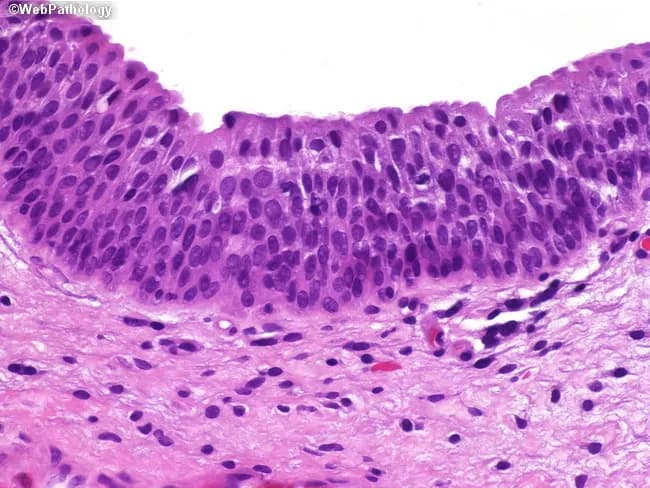
What type of epithelial is this
Reading File
Searching for information on this epithelial type shown in the image.
search_medical_text
transitional epithelium urothelium histology features ureter bladder
Harrison's Principles of Internal Medicine, Twenty First Edition
Page 1338
GradeResponse
GradeResponse
Transitional Epithelium (Urothelium)
The image shows transitional epithelium, also called urothelium.
Key Histological Features Visible
| Feature | Description |
|---|---|
| Cell layers | Multiple layers (stratified) — basal, intermediate, and superficial |
| Umbrella cells | Large, dome-shaped superficial cells at the luminal surface — the hallmark of transitional epithelium |
| Cell shape | Cells change shape depending on distension (columnar when relaxed, squamous when stretched) |
| Nuclei | Round to oval, prominent |
| Underlying tissue | Loose connective tissue (lamina propria) visible beneath |
Where Is It Found?
The correct answer is Ureter (option 3, which got 65%) — and also lines the:
- Renal pelvis and calyces
- Urinary bladder
- Proximal urethra
Why Not the Other Options?
- Duodenum → Simple columnar epithelium with villi and goblet cells
- Transitional epithelium is exclusive to the urinary tract
What Makes It Unique
Transitional epithelium is specialized to accommodate stretch and distension. The superficial umbrella cells contain unique proteins called uroplakines that form rigid plaques, creating an impermeable barrier against hypertonic urine. The stratified layers (basal → intermediate → umbrella) with the characteristic dome-shaped surface cells are the classic identifying features on H&E staining, exactly as seen in your image.
This is a shared conversation. Sign in to Orris to start your own chat.