
Cat bite lead to rabies ?
Yes, cat bites can transmit rabies. Cats are one of the more common domestic animal sources of rabies exposure, particularly in regions where feline vaccination rates are low. The rabies virus is present in the saliva of infected animals and enters the body through a bite wound. Post-exposure prophylaxis (PEP) should be considered after any cat bite, especially from an unknown or unvaccinated animal.
Searching sources...
Reading File
Searching the Web
cat bite rabies transmission risk 2025
Finding Sources
Reading File
Reading File
Here is a thorough answer based on authoritative medical textbooks and current sources:
Can a Cat Bite Lead to Rabies?
Yes - a cat bite can transmit rabies, though the actual risk depends on several factors including whether the cat is infected, vaccinated, and the nature of the bite.
How Rabies Is Transmitted
Rabies is caused by the rabies virus (a rhabdovirus). It spreads via the saliva of an infected animal - through bites, scratches, or direct saliva contact with mucous membranes or open wounds. Cats are warm-blooded mammals and can both contract and transmit rabies.
- WHO Rabies Fact Sheet: Any mammal can be infected, including cats
- Once clinical symptoms appear, rabies is virtually 100% fatal
- The risk of death following untreated clinical disease approaches 100%; with proper treatment (PEP), the risk approaches 0% - Rosen's Emergency Medicine
Risk Level from Cat Bites Specifically
According to a Delphi analysis of rabies transmission risk:
- Estimated median transmission risk from a cat bite (in a rabies-prevalent area): ~0.001 (0.1%)
- Much lower than a skunk bite (~5%), but still significant enough that PEP is recommended
In 2023, there were 222 reported rabies cases in cats in the US, Canada, and Mexico combined - making cats one of the more common domestic animal sources.
Incubation Period
The incubation period in humans ranges from 1 week to several years, though typically 1 to 3 months. During incubation, the person shows no symptoms but the virus travels via peripheral nerves toward the brain. This is why early post-exposure treatment is so effective.
Clinical Signs of Rabies in Humans
As described in Bradley and Daroff's Neurology in Clinical Practice:
- Prodrome: Fever, headache, pain/paresthesias at the bite site
- Acute neurological phase:
- Furious (encephalitic) rabies: Hyperactivity, hydrophobia (fear of water), aerophobia, pharyngeal spasms, agitation, hallucinations, autonomic instability
- Paralytic ("dumb") rabies: Ascending paralysis, less common but often misdiagnosed
- Coma and death
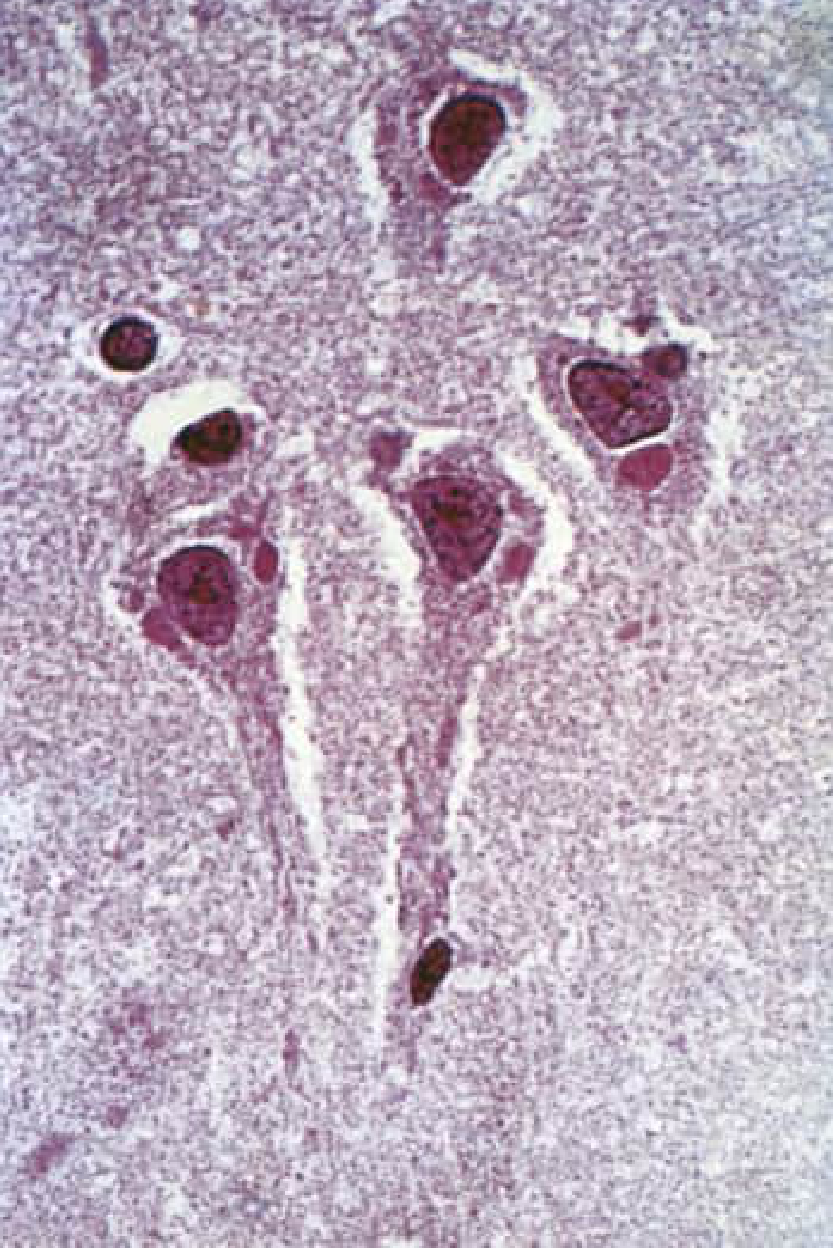
Pathological hallmark: Negri bodies - intraneuronal inclusion bodies in the hippocampus and cerebellum.
What to Do After a Cat Bite
| Situation | Action |
|---|---|
| Cat is vaccinated and healthy | Observe cat for 10 days; PEP usually not needed |
| Cat is stray/feral or unknown vaccination status | Consult doctor immediately for PEP assessment |
| Cat shows neurological signs | Assume rabid; begin PEP without delay |
| Cat bites and escapes/unavailable | Treat as high-risk; start PEP |
The 10-day rule: For dogs, cats, and ferrets - if the animal had rabies at the time of the bite, it will show clinical signs or die within 3 to 4 days. If the animal remains healthy 10 days later, it was not shedding rabies virus at the time of the bite.
Post-Exposure Prophylaxis (PEP)
PEP is highly effective when started promptly and consists of:
- Thorough wound washing with soap and water (reduces viral load)
- Rabies immunoglobulin (RIG) injected into/around the wound (for unvaccinated individuals)
- Rabies vaccine series - typically 4 doses over 14 days (Days 0, 3, 7, 14)
PEP should never be delayed waiting for lab results in high-risk exposures.
Key Takeaway
A cat bite can cause rabies, particularly from unvaccinated, stray, or feral cats. In regions where cat rabies is endemic, any bite from a cat of unknown vaccination status warrants urgent medical evaluation and potential PEP. Never dismiss a cat bite as trivial - even if the wound looks minor, the virus can still enter nerve tissue.
I had unknown dog bite in December 2025 and I took all the vaccine and today my domestic pet cat touched teeth to my hand no bleeding just little redness
Based on what you've described, your risk is very low. You completed a full rabies vaccine series in December 2025 (about 7-8 months ago), which gives you significant protective immunity. Your domestic pet cat caused no bleeding - just redness - which is a very minor exposure. Let me look this up properly.
Researching further...
Finding Sources
Searching the Web
rabies PEP previously vaccinated cat scratch no bleeding domestic pet 2025 WHO guidelines
Finding Sources
Finding Sources
Reading File
Here is a clear, personalized answer for your situation:
Your Situation - Risk Assessment
Factor 1: You are already vaccinated ✅
You completed a full rabies PEP (post-exposure prophylaxis) series in December 2025 - roughly 7-8 months ago. This is very important because:
- Rabies vaccines produce long-lasting immune memory (antibodies persist for years)
- You already have primed B and T cells that can mount a rapid response
- The CDC guidelines confirm that previously vaccinated people have strong protection
Factor 2: Your domestic pet cat - low risk animal ✅
- A vaccinated domestic house cat (kept indoors or regularly vaccinated) is considered very low risk for rabies
- Unlike stray or feral cats, pet cats with no exposure to wildlife or unknown animals are not a rabies concern
- Is your cat vaccinated? If yes, the risk is essentially zero.
Factor 3: No bleeding - just redness ✅
This is classified as a WHO Category II exposure at most (minor, non-bleeding contact with intact or near-intact skin). According to a recent study on rabies PEP in children, 71.3% of rabies vaccines administered for minor, non-bleeding cat scratches were found to be unnecessary per guidelines.
The virus needs to enter broken skin or a wound - redness without bleeding suggests the skin barrier was likely intact.
What You Should Do
| Action | Needed? |
|---|---|
| Wash the area with soap and water for 5-10 min | ✅ Yes - do this now |
| Apply antiseptic (povidone-iodine/betadine) | ✅ Recommended |
| Observe your cat for 10 days for any behavior changes | ✅ Yes |
| Full new PEP course (4 doses + RIG) | ❌ Not needed |
| 2-dose booster (Days 0 and 3) | Likely not needed given low-risk exposure, but consult a doctor if unsure |
If you do need any PEP as a previously vaccinated person, it would only be 2 vaccine doses (Day 0 and Day 3) - NO rabies immunoglobulin (RIG) needed. That's it.
Bottom Line
Your risk in this situation is very low - close to negligible. You are vaccinated, your pet cat is a domestic animal (presumably vaccinated), and there was no bleeding. Wash the area well with soap and water and apply antiseptic. Monitor your cat for 10 days.
However, if your cat is unvaccinated, behaved strangely, or was recently exposed to wildlife - consult a doctor or local health authority as a precaution. They may recommend a simple 2-dose booster.
⚠️ This is medical information, not a substitute for personal medical advice. If you are anxious or uncertain, please contact your doctor or nearest health center - they can assess your specific situation quickly and reassure you.
This is a shared conversation. Sign in to Orris to start your own chat.