
Autopsy of a asfixia case
Reading File
Now I'll search the library for asphyxia autopsy findings in parallel:
Finding Sources
Finding Sources
Searching the Web
asphyxia autopsy findings forensic pathology
Finding Sources
Reading Web Page
https://www.pathologyoutlines.com/topic/forensicsasphyxia.ht…
Searching PubMed
asphyxia autopsy forensic pathology findings
Searching Images
asphyxia autopsy petechiae cyanosis forensic pathology
Finding Sources
Here is a comprehensive overview of autopsy findings in asphyxia cases, organized by type:
Autopsy in Asphyxia (Asfixia)
Definition & Classification
Asphyxia is any condition resulting from interference with respiration — oxygen deprivation, failure to utilize O₂, or failure to eliminate CO₂. Forensic subtypes:
| Type | Mechanism |
|---|---|
| Hanging | Suspension asphyxia — ligature compresses neck under body weight |
| Ligature strangulation | External neck compression by a cord/ligature without suspension |
| Manual strangulation | Neck compression by hands |
| Smothering | Obstruction of the mouth/nose |
| Choking | Internal airway obstruction |
| Traumatic (Perthes syndrome) | Thoracoabdominal compression |
| Positional asphyxia | Body in a position preventing breathing |
| Drowning | Submersion in liquid |
General Signs of Asphyxia (Classic Triad)
These appear regardless of the specific type:
1. Tardieu Spots (Petechiae)
- Pinpoint hemorrhages caused by elevated venous pressure rupturing small capillaries
- Locations: conjunctivae, eyelids, facial skin, visceral pleura, epicardium
- Subconjunctival and subpleural petechiae are hallmark findings
- Also seen on epicardium (Tardieu spots) and beneath the thymus in infants
2. Cyanosis
- Dark blue/purple discoloration of face, lips, nail beds, and mucosae
- Due to deoxygenated hemoglobin accumulation
- In neck-compression asphyxia, jugular venous obstruction causes intense facial cyanosis while the trunk remains pale
3. Visceral Congestion
- Engorgement of all internal organs, especially the lungs, brain, and liver
- Lungs: heavy, dark red, congested, with or without edema and frothy airway fluid
- Brain: edema, congestion
- Right heart: dilated with dark, fluid blood
External Examination Findings by Type
Hanging
- Ligature mark: oblique, ascending, interrupted at the knot — parchment-like, dry, dark-brown furrow
- Facial congestion and petechiae (more common in incomplete hanging)
- Tongue protrusion and lip cyanosis
- Drooling of saliva from the mouth
Ligature Strangulation
- Horizontal ligature mark (vs. oblique in hanging) — uninterrupted around the neck
- Facial congestion, cyanosis, petechiae prominent
- Periligature abrasions/contusions from struggling
Manual Strangulation (Throttling)
- Fingertip bruises: oval/round contusions from fingerpads
- Fingernail scratches: linear or crescent abrasions on neck skin
- May show one large thumb bruise on one side + clustered finger bruises on opposite side
- Struggle injuries (defensive wounds on hands/forearms)
Traumatic Asphyxia (Perthes Syndrome)
- Severe facial and upper chest congestion and cyanosis
- Conjunctival hemorrhage
- Petechiae on face, upper chest
- Heavy, dark red lungs with subpleural petechiae
- Petrous ridge hemorrhage (without skull fracture) — highly characteristic
Smothering
- May be subtle — soft tissue petechiae around mouth/nose
- Inner lip mucosal lacerations (from pressure against teeth)
- Lungs congested
Drowning
- Bloody froth in airways
- Water in the stomach and sinuses
- Lung overinflation (emphysema aquosum)
- Petrous/mastoid hemorrhage
- Wrinkling ("washerwoman changes") of hands and feet if submerged
- Diagnosis of exclusion after ruling out all other causes
Internal (Autopsy) Findings
Neck Dissection (Critical in compression asphyxia)
- Layer-by-layer anterior neck dissection after vascular decompression is mandatory
- Hyoid bone fractures: more common in manual strangulation (30–40%) and hanging in older individuals (calcified bone)
- Thyroid/cricoid cartilage fractures: fractures and hemorrhage, especially in manual strangulation
- Strap muscle hemorrhage: hemorrhagic infiltration of sternohyoid, sternothyroid, thyrohyoid muscles
- Carotid artery intimal tears: dissection/intimal hemorrhage
Respiratory System
- Lungs: congestion, edema, airway froth
- Subpleural petechiae (Tardieu spots) — bilateral, on diaphragmatic and costal surfaces
- Frothy fluid in trachea/bronchi
Cardiovascular
- Right ventricular dilation with dark fluid blood
- Subepicardial petechiae (Tardieu spots)
- Dilated right atrium
Central Nervous System
- Cerebral edema
- Congestion of meninges
- Petechial hemorrhages in brain parenchyma in prolonged cases
Histopathology
- Pulmonary alveolar edema and congestion
- Alveolar hemorrhage
- Petechial hemorrhages in thymus (DiMaio spots in infants)
- Neuronal ischemic changes in cerebral cortex (red neurons)
- Adrenal congestion
Toxicology
Toxicology is an essential adjunct — drug/alcohol intoxication may:
- Coexist with asphyxia (contribute to positional or aspiration asphyxia)
- Simulate or mask asphyxia signs
- Always collect blood, urine, vitreous humor, bile, gastric contents
Forensic Classification at Autopsy
| Manner | Type | Key Distinguishing Feature |
|---|---|---|
| Suicide | Hanging | Oblique mark, no defensive injuries |
| Homicide | Manual strangulation | Fingernail marks, bilateral neck bruising |
| Homicide | Ligature strangulation | Horizontal mark, struggle injuries |
| Accident | Positional/traumatic | Scene evidence of compression/entrapment |
| Undetermined | Smothering | Minimal findings; exclusion diagnosis |
Relevant Images
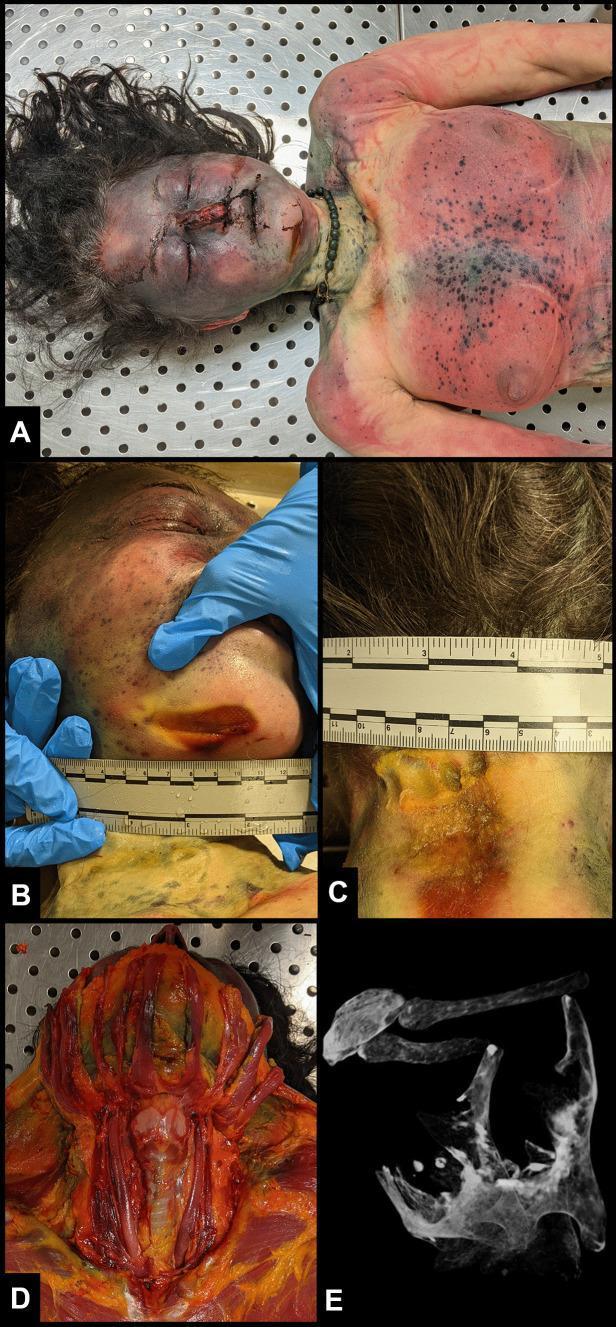
Facial congestion, cyanosis, petechiae (Tardieu spots), and deep posterior neck dissection showing hemorrhagic soft tissue infiltration in mechanical asphyxia
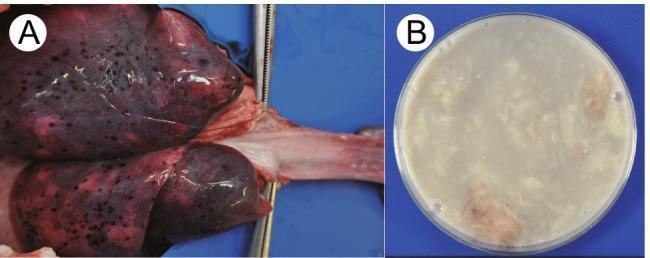
Dark, congested lungs with subpleural petechiae — hallmark pulmonary finding in asphyxia
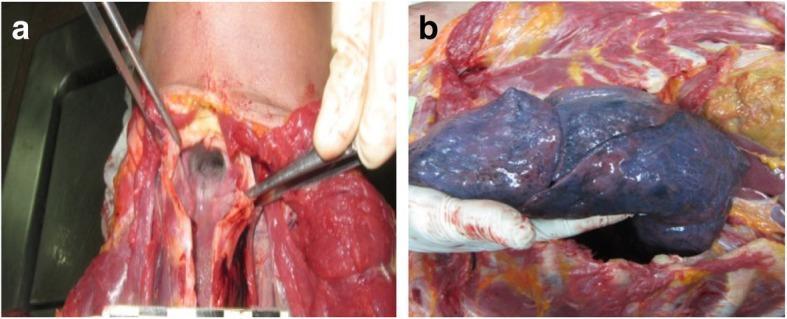
Frothy airway fluid and cyanosed, congested lung parenchyma — acute respiratory failure/asphyxia
Key Takeaways for the Forensic Autopsy Report
- Document all petechiae (conjunctival, facial, subpleural, epicardial) — highly significant but not pathognomonic of asphyxia
- Meticulous neck dissection after vascular decompression is non-negotiable in suspected compression asphyxia
- Manner of death depends on integrating scene investigation, injury pattern, toxicology, and autopsy findings
- Drowning is a diagnosis of exclusion — full toxicology and complete autopsy required
- Recent evidence (PMID 39519158) highlights that macroscopic signs have poor specificity — post-mortem molecular biomarkers (hypoxia-inducible factors, cytokines) are emerging as adjuncts
This is a shared conversation. Sign in to Orris to start your own chat.