
Sle explain as 10 mark question
Reading File
Searching sources...
Finding Sources
Searching PubMed
"systemic lupus erythematosus"[MeSH Terms] AND "pathogenesis"
Finding Sources
Finding Sources
Reading File
Finding Sources
Reading File
Reading File
I now have the SLE content from the Rheumatology textbook. Let me read the main SLE section more comprehensively.
Reading File
Reading File
Finding Sources
Finding Sources
Reading File
Reading File
I now have excellent material. Let me get the SLE clinical features and diagnosis/classification criteria content from Goldman-Cecil:
Reading File
Reading File
I now have comprehensive information to write a thorough 10-mark answer on SLE. Let me fetch the malar rash image to include visually.
Loading Image
Here is a complete 10-mark answer on Systemic Lupus Erythematosus (SLE):
Systemic Lupus Erythematosus (SLE)
Definition
Systemic Lupus Erythematosus is a chronic, multisystem autoimmune disease characterized by the production of pathogenic autoantibodies (especially anti-double-stranded DNA and anti-Sm), immune complex deposition, complement activation, and widespread tissue inflammation. It predominantly affects women of childbearing age (female:male ratio ~9:1), with higher prevalence in African American, Asian, and Hispanic populations.
Etiology and Predisposing Factors
SLE results from an interplay of genetic, hormonal, and environmental factors:
- Genetic: Multiple HLA and non-HLA gene associations including IRF5, STAT4, PTPN22, BLK, FCGR2A, and complement genes (C1q, C4 deficiencies strongly predispose to SLE)
- Hormonal: Estrogens promote autoimmunity; disease worsens during pregnancy and with oral contraceptive use
- Environmental triggers: UV light (photosensitivity), drugs (hydralazine, procainamide, isoniazid - drug-induced lupus), infections (EBV), smoking
Pathogenesis
SLE is a type III hypersensitivity (immune complex-mediated) disease. Key steps:
- Loss of tolerance to self-antigens - particularly nuclear antigens (DNA, histones, ribonucleoproteins)
- Autoantibody formation - B cells produce ANA, anti-dsDNA, anti-Sm antibodies. The earliest antibodies are against RNA-binding proteins (Ro), followed by anti-dsDNA, then anti-Sm/RNP around the time of clinical diagnosis
- Immune complex deposition - Antigen-antibody complexes deposit in kidneys (glomeruli), skin, joints, blood vessels, and choroid plexus, activating complement (C3a, C5a) and recruiting neutrophils and macrophages
- Type I Interferon signature - Plasmacytoid dendritic cells and low-density granulocytes (LDGs) produce large amounts of type I IFN (IFN-α), which amplifies B cell activation, dendritic cell maturation, and breaks peripheral tolerance
- NETosis - LDGs from SLE patients form NET (Neutrophil Extracellular Traps) excessively; NETs contain oxidized nucleic acids, LL37, and modified self-proteins that stimulate type I IFN via the cGAS/STING pathway and activate the NLRP3 inflammasome, releasing IL-1 and IL-18 that perpetuate tissue damage
- Complement activation and organ damage - Immune complex deposits activate classical complement → chemotaxis of inflammatory cells → fibrinoid necrosis → end-organ damage
Goldman-Cecil Medicine, p.2812; Firestein & Kelley's Textbook of Rheumatology
Clinical Features
SLE is a relapsing-remitting, multisystem disease. Common manifestations (with approximate frequency):
| System | Feature | Frequency |
|---|---|---|
| Cutaneous | Malar (butterfly) rash, discoid lupus, photosensitivity, oral ulcers, alopecia | 88% |
| Musculoskeletal | Arthritis/arthralgias (non-erosive, migratory) | 76% |
| Neuropsychiatric | Cognitive dysfunction, seizures, psychosis, headache | 66% |
| Serositis | Pleuritis, pericarditis | 63% |
| Hematologic | Hemolytic anemia, leukopenia, thrombocytopenia | 57% |
| Vascular | Raynaud phenomenon, vasculitis | 44-43% |
| Renal | Lupus nephritis (proteinuria, hematuria, casts) | 31% |
| Cardiac | Libman-Sacks endocarditis (non-infective), premature atherosclerosis | 18% |
Goldman-Cecil Medicine, Table 245-1
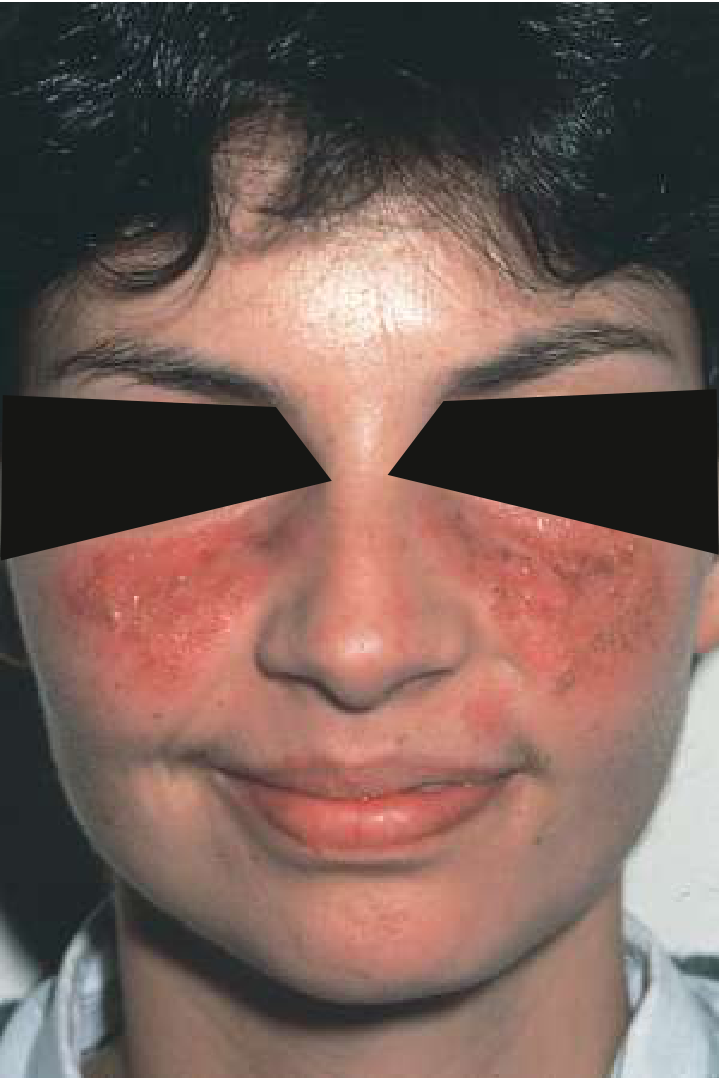
Malar Rash
The classic butterfly rash crosses both cheeks and the nasal bridge but characteristically spares the nasolabial folds:
Investigations
- ANA - Sensitive but not specific (positive in >95% of SLE; required entry criterion)
- Anti-dsDNA - Highly specific; titres correlate with disease activity (especially nephritis)
- Anti-Sm - Highly specific for SLE but less sensitive
- Complement levels - Low C3, C4 (consumed in active disease)
- Antiphospholipid antibodies (anticardiolipin, anti-β2GPI, lupus anticoagulant) - in ~30%; associated with thrombosis and pregnancy loss
- CBC - Anemia, lymphopenia, thrombocytopenia
- Urinalysis - Proteinuria, red cell casts in nephritis
- Renal biopsy - For lupus nephritis classification (WHO/ISN-RPS Class I-VI)
Diagnosis - 2019 ACR/EULAR Classification Criteria
SLE is classified when:
- ANA titer ≥ 1:80 (entry criterion - must be positive)
- Score ≥ 10 points from weighted clinical and immunologic domains
| Domain | Key Criterion | Points |
|---|---|---|
| Mucocutaneous | Acute cutaneous lupus | 6 |
| Musculoskeletal | Joint involvement | 6 |
| Immunologic | Anti-dsDNA antibody | 6 |
| Renal | Proteinuria >0.5g/24h | 4 |
| Complement | Low C3 AND C4 | 4 |
| Neuropsychiatric | Seizure | 5 |
| Constitutional | Fever | 2 |
Goldman-Cecil Medicine, Table 245
Management
General principles: Aim to suppress disease activity, prevent organ damage, and reduce cardiovascular risk.
- Hydroxychloroquine (HCQ) - Given to ALL SLE patients; reduces flares, thrombosis risk, and mortality. Mechanism: blocks TLR7/9 signaling
- NSAIDs / Low-dose corticosteroids - For mild disease (arthritis, serositis)
- Corticosteroids (moderate-high dose) - For major organ involvement (nephritis, CNS disease)
- Immunosuppressives:
- Mycophenolate mofetil (MMF) or cyclophosphamide - for lupus nephritis
- Azathioprine - maintenance therapy
- Methotrexate - for cutaneous/articular disease
- Biologics:
- Belimumab (anti-BAFF/BLyS) - approved for active SLE
- Anifrolumab (anti-IFN receptor) - for moderate-severe SLE
- Antiphospholipid antibody syndrome - Long-term anticoagulation
- Lifestyle: Sun protection, avoid triggers, vaccinations, manage CVD risk
Complications and Prognosis
- Lupus nephritis progresses to end-stage renal disease in ~10-20%
- Accelerated atherosclerosis and premature cardiovascular death
- Infections (major cause of early mortality due to immunosuppression)
- Avascular necrosis (from steroids or vasculitis)
- 10-year survival >90% with modern therapy; deaths in early disease are from organ failure/infection, later from cardiovascular disease
Summary: SLE is a prototype systemic autoimmune disease driven by failure of self-tolerance, autoantibody production (especially anti-dsDNA), immune complex deposition, and type I IFN dysregulation. It presents as a relapsing multisystem disorder diagnosed by positive ANA plus scored criteria. Treatment is layered from hydroxychloroquine (universal) to biologics for refractory disease.
Sources: Goldman-Cecil Medicine (International Edition); Firestein & Kelley's Textbook of Rheumatology (2022, Elsevier); Cellular and Molecular Immunology (9780323757485)
Create pdf of this
Reading File
Running Command
ls -la /home/daytona/workspace/
Running Command
mkdir -p /home/daytona/workspace/sle-pdf
Writing File
~/sle-pdf/generate_sle_pdf.py
from reportlab.lib.pagesizes import A4
from reportlab.lib import colors
from reportlab.lib.styles import getSampleStyleSheet, ParagraphStyle
from reportlab.lib.units import cm, mm
from reportlab.platypus import (
SimpleDocTemplate, Paragraph, Spacer, Table, TableStyle,
HRFlowable, KeepTogether, Image
)
from reportlab.lib.enums import TA_CENTER, TA_LEFT, TA_JUSTIFY
from reportlab.platypus import PageBreak
import urllib.request
import os
OUTPUT = "/home/daytona/workspace/sle-pdf/SLE_10_Mark_Answer.pdf"
IMG_PATH = "/home/daytona/workspace/sle-pdf/malar_rash.png"
# Download malar rash image
IMG_URL = "https://cdn.orris.care/cdss_images/63e92f9b6cff976dbbdaa9b25ddb2ebd08650a7d6531f61b52945c31876bdae4.png"
try:
urllib.request.urlretrieve(IMG_URL, IMG_PATH)
except Exception as e:
print(f"Image download failed: {e}")
IMG_PATH = None
# Colors
DARK_BLUE = colors.HexColor("#1a3a5c")
MED_BLUE = colors.HexColor("#2563a8")
LIGHT_BLUE = colors.HexColor("#dbeafe")
ACCENT = colors.HexColor("#e63946")
LIGHT_GRAY = colors.HexColor("#f8fafc")
MID_GRAY = colors.HexColor("#64748b")
TABLE_HEAD = colors.HexColor("#1a3a5c")
TABLE_ALT = colors.HexColor("#f0f4ff")
doc = SimpleDocTemplate(
OUTPUT,
pagesize=A4,
rightMargin=2*cm, leftMargin=2*cm,
topMargin=2.2*cm, bottomMargin=2*cm,
title="Systemic Lupus Erythematosus - 10 Mark Answer",
author="Orris Medical AI"
)
styles = getSampleStyleSheet()
# Custom styles
title_style = ParagraphStyle(
"TitleStyle",
parent=styles["Title"],
fontSize=20,
textColor=DARK_BLUE,
spaceAfter=4,
spaceBefore=0,
alignment=TA_CENTER,
fontName="Helvetica-Bold",
leading=26,
)
subtitle_style = ParagraphStyle(
"SubtitleStyle",
fontSize=10,
textColor=MID_GRAY,
alignment=TA_CENTER,
spaceAfter=12,
fontName="Helvetica",
)
h1_style = ParagraphStyle(
"H1Style",
fontSize=12,
textColor=colors.white,
fontName="Helvetica-Bold",
spaceBefore=14,
spaceAfter=4,
leading=16,
leftIndent=6,
)
h2_style = ParagraphStyle(
"H2Style",
fontSize=10.5,
textColor=MED_BLUE,
fontName="Helvetica-Bold",
spaceBefore=10,
spaceAfter=3,
leading=14,
)
body_style = ParagraphStyle(
"BodyStyle",
fontSize=9.5,
textColor=colors.HexColor("#1e293b"),
fontName="Helvetica",
spaceBefore=2,
spaceAfter=4,
leading=14,
alignment=TA_JUSTIFY,
)
bullet_style = ParagraphStyle(
"BulletStyle",
fontSize=9.5,
textColor=colors.HexColor("#1e293b"),
fontName="Helvetica",
spaceBefore=1,
spaceAfter=1,
leading=13,
leftIndent=16,
bulletIndent=4,
)
caption_style = ParagraphStyle(
"CaptionStyle",
fontSize=8,
textColor=MID_GRAY,
fontName="Helvetica-Oblique",
alignment=TA_CENTER,
spaceAfter=6,
)
source_style = ParagraphStyle(
"SourceStyle",
fontSize=7.5,
textColor=MID_GRAY,
fontName="Helvetica-Oblique",
spaceBefore=2,
spaceAfter=2,
alignment=TA_CENTER,
)
def section_header(text):
"""Return a list: colored background paragraph acting as section header."""
data = [[Paragraph(text, h1_style)]]
t = Table(data, colWidths=[17*cm])
t.setStyle(TableStyle([
("BACKGROUND", (0,0), (-1,-1), DARK_BLUE),
("TOPPADDING", (0,0), (-1,-1), 5),
("BOTTOMPADDING", (0,0), (-1,-1), 5),
("LEFTPADDING", (0,0), (-1,-1), 8),
("ROUNDEDCORNERS", [4]),
]))
return t
def bullet(text):
return Paragraph(f"<bullet>•</bullet> {text}", bullet_style)
story = []
# ── TITLE BLOCK ──────────────────────────────────────────────────────────────
story.append(Spacer(1, 4*mm))
story.append(Paragraph("Systemic Lupus Erythematosus (SLE)", title_style))
story.append(Paragraph("10-Mark Examination Answer | Medical Sciences", subtitle_style))
story.append(HRFlowable(width="100%", thickness=2, color=ACCENT, spaceAfter=10))
# ── 1. DEFINITION ─────────────────────────────────────────────────────────────
story.append(section_header("1. Definition"))
story.append(Spacer(1, 3*mm))
story.append(Paragraph(
"Systemic Lupus Erythematosus (SLE) is a <b>chronic, multisystem autoimmune disease</b> "
"characterised by the production of pathogenic autoantibodies (especially anti-double-stranded DNA "
"and anti-Sm), immune complex deposition, complement activation, and widespread tissue inflammation. "
"It predominantly affects women of childbearing age (F:M ratio ~9:1), with higher prevalence in "
"African American, Asian, and Hispanic populations.",
body_style
))
# ── 2. ETIOLOGY ───────────────────────────────────────────────────────────────
story.append(section_header("2. Etiology and Predisposing Factors"))
story.append(Spacer(1, 3*mm))
for b in [
"<b>Genetic:</b> HLA and non-HLA gene associations including IRF5, STAT4, PTPN22, BLK, FCGR2A; "
"deficiency of early complement proteins (C1q, C4) strongly predisposes to SLE.",
"<b>Hormonal:</b> Oestrogens promote autoimmunity; disease worsens during pregnancy and with oral "
"contraceptive use.",
"<b>Environmental triggers:</b> UV light (photosensitivity), drugs (hydralazine, procainamide, "
"isoniazid causing drug-induced lupus), EBV infection, and smoking.",
]:
story.append(bullet(b))
story.append(Spacer(1, 2*mm))
# ── 3. PATHOGENESIS ───────────────────────────────────────────────────────────
story.append(section_header("3. Pathogenesis"))
story.append(Spacer(1, 3*mm))
story.append(Paragraph(
"SLE is the prototype <b>Type III hypersensitivity (immune complex-mediated) disease</b>. "
"Key steps in pathogenesis:",
body_style
))
steps = [
("<b>Loss of self-tolerance:</b>",
"Failure to eliminate or suppress autoreactive B and T lymphocytes specific for nuclear antigens "
"(DNA, histones, Ro, Sm, RNP)."),
("<b>Autoantibody formation:</b>",
"B cells produce ANA, anti-dsDNA, anti-Sm antibodies. The earliest antibodies target "
"RNA-binding proteins (Ro), followed by anti-dsDNA, then anti-Sm/RNP at clinical diagnosis."),
("<b>Immune complex deposition:</b>",
"Antigen-antibody complexes deposit in kidneys (glomeruli), skin, joints, and vessels. "
"Complement activation (C3a, C5a) recruits neutrophils and macrophages causing fibrinoid necrosis."),
("<b>Type I Interferon (IFN) signature:</b>",
"Plasmacytoid dendritic cells and low-density granulocytes (LDGs) produce excess IFN-alpha, "
"amplifying B-cell activation, dendritic cell maturation, and breaking peripheral tolerance."),
("<b>NETosis (Neutrophil Extracellular Traps):</b>",
"LDGs form NETs excessively; NETs contain oxidised nucleic acids and modified self-proteins that "
"stimulate type I IFN via the cGAS/STING pathway and activate the NLRP3 inflammasome, releasing "
"IL-1 and IL-18 that perpetuate tissue damage and promote lupus nephritis."),
]
for num, (heading, body) in enumerate(steps, 1):
story.append(bullet(f"<b>Step {num} - </b>{heading} {body}"))
story.append(Spacer(1, 2*mm))
# ── 4. CLINICAL FEATURES ──────────────────────────────────────────────────────
story.append(section_header("4. Clinical Features"))
story.append(Spacer(1, 3*mm))
story.append(Paragraph(
"SLE is a relapsing-remitting, multisystem disease. Clinical manifestations (approximate frequency):",
body_style
))
story.append(Spacer(1, 2*mm))
cf_data = [
["System", "Feature", "~Frequency"],
["Cutaneous", "Malar (butterfly) rash, discoid lupus, photosensitivity, oral ulcers, alopecia", "88%"],
["Musculoskeletal", "Non-erosive migratory arthritis/arthralgias", "76%"],
["Neuropsychiatric", "Cognitive dysfunction, seizures, psychosis, headache", "66%"],
["Serositis", "Pleuritis, pericarditis", "63%"],
["Haematologic", "Haemolytic anaemia, leukopenia, thrombocytopenia", "57%"],
["Vascular", "Raynaud phenomenon, vasculitis", "43-44%"],
["Renal", "Lupus nephritis - proteinuria, haematuria, casts", "31%"],
["Cardiac", "Libman-Sacks endocarditis, premature atherosclerosis", "18%"],
]
cf_table = Table(cf_data, colWidths=[3.5*cm, 9*cm, 2.5*cm])
cf_table.setStyle(TableStyle([
("BACKGROUND", (0,0), (-1,0), TABLE_HEAD),
("TEXTCOLOR", (0,0), (-1,0), colors.white),
("FONTNAME", (0,0), (-1,0), "Helvetica-Bold"),
("FONTSIZE", (0,0), (-1,-1), 8.5),
("ROWBACKGROUNDS", (0,1), (-1,-1), [colors.white, TABLE_ALT]),
("GRID", (0,0), (-1,-1), 0.4, colors.HexColor("#cbd5e1")),
("TOPPADDING", (0,0), (-1,-1), 4),
("BOTTOMPADDING",(0,0), (-1,-1), 4),
("LEFTPADDING", (0,0), (-1,-1), 6),
("VALIGN", (0,0), (-1,-1), "MIDDLE"),
("ALIGN", (2,0), (2,-1), "CENTER"),
]))
story.append(cf_table)
story.append(Spacer(1, 4*mm))
# Malar rash image
if IMG_PATH and os.path.exists(IMG_PATH):
img = Image(IMG_PATH, width=5*cm, height=6*cm)
img.hAlign = "CENTER"
story.append(img)
story.append(Paragraph(
"Malar (butterfly) rash in SLE - note erythema across cheeks and nasal bridge, "
"characteristically sparing the nasolabial folds.",
caption_style
))
story.append(Paragraph("Goldman-Cecil Medicine (International Edition)", source_style))
story.append(Spacer(1, 2*mm))
# ── 5. INVESTIGATIONS ─────────────────────────────────────────────────────────
story.append(section_header("5. Investigations"))
story.append(Spacer(1, 3*mm))
inv_data = [
["Test", "Significance"],
["ANA (antinuclear antibody)", "Sensitive >95%; required entry criterion for diagnosis"],
["Anti-dsDNA", "Highly specific; titres correlate with disease activity (esp. nephritis)"],
["Anti-Sm antibody", "Highly specific for SLE but less sensitive"],
["Complement (C3, C4)", "Low levels = consumed in active disease; low C3+C4 = most specific"],
["Antiphospholipid antibodies", "Anticardiolipin, anti-beta2GPI, lupus anticoagulant (~30%); thrombosis risk"],
["CBC", "Haemolytic anaemia, lymphopenia, thrombocytopenia"],
["Urinalysis / 24h protein", "Proteinuria, red cell casts indicate active lupus nephritis"],
["Renal biopsy", "ISN/RPS Class I-VI classification of lupus nephritis"],
]
inv_table = Table(inv_data, colWidths=[5.5*cm, 11.5*cm])
inv_table.setStyle(TableStyle([
("BACKGROUND", (0,0), (-1,0), TABLE_HEAD),
("TEXTCOLOR", (0,0), (-1,0), colors.white),
("FONTNAME", (0,0), (-1,0), "Helvetica-Bold"),
("FONTSIZE", (0,0), (-1,-1), 8.5),
("ROWBACKGROUNDS",(0,1), (-1,-1), [colors.white, TABLE_ALT]),
("GRID", (0,0), (-1,-1), 0.4, colors.HexColor("#cbd5e1")),
("TOPPADDING", (0,0), (-1,-1), 4),
("BOTTOMPADDING",(0,0), (-1,-1), 4),
("LEFTPADDING", (0,0), (-1,-1), 6),
("VALIGN", (0,0), (-1,-1), "MIDDLE"),
]))
story.append(inv_table)
story.append(Spacer(1, 3*mm))
# ── 6. DIAGNOSIS / CLASSIFICATION CRITERIA ────────────────────────────────────
story.append(section_header("6. Diagnosis - 2019 ACR/EULAR Classification Criteria"))
story.append(Spacer(1, 3*mm))
story.append(Paragraph(
"SLE is classified when: (1) <b>ANA titer ≥1:80</b> (mandatory entry criterion) AND "
"(2) total score <b>≥10 points</b> from weighted clinical and immunologic domains.",
body_style
))
story.append(Spacer(1, 2*mm))
crit_data = [
["Domain", "Criterion", "Points"],
["Mucocutaneous", "Acute cutaneous lupus (e.g. malar rash)", "6"],
["Mucocutaneous", "Subacute cutaneous / discoid lupus", "4"],
["Mucocutaneous", "Oral ulcers / non-scarring alopecia", "2"],
["Musculoskeletal", "Joint involvement (synovitis ≥2 joints)", "6"],
["Serositis", "Pleural/pericardial effusion", "5"],
["Neuropsychiatric","Seizure", "5"],
["Neuropsychiatric","Psychosis / delirium", "3/2"],
["Renal", "Proteinuria >0.5 g/24h", "4"],
["Renal", "Class II-V lupus nephritis on biopsy", "8/10"],
["Complement", "Low C3 AND C4", "4"],
["Immunologic", "Anti-dsDNA antibody", "6"],
["Immunologic", "Antiphospholipid antibody", "2"],
]
crit_table = Table(crit_data, colWidths=[4.5*cm, 9.5*cm, 3*cm])
crit_table.setStyle(TableStyle([
("BACKGROUND", (0,0), (-1,0), TABLE_HEAD),
("TEXTCOLOR", (0,0), (-1,0), colors.white),
("FONTNAME", (0,0), (-1,0), "Helvetica-Bold"),
("FONTSIZE", (0,0), (-1,-1), 8.5),
("ROWBACKGROUNDS",(0,1), (-1,-1), [colors.white, TABLE_ALT]),
("GRID", (0,0), (-1,-1), 0.4, colors.HexColor("#cbd5e1")),
("TOPPADDING", (0,0), (-1,-1), 4),
("BOTTOMPADDING",(0,0), (-1,-1), 4),
("LEFTPADDING", (0,0), (-1,-1), 6),
("VALIGN", (0,0), (-1,-1), "MIDDLE"),
("ALIGN", (2,0), (2,-1), "CENTER"),
]))
story.append(crit_table)
story.append(Spacer(1, 3*mm))
# ── 7. MANAGEMENT ─────────────────────────────────────────────────────────────
story.append(section_header("7. Management"))
story.append(Spacer(1, 3*mm))
story.append(Paragraph("<b>Stepwise, disease activity-guided approach:</b>", body_style))
mgmt = [
("<b>Hydroxychloroquine (HCQ)</b>",
"Given to ALL SLE patients regardless of severity. Reduces flares, thrombosis risk, and mortality. "
"Mechanism: blocks TLR7/9 endosomal signalling."),
("<b>NSAIDs / Low-dose corticosteroids</b>",
"First-line for mild disease (arthritis, serositis, skin rash)."),
("<b>Moderate-high dose corticosteroids</b>",
"For major organ involvement - lupus nephritis, CNS disease, haemolytic anaemia."),
("<b>Immunosuppressives</b>",
"Mycophenolate mofetil (MMF) or cyclophosphamide for lupus nephritis induction; "
"azathioprine for maintenance; methotrexate for cutaneous/articular disease."),
("<b>Biologics</b>",
"Belimumab (anti-BAFF/BLyS monoclonal antibody) - approved for active SLE. "
"Anifrolumab (anti-type I IFN receptor) - for moderate-to-severe SLE refractory to standard therapy."),
("<b>Antiphospholipid antibody syndrome</b>",
"Long-term anticoagulation with warfarin for thrombotic events."),
("<b>Lifestyle and preventive measures</b>",
"Strict sun protection (SPF >50), avoid triggers, vaccinations (avoid live vaccines on "
"immunosuppression), manage cardiovascular risk factors."),
]
for heading, body in mgmt:
story.append(bullet(f"{heading}: {body}"))
story.append(Spacer(1, 1*mm))
# ── 8. COMPLICATIONS & PROGNOSIS ──────────────────────────────────────────────
story.append(section_header("8. Complications and Prognosis"))
story.append(Spacer(1, 3*mm))
for b in [
"Lupus nephritis progresses to end-stage renal disease in ~10-20% of patients.",
"Accelerated atherosclerosis and premature cardiovascular death (major cause of late mortality).",
"Infections - major cause of early mortality due to immunosuppression and complement deficiency.",
"Avascular (aseptic) necrosis of bone, particularly femoral head (from steroids/vasculitis).",
"Drug side effects: HCQ retinopathy, steroid osteoporosis/diabetes, cyclophosphamide gonadotoxicity.",
"10-year survival >90% with modern therapy. Adverse prognostic factors: nephritis, CNS involvement, "
"thrombocytopenia, early disease onset.",
]:
story.append(bullet(b))
story.append(Spacer(1, 3*mm))
# ── SUMMARY BOX ───────────────────────────────────────────────────────────────
summary_text = (
"<b>Summary:</b> SLE is the prototype systemic autoimmune disease driven by failure of self-tolerance, "
"autoantibody production (anti-dsDNA, anti-Sm), immune complex deposition (Type III hypersensitivity), "
"and type I IFN dysregulation. It presents as a relapsing, multisystem disorder diagnosed by positive "
"ANA (entry) plus scored ACR/EULAR criteria (threshold ≥10). Management is layered from hydroxychloroquine "
"(universal) through immunosuppressives to targeted biologics for refractory disease."
)
sum_data = [[Paragraph(summary_text, ParagraphStyle(
"SumStyle", parent=body_style, fontSize=9, leading=13, textColor=DARK_BLUE
))]]
sum_table = Table(sum_data, colWidths=[17*cm])
sum_table.setStyle(TableStyle([
("BACKGROUND", (0,0), (-1,-1), LIGHT_BLUE),
("BOX", (0,0), (-1,-1), 1.2, MED_BLUE),
("TOPPADDING", (0,0), (-1,-1), 8),
("BOTTOMPADDING", (0,0), (-1,-1), 8),
("LEFTPADDING", (0,0), (-1,-1), 10),
("RIGHTPADDING", (0,0), (-1,-1), 10),
]))
story.append(sum_table)
story.append(Spacer(1, 4*mm))
# Sources
story.append(HRFlowable(width="100%", thickness=0.5, color=MID_GRAY, spaceAfter=4))
story.append(Paragraph(
"<i>Sources: Goldman-Cecil Medicine (International Edition, 2022); "
"Firestein & Kelley's Textbook of Rheumatology (2022, Elsevier); "
"Cellular and Molecular Immunology (Abbas et al.)</i>",
source_style
))
# Build PDF
doc.build(story)
print(f"PDF created: {OUTPUT}")
Running Command
python /home/daytona/workspace/sle-pdf/generate_sle_pdf.py
Running Command
ls -lh /home/daytona/workspace/sle-pdf/
Your PDF is ready! Here is the download link:
SLE 10 Mark Answer
PDF Document · PDF
The PDF (375 KB) includes:
- 8 colour-coded sections with dark blue headers: Definition, Etiology, Pathogenesis, Clinical Features, Investigations, Diagnosis (2019 ACR/EULAR criteria), Management, and Complications/Prognosis
- Formatted tables for clinical manifestations, investigations, and classification criteria with alternating row colours
- Malar rash photograph with caption
- Summary box highlighting the key exam points
- Source citations at the bottom
Explain dumping syndrom like above
Reading File
Searching sources...
Finding Sources
Finding Sources
Reading File
Reading File
Reading File
Reading File
Reading File
Finding Sources
I now have comprehensive content from multiple textbooks. Let me generate the PDF directly.
Writing File
~/sle-pdf/generate_dumping_pdf.py
from reportlab.lib.pagesizes import A4
from reportlab.lib import colors
from reportlab.lib.styles import getSampleStyleSheet, ParagraphStyle
from reportlab.lib.units import cm, mm
from reportlab.platypus import (
SimpleDocTemplate, Paragraph, Spacer, Table, TableStyle,
HRFlowable, KeepTogether
)
from reportlab.lib.enums import TA_CENTER, TA_LEFT, TA_JUSTIFY
OUTPUT = "/home/daytona/workspace/sle-pdf/Dumping_Syndrome_10_Mark_Answer.pdf"
# Colors
DARK_BLUE = colors.HexColor("#1a3a5c")
MED_BLUE = colors.HexColor("#2563a8")
LIGHT_BLUE = colors.HexColor("#dbeafe")
ACCENT = colors.HexColor("#e63946")
LIGHT_GRAY = colors.HexColor("#f8fafc")
MID_GRAY = colors.HexColor("#64748b")
TABLE_HEAD = colors.HexColor("#1a3a5c")
TABLE_ALT = colors.HexColor("#f0f4ff")
doc = SimpleDocTemplate(
OUTPUT,
pagesize=A4,
rightMargin=2*cm, leftMargin=2*cm,
topMargin=2.2*cm, bottomMargin=2*cm,
title="Dumping Syndrome - 10 Mark Answer",
author="Orris Medical AI"
)
styles = getSampleStyleSheet()
title_style = ParagraphStyle("TitleStyle", parent=styles["Title"],
fontSize=20, textColor=DARK_BLUE, spaceAfter=4, spaceBefore=0,
alignment=TA_CENTER, fontName="Helvetica-Bold", leading=26)
subtitle_style = ParagraphStyle("SubtitleStyle", fontSize=10, textColor=MID_GRAY,
alignment=TA_CENTER, spaceAfter=12, fontName="Helvetica")
h1_style = ParagraphStyle("H1Style", fontSize=12, textColor=colors.white,
fontName="Helvetica-Bold", spaceBefore=14, spaceAfter=4, leading=16, leftIndent=6)
body_style = ParagraphStyle("BodyStyle", fontSize=9.5, textColor=colors.HexColor("#1e293b"),
fontName="Helvetica", spaceBefore=2, spaceAfter=4, leading=14, alignment=TA_JUSTIFY)
bullet_style = ParagraphStyle("BulletStyle", fontSize=9.5, textColor=colors.HexColor("#1e293b"),
fontName="Helvetica", spaceBefore=1, spaceAfter=1, leading=13, leftIndent=16, bulletIndent=4)
caption_style = ParagraphStyle("CaptionStyle", fontSize=8, textColor=MID_GRAY,
fontName="Helvetica-Oblique", alignment=TA_CENTER, spaceAfter=6)
source_style = ParagraphStyle("SourceStyle", fontSize=7.5, textColor=MID_GRAY,
fontName="Helvetica-Oblique", spaceBefore=2, spaceAfter=2, alignment=TA_CENTER)
box_style = ParagraphStyle("BoxStyle", fontSize=9, textColor=DARK_BLUE,
fontName="Helvetica", spaceBefore=0, spaceAfter=0, leading=13, alignment=TA_JUSTIFY)
def section_header(text):
data = [[Paragraph(text, h1_style)]]
t = Table(data, colWidths=[17*cm])
t.setStyle(TableStyle([
("BACKGROUND", (0,0), (-1,-1), DARK_BLUE),
("TOPPADDING", (0,0), (-1,-1), 5),
("BOTTOMPADDING", (0,0), (-1,-1), 5),
("LEFTPADDING", (0,0), (-1,-1), 8),
]))
return t
def bullet(text):
return Paragraph(f"<bullet>•</bullet> {text}", bullet_style)
def info_box(text):
data = [[Paragraph(text, box_style)]]
t = Table(data, colWidths=[17*cm])
t.setStyle(TableStyle([
("BACKGROUND", (0,0), (-1,-1), LIGHT_BLUE),
("BOX", (0,0), (-1,-1), 1.2, MED_BLUE),
("TOPPADDING", (0,0), (-1,-1), 7),
("BOTTOMPADDING", (0,0), (-1,-1), 7),
("LEFTPADDING", (0,0), (-1,-1), 10),
("RIGHTPADDING", (0,0), (-1,-1), 10),
]))
return t
story = []
# ── TITLE BLOCK ──────────────────────────────────────────────────────────────
story.append(Spacer(1, 4*mm))
story.append(Paragraph("Dumping Syndrome", title_style))
story.append(Paragraph("10-Mark Examination Answer | Surgery / Gastroenterology", subtitle_style))
story.append(HRFlowable(width="100%", thickness=2, color=ACCENT, spaceAfter=10))
# ── 1. DEFINITION ─────────────────────────────────────────────────────────────
story.append(section_header("1. Definition"))
story.append(Spacer(1, 3*mm))
story.append(Paragraph(
"Dumping syndrome is a <b>constellation of gastrointestinal and vasomotor symptoms</b> caused by "
"rapid, unregulated emptying of gastric contents (particularly hyperosmolar/calorie-dense food) into "
"the small intestine, bypassing normal pyloric regulation. It is predominantly a <b>postgastrectomy "
"complication</b> and is classified into two distinct types: <b>early dumping</b> (within 10-30 minutes "
"of eating) and <b>late dumping</b> (1-3 hours after eating).",
body_style
))
story.append(Spacer(1, 2*mm))
# ── 2. ETIOLOGY / PREDISPOSING CAUSES ─────────────────────────────────────────
story.append(section_header("2. Etiology and Predisposing Causes"))
story.append(Spacer(1, 3*mm))
story.append(Paragraph("<b>Surgical causes (most common):</b>", body_style))
for b in [
"<b>Partial gastrectomy with Billroth II reconstruction</b> - most common cause; loss of pyloric "
"reservoir function.",
"<b>Billroth I (gastroduodenostomy)</b> and <b>Roux-en-Y reconstruction</b> - less commonly associated.",
"<b>Vagotomy with pyloroplasty or gastroenterostomy</b> - vagotomy abolishes receptive relaxation of "
"the proximal stomach, markedly accelerating liquid emptying.",
"<b>Roux-en-Y gastric bypass (bariatric surgery)</b> - mild early dumping common in first 1-2 months "
"postoperatively but usually resolves.",
"<b>Oesophageal surgery</b> (distal oesophagectomy, myotomy for achalasia) and <b>Whipple procedure</b> "
"(non-pylorus-sparing pancreaticoduodenectomy).",
]:
story.append(bullet(b))
story.append(Spacer(1, 2*mm))
story.append(Paragraph("<b>Non-surgical (idiopathic) causes:</b>", body_style))
for b in [
"Functional dyspepsia and early-stage <b>type 2 diabetes mellitus</b> (autonomic neuropathy accelerating "
"gastric emptying).",
"<b>Zollinger-Ellison syndrome (ZES)</b> - hypersecretion of acid accelerates emptying.",
"<b>Idiopathic rapid gastric emptying</b> - diagnosed when no prior surgery or other cause is identified.",
]:
story.append(bullet(b))
story.append(Spacer(1, 2*mm))
# ── 3. PATHOPHYSIOLOGY ────────────────────────────────────────────────────────
story.append(section_header("3. Pathophysiology"))
story.append(Spacer(1, 3*mm))
story.append(Paragraph("<b>A. Early Dumping Syndrome (within 10-30 minutes of meal)</b>", body_style))
story.append(Spacer(1, 1*mm))
for b in [
"Loss of pyloric reservoir function causes rapid delivery of <b>hyperosmolar, calorie-dense food</b> "
"into the duodenum/jejunum.",
"The hypertonic bolus drives a rapid <b>osmotic shift of extracellular fluid into the intestinal lumen</b> "
"to achieve isotonicity, causing luminal distension and intravascular volume contraction.",
"Loss of vagally mediated <b>receptive relaxation</b> of the proximal stomach (especially after vagotomy) "
"raises intragastric pressure, accelerating emptying further.",
"When intestinal content bypasses the duodenum (e.g. Billroth II, Roux-en-Y), the <b>duodenal feedback "
"mechanism</b> (mucosal receptors for acid, fat, sugar, osmolality that slow gastric emptying) is lost.",
"Rapid entry of nutrients into the jejunum triggers release of <b>vasoactive neurohormonal agents</b> "
"including neurotensin, VIP, GLP-1, serotonin, and substance P, causing the vasomotor symptoms.",
"Result: intestinal distension + neurohormonal response → GI symptoms (pain, bloating, nausea, diarrhoea) "
"+ vasomotor symptoms (flushing, tachycardia, diaphoresis, syncope).",
]:
story.append(bullet(b))
story.append(Spacer(1, 3*mm))
story.append(Paragraph("<b>B. Late Dumping Syndrome (1-3 hours after meal)</b>", body_style))
story.append(Spacer(1, 1*mm))
for b in [
"Carbohydrates delivered rapidly to the proximal intestine are <b>quickly absorbed</b>, causing a rapid "
"rise in blood glucose (hyperglycaemia).",
"This triggers an <b>exaggerated, excessive insulin release</b> (with key mediation by GLP-1), which "
"overshoots and results in <b>reactive hypoglycaemia</b>.",
"Hypoglycaemia stimulates the adrenal glands to release <b>catecholamines</b> (adrenaline/noradrenaline), "
"causing the characteristic sympathoadrenal symptoms.",
"Result: diaphoresis, tremulousness, lightheadedness, tachycardia, confusion, and weakness "
"(adrenergic hypoglycaemic symptoms).",
]:
story.append(bullet(b))
story.append(Spacer(1, 2*mm))
# Comparison table
story.append(info_box(
"<b>Key distinction:</b> Early dumping = osmotic + neurohormonal (GI + vasomotor symptoms). "
"Late dumping = reactive hypoglycaemia (adrenergic symptoms). Both stem from the same root cause: "
"rapid gastric emptying."
))
story.append(Spacer(1, 3*mm))
# ── 4. CLINICAL FEATURES ──────────────────────────────────────────────────────
story.append(section_header("4. Clinical Features"))
story.append(Spacer(1, 3*mm))
cf_data = [
["Feature", "Early Dumping\n(10-30 min after meal)", "Late Dumping\n(1-3 hours after meal)"],
["Mechanism", "Osmotic fluid shift + neurohormonal", "Reactive hypoglycaemia"],
["GI symptoms", "Nausea, vomiting, abdominal pain,\nbloating, early satiety, diarrhoea", "Minimal or absent"],
["Vasomotor\nsymptoms", "Flushing, tachycardia, palpitations,\ndiaphoresis, syncope, hypotension", "Diaphoresis, tremor, weakness,\nlightheadedness, confusion"],
["Posture", "Patients typically lie down\nfor 30-60 min to get relief", "Symptoms relieved by eating\n(glucose raises blood sugar)"],
["Frequency", "More common (~75% of cases)", "Less common (~25% of cases)"],
]
cf_table = Table(cf_data, colWidths=[3.5*cm, 6.75*cm, 6.75*cm])
cf_table.setStyle(TableStyle([
("BACKGROUND", (0,0), (-1,0), TABLE_HEAD),
("TEXTCOLOR", (0,0), (-1,0), colors.white),
("FONTNAME", (0,0), (-1,0), "Helvetica-Bold"),
("FONTSIZE", (0,0), (-1,-1), 8.5),
("ROWBACKGROUNDS",(0,1), (-1,-1), [colors.white, TABLE_ALT]),
("GRID", (0,0), (-1,-1), 0.4, colors.HexColor("#cbd5e1")),
("TOPPADDING", (0,0), (-1,-1), 4),
("BOTTOMPADDING",(0,0), (-1,-1), 4),
("LEFTPADDING", (0,0), (-1,-1), 6),
("VALIGN", (0,0), (-1,-1), "MIDDLE"),
("FONTNAME", (0,1), (0,-1), "Helvetica-Bold"),
]))
story.append(cf_table)
story.append(Spacer(1, 3*mm))
# ── 5. DIAGNOSIS ──────────────────────────────────────────────────────────────
story.append(section_header("5. Diagnosis"))
story.append(Spacer(1, 3*mm))
story.append(Paragraph(
"Diagnosis is primarily <b>clinical</b>, based on characteristic postprandial symptoms in the "
"appropriate surgical context. Confirmatory tests when indicated:",
body_style
))
for b in [
"<b>Modified oral glucose tolerance test (75 g glucose load after overnight fast):</b>"
"<br/>- Positive for <i>early</i> dumping: rise in haematocrit ≥3% OR heart rate increase ≥10 bpm at 30 min."
"<br/>- Positive for <i>late</i> dumping: blood glucose <50 mg/dL between 1-3 hours after ingestion.",
"<b>Radionuclide gastric emptying scintigraphy:</b> Can confirm rapid liquid emptying (>30% emptied "
"at 30 min or >70% at 60 min). Note: most standard tests use solid markers; a liquid marker must be "
"specifically requested. Sensitivity and specificity are low.",
"<b>Continuous glucose monitoring (CGM):</b> Useful for detecting reactive hypoglycaemia episodes in "
"late dumping.",
"<b>Mixed meal tolerance test:</b> Alternative confirmatory test in non-surgical (idiopathic) cases.",
]:
story.append(bullet(b))
story.append(Spacer(1, 2*mm))
# ── 6. DIFFERENTIAL DIAGNOSIS ─────────────────────────────────────────────────
story.append(section_header("6. Differential Diagnosis"))
story.append(Spacer(1, 3*mm))
for b in [
"<b>Gastroparesis</b> - delayed (not rapid) gastric emptying; symptoms overlap (bloating, nausea) "
"but occur later.",
"<b>Functional dyspepsia</b> - no identifiable structural cause; may have idiopathic rapid emptying.",
"<b>Afferent loop syndrome</b> - postprandial epigastric pain 1-2 hours after eating, relieved by "
"bilious vomiting (Billroth II specific).",
"<b>Reactive hypoglycaemia (non-surgical)</b> - late dumping pattern; distinguish by surgical history.",
"<b>Pancreatic insufficiency / malabsorption</b> - overlapping diarrhoea and bloating.",
"<b>Short bowel syndrome</b> - follows massive intestinal resection; persistent malabsorptive diarrhoea.",
]:
story.append(bullet(b))
story.append(Spacer(1, 2*mm))
# ── 7. MANAGEMENT ─────────────────────────────────────────────────────────────
story.append(section_header("7. Management"))
story.append(Spacer(1, 3*mm))
story.append(Paragraph("<b>Step 1 - Dietary Modification (first-line for all patients):</b>", body_style))
for b in [
"Eat small, frequent meals (6 small meals per day rather than 3 large meals).",
"<b>Separate liquids from solids</b> - drink fluids 30-45 minutes before or after eating, not during.",
"Avoid simple sugars, rapidly absorbed carbohydrates, and high-osmolarity foods.",
"Choose foods rich in protein, complex carbohydrates, and dietary fibre (slows intestinal transit).",
"Lie down for 30 minutes after meals (reduces gravitational effect on gastric emptying).",
"Add <b>pectin (15 g/meal)</b> or <b>guar gum</b> to meals to retard gastric emptying of liquids.",
]:
story.append(bullet(b))
story.append(Spacer(1, 2*mm))
story.append(Paragraph("<b>Step 2 - Pharmacologic Treatment (for diet-refractory cases):</b>", body_style))
pharm_data = [
["Drug", "Mechanism", "Dose / Notes"],
["Octreotide\n(somatostatin analogue)", "Inhibits gastric emptying, slows small bowel transit, inhibits GI hormone and insulin release", "25-100 mcg SC before meals; long-acting depot 10-20 mg IM monthly; ~20% respond dramatically"],
["Acarbose\n(alpha-glucosidase inhibitor)", "Blocks carbohydrate absorption in small bowel, blunts postprandial glucose spike and reactive hyperinsulinaemia", "50-100 mg orally TID with meals; effective specifically for late dumping/hypoglycaemia"],
["GLP-1 receptor agonists", "Promising for symptomatic reactive hypoglycaemia (late dumping)", "Emerging therapy; delays gastric emptying and modulates insulin secretion"],
["Loperamide / Opium tincture", "Reduce diarrhoea by slowing intestinal transit", "Symptomatic relief for diarrhoea-predominant dumping"],
["Meclizine / Antiemetics", "Control nausea", "Symptomatic adjunct"],
]
pharm_table = Table(pharm_data, colWidths=[4*cm, 7*cm, 6*cm])
pharm_table.setStyle(TableStyle([
("BACKGROUND", (0,0), (-1,0), TABLE_HEAD),
("TEXTCOLOR", (0,0), (-1,0), colors.white),
("FONTNAME", (0,0), (-1,0), "Helvetica-Bold"),
("FONTSIZE", (0,0), (-1,-1), 8.2),
("ROWBACKGROUNDS",(0,1), (-1,-1), [colors.white, TABLE_ALT]),
("GRID", (0,0), (-1,-1), 0.4, colors.HexColor("#cbd5e1")),
("TOPPADDING", (0,0), (-1,-1), 4),
("BOTTOMPADDING",(0,0), (-1,-1), 4),
("LEFTPADDING", (0,0), (-1,-1), 6),
("VALIGN", (0,0), (-1,-1), "MIDDLE"),
]))
story.append(pharm_table)
story.append(Spacer(1, 3*mm))
story.append(Paragraph("<b>Step 3 - Surgical Intervention (last resort for severe, refractory cases):</b>", body_style))
for b in [
"<b>Roux-en-Y conversion:</b> For patients with prior Billroth II distal gastrectomy; converting the "
"loop gastrojejunostomy to a Roux-en-Y reconstruction is the procedure of choice.",
"<b>Pyloric reconstruction:</b> Restoration of pyloric function can be attempted in select cases.",
"<b>Takedown of gastrojejunostomy:</b> If pylorus is intact and functional, reversing the gastroenteric "
"anastomosis is an option.",
"<b>Jejunal interposition:</b> Placing a segment of reversed jejunum between stomach remnant and duodenum "
"to slow emptying (rarely performed).",
"<b>Continuous jejunal tube feeding:</b> Bypasses the problem by delivering nutrients slowly; effective "
"but impractical long-term.",
]:
story.append(bullet(b))
story.append(Spacer(1, 2*mm))
# ── 8. PROGNOSIS ──────────────────────────────────────────────────────────────
story.append(section_header("8. Prognosis and Complications"))
story.append(Spacer(1, 3*mm))
for b in [
"Most patients improve significantly with <b>dietary modification alone</b>; symptoms usually "
"self-limit within 1-2 months after bariatric surgery.",
"Persistent, clinically relevant symptoms beyond 2-3 months are uncommon (approximately <b>2% of "
"gastrectomy patients</b>) and are most associated with concomitant vagotomy.",
"<b>Weight loss and malnutrition</b> from food avoidance can be significant long-term complications.",
"<b>Reactive hypoglycaemia</b> in late dumping can occasionally be severe enough to cause loss of "
"consciousness; continuous glucose monitoring helps identify these patients.",
"Overall prognosis is <b>good</b> with stepwise management (diet → pharmacotherapy → surgery).",
"Surgical correction achieves symptom relief in the majority of appropriately selected patients.",
]:
story.append(bullet(b))
story.append(Spacer(1, 3*mm))
# ── SUMMARY BOX ───────────────────────────────────────────────────────────────
story.append(info_box(
"<b>Summary:</b> Dumping syndrome is a postgastrectomy disorder of rapid gastric emptying. "
"<b>Early dumping</b> (10-30 min) results from osmotic fluid shifts and neurohormonal release into "
"the intestine, producing GI and vasomotor symptoms. <b>Late dumping</b> (1-3 h) results from "
"reactive hypoglycaemia driven by exaggerated GLP-1-mediated insulin release. Diagnosis is clinical; "
"a modified 75g OGTT can confirm. Management follows a stepwise approach: dietary modification "
"(first line) → acarbose/octreotide (pharmacotherapy) → surgical reconstruction (refractory cases)."
))
story.append(Spacer(1, 4*mm))
story.append(HRFlowable(width="100%", thickness=0.5, color=MID_GRAY, spaceAfter=4))
story.append(Paragraph(
"<i>Sources: Sabiston Textbook of Surgery (2024, Elsevier); Fischer's Mastery of Surgery (8th ed.); "
"Goldman-Cecil Medicine (International Edition, 2022); "
"Sleisenger & Fordtran's Gastrointestinal and Liver Disease; "
"Yamada's Textbook of Gastroenterology (7th ed.)</i>",
source_style
))
doc.build(story)
print(f"PDF created: {OUTPUT}")
Running Command
python /home/daytona/workspace/sle-pdf/generate_dumping_pdf.py
Running Command
ls -lh /home/daytona/workspace/sle-pdf/
Here is the complete answer and the PDF:
Dumping Syndrome 10 Mark Answer
PDF Document · PDF
Dumping Syndrome
1. Definition
Dumping syndrome is a constellation of GI and vasomotor symptoms caused by rapid, unregulated emptying of gastric contents into the small intestine, bypassing normal pyloric regulation. It is classified into early dumping (10-30 min after meal) and late dumping (1-3 hours after meal).
2. Etiology and Predisposing Causes
Surgical (most common):
- Partial gastrectomy with Billroth II reconstruction - most common; loss of pyloric reservoir function
- Billroth I, Roux-en-Y reconstruction (less often)
- Vagotomy + pyloroplasty/gastroenterostomy - vagotomy abolishes receptive relaxation of proximal stomach, markedly accelerating liquid emptying
- Roux-en-Y gastric bypass (mild early dumping, usually self-limiting in 1-2 months)
- Oesophagectomy, Whipple procedure (non-pylorus sparing)
Non-surgical:
- Early type 2 diabetes (autonomic neuropathy), Zollinger-Ellison syndrome, idiopathic rapid gastric emptying
3. Pathophysiology
Early Dumping (osmotic + neurohormonal)
- Loss of pyloric function → hyperosmolar food bolus rapidly enters duodenum/jejunum
- Osmotic fluid shift from intravascular space into intestinal lumen → luminal distension + intravascular volume contraction
- Loss of vagally mediated receptive relaxation raises intragastric pressure, accelerating emptying further
- Duodenal bypass (Billroth II, Roux-en-Y) eliminates feedback receptors that normally slow emptying
- Rapid jejunal nutrient entry triggers release of vasoactive agents: neurotensin, VIP, GLP-1, serotonin, substance P
- Result: GI symptoms (pain, nausea, bloating, diarrhoea) + vasomotor symptoms (flushing, tachycardia, diaphoresis, syncope)
Late Dumping (reactive hypoglycaemia)
- Rapid carbohydrate delivery → quick absorption → hyperglycaemia
- Exaggerated GLP-1-mediated insulin release (overshoots) → reactive hypoglycaemia
- Hypoglycaemia activates adrenal glands → catecholamine release
- Result: diaphoresis, tremulousness, lightheadedness, tachycardia, confusion
4. Clinical Features
| Feature | Early Dumping (10-30 min) | Late Dumping (1-3 hours) |
|---|---|---|
| Mechanism | Osmotic + neurohormonal | Reactive hypoglycaemia |
| GI symptoms | Nausea, vomiting, pain, bloating, diarrhoea | Minimal |
| Vasomotor | Flushing, tachycardia, diaphoresis, syncope | Diaphoresis, tremor, weakness, confusion |
| Relief | Lying down for 30-60 min | Eating (raises blood glucose) |
| Frequency | ~75% of cases | ~25% of cases |
5. Diagnosis
- Primarily clinical - characteristic postprandial symptoms after appropriate gastric surgery
- Modified 75g OGTT:
- Early dumping positive: haematocrit rise ≥3% OR heart rate increase ≥10 bpm at 30 min
- Late dumping positive: blood glucose <50 mg/dL between 1-3 hours
- Radionuclide gastric emptying scintigraphy with a liquid marker (>30% emptied at 30 min = rapid); low sensitivity and specificity
- Continuous glucose monitoring (CGM): for late dumping hypoglycaemia episodes
6. Management
Step 1 - Dietary (first-line):
- Small, frequent meals (6/day); separate liquids from solids (30-45 min apart); avoid simple sugars; lie down after meals; add pectin/guar gum to retard emptying
Step 2 - Pharmacological (diet-refractory):
| Drug | Mechanism | Dose |
|---|---|---|
| Octreotide | Inhibits gastric emptying, slows bowel transit, inhibits GI hormones + insulin | 25-100 mcg SC before meals; depot 10-20 mg IM monthly |
| Acarbose | Blocks carb absorption, blunts glucose spike + hyperinsulinaemia | 50-100 mg TID with meals (late dumping) |
| GLP-1 receptor agonists | Delays gastric emptying, modulates insulin | Emerging therapy |
| Loperamide | Slows intestinal transit | For diarrhoea-predominant cases |
Step 3 - Surgery (refractory cases only, ~2% of patients):
- Billroth II → Roux-en-Y conversion (preferred)
- Pyloric reconstruction; takedown of gastrojejunostomy
7. Prognosis
Majority improve with diet alone. Persistent symptoms >2-3 months are uncommon and mainly seen after vagotomy. Good overall prognosis with stepwise management.
Sources: Sabiston Textbook of Surgery (2024); Fischer's Mastery of Surgery (8th ed.); Goldman-Cecil Medicine (2022); Sleisenger & Fordtran's GI and Liver Disease; Yamada's Textbook of Gastroenterology (7th ed.)
Explain ezcema like above but not give pdf
Reading File
Searching sources...
Finding Sources
Finding Sources
Reading File
Reading File
Reading File
Reading File
Reading File
Finding Sources
Reading File
Finding Sources
Reading File
Finding Sources
Reading File
Reading File
Reading File
Reading File
Loading Image
I now have comprehensive content from Fitzpatrick's Dermatology and Andrews' Diseases of the Skin. Here is the full 10-mark answer:
Eczema (Atopic Dermatitis)
1. Definition
Atopic Dermatitis (AD), commonly called eczema, is a chronic, relapsing-remitting inflammatory skin disease characterised by intense pruritus (itch), eczematous lesions with age-specific morphology and distribution, and a personal or family history of atopy (asthma, allergic rhinitis). Itch is the hallmark symptom - often unrelenting in severe disease - leading to sleep disturbance, excoriated skin, and impaired quality of life.
The term "eczema" is a morphological descriptor (meaning spongiotic dermatitis) that includes contact and other eczematous conditions. "Atopic dermatitis" is the preferred specific term for the disease.
2. Epidemiology
- Prevalence ~20% worldwide cumulative; up to 30% in developed nations
- ~50% of cases appear in the first year of life; vast majority before age 5
- Girls slightly more affected than boys
- Rates plateaued in developed nations in the 1990s but continue rising in developing countries
- Higher risk with: family history of atopy, Western diet, first-born children, caesarean section delivery, antibiotic exposure prenatally, urban/indoor environments (hygiene hypothesis)
- Dog ownership before age 1 year is protective; gut microbiome diversity is protective
Andrews' Diseases of the Skin; Fitzpatrick's Dermatology
3. Etiology and Risk Factors
AD is a multifactorial disease driven by the interplay of genetic, immunological, and environmental factors:
- Genetic susceptibility - >80 genes associated with AD; 80% concordance in identical twins
- Filaggrin (FLG) mutations - most consistently replicated risk factor (chromosome 1q21); null mutations cause reduced natural moisturising factor (NMF), increased transepidermal water loss, and defective skin barrier
- Atopic march - AD is often the first step in a sequence: AD → food allergy → asthma → allergic rhinitis; epicutaneous sensitisation through a broken skin barrier drives systemic atopy
- Environmental factors: soap/detergents, temperature extremes, wool, smoke, stress, sweating, microbial colonisation
- Hygiene hypothesis: reduced microbial exposure in modernised environments → inadequate immune regulation → atopy
4. Pathogenesis
AD pathogenesis involves a "dual defect" - skin barrier dysfunction AND immune dysregulation - with each feeding the other:
A. Skin Barrier Defect (Outside-In Model)
- FLG null mutations → reduced filaggrin protein → deficient NMF → xerosis (dry skin) + increased transepidermal water loss (TEWL)
- Defective lipid bilayers (especially reduced ceramide) in the stratum corneum fail to retain water
- Impaired barrier → increased allergen penetration → epicutaneous sensitisation → systemic allergic responses
- SPINK5 gene mutations → excess serine protease activity in the epidermis → impaired desquamation and inflammation
B. Immune Dysregulation (Inside-Out Model)
- AD is driven by a Th2-skewed immune response:
- Activated Th2 cells release IL-4 and IL-13 → stimulate IgE production (elevated total and antigen-specific IgE), drive eosinophil recruitment, and amplify skin inflammation
- Thymic stromal lymphopoietin (TSLP) - produced by keratinocytes in high amounts in AD lesions - activates Th2 cells, basophils, mast cells, and dendritic cells to produce Th2 cytokines and OX40L
- IL-31 (produced by Th2/Th22 cells) - binds directly to cutaneous nerves causing itch; also directly downregulates filaggrin expression, worsening the barrier defect
- IL-17 (Th17) contributes to inflammation in a subset of patients
- JAK-STAT pathway is critical in driving Th2 overactivation and itch signalling
- Elevated IgE + eosinophilia are hallmark laboratory findings (though not always diagnostic)
C. Microbial Dysbiosis
- Staphylococcus aureus colonises >70% of AD lesions; S. aureus superantigens activate T cells and augment Th2 inflammation
- S. aureus produces toxins that damage the skin barrier, bind to IgE on mast cells, and induce TSLP release
- This creates a vicious cycle: impaired barrier → colonisation → inflammation → further barrier breakdown
D. Neurological Itch Sensitisation
- IL-31, TSLP, and neurotrophin signalling sensitise cutaneous itch neurons (pruriceptors)
- Chronic scratching leads to lichenification and perpetuates the itch-scratch cycle
Fitzpatrick's Dermatology (Vol 1-2); Andrews' Diseases of the Skin (Clinical Dermatology)
5. Clinical Features
AD presents differently according to age - this is one of its distinguishing characteristics:
| Age Group | Distribution | Morphology |
|---|---|---|
| Infants (<2 years) | Face (cheeks, forehead), scalp, extensor surfaces | Acute: erythema, weeping vesicles, crusting |
| Children (2-12 years) | Flexural areas: antecubital/popliteal fossa, wrists, ankles | Subacute: scaling, erythema; chronic: lichenification |
| Adolescents/Adults | Flexures, hands, feet, eyelids, neck | Lichenification, excoriation, post-inflammatory dyspigmentation |
Key Clinical Signs (Hanifin-Rajka Minor Criteria)
- Dennie-Morgan folds - accentuated infraorbital skin creases
- Allergic shiners - darkening beneath the eyes
- Xerosis - universal dry skin
- White dermatographism - white line on stroking skin (abnormal cutaneous vasoconstriction)
- Hyperlinear palms/soles (strongly associated with FLG mutations, PPV 71%)
- Keratosis pilaris, ichthyosis vulgaris, pityriasis alba
- Keratoconus, anterior subcapsular cataracts, recurrent conjunctivitis
- Nipple eczema, cheilitis, perifollicular accentuation
6. Diagnosis - Hanifin-Rajka Criteria
Diagnosis requires 3 major + 3 minor criteria:
Major criteria (must have 3 of 4):
- Pruritus
- Typical morphology and age-specific distribution (flexural eczema/lichenification in adults)
- Chronic or chronically relapsing course
- Personal or family history of atopy (asthma, allergic rhinitis, AD)
Minor criteria (must have 3 of 22): Xerosis, elevated IgE, early age of onset, skin infections (S. aureus, HSV), keratoconus, Dennie-Morgan folds, hand/foot dermatitis, white dermatographism, food hypersensitivity, etc.
Note: Routine allergy testing (skin prick test, RAST) is not recommended as standard workup - positive tests do not reliably predict causal allergens in AD. Testing is reserved for children <5 years with moderate-severe persistent AD failing treatment.
7. Investigations
- Serum IgE: Elevated in most (though non-specific); not diagnostic alone
- Eosinophil count: Often elevated in active disease
- Skin biopsy: Shows spongiotic dermatitis (non-specific to AD); used mainly to exclude cutaneous T-cell lymphoma (mycosis fungoides) in atypical adult cases
- KOH microscopy / mineral oil preparation: To rule out tinea/scabies
- Patch testing: If allergic contact dermatitis is suspected (atypical distribution, therapy-refractory disease)
- Genetic testing / immunodeficiency workup: If syndromic AD is suspected (Wiskott-Aldrich, hyper-IgE syndrome, SCID)
8. Complications
- S. aureus infection / impetiginisation - most common complication (>70% colonisation rate); risk of bacteraemia, endocarditis, osteomyelitis in severe cases
- Eczema herpeticum (Kaposi's varicelliform eruption) - disseminated HSV infection in AD skin; potentially life-threatening; requires IV aciclovir
- Molluscum contagiosum and dermatophytosis - increased susceptibility
- Atopic march - progression to asthma (especially with FLG mutations) and allergic rhinitis
- Psychological comorbidities - anxiety and depression in 43-57% of adult patients; ADHD and behavioural disorders in children (mediated by sleep disturbance from chronic pruritus)
- Steroid side effects from long-term topical corticosteroid use: skin atrophy, striae, perioral dermatitis, hypothalamic-pituitary-adrenal axis suppression
- Cataracts / keratoconus as ocular complications
9. Management
Management Algorithm
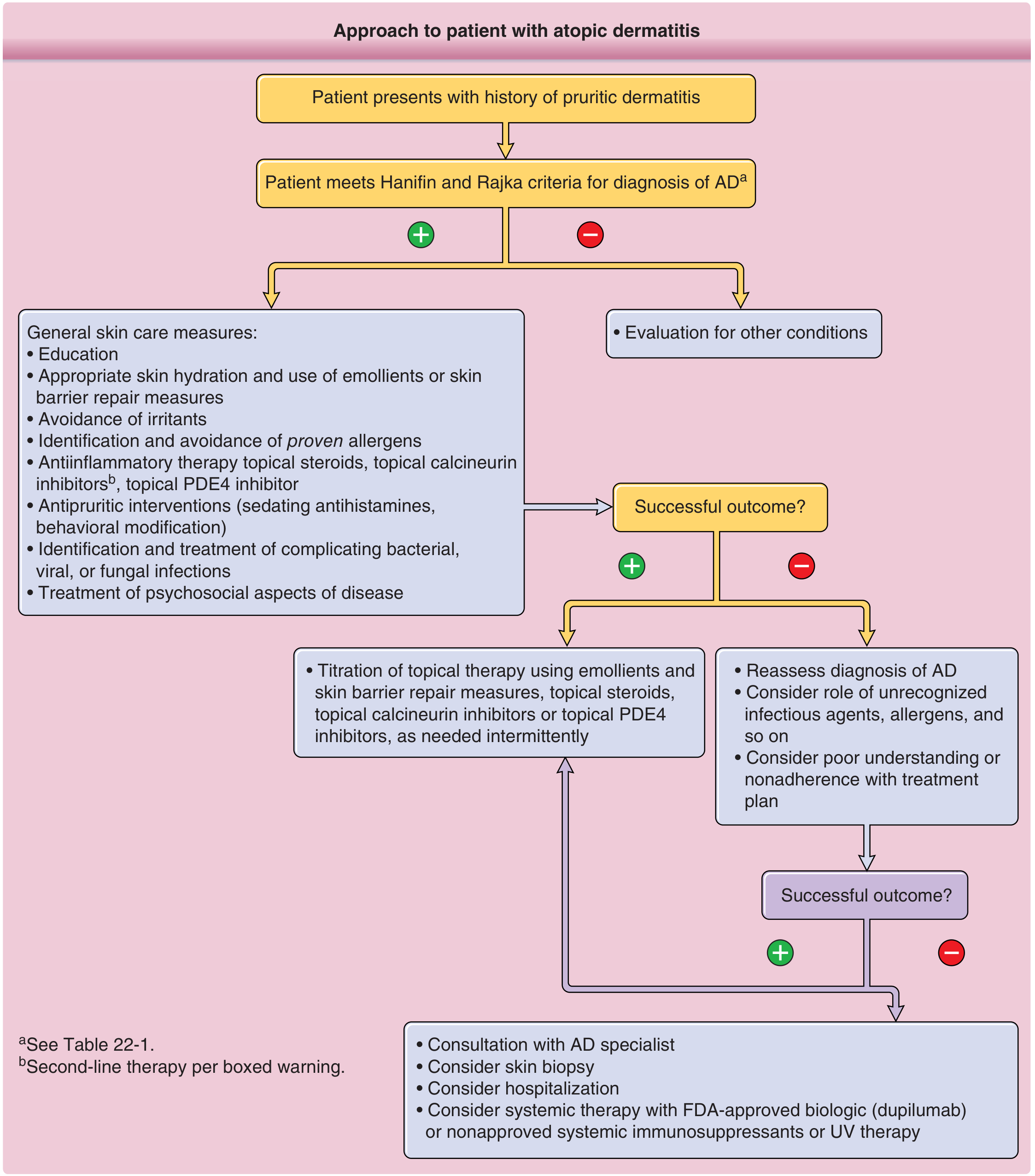
Step 1 - General Skin Care and Trigger Avoidance (All patients)
- Regular emollient/moisturiser application to restore skin barrier (cornerstone of maintenance)
- Bathe in lukewarm water (not hot); apply moisturiser immediately after ("soak and smear")
- Avoid soaps with high defatting activity; use neutral/mildly acidic pH cleansers
- Avoid wool, chemical irritants, fragrances, cigarette smoke, and extreme temperatures
- Wash new clothing before wearing to remove formaldehyde and chemicals
Step 2 - Topical Anti-inflammatory Therapy
| Agent | Use | Notes |
|---|---|---|
| Topical corticosteroids (TCs) | Cornerstone of active flare treatment | 7 potency classes; avoid high-potency on face/genitalia/intertriginous areas; twice-weekly maintenance dosing after remission |
| Topical calcineurin inhibitors (TCIs) - Tacrolimus, Pimecrolimus | Second-line; preferred for face, eyelids, skin folds | Avoid systemic absorption concerns; carry FDA boxed warning for theoretical malignancy risk |
| Topical PDE4 inhibitors - Crisaborole | Mild-moderate AD; steroid-sparing | Non-steroidal; suitable for sensitive areas |
| Topical JAK inhibitors - Ruxolitinib | Mild-moderate AD in adults ≥12 years | Blocks JAK1/JAK2 signalling driving Th2 inflammation and itch |
Step 3 - Phototherapy (Moderate-Severe, Refractory)
- Narrowband UVB (NB-UVB): Most commonly used; 3 sessions/week
- UVA1: Effective for acute flares; penetrates deeper
- Not suitable for children in general practice
Step 4 - Systemic Therapy (Severe, Refractory Disease)
| Drug | Mechanism | Notes |
|---|---|---|
| Dupilumab (anti-IL-4Rα) | Blocks IL-4 and IL-13 signalling simultaneously | FDA-approved for ≥6 months age; 40-70% achieve clear/almost clear skin; first-line biologic |
| Tralokinumab (anti-IL-13) | Selectively blocks IL-13 | Approved for moderate-severe AD in adults |
| JAK inhibitors - Upadacitinib, Abrocitinib, Baricitinib | Oral; block JAK-STAT pathway | Rapid itch relief; monitor for infections, thrombosis, lipid changes |
| Cyclosporine | Calcineurin inhibitor; reduces T cell activation | Short-term only; renal toxicity, hypertension |
| Azathioprine / Methotrexate / Mycophenolate | Immunosuppression | Off-label; used when biologics unavailable |
| Oral corticosteroids | Reserved for acute, severe flares | Short courses only; rebound flares on withdrawal are problematic |
10. Prognosis
- 40-70% of children with AD outgrow the condition by adolescence/adulthood
- FLG null mutations are associated with persistent disease into adulthood and development of asthma
- Quality of life impact is substantial - comparable to other chronic diseases
- Early, effective treatment is encouraged to potentially interrupt the atopic march
- Biologics (dupilumab) have transformed outcomes for moderate-severe disease; 60-70% achieve IGA clear/almost clear with combined dupilumab + TCS at 16 weeks
Summary: Eczema (atopic dermatitis) is a chronic Th2-driven inflammatory skin disease arising from a dual defect in skin barrier integrity (FLG mutations) and immune regulation (IL-4, IL-13, TSLP, IL-31 excess). It presents as pruritic eczematous dermatitis with age-specific distribution, diagnosed by the Hanifin-Rajka criteria. Management is stepwise: emollients + trigger avoidance → topical corticosteroids/TCIs → phototherapy → dupilumab/JAK inhibitors for severe refractory disease.
Sources: Fitzpatrick's Dermatology (Vols 1-2); Andrews' Diseases of the Skin (Clinical Dermatology, Elsevier); Goodman & Gilman's Pharmacological Basis of Therapeutics
This is a shared conversation. Sign in to Orris to start your own chat.