
Hyperkalemia or hypocalcemia related to blood transfusion is more lethal
Reading File
Quick answer: In the context of massive blood transfusion, hyperkalemia is generally considered more immediately life-threatening than hypocalcemia. Stored blood releases potassium as red cells age (up to 20-30 mEq/L in old packed cells), and rapid infusion can precipitate fatal cardiac arrhythmias. Hypocalcemia (from citrate chelation of ionized calcium) is common but usually self-correcting once transfusion slows, though severe untreated hypocalcemia can also cause cardiac dysfunction. The relative lethality, however, depends on the clinical context.
Searching sources...
Finding Sources
Finding Sources
Now let me read the key sections for detailed content:
Reading File
Reading File
I now have excellent textbook content. Let me read the Morgan & Mikhail section on hyperkalemia specifically, and also the Brenner & Rector section:
Reading File
I now have all the information needed for a thorough answer. Let me also fetch the ECG image for illustration:
Loading Image
Hyperkalemia vs. Hypocalcemia in Blood Transfusion: Which Is More Lethal?
The answer: Hyperkalemia is more immediately and directly lethal in the context of blood transfusion. Here is a detailed breakdown of both:
1. Hyperkalemia (Transfusion-Associated)
Mechanism
Stored red blood cells progressively leak potassium into the surrounding plasma as they age. The plasma [K+] in a unit of stored whole blood can reach up to 30 mEq/L after 21 days of storage. While each individual unit carries only ~4 mEq of extracellular potassium (because the total volume is small), the danger arises with:
- Rapid/massive transfusion - hyperkalemia can develop at rates exceeding 100 mL/min, regardless of blood age
- Irradiated blood products - irradiation damages cell membranes, worsening potassium leakage
- Neonates and patients with renal insufficiency - these groups cannot excrete the potassium load quickly enough
- Pressure pumping / central venous infusion - delivers the potassium bolus directly to the heart
Cardiac Consequences (Why It Is the More Lethal One)
Hyperkalemia causes directly life-threatening cardiac arrhythmias through a predictable ECG progression:
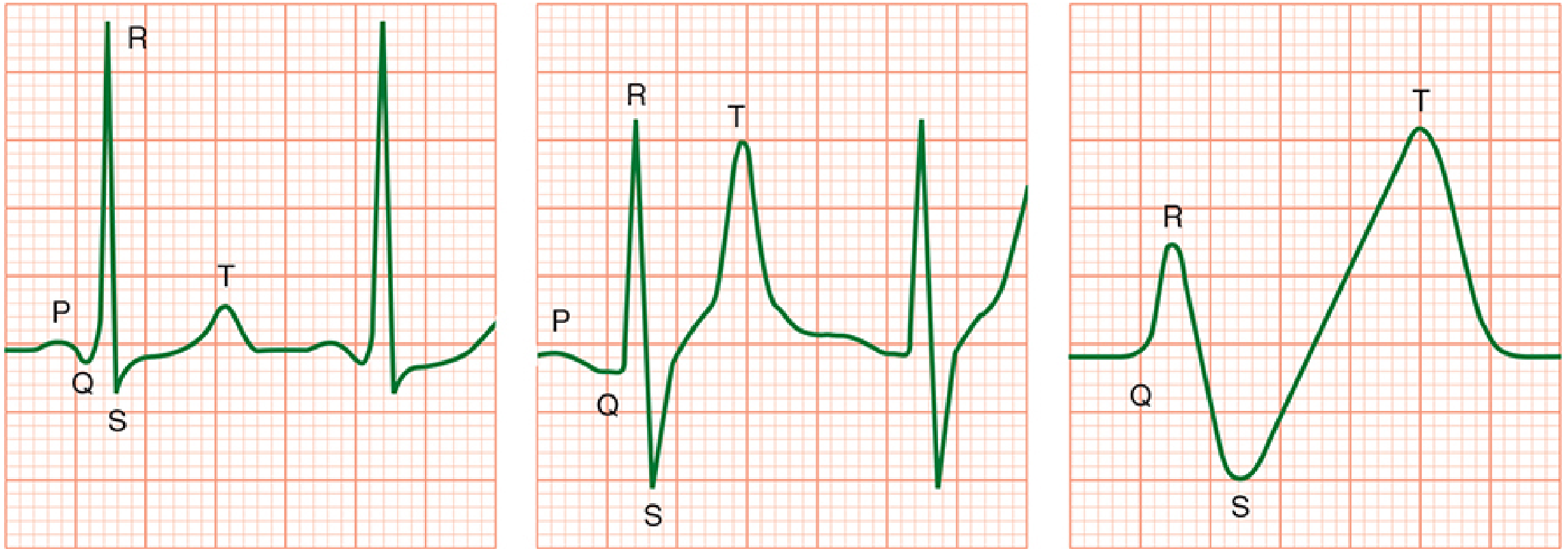
ECG progression: peaked T waves → widened QRS → prolonged PR → loss of P wave → loss of R-wave amplitude → ST depression → sine wave → ventricular fibrillation or asystole
Skeletal muscle weakness generally appears only when [K+] > 8 mEq/L, but cardiac manifestations are consistently present at [K+] > 7 mEq/L. At that point, the risk of sudden cardiac arrest is real and immediate. Any coexisting hypocalcemia, hyponatremia, or acidosis accentuates hyperkalemia's cardiac toxicity further.
Because of this lethal potential, hyperkalemia exceeding 6 mEq/L should always be treated - Morgan & Mikhail's Clinical Anesthesiology, 7e, p. 2179.
2. Hypocalcemia (Citrate Toxicity)
Mechanism
Citrate is the anticoagulant/preservative in stored blood. It chelates ionized calcium (Ca²+). Normally, the liver metabolizes citrate rapidly, so hypocalcemia does not occur with routine transfusion. Clinically important hypocalcemia causing cardiac depression will not occur in most normal patients unless the transfusion rate exceeds 1 unit every 5 minutes.
It becomes problematic in:
- Liver disease / cirrhosis - impaired citrate metabolism
- Hypothermia - slows hepatic citrate metabolism
- Small children - relatively limited hepatic reserve
- Massive transfusion - citrate load overwhelms even normal hepatic capacity
Consequences
Severe hypocalcemia causes:
- Muscle weakness and tetany
- Cardiac arrhythmias and myocardial depression
- Acquired coagulopathy (calcium is a cofactor in the coagulation cascade - this is a unique danger not shared with hyperkalemia)
- Unmetabolized citrate also chelates magnesium, potentially causing concurrent hypomagnesemia
Head-to-Head Comparison
| Feature | Hyperkalemia | Hypocalcemia |
|---|---|---|
| Mechanism | K+ leak from stored RBCs | Citrate chelation of Ca²+ |
| Threshold for cardiac danger | [K+] > 7 mEq/L | Rate > 1 unit/5 min in normal liver |
| Cardiac arrhythmia risk | High - directly causes VF/asystole | Moderate - myocardial depression |
| Self-correcting? | No - requires active treatment | Yes - liver clears citrate when rate slows |
| Most at-risk patients | Neonates, renal failure, irradiated blood | Liver disease, hypothermia, small children |
| Additional dangers | None specific | Coagulopathy via calcium chelation |
| Overall lethality | Greater | Less (usually self-limiting) |
Key Teaching Point
Hyperkalemia is more lethal because:
- It can precipitate sudden fatal arrhythmias (VF, asystole) without warning
- It is not self-correcting - active treatment is mandatory once [K+] > 6 mEq/L
- It is worsened by coexisting hypocalcemia, acidosis, and hypothermia - all of which commonly accompany massive transfusion
Hypocalcemia, while dangerous (especially in liver-impaired patients), is generally self-limiting once transfusion slows, because the normal liver rapidly clears citrate. IV calcium supplementation quickly reverses it when needed.
The two conditions also interact: severe hypocalcemia accentuates the cardiac toxicity of hyperkalemia, making the combination particularly dangerous in massive transfusion scenarios.
Sources: Morgan & Mikhail's Clinical Anesthesiology, 7e; Barash, Cullen & Stoelting's Clinical Anesthesia, 9e; Brenner & Rector's The Kidney
This is a shared conversation. Sign in to Orris to start your own chat.