
Hamstrings origin insertion
The hamstrings are three muscles on the posterior thigh. Here's a quick summary before I pull the textbook details:
- Origin: Ischial tuberosity (all three), plus the linea aspera/lateral lip of femur for biceps femoris short head
- Insertion: Biceps femoris -> fibular head; Semitendinosus -> pes anserinus (medial tibia); Semimembranosus -> posterior medial tibial condyle
Searching sources...
Reading File
Finding Sources
Finding Sources
Reading File
Reading File
Reading File
Reading File
Reading File
I now have comprehensive textbook data. Let me fetch the key anatomy diagram.
Loading Image
Here is a complete, textbook-sourced breakdown of hamstring origin and insertion:
Hamstring Muscles - Origin & Insertion
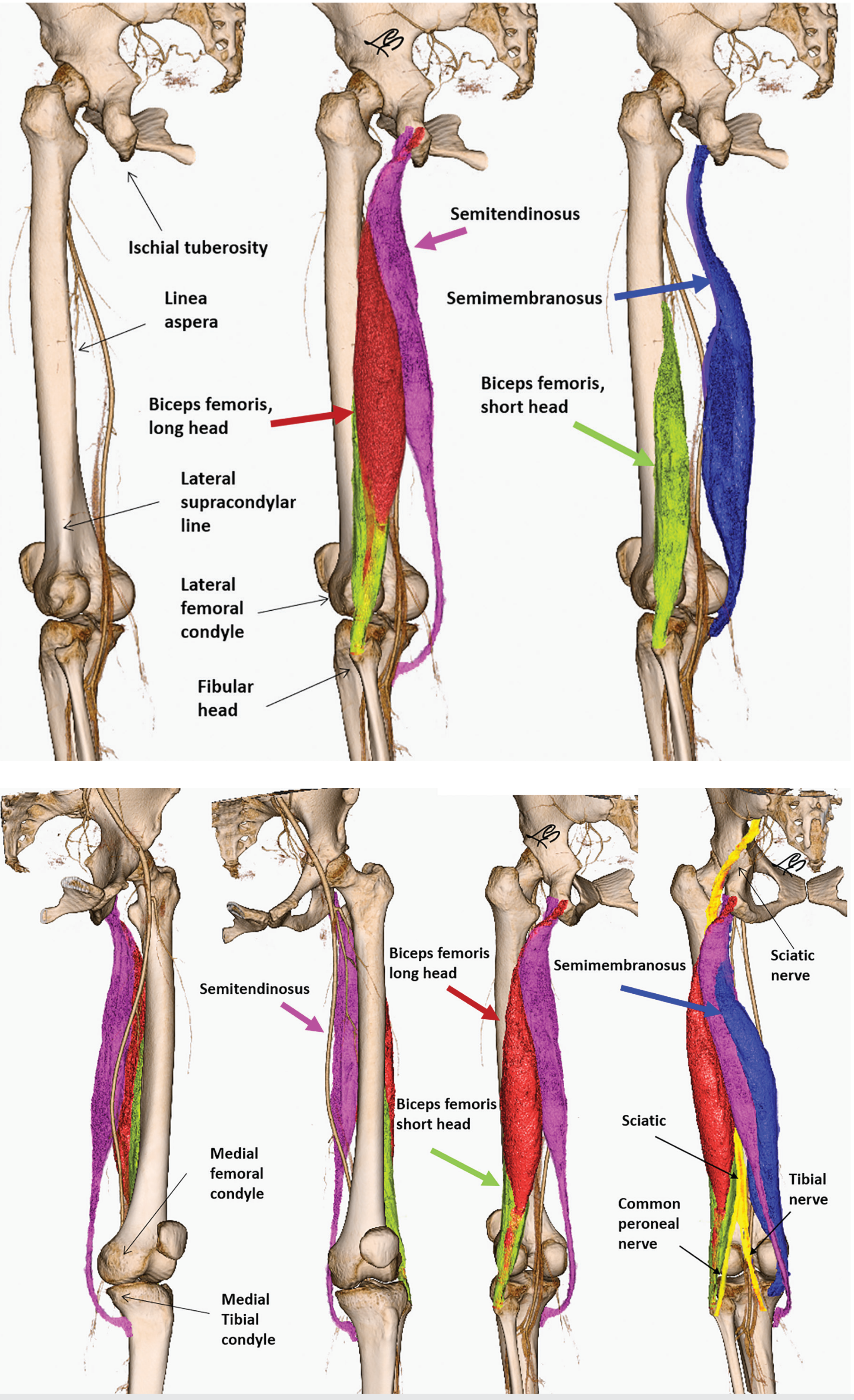
Fig. 9.49 - Attachments of the hamstring muscles (Imaging Anatomy: Bones, Joints, Vessels & Nerves)
Overview
The hamstrings consist of four muscle bellies in two anatomical groups:
- Lateral: Biceps femoris (long head + short head)
- Medial: Semimembranosus + Semitendinosus
Origin
| Muscle | Origin |
|---|---|
| Biceps femoris - long head (BF-L) | Ischial tuberosity (conjoined tendon with semitendinosus) |
| Biceps femoris - short head (BF-S) | Linea aspera and lateral supracondylar line of femur |
| Semitendinosus | Ischial tuberosity (conjoined tendon with BF-L) |
| Semimembranosus | Superolateral aspect of ischial tuberosity (separate, anterior to the conjoined tendon) |
Key detail: BF-L and semitendinosus share a conjoined tendon at the ischial tuberosity that divides into two separate tendons ~9-10 cm distally. The short head of biceps femoris is the only hamstring that does NOT arise from the ischial tuberosity.
Insertion
| Muscle | Insertion |
|---|---|
| Biceps femoris (long + short head) | Head of the fibula (common distal tendon) |
| Semitendinosus | Anteromedial surface of the upper tibia - forms part of the pes anserinus (along with gracilis and sartorius) |
| Semimembranosus | Posterior surface of the medial condyle of the tibia (direct arm); also sends expansions into the oblique popliteal ligament, posterior capsule, and popliteus aponeurosis |
Mean distal tendon lengths: BF = 9 cm, semitendinosus = 13 cm (longest, most vulnerable to injury), semimembranosus = 5.5 cm.
Innervation
| Muscle | Nerve |
|---|---|
| Biceps femoris - long head | Tibial division of sciatic nerve |
| Biceps femoris - short head | Common peroneal (fibular) division of sciatic nerve |
| Semitendinosus | Tibial division (two branches) |
| Semimembranosus | Tibial division (single branch) |
Function
- Hip extension and knee flexion (primary roles)
- Semimembranosus also stabilizes the posteromedial knee capsule via its connection to the oblique popliteal ligament; it retracts the medial meniscus posteriorly during knee flexion
Sources: Imaging Anatomy: Bones, Joints, Vessels & Nerves, pp. 281-285 | Gray's Anatomy for Students, p. 702
This is a shared conversation. Sign in to Orris to start your own chat.