

IMG-20260607-WA0001.jpg
4 yrs female with history of loose stool, pain abdomen, fever, vomiting for 1 day.
Reading File
Now let me search the medical library for relevant content on this pediatric acute diarrhea/gastroenteritis case.
Finding Sources
Finding Sources
Finding Sources
Finding Sources
Reading File
Finding Sources
Reading File
Reading File
I now have excellent information to give a comprehensive clinical answer. Let me also fetch the management flowchart image that was referenced.
Loading Image
Here is a detailed clinical analysis of this case:
Clinical Analysis: 4-year-old Female with Acute Gastroenteritis
Stool R/M/E Report Summary
| Parameter | Result |
|---|---|
| Color | Yellowish |
| Consistency | Loose |
| Blood | Absent |
| Mucus | Present |
| Pus Cells | 7-8 /hpf |
| RBC | Not seen |
| Ova/Cyst/Trophozoite | Not seen |
| Undigested food particles | 12-15 |
| Other | Bacteria - Few Seen |
Interpretation
This stool report, in the context of fever, loose stools, vomiting, and abdominal pain for 1 day, is consistent with acute bacterial enteritis / infective gastroenteritis.
Key findings:
- Pus cells 7-8/hpf + Mucus present + Bacteria seen = inflammatory/invasive diarrhea pattern pointing to a bacterial etiology
- No blood in stool - non-dysenteric pattern (rules out frank dysentery/amoebic colitis for now)
- No ova/cyst/trophozoites - parasitic infection unlikely at this stage
- Undigested food particles 12-15 - indicates rapid intestinal transit and malabsorption
Most likely causative organisms at this age in this setting:
- Escherichia coli (ETEC / EIEC) - most common in <5 years in South Asia
- Shigella species - can present with fever + mucus even without visible blood
- Campylobacter jejuni - fever, mucus, pus cells
- Salmonella species - fever-prominent presentation
Clinical Assessment Priorities
Assess degree of dehydration immediately - this is the most critical step:
| Signs | Mild (<5%) | Moderate (5-10%) | Severe (>10%) |
|---|---|---|---|
| Alertness | Normal | Restless/irritable | Lethargic/unconscious |
| Eyes | Normal | Sunken | Very sunken |
| Skin turgor | Normal | Decreased | Very decreased |
| Mucous membranes | Moist | Dry | Very dry |
| Pulse | Normal | Rapid | Rapid/weak |
| Urine output | Normal | Reduced | Oliguria/anuria |
Management
1. Rehydration (First Priority)
- ORS (Oral Rehydration Solution) is the mainstay
- Mild dehydration: 30-50 mL/kg over 4 hours
- Moderate dehydration: 50-100 mL/kg over 4 hours
- Replace ongoing losses: 10 mL/kg per loose stool, 2 mL/kg per vomiting episode
- If persistent vomiting prevents oral intake: Ondansetron 0.15 mg/kg PO (single dose) as antiemetic - do NOT use promethazine or metoclopramide in children
- If oral rehydration fails: IV fluids (Normal Saline or Ringer's Lactate)
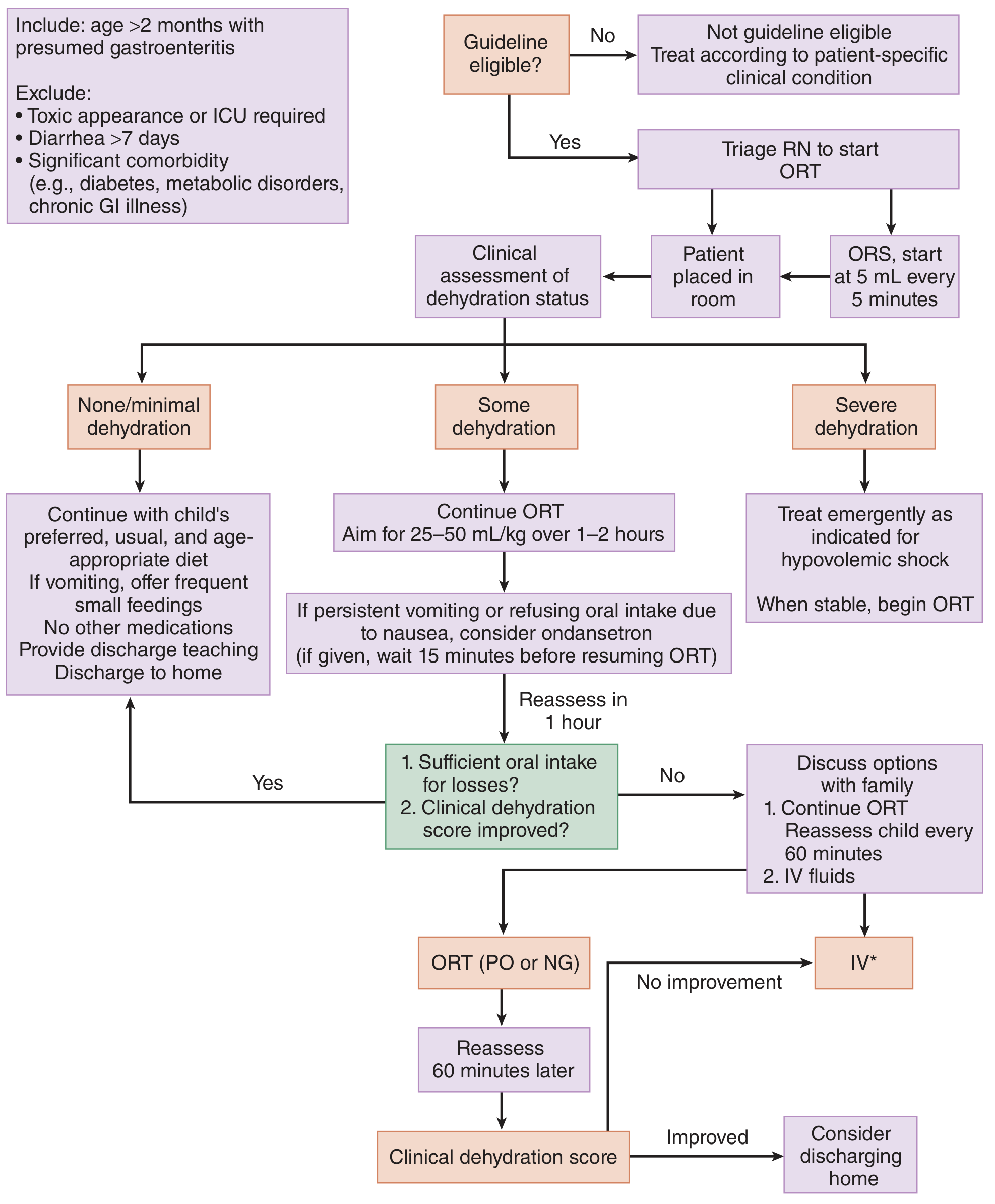
2. Zinc Supplementation (WHO recommendation for children)
- Zinc 20 mg/day for 10-14 days (reduces duration and severity of diarrhea)
- Age <6 months: 10 mg/day
3. Antibiotic Therapy
Given the stool picture (pus cells + mucus + bacteria + fever), a bacterial cause is likely. Antibiotic options in a 4-year-old:
| Drug | Dose | Duration | Notes |
|---|---|---|---|
| Cotrimoxazole (first line in resource-limited settings) | TMP 8 mg/kg/day in 2 divided doses | 5 days | Widely used for Shigella, E. coli |
| Azithromycin | 10 mg/kg/day once daily | 3-5 days | Good coverage, preferred for Campylobacter |
| Cefixime | 8 mg/kg/day in 2 doses | 5 days | If Salmonella suspected |
| Ciprofloxacin | 15 mg/kg/day in 2 doses | 3-5 days | Reserved for resistant cases |
Important: If STEC (Shiga toxin-producing E. coli) is suspected (bloody diarrhea, HUS features), do NOT give antibiotics as they may precipitate HUS. This child has no blood in stool, so standard treatment is appropriate.
4. Dietary Management
- Do NOT fast the child - resume age-appropriate feeding as soon as vomiting settles
- BRAT diet (Banana, Rice, Apple, Toast) or soft, easily digestible foods
- Avoid high-fat, high-sugar foods initially
- Continue breastfeeding if applicable
5. Probiotics (adjunct)
- Lactobacillus reuteri DSM 17938 or Saccharomyces boulardii may shorten duration by ~1 day
Red Flags - When to Hospitalize
- Signs of moderate-severe dehydration
- Unable to take oral fluids / persistent vomiting
- Blood in stool (new onset)
- High fever not responding to antipyretics
- Altered consciousness, lethargy
- Age <6 months
- Failure to improve after 24-48 hours of treatment
Follow-up Advice
- Return immediately if child becomes drowsy, develops blood in stool, stops urinating, or vomiting worsens
- Stool culture should be sent if the child does not improve in 48 hours, as antibiotic sensitivities may guide therapy in this geographic region
- Hand hygiene education for caregivers
Sources: Tintinalli's Emergency Medicine (Chapter 131), Rosen's Emergency Medicine (Chapter 167) - Acute Gastroenteritis in Children; WHO guidelines for diarrheal diseases in children.
Which antibiotics cover shigella species
Your credits are exhausted. Your daily credits reset tomorrow, or you can purchase a top-up for more.
This is a shared conversation. Sign in to Orris to start your own chat.