
What is prolactin
Prolactin is a hormone produced by the pituitary gland, best known for stimulating milk production (lactation) after childbirth. It also plays roles in reproductive function, immune modulation, and behavior. In women, high prolactin levels suppress ovulation; in men, it affects testosterone and sperm production. It is regulated primarily by dopamine, which inhibits its release.
Searching sources...
Reading File
Finding Sources
Searching the Web
prolactin hormone function physiology regulation
Reading File
Reading File
Reading File
Loading Image
Here is a thorough overview of prolactin, drawn from Costanzo Physiology (7th Edition) and Goldman-Cecil Medicine:
Prolactin
What It Is
Prolactin (PRL) is a polypeptide hormone consisting of 198 amino acids in a single-chain structure with 3 internal disulfide bridges. It is synthesized and secreted by lactotrophs, which make up about 15% of the anterior pituitary gland. The number of lactotrophs increases during pregnancy and lactation when demand rises. Prolactin is structurally related to growth hormone.
Regulation of Secretion
Prolactin regulation is unique because it is primarily under tonic inhibitory control - not stimulatory control like most other anterior pituitary hormones.
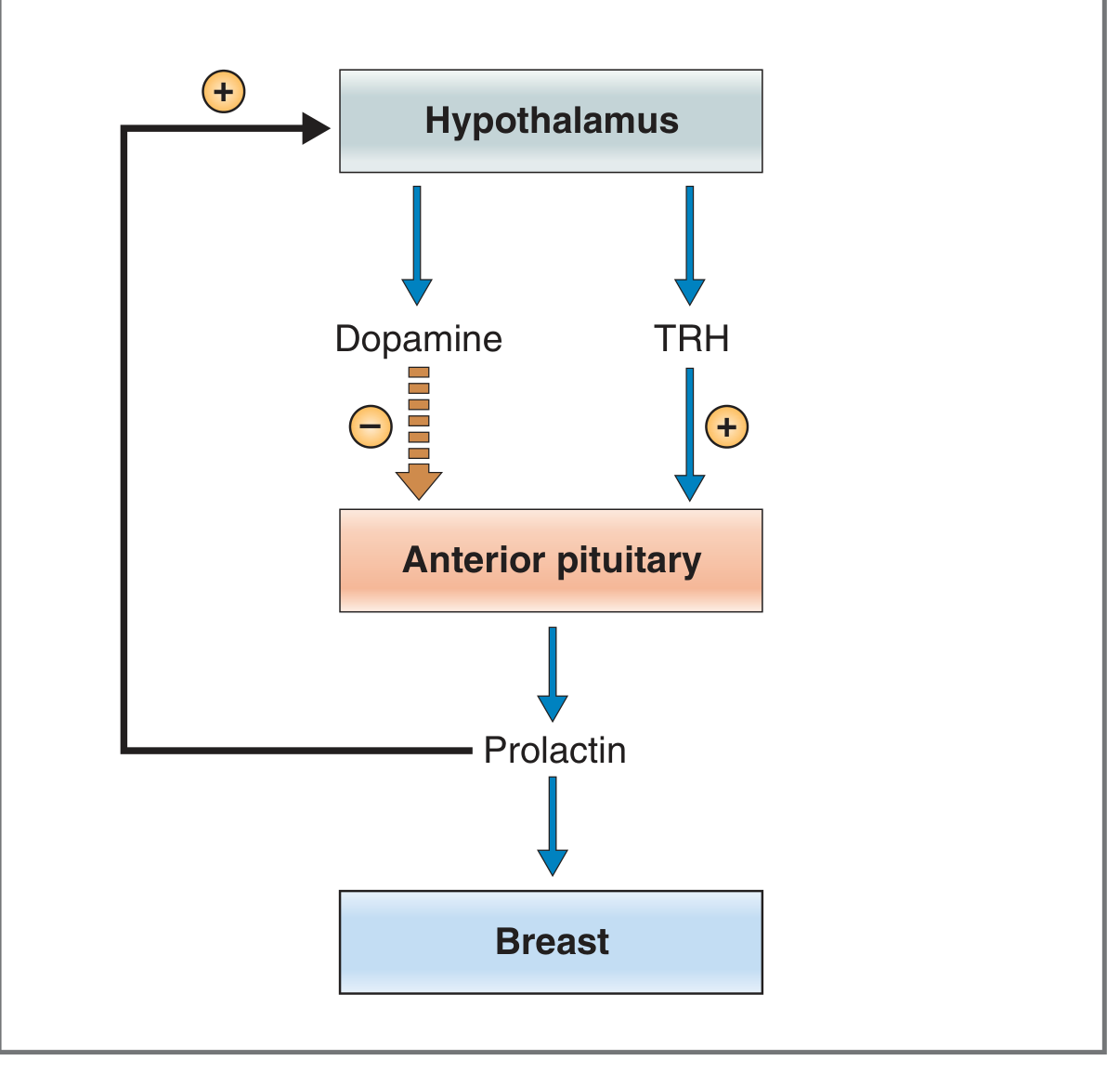
The hypothalamus exerts two opposing influences:
| Path | Mediator | Effect |
|---|---|---|
| Inhibitory | Dopamine (Prolactin-Inhibiting Factor, PIF) | Decreases cAMP in lactotrophs → suppresses secretion |
| Stimulatory | TRH (Thyrotropin-releasing hormone) | Increases transcription of the prolactin gene |
In non-pregnant, non-lactating individuals, dopamine dominates and keeps prolactin levels low. Dopamine reaches the anterior pituitary via three routes: the hypothalamic-hypophysial portal vessels, short connecting portal veins from the posterior pituitary, and paracrine diffusion from non-lactotroph cells within the anterior pituitary itself.
Prolactin also inhibits its own secretion (negative feedback) by stimulating dopamine synthesis in the hypothalamus.
Factors that raise prolactin:
- Pregnancy (high estrogen)
- Breast-feeding / nipple stimulation
- Sleep
- Stress
- TRH
- Dopamine antagonists (e.g., antipsychotics)
Factors that lower prolactin:
- Dopamine
- Bromocriptine (dopamine agonist)
- Somatostatin
- Prolactin itself (negative feedback)
Actions
-
Breast development - At puberty and during pregnancy, prolactin (with estrogen and progesterone) stimulates proliferation of mammary ducts and growth of the alveoli.
-
Lactogenesis (milk production) - Prolactin's signature action. It induces synthesis of the key components of milk:
- Lactose (the carbohydrate)
- Casein (the protein)
- Lipids It works by binding a cell-membrane receptor and triggering transcription of the genes for the biosynthetic enzymes needed.
Note: During pregnancy, milk is NOT produced despite high prolactin because estrogen and progesterone down-regulate prolactin receptors in the breast. At delivery, estrogen and progesterone drop sharply, removing this block, and lactation begins. -
Inhibition of ovulation - Prolactin suppresses GnRH release from the hypothalamus, which in turn lowers FSH and LH - this is why fertility is reduced during breastfeeding. In men with a prolactinoma, the same mechanism leads to suppressed spermatogenesis and infertility.
Pathophysiology
| Condition | Cause | Effect |
|---|---|---|
| Prolactin deficiency | Destruction of the anterior pituitary or selective loss of lactotrophs | Failure to lactate |
| Hyperprolactinemia | Prolactinoma, dopamine-blocking drugs (antipsychotics), hypothalamic lesions interrupting dopamine delivery | Galactorrhea, amenorrhea, infertility |
- Medications - especially antipsychotic agents - cause hyperprolactinemia by blocking central catecholamines (dopamine).
- A pituitary prolactinoma typically elevates prolactin 5 to 50 times above normal (often >100 ng/mL), whereas a non-secreting adenoma with suprasellar extension causes only modest elevation (usually <100 ng/mL) by compressing the dopamine-delivering portal pathway.
Sources:
This is a shared conversation. Sign in to Orris to start your own chat.