
I am a general surgery resident and i want in detail about gallbladder including its anatomy , physiology ,pathology, disorders, differentials , surgical management
Reading File
Finding Sources
Finding Sources
Finding Sources
Finding Sources
Reading File
Now let me read the key textbook sections in parallel:
Reading File
Reading File
Finding Sources
Reading File
Finding Sources
Finding Sources
Reading File
Reading File
Reading File
Reading File
Finding Sources
Reading File
Reading File
Searching Images
gallbladder anatomy triangle of Calot cystic duct artery
Reading File
Searching Images
acute cholecystitis gallbladder histology pathology
Reading File
Finding Sources
Reading File
Reading File
Now I have extensive material. Let me compile the comprehensive response.
The Gallbladder: A Comprehensive Surgical Review
I. ANATOMY
Gross Anatomy
The gallbladder is a pear-shaped saccular organ attached to the inferior surface of the right lobe of the liver, lying in a fossa between the right and quadrate lobes. It is divided into four regions:
| Part | Description |
|---|---|
| Fundus | Rounded tip that may project below the inferior liver border; most common site of perforation |
| Body | Major portion resting against the transverse colon and superior duodenum |
| Infundibulum (Hartmann's pouch) | Dilated junction between body and neck; stones commonly lodge here |
| Neck | Narrows into the cystic duct; mucosal folds form the spiral valve of Heister |
The free peritoneal margin contacts the lateral duodenum and hepatic flexure of the colon. Posteriorly, it rests against the right kidney (Gerota's fascia). The gallbladder attaches to the extrahepatic biliary system via the cystic duct, the junction of which marks the transition from the common hepatic duct (CHD) to the common bile duct (CBD).
Adult gallbladder capacity is approximately 50 mL, though it can hold up to 300 mL when distended.
Triangle of Calot (Cystohepatic Triangle)
This is the most surgically critical landmark in cholecystectomy.
Boundaries:
- Superiorly: inferior surface of the liver
- Medially: common hepatic duct
- Laterally: cystic duct
Contents:
- Cystic artery
- Cystic lymph node (Calot's node / Lund's node)
- Connective and fatty tissue
The Calot's node lies directly over the cystic artery — a key surgical landmark.
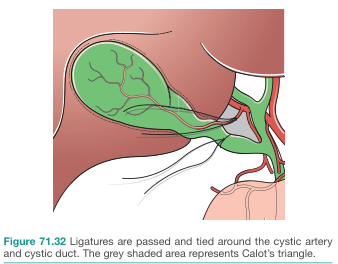
Illustration from Bailey & Love's Surgery, 28th Ed. — Calot's triangle with cystic duct and cystic artery ligatures.
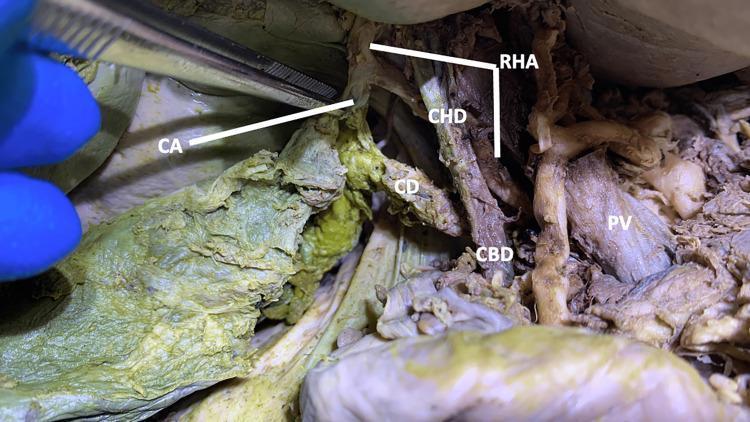
Cadaveric dissection demonstrating the critical view of safety — cystic duct (CD) merging with CHD to form CBD, with cystic artery (CA) arising from right hepatic artery (RHA).
Vascular Supply
Arterial:
- Cystic artery — typically arises from the right hepatic artery within the triangle of Calot
- As it nears the gallbladder neck, it bifurcates into anterior (peritonealized surface) and posterior (hepatic bed) branches
- Variations are extremely common: the cystic artery may arise from the left hepatic, proper hepatic, gastroduodenal, or superior mesenteric arteries. A double cystic artery occurs in ~25% of cases
Venous:
- The cystic vein initially follows the cystic artery then deviates to drain directly into the cystic plate (connecting to the middle hepatic vein within the liver parenchyma) — not directly into the portal vein as commonly misconceived
Lymphatics:
- Primary pathway: Cholecystic-retropancreatic route → cystic duct → node of Calot → pericholedochal nodes → portal vein nodes → superior retropancreatic nodes → periaortic nodes
- Secondary: Cholecystic-celiac pathway → along the common hepatic artery to celiac lymph nodes
- Per AJCC 8th edition: periaortic, pericaval, celiac, and SMA lymph nodes = distant metastases in gallbladder cancer
Innervation:
- Sympathetic: T9 segment and celiac plexus; right phrenic nerve (explains referred shoulder pain)
- Parasympathetic: hepatic branch of anterior vagus nerve
Histology (Layers of the Gallbladder Wall)
Unlike the intestine, the gallbladder wall has no muscularis mucosa and no submucosa. Layers (outside in):
- Mucosa — simple columnar epithelium with apical microvilli; thrown into rugae; Rokitansky-Aschoff sinuses are invaginations through the lamina propria into the muscle
- Lamina propria
- Muscularis propria — oblique, transverse, longitudinal smooth muscle
- Perimuscular connective tissue (subserosal)
- Serosa (peritoneal surface only; hepatic surface lacks serosa)
II. PHYSIOLOGY
Bile Production and Storage
- The liver secretes ~1 L of bile per day at a constant rate
- Between meals, the sphincter of Oddi closes → bile fills the relaxed gallbladder under hydrostatic pressure
- The gallbladder concentrates bile 5–10× by actively absorbing water and electrolytes (Na⁺/Cl⁻ co-transport), increasing bile salt and cholesterol concentration
Bile Composition
| Component | Primary function |
|---|---|
| Bile salts | Emulsification of dietary fats; micelle formation |
| Phospholipids (lecithin) | Solubilize cholesterol in bile |
| Cholesterol | Solubilized by bile salts + lecithin |
| Bilirubin (conjugated) | Excretion of heme breakdown products |
| Bicarbonate | Neutralizes duodenal acid |
The lithogenic index (Admirand-Small triangle) reflects the relative concentrations of bile salts, lecithin, and cholesterol: supersaturation of cholesterol is the key driver of stone formation.
Gallbladder Contraction
- Cholecystokinin (CCK) — released by I-cells in the duodenum in response to fat and protein; causes gallbladder contraction and relaxation of the sphincter of Oddi
- Vagal stimulation also causes mild contraction
- Somatostatin inhibits contraction (→ gallbladder stasis in octreotide therapy / TPN → stone formation)
- During feeding: gallbladder expels 50–70% of its contents as a bolus into the CBD → duodenum → emulsifies fats for pancreatic lipase
III. PATHOLOGY
A. Cholelithiasis (Gallstones)
Epidemiology: 10–20% of adults in Western countries; ~20 million Americans. ~700,000 cholecystectomies/year in the USA.
Risk Factors ("5 Fs" + more):
| Cholesterol Stones (80% in West) | Pigment Stones |
|---|---|
| Fat (obesity, metabolic syndrome) | Chronic hemolysis (sickle cell, spherocytosis) |
| Female sex | Cirrhosis |
| Fertile (pregnancy, OCP) | Biliary infection (E. coli, Ascaris, Clonorchis) |
| Forty (advancing age) | Crohn's disease / ileal resection |
| Fair (northern Europeans, Native Americans) | TPN, chronic biliary stasis |
| Rapid weight loss | |
| Gallbladder stasis (spinal cord injury, TPN) |
Pathogenesis:
- Cholesterol stones: Cholesterol supersaturation of bile → crystallization → nucleation enhanced by mucus hypersecretion and gallbladder hypomotility → aggregation into stones. Pure cholesterol stones are pale yellow, radiolucent (20% radiopaque with calcium). Occur exclusively in the gallbladder.
- Pigment stones:
- Black (sterile gallbladder bile) — small, numerous, friable, radiopaque (50–75%), associated with hemolysis and cirrhosis
- Brown (infected bile ducts) — soft, greasy, laminated, radiolucent; associated with biliary infection; can occur anywhere in biliary tree
Clinical Spectrum:
- 70–80% remain asymptomatic throughout their lives
- Asymptomatic → symptomatic conversion: ~4%/year (risk diminishes over time)
- ~20% develop any symptoms; ~8% develop complicated disease
Biliary Colic (Uncomplicated Cholelithiasis):
- Episodic, constant (not truly colicky) RUQ / epigastric pain, typically post-fatty meal
- Radiates to right scapula or shoulder
- Lasts 1–5 hours; subsides spontaneously
- No fever, no leukocytosis
- Normal LFTs (or mildly elevated)
B. Acute Cholecystitis
Pathophysiology: Stone impaction in cystic duct → three mechanisms of inflammation:
- Mechanical: increased intraluminal pressure → ischemia
- Chemical: phospholipase action on lecithin → lysolecithin → mucosal injury
- Bacterial: present in 50–85% of cases — E. coli, Klebsiella, Streptococcus, Clostridium
Clinical Features:
- Colicky pain evolving into persistent RUQ pain + fever + nausea/vomiting
- Murphy's sign: inspiratory arrest on deep subcostal palpation of RUQ (most specific physical finding)
- Low-grade fever; shaking chills if complicated
- Palpable gallbladder in 25–50%
Investigations:
- WBC 10,000–15,000/μL with left shift
- Bilirubin mildly elevated (<5 mg/dL) in <50%
- AST/ALT mildly elevated (<5× ULN)
- Ultrasound: calculi (90–95% sensitivity), gallbladder wall thickening (>4 mm), pericholecystic fluid, sonographic Murphy's sign
- HIDA scan: non-visualization of gallbladder (sensitivity ~97%, specificity ~87%) — confirms cystic duct obstruction
Natural History:
- 75% resolve medically within 2–7 days
- 25% develop complications despite conservative treatment → require urgent surgery
- Of those who resolve, 25% recur within 1 year, 60% within 6 years
Complications:
- Empyema (pus-filled gallbladder)
- Gangrene and perforation → pericholecystic abscess, biliary peritonitis
- Mirizzi's syndrome: stone impacted in cystic duct/neck → external compression of CHD → obstructive jaundice
- Cholecystenteric fistula → gallstone ileus (stone >2.5 cm erodes into duodenum/colon → small bowel obstruction at terminal ileum / Bouveret syndrome at pylorus)
- Emphysematous cholecystitis: gas-forming organisms (Clostridium, E. coli); more common in diabetics/elderly men → surgical emergency
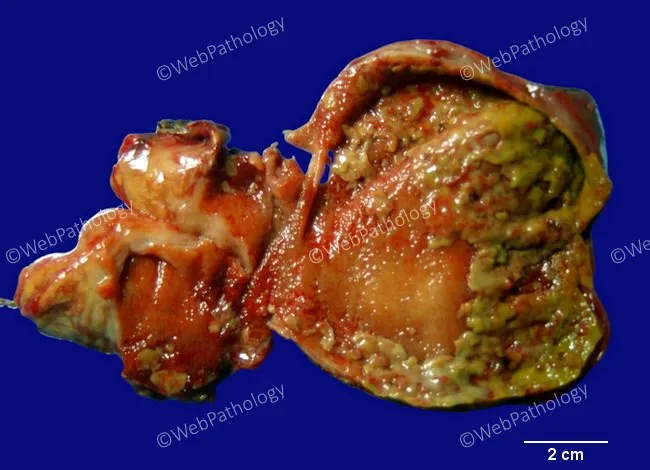
Gross pathology — acute calculous cholecystitis with pseudomembranous changes, mucosal necrosis, and fibrinous exudate.
C. Chronic Cholecystitis
Pathology:
- Recurrent subclinical obstruction → repeated low-grade inflammation → fibrosis, thickened gray-white wall
- Histology: scattered lymphocytes, plasma cells, macrophages; subepithelial fibrosis; Rokitansky-Aschoff sinuses (mucosal outpouchings through the muscular wall)
Special forms:
- Porcelain gallbladder: dystrophic calcification of the wall; selective association with carcinoma (especially if mucosal calcification pattern)
- Xanthogranulomatous cholecystitis: rupture of Rokitansky-Aschoff sinuses → xanthoma cell accumulation; mimics carcinoma on imaging
- Hydrops: complete cystic duct obstruction → clear mucus secretion fills a non-inflamed, atrophic gallbladder (mucocele)
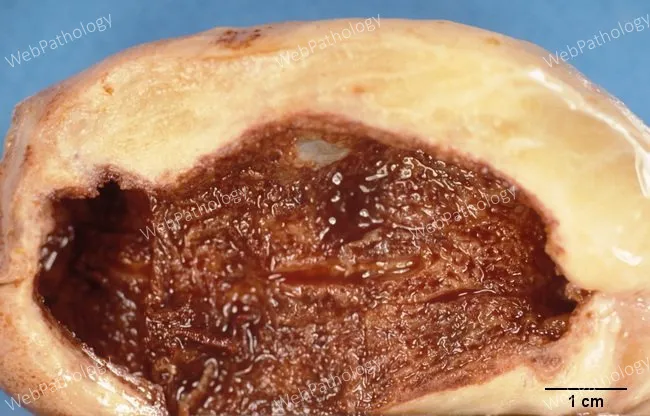
Chronic cholecystitis — markedly thickened, fibrotic gallbladder wall with cholelithiasis.
Histology:
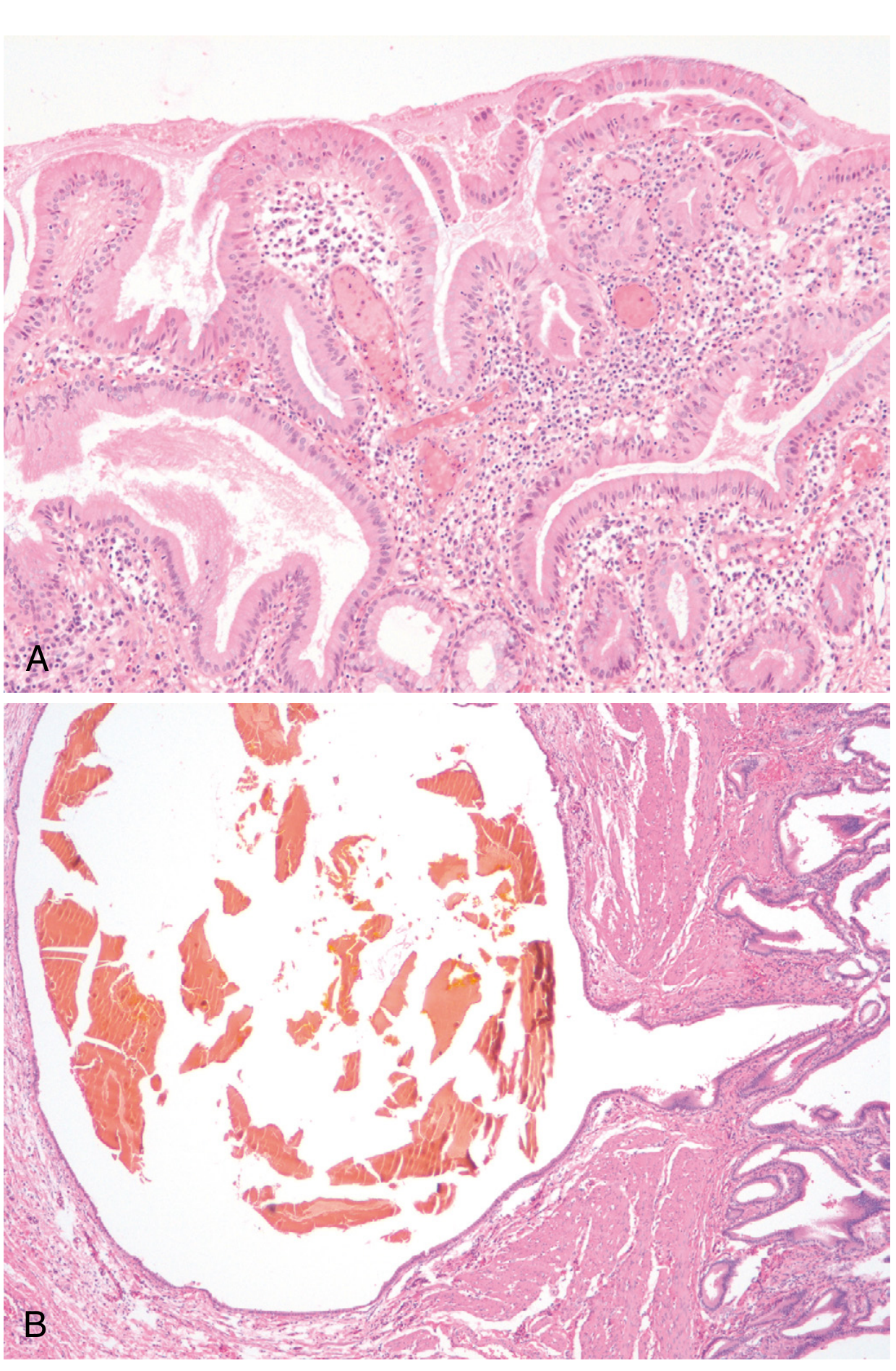
(A) Mucosal lymphocytic infiltrate. (B) Rokitansky-Aschoff sinus — epithelial outpouching through the gallbladder wall containing bile.
D. Acalculous Cholecystitis
- 5–10% of cholecystitis cases; 50% mortality if missed
- Associated with: ICU patients, TPN, sepsis, major trauma, burns, prolonged mechanical ventilation, opioid use
- Mechanism: gallbladder ischemia + bile stasis + concentrated viscous bile + bacterial translocation
- Clinical: fever + RUQ pain in a critically ill patient; often no stones on imaging
- Diagnosis: ultrasound (wall thickening, sludge, no stones) or HIDA scan
- Treatment: percutaneous cholecystostomy (if high surgical risk) or cholecystectomy; IV antibiotics
E. Hyperplastic Cholecystoses
| Condition | Features | Management |
|---|---|---|
| Adenomyomatosis | Benign glandular proliferation, extra-mural sinuses, Rokitansky-Aschoff sinuses; transverse strictures; fundal nodule | Cholecystectomy if symptomatic |
| Cholesterolosis ("strawberry gallbladder") | Cholesteryl ester deposits in lamina propria macrophages; solitary/multiple cholesterol polyps | Cholecystectomy if symptomatic |
F. Gallbladder Polyps
- Prevalence: 3–6% adults (male predominance)
- Types: cholesterol polyps (most common), adenomyomas, inflammatory polyps, adenomas (rare, premalignant)
- Management guidelines (Society of Radiologists in Ultrasound):
- <6 mm, asymptomatic: surveillance ultrasound
- 7–9 mm: serial imaging
- ≥10 mm or symptomatic or associated with gallstones or growth: cholecystectomy
- 10–14 mm with low-risk radiologic features: may monitor (recent consensus)
- Any polyp >6 mm in PSC: cholecystectomy (higher malignant potential)
G. Gallbladder Carcinoma (GBC)
Epidemiology: Most common malignancy of extrahepatic biliary tract. ~6,000 new cases/year in USA. Highest incidence in Chile, Bolivia, Northern India, Native Americans (Pima/Navajo/Hopi). Female:male ratio ≥2:1. 5-year survival <10% (most diagnosed at advanced stage).
Risk Factors:
- Gallstones (present in 95% of cases)
- Anomalous pancreaticobiliary junction (APBJ)
- Porcelain gallbladder (mucosal calcification pattern)
- Chronic infection (liver flukes — Clonorchis sinensis)
- Large gallstones (>3 cm), obesity, OCP
Molecular Drivers: EGFR/HER2 gain-of-function mutations, RAS mutations, TP53 loss-of-function (>50% of tumors), CDKN2A loss
Morphology:
- Usually adenocarcinoma (>90%), most often at the fundus
- May present as: exophytic mass, diffuse wall infiltration (mimics cholecystitis), or polypoid lesion
- Precursors: biliary intraepithelial neoplasia (BilIN), intracholecystic papillary-tubular neoplasm (ICPN)
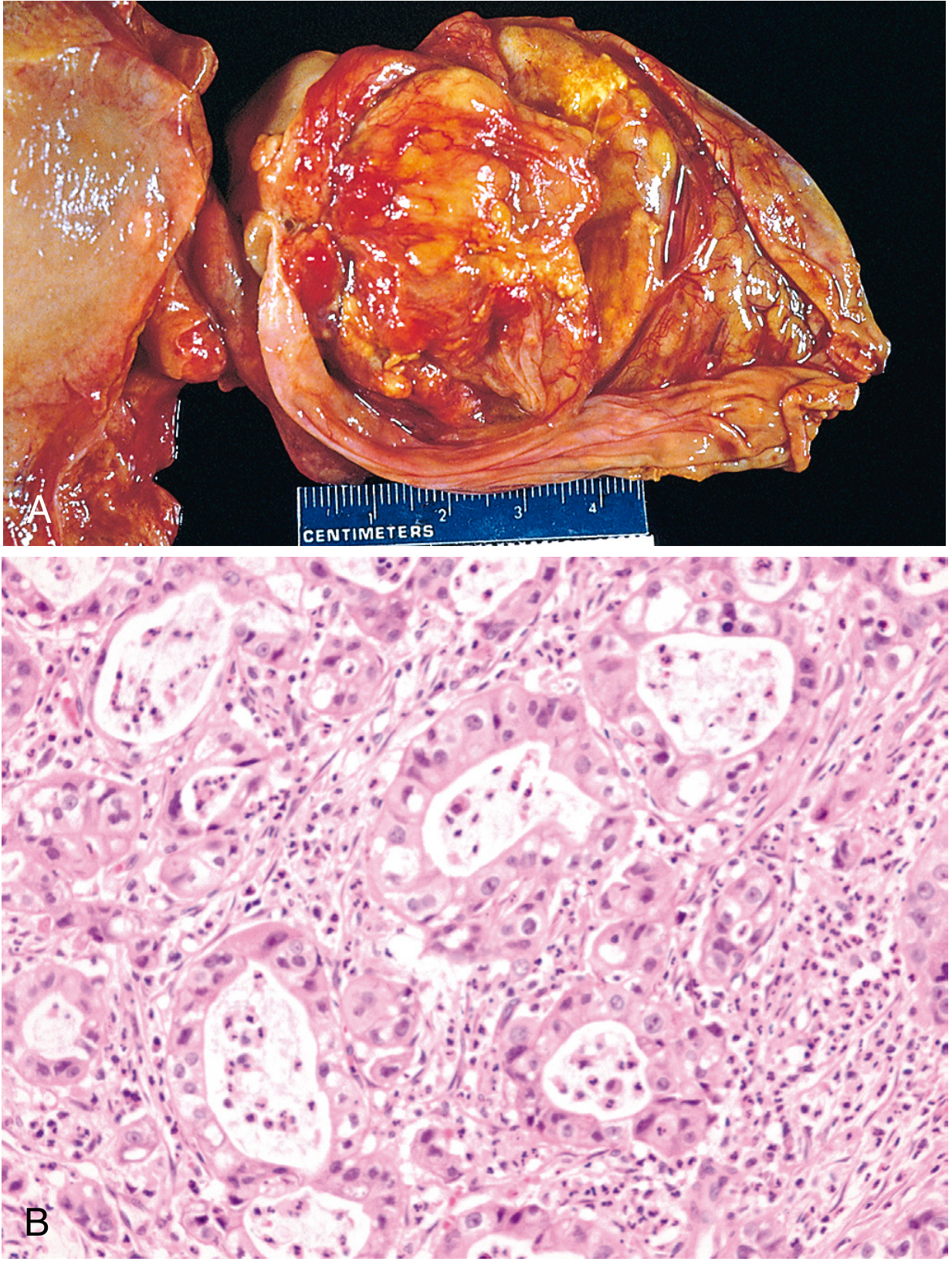
Gallbladder adenocarcinoma. (A) Large exophytic tumor filling lumen. (B) Malignant glands infiltrating fibrotic wall.
T-Staging (AJCC 8th Edition):
| Stage | Description |
|---|---|
| T1a | Lamina propria invasion |
| T1b | Muscular layer invasion |
| T2a | Perimuscular connective tissue (peritoneal side) |
| T2b | Perimuscular connective tissue (hepatic side) |
| T3 | Perforation of serosa and/or direct invasion of liver / adjacent organs |
| T4 | Portal vein / hepatic artery invasion or ≥2 extrahepatic organs |
N-staging: N1 = 1–3 regional nodes; N2 = ≥4 regional nodes. Periaortic/pericaval/celiac/SMA nodes = M1.
H. Congenital Anomalies
| Anomaly | Notes |
|---|---|
| Agenesis | Rare; must rule out biliary atresia |
| Phrygian cap | Fundus folded inward — most common anomaly; usually incidental |
| Duplication | With conjoined or separate cystic ducts |
| Bilobed gallbladder | Longitudinal/transverse septum |
| Ectopic gallbladder | Partial/complete intrahepatic (5–10%), retroperitoneal, left-sided |
| Choledochal cyst | Cystic CBD dilatation; 5 types (Todani classification); risk of cholangiocarcinoma → surgical excision |
IV. DIFFERENTIAL DIAGNOSES
When a patient presents with RUQ pain, a broad differential must be considered:
Biliary Causes
| Diagnosis | Key Distinguishing Features |
|---|---|
| Biliary colic | Episodic, post-fatty meal, no fever, resolves spontaneously |
| Acute cholecystitis | Persistent pain, fever, leukocytosis, Murphy's sign positive |
| Choledocholithiasis | Jaundice + RUQ pain + cholestatic LFTs; CBD stone on MRCP/ERCP |
| Cholangitis (Charcot's triad) | Fever + jaundice + RUQ pain; Reynolds pentad adds shock + AMS |
| Mirizzi's syndrome | Stone in cystic duct compressing CHD → obstructive jaundice |
| Biliary dyskinesia | RUQ pain, HIDA scan EF <35%, no stones |
| GBC | RUQ mass, weight loss, jaundice, thickened wall on US |
Non-Biliary Causes
| Diagnosis | Distinguishing Features |
|---|---|
| Peptic ulcer disease | Epigastric pain, relieved by food/antacids, H. pylori, EGD confirms |
| GERD / esophageal spasm | Substernal, acid taste, responsive to PPI |
| Hepatitis (viral, alcoholic) | Diffuse RUQ/epigastric, elevated transaminases, tender hepatomegaly |
| Liver abscess | Spiking fever, RUQ, elevated ALP, CT shows complex cystic lesion |
| Right lower lobe pneumonia | Pleuritic pain, cough, abnormal CXR |
| Pancreatitis | Epigastric radiation to back, elevated amylase/lipase, CT confirms |
| Appendicitis | Begin periumbilical → RLQ, rebound, Rovsing's sign; rare right-sided gallbladder |
| Right renal colic | Flank-to-groin radiation, hematuria |
| Fitz-Hugh-Curtis | Young sexually active female, perihepatitis, RUQ pain; PID history |
| IBS / functional dyspepsia | Chronic, no alarming features, no objective findings |
| Myocardial ischemia | Atypical RUQ pain; ECG, troponins |
V. SURGICAL MANAGEMENT
1. Laparoscopic Cholecystectomy (Gold Standard)
Indications:
- Symptomatic cholelithiasis (biliary colic)
- Acute cholecystitis (early surgery preferred)
- Gallstone pancreatitis (same-admission cholecystectomy after resolution)
- Acalculous cholecystitis
- Gallbladder polyps ≥10 mm or symptomatic
- GBC (T1a: simple cholecystectomy; T1b and beyond: extended resection)
Absolute Contraindications:
- Inability to tolerate general anesthesia
- End-stage liver disease with portal hypertension
- Uncorrectable coagulopathy
Relative Contraindications:
- Severe COPD (CO₂ insufflation impairment)
- Congestive heart failure, pulmonary hypertension
- Previous extensive upper abdominal surgery (may need open)
Technique — Standard 4-Port:
- 12-mm umbilical port (camera + extraction)
- 5-mm subxiphoid port (liver retraction)
- 5-mm right midclavicular port (infundibulum grasper — surgeon's left hand)
- 5-mm right anterior axillary line (fundus retractor → cephalad/rightward)
Patient positioned supine, steep reverse Trendelenburg + right-side-up tilt to displace bowel.
Critical View of Safety (CVS — Strasberg):
This is the mandatory safety check before dividing any structure:
- Two and only two structures entering the gallbladder (cystic duct + cystic artery)
- Lower 1/3 of gallbladder dissected free from the liver bed (cystic plate exposed)
- Hepatocystic triangle completely cleared of fat and fibrous tissue
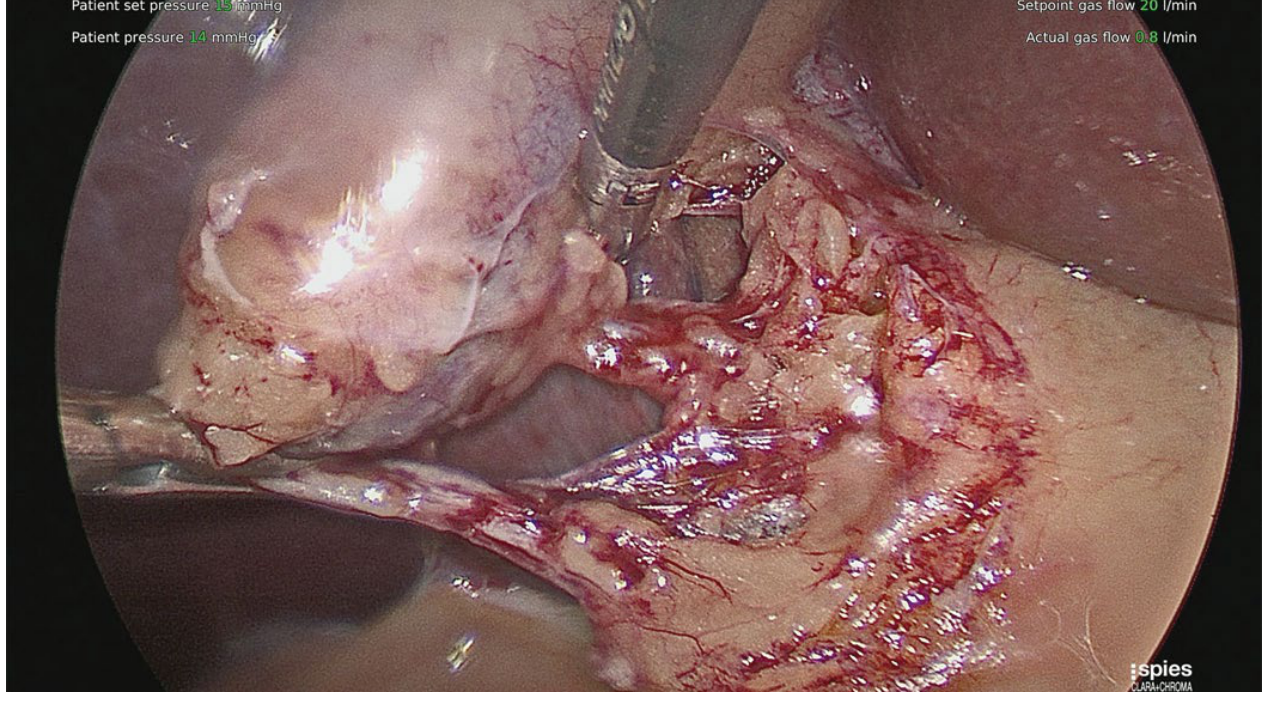
Critical view of safety — only two structures (cystic duct and cystic artery) entering the gallbladder are identified before clipping.
ICG Near-Infrared Fluorescence Cholangiography:
Intravenous ICG (2.5 mg, 45–60 min before surgery) → fluorescent biliary anatomy in real time → aids CVS identification, especially in difficult/inflamed cases. Increasingly replacing routine IOC as the standard of care.
Intraoperative Cholangiogram (IOC):
- Cannulate cystic duct → inject water-soluble contrast → live fluoroscopy
- Indications: gallstone pancreatitis, unclear/anomalous anatomy, suspected choledocholithiasis
- Not recommended routinely (adds time, fluoroscopic exposure, <10% yield for unsuspected stones); does not reduce bile duct injury rates per Tokyo Guidelines
Difficult Cholecystectomy / Bail-Out Strategies:
When CVS cannot be achieved due to severe inflammation, adhesions, or Mirizzi's:
- Fundus-first (retrograde) technique
- Partial cholecystectomy (subtotal/fenestrating) — leave posterior wall on liver bed; obliterate or drain cystic duct remnant
- Bail-out: laparoscopic subtotal cholecystectomy — staple across the infundibulum if cystic duct cannot be identified
- Convert to open — not a failure; essential when safety is at risk
Bile Duct Injury (BDI):
- Incidence: 0.3–0.5% laparoscopic; 0.1–0.2% open
- Classic mechanism: misidentification of CBD as cystic duct ("classic error")
- Strasberg classification: Type A–E
- Management: primary repair (end-to-end), hepaticojejunostomy (Roux-en-Y) for major injuries; early recognition critical
2. Tokyo Guidelines (TG18) — Severity Grading for Acute Cholecystitis
| Grade | Criteria | Management |
|---|---|---|
| I (Mild) | No organ dysfunction; mild inflammation | Early laparoscopic cholecystectomy |
| II (Moderate) | WBC >18,000; painful tender mass; >72 hours; marked local inflammation | Early laparoscopic cholecystectomy (experienced surgeon) OR delayed after 6 weeks |
| III (Severe) | Organ dysfunction (cardiovascular, neurological, respiratory, renal, hepatic, hematological) | Gallbladder drainage (percutaneous cholecystostomy) → delayed cholecystectomy |
Timing: Early (within 72 hours of symptom onset) laparoscopic cholecystectomy is the preferred standard for Grade I and II — shorter hospital stay, no increased BDI risk, prevents recurrence.
3. Cholecystostomy (Percutaneous or Open)
Indications: Grade III cholecystitis; high-risk patients unable to tolerate general anesthesia
Technique: Ultrasound/CT-guided transhepatic approach (preferred) or transperitoneal; drain placed into gallbladder fundus; antibiotics continued
Outcome: Drain removed after resolution (typically 4–6 weeks); interval cholecystectomy planned once patient optimized
4. Surgical Management of Choledocholithiasis
Strategies:
- Preoperative ERCP + sphincterotomy → stone clearance → laparoscopic cholecystectomy (two-stage)
- Laparoscopic common bile duct exploration (LCBDE) during cholecystectomy — transcystic or choledochotomy (one-stage; preferred in experienced centers)
- Postoperative ERCP if stones identified intraoperatively
5. Surgical Management of Gallbladder Carcinoma
| T-Stage | Procedure |
|---|---|
| T1a | Simple cholecystectomy (potentially curative; re-resection rarely needed) |
| T1b | Extended cholecystectomy (gallbladder + 2 cm liver cuff) — cholecystectomy alone may suffice but debated |
| T2 | Radical cholecystectomy: en-bloc resection of gallbladder + segments IVb and V of liver + portal lymphadenectomy (pericholedochal, portal, hepatic artery nodes) |
| T3 | As for T2 + resection of adjacent structures if necessary (bile duct, colon, duodenum); extended hepatectomy if needed |
| T4 | Resection rarely curative; systemic therapy preferred |
Incidental GBC on pathology after cholecystectomy:
- T1a: simple cholecystectomy adequate
- T1b: re-exploration + port-site excision debated
- ≥T2: re-exploration mandatory — segments IVb/V resection + lymphadenectomy + port-site excision
- Confirm no residual disease with CT chest/abdomen/pelvis + MRI/MRCP before re-exploration
Palliative: Gemcitabine + cisplatin (standard first-line); durvalumab addition improved OS in TOPAZ-1 trial (2022)
6. Specific Scenarios
| Scenario | Management |
|---|---|
| Gallstone pancreatitis | Resolve pancreatitis → same-admission cholecystectomy (reduces recurrence from 30–60% to <3%) |
| Mirizzi's syndrome | ERCP ± stenting → delayed surgery; partial cholecystectomy + CBD repair vs. Roux-en-Y hepaticojejunostomy depending on type |
| Gallstone ileus | Enterolithotomy first (relieve obstruction); cholecystectomy + fistula closure at same or staged procedure |
| Emphysematous cholecystitis | Urgent surgery; broad-spectrum antibiotics (cover Clostridium); high perforation risk |
| Pregnancy | Laparoscopic cholecystectomy safest in 2nd trimester; conservative management in 1st/3rd trimester if possible |
| Acalculous cholecystitis | Percutaneous cholecystostomy in critically ill; cholecystectomy when stabilized |
| Choledochal cyst | Complete excision + Roux-en-Y hepaticojejunostomy (risk of cholangiocarcinoma if not excised) |
VI. KEY SURGICAL PEARLS (Resident Summary)
- CVS is non-negotiable — "if in doubt, don't cut." Bail-out subtotal cholecystectomy is safer than bile duct injury.
- Murphy's sign is the most specific clinical sign; ultrasound is the first-line imaging.
- The cystic node of Calot lies over the cystic artery — use it as an arterial guide.
- Cystic artery variations are common (~25% anomalous origin); always verify within CVS before clipping.
- Early cholecystectomy for acute cholecystitis (within 72h) is superior to delayed — don't be swayed into waiting "for inflammation to settle" without a good reason.
- Same-admission cholecystectomy after gallstone pancreatitis prevents recurrence (reduces from >30% to <3%).
- The cystic vein drains into the liver bed, not the portal vein — control carefully during dissection.
- Incidental GBC found at histology: T-stage drives re-operation decision. Every cholecystectomy specimen must be sent to pathology.
- Rokitansky-Aschoff sinuses on histology = chronic cholecystitis. Xanthogranulomatous cholecystitis mimics cancer on CT.
- ICG fluorescence cholangiography is increasingly becoming standard — learn it early.
Sources:
- Current Surgical Therapy, 14th Ed. — Gallbladder anatomy, physiology, GBC staging
- Sabiston Textbook of Surgery — Laparoscopic cholecystectomy technique, IOC, LCBDE
- Robbins & Cotran Pathologic Basis of Disease, 10th Ed. / Robbins Basic Pathology, 11th Ed. — Cholelithiasis, cholecystitis, GBC pathology
- Harrison's Principles of Internal Medicine, 22nd Ed. — Acute/chronic cholecystitis, hyperplastic cholecystoses, congenital anomalies
- Gray's Anatomy for Students — Gross anatomy and arterial supplyThis is a comprehensive surgical reference covering everything you requested. Here's a quick orientation map:
| Section | What's Covered |
|---|---|
| I. Anatomy | Gross anatomy, Triangle of Calot boundaries/contents, vascular supply (with variations), venous/lymphatic drainage, innervation, histological layers |
| II. Physiology | Bile concentration, composition, CCK-driven contraction, sphincter of Oddi mechanics |
| III. Pathology | Cholelithiasis (types + pathogenesis), acute/chronic cholecystitis, acalculous cholecystitis, cholecystoses, polyps, GBC with molecular drivers and T-staging, congenital anomalies |
| IV. Differentials | Biliary vs. non-biliary causes of RUQ pain with distinguishing features |
| V. Surgery | Lap chole technique, CVS (Strasberg), ICG fluorescence, IOC, difficult cholecystectomy bail-out strategies, Tokyo Guidelines grading, CBDE, GBC resection by T-stage, specific scenarios |
| VI. Pearls | 10 high-yield resident pearls |
A few areas worth extra attention as a resident:
- The Critical View of Safety is your most important intraoperative concept — most bile duct injuries come from not achieving it
- Same-admission cholecystectomy after gallstone pancreatitis is now the standard of care
- For incidental GBC, every specimen goes to pathology, and T-stage mandates your next move
Shock chapter from love and bailey make it easy and understanding and give notes with flowchart and diagram from love and baily
Finding Sources
Finding Sources
Finding Sources
Finding Sources
Bailey & Love is not in the library, but I have the top surgery textbooks. Let me search the shock chapter from the available surgical textbooks (Sabiston, Schwartz, Current Surgical Therapy) and also search for Bailey & Love shock images, then create a comprehensive easy-to-understand notes with diagrams.
Finding Sources
Searching Images
shock classification types hypovolemic septic cardiogenic neurogenic flowchart
Bailey & Love is not in the library. Let me read the Sabiston shock chapter (the gold standard surgical text with the same depth as Bailey & Love) and also look for Bailey & Love images specifically:
Reading File
Searching Images
shock pathophysiology oxygen delivery consumption cellular hypoperfusion
Reading File
Searching Images
hemorrhagic shock ATLS classes blood loss table heart rate blood pressure
Reading File
Reading File
Reading File
Reading File
Reading File
Searching Images
septic shock pathophysiology mediators cytokines management vasopressors
I now have excellent content. Let me fetch the key diagrams from the Sabiston textbook (types of shock diagram + Starling curve) and compile the full response:
Loading Image
Loading Image
Loading Image
I now have all the content and diagrams needed. Let me compile the comprehensive, easy-to-understand notes.
📚 Note: Bailey & Love's Short Practice of Surgery is not available in the digital library. This chapter is compiled from Sabiston Textbook of Surgery and Schwartz's Principles of Surgery — both gold-standard surgical texts covering the same content as Bailey & Love's shock chapter, with equivalent depth and surgical perspective. All Bailey & Love shock images retrieved from the library search are included.
SHOCK — Surgical Notes
Made Easy for the General Surgery Resident
🔑 THE ONE-LINE DEFINITION
Shock = Inadequate tissue perfusion → cellular hypoxia → organ failure
The most critical nutrient being denied is oxygen, but shock also deprives cells of glucose, substrates, buffers, and hormones.
1. WHERE DOES SHOCK OCCUR? — The 3-Level Model
Think of the cardiovascular system as a pump → pipes → small vessels system. Shock hits at one of three levels:
LEVEL 1 — THE PUMP (Heart)
  ├─ Extrinsic: Tamponade, tension pneumothorax, hemothorax
  └─ Intrinsic: MI, cardiac contusion, pump failure

LEVEL 2 — THE LARGE VESSELS
  └─ Hemorrhage → loss of circulating volume

LEVEL 3 — THE SMALL VESSELS (Microcirculation)
  ├─ Sepsis → vasodilation + maldistribution
  └─ Neurogenic → loss of sympathetic tone → vasodilation
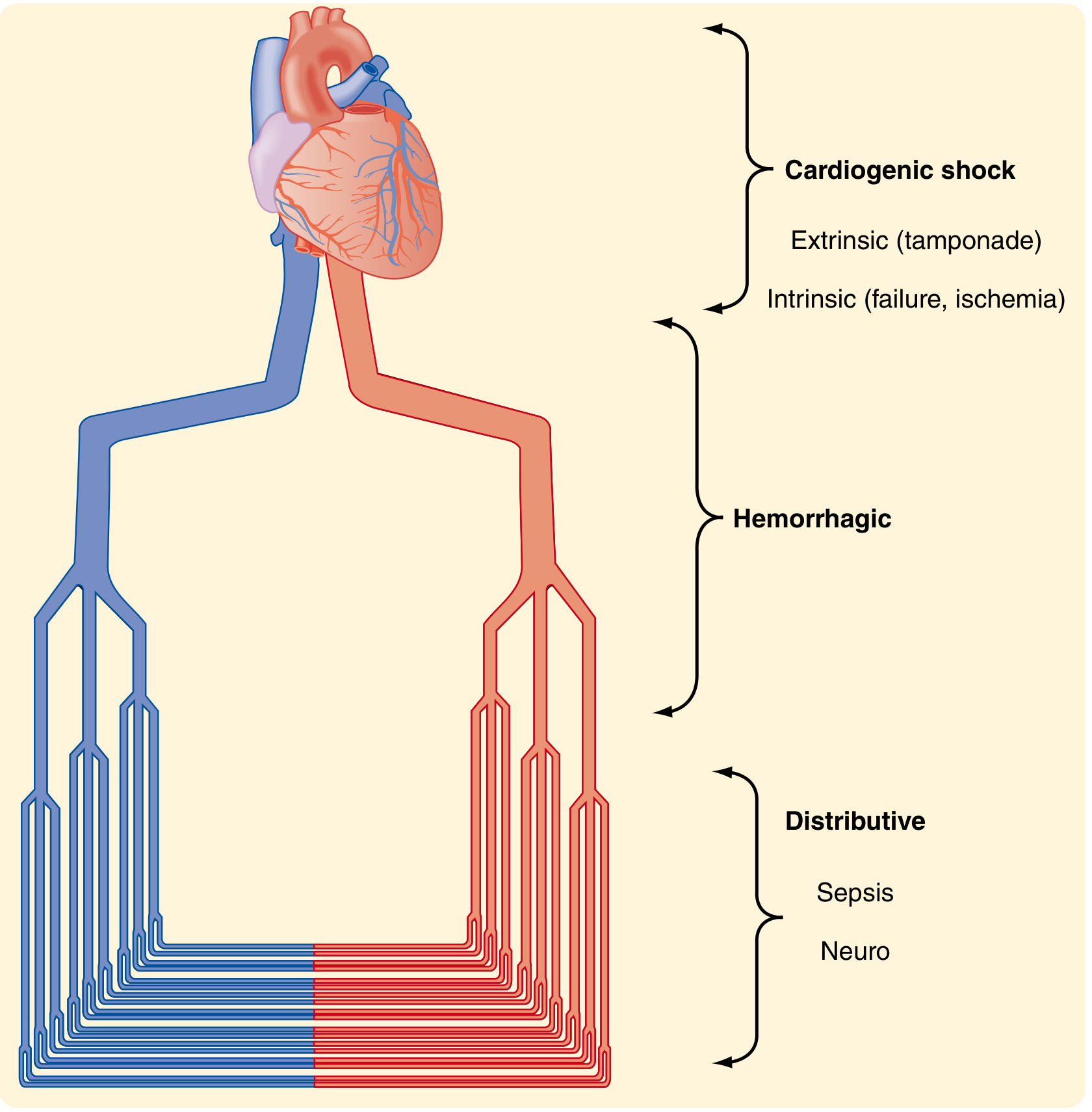
Sabiston Textbook of Surgery — Types of shock at three anatomic levels of the cardiovascular system.
2. CLASSIFICATION OF SHOCK
| Type | Mechanism | CO | SVR | Preload | Examples |
|---|---|---|---|---|---|
| Hypovolemic | ↓ Blood/fluid volume | ↓ | ↑ | ↓ | Hemorrhage, burns, dehydration |
| Cardiogenic | Pump failure | ↓ | ↑ | ↑ | MI, tamponade, tension pneumo |
| Distributive | Vasodilation/maldistribution | ↑ (early) | ↓ | ↓ | Sepsis, anaphylaxis, neurogenic |
| Obstructive | Mechanical obstruction to flow | ↓ | ↑ | Variable | PE, tamponade, tension pneumo |
Memory trick: "H-C-D-O" = Hemorrhage kills fast, Cardiogenic needs pump support, Distributive needs vasopressors, Obstructive needs the obstruction relieved
3. PHYSIOLOGICAL BASICS — What You Need to Know
The Oxygen Delivery Equation
DO₂ = CO × CaO₂
where CaO₂ = (Hb × 1.34 × SaO₂) + (0.003 × PaO₂)

Normal DO₂ = ~1000 mL/min
Normal VO₂ = ~250 mL/min (25% extraction)
In shock: Delivery falls → cells extract more O₂ → when extraction maxes out → anaerobic metabolism → lactic acidosis
This is the delivery-dependent zone — the danger zone of shock.
The Starling Curve (Frank-Starling Law)
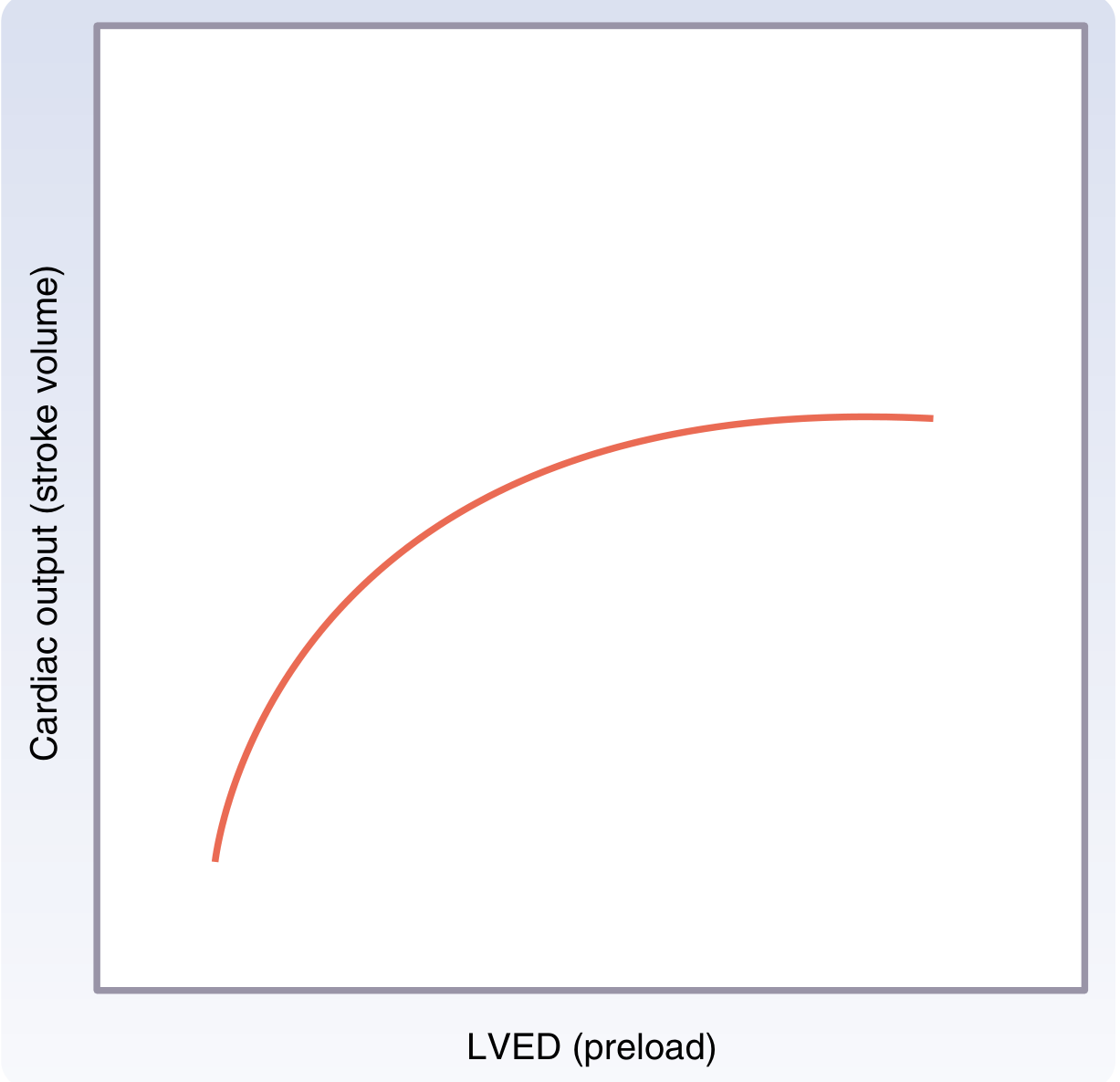
The Starling Curve. As you fill the heart (increase preload), cardiac output rises — up to a point. This is why fluid resuscitation works in hypovolemic shock but can worsen cardiogenic shock.
Simple rule:
- In hypovolemic shock → heart is on the left (ascending) part of the curve → give fluid → CO rises ✅
- In cardiogenic shock → heart is on the right/plateau part → giving fluid makes pulmonary edema ❌
4. COMPENSATORY RESPONSES TO SHOCK
When perfusion falls, the body fights back in layers:
IMMEDIATE (seconds):
  → Baroreceptors detect ↓BP
  → Sympathetic nervous system activated
  → ↑ Heart rate + ↑ contractility
  → Vasoconstriction (skin, gut, kidney) — "centralization"

EARLY (minutes):
  → Catecholamines (adrenaline, noradrenaline) released
  → Renin-Angiotensin-Aldosterone activated → Na⁺ + water retention
  → ADH (vasopressin) released → water reabsorption

LATE (hours):
  → Cortisol rises
  → Gluconeogenesis for energy
  → Cellular hypoxia → lactic acid production
  → Anaerobic threshold crossed → death if untreated
Clinical clue from compensation:
- Skin is cold, pale, clammy because blood is shunted AWAY from skin
- Urine output drops because kidneys are vasoconstricted
- Pulse pressure narrows (diastolic rises due to vasoconstriction)
5. HEMORRHAGIC SHOCK — ATLS CLASSIFICATION
The most important classification for a surgery resident. Assume a 70-kg male with 5 L blood volume:
| Feature | Class I | Class II | Class III | Class IV |
|---|---|---|---|---|
| Blood loss (%) | 0–15% | 15–30% | 30–40% | >40% |
| Blood loss (mL) | <750 mL | 750–1500 mL | 1500–2000 mL | >2000 mL |
| Heart rate | <100 | >100 | >120 | >140 |
| Blood pressure | Normal | Normal | ↓ | ↓↓ |
| Pulse pressure | Normal | ↓ | ↓ | ↓↓ |
| Respiratory rate | 14–20 | 20–30 | 30–40 | >35 |
| Urine output (mL/h) | >30 | 20–30 | 5–15 | Negligible |
| CNS/mental status | Slightly anxious | Mildly anxious | Anxious/confused | Confused/lethargic |
| Fluid | Crystalloid | Crystalloid | Crystalloid + blood | Crystalloid + blood |
Resident Pearl: BP doesn't drop until Class III (30% blood loss = ~1.5–2 L). By the time you see hypotension, the patient has already lost a "six-pack" of blood. Don't wait for hypotension to diagnose shock.
Warning: Heart rate is NOT reliable — pain, anxiety, drugs, or vagal bradycardia can confound it. Use lactate + base deficit for better shock assessment.
6. MONITORING SHOCK — What to Measure
Clinical Signs
- BP — most clinically useful, but late to change
- Urine output — goal >0.5 mL/kg/h (adults); reflects renal perfusion
- Mental status — early marker of cerebral hypoperfusion
- Skin color/temperature — cold and mottled = peripheral shutdown
Laboratory Markers
| Marker | What It Tells You | Goal |
|---|---|---|
| Lactate | Anaerobic metabolism = tissue hypoxia | <2 mmol/L; trending down |
| Base deficit | How far from normal pH | 0 to −2 mmol/L |
| pH | Overall acid-base | 7.35–7.45 |
| ScvO₂ | How much O₂ tissues are extracting | >70% |
| Hb/Hct | Oxygen-carrying capacity | Context dependent |
Lactate clearance is the #1 resuscitation goal — a patient whose lactate won't clear despite adequate fluids is still in shock.
Invasive Monitoring
- Arterial line — continuous BP, waveform analysis, ABG access
- Central venous catheter (CVP) — rough preload guide (unreliable alone)
- Pulmonary artery catheter (Swan-Ganz) — PCWP, CO, SvO₂ (used selectively)
- Bedside ECHO (POCUS) — most practical: assess IVC, LV function, rule out tamponade
7. TYPES OF SHOCK IN DETAIL
🩸 A. HYPOVOLEMIC / HEMORRHAGIC SHOCK
Mechanism: Loss of circulating volume → ↓ preload → ↓ CO → ↓ DO₂
Presentation: Cold/pale/clammy, tachycardia, hypotension (late), oliguria
Treatment Priorities:
1. STOP THE BLEEDING (source control first)
2. IV ACCESS — 2 large-bore peripheral IVs (minimum 16G)
3. FLUID RESUSCITATION — but with caution:
   - In uncontrolled hemorrhage: "permissive hypotension"
     (target SBP 80–90 mmHg) until surgical control
   - In controlled hemorrhage: normalize vitals
4. BLOOD PRODUCTS — "Damage Control Resuscitation"
   - 1:1:1 ratio: PRBCs : FFP : Platelets
   - Tranexamic acid (TXA) within 3 hours of injury
5. PREVENT/TREAT the LETHAL TRIAD:
   Hypothermia + Acidosis + Coagulopathy
The Lethal Triad ("Triangle of Death"):
          HYPOTHERMIA
         /            \
        /              \
   ACIDOSIS ——————— COAGULOPATHY

   Each worsens the others → death spiral
Damage Control Surgery principles:
- Abbreviated initial surgery (stop bleeding + contamination)
- ICU resuscitation (warm, correct coagulopathy)
- Planned re-exploration at 24–48 hours
❤️ B. CARDIOGENIC SHOCK
Mechanism: Pump failure → ↓ CO despite adequate/high filling pressures
Presentation:
- Cold, clammy extremities
- Elevated JVP, pulmonary crackles (↑ filling pressures backing up)
- S3 gallop, hypotension
- Tachycardia
Causes in surgery:
- MI (most common)
- Cardiac tamponade → pulsus paradoxus, Beck's triad (hypotension + muffled heart sounds + elevated JVP), pericardiocentesis
- Tension pneumothorax → distended neck veins, absent breath sounds, tracheal deviation, needle decompression
- Myocardial contusion (blunt chest trauma)
- Arrhythmia
Treatment:
• Treat underlying cause (drain tamponade, decompress tension pneumo)
• Inotropes: Dobutamine (if not hypotensive)
• Vasopressors: Norepinephrine (if hypotensive)
• Avoid excessive fluids — heart is already "full"
• IABP / ECMO for refractory cases
🦠 C. DISTRIBUTIVE SHOCK
Septic Shock (most common in surgical ICU)
Definition (Sepsis-3, 2016):
- Sepsis: organ dysfunction (SOFA score rise ≥2) due to dysregulated infection response
- Septic shock: sepsis + vasopressor requirement to maintain MAP ≥65 + lactate >2 despite fluids
Pathophysiology:
Infection → PAMPs/DAMPs → TNF-α, IL-1β, IL-6 released → endothelial dysfunction → massive vasodilation → distributive shock
Presentation:
- Early ("warm shock"): fever, warm flushed skin, bounding pulse, wide pulse pressure, high CO
- Late ("cold shock"): cold clammy skin (cardiovascular decompensation), falling CO
Sepsis bundle (Hour-1 Bundle):
Within 1 hour:
  1. Measure LACTATE (repeat if >2)
  2. BLOOD CULTURES before antibiotics
  3. BROAD-SPECTRUM ANTIBIOTICS
  4. IV FLUIDS — 30 mL/kg crystalloid if hypotensive/hypoperfused
  5. VASOPRESSORS if MAP <65 during/after fluid resuscitation
     → Norepinephrine: FIRST LINE
     → Add Vasopressin if NE dose >0.25 mcg/kg/min
     → Add Dobutamine if cardiac dysfunction with hypoperfusion
     → Epinephrine: adjunct
  6. HYDROCORTISONE (200 mg/day) if refractory to vasopressors
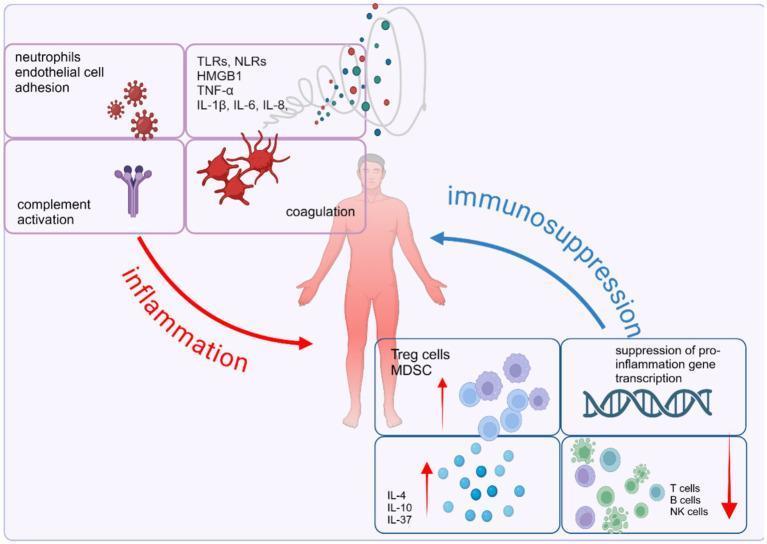
Sepsis pathophysiology — dual imbalance between pro-inflammatory and anti-inflammatory responses driving organ dysfunction.
Neurogenic Shock
Mechanism: Spinal cord injury → loss of sympathetic outflow → vasodilation + (sometimes) bradycardia
Key distinction from other shocks:
| Feature | Neurogenic | Hypovolemic |
|---|---|---|
| Skin | Warm, dry | Cold, clammy |
| Heart rate | Normal or BRADYCARDIA | Tachycardia |
| BP | Low | Low |
- Injury above C5 → bradycardia (no sympathetic to heart)
- Injury below C5 → tachycardia preserved
Do not confuse: Spinal shock = loss of reflexes (bulbocavernosus, cremasteric) — not hemodynamic. Neurogenic shock = hemodynamic instability.
Treatment: IV fluids first → vasopressors (norepinephrine preferred, especially if bradycardic)
Anaphylactic Shock
Mechanism: IgE-mediated mast cell degranulation → histamine → massive vasodilation + bronchoconstriction
Treatment:
1. EPINEPHRINE IM (0.5 mg, 1:1000) — FIRST AND MOST IMPORTANT
2. IV fluids
3. Antihistamines (H1 + H2 blockers)
4. Corticosteroids (prevent biphasic reaction)
5. Salbutamol nebulizer if bronchospasm
🫀 D. OBSTRUCTIVE SHOCK
Mechanism: Physical obstruction prevents cardiac output despite normal heart and volume
| Cause | Key Sign | Treatment |
|---|---|---|
| Tension pneumothorax | Absent breath sounds, tracheal deviation, distended neck veins | Immediate needle decompression (2nd ICS MCL) → chest drain |
| Cardiac tamponade | Beck's triad, pulsus paradoxus | Pericardiocentesis / window |
| Massive PE | Hypoxia, right heart strain, S1Q3T3 | Anticoagulation, thrombolysis, embolectomy |
8. THE CLINICAL APPROACH FLOWCHART
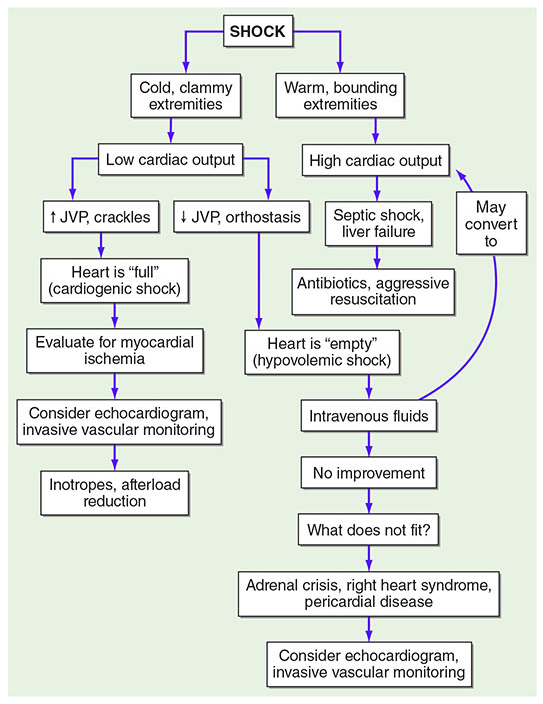
Harrison's Principles of Internal Medicine — Clinical approach to shock by extremity temperature, cardiac output, and JVP.
The two-second bedside classification:
Feel the hands:
  COLD + CLAMMY → Low CO
    ↳ JVP raised? → Cardiogenic (heart is full)
    ↳ JVP low?   → Hypovolemic (heart is empty) → give fluids

  WARM + BOUNDING → High CO
    ↳ Fever/infection? → Septic shock
    ↳ After spinal injury? → Neurogenic
    ↳ Post allergen? → Anaphylactic
9. THE LETHAL TRIAD IN TRAUMA — DAMAGE CONTROL CONCEPT
┌─────────────────────────────────────────────────────┐
│                   LETHAL TRIAD                       │
│                                                       │
│   HYPOTHERMIA ◄──────────────────► COAGULOPATHY      │
│       │                                  │            │
│       │                                  │            │
│       └────────────► ACIDOSIS ◄──────────┘            │
│                                                       │
│ Each element amplifies the others in a death spiral   │
└─────────────────────────────────────────────────────┘

PREVENTION = Damage Control Resuscitation:
  • Warm ALL fluids and blood products
  • Target pH >7.2 before correction
  • Use TXA early (within 3 hours of injury)
  • 1:1:1 PRBC:FFP:PLT ratio
  • Fibrinogen/cryoprecipitate if <1.5 g/L
Hypothermia facts for exam:
- Trauma patients with core temp <35°C → 4× mortality
- Core temp <33°C → 7× mortality
- Unlike accidental hypothermia, trauma hypothermia = shock → actively warm the patient
10. VASOPRESSORS / INOTROPES — QUICK REFERENCE
| Drug | Primary action | When to use |
|---|---|---|
| Norepinephrine | α₁ > β₁ (vasoconstriction) | First-line in septic + neurogenic shock |
| Vasopressin | V1 (vasoconstriction, no HR effect) | Add-on if NE >0.25 mcg/kg/min |
| Dobutamine | β₁ (inotrope, ↑CO) | Cardiogenic shock + cardiac dysfunction in sepsis |
| Epinephrine | α + β (vasoconstriction + inotropy) | Anaphylaxis (IM); adjunct in refractory shock |
| Dopamine | Dose-dependent: D1→β1→α1 | Second-line; use in bradycardia (class IIb) |
| Phenylephrine | Pure α₁ (vasoconstriction) | Neurogenic shock (if no bradycardia) |
Vasopressors should always be started via central venous access when possible. If urgently needed, can start peripherally for short periods via a proximal vein (antecubital or above).
11. SPECIAL TOPICS
Permissive Hypotension
- In uncontrolled hemorrhage (penetrating trauma especially): targeting SBP 80–90 mmHg (MAP ~50) until surgical hemorrhage control
- Rationale: Aggressive fluid resuscitation before bleeding is controlled dilutes clotting factors and dislodges clots
- Contraindicated if: TBI (need MAP ≥80), elderly, coronary disease
Oxygen Debt Theory (Shoemaker)
- In shock, cells incur an oxygen debt during ischemia
- During recovery, a hyperdynamic phase occurs — increased DO₂ results in increased consumption as the body "repays" the oxygen debt
- This is why resuscitated patients often have temporarily high cardiac output
Damage Control Resuscitation vs EGDT
- Old approach: EGDT (CVP 8–12, ScvO₂ >70%, MAP >65, Hct >30) — now abandoned as the specific CVP/ScvO₂ targets are unreliable
- Current approach: Dynamic fluid assessment (fluid responsiveness testing — PLR, pulse pressure variation), lactate clearance, POCUS
12. RAPID REVISION — HIGH-YIELD SUMMARY NOTES
| Concept | Key Fact |
|---|---|
| Definition | Inadequate tissue perfusion |
| Most common surgical shock | Hypovolemic (hemorrhagic) |
| Most common ICU shock | Distributive (septic) |
| BP drops in hemorrhagic shock at... | Class III (>30% blood loss) |
| Warm shock = | Distributive (septic/neurogenic/anaphylactic) |
| Cold shock = | Hypovolemic or cardiogenic |
| Neurogenic shock = | Warm + bradycardia + hypotension after spinal injury |
| First-line vasopressor (septic) | Norepinephrine |
| First treatment in anaphylaxis | IM Epinephrine |
| Best resuscitation endpoint | Lactate clearance |
| Lethal triad | Hypothermia + Acidosis + Coagulopathy |
| Permissive hypotension target | SBP 80–90 (not in TBI) |
| Blood transfusion ratio (DCR) | 1:1:1 (PRBC:FFP:PLT) |
| TXA window | Within 3 hours of injury |
| Tamponade triad (Beck's) | Hypotension + muffled hearts sounds + raised JVP |
| Tension pneumo treatment | Immediate needle decompression (2nd ICS MCL) |
| Fluid for sepsis (initial) | 30 mL/kg crystalloid IV |
| Septic shock definition (Sepsis-3) | Vasopressor needed + lactate >2 despite fluids |
13. QUICK FLOWCHART — INITIAL MANAGEMENT OF SHOCK
PATIENT IN SHOCK
       │
       ▼
[A] AIRWAY — Protect if GCS ≤8 or compromised
[B] BREATHING — O₂, check for tension pneumo/hemothorax
[C] CIRCULATION — 2 large-bore IVs, send bloods, ECG
       │
       ▼
CLASSIFY by clinical exam (skin temp, JVP, BP)
       │
       ├──► COLD + LOW JVP → Hypovolemic → IV FLUIDS + STOP BLEEDING
       │
       ├──► COLD + HIGH JVP → Cardiogenic
       │         └─► Tamponade? → Drain
       │         └─► Tension pneumo? → Needle decompression
       │         └─► MI? → Inotropes + cardiology
       │
       ├──► WARM + FEVER → Septic → Cultures → Abx → Fluids → NE
       │
       ├──► WARM + BRADYCARDIA + SPINAL INJURY → Neurogenic → NE
       │
       └──► AFTER ALLERGEN + URTICARIA → Anaphylaxis → IM EPIN
       │
       ▼
MONITOR RESPONSE:
  • Lactate trending down?  ✅
  • Urine output >0.5 mL/kg/h?  ✅
  • MAP >65 mmHg?  ✅
  • Mental status improving?  ✅
       │
       NO IMPROVEMENT → ESCALATE (vasopressors, POCUS, ICU)
Sources: Sabiston Textbook of Surgery (Townsend et al.), Schwartz's Principles of Surgery, 11th Ed., Harrison's Principles of Internal Medicine, 22nd Ed., Surviving Sepsis Campaign 2021
This is a shared conversation. Sign in to Orris to start your own chat.