
Dystrophy
Reading File
“Dystrophy” can refer to several conditions. Which one do you mean?
Asking for Preferences
What type of dystrophy are you asking about?
“Dystrophy” can refer to several conditions. Which one do you mean?
Mixed dystrophy
Reading File
Finding Sources
Searching PubMed
corneal dystrophies AND TGFBI
Searching the Web
mixed corneal dystrophy granular lattice Avellino dystrophy overview
Reading File
Reading File
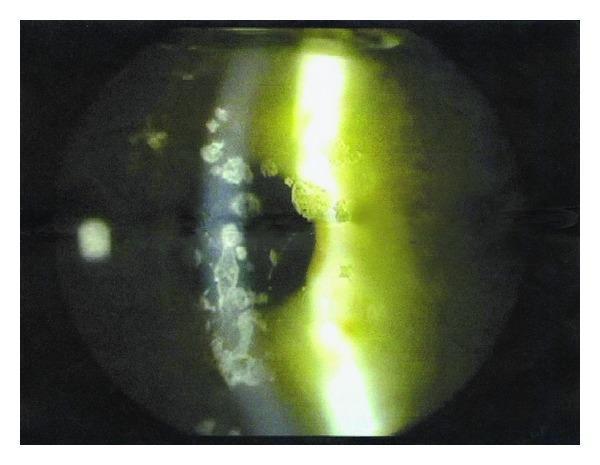
Mixed dystrophy usually means combined granular-lattice corneal dystrophy, also called:
- Granular corneal dystrophy type 2 (GCD2)
- Avellino corneal dystrophy
It is an inherited, usually autosomal dominant, corneal disorder caused by a mutation in the TGFBI gene. The cornea develops two types of deposits:
- Granular, white crumb-like deposits made largely of hyaline
- Fine lattice-like branching deposits containing amyloid
Clinical features
- Usually affects both eyes
- Corneal spots may become apparent in childhood or adolescence
- Glare, light sensitivity, intermittent blurred vision
- Mild recurrent corneal erosions can cause pain, watering, and foreign-body sensation
- Vision often worsens gradually later as deposits accumulate
Diagnosis
An ophthalmologist identifies the characteristic deposits on slit-lamp examination. Genetic testing for TGFBI can confirm the diagnosis and assist family counseling. NCBI’s condition summary describes its autosomal dominant inheritance and combined granular plus amyloid deposits.
Management
- Observation if vision is good
- Lubricating drops or ointment for surface irritation or erosions
- Procedures such as phototherapeutic keratectomy or corneal transplantation only if opacity significantly reduces vision
- Avoid LASIK and other corneal refractive surgery, since trauma to the cornea can accelerate deposits and recurrence.
Kanski describes the stellate or annular superficial lesions with possible deeper linear opacities, and notes that corneal trauma can speed progression. Kanski's Clinical Ophthalmology: A Systematic Approach, p. 272.
This is a shared conversation. Sign in to Orris to start your own chat.