
Drug Profile of telmisartan Drug Name Class Generic Name Brand Name Formulation Content Uses Pharmacology (PK & PD) Route of Administration MOA Adverse Drug Reaction (Mild, Moderate, Severe) Drug–Drug Interaction Source
Reading File
Now let me search the medical library and web in parallel for comprehensive telmisartan information.
Finding Sources
Searching the Web
telmisartan drug profile pharmacology MOA pharmacokinetics adverse effects drug interactions
Searching PubMed
telmisartan pharmacology clinical use
Now let me pull the detailed textbook content on telmisartan from Goodman & Gilman and Lippincott, plus the Brenner & Rector kidney content:
Reading File
Reading File
Reading File
Let me now read the core ARB/telmisartan sections from Goodman & Gilman more specifically, and also from Lippincott:
Reading File
Reading File
I now have the key telmisartan section from Goodman & Gilman (lines 3547-3552). Let me read it fully, along with the ARB MOA and drug interaction sections:
Reading File
Reading File
Now let me also grab the ARB MOA section from Goodman & Gilman and the Lippincott ARB section:
Reading File
Reading File
Now let me read the ARB section from Lippincott (which discusses telmisartan's MOA) and also grab the Brenner & Rector telmisartan-specific section:
Reading File
Reading File
Now let me also read the Lippincott ARB mechanism and drug interactions section:
Reading File
Let me quickly find the Lippincott ARB-specific section:
Reading File
I now have comprehensive data from multiple authoritative sources. Let me compile the complete drug profile.
Drug Profile: Telmisartan
1. Drug Name
Telmisartan
2. Class
- Pharmacological Class: Angiotensin II Receptor Blocker (ARB) - Nonbiphenyl Tetrazole Derivative
- Therapeutic Class: Antihypertensive / Cardiovascular Agent / Renoprotective Agent
3. Generic Name
Telmisartan
4. Brand Name
- Micardis (originator brand, Boehringer Ingelheim)
- Telma (India)
- Telmikind, Telsartan, Arbitel (India - generics)
- Micardis Plus (telmisartan + hydrochlorothiazide combination)
- Twynsta (telmisartan + amlodipine combination)
5. Formulation
| Form | Details |
|---|---|
| Tablets | 20 mg, 40 mg, 80 mg oral tablets |
| Combination tablet | Telmisartan 40/80 mg + Hydrochlorothiazide 12.5/25 mg |
| Combination tablet | Telmisartan 40/80 mg + Amlodipine 5/10 mg |
6. Content (Chemical Profile)
| Property | Details |
|---|---|
| Chemical nature | Nonpeptide, noncompetitive AT1 receptor antagonist |
| Structure | Incorporates a carboxylic acid as the biphenyl acidic group (distinguishing it from biphenyl-tetrazole ARBs like losartan) |
| Molecular weight | 514.63 g/mol |
| Solubility | Practically insoluble in water; soluble in strong acid/alkali |
| IUPAC Name | 4'-{[4-methyl-6-(1-methyl-2-benzimidazolyl)-2-propyl-1-benzimidazolyl]methyl}biphenyl-2-carboxylic acid |
7. Uses (Indications)
| Indication | Details |
|---|---|
| Hypertension | First-line treatment; reduces systolic and diastolic BP |
| Cardiovascular risk reduction | Reduces CV morbidity in high-risk patients (ONTARGET trial) |
| Antipsychotic-associated hypertension | Specific evidence for telmisartan in this setting |
| Diabetic nephropathy | Renoprotective in type 2 DM with albuminuria (class effect of ARBs) |
| ACE inhibitor intolerance | Alternative when ACE inhibitors cause cough or angioedema |
| Heart failure | Used in patients who cannot tolerate ACE inhibitors |
8. Pharmacology
A. Pharmacokinetics (PK)
| Parameter | Telmisartan |
|---|---|
| Bioavailability | ~50% (mean absolute; lower than irbesartan/azilsartan) |
| Tmax | 0.5-1 hour after oral administration (fastest peak among ARBs) |
| Protein binding | >99% (primarily albumin and alpha-1-acid glycoprotein) |
| Volume of distribution | ~500 L |
| Metabolism | Conjugation with glucuronic acid → inactive acylglucuronide metabolite; CYP system not significantly involved (<3% hepatic biotransformation to inactive compounds) |
| Elimination half-life (t½) | ~24 hours (longest half-life among ARBs - supports once-daily dosing) |
| Duration of action | 24 hours; may persist up to 7 days after drug discontinuation |
| Clearance | Primarily biliary excretion of intact drug (>97%); <3% renal |
| Renal impairment | No dose adjustment needed; not dialyzable |
| Hepatic impairment | Clearance reduced; use with caution in hepatic insufficiency; not recommended in severe hepatic impairment |
| Sex differences | Women achieve plasma levels 2-3× higher than men, but no difference in BP response |
| Food effect | Slight decrease in AUC with food but clinically insignificant |
Key PK advantage: The 24-hour t½ and primarily biliary (non-renal) elimination distinguish telmisartan from most other ARBs.
- Goodman & Gilman's The Pharmacological Basis of Therapeutics, p. 621
- Brenner and Rector's The Kidney, p. 2196
B. Pharmacodynamics (PD)
- Receptor selectivity: Binds AT1 receptors with high affinity; >10,000-fold more selective for AT1 vs. AT2
- Antagonism type: Noncompetitive (insurmountable) - blockade is sustained even with elevated Ang II levels
- Additional property: Partial agonist activity at PPAR-γ (peroxisome proliferator-activated receptor gamma) - may contribute to metabolic benefits (insulin sensitization, glucose metabolism improvement) - unique among ARBs
- Onset of action: Initial response within 3 hours of first dose
- Maximum antihypertensive effect: Achieved within 4-8 weeks of regular dosing
- BP reduction: Reduces systolic BP by ~10-15 mmHg and diastolic BP by ~6-8 mmHg (dose-dependent)
9. Route of Administration
| Route | Details |
|---|---|
| Oral | Sole approved route |
| Frequency | Once daily (OD) |
| Dosing | Starting dose: 40 mg OD; Usual range: 40-80 mg OD; Maximum: 80 mg/day |
| Food | Can be taken with or without food |
10. Mechanism of Action (MOA)
Telmisartan selectively and competitively blocks the Angiotensin II Type 1 (AT1) receptor - a G protein-coupled receptor located on vascular smooth muscle, adrenal cortex, kidneys, heart, and brain.
Step-by-step mechanism:
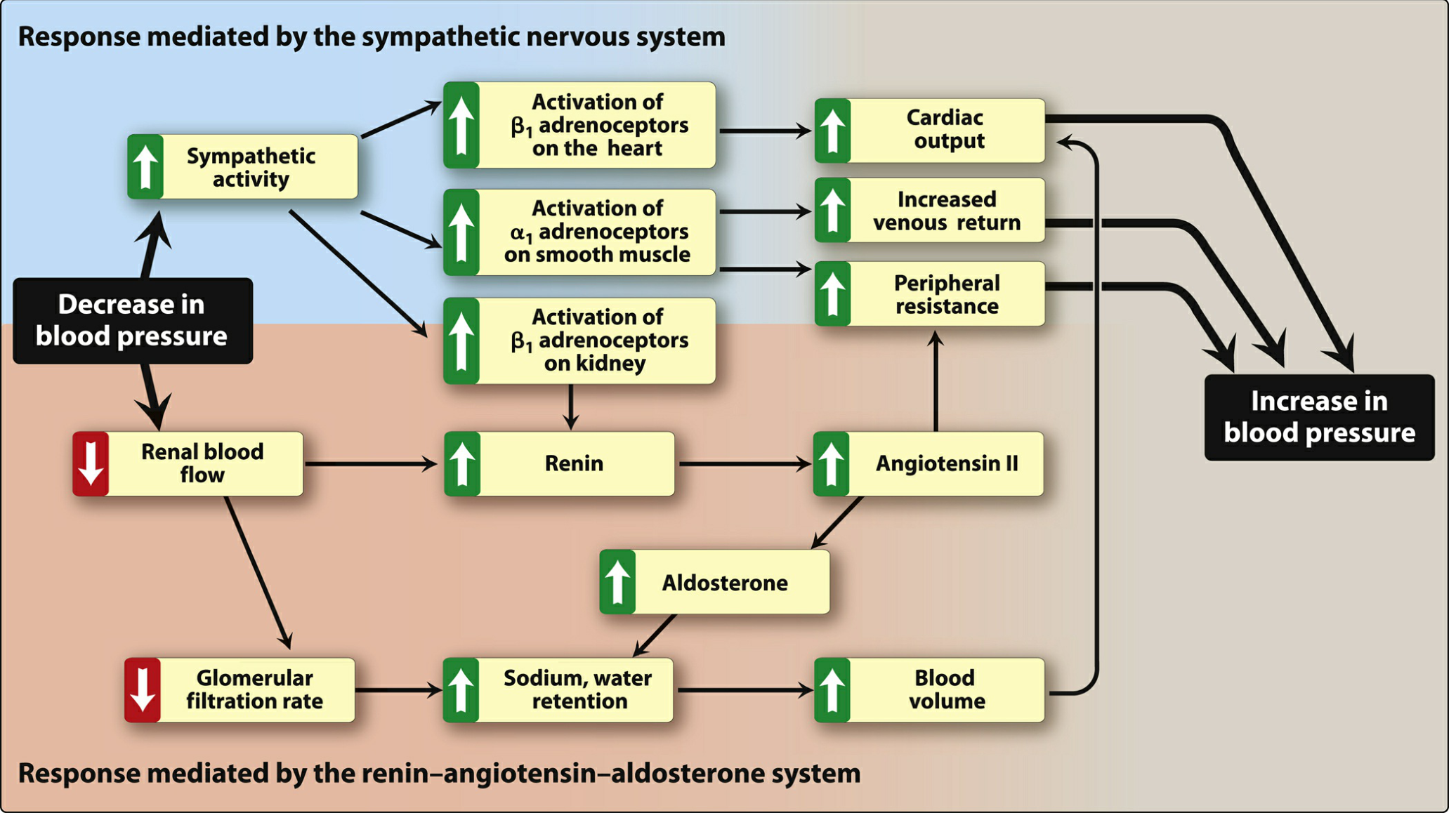
- Renin-Angiotensin-Aldosterone System (RAAS): Renin converts angiotensinogen → Angiotensin I → Angiotensin II (via ACE)
- Angiotensin II normally acts on AT1 receptors to cause:
- Vasoconstriction (increases peripheral resistance)
- Aldosterone release → Na⁺ and water retention → increased blood volume
- Sympathetic activation → increased HR and cardiac output
- Cell hypertrophy and proliferation in blood vessels and heart
- Telmisartan binds AT1 receptors with insurmountable antagonism, blocking all these effects:
- Vasodilation → reduced peripheral vascular resistance → reduced BP
- Reduced aldosterone → decreased Na⁺/water retention → reduced preload
- Reduced sympathetic tone and catecholamine release
- Anti-fibrotic and anti-hypertrophic effects at the cardiac and vascular level
- Natriuresis (increased Na⁺ excretion)
- AT2 receptors remain unblocked (as with all ARBs), and with elevated circulating Ang II levels secondary to AT1 blockade, AT2 stimulation provides vasodilatory and cardioprotective counter-regulatory effects
- PPAR-γ partial agonism (unique to telmisartan): May improve insulin sensitivity and lipid metabolism, providing additional metabolic benefits
Unlike ACE inhibitors, telmisartan does not block bradykinin breakdown → no ACE inhibitor-type cough and lower risk of angioedema.
- Goodman & Gilman's, p. 620
- Lippincott Illustrated Reviews Pharmacology, p. 288
11. Adverse Drug Reactions (ADRs)
Mild (Common, generally well tolerated)
| ADR | Frequency |
|---|---|
| Upper respiratory tract infections | ~10.7% |
| Headache | ~11.8% |
| Back pain | ~6% / 2.7% |
| Dizziness | ~6.6% |
| Diarrhea | ~4.4% |
| Fatigue | ~3.2-4.6% |
| Sinusitis | ~4.1% |
| Bronchitis | ~4.1% |
| Influenza-like symptoms | ~1.7-3% |
| Nausea | ~2.2% |
| Myalgia | ~2.4% |
| Dyspepsia | ~2.7% |
| Pharyngitis | ~2.1% |
Note: The overall ADR incidence with telmisartan is comparable to placebo (41.4% vs 43.9%) - EMA Micardis EPAR
Moderate (Less common, require monitoring)
| ADR | Notes |
|---|---|
| Hypotension (including orthostatic) | Especially with volume/salt depletion, first dose effect |
| Hyperkalemia | Particularly in renal disease, DM, or with K⁺-sparing diuretics |
| Impaired renal function | Especially in renal artery stenosis, heart failure, or dehydration |
| Dizziness/vertigo | May impair driving |
| Insomnia, depression, anxiety | Post-marketing reports |
| Increased serum creatinine | Monitor renal function |
| Arthralgia, muscle spasms | Post-marketing |
| Erythema, pruritus | Skin reactions |
| Bradycardia or tachycardia | Rare |
| Elevated liver enzymes | Requires monitoring in hepatic disease |
Severe (Rare, potentially life-threatening)
| ADR | Notes |
|---|---|
| Angioedema | Rare (≥1/10,000 to <1/1,000); less frequent than with ACE inhibitors but possible; may involve face, lips, tongue, larynx |
| Acute renal failure | In susceptible patients (bilateral renal artery stenosis, severe heart failure) |
| Anaphylactic reaction | Rare |
| Fetal/neonatal toxicity | Teratogenic - causes oligohydramnios, renal agenesis, fetal hypotension, limb contractures, craniofacial deformities (Category D); contraindicated in 2nd/3rd trimester |
| Severe hypotension | In volume-depleted patients, especially at initiation |
| Thrombocytopenia | Rare, post-marketing |
| Agranulocytosis / neutropenia / leukopenia | Very rare, post-marketing |
| Hepatitis / hepatic dysfunction | Rare |
| Hyperkalemia-induced arrhythmia | In susceptible patients |
| Vasculitis | Rare |
12. Drug-Drug Interactions (DDIs)
| Interacting Drug/Class | Interaction Type | Clinical Effect | Management |
|---|---|---|---|
| NSAIDs (ibuprofen, naproxen, indomethacin) | Pharmacodynamic antagonism + renal | Reduced antihypertensive effect; increased risk of renal impairment | Avoid combination or monitor BP and renal function closely |
| Aliskiren (direct renin inhibitor) | Dual RAAS blockade | Increased risk of hypotension, hyperkalemia, and renal impairment | Contraindicated in diabetic patients |
| ACE inhibitors | Dual RAAS blockade | Increased hypotension, hyperkalemia, renal failure - no additive CV benefit | Avoid combination |
| Digoxin | PK: Telmisartan raises digoxin Cmax by ~50% and AUC by ~20% | Digoxin toxicity risk | Monitor digoxin levels on initiation, adjustment, and discontinuation of telmisartan |
| Lithium | Reduced renal lithium clearance | Elevated serum lithium → toxicity risk | Monitor lithium levels; consider dose reduction |
| Potassium-sparing diuretics (spironolactone, eplerenone, amiloride) | Additive hyperkalemic effect | Severe hyperkalemia | Monitor serum K⁺; avoid if possible |
| Potassium supplements / salt substitutes | Additive | Hyperkalemia | Avoid or monitor serum K⁺ |
| Antidiabetic drugs (insulin, oral hypoglycemics) | Pharmacodynamic | Enhanced glucose-lowering effect possible; hypoglycemia risk | Monitor blood glucose, adjust doses as needed |
| Antihypertensives (other) | Additive | Enhanced BP lowering → hypotension | Monitor BP; adjust doses |
| Warfarin | No clinically significant interaction | Minor; telmisartan may slightly reduce warfarin anticoagulant effect | Monitor INR |
| Cholestyramine / Colestipol (for combination with hydrochlorothiazide) | Reduced absorption | Reduced drug efficacy | Administer telmisartan 2+ hours before or after resins |
| Ramipril (ACE inhibitor) | ONTARGET trial | Combination showed no added CV benefit + more ADRs | Avoid combination |
13. Special Considerations
| Population | Recommendation |
|---|---|
| Pregnancy | Contraindicated (Pregnancy Category D) - discontinue immediately if pregnancy detected |
| Breastfeeding | Not recommended; unknown if excreted in breast milk |
| Renal impairment | No dose adjustment needed (biliary clearance dominant) |
| Hepatic impairment | Use with caution; not recommended in severe biliary obstruction or hepatic failure |
| Elderly | No dose adjustment required; start low and titrate |
| Black patients | ARBs generally less effective as monotherapy in Black patients; combination therapy usually needed |
| Dialysis | Not dialyzable; no dose adjustment |
14. Contraindications
- Pregnancy (2nd and 3rd trimesters)
- Concomitant use with aliskiren in patients with diabetes mellitus or renal impairment (eGFR <60 mL/min/1.73m²)
- Hypersensitivity to telmisartan or any excipient
- Severe hepatic impairment / cholestasis / biliary obstruction
Sources
| Source | Type |
|---|---|
| Goodman & Gilman's The Pharmacological Basis of Therapeutics, 14e - Chapter 30: Clinical Pharmacology of ARBs | Primary textbook |
| Brenner and Rector's The Kidney, 2-Volume Set - Chapter 49: ARBs, Nonbiphenyl Tetrazole Derivatives | Primary textbook |
| Lippincott Illustrated Reviews: Pharmacology, 8e - Chapter 8: Antihypertensives | Primary textbook |
| EMA: Micardis EPAR Scientific Discussion (Boehringer Ingelheim) | Regulatory document |
| EMA: Telmisartan Actavis Product Information | Regulatory document |
| Health Canada: Telmisartan Product Monograph (DPD) | Regulatory document |
| EBMConsult Drug Monograph: Telmisartan | Clinical reference |
| ONTARGET Investigators - Yusuf S et al. NEJM 2008;358:1547-1559 | Landmark clinical trial |
| Maudsley Prescribing Guidelines in Psychiatry, 15e | Psychiatric prescribing |
Quick Summary Card:
Telmisartan (Micardis) is a long-acting, once-daily noncompetitive AT1 receptor blocker with the longest half-life (~24 h) and predominantly biliary elimination among ARBs. It requires no dose adjustment in renal impairment, is safe in patients intolerant of ACE inhibitors (no cough), possesses additional PPAR-γ agonist activity, and is used for hypertension and cardiovascular risk reduction. Its key interactions are with digoxin (raises levels), lithium, NSAIDs, and dual RAAS blockade combinations (aliskiren, ACEi). It is absolutely contraindicated in pregnancy.
Drug Profile of telmisartan Drug Name Class Generic Name Brand Name Formulation Content[ingredients) Uses Pharmacology (PK & PD) Route of Administration MOA Adverse Drug Reaction (Mild, Moderate, Severe) Drug–Drug Interaction Source
Finding Sources
Searching the Web
telmisartan Micardis tablet ingredients excipients formulation complete drug profile
Searching PubMed
telmisartan pharmacology hypertension cardiovascular
Now let me pull the core textbook sections in parallel:
Reading File
Reading File
Reading File
Now let me read the ARB-specific sections on adverse effects and drug interactions, plus the telmisartan PK entry:
Reading File
Reading File
Reading File
I now have all data needed. Here is the complete, detailed drug profile:
💊 Drug Profile: Telmisartan
1. Drug Name
Telmisartan
(Pronunciation: tel-mi-SAR-tan)
2. Class
| Level | Classification |
|---|---|
| Pharmacological class | Angiotensin II Receptor Blocker (ARB) - Nonbiphenyl Tetrazole Derivative |
| Chemical subclass | Nonpeptide, noncompetitive AT1 receptor antagonist |
| Therapeutic class | Antihypertensive / Cardiovascular protective agent / Renoprotective agent |
3. Generic Name
Telmisartan
IUPAC name: 4'-[(1,4'-Dimethyl-2'-propyl[2,6'-bi-1H-benzimidazol]-1'-yl)methyl]-[1,1'-biphenyl]-2-carboxylic acid
Empirical formula: C₃₃H₃₀N₄O₂
Molecular weight: 514.63 g/mol
4. Brand Names
| Brand Name | Manufacturer | Notes |
|---|---|---|
| Micardis | Boehringer Ingelheim | Originator / Reference brand |
| Micardis Plus | Boehringer Ingelheim | Telmisartan + Hydrochlorothiazide |
| Twynsta | Boehringer Ingelheim | Telmisartan + Amlodipine |
| Telma | Glenmark (India) | - |
| Telsartan | Dr. Reddy's (India) | - |
| Telmikind | Mankind (India) | - |
| Arbitel | Torrent (India) | - |
| Pritor | Bayer (Europe) | - |
5. Formulation
| Dosage Form | Strengths Available |
|---|---|
| Film-coated oral tablet (plain) | 20 mg, 40 mg, 80 mg |
| Combination tablet (+ Hydrochlorothiazide) | Telm 40 mg + HCTZ 12.5 mg; Telm 80 mg + HCTZ 12.5 mg; Telm 80 mg + HCTZ 25 mg |
| Combination tablet (+ Amlodipine) | Telm 40 mg + Amlod 5 mg; Telm 80 mg + Amlod 5 mg; Telm 80 mg + Amlod 10 mg |
Physical description: White to off-white, oblong (or round for 20 mg), hygroscopic tablets. Must be stored in original sealed blister pack to protect from moisture. Tablets should be removed from blister pack just before administration.
6. Content (Ingredients)
Active Ingredient
| Strength | Active Substance |
|---|---|
| 20 mg tablet | Telmisartan 20 mg |
| 40 mg tablet | Telmisartan 40 mg |
| 80 mg tablet | Telmisartan 80 mg |
Inactive Ingredients (Excipients) - Micardis Originator Brand
| Excipient | Role |
|---|---|
| Sorbitol (E420) | Filler/diluent (20 mg tab: 84 mg; 40 mg tab: 169 mg; 80 mg tab: 337 mg) |
| Meglumine | pH adjuster / solubilizer (telmisartan is practically insoluble in water; meglumine aids dissolution) |
| Sodium hydroxide | pH modifier |
| Povidone (PVP) | Binder |
| Magnesium stearate | Lubricant |
Note: Patients with hereditary fructose intolerance (HFI) should not take Micardis because of the sorbitol content. Generic brands may substitute mannitol, lactose, or sodium stearyl fumarate for sorbitol.
- FDA Prescribing Information NDA 20-850; Micardis EMA Product Information; Australian PI
7. Uses (Indications)
| Indication | Evidence Level |
|---|---|
| Essential Hypertension (adults) | FDA-approved; first-line |
| Cardiovascular risk reduction - Reduction of CV morbidity/mortality in adults with established atherosclerotic CV disease or type 2 DM with target-organ damage (ONTARGET trial) | FDA-approved |
| Diabetic nephropathy / Renoprotection in type 2 DM with albuminuria | Class indication for ARBs |
| ACE-inhibitor intolerance - Alternative for patients who develop cough or angioedema with ACEi | Preferred substitute |
| Heart failure - In patients intolerant of ACE inhibitors | Off-label / guideline supported |
| Antipsychotic-associated hypertension | Specific evidence exists (Maudsley Guidelines, 15e) |
| Hypertension with metabolic syndrome / DM | PPAR-γ activity may provide added metabolic benefit |
8. Pharmacology
A. Pharmacokinetics (PK)
| Parameter | Telmisartan | Clinical Significance |
|---|---|---|
| Absorption | Well absorbed orally | Reliable oral efficacy |
| Bioavailability | ~50% (dose-dependent; non-linear; increases disproportionately at doses >40 mg) | At 40 mg: ~42%; at 160 mg: ~58% |
| Tmax | 0.5-1 hour after oral dosing | Fastest peak onset among ARBs |
| Effect onset | Initial BP reduction within 3 hours | Clinically useful rapid onset |
| Protein binding | >99% (albumin and alpha-1-acid glycoprotein) | Minimal free drug |
| Volume of distribution | ~500 L | Wide tissue distribution |
| Metabolism | Minimal hepatic metabolism (<3%); conjugation with glucuronic acid → pharmacologically inactive acylglucuronide metabolite; CYP enzymes not significantly involved | Low drug interaction risk via CYP pathways |
| Elimination half-life (t½) | ~24 hours | Longest t½ among ARBs - supports true once-daily dosing; effect may persist up to 7 days after stopping |
| Elimination route | Primarily biliary/fecal excretion of intact drug (>97%); <3% renal | No dose adjustment in renal impairment |
| Dialyzability | Not dialyzable | No supplemental dosing post-dialysis needed |
| Renal impairment | No dose adjustment required | Safe to use in CKD |
| Hepatic impairment | Clearance reduced; use cautiously; not recommended in severe hepatic insufficiency or biliary obstruction | Biliary excretion is primary route |
| Sex differences | Women: plasma levels 2-3× higher than men | No difference in antihypertensive response |
| Food effect | Slight reduction in AUC (6-13%) with food | Clinically not significant; can be taken with or without food |
- Goodman & Gilman's 14e, p. 621
- Brenner & Rector's The Kidney, p. 2196
B. Pharmacodynamics (PD)
| Parameter | Detail |
|---|---|
| Receptor target | Angiotensin II Type 1 (AT1) receptor - selective, high affinity |
| Selectivity | >10,000-fold more selective for AT1 vs AT2 |
| Type of antagonism | Noncompetitive (functionally insurmountable) - sustained blockade even with elevated Ang II levels |
| AT2 receptor | Left unblocked (Ang II accumulates and stimulates AT2) - provides added vasodilatory and cardioprotective counter-regulation |
| BP reduction | SBP reduction: ~10-15 mmHg; DBP: ~6-8 mmHg (dose-dependent) |
| Special PD property | Partial agonist activity at PPAR-γ (peroxisome proliferator-activated receptor gamma) - unique among ARBs; may improve insulin sensitivity and lipid metabolism |
| Duration of effect | 24 hours; may persist up to 7 days post-discontinuation due to high receptor affinity |
| Anti-remodeling | Reduces cardiac and vascular hypertrophy/fibrosis (anti-hypertrophic, anti-hyperplastic via AT1 blockade) |
9. Route of Administration
| Route | Oral (only approved route) |
|---|---|
| Dosage form | Tablet, swallowed whole with liquid |
| Frequency | Once daily (OD) |
| Starting dose | 40 mg once daily |
| Usual dose range | 40-80 mg once daily |
| Maximum dose | 80 mg/day |
| Administration | With or without food; take tablet out of blister just before use (hygroscopic) |
| No dose adjustment | In renal impairment or elderly patients |
| Dose titration | If BP not controlled at 40 mg, increase to 80 mg |
10. Mechanism of Action (MOA)
Telmisartan acts by selectively blocking the Angiotensin II Type 1 (AT1) receptor, thereby interrupting the Renin-Angiotensin-Aldosterone System (RAAS) at receptor level.
Step-by-Step MOA:
Step 1 - Normal RAAS pathway:
Renin (released by juxtaglomerular cells in response to low BP, low Na⁺, or sympathetic stimulation) cleaves angiotensinogen → Angiotensin I → Angiotensin-Converting Enzyme (ACE) converts → Angiotensin II (Ang II)
Step 2 - Ang II actions via AT1 receptors (normally):
- Potent vasoconstriction of arterioles → increased peripheral resistance
- Aldosterone secretion from adrenal cortex → Na⁺/water retention → increased blood volume
- Sympathetic nervous system stimulation → increased HR and cardiac output
- Vasopressin (ADH) release → water retention
- Vascular and cardiac hypertrophy/hyperplasia → end-organ damage
- Afferent/efferent arteriolar vasoconstriction in kidneys → glomerular hypertension
Step 3 - Telmisartan binds AT1 receptors:
- Insurmountable (noncompetitive) blockade of AT1 receptors throughout the body
- Blocks ALL of the above Ang II-mediated effects
Step 4 - Therapeutic consequences:
- Vasodilation → reduced peripheral vascular resistance → BP reduction
- Reduced aldosterone → decreased sodium/water retention → reduced blood volume and preload
- Natriuresis (increased renal sodium excretion)
- Reduced sympathetic tone
- Anti-fibrotic, anti-hypertrophic effects → cardiac and vascular protection
- Renal protection: reduced glomerular capillary hypertension → less proteinuria
Step 5 - Unlike ACE inhibitors:
- Does NOT inhibit bradykinin degradation → no dry cough, very low angioedema risk
- Allows AT2 receptor stimulation (by elevated Ang II) → additional vasodilatory/antiproliferative benefit
- Blocks Ang II regardless of which pathway produced it (ACE or non-ACE pathways like chymase)
Step 6 - PPAR-γ activation (unique to telmisartan):
-
Acts as partial agonist at nuclear PPAR-γ receptors
-
Improves insulin sensitivity, modulates adipogenesis and lipid metabolism
-
May benefit patients with metabolic syndrome or type 2 DM
-
Goodman & Gilman's 14e, pp. 619-621
-
Lippincott Illustrated Reviews Pharmacology 8e, p. 295
11. Adverse Drug Reactions (ADRs)
Mild (Common; generally well-tolerated; comparable to placebo rates)
| ADR | Incidence |
|---|---|
| Headache | ~11.8% |
| Upper respiratory tract infection (URTI) | ~10.7% |
| Back pain | ~6% |
| Dizziness | ~6.6% |
| Sinusitis | ~4.1% |
| Bronchitis | ~4.1% |
| Diarrhea | ~4.4% |
| Fatigue | ~3.2-4.6% |
| Influenza-like symptoms | ~1.7-3% |
| Myalgia | ~2.4% |
| Dyspepsia | ~2.7% |
| Nausea | ~2.2% |
| Pharyngitis | ~2.1% |
| Urinary tract infection | ~2.1% |
| Abdominal pain | Uncommon |
| Chest pain | ~1.3% |
| Skin erythema / pruritus | Post-marketing |
The overall incidence of ADRs with telmisartan (~41%) is comparable to placebo (~44%) in controlled trials. ADRs are not dose-related and show no correlation with age, gender, or race.
- EMA Micardis EPAR; FDA PI
Moderate (Less common; require monitoring and clinical assessment)
| ADR | Notes |
|---|---|
| Hypotension (including orthostatic) | Especially with volume/salt depletion, high-dose diuretics, or first dose in heart failure patients |
| Hyperkalemia | Risk increases in renal impairment, DM, or combination with K⁺-sparing diuretics |
| Elevated serum creatinine / Renal impairment | Progressive azotemia or oliguria in RAS-dependent states |
| Anxiety, insomnia, depression | Post-marketing nervous system reports |
| Vertigo | Central nervous system effect |
| Tachycardia / bradycardia | Cardiovascular post-marketing reports |
| Arthralgia, muscle spasms, pain in extremities | Musculoskeletal - post-marketing |
| Elevated liver enzymes / hepatic dysfunction | Monitor in hepatic impairment patients |
| Thrombocytopenia | Uncommon - post-marketing |
| Anaemia | Rare - post-marketing |
| Dyspnoea | Respiratory - post-marketing |
| Asthenia / weakness | Post-marketing |
Severe (Rare; potentially life-threatening)
| ADR | Incidence / Notes |
|---|---|
| Fetal/Neonatal Toxicity | Most important severe ADR - Use in 2nd/3rd trimester causes oligohydramnios, fetal renal dysgenesis/agenesis, limb contractures, craniofacial deformities, hypotension, fetal/neonatal death - Category D |
| Anaphylactic reaction | Rare (≥1/10,000 to <1/1,000) |
| Angioedema | Rare; may involve face, lips, tongue, throat, larynx - risk lower than with ACEi but still possible |
| Acute renal failure | In patients with bilateral renal artery stenosis, severe heart failure, or dehydration |
| Severe hypotension / syncope | In volume-depleted or high-renin states at initiation |
| Agranulocytosis / neutropenia / leukopenia | Very rare post-marketing reports |
| Hepatitis | Rare post-marketing report |
| Hyperkalemia-induced cardiac arrhythmia | In susceptible patients with renal disease |
| Vasculitis | Very rare |
12. Drug-Drug Interactions (DDIs)
| Interacting Drug / Class | Mechanism | Clinical Effect | Management |
|---|---|---|---|
| Digoxin | Telmisartan raises digoxin Cmax by ~49% and trough by ~20% (possible inhibition of P-gp or renal tubular secretion) | Digoxin toxicity risk (nausea, bradycardia, arrhythmia, visual disturbances) | Monitor digoxin serum levels when initiating, adjusting, or stopping telmisartan; adjust digoxin dose as needed |
| Lithium | Reduced renal lithium clearance via RAAS effects on renal tubular reabsorption | Elevated serum lithium → lithium toxicity (tremor, confusion, renal damage) | Monitor serum lithium levels regularly; consider dose reduction |
| NSAIDs (ibuprofen, naproxen, indomethacin, selective COX-2 inhibitors) | Prostaglandin inhibition → reduced renal vasodilation and natriuresis | Blunted antihypertensive effect + increased risk of acute renal impairment | Avoid if possible; if necessary, monitor BP and renal function |
| Aliskiren (direct renin inhibitor) | Dual RAAS blockade at different levels | Increased hypotension, hyperkalemia, renal failure | Contraindicated in patients with diabetes mellitus or renal impairment (GFR <60) |
| ACE Inhibitors (captopril, enalapril, ramipril etc.) | Dual RAAS blockade | No additional cardiovascular benefit (ONTARGET trial); increased hypotension, hyperkalemia, renal impairment | Avoid combination; no clinical indication supports dual RAAS blockade |
| Potassium-sparing diuretics (spironolactone, eplerenone, amiloride, triamterene) | Additive potassium-retaining effect via RAAS | Severe hyperkalemia | Monitor serum K⁺; avoid combination or use with extreme caution |
| Potassium supplements / salt substitutes containing K⁺ | Additive | Hyperkalemia | Avoid or carefully monitor serum potassium |
| Other antihypertensives (any class) | Additive pharmacodynamic | Enhanced BP lowering; risk of severe hypotension | Monitor BP; titrate doses |
| Antidiabetic drugs (insulin, sulphonylureas, metformin, GLP-1 agonists) | Telmisartan's PPAR-γ activity may enhance glucose lowering | Risk of hypoglycemia | Monitor blood glucose; adjust antidiabetic doses as needed |
| Warfarin | Minor interaction; telmisartan may slightly reduce anticoagulant effect | Minor reduction in INR | Monitor INR, particularly at initiation |
| Baclofen / antihypertensives/anxiolytics | CNS and cardiovascular additive | Enhanced hypotension | Monitor |
| Bile acid sequestrants (cholestyramine, colestipol) | Relevant only in combination products containing HCTZ component | Reduced absorption of thiazide component | Space administration 2+ hours apart |
| Ramipril (ONTARGET trial) | Pharmacodynamic - Dual RAAS blockade | No added CV benefit + more renal events and hypotension; ONTARGET trial (Yusuf et al., NEJM 2008) | Avoid combination |
13. Contraindications
- Pregnancy (2nd and 3rd trimesters) - teratogenic/fetotoxic
- Known hypersensitivity to telmisartan or any excipient
- Concomitant use with aliskiren in patients with diabetes mellitus or renal impairment (GFR <60 mL/min/1.73 m²)
- Severe hepatic impairment, cholestasis, or biliary obstructive disorders
- Hereditary fructose intolerance (Micardis contains sorbitol)
- Breastfeeding not recommended
14. Special Populations
| Population | Recommendation |
|---|---|
| Pregnancy | Category D - Discontinue immediately if pregnancy confirmed |
| Breastfeeding | Not recommended (unknown if excreted in breast milk) |
| Elderly | No dose adjustment; start at 40 mg OD |
| Renal impairment (any degree) | No dose adjustment needed; not dialyzable |
| Hepatic impairment | Mild-moderate: use cautiously, uptitrate slowly; Severe: do not use |
| Pediatric (<18 years) | Safety and efficacy not established; not recommended |
| Black patients | ARBs may be less effective as monotherapy; combination therapy usually required |
| Diabetic patients | Avoid co-administration with aliskiren; monitor glucose closely |
15. Sources
| Source | Type |
|---|---|
| Goodman & Gilman's The Pharmacological Basis of Therapeutics, 14e - Chapter 30 | Medical Textbook |
| Brenner and Rector's The Kidney, 2-Volume Set, Chapter 49: ARBs | Medical Textbook |
| Lippincott Illustrated Reviews: Pharmacology, 8e - Chapter 8: Antihypertensives | Medical Textbook |
| Maudsley Prescribing Guidelines in Psychiatry, 15e | Clinical Reference |
| FDA Prescribing Information - Micardis (telmisartan) NDA 20-850 | Regulatory |
| EMA Product Information - Micardis EPAR (Boehringer Ingelheim) | Regulatory |
| Medicines.org.uk - Micardis 40 mg SmPC | Regulatory |
| Australian Product Information - Micardis PI0072-22 | Regulatory |
| Yusuf S et al. - "Telmisartan, ramipril, or both in patients at high risk for vascular events" (ONTARGET). NEJM 2008;358:1547-1559 | Landmark RCT |
| Shubietah A et al. (PMID 41222871) - Meta-analysis of low-dose triple-pill telmisartan/amlodipine/indapamide. High Blood Press Cardiovasc Prev 2026 | Recent Meta-Analysis |
| PMC9414511 - Telmisartan excipient stability study (brand comparison table) | Pharmaceutical |
Clinical Summary: Telmisartan (Micardis) is a long-acting, once-daily ARB with the longest half-life (~24 h) in its class and predominantly biliary (non-renal) elimination. Its key distinguishing features are: no dose adjustment in renal impairment, no dry cough (unlike ACEi), additional PPAR-γ partial agonism, and duration of effect up to 7 days post-discontinuation. It is used for hypertension, cardiovascular risk reduction, and renoprotection. The most clinically important interaction is with digoxin (raises digoxin levels by ~49%). It is absolutely contraindicated in pregnancy.
This is a shared conversation. Sign in to Orris to start your own chat.