
Patella instability explain in detail etiology signs and symptoms and investigations and evaluation treatment rehab surgeries explain in detail with appropriate illustrative diagrams and images
Reading File
Now let me run parallel searches across the medical library and web simultaneously.
Finding Sources
Finding Sources
Searching PubMed
"patellar instability" AND treatment
Searching the Web
patellar instability etiology classification signs symptoms investigations treatment surgery 2024
Now let me read the primary Campbell's Operative Orthopaedics sections on patellar instability and also search for more specific topics in parallel.
Reading File
Finding Sources
Finding Sources
Reading Web Page
https://www.ncbi.nlm.nih.gov/books/NBK482427
Excellent content. Now let me read the main Campbell's chapter on patellar instability from the beginning, and also read Miller's Review section, and Bailey & Love:
Reading File
Reading File
Reading File
Now let me read the beginning of the chapter (anatomy, etiology, risk factors) and the surgical procedures section:
Reading File
Reading File
The first read pulled references from the wrong chapter block. Let me find the start of Chapter 52 on patellar instability more accurately:
Finding Sources
Finding Sources
Let me read the section just before the clinical features (the anatomy and etiology section):
Reading File
Reading File
I see the chapter is split across blocks. I've found the surgical section. Let me now find the beginning of the patellar instability chapter (which starts around line 3658 per my earlier search) - let me look at the chapter intro section:
Finding Sources
Reading File
I can see the chapter table of contents. "PATELLA" starts at p.2194, "CLINICAL FEATURES" at 2194, "RADIOGRAPHIC FEATURES" at 2195, etc. The patella section begins around line 3389. Let me read from there:
Reading File
I now have a comprehensive set of content. Let me also fetch the key images and read the MPFL reconstruction surgical technique section:
Loading Image
Loading Image
Loading Image
Loading Image
Excellent images retrieved. Now let me fetch a few more key images and also look at the radiographic features and MPFL surgery sections more closely:
Reading File
Loading Image
Loading Image
Now let me fetch the MPFL anatomy image and TT-TG CT image:
Loading Image
Loading Image
I now have all the core content and images needed. Let me update the todos and compile the comprehensive answer:# Patellar Instability - Comprehensive Review
1. Definition & Overview
Patellar instability is a condition where the patella pathologically disarticulates out of the patellofemoral (PF) joint, either as a subluxation (partial lateral shift to the edge of the trochlear groove) or a complete dislocation (full lateral displacement requiring reduction). It represents a spectrum of disorders and accounts for approximately 3% of all knee injuries, making it a leading cause of knee hemarthrosis.
- Incidence: ~6-77 per 100,000 population/year (higher in adolescents)
- Peak incidence: 2nd and 3rd decades of life
- Higher prevalence in female adolescent athletes and patients with obesity
- Recurrence rate in skeletally immature individuals: ~two-thirds of patients
2. Anatomy & Biomechanics
The patellofemoral joint consists of the undersurface of the patella articulating with the cartilaginous anterior surface of the distal femur (the trochlear groove). Stability of this joint depends on a balance of static and dynamic restraints:
Static Restraints
- Medial Patellofemoral Ligament (MPFL) - the PRIMARY restraint to lateral patellar displacement, providing 50-60% of total medial restraining force
- Medial patellotibial ligament
- Medial patellomeniscal ligament
- Lateral retinaculum (resist medial translation)
Dynamic Restraints
- Vastus medialis obliquus (VMO) - the key dynamic stabilizer, maintaining stability from 0-20° of flexion
- Quadriceps mechanism as a whole
- IT band / lateral retinaculum
Bony Stability
- At 30° of knee flexion, the patella enters the trochlear groove and bony congruity becomes the dominant stabilizing force
- The lateral facet of the trochlea is taller/more prominent, resisting lateralizing forces
- Normal sulcus angle: ~137° (SD 6°); congruence angle: average -8° (SD 6°)
Q-Angle
The quadriceps angle (Q-angle) is the angle between the line of quadriceps pull (from ASIS to patella center) and the patellar tendon. Normal Q-angle is 10-15° in males and 15-20° in females. An increased Q-angle creates a lateral vector force on the patella, predisposing to instability.
3. Etiology & Risk Factors
Patellar instability is multifactorial. The major anatomical risk factors (as defined by the Dejour classification system) include:
A. Trochlear Dysplasia
The most important anatomical risk factor, present in up to 85% of recurrent dislocations. Characterized by a shallow or convex trochlear groove.
Dejour Classification of Trochlear Dysplasia (updated 2024 V3.0 - MRI based):
- Type 0 (no dysplasia): sulcus angle <157°, LTI >14°
- Type 1 (low-grade): sulcus angle >157°, LTI <14°, central bump <5 mm
- Type 2 (moderate): sulcus angle/LTI unmeasurable, central bump <5 mm
- Type 3 (high-grade): sulcus angle >157° or unmeasurable, LTI <14° or unmeasurable, central bump >5 mm
B. Patella Alta
High-riding patella means the patella does not articulate with the trochlear groove until higher degrees of knee flexion, reducing bony stability in extension and early flexion.
Caton-Deschamps index >1.2 (or Insall-Salvati ratio >1.2) defines patella alta.
C. TT-TG Distance (Tibial Tubercle - Trochlear Groove)
Measured on CT or MRI. Represents the lateral displacement of the tibial tubercle relative to the trochlear groove deepest point. Normal <10 mm; pathological >20 mm; borderline 15-20 mm.
D. Patellar Tilt
Excessive lateral tilt of the patella. Measured as the angle between the patella's transverse axis and the posterior femoral condyle axis; pathological if >20°.
E. Lower-limb Malalignment
- Increased femoral anteversion - causes apparent genu valgum and increases Q-angle
- Genu valgum - increases lateral vector on patella
- External tibial torsion - lateralizes the tibial tubercle
- "Miserable malalignment syndrome": the combination of increased femoral anteversion + genu valgum + external tibial torsion - dramatically increases Q-angle and instability risk
F. Soft Tissue Factors
- MPFL deficiency / injury
- Ligamentous laxity (hypermobility syndromes: Ehlers-Danlos, Marfan)
- Tight lateral retinaculum pulling the patella laterally
- VMO weakness/dysplasia
G. Traumatic
- Direct blow to the medial patella
- Indirect: planted foot + internal rotation of femur (most common sporting mechanism) - creates a valgus-producing force
- Forced knee extension with quadriceps contraction
4. Classification
By Mechanism
| Type | Description |
|---|---|
| Acute traumatic dislocation | Single event, usually first-time, often associated with MPFL tear |
| Recurrent instability | ≥2 episodes; most common presentation |
| Chronic/habitual | Dislocation occurring consistently at a fixed degree of knee flexion |
| Permanent dislocation | Patella remains dislocated throughout full ROM |
| Congenital dislocation | Present from birth, associated with syndromes |
Lyon School Classification (Dejour)
- Objective patellar instability (OPI): ≥1 documented dislocation + identifiable anatomic risk factor
- Potential patellar instability (PPI): Anatomic risk factors present with knee discomfort but no documented dislocation
- Painful patellar syndrome (PPS): Knee pain without anatomic risk factors or documented events
5. Signs and Symptoms
Symptoms
- Giving way or "going out" of the knee - hallmark symptom of subluxation
- Knee pain - during and after instability events; anterior knee pain especially on stairs, squatting, and prolonged sitting
- Swelling/hemarthrosis - common after acute dislocation (MPFL tear + osteochondral injury)
- Feeling of insecurity in the knee with activities
- Crepitation - especially with chondral involvement
- Locking/catching if loose osteochondral bodies are present
Presentation Differences
| Subluxation | Complete Dislocation |
|---|---|
| Patella feels like it "moves" | Visible/palpable deformity |
| Self-reduces | May self-reduce or require manual reduction |
| Diffuse periarticular tenderness | Hemarthrosis, acute swelling |
| Sense of instability | Loss of function |
6. Physical Examination
Inspection
- Assess limb alignment: valgus, rotational deformities, VMO bulk
- Gait analysis - antalgic gait
Palpation
- Effusion - ballottement, bulge sign
- Medial retinaculum/MPFL tenderness - at medial patellar border and medial femoral epicondyle (after acute dislocation)
- Focal tenderness in each patellar quadrant
- Pain with patellar compression (relaxed and with quadriceps contracted)
Special Tests
1. Patellar Apprehension Test (Fairbank's Test) - MOST IMPORTANT TEST
- Patient supine, knee relaxed in extension
- Examiner pushes patella laterally
- Positive: patient contracts quadriceps or expresses apprehension/grabs the examiner's hand
- Repeat with knee at 30° flexion (more specific)
2. Patellar Glide Test
- Divide patella width into quadrants
-
2 quadrants of lateral glide = laxity
- <1 quadrant lateral glide = tight lateral retinaculum
3. Patellar Tilt Test
- Elevate the lateral border of patella
- Normal: can evert lateral border to neutral (0°)
- Tight: unable to reach neutral (excessive lateral tilt)
4. J-Sign (Patellar Tracking)
- Patient seated, legs hanging at 90° flexion
- Ask patient to slowly extend the knee
- Observe for sudden lateral jump of patella as it exits the trochlear groove near full extension
- Positive J-sign = maltracking (lateral subluxation near terminal extension)
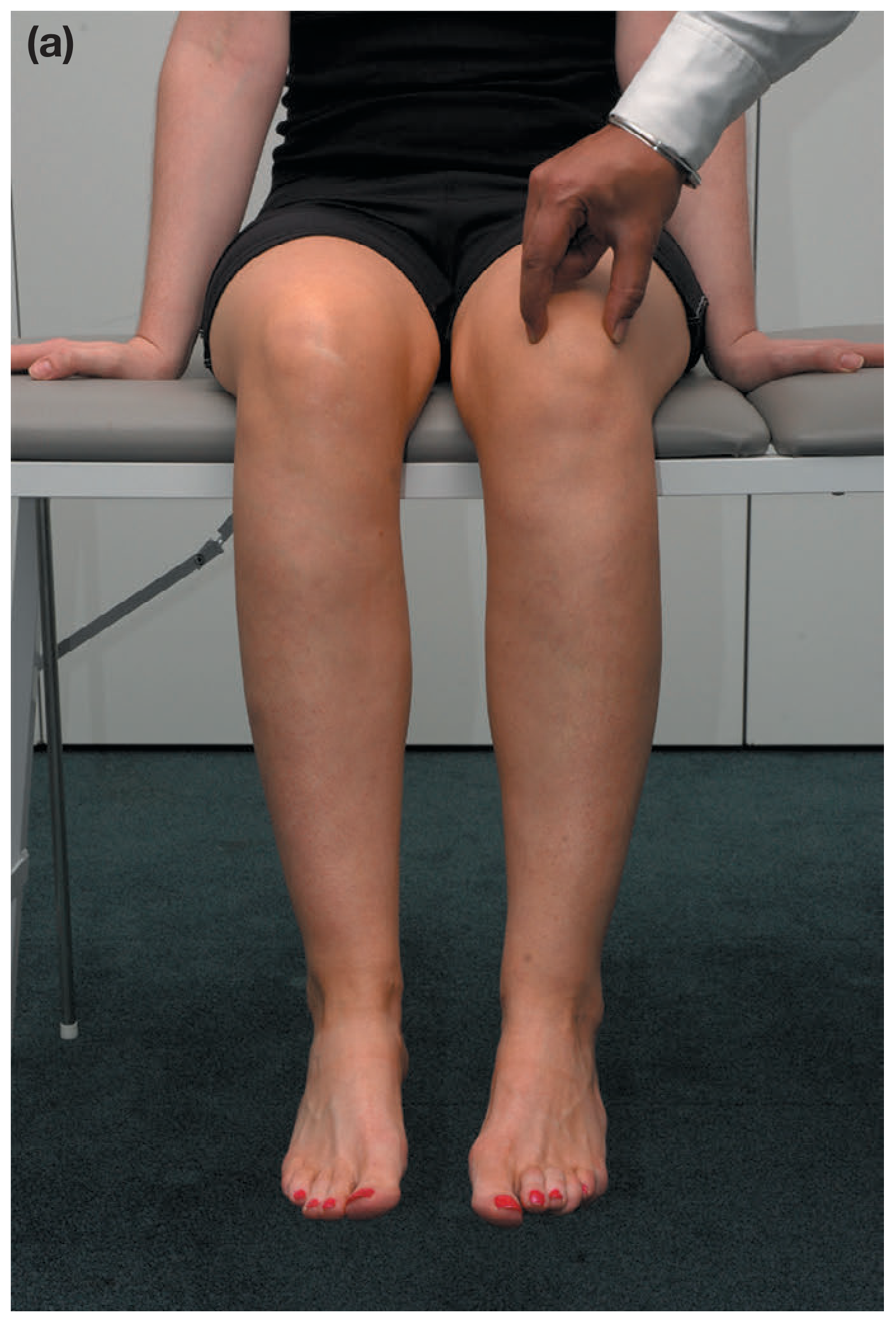
Figure: Patellar tracking test - examiner observes lateral subluxation of patella during knee extension (the "J-sign")
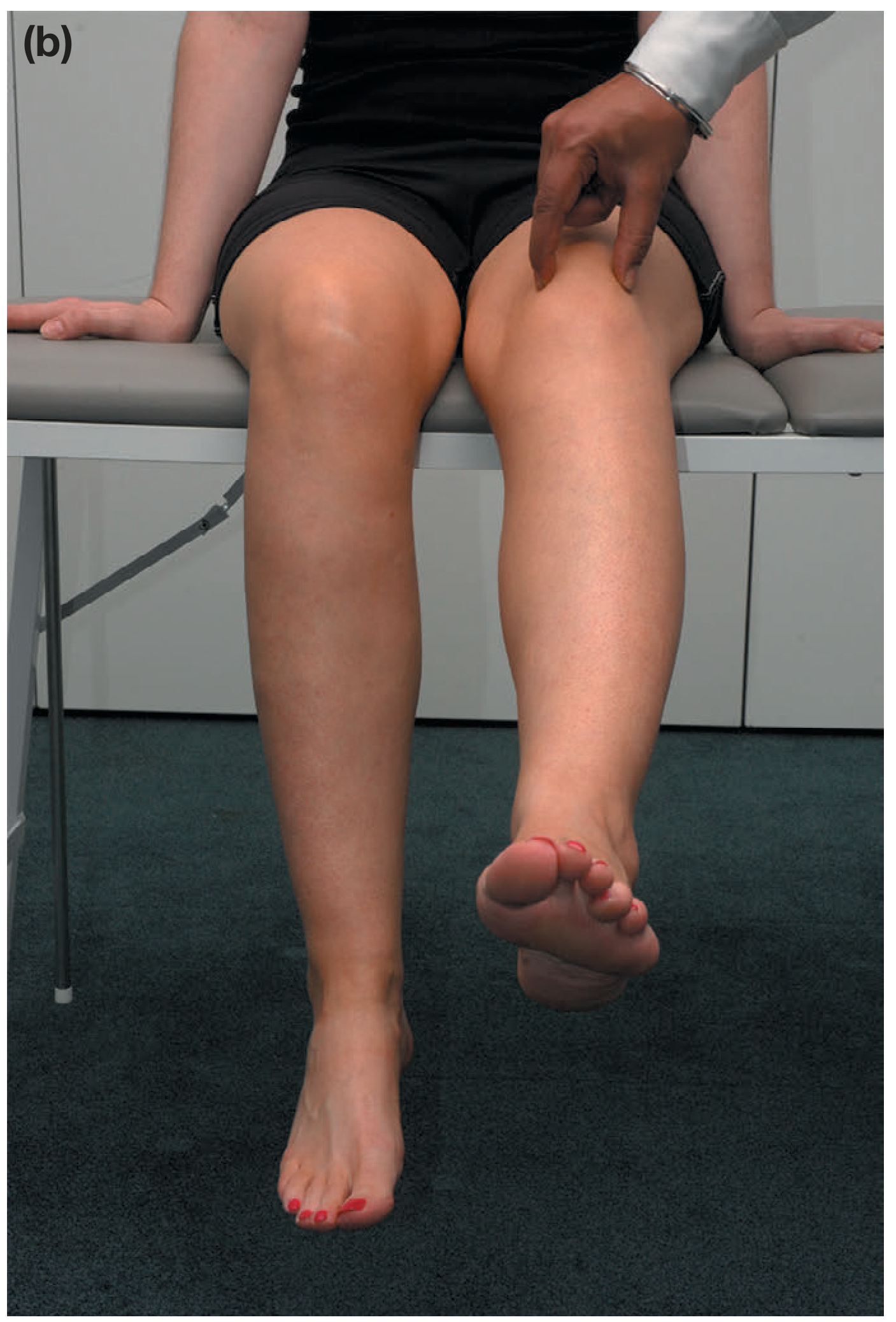
Figure: Lateral displacement of the patella during extension - positive J-sign
5. Clarke's Test - for chondromalacia (patellofemoral pain); not specific for instability
6. Q-angle measurement - measured with knee in extension and 30° flexion
7. Investigations & Evaluation
A. Radiographs (X-ray)
Standard views:
- AP view - assess limb alignment, patella position
- Lateral view - assess patella alta/baja (Insall-Salvati, Caton-Deschamps ratios), trochlear dysplasia (crossing sign, supratrochlear spur, double contour sign)
- Axial (Merchant/Sunrise) view - at 45° of flexion - assess patellar tilt, congruence angle, sulcus angle, trochlear morphology
Key radiographic measurements:
- Sulcus angle: Average 137°; >145° = dysplasia
- Congruence angle: Average -8°; >+16° = lateral patellar displacement
- Patellofemoral angle (Laurin): Should open laterally; parallel or medially opening = abnormal tilt
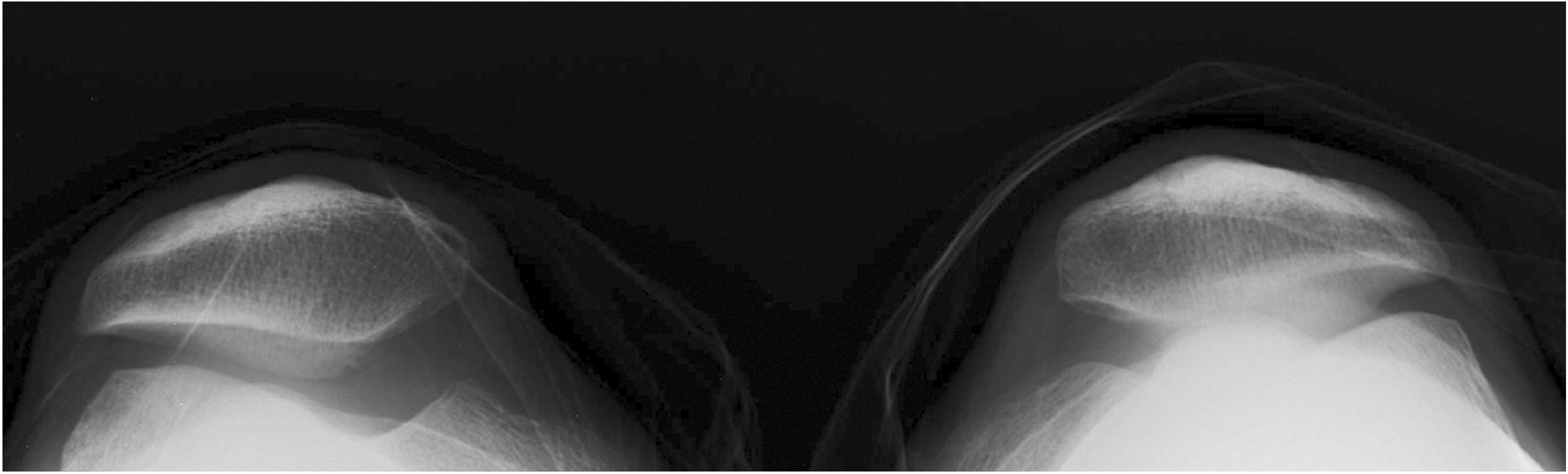
Figure 52.3: Lateral tilt of patella on axial view (Campbell's Operative Orthopaedics 15th Ed)
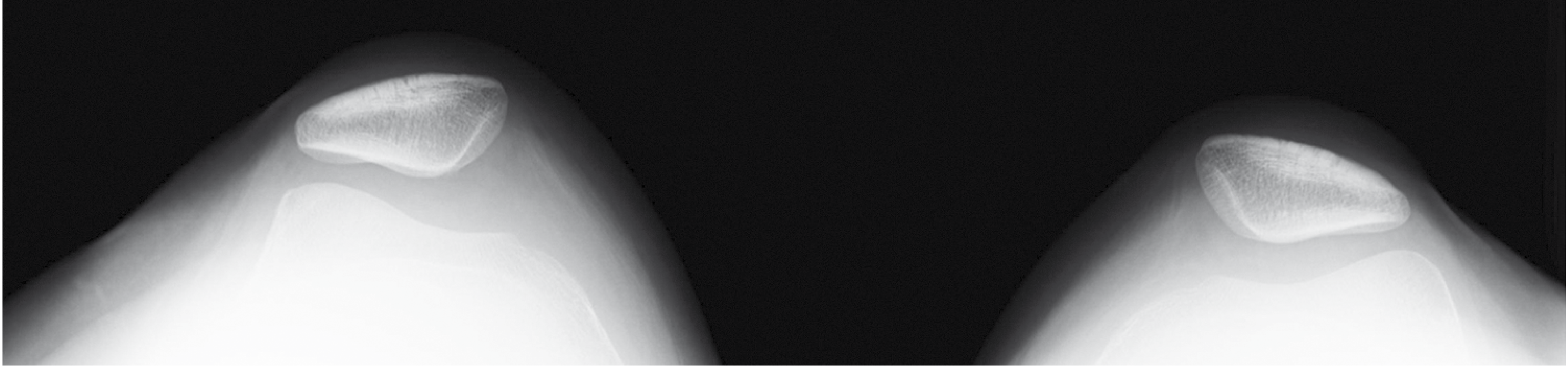
Figure 52.4: Merchant view showing hypoplastic sulcus indicating trochlear dysplasia (Campbell's Operative Orthopaedics 15th Ed)
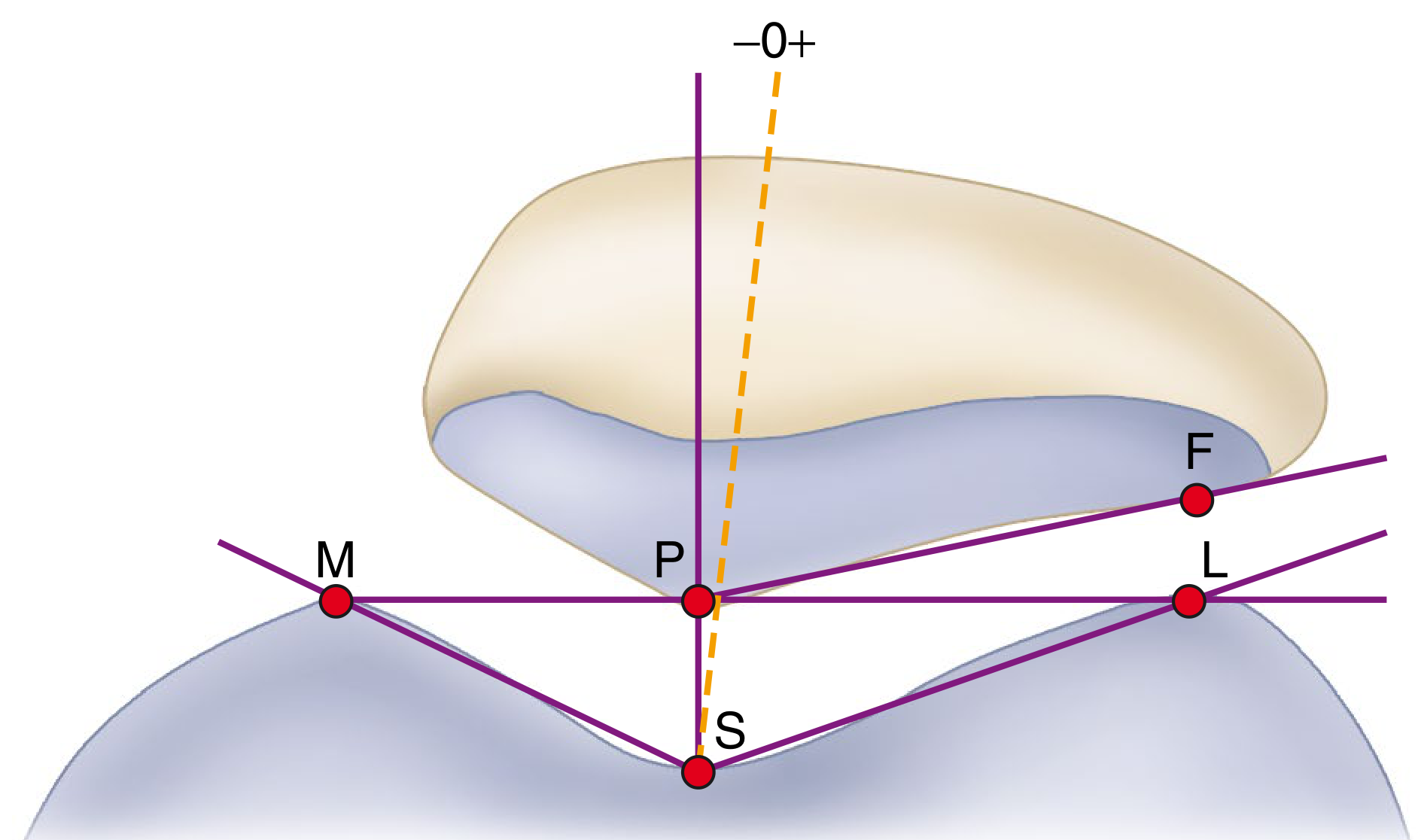
Figure 52.5: Measurements of patellofemoral congruence (Merchant method). M = medial condyle, L = lateral condyle, P = patellar ridge, S = sulcus, F = lateral facet. Angle MSL = sulcus angle (avg 137°). Angle PSO = congruence angle (avg -8°). (Campbell's Operative Orthopaedics 15th Ed)
B. CT Scan
Indications: Bony deformity assessment, surgical planning
Key measurements:
- TT-TG distance (Tibial Tubercle - Trochlear Groove): Most important surgical planning measurement; measured on superimposed axial CT cuts through the trochlear groove and tibial tubercle; pathological >20 mm, surgery warranted; 15-20 mm borderline especially with trochlear dysplasia
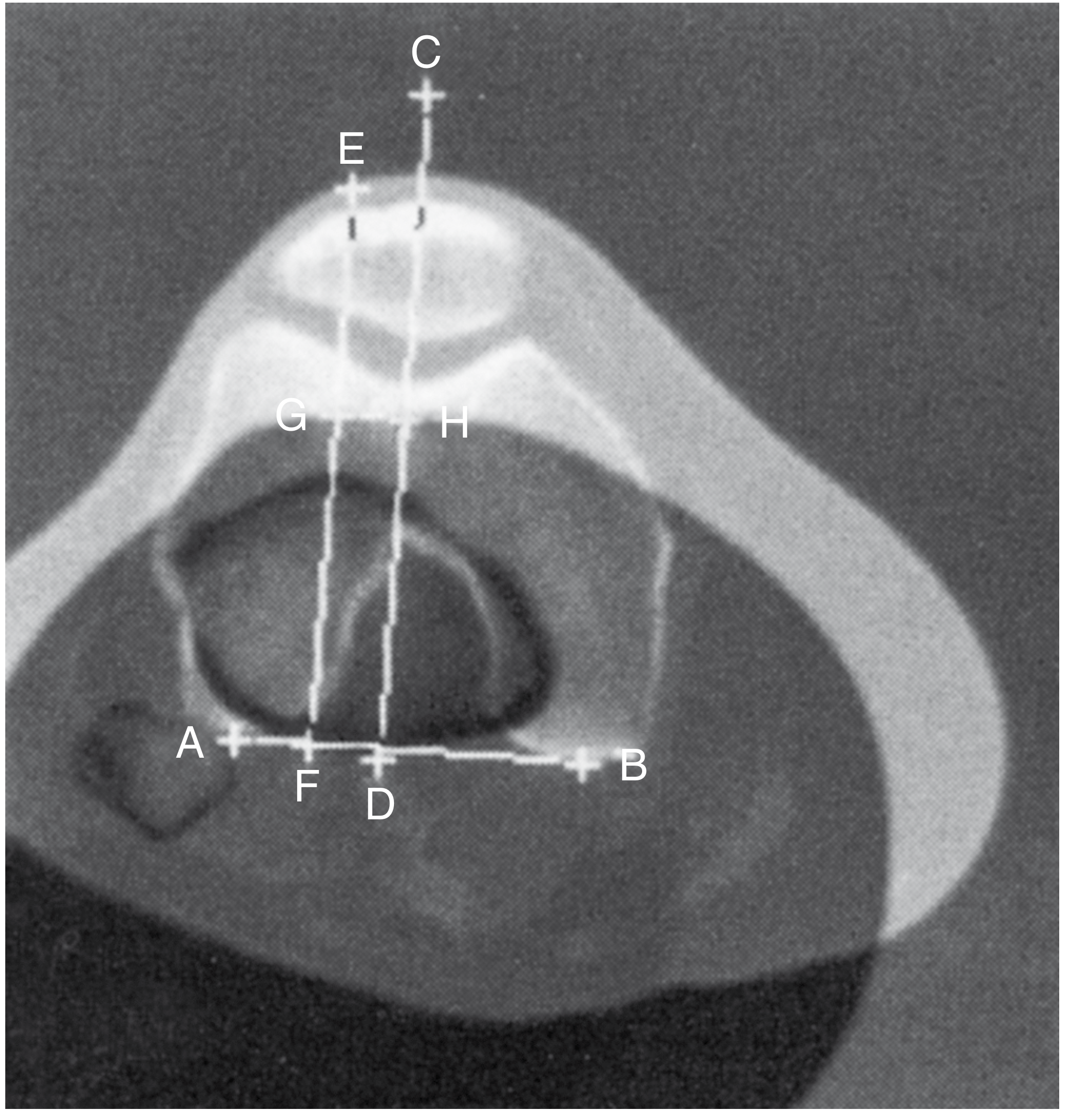
Figure 52.6: CT determination of TT-TG distance. Line AB connects posterior femoral condyle margins. Perpendiculars CD (bisecting trochlear groove) and EF (bisecting tibial tubercle) are drawn. Distance GH = TT-TG measurement. (Campbell's Operative Orthopaedics 15th Ed)
- Trochlear morphology assessment
- Rotational profile: femoral anteversion, tibial torsion
C. MRI
Best for:
- Soft tissue evaluation (MPFL, cartilage, retinaculum)
- Osteochondral injury assessment (bone bruising pattern - lateral femoral condyle + medial patella facet is pathognomonic for lateral dislocation)
- Trochlear dysplasia grading (Dejour V3.0 uses MRI exclusively)
- Patella alta (Caton-Deschamps on MRI)
- TT-TG on MRI (increasingly preferred over CT as no radiation)
- Patellar tilt angle
Classic MRI findings after acute dislocation:
- MPFL tear (medial aspect of patella and/or medial femoral epicondyle)
- Bone bruise: lateral femoral condyle + medial patellar facet ("kissing" contusions)
- Joint effusion / hemarthrosis
- Osteochondral fragments (loose bodies)
D. Diagnostic Arthroscopy
- Can assess patellar tracking directly
- Evaluate chondral surfaces (grade cartilage damage)
- Identify and remove loose bodies
- Often performed at time of surgery
8. Treatment
NONOPERATIVE TREATMENT
First-time patellar dislocation: Nonoperative treatment is the standard of care unless:
- Osteochondral fragment/loose body present
- Associated injuries requiring surgery
- High-risk combination of anatomical risk factors (trochlear dysplasia + patella alta + skeletal immaturity)
Acute Phase (Week 0-2)
- Closed reduction if needed (gentle extension with medial pressure)
- Immobilization in extension: cylinder cast or knee immobilizer for 2-4 weeks
- RICE: rest, ice, compression, elevation
- NSAIDs for pain and inflammation
- Aspiration of hemarthrosis if tense/painful
Subacute/Rehabilitation Phase (Week 2-12)
- Patellar stabilizing brace (worn for 6-8 weeks during rehabilitation and return to sport)
- Progressive range of motion exercises
- Closed-chain exercises (preferred over open-chain):
- Wall slides/sets (squats to ~40° against wall, 15-20 sec hold, 10-15 reps)
- Side and forward step-ups (6-8 inch platform, after inflammation resolves)
- Short-arc leg presses
- Stationary bike / Stairmaster for endurance strengthening
- VMO strengthening (straight leg raises, terminal knee extension)
- Hip abductor and external rotator strengthening
- Core stabilization exercises
- Ankle and proprioceptive training
Return to Sport Criteria:
- Quadriceps and hamstring strength ≥85% of uninjured contralateral side
- Sport-specific agility regained
- Absence of apprehension
Patellar Taping (McConnell technique) - medial glide taping to decrease lateral patellar translation; reduces pain and improves neuromuscular firing of VMO
9. Surgical Treatment
Surgery is indicated for:
- Recurrent instability after failed conservative management
- First-time dislocation with osteochondral injury/loose body
- High-risk first-time dislocators with combination of significant anatomical risk factors
- Mechanical symptoms (locking, loose bodies)
Risk-Reward Classification of Procedures (Campbell's Operative Orthopaedics 15th Ed)
| Category | Procedure | Indication |
|---|---|---|
| Low risk/Low reward | Medial repair/imbrication | First dislocation + repairable chondral defect; ~30% failure rate |
| Low risk/Low reward | Lateral retinacular release | Excessive lateral pressure; adjunct - may increase medial/lateral subluxation risk if used alone |
| Low risk/High reward | MPFL Reconstruction | Recurrent instability ± trochlear dysplasia; GOLD STANDARD |
| Low risk/High reward | Elmslie-Trillat | Instability + TT-TG >20mm + strong repairable medial structures |
| Low risk/High reward | Fulkerson osteotomy | Instability + TT-TG >20mm + lateral/distal patellar arthrosis |
| High risk/High reward | Rotational high tibial osteotomy | Instability + severe rotational deformity |
| High risk/High reward | Distal femoral osteotomy | Instability + genu valgum |
| High risk/High reward | Trochleoplasty | Severe trochlear dysplasia (Type 2-3) |
A. MPFL Reconstruction (Gold Standard for Recurrent Instability)
The MPFL is torn in nearly 100% of lateral patellar dislocations. Reconstruction is the most commonly performed and most evidence-based procedure.
Technique (Phillips - MQTFL Reconstruction):
- Patient supine with tourniquet on upper thigh
- Diagnostic arthroscopy through medial and lateral portals to evaluate tracking and intraarticular damage
- 3-cm incision 3 cm medial to inferior patellar tuberosity; harvest semitendinosus or gracilis tendon; size the folded graft; place Krakow sutures in each tail
- Locate the MPFL femoral footprint: at medial epicondyle (midway between adductor tubercle and medial epicondyle, anterior to MCL); confirm correct isometry
- Two convergent patellar tunnels drilled from medial to lateral; graft sutured into patella
- Femoral tunnel drilled at isometric point; graft fixed with interference screw at 30-45° of flexion with knee in neutral rotation
- Critical: avoid overtightening (causes medial facet overload) and avoid proximal/anterior femoral placement (changes graft isometry)
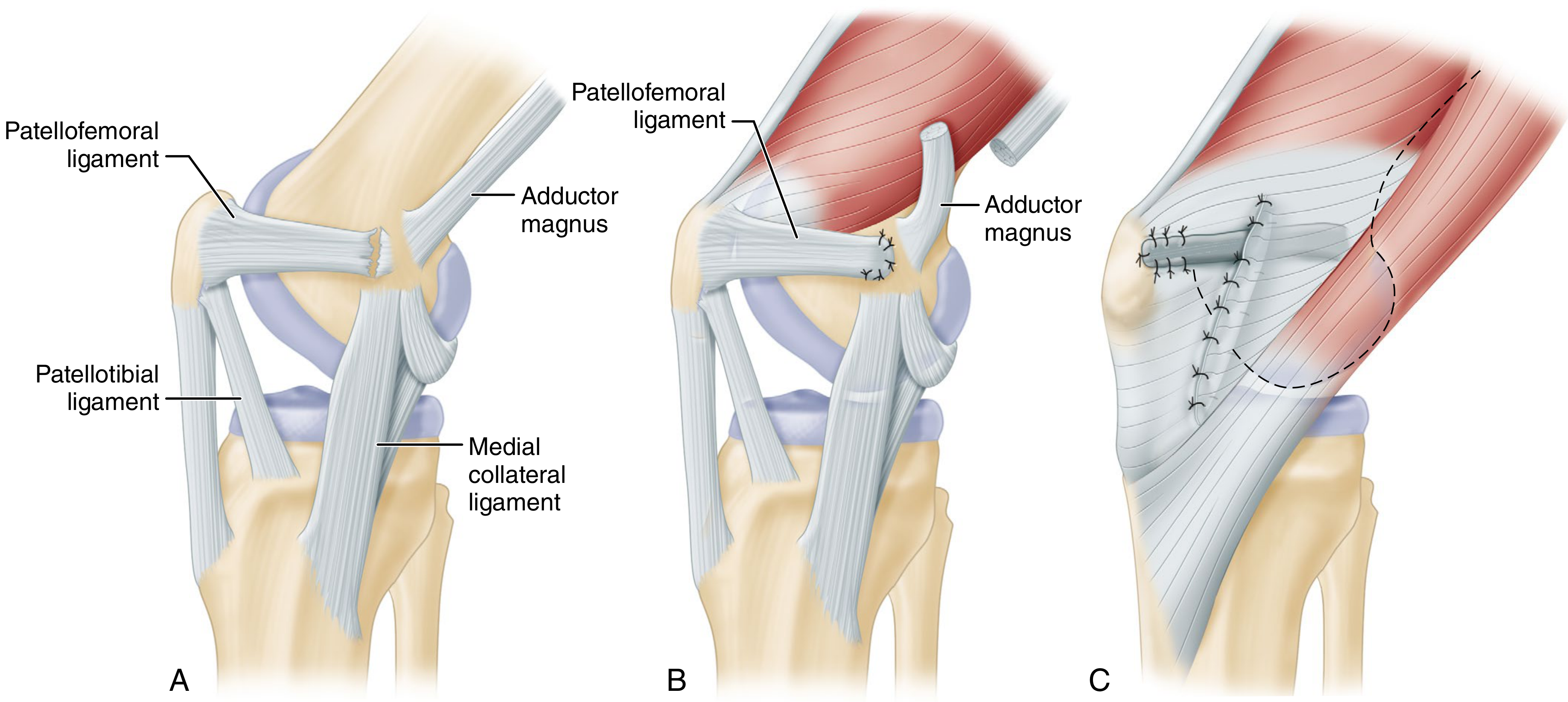
Figure 52.7: MPFL repair/reconstruction anatomy. A) Normal medial knee anatomy. B) MPFL detached at medial femoral epicondyle, reattached with VMO to periosteum. C) Adductor magnus tendon autograft fixed to medial patellar border with retinacular imbrication. (Campbell's Operative Orthopaedics 15th Ed)
Outcomes (2024 systematic review, PMID 39143601): MPFL reconstruction alone shows excellent recurrence-free rates (~90%) for patients without significant TT-TG elevation. Adding tibial tubercle osteotomy is indicated when TT-TG >20 mm.
B. Tibial Tubercle Osteotomy (TTO) - Distal Realignment
Used when TT-TG distance is elevated (>20 mm, or >15 mm with trochlear dysplasia). Two main types:
1. Elmslie-Trillat Procedure
- Pure medialization of the tibial tubercle
- Indicated for patellar instability without arthrosis
- Reduces the Q-angle and TT-TG distance
- Faster healing, lower fracture risk than Fulkerson
2. Fulkerson Anteromedial Osteotomy (AMZ)
- Oblique osteotomy that moves the tubercle anteromedially
- Anteriorizes + medializes the tubercle
- Reduces lateral facet and distal pole loading
- Indicated when instability is combined with lateral facet or distal pole arthrosis and TT-TG >20 mm
- Contraindicated with proximal/medial patellar arthrosis (increases medial facet loading)
- Longer healing time; higher stress fracture risk in athletes
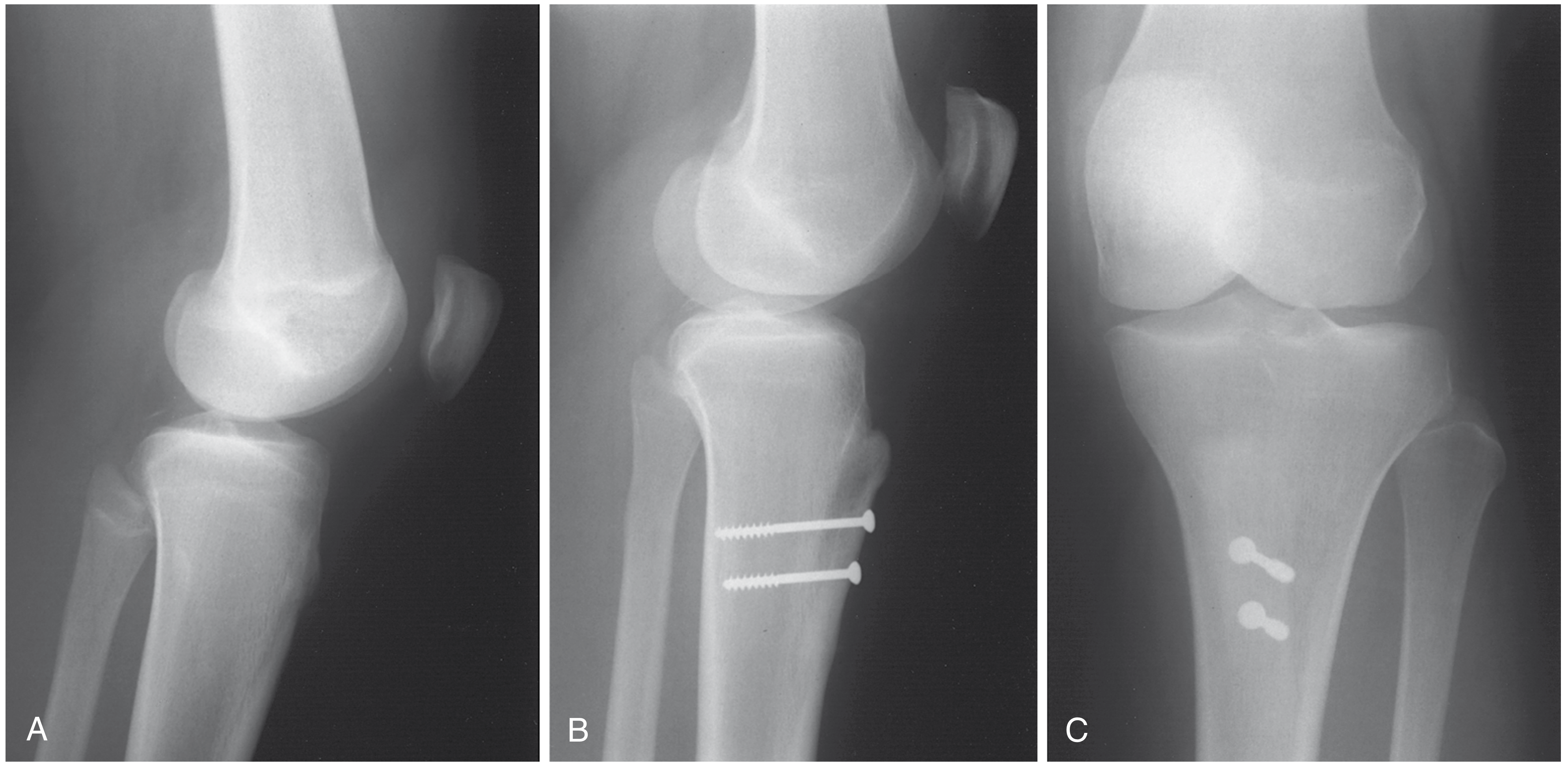
Figure 52.10: Fulkerson (anteromedial tibial tubercle) osteotomy. Pre- and post-operative radiographs showing tibial tubercle transfer with screw fixation. (Campbell's Operative Orthopaedics 15th Ed)
C. Trochleoplasty (for Severe Trochlear Dysplasia)
Indicated for high-grade trochlear dysplasia (Type 2-3 Dejour) where the trochlea is convex/flat, and other soft tissue procedures alone would fail.
Sulcus-Deepening Trochleoplasty (Bereiter technique):
- Open approach (midvastus or medial parapatellar)
- Expose trochlear surface; incise peritrochlear synovium
- Mark new trochlear limits with sterile pen; use intercondylar notch as landmark
- Remove strip of cortical bone from osteochondral edge (width = bump prominence)
- Drill at 5 mm depth with depth guide to create uniform osteochondral flap
- Deepen by removing cancellous bone from undersurface
- Reshape and fix reshaped osteochondral flap with absorbable pins
Associated procedures often needed with trochleoplasty (Box 52.1):
- MPFL reconstruction
- Tibial tubercle medialization
- Lateral retinacular lengthening
Risks: Osteonecrosis, degenerative joint disease, arthrofibrosis, increased lateral compartment pressure
D. Other Procedures
Lateral Retinacular Release / Lengthening
- Rarely indicated alone
- Adjunct for excessive tightness preventing patellar centering
- Arthroscopic or open
- Isolated release increases risk of medial subluxation
Proximal Realignment (VMO Advancement)
- Advancement of the VMO muscle and medial retinaculum distally and laterally
- Often combined with other procedures
- Less reliable as isolated procedure
3-in-1 Procedure (Skeletally Immature Patients)
- Extensor mechanism realignment + VMO advancement + transfer of medial third of patellar tendon to MCL
- Used when open physes contraindicate tibial tubercle transfer
- Now largely replaced by MQTFL reconstruction avoiding the physis
Distal Femoral Osteotomy
- For instability + genu valgum (>5-10°)
- 2024 systematic review (PMID 39260775) confirms improvement in recurrent instability with genu valgum
Derotational Osteotomy
- For instability + excessive femoral anteversion (>35-40°) or tibial torsion
- Femoral and/or tibial derotation
10. Rehabilitation Protocol
Phase 1 - Acute/Protective Phase (0-6 weeks post-surgery)
- Hinged knee brace locked in extension or 0-30° ROM
- Touchdown weight bearing → full weight bearing as tolerated
- Quadriceps activation (neuromuscular electrical stimulation if needed)
- Straight leg raises, ankle pumps
- Ice and compression for swelling
- Goal: full extension, 90° flexion by 6 weeks
Phase 2 - Strengthening Phase (6-12 weeks)
- Progressive ROM to full flexion
- Closed kinetic chain exercises (primary):
- Wall squats to 40° (avoid >60° for tibial tubercle osteotomy)
- Step-ups (6-8 inch platform), step-downs
- Stationary bike
- Leg press (0-60°)
- Hip strengthening: abductors, external rotators (clamshells, side-lying hip abduction)
- Core strengthening
- Proprioception/balance training: single-leg stance, BOSU, wobble board
- Patellar stabilizing brace for activities
Phase 3 - Return to Activity (3-6 months)
- Short arc leg presses and endurance strengthening
- Stairmaster, elliptical
- Sport-specific training: running, cutting, agility drills
- Plyometrics (if appropriate)
- Return to sport criteria:
- Quadriceps and hamstring strength ≥85% of contralateral side
- Limb symmetry index >90% on hop tests
- No apprehension
- Sport-specific agility regained
Special Considerations by Surgery:
| Surgery | Weight Bearing | ROM Restriction | Return to Sport |
|---|---|---|---|
| MPFL Reconstruction | Immediate WBAT in brace | 0-90° for 6 wks | 4-6 months |
| Elmslie-Trillat | 6 weeks partial WB | Progressive | 6 months |
| Fulkerson AMZ | 6-8 weeks partial WB | Progressive | 9-12 months |
| Trochleoplasty | 4-6 weeks non-WB | Guided ROM | 9-12 months |
11. Complications
- Recurrent instability - most common after any surgery (10-30% depending on procedure and risk factors)
- Medial iatrogenic instability - from overcorrection, over-tightened MPFL graft, or excessive lateral release
- Osteonecrosis - especially after trochleoplasty
- Degenerative joint disease - long-term risk, especially with chondral damage
- Arthrofibrosis - loss of range of motion post-surgery
- Proximal tibia stress fracture - after Fulkerson osteotomy (higher risk in athletes)
- Osteochondral defects - from repeated instability events
12. Recent Evidence (2024 Systematic Reviews)
| Study | Finding |
|---|---|
| Su P et al. 2024 (PMID 39143601) | MPFL reconstruction alone vs. with tibial tubercle osteotomy: Adding TTO improves outcomes when TT-TG >20 mm |
| Abelleyra-Lastoria et al. 2024 (PMID 38657526) | In children/adolescents, trochlear dysplasia and patella alta are the dominant pathomorphological risk factors |
| Moran TE et al. 2024 (PMID 39260775) | Distal femoral osteotomy improves recurrent instability in genu valgum patients |
Summary Algorithm
PATELLAR INSTABILITY
↓
Is there an acute dislocation?
↙ ↘
YES NO (recurrent / chronic)
↓ ↓
Loose body? Assess risk factors:
↙ ↘ TT-TG, trochlear dysplasia,
YES NO patella alta, malalignment
↓ ↓ ↓
Surgery Non-op HIGH risk factors?
(remove then rehab ↙ ↘
body) YES NO
↓ ↓
Surgery Non-op
planning rehab
↓
TT-TG >20mm? → Tibial tubercle osteotomy + MPFL Recon
Trochlear dysplasia Type 2-3? → Trochleoplasty + MPFL
Genu valgum? → Distal femoral osteotomy
Isolated MPFL deficiency? → MPFL Reconstruction alone
*Sources: Campbell's Operative Orthopaedics 15th Ed 2026, Ch. 52 (Lamplot & Brolin); Bailey & Love's Short Practice of Surgery 28th Ed; Miller's Review of Orthopaedics 9th Ed; PMC12139600 (Patellar instability: current approach, 2025); PMID 39143601, 38657526, 39260775 (Systematic Reviews 2024)*Here is a comprehensive, illustrated review of patellar instability covering all the major areas you requested. Here is a brief summary of what was covered:
What Was Covered
Etiology
The major anatomical risk factors (the "Dejour quartet") are: trochlear dysplasia (most important - present in 85% of recurrent dislocations), patella alta, elevated TT-TG distance (>20 mm), and increased patellar tilt. These combine with soft tissue deficiency (especially MPFL rupture), lower-limb malalignment (Q-angle, femoral anteversion, genu valgum, tibial torsion), trauma, and ligamentous laxity syndromes.
Signs & Symptoms
Giving way, anterior knee pain, hemarthrosis, patellar apprehension, crepitation, and in acute dislocations - visible deformity. Key exam findings: positive Fairbank's apprehension test, J-sign (maltracking), medial retinaculum tenderness.
Investigations
- X-ray: Merchant view (sulcus angle, congruence angle, tilt); lateral (patella alta, crossing sign of trochlear dysplasia)
- CT: TT-TG distance measurement (key surgical planning tool)
- MRI: MPFL integrity, osteochondral injury, cartilage assessment, Dejour V3.0 grading
Treatment & Rehab
Non-operative for first-time dislocations (brace + rehab emphasizing VMO, closed-chain exercises, hip strengthening). Surgery for recurrent instability or high-risk first-timers.
Surgeries
Ranging from MPFL reconstruction (gold standard, low risk/high reward) to tibial tubercle osteotomies (Elmslie-Trillat, Fulkerson AMZ), trochleoplasty for severe trochlear dysplasia, and osteotomies for malalignment - each with specific indications guided by the patient's unique anatomical risk factor profile.
This is a shared conversation. Sign in to Orris to start your own chat.