
General Medicine MBBS Pedal Edema Practical theory
Reading File
Now let me search the library for pedal edema content across multiple relevant headings and paragraphs simultaneously.
Finding Sources
Finding Sources
Finding Sources
Finding Sources
Finding Sources
Finding Sources
Finding Sources
Finding Sources
Reading File
Finding Sources
Reading File
Reading File
Searching the Web
pedal edema MBBS clinical examination causes management practical approach
Now let me fetch the nephrology edema image and grab a few more key sections for a thorough answer:
Loading Image
Reading File
I now have comprehensive information from multiple authoritative textbooks. Let me compile the full MBBS-level practical theory on pedal edema.
Pedal Edema - General Medicine MBBS Practical Theory
Definition
Pedal edema (peripheral/dependent edema) is the abnormal accumulation of interstitial fluid in the feet and lower extremities. It is visible swelling that pits on pressure (pitting edema) when caused by fluid overload states, or may be non-pitting in certain conditions.
Pathophysiology - Starling Forces
Edema forms when the balance of Starling forces is disturbed. Four mechanisms operate:
| Mechanism | Example |
|---|---|
| Increased hydrostatic pressure | Heart failure, venous obstruction, portal hypertension |
| Decreased oncotic (colloid osmotic) pressure | Hypoalbuminemia (nephrotic syndrome, cirrhosis, malnutrition) |
| Increased capillary permeability | Inflammation, allergy, cellulitis |
| Impaired lymphatic drainage | Lymphedema, filariasis, post-surgical |
In cardiac failure, reduced cardiac output is sensed by the kidney as "hypovolemia," triggering renin-angiotensin-aldosterone system (RAAS) activation and renal salt/water retention. This expands plasma volume but the failing heart cannot handle the extra volume, so fluid leaks into the interstitium - producing bilateral pedal edema. - Katzung's Basic and Clinical Pharmacology, 16th Edition
Classification
By Laterality
- Bilateral pedal edema - Systemic causes (heart failure, nephrotic syndrome, cirrhosis, hypothyroidism, nutritional, drugs)
- Unilateral edema - Local causes (DVT, cellulitis, venous insufficiency, lymphedema, bony/soft tissue tumor)
By Type
- Pitting edema - Leaves a pit/indentation on pressing firmly for 5 seconds; seen in cardiac, renal, hepatic, nutritional causes
- Non-pitting edema - No indentation; seen in lymphedema, myxedema (hypothyroidism), lipoedema
Grading of Pitting Edema (Clinical)
| Grade | Depth of Pit | Rebound Time |
|---|---|---|
| 1+ | 2 mm | Rapid (<2 sec) |
| 2+ | 4 mm | 2-4 sec |
| 3+ | 6 mm | >4 sec |
| 4+ | 8 mm | Prolonged (>20 sec) |
Causes (MBBS Mnemonics)
Bilateral Pedal Edema - CHIEFS
| Letter | Category | Specific Examples |
|---|---|---|
| C | Cardiac | Congestive heart failure (most common), cor pulmonale, constrictive pericarditis |
| H | Hepatic | Cirrhosis with portal hypertension + hypoalbuminemia |
| I | Idiopathic/Inflammatory | Idiopathic edema (young women), allergic/angioedema |
| E | Endocrine | Hypothyroidism (myxedema), Cushing's syndrome, premenstrual edema |
| F | Fluid retention/Drugs | Calcium channel blockers (amlodipine), NSAIDs, steroids, thiazolidinediones, OCP |
| S | Systemic/Renal | Nephrotic syndrome, chronic kidney disease, nutritional (hypoalbuminemia) |
Additional Causes
- Pregnancy - Increased venous pressure from gravid uterus + hormonal changes
- Venous insufficiency - Chronic venous hypertension, varicose veins
- Malnutrition/hypoalbuminemia - Kwashiorkor, protein-losing enteropathy
- Immobility - Prolonged sitting (airplane travel), dependent position
- Heat edema - Benign, seen in elderly in hot environments; resolves with cooling
History Taking (Key Points)
Duration and onset: Acute vs. chronic; acute unilateral = DVT until proven otherwise
Associated symptoms to ask:
- Dyspnea, orthopnea, PND → Heart failure
- Oliguria, frothy urine, facial puffiness in morning → Nephrotic syndrome
- Jaundice, abdominal distension, alcohol history → Cirrhosis
- Weight gain, cold intolerance, constipation → Hypothyroidism
- Calf pain, redness, recent immobilization/surgery/travel → DVT
- Diurnal variation - Cardiac/venous edema increases by end of day (dependent); nephrotic edema starts periorbital in morning
Medications: Amlodipine, NSAIDs, steroids, OCP, glitazones
Risk factors: Heart disease, diabetes, liver disease, renal disease, malignancy
Clinical Examination
General Survey
- Pallor (anemia in CKD, liver disease)
- Icterus (liver disease)
- Facial puffiness (nephrotic syndrome - periorbital edema worst in morning)
- JVP elevation (heart failure, cardiac tamponade)
- Cyanosis
- Nutritional status - cachexia or obesity
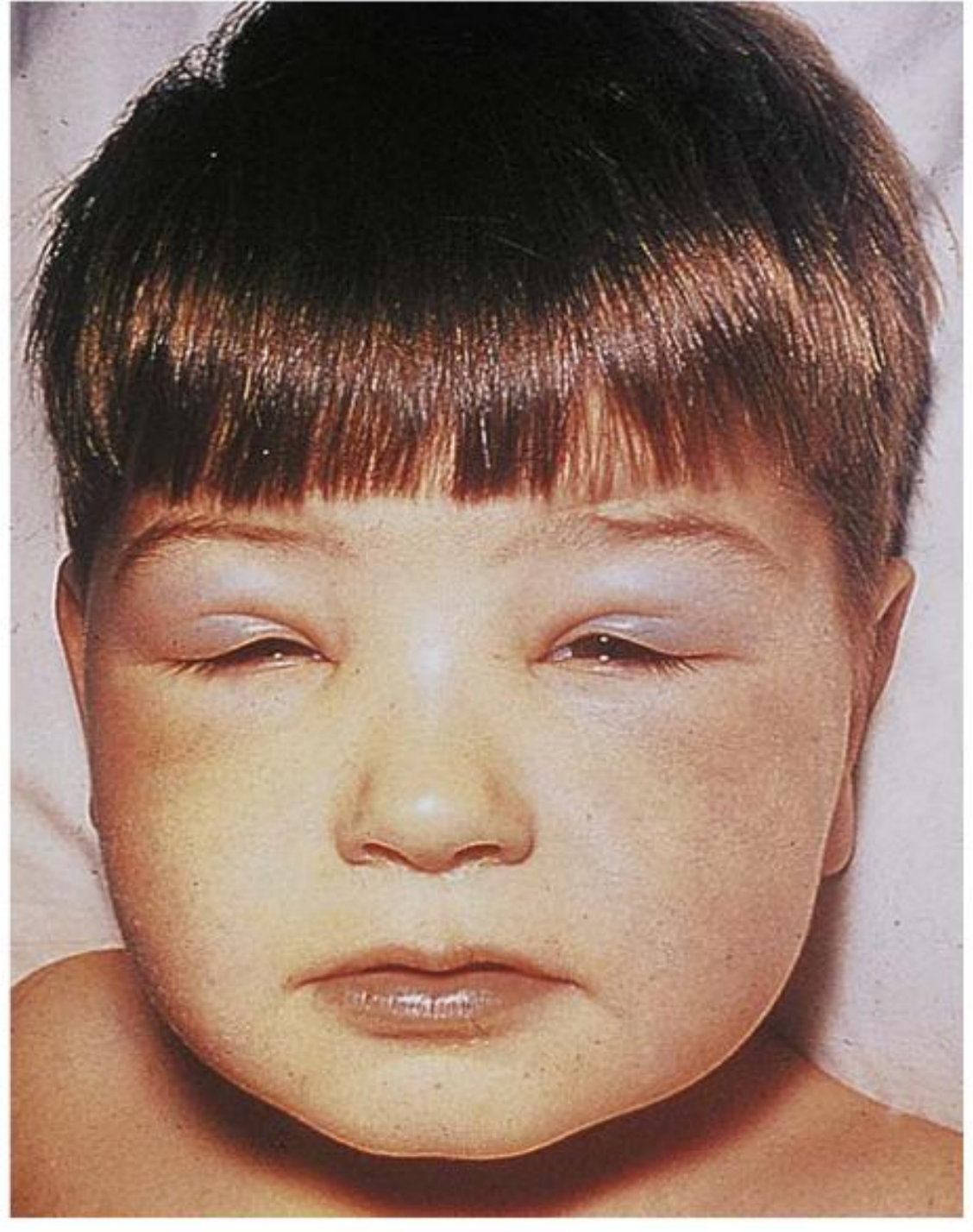
Nephrotic edema: Periorbital puffiness in a child in the early morning. Note it resolves during the day under gravity. - Comprehensive Clinical Nephrology, 7th Ed.
Examination of Edema
- Site - Dorsum of feet, ankles, pretibial region, sacrum (if bedridden), genitals (severe)
- Extent - Feet only / up to knee / up to thigh / anasarca
- Pitting - Press firmly over bony area (pretibial, dorsum of foot) for 5 seconds; note depth and rebound
- Temperature - Warm = inflammation/cellulitis; cool = reduced perfusion
- Skin changes - Pigmentation, lipodermatosclerosis, ulceration (chronic venous insufficiency); skin thickening/roughness (lymphedema); dry coarse skin (hypothyroidism)
- Tenderness - Tender = DVT, cellulitis, inflammatory; non-tender = cardiac/renal/hepatic
- Varicosities - Dilated superficial veins suggest chronic venous insufficiency
Systemic Examination Clues
| Finding | Suggests |
|---|---|
| Elevated JVP + S3 gallop + displaced apex + bilateral basal crepitations | Congestive heart failure |
| Ascites + spider naevi + palmar erythema + hepatomegaly/splenomegaly | Cirrhosis |
| Frothy urine + hypertension + periorbital puffiness | Nephrotic syndrome |
| Bradycardia + coarse hair + delayed ankle reflex relaxation | Hypothyroidism |
| Calf tenderness + unilateral swelling (Homans' sign - limited sensitivity) | DVT |
Exam Tip: Nephrotic edema is characteristically periorbital in the morning and pedal by evening; cardiac edema is absent in the morning and worst in the evening (gravity-dependent). - Comprehensive Clinical Nephrology, 7th Ed.
Investigations
First-Line (Must Order)
| Test | Rationale |
|---|---|
| Serum albumin | Low in nephrotic syndrome (<2.5 g/dL), cirrhosis, malnutrition |
| Urine routine + microscopy | Proteinuria (nephrotic), casts, hematuria |
| 24-hour urine protein / spot PCR | Confirms nephrotic range (>3.5 g/day) |
| RFTs (S. creatinine, BUN, eGFR) | Renal failure |
| LFTs (bilirubin, transaminases, PT) | Liver disease |
| Serum electrolytes | Hyponatremia (SIADH/CHF), hypokalemia |
| CBC | Anemia, thrombocytopenia (cirrhosis) |
| TSH / T3, T4 | Hypothyroidism |
| ECG + CXR | Cardiomegaly, pulmonary congestion, pleural effusion |
| 2D Echo | LV function, EF, valvular disease |
Second-Line (As indicated)
- Doppler ultrasound of lower limbs - DVT
- Venous duplex - Chronic venous insufficiency
- D-dimer - DVT screening (high sensitivity, low specificity)
- BNP / NT-proBNP - Differentiates cardiac from non-cardiac edema
- Renal biopsy - If nephrotic syndrome confirmed (identifies: minimal change disease, focal segmental glomerulosclerosis, membranous nephropathy, diabetic nephropathy, amyloidosis)
- Liver biopsy / fibroscan - Severity of cirrhosis
Differential Diagnosis at a Glance
| Feature | Cardiac Failure | Nephrotic Syndrome | Cirrhosis | Hypothyroidism | DVT |
|---|---|---|---|---|---|
| Laterality | Bilateral | Bilateral | Bilateral | Bilateral | Unilateral |
| Pitting | Yes | Yes | Yes | No (myxedema) | Yes (early) |
| JVP | Elevated | Normal | Normal/Low | Normal | Normal |
| Ascites | Late/absent | Present (severe) | Prominent | Absent | Absent |
| Serum albumin | Normal/low | Very low (<2.5) | Low | Normal | Normal |
| Urine protein | Trace | Massive (>3.5 g/d) | Trace | Trace | Trace |
| Diurnal variation | Worse PM | Worse AM (face) | Constant | Constant | Constant |
| BNP | Elevated | Normal | Normal | Normal | Normal |
Management
General Measures
- Leg elevation above the level of the heart when resting - reduces hydrostatic pressure
- Sodium restriction (<2 g/day) in cardiac and renal edema
- Fluid restriction in severe hyponatremia
- Compression stockings (graduated, 20-30 mmHg) in venous insufficiency
- Avoid prolonged standing/sitting
- Treat underlying cause (cornerstone of management)
Pharmacological Treatment
1. Heart Failure Edema
- Loop diuretics (furosemide) - First choice; inhibit Na-K-2Cl cotransporter in thick ascending limb; cause brisk natriuresis and reduction of pulmonary congestion - Katzung's Basic and Clinical Pharmacology
- Add aldosterone antagonist (spironolactone) for mortality benefit in HFrEF
- Combination loop + thiazide (metolazone) for diuretic-resistant edema; requires close K+ monitoring
- Caution: Excessive diuresis lowers filling pressures below 15 mmHg → reduces cardiac output (especially critical in right ventricular failure) - Katzung's
2. Nephrotic Syndrome Edema
- Loop diuretics - but may be less effective due to protein binding in tubules
- Salt restriction
- Treat primary cause (steroids for minimal change disease, immunosuppressants for others)
- ACE inhibitors/ARBs to reduce proteinuria
3. Cirrhosis with Ascites/Edema
- Spironolactone (first choice) - targets secondary hyperaldosteronism
- Add furosemide for synergistic effect (ratio 100 mg spironolactone : 40 mg furosemide)
- Paracentesis for tense ascites
- Salt restriction
4. Hypothyroid Edema
- Thyroid replacement (levothyroxine) - edema resolves with correction of hypothyroidism
5. Drug-Induced Edema
- Withdraw offending drug (e.g., switch amlodipine to another antihypertensive)
6. DVT
- Anticoagulation (LMWH/DOACs) - mainstay
- Compression, elevation
7. Lymphedema
- Complex decongestive physiotherapy
- Compression bandaging
- Diuretics NOT useful for pure lymphedema
Key Diuretic Points (Pharmacology - Viva Favorite)
| Diuretic | Site of Action | Use in Edema | Key Side Effect |
|---|---|---|---|
| Furosemide (loop) | Thick ascending loop of Henle (NKCC2) | Heart failure, renal edema, acute pulmonary edema | Hypokalemia, ototoxicity |
| Hydrochlorothiazide | Distal convoluted tubule (NCC) | Mild CHF, hypertension | Hypokalemia, hyperuricemia |
| Spironolactone | Collecting duct (aldosterone antagonist) | Cirrhosis, CHF (add-on) | Hyperkalemia, gynecomastia |
| Eplerenone | Collecting duct (selective aldosterone antagonist) | CHF post-MI | Hyperkalemia (less gynecomastia) |
High-Yield Exam Points (Viva/Short Notes)
- Most common cause of bilateral pedal edema in India: Congestive heart failure
- Edema that does not change with dependency: Protein-loss edema (hypoalbuminemia) - because it's oncotic, not hydrostatic
- Edema worse in morning (face/periorbital): Nephrotic syndrome
- Non-pitting edema causes: Lymphedema, myxedema (hypothyroidism), lipoedema, pretibial myxedema (Graves' disease - pretibial only)
- Unilateral edema: Always think DVT or local lymphatic/venous obstruction
- Diuretics contraindicated in: Pure chronic venous insufficiency edema - do NOT use diuretics as sole therapy
- Heat edema: Benign; in elderly in hot climates; history + examination exclude systemic cause
- Anasarca = generalized edema involving face, abdomen (ascites), pleural effusions + limbs; severe nephrotic syndrome, end-stage liver failure
- Starling's law application: Edema forms when capillary hydrostatic pressure > oncotic pressure, i.e., net filtration exceeds lymphatic drainage capacity
- BNP/NT-proBNP: Most useful single test to differentiate cardiac from non-cardiac pedal edema
Practical Viva Approach
"A patient presents with bilateral pedal edema - how do you proceed?"
- Confirm it is edema (pitting test)
- Bilateral vs. unilateral (systemic vs. local cause)
- Take history - duration, diurnal variation, associated SOB/orthopnea, frothy urine, jaundice, drug history
- Examine - JVP, S3, crepitations (cardiac); periorbital puffiness, ascites (nephrotic/hepatic); thyroid enlargement, delayed reflexes (hypothyroid); calf tenderness (DVT)
- Investigate - Serum albumin, urine protein, RFT, LFT, ECG, echo, TSH
- Treat underlying cause + diuretics as appropriate
Sources: Katzung's Basic and Clinical Pharmacology 16th Ed. | Comprehensive Clinical Nephrology 7th Ed. | Symptom to Diagnosis - An Evidence Based Guide, 4th Ed. | Goodman & Gilman's Pharmacological Basis of Therapeutics | Harrison's Principles of Internal Medicine 22E
This is a shared conversation. Sign in to Orris to start your own chat.