
I want to learn ECG from basic
Reading File
Now let me search the medical library for ECG fundamentals content, running parallel queries to cover the key topics.
Finding Sources
Finding Sources
Searching the Web
ECG basics for beginners cardiac conduction system P wave QRS T wave explained
Finding Sources
Finding Sources
Reading File
Reading File
Reading File
Finding Sources
Finding Sources
Loading Image
Now let me read the key ECG waveform sections from Guyton, Harrison's, and Tietz for comprehensive content.
Reading File
Reading File
Loading Image
Reading File
Loading Image
Reading File
I now have excellent content from Harrison's, Guyton, and Gray's Anatomy. Let me compile a comprehensive beginner's ECG guide.
Here is a complete, structured guide to learning ECG from the basics, sourced from Harrison's Principles of Internal Medicine (22nd Ed.), Guyton & Hall Medical Physiology, and Gray's Anatomy for Students.
ECG from the Basics: A Complete Beginner's Guide
1. What Is an ECG?
An electrocardiogram (ECG or EKG) is a recording of the electrical activity of the heart over time. When a cardiac impulse passes through the heart, electrical currents spread into the surrounding tissues and all the way to the skin surface. Electrodes placed on the skin pick up these tiny voltage differences and trace them on graph paper. The result is the familiar "squiggly line" pattern you see on monitors.
- Guyton & Hall Medical Physiology
2. The Cardiac Conduction System (The Foundation)
Before reading an ECG, you must understand why the heart generates electricity. The conduction system initiates and coordinates contraction in a specific order:
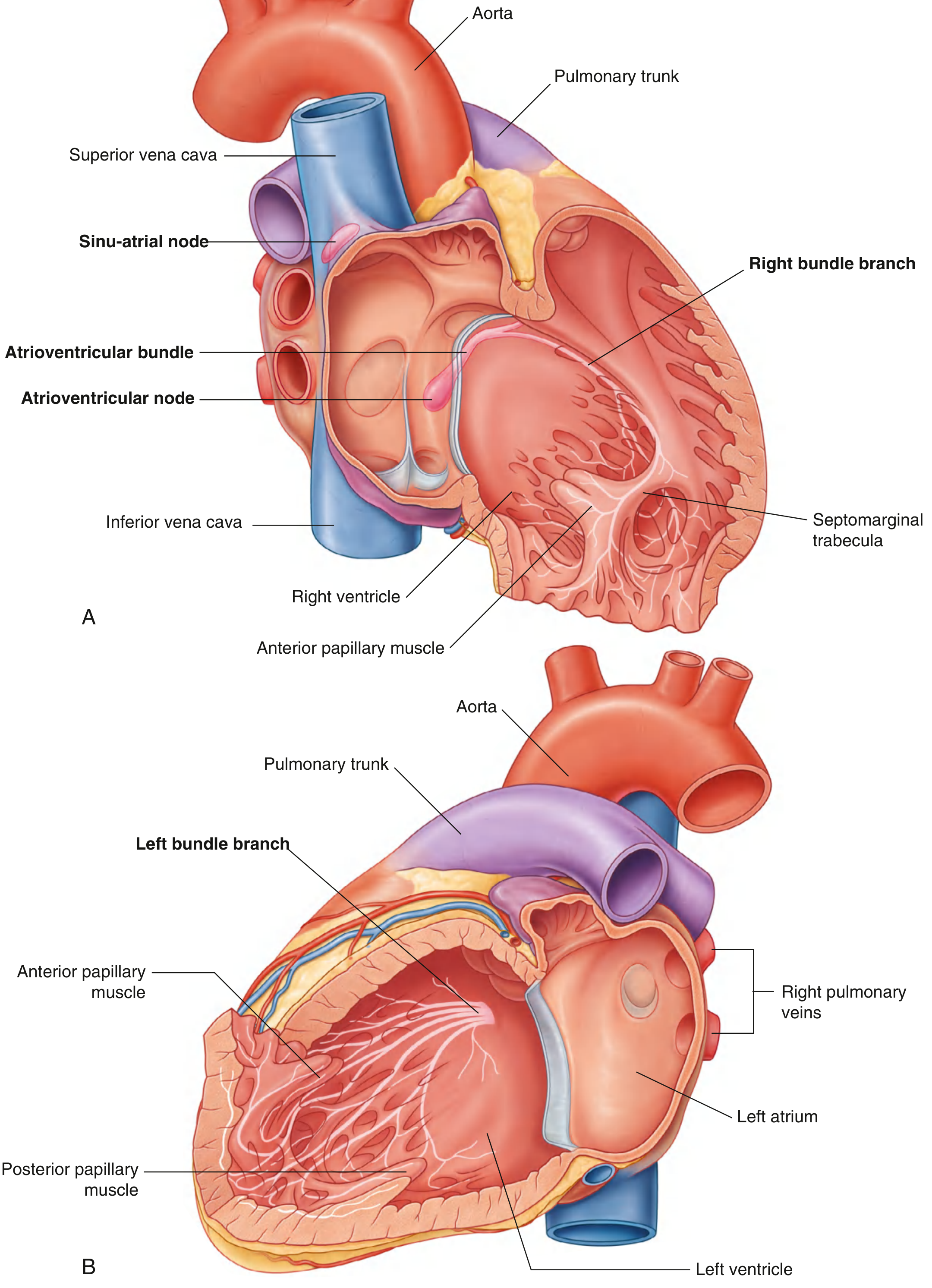
Fig. 3.86 from Gray's Anatomy for Students - Conduction System of the Heart
The pathway flows in this order:
| Step | Structure | What happens |
|---|---|---|
| 1 | SA node (sinoatrial node) | The heart's natural pacemaker. Located at the junction of the superior vena cava and right atrium. Fires spontaneously ~60-100 times/min. |
| 2 | Atria | The electrical wave spreads across both atria, causing them to contract. |
| 3 | AV node (atrioventricular node) | Near the tricuspid valve. Deliberately slows the impulse to give ventricles time to fill with blood. |
| 4 | Bundle of His | Carries impulse down the interventricular septum. |
| 5 | Right & Left Bundle Branches | Split and carry signals to right and left ventricles respectively. |
| 6 | Purkinje fibers | Final network that spreads activation through the ventricular walls from endocardium to epicardium, triggering coordinated contraction. |
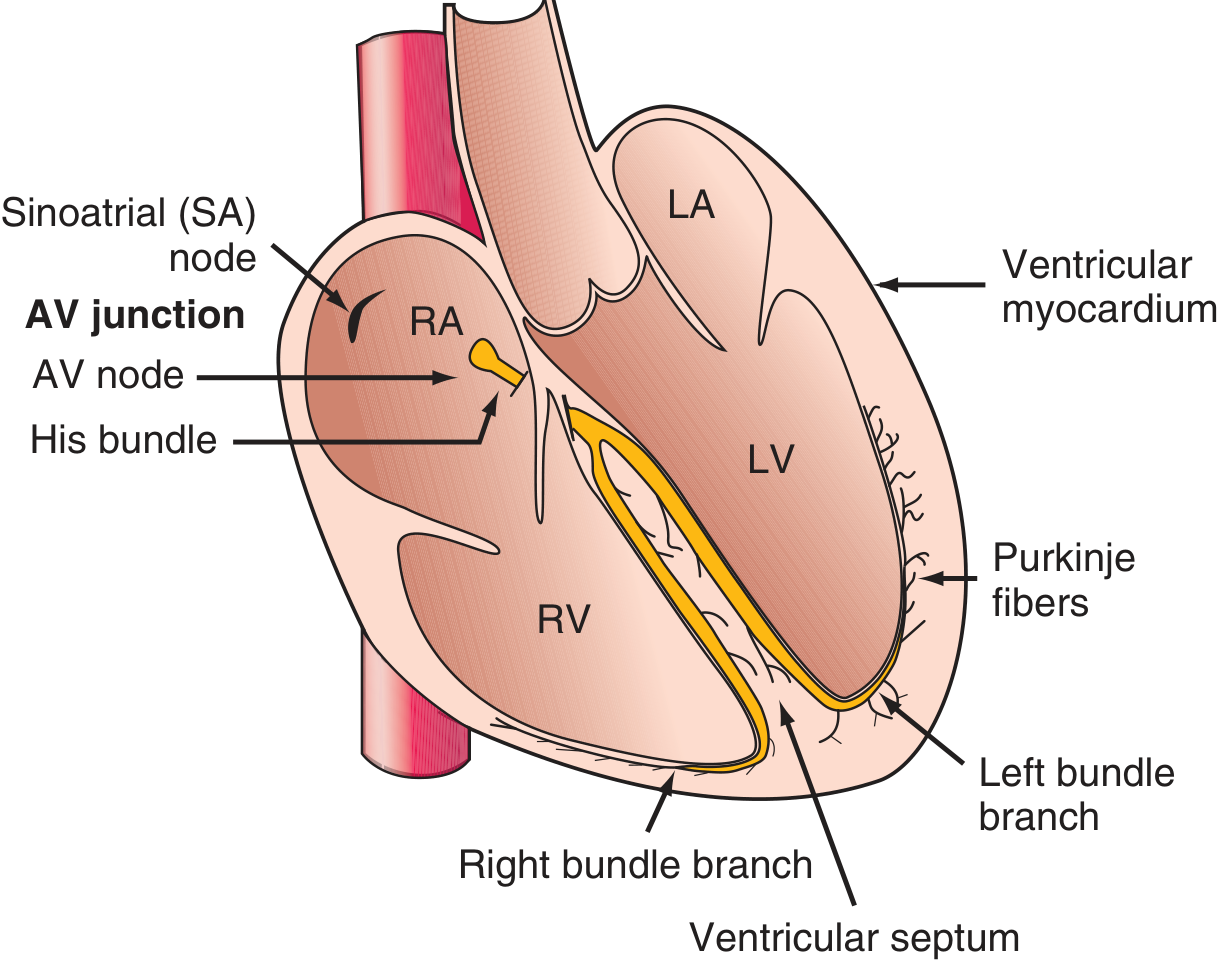
FIGURE 247-1 from Harrison's Principles of Internal Medicine 22E - Schematic of the cardiac conduction system
Key clinical point: If the SA node fails, the AV node takes over at ~40-60 bpm. If the AV node fails, the ventricles pace themselves at ~20-40 bpm (very slow and dangerous).
- Gray's Anatomy for Students; Harrison's 22E
3. The ECG Waveform: P-QRS-T
Every single heartbeat produces a characteristic pattern of waves. Here is what each represents:
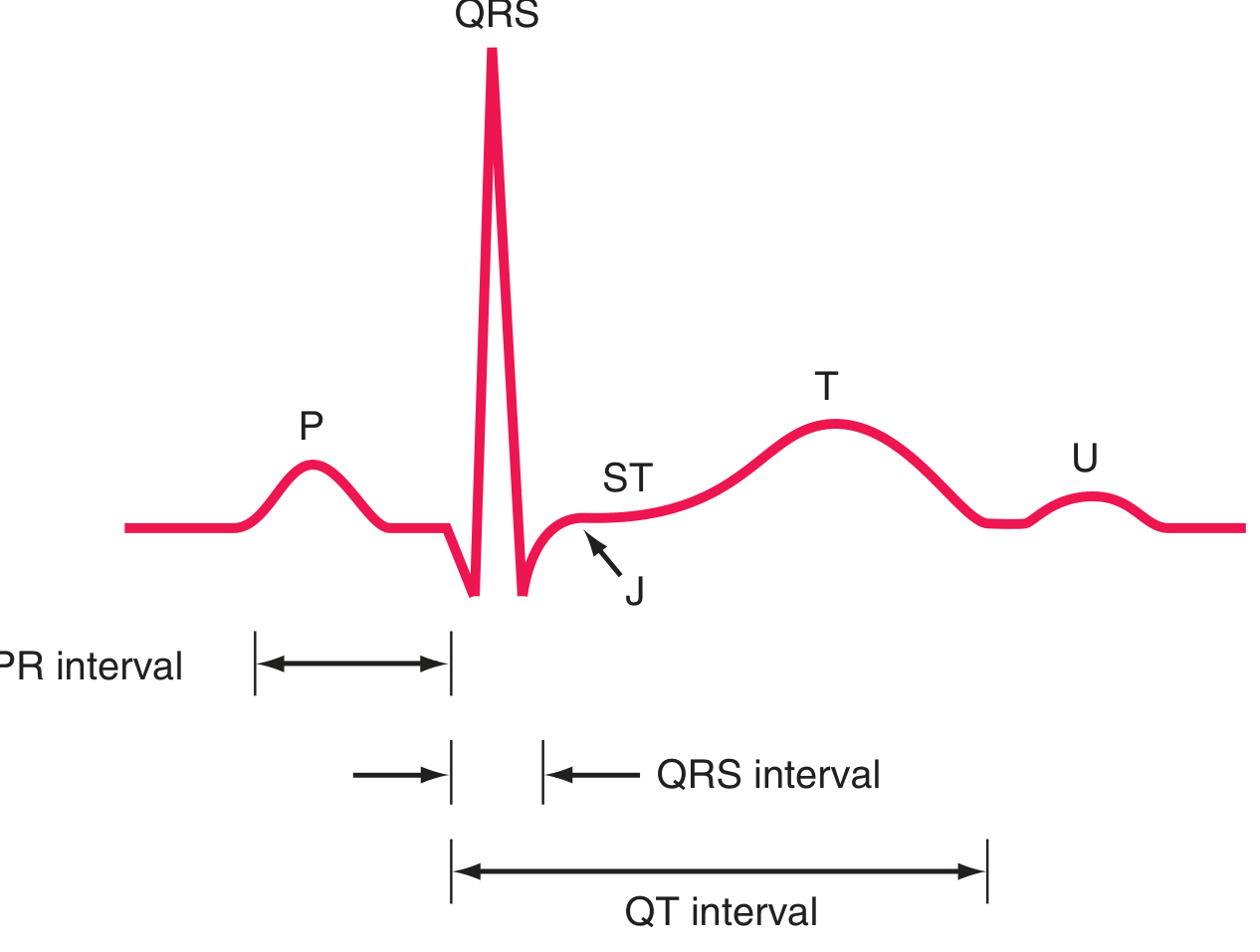
FIGURE 247-2 from Harrison's Principles of Internal Medicine 22E - Basic ECG waveforms and intervals
P Wave
- Represents: Atrial depolarization (both atria contract)
- Duration: 0.06-0.12 seconds (1.5-3 small boxes)
- Amplitude: 2-3 mm high normally
- Normal appearance: Small, rounded, upright in lead II; negative in aVR
- In lead V1, it may be biphasic (positive component = right atrium, negative = left atrium)
PR Interval
- Represents: Time from start of atrial depolarization to start of ventricular depolarization - includes the AV node delay
- Normal: 120-200 ms (3-5 small boxes)
- A prolonged PR (>200 ms) = first-degree AV block
QRS Complex
- Represents: Ventricular depolarization (both ventricles contract)
- Duration: Normally ≤100-110 ms (≤2.5 small boxes)
- The QRS is larger than the P wave because ventricular muscle mass is much greater than atrial mass
- Q wave: Small initial downward deflection (septal depolarization, left→right)
- R wave: Tall upward spike
- S wave: Downward deflection after R
- Not every QRS will have all three components
ST Segment
- Represents: Ventricular plateau phase (phase 2 of action potential) - isoelectric period between depolarization and repolarization
- Normally flat (isoelectric)
- ST elevation = acute myocardial infarction (STEMI) or pericarditis
- ST depression = ischemia or NSTEMI
T Wave
- Represents: Ventricular repolarization (ventricles "recharging")
- Occurs 0.25-0.35 seconds after depolarization
- Normally upright in most leads
- This is a repolarization wave (opposite mechanism to the depolarization waves)
QT Interval
- Represents: Total ventricular activity (depolarization + repolarization)
- Normally: ≤460 ms in women, ≤450 ms in men (corrected for rate = QTc)
- Prolonged QT = risk of dangerous arrhythmia (torsades de pointes)
U Wave
- Small wave after T wave; seen in some leads
- May represent late repolarization of Purkinje fibers
Mnemonic: "P-QRS-T" = Please Queen, Rest Some Time
- Harrison's Principles of Internal Medicine 22E; Guyton & Hall Medical Physiology
4. The ECG Paper
The ECG is recorded on standardized graph paper at a speed of 25 mm/second:
| Division | Size | Time | Voltage |
|---|---|---|---|
| Small box | 1 mm | 0.04 s (40 ms) | 0.1 mV |
| Large box | 5 mm | 0.20 s (200 ms) | 0.5 mV |
Standard calibration: 1 mV = 10 mm (a 1 mV calibration pulse = 2 large boxes tall).
5. Calculating Heart Rate
Regular rhythm - two quick methods:
-
300 ÷ number of large boxes between two R waves
- 1 large box = 300 bpm, 2 = 150, 3 = 100, 4 = 75, 5 = 60, 6 = 50
- Easy memory trick: "300, 150, 100, 75, 60, 50"
-
For irregular rhythms: Count the number of QRS complexes in 10 seconds (one rhythm strip) and multiply by 6.
Normal heart rate: 60-100 bpm
6. The 12 ECG Leads
A standard ECG has 12 leads - think of them as 12 different "camera angles" looking at the same electrical activity from different directions.
Two groups:
Limb Leads (6) - view the heart in the frontal plane:
| Lead | View |
|---|---|
| I | Lateral |
| II | Inferior |
| III | Inferior |
| aVR | Right side (normally negative) |
| aVL | Lateral |
| aVF | Inferior |
Precordial Leads (6) - view the heart in the horizontal plane:
| Lead | Position | View |
|---|---|---|
| V1 | 4th intercostal space, right sternal border | Septal/Right ventricle |
| V2 | 4th intercostal space, left sternal border | Septal |
| V3 | Between V2 and V4 | Anterior |
| V4 | 5th intercostal space, midclavicular line | Anterior |
| V5 | Anterior axillary line | Lateral |
| V6 | Midaxillary line | Lateral |
Key rule: A lead records a positive (upward) deflection when the depolarization wave moves toward its positive electrode; a negative deflection when it moves away.
- Harrison's Principles of Internal Medicine 22E
7. A Systematic Approach to Reading Any ECG
Use this checklist on every ECG you read - never skip steps:
- Rate - Is it normal (60-100), slow (<60 = bradycardia), or fast (>100 = tachycardia)?
- Rhythm - Regular or irregular? Is every P wave followed by a QRS?
- P wave - Present? Normal shape? Upright in II? Every P followed by QRS?
- PR interval - Normal (120-200 ms)?
- QRS duration - Narrow (<120 ms) or wide (≥120 ms)? Wide = bundle branch block or ventricular origin
- ST segment - Flat, elevated, or depressed?
- T wave - Upright, inverted, peaked?
- QT interval - Normal for the rate?
- Axis - Normal (-30° to +90°)? Left or right axis deviation?
8. Common Beginner Patterns to Recognize
| Pattern | Key Finding |
|---|---|
| Normal sinus rhythm | P before every QRS, rate 60-100, regular |
| Sinus tachycardia | Same as above, rate >100 |
| Sinus bradycardia | Same as above, rate <60 |
| Atrial fibrillation | No P waves, irregularly irregular rhythm |
| 1st degree AV block | Long PR interval (>200 ms) |
| STEMI | ST elevation in contiguous leads |
| Left bundle branch block | Wide QRS ≥120 ms, "W" in V1, "M" in V6 |
9. What to Study Next (Learning Roadmap)
- Start with: Normal sinus rhythm recognition - master the normal before the abnormal
- Then: Arrhythmias - sinus tachycardia/bradycardia, atrial fibrillation, SVT
- Then: Conduction blocks - AV blocks (1st, 2nd, 3rd degree) and bundle branch blocks
- Then: Ischemia/infarction patterns - STEMI, NSTEMI, old MI (Q waves)
- Then: Axis determination and chamber hypertrophy
- Advanced: Electrolyte abnormalities on ECG, drug effects (digoxin, QT-prolonging drugs)
Recommended resources:
- Goldberger's Clinical Electrocardiography (10th ed.) - the classic beginner textbook
- Life in the Fast Lane ECG Library - free, comprehensive online reference
- ECG Wave-Maven (Harvard) - free ECG practice cases
- Ninja Nerd ECG Lecture - popular video lecture
Sources: Harrison's Principles of Internal Medicine 22E (2025); Guyton & Hall Textbook of Medical Physiology; Gray's Anatomy for Students
Explain how to calculate electrical axis and measure axis deviation
The electrical axis represents the average direction of ventricular depolarization in the frontal plane. Normal axis is -30° to +90°. You calculate it by looking at leads I and aVF - if both are positive, axis is normal. Deviation occurs when the axis shifts left (LAD: more negative than -30°) or right (RAD: more positive than +90°).
Searching sources...
Finding Sources
Finding Sources
Searching the Web
ECG electrical axis calculation method lead I aVF hexaxial reference system axis deviation
Finding Sources
Reading File
Reading File
Loading Image
Reading File
Loading Image
Reading File
Loading Image
Excellent - I now have everything needed from Guyton & Hall and Harrison's. Let me compile the full explanation.
Electrical Axis: How to Calculate It and Identify Axis Deviation
1. What Is the Electrical Axis?
The mean electrical axis is the average direction of the depolarization wavefront as it travels through the ventricular myocardium during a single heartbeat. Because the left ventricle has far more muscle mass than the right, the net electrical force during depolarization normally points downward and to the left - toward the apex of the heart.
The mean electrical axis of the normal ventricles is approximately +59°, and it can range from about +20° to +100° in healthy individuals, depending on heart position, body habitus, and Purkinje distribution.
- Guyton & Hall Textbook of Medical Physiology
2. The Hexaxial Reference System
The six limb leads (I, II, III, aVR, aVL, aVF) are arranged around the heart at fixed angles. Together they form the hexaxial reference system - a 360° "clock face" around the heart that allows you to assign a degree value to any axis.
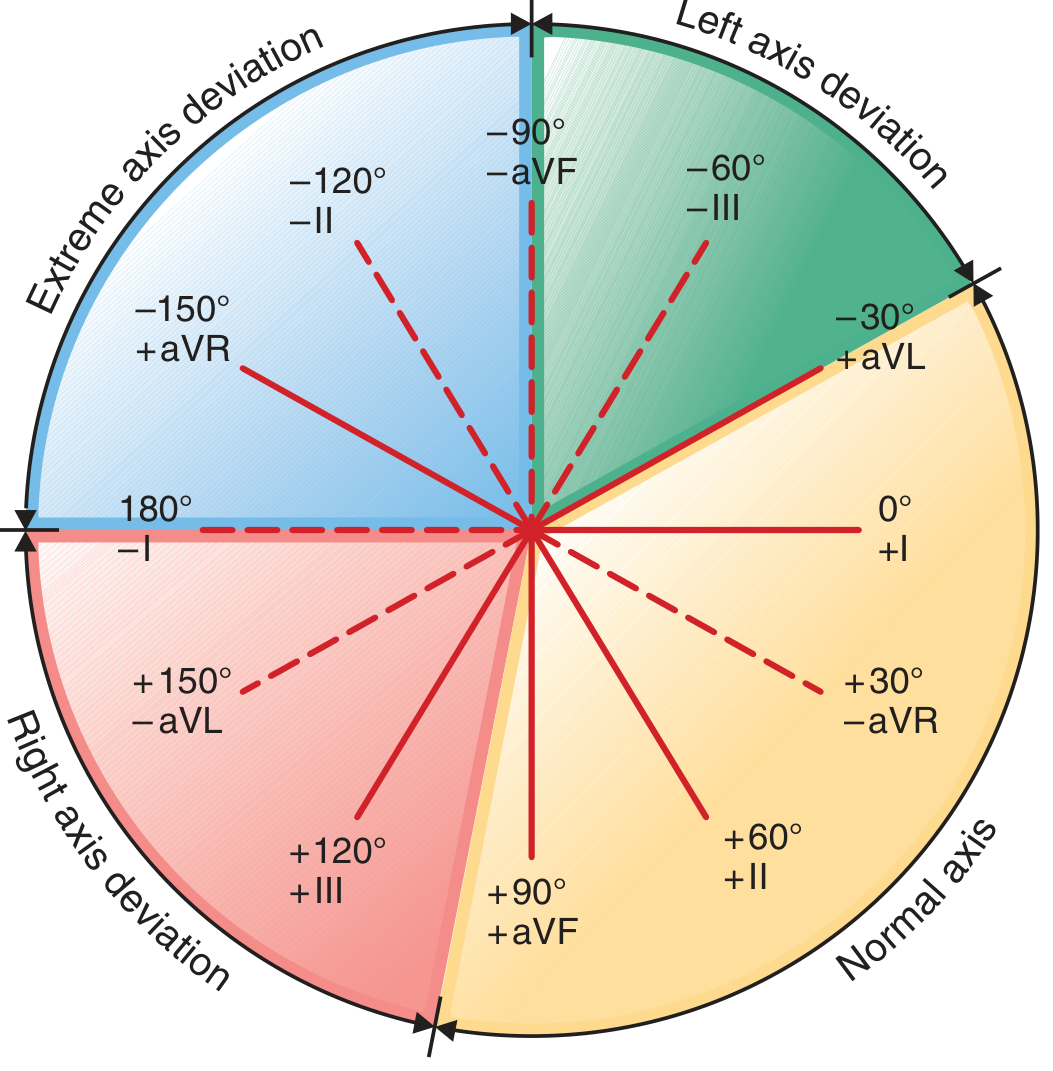
FIGURE 247-4 from Harrison's Principles of Internal Medicine 22E - The hexaxial diagram
Lead positions on the hexaxial circle:
| Lead | Positive Pole Angle |
|---|---|
| Lead I | 0° (pointing left) |
| Lead II | +60° |
| aVF | +90° (pointing down) |
| Lead III | +120° |
| aVL | −30° |
| aVR | −150° |
The rule: A lead records a positive (upward) deflection when the depolarization wave moves toward its positive pole, and a negative deflection when it moves away. If the vector is perpendicular to a lead, the QRS is biphasic (equally positive and negative).
3. Methods of Calculating the Axis
Method 1 - The Precise Vector Method (Guyton)
This is the mathematically exact approach using Leads I and III:
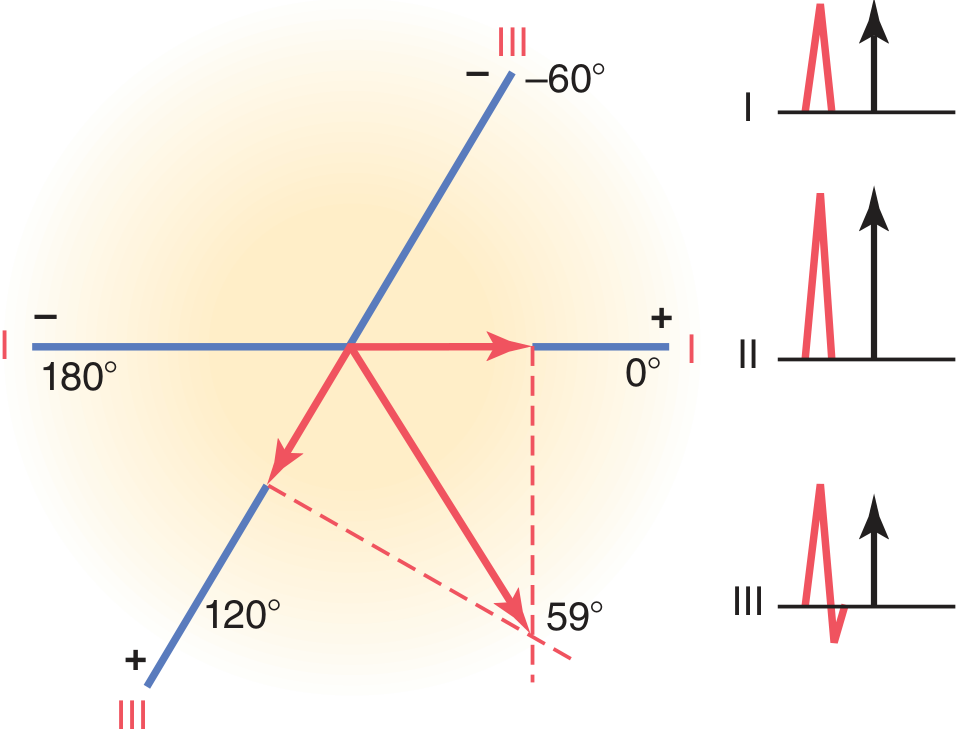
Figure 12.11 from Guyton & Hall - Plotting the mean electrical axis from leads I and III
Steps:
- Measure the net QRS deflection in Lead I - add up positive mm, subtract negative mm (R - S - Q = net)
- Measure the net QRS deflection in Lead III - same method
- Draw the hexaxial diagram on paper
- Plot the Lead I net value along the Lead I axis (0° line), measured from the center
- Plot the Lead III net value along the Lead III axis (120° line), measured from the center
- Drop perpendicular lines from the tip of each plotted point
- The point where the two perpendiculars intersect = the tip of the mean QRS vector
- Draw a line from the center of the diagram to that intersection point - this is your axis
- Read the angle from the hexaxial reference
Example from Guyton: Lead I net = positive, Lead III net = positive → perpendiculars intersect at approximately +59° = normal axis.
- Guyton & Hall Textbook of Medical Physiology
Method 2 - The Quick Two-Lead Quadrant Method (Clinical Bedside)
In practice, the fastest and most widely used method uses Lead I and Lead aVF to place the axis into one of four quadrants:
| Lead I | Lead aVF | Axis Quadrant | Interpretation |
|---|---|---|---|
| ✅ Positive | ✅ Positive | 0° to +90° | Normal axis |
| ✅ Positive | ❌ Negative | 0° to −90° | Left axis deviation (LAD) |
| ❌ Negative | ✅ Positive | +90° to +180° | Right axis deviation (RAD) |
| ❌ Negative | ❌ Negative | −90° to ±180° | Extreme axis deviation ("northwest axis") |
Then use Lead II to refine within the LAD quadrant:
- Lead I positive + aVF negative + Lead II positive → axis between 0° and −30° → normal variant (or physiologic LAD)
- Lead I positive + aVF negative + Lead II negative → axis more negative than −30° → true pathological LAD
Method 3 - The Isoelectric (Perpendicular) Method
This is the most precise quick method:
- Find the lead with the most biphasic/isoelectric QRS (positive and negative deflections roughly equal, net ≈ 0)
- The true axis is perpendicular to that lead (90° away)
- Look at the perpendicular lead to determine which of the two possible perpendicular directions is positive
Example: If lead aVL (at −30°) is isoelectric, the axis must be perpendicular = either +60° or −120°. Look at lead II (+60°): if lead II is positive, the axis is +60°.
4. Normal vs. Abnormal Axis - Reference Table
| Category | Axis Range | Lead I | aVF | Lead II |
|---|---|---|---|---|
| Normal axis | −30° to +90° | Positive | Positive | Positive |
| Left axis deviation (LAD) | −30° to −90° | Positive | Negative | Negative |
| Right axis deviation (RAD) | +90° to +180° | Negative | Positive | Positive/Negative |
| Extreme axis deviation | −90° to ±180° | Negative | Negative | - |
Note: Some sources define normal as 0° to +90°, treating −30° to 0° as "physiologic LAD." The clinical threshold for pathological LAD is more negative than −30°.
5. Causes of Axis Deviation
Left Axis Deviation (LAD) - axis more negative than −30°
The axis shifts left when the left side of the heart dominates electrically or conducts more slowly:
| Cause | Mechanism |
|---|---|
| Left ventricular hypertrophy | More LV muscle mass generates greater leftward potential |
| Left anterior fascicular block (LAFB) | Most common cause of LAD; blocks anterior division of left bundle |
| Left bundle branch block (LBBB) | RV depolarizes first → vector points toward delayed LV (−50°) |
| Inferior MI | Loss of inferior wall depolarization forces shifts axis superiorly |
| Obesity / high diaphragm | Heart physically tilts left |
| Wolff-Parkinson-White | Accessory pathway changes initial vector |
| Hyperkalemia | Slows conduction asymmetrically |
From Guyton: In LBBB, the left ventricle remains electropositive while the right has already depolarized - creating a strong vector toward the left, producing axis around −50°.
Right Axis Deviation (RAD) - axis more positive than +90°
| Cause | Mechanism |
|---|---|
| Right ventricular hypertrophy | More RV mass (e.g., pulmonary hypertension, pulmonary stenosis, cor pulmonale) |
| Right bundle branch block (RBBB) | LV depolarizes first → vector points toward delayed RV (+105°) |
| Left posterior fascicular block (LPFB) | Blocks posterior division; diagnosis of exclusion |
| Anterolateral MI | Loss of leftward forces from LV lateral wall |
| Tall, thin body habitus | Heart hangs vertically |
| Deep inspiration | Diaphragm descends, heart becomes more vertical |
| Dextrocardia | Heart in right chest |
| Wolff-Parkinson-White (left-sided pathway) | Accessory pathway changes vector |
From Guyton: In right ventricular hypertrophy from pulmonary valve stenosis, the axis can reach +170° - 111° to the right of the normal axis of +59°.
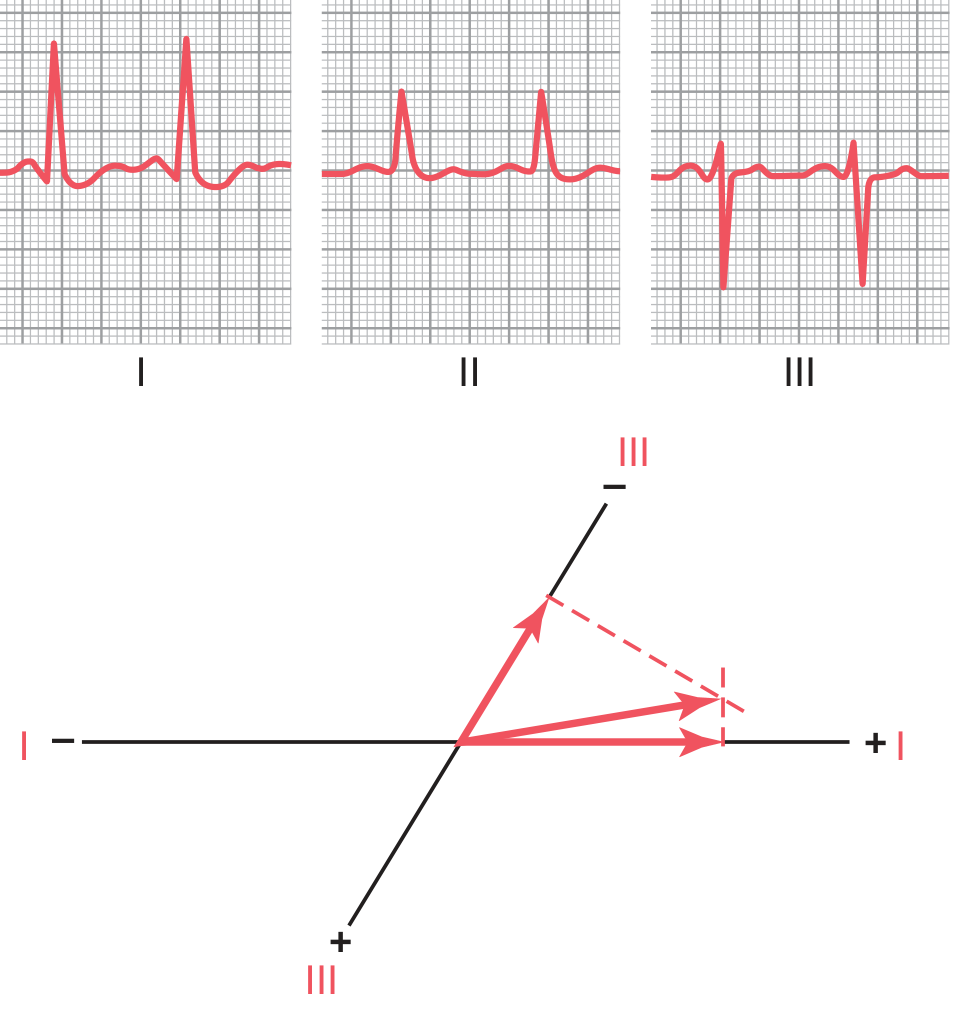
Figure 12.12 from Guyton & Hall - Left axis deviation in hypertensive LVH, axis at −15°
6. Worked Example - How to Determine Axis Step by Step
Given ECG findings:
- Lead I: tall R wave (positive, net +8 mm)
- aVF: small net negative (−2 mm)
- Lead II: net negative
Step 1: Lead I positive, aVF negative → upper-left quadrant (0° to −90°) → LAD
Step 2: Lead II is also negative → axis is more negative than −30° → pathological LAD
Step 3 (optional refinement): Look for the most isoelectric lead. If aVR is isoelectric (net ≈ 0), the axis is perpendicular to aVR (−150°), meaning it's at either −60° or +30°. Since we already know it's in the LAD quadrant → axis ≈ −60°
Conclusion: Pathological left axis deviation. In the right clinical context, this suggests left anterior fascicular block or LVH.
7. Quick Summary Card
NORMAL: Lead I ↑ aVF ↑ → 0° to +90°
LAD: Lead I ↑ aVF ↓ → more negative than −30°
RAD: Lead I ↓ aVF ↑ → more positive than +90°
EXTREME: Lead I ↓ aVF ↓ → "northwest" axis
Refine LAD with Lead II:
Lead II ↑ = mild/physiologic (0° to −30°)
Lead II ↓ = pathological (< −30°)
Most common causes:
LAD → LAFB, LVH, inferior MI
RAD → RVH, RBBB, LPFB
Sources: Guyton & Hall Textbook of Medical Physiology; Harrison's Principles of Internal Medicine 22E (2025)
Now i want to learn different abnornal ecg
Before diving in, let me clarify what you'd like to focus on - there are many categories of abnormal ECG patterns.
Asking for Preferences
Which categories of abnormal ECG would you like to cover? · How deep should I go?
Good - all categories, advanced level. Let me pull from the textbooks across all these topics simultaneously.
Finding Sources
Finding Sources
Finding Sources
Finding Sources
Finding Sources
Finding Sources
Finding Sources
Reading File
Reading File
Reading File
Reading File
Loading Image
Loading Image
Reading File
Reading File
Loading Image
Loading Image
Reading File
Reading File
Loading Image
Loading Image
Finding Sources
Reading File
Finding Sources
Loading Image
Reading File
I now have comprehensive material across all categories. Let me write the full guide.Here is your complete advanced guide to abnormal ECG patterns, sourced from Harrison's, Braunwald's, Tintinalli's, Washington Manual, and Guyton & Hall.
Abnormal ECG Patterns: A Complete Advanced Guide
SECTION 1: ARRHYTHMIAS
1.1 Atrial Fibrillation (AF)
Mechanism: Multiple small re-entrant circuits in atrial myocardium fire chaotically at >600 impulses/min. The AV node acts as a filter, allowing only a fraction through, causing an irregular ventricular response.
ECG Criteria:
- No P waves - replaced by a chaotic, irregular baseline (fibrillatory waves), most prominent in V1
- Irregularly irregular RR intervals (the hallmark - no two consecutive RR intervals are equal)
- QRS is narrow (unless aberrant conduction or bundle branch block present)
- Ventricular rate typically 120-170 bpm when AV node is unaffected
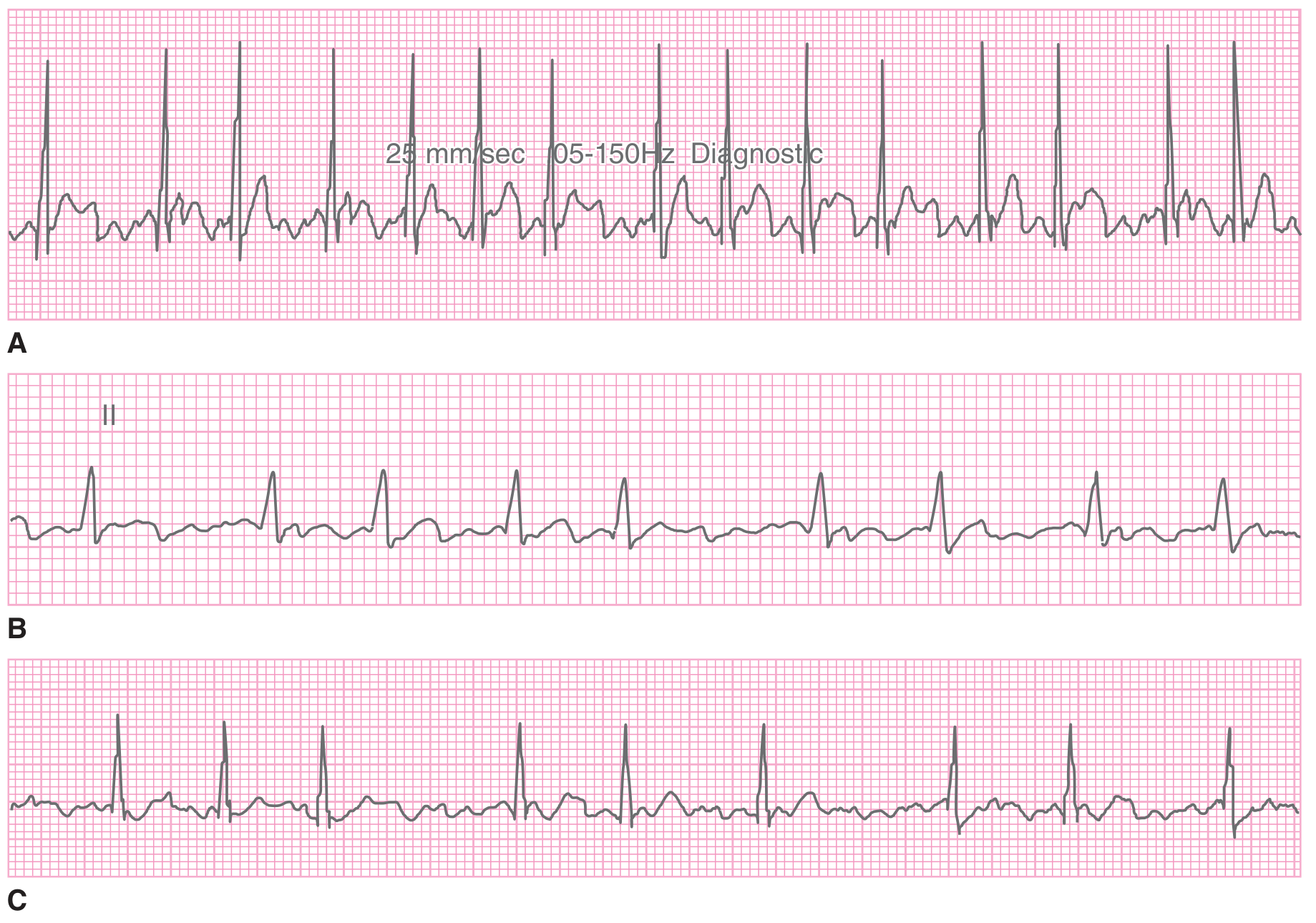
FIGURE 18-10 from Tintinalli's EM - Three examples of AF with irregular ventricular response
Key clinical causes: Ischemic/valvular heart disease, hypertension, cardiomyopathy, thyrotoxicosis, alcohol binge ("holiday heart"), pulmonary embolism, sepsis
Differential diagnosis:
- Multifocal atrial tachycardia (MAT) - also irregular, but P waves are present in at least 3 different morphologies
- Atrial flutter with variable block - flutter waves (sawtooth) visible, not truly chaotic
Clinical significance: Risk of thrombus formation in left atrial appendage → stroke. Assess CHA₂DS₂-VASc score for anticoagulation.
- Tintinalli's Emergency Medicine
1.2 Atrial Flutter
Mechanism: Single large re-entrant circuit in the right atrium (cavotricuspid isthmus), rotating at ~300 circuits/min.
ECG Criteria:
- Sawtooth flutter waves at ~300 bpm, best seen in inferior leads (II, III, aVF) and V1
- P waves have a single, uniform morphology (downward deflection in inferior leads)
- Ventricular rate is a function of AV block ratio:
- 2:1 block = 150 bpm (most common - tip: any regular narrow tachycardia at ~150 bpm, always look for flutter)
- 3:1 block = 100 bpm
- 4:1 block = 75 bpm
- Regular ventricular rhythm (unless variable block)
Key tip: Regular narrow-complex tachycardia at exactly 150 bpm (±5) = atrial flutter with 2:1 block until proven otherwise. Look in V1 and inferior leads for the sawtooth pattern.
Differential: Sinus tachycardia (P waves visible before each QRS, rate varies), AVNRT at 150 (but P waves buried in QRS or just after)
1.3 Supraventricular Tachycardia (SVT) / AVNRT
Mechanism: Re-entrant circuit involving the AV node using two pathways (fast and slow) - most common form is AVNRT (AV nodal re-entrant tachycardia).
ECG Criteria:
- Regular narrow-complex tachycardia, rate 150-250 bpm
- P waves absent, buried in QRS, or immediately after QRS (pseudo-r' in V1, pseudo-s in inferior leads)
- Abrupt onset and termination ("paroxysmal")
- QRS typically narrow unless bundle branch block present
Differential: Sinus tachycardia (gradual onset, P visible before QRS), atrial flutter 2:1, WPW-mediated tachycardia
1.4 Ventricular Tachycardia (VT)
Mechanism: Re-entrant circuit or abnormal automaticity within the ventricular myocardium below the bundle of His. Can be monomorphic (uniform QRS) or polymorphic (changing QRS).
ECG Criteria:
- Wide complex tachycardia (QRS ≥120 ms), rate >100 bpm (usually 140-220 bpm)
- Regular rhythm (slight irregularity possible)
- AV dissociation - P waves and QRS complexes are completely independent (P waves "march through" the wide QRS) - pathognomonic but only seen in ~10% of cases
- Fusion beats - hybrid beat where sinus impulse partially captures ventricle during VT (narrow-ish QRS between wide complexes) - confirms VT
- Capture beats - normal narrow QRS in middle of VT run when sinus impulse fully captures ventricle
- QRS morphology: concordance (all precordial leads positive OR all negative) strongly suggests VT
- QRS duration >160 ms in RBBB morphology or >140 ms in LBBB morphology favors VT
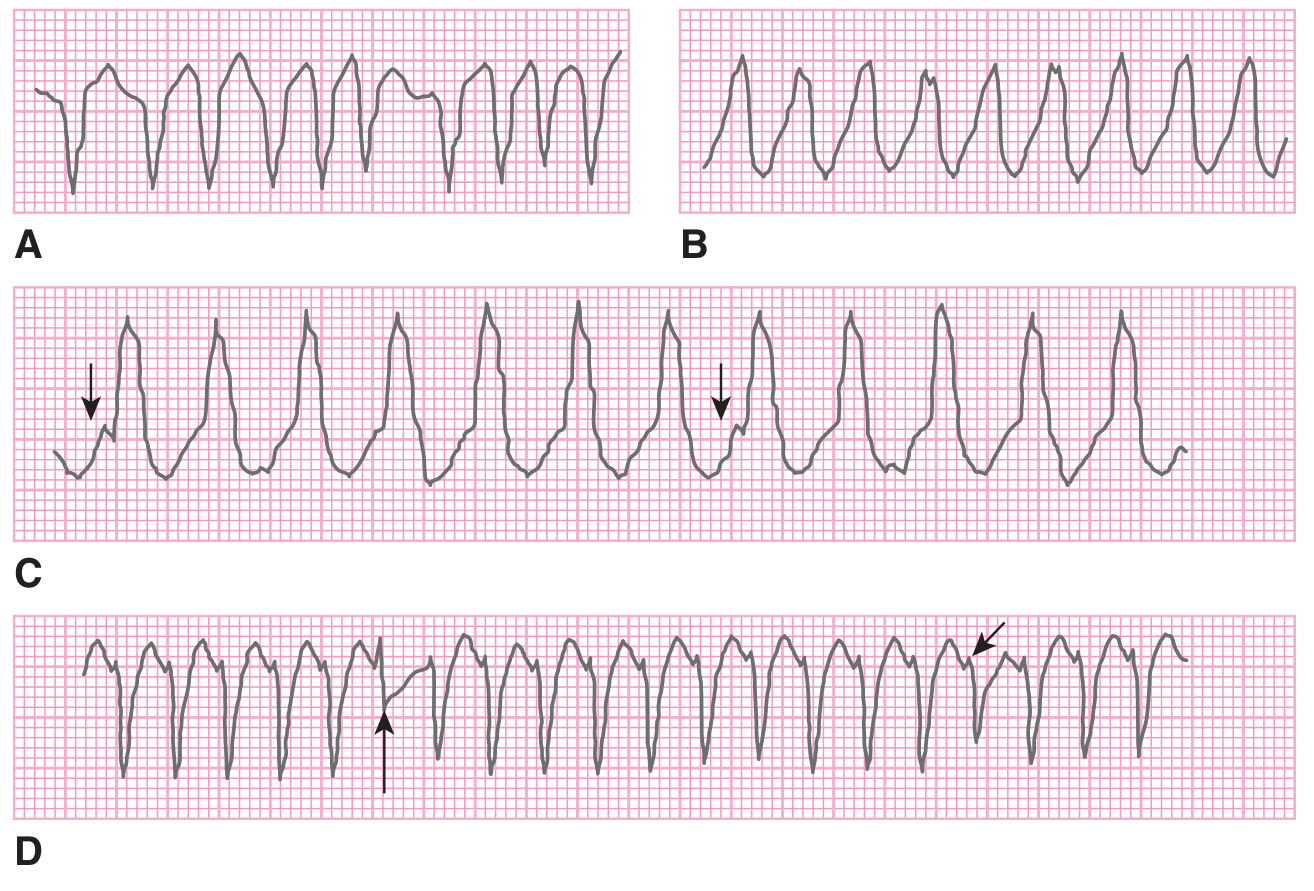
FIGURE 18-22 from Tintinalli's EM - ECG differentiation features: AV dissociation (C, arrows = P waves) and capture/fusion beats (D)
Brugada Algorithm for VT vs SVT-aberrancy (4-step):
- Absence of RS complex in ALL precordial leads → VT
- R-to-S interval >100 ms in any precordial lead → VT
- AV dissociation present → VT
- Classic LBBB or RBBB morphology absent → VT
- If none of the above → SVT with aberrancy
Key rule in clinical practice: Any wide complex tachycardia in a patient with structural heart disease is VT until proven otherwise.
- Tintinalli's Emergency Medicine; Braunwald's Heart Disease
1.5 Ventricular Fibrillation (VF)
ECG Criteria:
- Completely chaotic, irregular waveforms of varying morphology and amplitude
- No recognizable P waves, QRS complexes, or T waves
- Coarse VF = larger amplitude waves (early); Fine VF = small amplitude waves (late, near asystole)
Clinical significance: No coordinated cardiac output → cardiac arrest → immediate defibrillation required.
1.6 Torsades de Pointes (TdP)
ECG Criteria:
- Polymorphic VT with characteristic twisting of QRS axis around the isoelectric line
- QRS complexes appear to "twist" above and below the baseline in a spindle shape
- Usually preceded by prolonged QT interval on baseline ECG
- Rate 200-250 bpm, often self-terminating but can degenerate to VF
Causes of QT prolongation leading to TdP:
- Drugs: class IA agents (quinidine, procainamide), class III agents (amiodarone, sotalol, dofetilide), tricyclic antidepressants, antipsychotics, macrolide antibiotics
- Electrolytes: hypokalemia, hypomagnesemia, hypocalcemia
- Congenital: long QT syndrome (Romano-Ward, Jervell-Lange-Nielsen)
- Intracranial hemorrhage / subarachnoid hemorrhage
SECTION 2: CONDUCTION BLOCKS
2.1 AV Blocks
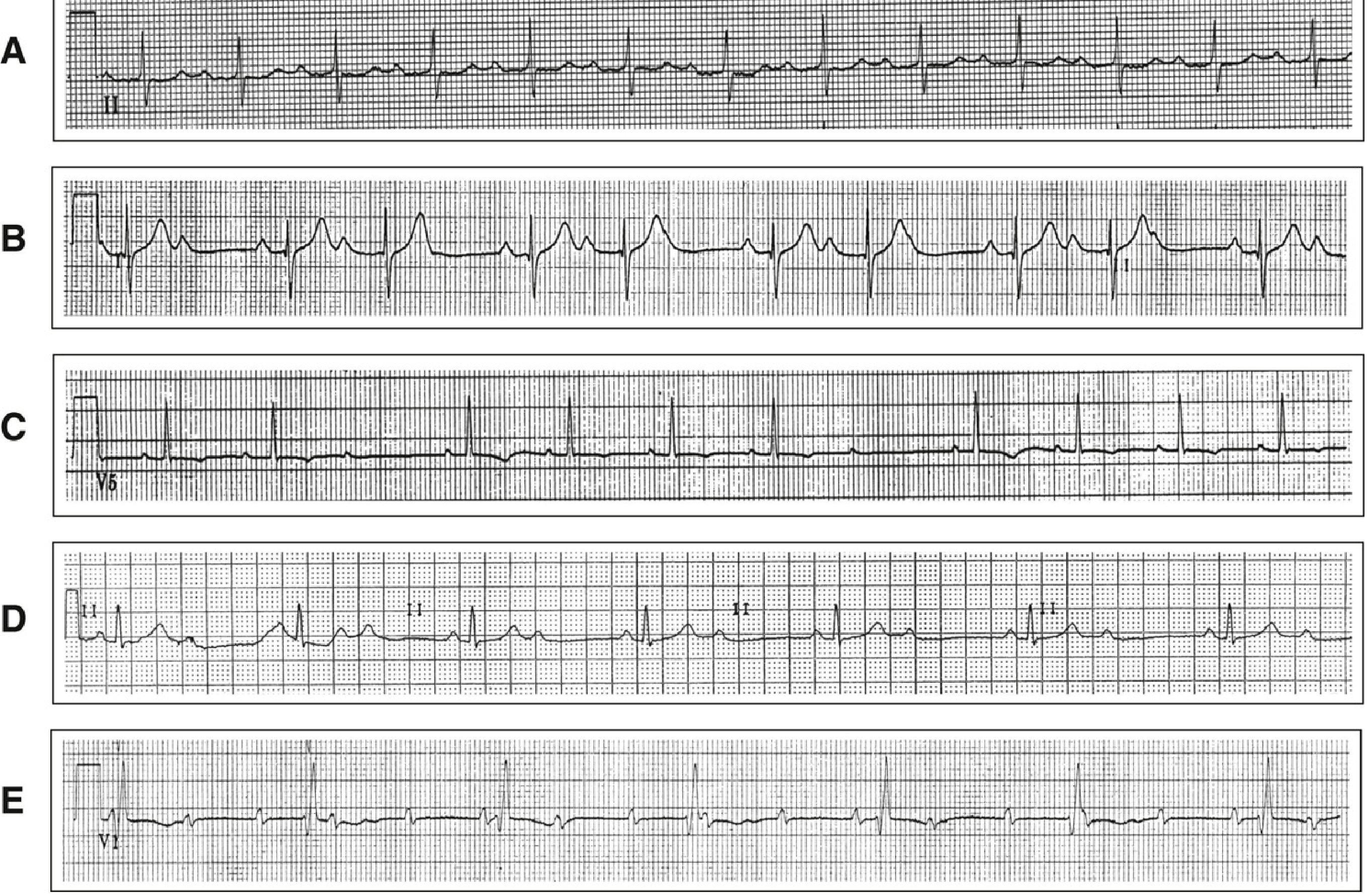
Figure 7-5 from Washington Manual - Five examples of AV block (A-E)
First-Degree AV Block
- ECG: PR interval >200 ms (>5 small boxes) on every beat
- All P waves conducted; no dropped beats
- Usually benign; may be caused by vagal tone, AV nodal disease, digoxin, beta-blockers, inferior MI
- No treatment usually needed
Second-Degree AV Block - Mobitz Type I (Wenckebach)
- Mechanism: Progressive fatigue of AV node conduction until a beat is dropped, then cycle resets
- ECG:
- Progressive PR prolongation with each beat before a dropped beat
- Shortening RR intervals before the dropped beat
- Group beating pattern (clusters of QRS followed by a pause)
- The RR interval containing the dropped beat is less than twice the preceding RR
- Site of block: within the AV node (proximal)
- Prognosis: usually benign; rarely progresses to complete heart block
- Common in: inferior MI, athletes (vagal), post-cardiac surgery
Second-Degree AV Block - Mobitz Type II
- Mechanism: Abrupt, unexpected failure of conduction - no progressive fatigue
- ECG:
- Fixed PR interval on all conducted beats
- Sudden dropped beat with no preceding PR change
- Often associated with wide QRS (bundle branch block coexists)
- Site of block: below the AV node, in the bundle of His or bundle branches (distal)
- Prognosis: dangerous - unpredictably progresses to complete heart block
- Requires pacemaker implantation
Tip for 2:1 block (can't tell Mobitz I vs II):
- Narrow QRS = more likely Mobitz I (proximal block)
- Wide QRS/bundle branch block = more likely Mobitz II (distal block)
Third-Degree (Complete) AV Block
-
Mechanism: No atrial impulses conduct to ventricles; atria and ventricles are driven by completely independent pacemakers
-
ECG:
- P waves and QRS complexes are completely independent (AV dissociation)
- P rate > QRS rate (SA node fires faster than escape rhythm)
- Regular PP interval, regular RR interval, but no fixed relationship between P and QRS
- Escape QRS: narrow (junctional escape ~40-60 bpm) or wide (ventricular escape ~20-40 bpm)
-
Causes: inferior MI (usually transient, junctional escape), anterior MI (often permanent, ventricular escape), Lyme disease, infiltrative disease, degenerative (Lev's/Lenègre's disease), congenital
-
Requires urgent pacemaker
-
Washington Manual of Medical Therapeutics
2.2 Bundle Branch Blocks
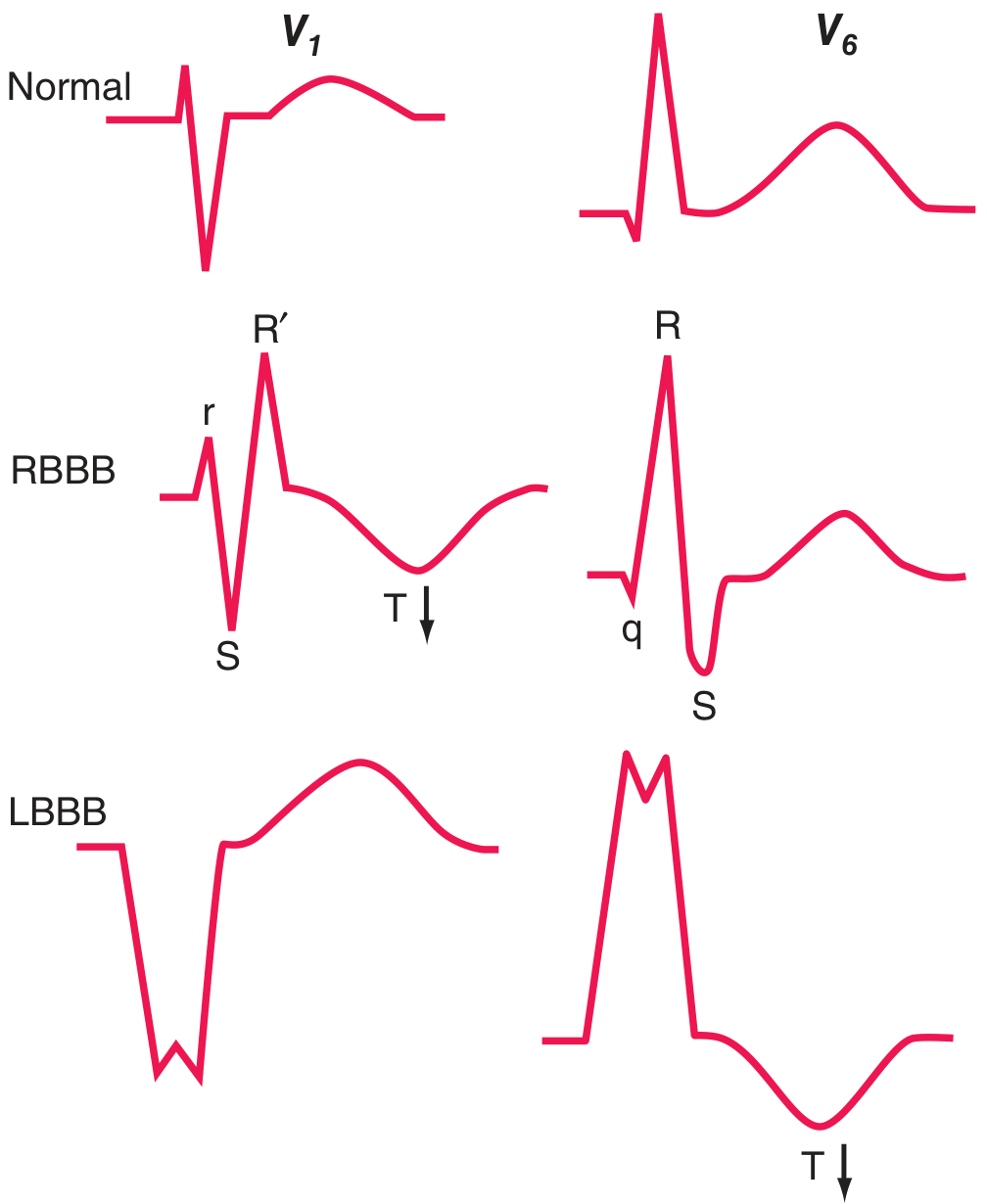
FIGURE 247-10 from Harrison's 22E - RBBB and LBBB patterns compared to normal in V1 and V6
Right Bundle Branch Block (RBBB)
Mechanism: Right bundle blocked → LV depolarizes first (normal) → RV depolarizes late via slow cell-to-cell conduction → terminal QRS vector directed rightward and anteriorly
ECG Criteria (QRS ≥120 ms for complete RBBB):
- rSR' ("rabbit ears") in V1 - small r, deep S, tall R' (the terminal R' is the delayed RV depolarization)
- Wide S wave in leads I and V6 (qRS pattern in V6)
- T-wave inversion in V1-V2 (secondary repolarization change, opposite to last QRS deflection - normal for BBB)
- Right axis deviation may be present
Memory trick for RBBB: "WiLLiaM MaRRoW" - in RBBB, V1 has W shape (rSR'), V6 has M shape... actually the classic is "MaRRoW" for RBBB (M in V1, W in V6 - but this varies). The reliable pattern: rSR' in V1 + wide S in V6.
Causes: Can be a normal variant (especially in young individuals); also ASD, right heart strain (PE), ischemia, cardiomyopathy
Left Bundle Branch Block (LBBB)
Mechanism: Left bundle blocked → RV depolarizes first → LV depolarizes late, also alters the normal left-to-right septal activation → major QRS vector directed leftward and posteriorly
ECG Criteria (QRS ≥120 ms for complete LBBB):
- Broad, entirely negative (QS) complex or broad rS in V1 - no normal septal r wave
- Tall, broad, notched (M-shaped) R wave in V6 and lead I - no Q wave in lateral leads
- T-wave inversion in V6, I, aVL (secondary change - opposite to last QRS deflection)
- Left axis deviation often present
- QRS morphology is identical to right ventricular pacing
Critical clinical point: LBBB makes ECG diagnosis of ischemia/STEMI difficult. However, new LBBB in the context of acute chest pain should be treated as STEMI equivalent (Sgarbossa criteria can help).
Sgarbossa Criteria for ischemia in LBBB:
- ST elevation ≥1 mm concordant with QRS (same direction) in any lead = 5 points
- ST depression ≥1 mm in V1, V2, or V3 = 3 points
- ST elevation ≥5 mm discordant (opposite) to QRS = 2 points
- Score ≥3 = high specificity for MI
Association of LBBB: Coronary artery disease, hypertensive heart disease, aortic valve disease, cardiomyopathy - LBBB is almost never a benign finding.
- Harrison's Principles of Internal Medicine 22E
2.3 Fascicular Blocks (Hemiblocks)
These do not prolong QRS significantly (<120 ms); they mainly cause axis deviation.
| Block | ECG Finding | Axis | Common Cause |
|---|---|---|---|
| Left anterior fascicular block (LAFB) | LAD more negative than −45°; small Q in I, aVL; small R in II, III, aVF | More negative than −45° | Most common cause of marked LAD; MI, cardiomyopathy |
| Left posterior fascicular block (LPFB) | RAD more positive than +110°; small R in I, aVL; small Q in II, III, aVF | +110° to +180° | Rare; diagnosis of exclusion (must rule out RVH, PE, lateral MI) |
SECTION 3: ISCHEMIA AND MYOCARDIAL INFARCTION
3.1 Mechanisms of ECG Changes in Ischemia
Severe acute ischemia lowers the resting membrane potential and shortens action potential duration. This creates a voltage gradient between normal and ischemic zones, generating currents of injury that manifest as ST segment deviation:
-
Transmural (epicardial) ischemia → ST vector directed outward → ST elevation in overlying leads
-
Subendocardial ischemia → ST vector directed inward toward cavity → ST depression in overlying leads + ST elevation in aVR
-
Harrison's Principles of Internal Medicine 22E
3.2 STEMI - ST Elevation Myocardial Infarction
Diagnostic Criteria:
- New ST elevation at the J point in ≥2 contiguous leads:
- ≥2 mm in V2-V3 (men), ≥1.5 mm in V2-V3 (women)
- ≥1 mm in all other leads
- New LBBB with ischemic symptoms = STEMI equivalent
Evolutionary Changes (over hours to days):
- Hyperacute T waves - tall, broad, pointed T waves (very early, often missed)
- ST elevation - concave-up ("tombstone" if severe) - confirms ongoing occlusion
- T-wave inversion - developing in hours as ST starts to resolve
- Pathological Q waves - usually 8-12 hours; represent necrosis (electrically silent tissue)
- R-wave loss - diminished R amplitude in infarcted territory
Pathological Q wave criteria: Width ≥40 ms (1 small box) OR depth ≥25% of R-wave height in the same lead
Localizing the Infarct by Territory:
| Territory | ECG Leads with ST Elevation | Culprit Artery |
|---|---|---|
| Anterior | V1-V4 | LAD (left anterior descending) |
| Anterolateral | V1-V6, I, aVL | LAD (proximal) or left main |
| Lateral | I, aVL, V5, V6 | LCx (left circumflex) or diagonal branch |
| Inferior | II, III, aVF | RCA (right coronary artery, 80%) or LCx |
| Right ventricular | V1, V3R-V4R | RCA (proximal) |
| Posterior | ST depression V1-V3 (reciprocal); ST elevation V7-V9 | LCx or RCA |
Reciprocal changes - ST depression in leads anatomically opposite to the infarct zone - their presence increases specificity for STEMI:
- Inferior STEMI → reciprocal ST depression in I and aVL
- Anterior STEMI → reciprocal ST depression in II, III, aVF
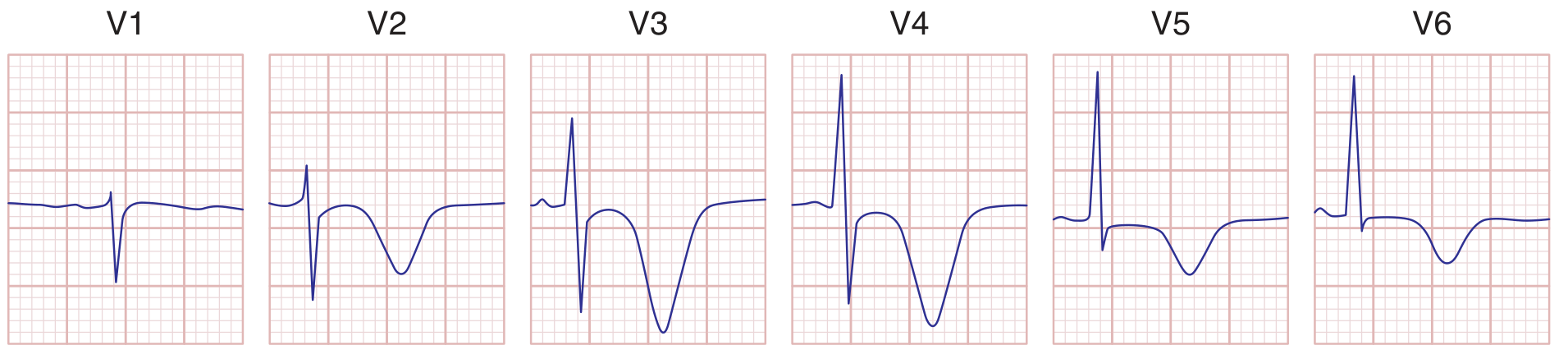
FIGURE 247-12 from Harrison's 22E - Anterior wall ischemia with deep T-wave inversions in precordial leads (Wellens pattern)
3.3 Wellens Syndrome
What it is: A specific pattern of T-wave change in V2-V3 indicating critical stenosis of the proximal LAD - pre-infarction pattern - patient is at very high risk for anterior STEMI.
Two types:
- Type A (biphasic T wave in V2-V3) - positive then negative
- Type B (deep symmetric T-wave inversion in V2-V3) - more common
Critical point: These changes appear when the patient is pain-free. This is not benign T-wave inversion - it requires urgent catheterization.
3.4 NSTEMI / Unstable Angina
ECG changes:
- ST depression (≥0.5 mm, horizontal or downsloping) in ≥2 contiguous leads
- T-wave inversion
- May have normal ECG (NSTEMI is a clinical + troponin diagnosis, not ECG diagnosis)
- No ST elevation, no pathological Q waves (unless old)
3.5 Posterior STEMI (Easily Missed)
Because the posterior wall has no overlying ECG leads in a standard 12-lead, it manifests as reciprocal changes in anterior leads:
- ST depression in V1-V3 (the ST elevation is on the back of the heart)
- Tall, broad R wave in V1-V2 (reciprocal Q wave)
- Upright T waves in V1-V2 (reciprocal T-wave inversion)
How to confirm: Place posterior leads V7-V9 → will show ST elevation if posterior STEMI.
3.6 Pericarditis
ECG changes (diffuse, not localized to a territory - a key distinguishing feature from STEMI):
- Diffuse concave-up ("saddle-shaped") ST elevation in nearly all leads (except aVR and V1, which have ST depression)
- PR depression in most leads (PR elevation in aVR) - classic and early finding
- No reciprocal ST depression (unlike STEMI, which has localized elevation + reciprocal depression)
- No Q waves
- Evolves through 4 stages over days-weeks
STEMI vs Pericarditis quick distinction:
- Pericarditis: diffuse ST elevation, concave-up, PR depression, no reciprocal changes
- STEMI: localized ST elevation, often convex-up, reciprocal depression, Q waves may develop
SECTION 4: HYPERTROPHY PATTERNS
4.1 Left Ventricular Hypertrophy (LVH)
Mechanism: Increased LV muscle mass generates greater leftward, posterior electrical forces.
Voltage Criteria (multiple in clinical use):
- Sokolow-Lyon: S in V1 + R in V5 or V6 ≥35 mm (in adults >35 years)
- Cornell: R in aVL + S in V3 ≥28 mm (men) or ≥20 mm (women)
- R in aVL ≥11 mm (simple and useful)
Associated changes ("LVH strain pattern"):
- ST depression and T-wave inversion in left lateral leads (I, aVL, V5, V6) - "strain" pattern = pressure overload
- Left axis deviation
- Prolonged QRS (but usually <120 ms)
- Left atrial enlargement pattern (broad notched P wave in II, biphasic P in V1 with large negative component)
Causes: Hypertension (most common), aortic stenosis, hypertrophic cardiomyopathy, aortic regurgitation
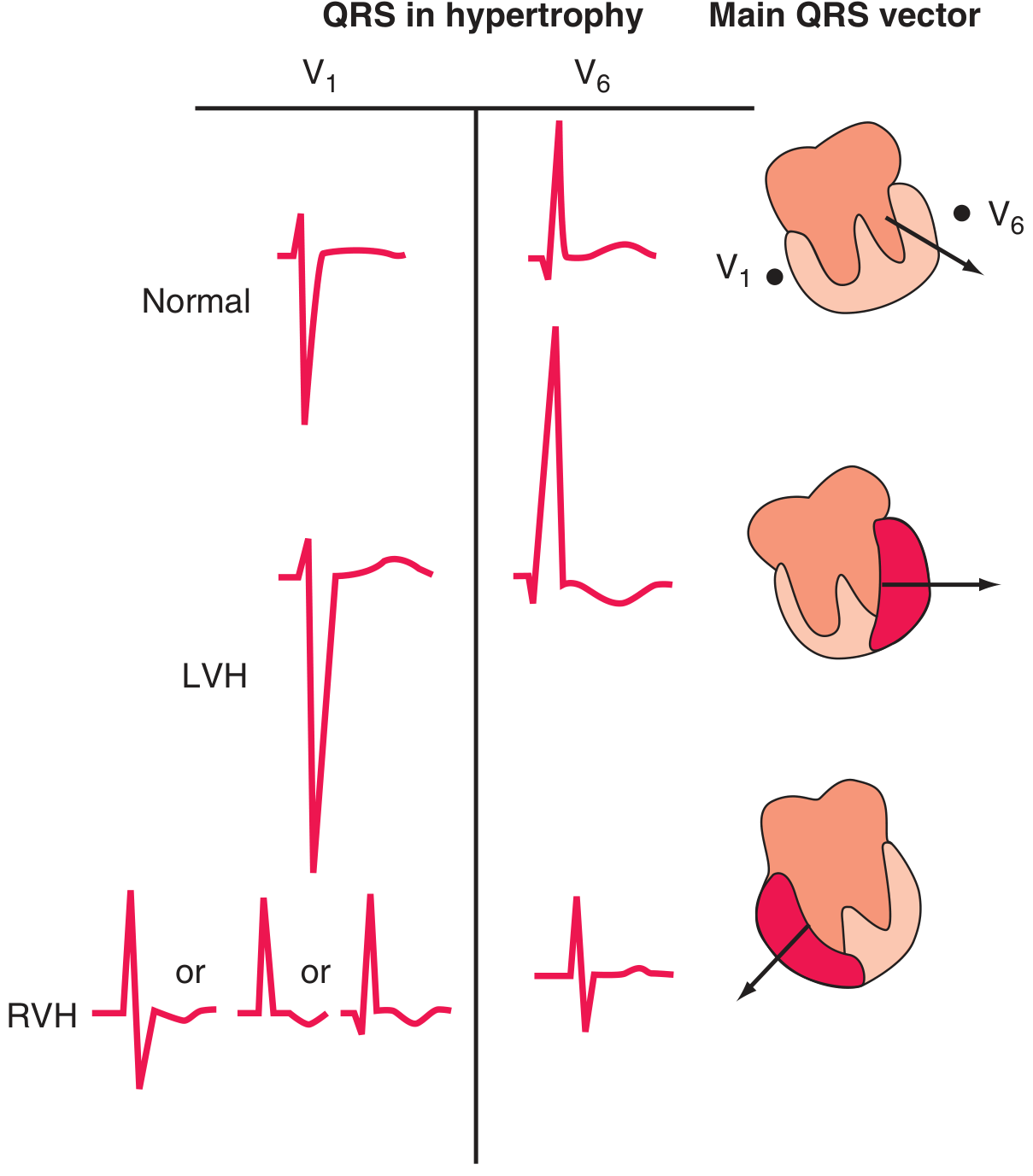
FIGURE 247-9 from Harrison's 22E - LVH and RVH patterns with heart diagram and main QRS vectors
4.2 Right Ventricular Hypertrophy (RVH)
Mechanism: Increased RV muscle mass generates greater rightward, anterior electrical forces.
ECG Criteria:
- Dominant R wave in V1 (R > S in V1, or R >7 mm)
- Deep S waves in V5, V6 and leads I (persistent S waves in left lateral leads)
- Right axis deviation (>+90°)
- T-wave inversion in V1-V3 (right ventricular "strain" pattern)
- Often associated with right bundle branch block pattern (especially in ASD with volume overload)
Causes: Pulmonary hypertension (cor pulmonale), pulmonary stenosis, ASD, VSD with Eisenmenger, tetralogy of Fallot
4.3 Atrial Enlargement
Right atrial enlargement (P pulmonale):
- Tall, peaked P waves ≥2.5 mm in II, III, aVF (P wave is narrow and pointed)
- P wave duration normal
- Causes: COPD, pulmonary hypertension, tricuspid stenosis
Left atrial enlargement (P mitrale):
-
Broad, notched ("M-shaped") P wave ≥120 ms (3 small boxes) in lead II
-
Biphasic P wave in V1 with a prominent negative terminal component (≥1 mm deep AND ≥1 mm wide = 1 small box × 1 small box)
-
Causes: Mitral stenosis, mitral regurgitation, LVH from any cause, heart failure
-
Harrison's Principles of Internal Medicine 22E
SECTION 5: ELECTROLYTE AND METABOLIC ECG CHANGES
5.1 Hyperkalemia
The most dangerous electrolyte ECG emergency - changes occur in a progressive sequence with rising K+:
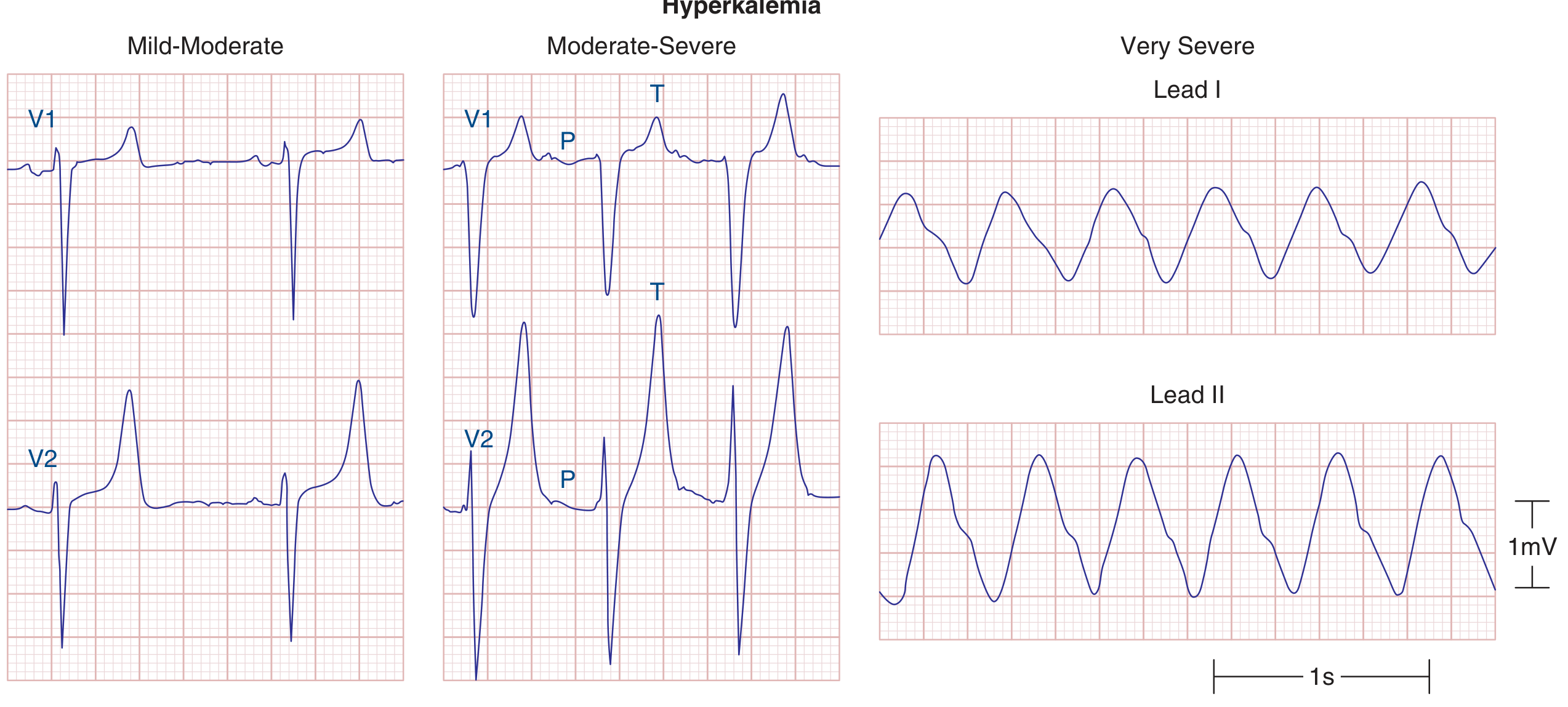
FIGURE 247-14 from Harrison's 22E - Hyperkalemia ECG progression from mild to very severe
| K+ Level | ECG Change |
|---|---|
| Mild (5.5-6.5) | Tall, narrow, peaked ("tented") T waves - best seen in precordial leads |
| Moderate (6.5-7.5) | PR prolongation, P wave flattening/loss, QRS widening begins |
| Severe (7.5-9.0) | Wide QRS (≥120 ms), P waves absent, marked QRS widening |
| Very severe (>9.0) | Sine-wave pattern (QRS and T merge into undulating sinusoid) → asystole |
Key point: Peaked T waves in hyperkalemia are narrow and symmetric (vs early repolarization which has a notched J point).
5.2 Hypokalemia
- Prominent U waves (U > T wave amplitude, especially in V2-V3)
- T-wave flattening or inversion
- ST depression
- Apparent QT prolongation (actually QU prolongation as T and U merge)
- Risk of torsades de pointes
5.3 Hypercalcemia vs Hypocalcemia
| Disorder | ECG Effect | Mechanism |
|---|---|---|
| Hypercalcemia | Short QT interval (shortened ST segment) | Shortened phase 2 of action potential |
| Hypocalcemia | Prolonged QT interval (long ST segment, T wave normal) | Prolonged phase 2 |
Tip: In hypercalcemia, the QT shortens because the ST segment is abbreviated - the T wave itself looks normal, there's just very little ST segment before it.
5.4 Hypothermia
- Bradycardia
- Osborn wave (J wave): Distinctive convex "hump" at the J point (junction of QRS and ST), best seen in V4-V6. Pathognomonic of hypothermia.
- Prolonged PR, QRS, QT intervals
- Shivering artifact on baseline
- Risk of VF at core temperatures <28°C
5.5 Digoxin Effect
- Characteristic "scooping" or "sagging" ST-T wave depression (like a reversed check mark) in lateral leads - the "Salvador Dalí moustache" appearance
- Shortened QT interval
- Flattened or inverted T waves
- PR prolongation (digoxin slows AV conduction)
Important: Digoxin effect (therapeutic levels) vs digoxin toxicity (supratherapeutic) - toxicity causes almost any arrhythmia, classically: paroxysmal atrial tachycardia with 2:1 AV block, bidirectional VT, accelerated junctional rhythm.
5.6 Drug Effects on QT
| Drug Class | ECG Effect |
|---|---|
| Class IA antiarrhythmics (quinidine, procainamide) | QT prolongation → TdP |
| Class III antiarrhythmics (amiodarone, sotalol, dofetilide) | QT prolongation |
| Tricyclic antidepressants | QRS widening + QT prolongation + sinus tachycardia |
| Antipsychotics (haloperidol, quetiapine) | QT prolongation |
| Macrolides (azithromycin) | QT prolongation |
SECTION 6: SPECIAL PATTERNS
6.1 Wolff-Parkinson-White (WPW)
Mechanism: Accessory pathway (Bundle of Kent) conducts from atria to ventricles faster than AV node, pre-exciting part of the ventricle.
ECG Criteria (classic triad):
- Short PR interval (<120 ms) - because AV nodal delay is bypassed
- Delta wave - slurred initial upstroke of QRS (the pre-excited ventricle depolarizing slowly via muscle-to-muscle conduction before the normal His-Purkinje wave arrives)
- Widened QRS (>120 ms total, due to delta wave)
Danger: If AF develops in WPW, impulses bypass the AV node's protective filtering → extremely rapid ventricular rates (>250 bpm) → can degenerate to VF. Do NOT give AV nodal blocking agents (adenosine, verapamil, diltiazem, digoxin) in WPW + AF - they can accelerate accessory pathway conduction.
6.2 Brugada Syndrome
Pattern: Right bundle branch block-like morphology with coved-type ST elevation (convex upward ST elevation ≥2 mm followed by a negative T wave) in V1-V2, without acute ischemia or RBBB.
Two types:
- Type 1 (diagnostic): Coved-type ST elevation ≥2 mm, negative T wave in V1-V2
- Type 2: Saddleback ST elevation (not diagnostic alone)
Significance: Risk of sudden cardiac death from VF, even in structurally normal hearts. Autosomal dominant (SCN5A gene mutation - loss of sodium channel function).
Triggers that unmask the pattern: Fever, sodium channel blockers (flecainide, procainamide - used as a provocative test), vagal maneuvers, cocaine.
6.3 Early Repolarization
- Notching or slurring of the terminal QRS (J-point elevation) with ST elevation, most prominent in V4-V6 and inferior leads
- Historically considered benign normal variant in young athletes
- Current understanding: some patterns (especially inferior leads, horizontal/descending ST morphology, high amplitude) carry a small but real risk of VF - still an area of active research
6.4 Long QT Syndrome (Congenital)
- Corrected QT (QTc) >460 ms in women, >450 ms in men
- Multiple subtypes (LQT1 = KCNQ1, LQT2 = HERG/KCNH2, LQT3 = SCN5A)
- Risk of TdP and sudden cardiac death, often triggered by:
- LQT1: exercise/swimming
- LQT2: auditory stimuli (alarm, telephone)
- LQT3: sleep/rest
Quick Reference Summary Table
| Pattern | Key ECG Feature | Cause to Think of First |
|---|---|---|
| Atrial fibrillation | No P waves, irregularly irregular | Hypertension, thyrotoxicosis |
| Atrial flutter | Sawtooth at 300, rate ~150 | Re-entry in right atrium |
| SVT/AVNRT | Regular narrow tachycardia, P buried | AV nodal re-entry |
| VT | Wide complex tachycardia, AV dissociation | Structural heart disease |
| VF | Chaotic, no QRS | Cardiac arrest |
| TdP | Twisting polymorphic VT | Long QT + K/Mg abnormality |
| 1st degree AVB | Long PR (>200 ms) | Vagal tone, inferior MI |
| Mobitz I | Grouped beats, PR lengthens | AV node - usually benign |
| Mobitz II | Fixed PR, sudden drop | Below AV node - pacemaker needed |
| Complete AVB | P and QRS independent | Inferior/anterior MI, degeneration |
| RBBB | rSR' in V1, wide S in V6 | Can be normal, ASD, PE |
| LBBB | Wide QS in V1, notched R in V6 | Structural heart disease |
| STEMI (anterior) | ST elevation V1-V4 | LAD occlusion |
| STEMI (inferior) | ST elevation II, III, aVF | RCA occlusion |
| Posterior STEMI | ST depression V1-V3 + tall R V1 | LCx or RCA occlusion |
| LVH | Deep S V1 + tall R V5/V6 ≥35 mm | Hypertension |
| RVH | Dominant R in V1, RAD | Pulmonary hypertension |
| Hyperkalemia | Peaked T waves → sine wave | Renal failure |
| Hypokalemia | Prominent U waves, flat T | Diuretics, vomiting |
| WPW | Short PR, delta wave, wide QRS | Accessory pathway |
| Brugada | Coved ST elevation V1-V2 | SCN5A mutation |
Sources: Harrison's Principles of Internal Medicine 22E (2025); Braunwald's Heart Disease 15E; Tintinalli's Emergency Medicine; Washington Manual of Medical Therapeutics; Guyton & Hall Textbook of Medical PhysiologyThat covers all five major categories at an advanced level. Here is a quick map of what was covered:
6 Sections, 30+ patterns:
- Arrhythmias - AF, atrial flutter, SVT/AVNRT, VT (with Brugada algorithm for VT vs SVT-aberrancy), VF, Torsades de Pointes
- Conduction Blocks - 1st/2nd/3rd degree AV blocks (Mobitz I vs II differentiation in detail), RBBB, LBBB, Sgarbossa criteria for ischemia in LBBB, fascicular blocks
- Ischemia/MI - Mechanisms of ST deviation, STEMI by territory with culprit arteries, evolutionary changes, Wellens syndrome, NSTEMI, posterior STEMI (most commonly missed), pericarditis vs STEMI
- Hypertrophy - LVH voltage criteria (Sokolow-Lyon, Cornell), RVH, right/left atrial enlargement
- Electrolytes/Drugs - Hyperkalemia progression to sine-wave, hypokalemia U waves, hypo/hypercalcemia, hypothermia Osborn wave, digoxin scooping, QT-prolonging drugs
- Special Patterns - WPW (with danger of AF+WPW), Brugada syndrome, early repolarization, congenital long QT
The summary table at the end can serve as a quick revision card. Let me know if you'd like any section expanded further - for example, a dedicated deep-dive into localization of MI territories, or specific arrhythmia management algorithms.
This is a shared conversation. Sign in to Orris to start your own chat.