
analyse_media
Reading File
This is a Pharmacology Paper I exam from the Department of Pharmacology, SSJGIMSR, Almora (Pre-University Examination, Batch 2024, dated 13/08/2026). Let me now search the medical library for all the key topics and answer every question comprehensively.Now let me search the medical library for all topics in parallel:
Finding Sources
Finding Sources
Finding Sources
Finding Sources
Good results. Let me now read the most relevant sections in parallel:
Reading File
Finding Sources
Finding Sources
Reading File
Excellent data gathered. Let me get a few more key sections:
Reading File
Finding Sources
Finding Sources
I now have enough material from the medical library combined with my comprehensive pharmacology knowledge. Let me also fetch the status epilepticus flowchart image, then write the full answer:
Loading Image
I now have all the information needed. Let me write the comprehensive answers to all questions.Here are comprehensive model answers for the entire Pharmacology Paper I exam from SSJGIMSR, Almora (13/08/2026):
PHARMACOLOGY PAPER I - MODEL ANSWERS
SECTION B (40 Marks)
Q1. (2+4+4 = 10 Marks)
a. Drugs Used in the Treatment of Epilepsy (2 marks)
Antiseizure drugs are classified by seizure type:
| Seizure Type | Drugs of Choice |
|---|---|
| Generalized tonic-clonic (GTCS) | Valproate, Levetiracetam, Phenytoin, Carbamazepine, Lamotrigine |
| Absence seizures | Ethosuximide, Valproate, Lamotrigine |
| Myoclonic | Valproate, Levetiracetam, Clonazepam |
| Focal (partial) seizures | Carbamazepine, Oxcarbazepine, Levetiracetam, Lamotrigine |
| Broad-spectrum (polytherapy) | Topiramate, Zonisamide, Lacosamide, Cenobamate, Phenobarbitone |
b. Sodium Valproate - Mechanism, Therapeutic Uses, Adverse Effects & Drug Interactions (4 marks)
Mechanism of Action:
- Blocks voltage-gated Na+ channels - reduces repetitive neuronal firing
- Blocks T-type Ca2+ channels (relevant in absence seizures)
- Increases GABA concentration by inhibiting GABA transaminase (the enzyme degrading GABA) and stimulating glutamate decarboxylase (GABA synthesis)
- May block NMDA-type glutamate receptors
Therapeutic Uses:
- Drug of first choice for GTCS (as in this patient)
- First-line for absence seizures and myoclonic epilepsy (Juvenile Myoclonic Epilepsy - JME)
- Partial (focal) seizures
- Bipolar disorder (mood stabilizer)
- Migraine prophylaxis
Adverse Effects:
- GI: nausea, vomiting, dyspepsia (most common; reduced with enteric-coated preparation)
- Hepatotoxicity (rare but fatal - especially in children under 2 years; idiosyncratic)
- Pancreatitis (rare)
- Teratogenicity: neural tube defects (spina bifida), fetal valproate syndrome - CONTRAINDICATED in pregnancy
- Weight gain, hair loss (alopecia)
- Thrombocytopenia, platelet dysfunction
- Tremor, sedation
- Hyperammonemic encephalopathy (especially with phenobarbitone co-administration)
Drug Interactions:
- Inhibits CYP enzymes - increases plasma levels of phenobarbitone, phenytoin, lamotrigine, and carbamazepine-epoxide (toxic metabolite)
- Lamotrigine levels doubled by valproate - increases risk of toxic epidermal necrolysis
- Carbapenem antibiotics (e.g., meropenem) markedly reduce valproate levels
- Aspirin displaces valproate from plasma proteins
- Additive CNS depression with other CNS depressants
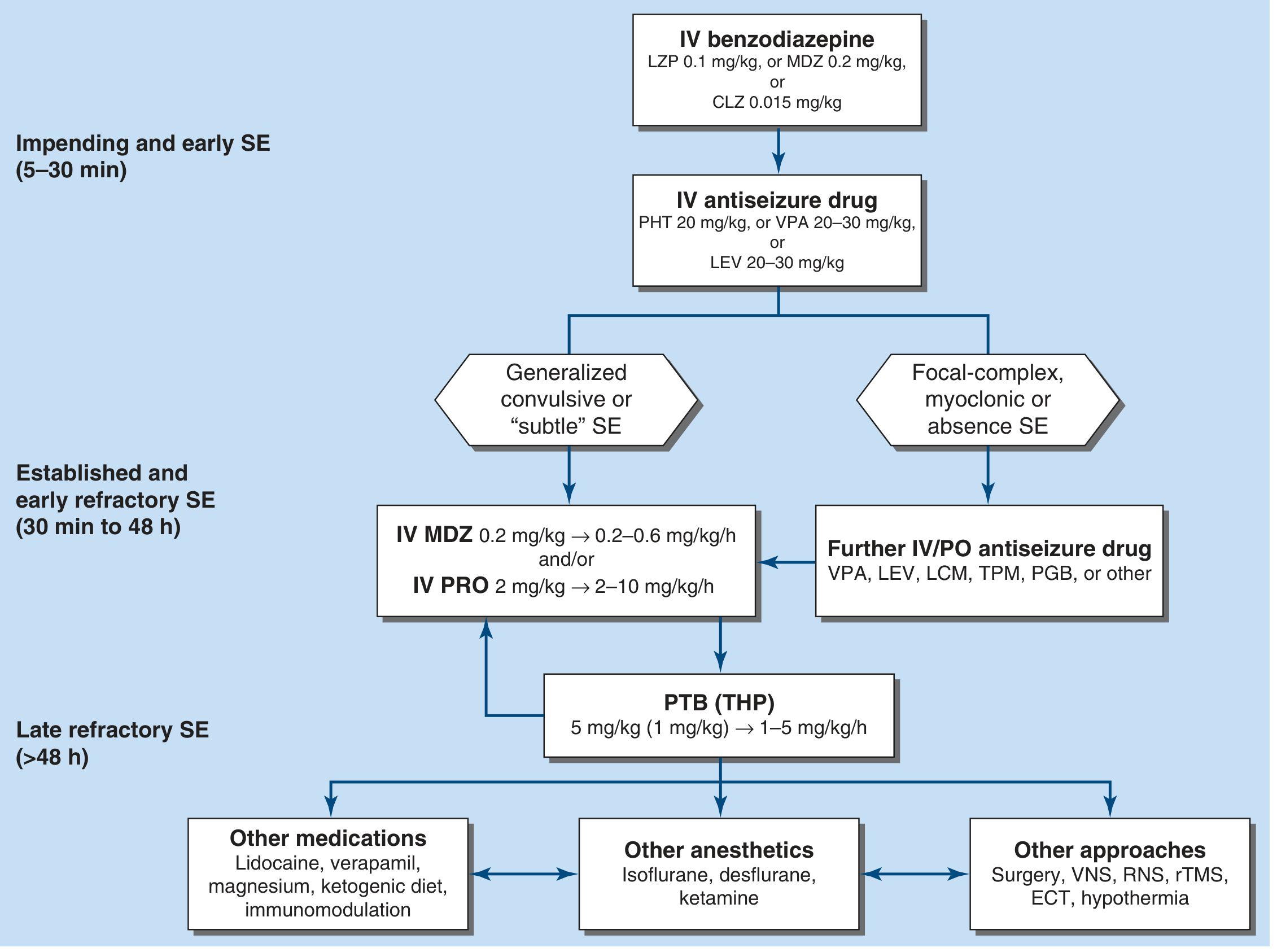
c. Management of Status Epilepticus (SE) (4 marks)
SE is defined as continuous seizure activity lasting >5 minutes OR two or more seizures without full recovery of consciousness between them.
Immediate (0-5 min):
- Secure airway, breathing, circulation (ABC)
- Lateral decubitus position, supplemental oxygen
- IV access, blood glucose check; if hypoglycemia - 50% dextrose IV
- Draw blood for CBC, electrolytes, drug levels, toxicology screen
- Lorazepam 0.1 mg/kg IV (or diazepam 0.15 mg/kg IV, or midazolam 0.2 mg/kg IM if no IV access)
5-30 min (Early SE):
If seizures continue after benzodiazepine:
- Fosphenytoin/Phenytoin 20 mg PE/kg IV (rate ≤50 mg/min - monitor cardiac)
- OR Levetiracetam 20-30 mg/kg IV
- OR Valproate 20-30 mg/kg IV
30 min-48 h (Refractory SE):
If still seizing:
- Midazolam IV infusion 0.2 mg/kg bolus → 0.2-0.6 mg/kg/h
- OR Propofol 2 mg/kg bolus → 2-10 mg/kg/h
- Intubate and mechanically ventilate; continuous EEG monitoring
>48 h (Super-refractory SE):
- Pentobarbital/Thiopental infusion
- Ketamine, isoflurane (volatile anaesthetic)
- Non-pharmacological: ketogenic diet, VNS, ECT, hypothermia, surgery
Treatment algorithm (Harrison's Principles of Internal Medicine, 22e):
Q2. Short Notes (4×5 = 20 Marks)
a. G-Protein Coupled Receptors (GPCRs)
GPCRs are the largest family of cell-surface receptors, involved in the majority of drug-receptor interactions.
Structure:
- Seven transmembrane (7-TM) alpha-helical domains
- Extracellular N-terminus (ligand binding site)
- Intracellular loops coupled to heterotrimeric G-proteins (Gα, Gβ, Gγ subunits)
Mechanism of Activation:
- Agonist binds → conformational change in receptor
- Gα subunit exchanges GDP for GTP → active state
- Gα dissociates from Gβγ → both can interact with effector proteins
- Effectors: adenylyl cyclase (cAMP), phospholipase C (IP3 + DAG), ion channels
- GTPase activity of Gα hydrolyzes GTP → GDP → inactivation (self-limiting)
G-Protein Subtypes and Second Messengers:
| G-Protein | Effect | Example Receptors |
|---|---|---|
| Gs | ↑ Adenylyl cyclase → ↑ cAMP | β1-adrenergic, H2, D1 |
| Gi | ↓ Adenylyl cyclase → ↓ cAMP | α2-adrenergic, M2, D2, opioid |
| Gq | ↑ PLC → ↑ IP3 + DAG → ↑ Ca2+ | α1-adrenergic, M1, M3, H1 |
| G12/13 | RhoGEF activation | Thrombin, LPA receptors |
Pharmacological Importance:
- Drug targets: beta-blockers (β-AR), antihistamines (H1-AR), opioids (μ-receptor), muscarinic antagonists
- Desensitization (tachyphylaxis) occurs via GRK phosphorylation and β-arrestin binding
b. Pharmacotherapy of Acute Migraine
Migraine is a neurovascular disorder. Acute treatment aims to abort the attack.
Step-up (stratified) approach:
Mild-Moderate attacks:
- NSAIDs: Ibuprofen 400-800 mg, Naproxen 500-1000 mg
- Aspirin 900 mg + Metoclopramide 10 mg (anti-emetic + prokinetic)
- Paracetamol 1000 mg (less effective)
Moderate-Severe attacks (Triptans - First Line):
- Selective 5-HT1B/1D receptor agonists
- Drugs: Sumatriptan (6 mg SC / 50-100 mg oral), Rizatriptan 10 mg, Zolmitriptan 2.5-5 mg, Almotriptan, Eletriptan, Frovatriptan, Naratriptan
- Mechanism: cranial vasoconstriction + inhibit release of CGRP/substance P from trigeminal terminals
- Contraindications: ischemic heart disease, uncontrolled hypertension, basilar/hemiplegic migraine
- Side effects: "triptan sensations" - chest tightness, tingling; coronary vasospasm
Ergotamine/Dihydroergotamine (DHE):
- Non-selective 5-HT1 + alpha-adrenergic agonist
- Effective but side effects greater (nausea, peripheral vasospasm, ergotism)
- DHE nasal spray or IV preferred
Newer agents:
- CGRP receptor antagonists (gepants): Ubrogepant, Rimegepant - used when triptans contraindicated
- Lasmiditan: 5-HT1F agonist (no vasoconstriction - safer in CVD)
Anti-emetics: Metoclopramide, Prochlorperazine (also direct antimigraine action)
Avoid: Opioids (risk of medication overuse headache)
c. Enzyme Induction and its Clinical Significance in Drug-Drug Interactions
Definition: Enzyme induction is an increase in the synthesis of drug-metabolizing enzymes (mainly CYP450 enzymes in the liver) due to exposure to certain drugs, chemicals, or environmental agents.
Mechanism:
- Inducing agents bind to nuclear receptors (e.g., pregnane X receptor - PXR, constitutive androstane receptor - CAR)
- These receptors translocate to nucleus → upregulate transcription of CYP genes
- Takes 1-2 weeks to develop; reverses over weeks after discontinuation
- Mainly involves CYP3A4, CYP2C9, CYP2C19, CYP1A2
Important Enzyme Inducers: "PC BRAS"
- Phenytoin, Phenobarbitone
- Carbamazepine
- Bacterial rifampicin (Rifampicin - strongest inducer)
- Ritonavir (also an inhibitor at low doses)
- Alcohol (chronic)
- St. John's Wort (herbal - contains hyperforin)
- Others: Griseofulvin, Nevirapine
Clinical Significance:
- Reduced efficacy of co-administered drugs: Rifampicin + Oral Contraceptive Pills (OCPs) → contraceptive failure; Carbamazepine + Warfarin → reduced anticoagulation (thrombosis risk)
- Tolerance: Carbamazepine induces its own metabolism (autoinduction) → dose escalation needed over weeks
- Increased toxic metabolite formation: Carbamazepine + Valproate → ↑ carbamazepine-10,11-epoxide (neurotoxic)
- Post-induction effects: When inducer is stopped, levels of co-drug rise sharply → toxicity (e.g., stopping rifampicin in TB treatment → sudden ↑ warfarin effect → bleeding)
d. Prostaglandin Analogues and Their Clinical Indications
Prostaglandin analogues are synthetic derivatives of naturally occurring prostaglandins (PGs) that act via G-protein coupled prostanoid receptors.
Classification and Clinical Indications:
| Drug | Receptor | Indication |
|---|---|---|
| Latanoprost (PGF2α analogue) | FP receptor | Glaucoma (↓ IOP by ↑ uveoscleral outflow) |
| Bimatoprost | FP + prostamide | Glaucoma; eyelash hypotrichosis |
| Travoprost | FP receptor | Glaucoma |
| Misoprostol (PGE1 analogue) | EP1/EP3 | Prevention/treatment of NSAID-induced gastric ulcers; cervical ripening; medical abortion (with mifepristone); PPH |
| Alprostadil (PGE1) | EP receptors | Erectile dysfunction (intracavernosal); keeping PDA open in neonates with ductal-dependent CHD |
| Dinoprostone (PGE2) | EP receptors | Cervical ripening, labor induction |
| Epoprostenol (PGI2 / Prostacyclin) | IP receptor | Pulmonary arterial hypertension (PAH); primary prevention in dialysis |
| Iloprost (PGI2 analogue) | IP receptor | PAH; Raynaud's phenomenon |
| Carboprost (15-methyl PGF2α) | FP receptor | Postpartum hemorrhage; refractory to oxytocin |
Adverse Effects (general):
- GI: nausea, diarrhea, cramping
- Uterine hypertonicity
- Bronchospasm (PGF2α - avoided in asthma)
- Hypotension (prostacyclin)
- With latanoprost: iris pigmentation, eyelash lengthening
Q3. Very Short Answers (5×2 = 10 Marks)
a. Define "Prodrugs" and Give Two Examples
A prodrug is a pharmacologically inactive compound that undergoes biotransformation (in the body) to yield an active metabolite that produces the therapeutic effect.
Purpose: Improve absorption, overcome first-pass metabolism, reduce toxicity, improve targeting.
Examples:
- Enalapril (ACE inhibitor prodrug) → hydrolyzed to enalaprilat (active) in the liver
- Levodopa → decarboxylated to dopamine in the brain (dopamine cannot cross BBB; L-DOPA can)
Other examples: Codeine → Morphine; Prednisone → Prednisolone; Cyclophosphamide → Phosphoramide mustard
b. Mechanism of Action of Depolarizing Blockers
Depolarizing blockers (prototype: Succinylcholine / Suxamethonium) produce neuromuscular blockade by a unique mechanism:
- They mimic acetylcholine at nicotinic NMJ receptors - bind and cause prolonged depolarization
- Initial transient fasciculations occur (brief muscle contractions)
- The motor endplate remains persistently depolarized ("Phase I block" / depolarization block)
- Since the plate is already depolarized, it cannot respond to further ACh release → flaccid paralysis
- With continued exposure: Phase II block (desensitization block) - membrane repolarizes but is unresponsive
Key features: Rapid onset (60 sec), ultra-short duration (~10 min), not reversed by neostigmine (Phase I), no antidote for Phase I.
Use: Rapid Sequence Intubation (RSI)
c. Why Atropine is Contraindicated in Angle-Closure Glaucoma
- Atropine is a muscarinic antagonist (anti-cholinergic drug)
- It causes mydriasis (pupillary dilation) by blocking M3 receptors on the iris sphincter, allowing the iris dilator to dominate
- In angle-closure (narrow-angle) glaucoma, the iridocorneal angle is already anatomically narrow
- Mydriasis causes the iris to physically crowd into and further narrow/block this angle
- This blocks the drainage of aqueous humor (through the trabecular meshwork into the canal of Schlemm)
- Aqueous humor accumulates → acute rise in intraocular pressure (IOP) → acute angle-closure attack
- Presents as severe eye pain, blurred vision, halos, headache, nausea - a medical emergency
Note: Atropine is NOT contraindicated in open-angle glaucoma (most common type)
d. Enumerate Inhalational Corticosteroids
Inhaled Corticosteroids (ICS) are used in asthma and COPD management:
- Beclomethasone dipropionate (BDP) - first ICS developed
- Budesonide - high topical potency; safe in pregnancy
- Fluticasone propionate (FP) - high lipophilicity, prolonged action
- Fluticasone furoate
- Mometasone furoate
- Ciclesonide - prodrug (activated in lungs)
- Triamcinolone acetonide
Adverse effects of ICS: Oropharyngeal candidiasis, dysphonia, adrenal suppression at high doses. Spacer use and rinsing mouth after use reduce local side effects.
e. Name Two Antitussives and Their Mechanism of Action
1. Codeine (Opioid antitussive)
- Mechanism: Agonist at mu (μ) and kappa (κ) opioid receptors in the cough center (nucleus tractus solitarius) in the medulla oblongata; raises the threshold for cough reflex; also has peripheral effect on afferent C-fibers in bronchi
- Dose for cough: 10-30 mg oral (lower than analgesic dose)
2. Dextromethorphan (Non-opioid antitussive)
- Mechanism: NMDA receptor antagonist in the cough center; also weak sigma receptor agonist; suppresses central cough reflex without significant sedation or dependence
- Has no analgesic or addictive properties at therapeutic doses
- OTC preparation widely used
Other antitussive: Noscapine (non-opioid, bronchodilatory), Benzonatate (local anesthetic - anesthetizes stretch receptors in alveoli/bronchi)
SECTION C (40 Marks)
Q1. (3+4+3 = 10 Marks)
Clinical Scenario: A 42-year-old farmer: unresponsive, profuse sweating, salivation, vomiting, urinary and fecal incontinence, HR 48 bpm, labored breathing, bilateral wheezing, pinpoint non-reactive pupils, muscle fasciculations.
a. Diagnosis and Management (3+4 marks)
Diagnosis: Organophosphate (OP) Poisoning
This is a cholinergic toxidrome caused by inhibition of acetylcholinesterase (AChE) by organophosphate insecticide (e.g., malathion, parathion, chlorpyrifos).
AChE inhibition → Accumulation of ACh at all cholinergic synapses → Overstimulation of:
- Muscarinic (M) receptors (Ps AND D - Parasympathetic + CNS)
- Nicotinic (N) receptors (NMJ + autonomic ganglia)
Clinical Features using DUMBELS/SLUDGE:
- DUMBELS: Diarrhea, Urination, Miosis, Bradycardia+Bronchospasm+Bronchorrhea, Emesis, Lacrimation, Salivation/Sweating
- Nicotinic effects: Muscle fasciculations → weakness → paralysis; tachycardia (ganglionic)
- CNS: Anxiety, seizures, coma
Diagnosis confirmed by: Clinical features + occupational exposure + depressed RBC and plasma cholinesterase activity
Management:
1. Emergency Stabilization (ABC):
- Secure airway (suction secretions), intubate if needed
- IV access, O2 therapy
- Remove contaminated clothing (decontamination)
- Wash skin/eyes thoroughly
- For intubation: use rocuronium (non-depolarizing) - NOT succinylcholine (prolonged action due to AChE inhibition)
2. Specific Antidotes:
Atropine (Competitive muscarinic antagonist):
- Blocks muscarinic effects: dries secretions, bronchodilation, reverses bradycardia
- Dose: 1-3 mg IV q5 min, doubling each dose until "atropinized" (dry secretions, improved breathing, HR >80)
- May need 200-500 mg in severe cases
- Endpoint: drying of secretions (NOT pupil dilation or tachycardia)
- Does NOT reverse nicotinic effects (fasciculations, weakness)
Pralidoxime (2-PAM) - Oxime:
- Reactivates AChE by breaking the OP-AChE bond if given EARLY (before "aging")
- Works at both muscarinic AND nicotinic sites (reverses muscle weakness)
- Dose: 1-2 g IV over 15-30 min, then infusion 200-500 mg/hr
- Must be given within 24-48 hours (before aging of OP-AChE complex)
3. Benzodiazepines: For seizures and agitation (diazepam 5-10 mg IV)
4. Supportive care: ICU monitoring, mechanical ventilation, bladder catheterization
c. Why Oximes are NOT Effective in Carbamate Poisoning (3 marks)
This is an important pharmacological distinction:
Organophosphates vs. Carbamates:
- Both inhibit acetylcholinesterase
- BUT the mechanism and reversibility differ:
Carbamate AChE inhibition:
- Carbamates (e.g., carbaryl, physostigmine) carbamylate the AChE enzyme
- The carbamate-AChE bond is spontaneously hydrolyzed rapidly (within 30 min - 4 hours)
- AChE regenerates on its own - the inhibition is intrinsically reversible
Why oximes don't work in carbamate poisoning:
- Oximes (pralidoxime) work by nucleophilic attack on the OP-AChE complex to displace the organophosphate and restore AChE activity
- In carbamate poisoning, the carbamyl-AChE complex spontaneously hydrolyzes faster than pralidoxime can act - making the oxime redundant
- There is experimental evidence that pralidoxime may actually worsen outcomes in carbamate poisoning (possibly by inhibiting AChE directly)
- Additionally, the clinical syndrome of carbamate poisoning is shorter and self-limiting due to rapid spontaneous reactivation of AChE
Treatment of carbamate poisoning: Atropine alone (sufficient); oximes only if cannot differentiate from OP poisoning (per Rosen's Emergency Medicine).
Q2. (5×4 = 20 Marks)
a. A 55-year-old lady with Rheumatoid Arthritis - Scenario on Empathy
1. Define Empathy and How You Will Use it in This Case:
Empathy is the ability to understand and share the feelings of another person - to put oneself in their position, appreciate their perspective, and communicate that understanding in a way that makes the patient feel heard, valued, and respected.
In this case:
- The patient is in severe pain, emotionally distressed ("tearfully"), and feels dismissed (doctor focused only on records, not on her suffering)
- Applying empathy:
- Acknowledge her distress: "I can hear how much you are suffering. It must be incredibly frustrating to feel that your pain is not being taken seriously."
- Validate her experience: Do not dismiss her subjective symptoms because inflammatory markers are stable
- Non-verbal empathy: Maintain eye contact, lean forward, avoid distractions (phone/computer)
- Ask open-ended questions: "Can you tell me more about how this is affecting your daily life?"
- Avoid premature closure - do not schedule a review and leave without addressing emotional needs
- Create a plan together (shared decision-making)
2. Components of Empathy (NURSES mnemonic):
- N - Name the emotion: "I can see you are upset and in pain"
- U - Understand: "I understand this has taken a toll on your daily life"
- R - Respect/Admire: "I admire how you have coped with this"
- S - Support: "I want to support you in managing this better"
- E - Explore: "Tell me more about what is worrying you most"
- S - (Summarize/Silence): Allow the patient to speak; listen actively
Also: Cognitive (intellectual understanding), Affective (emotional resonance), Behavioral (expressed through actions and communication)
b. Beta Blockers
Classification:
- Non-selective (β1+β2): Propranolol, Nadolol, Timolol, Sotalol
- Selective (β1 - cardioselective): Metoprolol, Atenolol, Bisoprolol, Esmolol (IV, ultra-short)
- α+β blockers (third generation): Carvedilol, Labetalol
- Intrinsic sympathomimetic activity (ISA): Pindolol, Acebutolol
Mechanism of Action:
Competitive antagonism at β-adrenoceptors:
- β1 blockade → ↓ heart rate (negative chronotropy), ↓ force of contraction (negative inotropy), ↓ renin release
- β2 blockade → bronchoconstriction, peripheral vasoconstriction, ↑ hypoglycemia risk
Pharmacological Effects:
- Cardiovascular: ↓ BP (antihypertensive), ↓ HR, ↓ cardiac output, ↓ O2 demand
- Anti-arrhythmic (Class II - Vaughan Williams)
- Reduce tremor (β2 blockade in skeletal muscle)
- Reduce intraocular pressure (timolol eye drops - glaucoma)
Therapeutic Uses:
- Hypertension, Angina pectoris (reduces O2 demand)
- Cardiac arrhythmias (SVT, AF rate control)
- Post-MI (reduces mortality, prevents sudden death)
- Heart failure (carvedilol, metoprolol, bisoprolol - reduce remodeling)
- Hyperthyroidism (symptom control)
- Pheochromocytoma (only after alpha blockade)
- Migraine prophylaxis (propranolol)
- Anxiety/performance anxiety, Essential tremor
- Glaucoma (timolol topical)
Adverse Effects:
- Bradycardia, heart block
- Bronchoconstriction (non-selective - dangerous in asthma/COPD)
- Peripheral vasoconstriction → cold extremities, worsening Raynaud's
- Masking of hypoglycemia (tachycardia masked; sweating unaffected - noradrenergic)
- CNS: fatigue, depression, nightmares
- Rebound hypertension/angina on abrupt withdrawal
Contraindications: Asthma, COPD, second/third degree heart block, cardiogenic shock
c. Opioid Receptors and Their Actions
Opioid receptors are 7-TM G-protein coupled receptors (Gi-coupled) found in CNS, peripheral sensory neurons, and immune cells.
Types:
| Receptor | G-protein | Location | Effects | Prototype Agonist |
|---|---|---|---|---|
| μ (Mu) | Gi | Brain, spinal cord, gut | Analgesia, euphoria, sedation, respiratory depression, constipation, miosis, dependence | Morphine, Fentanyl |
| κ (Kappa) | Gi | Spinal cord, brain, peripheral | Spinal analgesia, sedation, dysphoria, miosis, diuresis | Ketocyclazocine, Buprenorphine (partial) |
| δ (Delta) | Gi | Brain, periphery | Analgesia, antidepressant, modulates mu activity | Enkephalins |
| NOP/ORL1 | Gi | Brain | Anxiolysis, pain modulation (anti-opioid at supraspinal level) | Nociceptin/Orphanin FQ |
Mechanism: Gi activation → ↓ cAMP; open K+ channels (hyperpolarization); close Ca2+ channels → reduced neuronal excitability and neurotransmitter release
Endogenous ligands: β-Endorphin (μ), Enkephalins (μ, δ), Dynorphins (κ)
Clinical applications: Analgesia (morphine, codeine, fentanyl), cough suppression (codeine), antidiarrheal (loperamide - peripheral only), palliative care, anesthesia adjuncts
d. Dissociative Anaesthesia
Dissociative anaesthesia is a unique anesthetic state produced by Ketamine characterized by profound analgesia and amnesia but maintenance of laryngeal reflexes, spontaneous respiration, and cardiovascular stimulation - the patient appears "dissociated" from the environment.
Drug: Ketamine (arylcyclohexylamine derivative); available as racemic mixture or S-ketamine
Mechanism of Action:
- Primary: Non-competitive antagonist at NMDA (N-methyl-D-aspartate) receptor channels - blocks phencyclidine (PCP) site inside open channel
- Also: Opioid receptor agonism (μ, κ), sigma receptor agonism, muscarinic antagonism, monoamine reuptake inhibition
- Results in functional dissociation between thalamo-cortical and limbic systems
Pharmacological Properties:
- Analgesia: Excellent, even at sub-anesthetic doses
- Anesthesia: Loss of consciousness at higher doses (1-2 mg/kg IV)
- Cardiovascular: Stimulatory - ↑ HR, ↑ BP, ↑ cardiac output (sympathomimetic - releases catecholamines). Useful in shock/hypovolemia
- Respiratory: Preserves respiratory drive and airway reflexes
- Bronchodilation: Useful in asthmatic patients requiring anesthesia
- CNS: ↑ ICP, ↑ IOP (disadvantage)
Uses:
- Emergency anesthesia and procedural sedation (trauma, field conditions)
- Pediatric anesthesia and brief procedures
- Bronchospastic patients needing anesthesia
- Analgesia in burns, wound dressing changes
- Hemodynamically unstable patients
- Induction agent in rapid sequence intubation
Adverse Effects:
- Emergence delirium, hallucinations, unpleasant dreams (reduced by benzodiazepine premedication)
- ↑ ICP (contraindicated in head injury)
- ↑ IOP (avoid in perforating eye injuries)
- Excessive secretions (pretreat with glycopyrrolate/atropine)
- Tachycardia and hypertension (avoid in hypertensive cardiovascular disease)
Q3. Very Short Answers (5×2 = 10 Marks)
a. Plasma Half-Life (t½) and Its Clinical Significance
Definition: Plasma half-life (t½) is the time required for the plasma concentration of a drug to fall to half its initial value during elimination.
Formula: t½ = 0.693 × Vd / CL
(where Vd = volume of distribution, CL = clearance)
Clinical Significance:
- Dosing frequency: Drugs with short t½ (e.g., penicillin G ~30 min) need frequent dosing; long t½ (e.g., amlodipine ~35-50 hrs) allow once-daily dosing
- Time to steady state: Achieved in ~4-5 half-lives; important for monitoring therapeutic levels
- Duration of drug effect: Guides how long to continue or discontinue a drug
- Drug accumulation: Drugs with long t½ accumulate with repeated dosing (e.g., digoxin, amiodarone)
- Timing of drug interactions: Knowing when plasma levels decline helps anticipate interactions
- Dose adjustment in organ failure: Prolonged t½ in renal/hepatic disease (e.g., digoxin in renal failure)
- Withdrawal effects: Drugs with short t½ (benzodiazepines) cause acute withdrawal; those with long t½ (diazepam) cause gradual, milder withdrawal
b. Difference Between True and Pseudo-Cholinesterase
| Feature | True Cholinesterase (AChE) | Pseudo-Cholinesterase (BuChE) |
|---|---|---|
| Other name | Acetylcholinesterase, specific cholinesterase | Butyrylcholinesterase, plasma cholinesterase, non-specific cholinesterase |
| Location | Nerve terminals, RBCs, neuromuscular junction | Plasma, liver, glial cells, intestinal mucosa |
| Preferred substrate | Acetylcholine (specifically) | Butyrylcholine, succinylcholine, aspirin, procaine |
| Function | Rapid hydrolysis of ACh at synapses (essential for nerve transmission) | Metabolizes certain drugs; exact physiological role uncertain |
| Inhibited by | Organophosphates, neostigmine, physostigmine | Organophosphates; genetic variants cause prolonged succinylcholine action |
| Clinical relevance | OP poisoning: RBC AChE levels used for diagnosis | Genetic deficiency: prolonged paralysis with succinylcholine (dibucaine number test) |
| Dibucaine number | N/A | Normal: ~80; heterozygous atypical: ~60; homozygous atypical: ~20 |
c. Mechanism of Action and Indications of Roflumilast
Roflumilast is an oral, selective Phosphodiesterase-4 (PDE-4) inhibitor.
Mechanism:
- PDE-4 is the predominant phosphodiesterase in immune cells (neutrophils, eosinophils, macrophages, T-lymphocytes)
- PDE-4 normally hydrolyzes cAMP → AMP (inactivation)
- Roflumilast inhibits PDE-4 → ↑ intracellular cAMP → activates PKA → anti-inflammatory effects:
- Reduces neutrophil and eosinophil activity
- Decreases release of cytokines (TNF-α, IL-6, IL-8), mediators, and enzymes
- Reduces mucus hypersecretion
- Bronchodilation (minor effect)
Indications:
- COPD (primary indication): Add-on treatment to bronchodilators in severe COPD (FEV1 <50% predicted) with chronic bronchitis and frequent exacerbations; reduces exacerbation frequency
- Asthma: Investigated as add-on therapy for severe eosinophilic asthma
Adverse Effects:
- GI: Nausea, diarrhea, abdominal pain (most common, usually transient)
- Weight loss (clinically significant - monitor BMI)
- Headache, insomnia
- Psychiatric effects: Depression, suicidal ideation (BLACK BOX WARNING - use with caution in depression/suicidal history)
Key point: Roflumilast is NOT a bronchodilator - it does not provide acute relief.
d. Pharmacological Actions and Adverse Effects of Aspirin
Aspirin (Acetylsalicylic acid) irreversibly inhibits cyclooxygenase (COX-1 and COX-2) by acetylating serine residue.
Pharmacological Actions (Dose-Dependent):
| Dose | Effect | Mechanism |
|---|---|---|
| Low (75-100 mg) | Antiplatelet | Irreversible COX-1 inhibition → ↓ TXA2 in platelets (no nucleus, cannot synthesize new COX) |
| Analgesic (500 mg - 1 g) | Pain relief | ↓ PGE2, PGI2 at peripheral nociceptors and centrally |
| Anti-inflammatory (3-6 g/day) | Reduces inflammation | ↓ prostaglandins, ↓ bradykinin sensitization |
| Antipyretic (500 mg - 1 g) | Fever reduction | ↓ PGE2 in hypothalamus → reset thermostat |
| High dose (>5 g) | Uricosuric | Blocks uric acid reabsorption in renal tubule |
| Low dose | Anti-uricosuric | Blocks uric acid secretion (can precipitate gout) |
Adverse Effects:
- GI: Gastric mucosal irritation, ulcers, bleeding (↓ PGE2 = ↓ mucus, ↓ bicarbonate, ↑ acid; also direct irritant); take with food/PPI
- Bleeding tendency: Antiplatelet effect (prolonged bleeding time)
- Reye's Syndrome: Severe hepatic failure + encephalopathy in children with viral illness (e.g., chickenpox, influenza) - AVOID in children <12 years
- Hypersensitivity: Aspirin-induced asthma (ASA triad/Samter's triad: asthma + nasal polyps + aspirin sensitivity) - due to shunting of arachidonic acid to leukotrienes
- Salicylism: Tinnitus, deafness, vertigo, nausea (early toxicity at high doses)
- Salicylate poisoning: Mixed respiratory alkalosis + metabolic acidosis; hyperthermia; hyperventilation
- Uric acid effects: Low dose → hyperuricemia; high dose → uricosuria
- Platelet dysfunction: Prolonged bleeding time after single dose (lasts 7-10 days)
Contraindications: Children <12 years (Reye's), bleeding disorders, aspirin-sensitive asthma, concurrent anticoagulation (relative)
e. Essential Medicines Concept as per WHO
Definition (WHO, 1977 - updated periodically):
"Essential medicines are those that satisfy the priority health care needs of the population. They are selected with due regard to disease prevalence, evidence on efficacy and safety, and comparative cost-effectiveness."
Key Principles:
- Introduced by WHO in 1977 under Dr. Halfdan Mahler
- First list had 208 medicines
- Currently (~2023 edition): approximately 500 medicines (including vaccines, contraceptives, diagnostics)
- Updated every 2 years by the WHO Expert Committee
Selection Criteria:
- Relevance to the burden of disease in the population
- Evidence of efficacy from well-designed clinical trials
- Acceptable safety profile (benefit-risk ratio favorable)
- Quality: availability of assured quality supply
- Cost-effectiveness and affordability
Objectives:
- Guide national health systems in procuring and distributing medicines rationally
- Ensure universal availability of basic treatments
- Reduce irrational prescribing and unnecessary expenditure
- Used as template for National Essential Medicines Lists (NEMLs) by member states
India's National List of Essential Medicines (NLEM):
- India adopted this concept and publishes its own NLEM
- Last updated: NLEM 2022 has 384 medicines
- Basis for price control (DPCO - Drug Price Control Order) by the government
All answers are based on Harrison's Principles of Internal Medicine 22e, Rosen's Emergency Medicine, Katzung's Basic and Clinical Pharmacology, Goodman & Gilman's Pharmacological Basis of Therapeutics, and Lippincott Illustrated Reviews - Pharmacology.
This is a shared conversation. Sign in to Orris to start your own chat.