
Varicocele (mbbs urology ?
Reading File
Finding Sources
Searching PubMed
varicocele treatment management
Reading File
Reading File
Searching Images
varicocele anatomy diagram scrotal
Reading File
Reading File
Finding Sources
Finding Sources
Reading File
Finding Sources
Reading File
Loading Image
Now I have comprehensive information to provide a thorough MBBS-level urology answer on varicocele. Let me compile it.
Varicocele — MBBS Urology
Definition
Varicocele is an abnormal dilatation and tortuosity of the veins of the pampiniform plexus of the spermatic cord within the scrotum, resulting from incompetent/absent venous valves causing retrograde venous blood flow through the internal spermatic veins.
It is the most common surgically correctable cause of male subfertility.
Anatomy & Why It Is Predominantly Left-Sided (~90%)
| Feature | Left | Right |
|---|---|---|
| Drainage | Left renal vein (at right angle, 8–10 cm superior) | IVC (at oblique angle) |
| Hydrostatic pressure | Higher (longer column of blood) | Lower |
| Valvular incompetence | More common | Rare |
- The left internal spermatic vein is longer and drains into the left renal vein at a right angle, transmitting higher hydrostatic pressure.
- The right spermatic vein drains obliquely into the IVC with lower pressure.
- Isolated right-sided varicocele is rare and should raise suspicion for a retroperitoneal/renal mass (especially if of sudden onset) compressing the right renal/IVC drainage — always investigate with CT/USG.
- The "nutcracker phenomenon" (compression of left renal vein between the aorta and superior mesenteric artery) may contribute in some cases.
Epidemiology
| Group | Prevalence |
|---|---|
| Healthy young men | ~15% |
| Subfertile men | ~40% (left-sided) |
| Bilateral (healthy men) | <10% |
| Bilateral (subfertile men) | Up to 20% |
- Develops during puberty (peak at Tanner stage 3), rarely seen below age 10
- Varicoceles do not spontaneously regress
- Associated with tall, thin body habitus (low BMI)
- Familial predisposition: 4–8× higher risk in first-degree relatives
Clinical Features
Symptoms
- Often asymptomatic (majority discovered incidentally)
- Dull aching/dragging pain in the scrotum, especially on prolonged standing
- Heaviness or discomfort, worsening toward evening
- Male subfertility (most important clinical consequence)
Signs
- "Bag of worms" appearance/feel — classic description of dilated tortuous veins
- Examined in supine and standing positions with Valsalva maneuver
- Affected testis may be soft, smaller (testicular atrophy)
- Veins decompress in supine position (failure to do so suggests secondary cause)
Grading (Clinical Classification)
| Grade | Description |
|---|---|
| Grade 0 (Subclinical) | Non-palpable, detected only on colour Doppler ultrasound (CDUS) |
| Grade 1 | Palpable only during Valsalva maneuver |
| Grade 2 | Easily palpable at rest, but not visible |
| Grade 3 | Visible through scrotal skin; easily palpable |
(Grades 1–3 = Clinical varicocele; Grade 0 = Subclinical)
Pathophysiology — How It Causes Infertility
Several mechanisms are postulated (likely multifactorial):
- Countercurrent heat exchange failure — retrograde flow of warm corporeal blood around the testis raises intratesticular temperature → inhibits spermatogenesis (most accepted theory)
- Oxidative stress — elevated reactive oxygen species → DNA fragmentation and sperm apoptosis
- Reflux of renal/adrenal metabolites — toxic catecholamines/metabolites reflux down the spermatic vein
- Increased hydrostatic pressure → hypoperfusion, stasis, hypoxia, toxin accumulation
- Pituitary-gonadal hormonal dysfunction — altered FSH/testosterone levels
- Elevated seminal microRNA for apoptosis pathways
Effect on semen parameters:
- ↓ Concentration, ↓ motility (most profound), ↓ morphology
- Progressive testicular atrophy
Diagnosis
Physical Examination (cornerstone of diagnosis)
- Examine standing, with and without Valsalva
- Palpate spermatic cord; assess testicular volume (Prader orchidometer or ultrasound)
- Measure testicular volume: >20% asymmetry between testes is significant
Investigations
| Investigation | Details |
|---|---|
| Scrotal Colour Doppler Ultrasound (CDUS) | Gold standard for confirmation and subclinical cases; shows retrograde flow and vein diameter >3 mm |
| Semen analysis | Assess sperm concentration, motility, morphology |
| Hormone profile | FSH, LH, testosterone |
| Venography | Gold standard anatomically, but invasive; used pre-embolization |
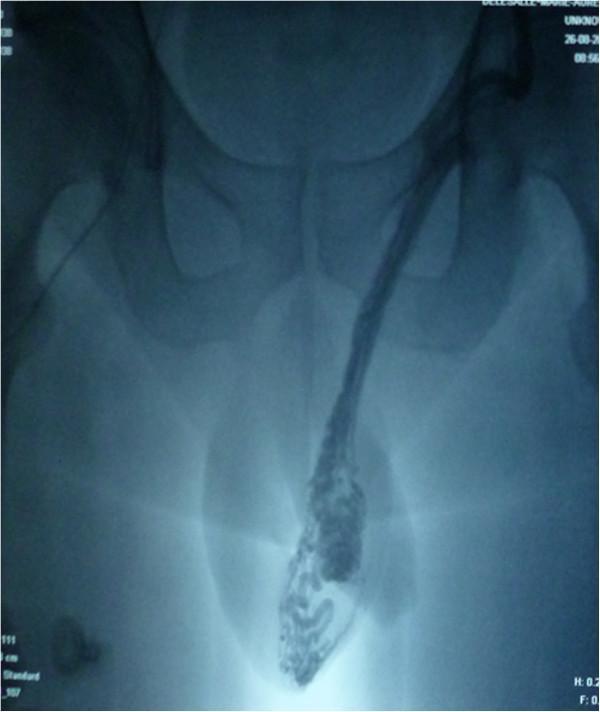
Indications for Treatment
- Palpable varicocele + abnormal semen parameters (most common indication)
- Varicocele + testicular atrophy (especially in adolescents — can reverse with early treatment)
- Pain causing significant discomfort
- Subfertile couple (varicocele on male partner)
Note: Varicocele correction can reverse testicular atrophy in adolescents and improve semen parameters in adults.
Treatment Options
All treatments aim to occlude retrograde flow in the internal spermatic veins.
Comparison of Treatment Modalities
| Outcome | Incisional (Surgical) | Laparoscopic | Radiological (Embolization) |
|---|---|---|---|
| Semen improvement | 66% | 50–70% | 60% |
| Pregnancy rate | 35% | 12–32% | 10–50% |
| Recurrence | 0–15% | 5–25% | 0–10% |
| Technical failure | Negligible | Small | 10–15% |
| Return to work | 5 days | 5.3 days | 1 day |
| Complication rate | 1% | 4% | 10–15% |
Surgical Approaches
- Retroperitoneal (Palomo) approach — mass ligation of internal spermatic veins; simple but higher recurrence
- Inguinal (Ivanissevich) approach — ligation at the internal ring level
- Subinguinal microsurgical varicocelectomy — gold standard; lowest recurrence and complication rates
- Laparoscopic varicocelectomy — useful for bilateral cases
Non-surgical
- Percutaneous retrograde embolization — interventional radiology; coil or sclerosant placed via femoral vein → left renal vein → spermatic vein; fastest recovery (1 day); 10–15% technical failure rate
Watchful Waiting
- If chosen, natural pregnancy rate ~16%; IVF gives ~35% pregnancy rate
Secondary Varicocele
- Caused by compression of the spermatic vein or renal vein by a mass (e.g., renal cell carcinoma, retroperitoneal lymphoma)
- Suspect when:
- Right-sided varicocele
- Does not decompress in supine position
- Sudden onset in older men
- Investigate with CT abdomen/pelvis
Key Points for Exams
| Fact | Detail |
|---|---|
| Most common side | Left (~90%) |
| Classic sign | "Bag of worms" |
| Best investigation | Scrotal CDUS (Doppler) |
| Most common indication for surgery | Abnormal semen analysis in infertile men |
| Gold standard surgery | Subinguinal microsurgical varicocelectomy |
| Surgical approach with lowest recurrence | Microsurgical (subinguinal) |
| Right-sided varicocele → | Rule out renal/retroperitoneal malignancy |
| Varicoceles spontaneously regress? | No |
| Grade of varicocele visible through skin | Grade 3 |
Sources: Smith and Tanagho's General Urology, 19th Ed.; Campbell-Walsh-Wein Urology
This is a shared conversation. Sign in to Orris to start your own chat.