
If I have little tonsils before 2 to 3 months before and I don't still it there or not but now I'm have one side throat pain if I cough, or little while swallowing
Reading File
Based on your description - one-sided throat pain when coughing or swallowing, with a history of tonsil issues 2-3 months ago - this sounds like it could be tonsillitis (one-sided/unilateral) or possibly a peritonsillar issue. Let me look this up properly.
Searching sources...
Finding Sources
Searching the Web
one sided throat pain swallowing tonsillitis peritonsillar abscess symptoms causes
Finding Sources
Finding Sources
Reading File
Loading Image
Here is a clear explanation of what may be happening with your throat, based on your symptoms.
Your Symptoms - What They Suggest
You described:
- Had tonsil problems 2-3 months ago
- One-sided throat pain (unilateral)
- Pain when coughing or swallowing
This pattern strongly points to one of two things:
Most Likely Causes
1. Recurrent / Residual Tonsillitis (Most Common)
Your tonsils may still be there (you said you're not sure), and the infection from 2-3 months ago may have returned or never fully cleared. Tonsillitis can cause one-sided pain when only one tonsil is more inflamed than the other.
2. Peritonsillar Abscess (Quinsy) - More Serious
This happens when an infection spreads from the tonsil into the surrounding tissue and forms a pocket of pus. According to Tintinalli's Emergency Medicine, it is a collection of pus between the tonsillar capsule and surrounding muscles, and it is a known complication of tonsillitis.
Key warning signs of a peritonsillar abscess:
- Severe one-sided throat pain (worse than normal sore throat)
- Pain/difficulty swallowing (odynophagia)
- Fever
- A "muffled" or "hot potato" voice
- Pain radiating to the same-side ear
- Difficulty opening your mouth wide (trismus)
- The uvula (that hanging flap at the back of your throat) may be pushed to the opposite side
Here is what a peritonsillar abscess looks like on exam:
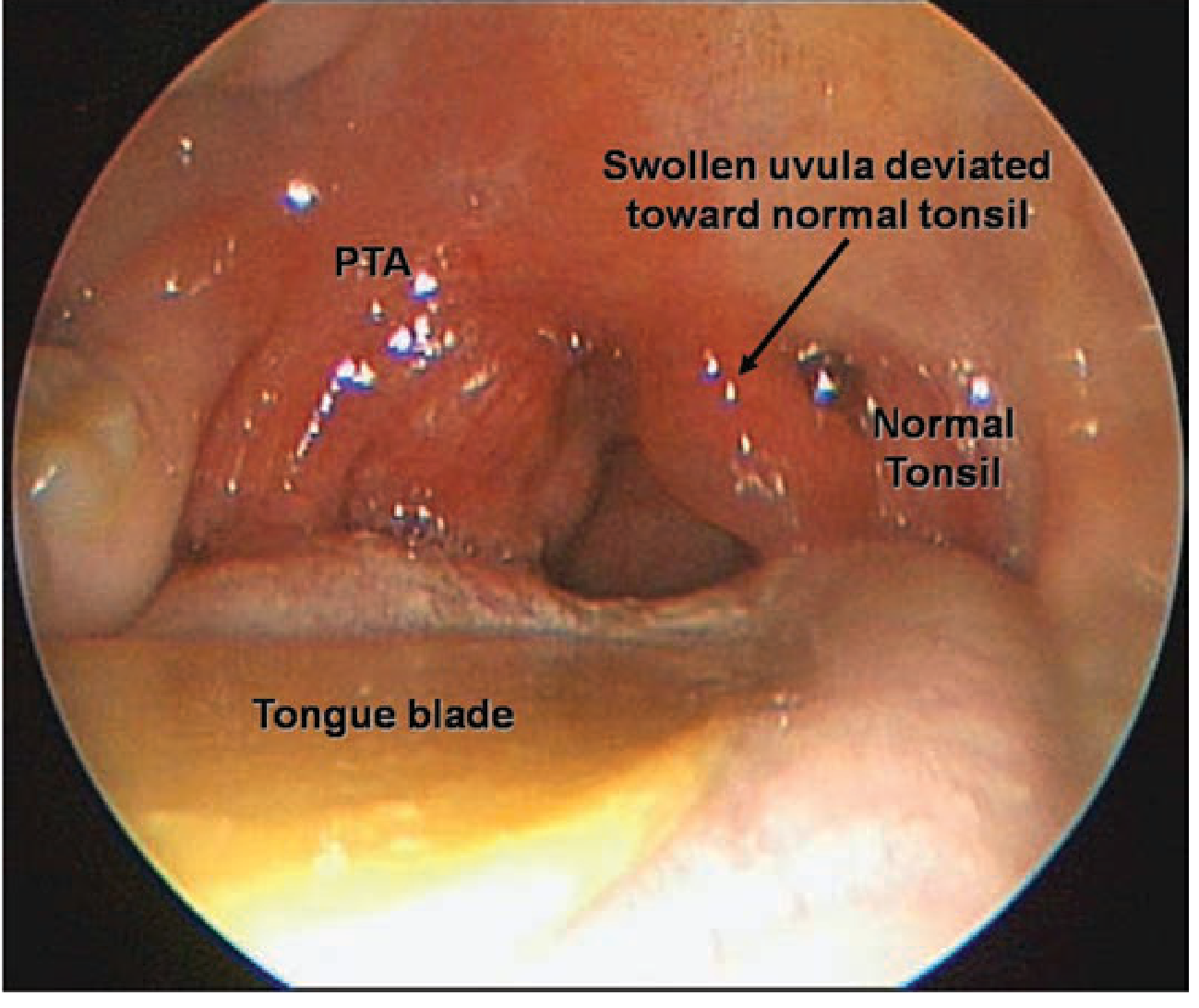
The left side shows the abscess (PTA), and the uvula is pushed toward the normal right tonsil - Tintinalli's Emergency Medicine
What You Should Do
See a doctor soon. One-sided throat pain with a history of tonsillitis needs to be examined in person. A doctor will look at your throat and check:
- Whether your tonsil is swollen or inflamed
- Whether there is an abscess forming
- Whether you need antibiotics or drainage
Go to an emergency department immediately if you notice any of these:
- Difficulty breathing or feeling like your airway is getting blocked
- Drooling because you cannot swallow
- High fever
- Severe pain, cannot open your mouth
- A very muffled, strange-sounding voice
Possible Treatments (Depending on the Cause)
| Cause | Treatment |
|---|---|
| Tonsillitis (bacterial) | Antibiotics (e.g., amoxicillin, penicillin) |
| Peritonsillar abscess | Drainage of the pus + antibiotics |
| Recurrent tonsillitis | May need tonsil removal (tonsillectomy) |
Important: Do not ignore one-sided throat pain, especially with your tonsil history. It is usually treatable, but a peritonsillar abscess can become serious if left alone. Please visit a doctor or ENT (ear, nose, and throat) specialist as soon as possible.
This is general medical information only, not a diagnosis. Only a doctor who examines you can tell you what is actually happening.
I saw doctor 2 or 3 month and I had meditation now I have pain one side and have pain while cough and not have pain while eating or swallowing
This is helpful clarification. So you took medication 2-3 months ago, and now you have one-sided throat pain only when coughing - but NO pain when eating or swallowing. This changes the picture quite a bit.
Searching sources...
Finding Sources
Searching the Web
one sided throat pain only when coughing no pain swallowing causes
Finding Sources
Finding Sources
This updated information is actually reassuring. Here is what your new symptom pattern means:
Updated Assessment
The key difference now is:
| Symptom | Your current situation |
|---|---|
| Pain when swallowing food/drink | No - this is reassuring |
| Pain when coughing | Yes - only this |
| One-sided | Yes |
| History | Tonsil problem treated 2-3 months ago |
Pain only during coughing (but not swallowing) is a much milder pattern. This is less likely to be a serious abscess (a peritonsillar abscess would typically make swallowing very painful too).
What is Most Likely Causing This
1. Residual Throat Irritation / Mild Tonsil Inflammation
After a tonsil infection, the throat tissue can stay slightly irritated for weeks. Coughing puts physical strain and pressure on that one side, causing pain at the spot that was previously infected.
2. Post-nasal Drip (Mucus Dripping Down the Throat)
Mucus from the nose or sinuses dripping down the back of the throat is a very common cause of one-sided throat irritation and a tickling cough. The irritated spot hurts more when you cough hard.
3. Mild Persistent / Low-Grade Tonsillitis
The infection from 2-3 months ago may not have fully resolved. A small amount of inflammation can remain in one tonsil, which you only notice when coughing (the forceful air movement irritates it), but it is not inflamed enough to hurt during normal swallowing.
4. Throat Dryness or Irritation (Pharyngitis)
Dry air, talking a lot, or breathing through the mouth can dry out and irritate one side of the throat, which becomes noticeable during coughing.
What You Can Do at Home (Since Swallowing is Fine)
- Warm salt water gargling - mix 1/4 teaspoon salt in a glass of warm water, gargle for 30 seconds, 2-3 times a day. This reduces throat inflammation.
- Stay well hydrated - drink plenty of water throughout the day.
- Honey + warm water or honey + ginger tea - soothes throat irritation.
- Avoid irritants - cold drinks, smoking, very spicy food, and dusty environments.
- Humidifier - if the air in your room is dry, especially at night.
When to Go Back to the Doctor
Go back if any of these happen:
- The pain gets worse or spreads to both sides
- You develop fever
- Swallowing starts to become painful too
- You notice swelling on one side of your neck
- The pain has not improved after 1-2 weeks of home care
- You feel a lump or hardness in your throat or neck
Bottom line: Your current symptoms - one-sided throat pain only on coughing, no pain while eating - suggest mild residual irritation after your previous tonsil infection, not an emergency. Try the home remedies above for a week. If it does not settle down, a follow-up visit with your doctor or an ENT specialist is a good idea to make sure the tonsil infection has fully cleared.
This is general health information only. Please consult your doctor if symptoms persist or worsen.
This is a shared conversation. Sign in to Orris to start your own chat.