
Hsp in 80 years female management
Reading File
Finding Sources
Finding Sources
Searching PubMed
"IgA vasculitis" AND elderly AND management
Reading File
Reading File
Reading File
Reading File
Reading File
Searching PubMed
"Henoch-Schonlein purpura" AND adult AND "older" AND treatment
Reading File
Reading File
Reading File
Reading Article
PMID: 41655840
Loading Image
Reading File
Reading File
I now have comprehensive information to give a detailed, clinically oriented answer. Here is the full response:
HSP (IgA Vasculitis) in an 80-Year-Old Female: Management
Overview and Why Age Matters
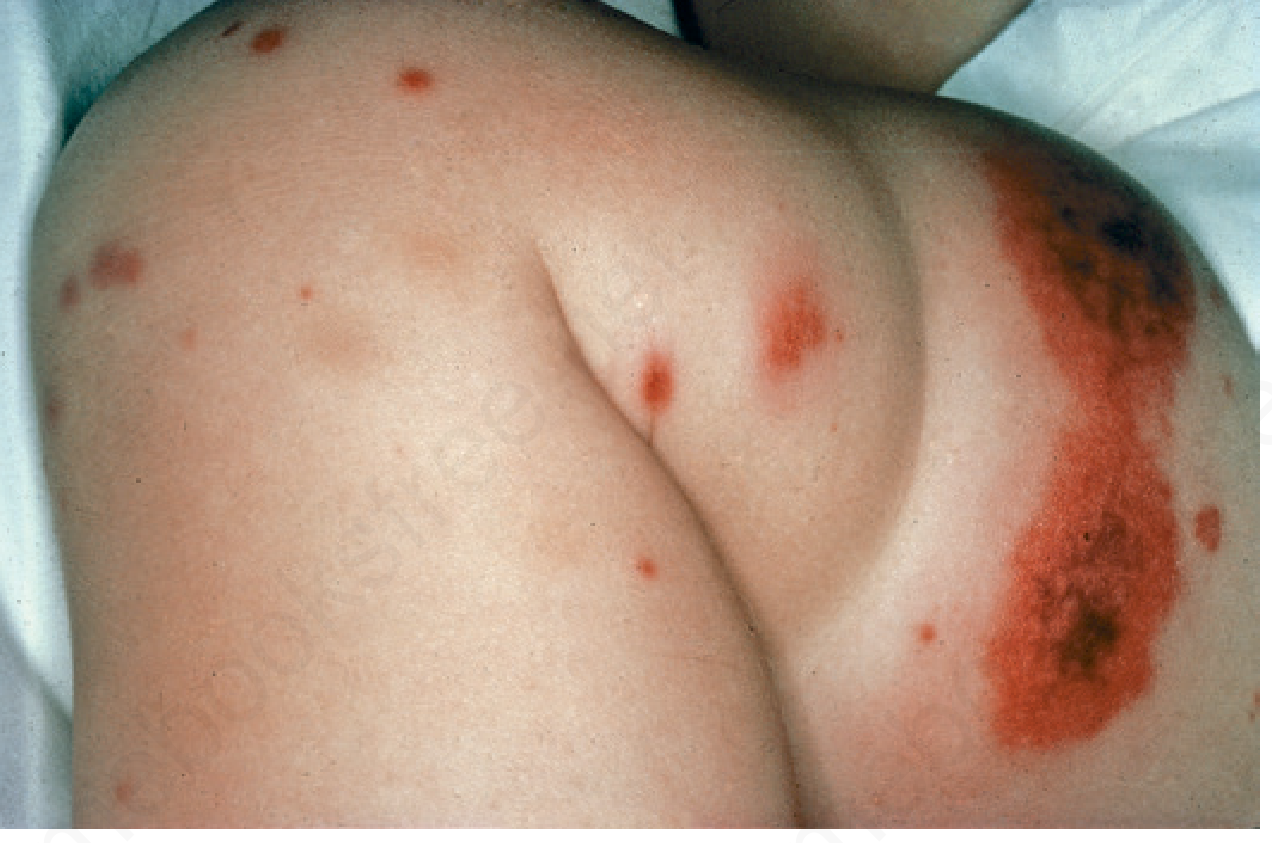
IgA vasculitis (IgAV/HSP) in elderly adults is a distinct and more severe clinical entity than childhood disease. Adults, especially older ones, have:
- Higher rates of renal involvement (up to 70%)
- Greater risk of ESKD (11-30% at 15 years vs. <2% in children)
- More severe GI involvement
- Higher rates of comorbidities complicating treatment
A 2026 narrative review (Stichert et al., JAAD, PMID 41655840) specifically notes that older age and medical comorbidities are independent predictors of adverse outcomes, and that most guidelines are derived from pediatric data, leaving adult management less standardized.
Diagnosis in an 80-Year-Old Female
Before treatment, confirm the diagnosis. In adults without classical tetrad, biopsy may be needed:
| Feature | Detail |
|---|---|
| Skin biopsy | Leukocytoclastic vasculitis + IgA deposits on direct immunofluorescence |
| Urinalysis | Microscopic hematuria, proteinuria (>1 g/day = high-risk marker) |
| Serum IgA | Elevated in ~50%; non-specific |
| Complement | Normal C3/C4 (helps exclude SLE/MPGN) |
| Renal biopsy | Indicated if significant proteinuria (>1 g/day), rising creatinine, or nephrotic syndrome |
| Screen for underlying malignancy | Critical in elderly - HSP in adults >60 years may be a paraneoplastic manifestation (solid organ tumors: lung, GI, prostate) |
Management - Organ-Based Approach
1. Skin Disease (Palpable Purpura)
- Usually self-limiting - lesions fade without treatment over 6-16 weeks
- First-line if treatment required: Dapsone 50-200 mg/day or Colchicine 0.6 mg twice daily
- Leg elevation and compression stockings help reduce dependent edema
- Avoid NSAIDs (risk of GI bleeding and renal injury - particularly dangerous in elderly)
- Andrews' Diseases of the Skin
2. Joint Pain (Arthralgias/Arthritis)
- Paracetamol (acetaminophen) is the safest analgesic in an 80-year-old
- Short-course corticosteroids (prednisolone 0.5-1 mg/kg/day) if severe joint pain, tapered quickly
- Avoid NSAIDs and opioids where possible in this age group
- No permanent joint damage or erosive arthritis occurs
3. Gastrointestinal Involvement
- For significant abdominal pain: Oral prednisolone 1 mg/kg/day (corticosteroids are more effective than analgesics alone for GI pain)
- Add H2 blocker or PPI for gastroprotection (especially in elderly on steroids)
- If H. pylori found: treat with eradication therapy
- Monitor for surgical emergencies (intussusception, perforation) - surgical abdomen carries high mortality in an 80-year-old; involve surgeons early
- IV methylprednisolone for severe GI bleeding/pain unresponsive to oral steroids
4. Renal Involvement (Most Critical in This Patient)
Renal involvement in adult HSP: proteinuria in 97%, hematuria in 93%. Severity determines treatment intensity.
Stratification by severity:
| Severity | Features | Management |
|---|---|---|
| Mild | Microscopic hematuria only, protein <0.5 g/day | Supportive; close urinalysis monitoring for 6 months |
| Moderate | Proteinuria 0.5-3 g/day, stable creatinine | RAAS blockade (ACEi or ARB); consider prednisolone course |
| Severe | Nephrotic syndrome (protein >3.5 g/day), rising creatinine, crescents on biopsy | Pulse IV methylprednisolone → oral prednisolone; consider add-on immunosuppression |
| Rapidly progressive | Crescent GN, rapidly rising creatinine | High-dose steroids ± cyclophosphamide (use with caution in elderly) |
Specific treatments for renal disease:
- ACE inhibitor or ARB: First-line for proteinuria reduction and blood pressure control (adjust for eGFR and avoid in hyperkalemia)
- Corticosteroids: Controversial for renal disease; controlled trials have not clearly shown benefit in altering long-term renal function, but benefit is seen for reducing proteinuria. Use prednisolone 1 mg/kg/day (max 60-80 mg), tapered over 6 months
- Cyclophosphamide: A controlled trial of 54 adults showed no benefit over steroids alone. Use only in rapidly progressive GN in consultation with nephrology; dose must be reduced for age/eGFR in an 80-year-old
- Cyclosporine: Used successfully in severe proteinuria refractory to steroids; monitor renal function and blood pressure closely
- IV Immunoglobulin (IVIG): Reserved for refractory nephropathy (nephrotic syndrome + declining GFR), refractory skin/GI disease
- Mycophenolate mofetil (MMF): Increasingly used as a steroid-sparing agent for moderate-to-severe renal disease
Special Considerations for an 80-Year-Old Female
| Concern | Management Adjustment |
|---|---|
| Corticosteroid side effects | High risk of osteoporotic fracture, hyperglycemia, delirium, infection; prescribe the lowest effective dose with PPI; add calcium + vitamin D; consider bone protection with bisphosphonate |
| Renal dosing | Most elderly have reduced eGFR at baseline; adjust all drug doses accordingly; avoid nephrotoxic agents |
| Infection risk | Immunosuppression (steroids, cyclophosphamide) carries high infection mortality in elderly; screen for TB, hepatitis B before starting |
| Malignancy screening | Age-appropriate cancer screening is essential - HSP can be paraneoplastic in elderly patients; treat the underlying malignancy |
| Polypharmacy / drug interactions | Review all medications; RAAS blockers may cause hyperkalemia with common drugs in elderly; cyclosporine has numerous interactions |
| Frailty / falls | Purpura + edema increase fall risk; physiotherapy referral |
| Monitoring | Urinalysis, serum creatinine, blood pressure, and urine protein:creatinine ratio at 1, 3, and 6 months; renal abnormalities may appear up to 6 months after initial presentation |
Prognosis
- In adults with HSP, ~11% develop ESKD and ~15-27% develop moderate-to-severe chronic kidney disease at 10-15 years
- Predictors of poor renal outcome: older age, nephrotic-range proteinuria, hypertension, crescents on biopsy, interstitial fibrosis
- In an 80-year-old, aggressive immunosuppression must be weighed against toxicity risk; if ESKD develops, dialysis and transplant eligibility must be re-evaluated given age and comorbidities
Summary Algorithm
80-year-old female with HSP
├── ALWAYS: Screen for underlying malignancy
├── Skin only → Colchicine or Dapsone; supportive care
├── Joint pain → Paracetamol ± short-course steroids
├── GI pain/bleeding → Prednisolone 1 mg/kg/day + PPI
└── Renal involvement?
    ├── Urine protein <1 g/day + normal creatinine → RAAS blockade + monitor
    ├── Protein >1 g/day or rising creatinine → Renal biopsy + steroids ± RAAS
    └── Nephrotic/crescentic → High-dose steroids ± cyclosporine/IVIG
        (Avoid cyclophosphamide unless absolutely necessary in elderly)
Key principle: Treatment must balance the benefits of disease control against the high risk of drug toxicity in an 80-year-old - err toward conservative management for mild-to-moderate disease, and involve nephrology, geriatrics, and rheumatology early for severe disease.
Sources: Brenner & Rector's The Kidney 10e | Andrews' Diseases of the Skin | NKF Primer on Kidney Diseases 8e | Stichert et al. 2026, JAAD (PMID 41655840)
Duration of treatment of steroids in case of hsp in skin gi and joint pain
Finding Sources
Finding Sources
Searching PubMed
"IgA vasculitis" AND corticosteroid AND duration AND treatment
Finding Sources
Finding Sources
Reading Article
PMID: 40183803
Reading File
Finding Sources
Searching PubMed
"Henoch-Schonlein purpura" AND corticosteroid AND "randomized" AND treatment
Finding Sources
Finding Sources
Reading File
Reading File
Reading File
I now have all the key data from multiple authoritative sources. Here is the focused, complete answer:
Steroid Duration in HSP: Skin, GI, and Joint Pain
Key Principle First
Steroids in HSP do NOT shorten the overall disease course, prevent nephritis, or reduce recurrence risk regardless of which organ system is targeted. Their role is purely symptomatic - to control pain and reduce inflammation. The disease naturally resolves in 3-6 weeks in most patients.
Steroid Indication and Duration by Organ System
1. Skin Disease (Palpable Purpura)
| Aspect | Detail |
|---|---|
| Role of steroids | Not indicated for skin lesions alone |
| Evidence | Harrison's 22e explicitly states steroids "have not proved beneficial in the treatment of skin disease" |
| Alternative | Colchicine 0.6 mg twice daily OR Dapsone 50-200 mg/day if treatment needed |
| Natural course | Lesions fade spontaneously within 5-14 days; new crops may appear for weeks |
Steroids should not be started for purpura alone - this is a common clinical error.
2. Joint Pain (Arthralgias/Arthritis)
| Aspect | Detail |
|---|---|
| Role of steroids | Effective at reducing joint pain but not the first choice |
| First-line | Paracetamol (acetaminophen) - safest, especially in elderly |
| When steroids used | Only for severe, incapacitating arthralgias not controlled by analgesics |
| Dose | Prednisolone 1 mg/kg/day (max 60 mg/day) |
| Duration | Short course only - benefit expected within days; no need to continue beyond symptom control |
| Harrison's 22e | Prednisone "has been shown to be useful in decreasing tissue edema and arthralgias" |
NSAIDs (ibuprofen, naproxen) are effective for joint pain in younger patients but should be avoided in elderly due to GI/renal risk.
3. Gastrointestinal Disease (Abdominal Pain / GI Bleeding)
This is the primary indication for steroids in HSP.
| Aspect | Detail |
|---|---|
| Dose | Prednisolone 1 mg/kg/day (max 60-80 mg/day) orally |
| Duration | 2 weeks of treatment, followed by a 2-week taper (total ~4 weeks) |
| Taper schedule | Week 1-2: Full dose → Week 3-4: Gradual dose reduction |
| Response | Corticosteroids are more effective than analgesics alone for abdominal pain |
| Severe/refractory GI | IV methylprednisolone pulse 500-1000 mg/day × 3 doses, then oral |
| Caution | Steroids do NOT prevent nephritis even when given for GI symptoms |
Evidence base (Tintinalli's Emergency Medicine):
"Prednisone 1.0 mg/kg/day for 2 weeks followed by a 2-week taper can attenuate joint and GI symptoms."
2025 Pediatric RCT (Kambara et al., Eur J Pediatr, PMID 40183803):
Early discontinuation within 7 days (vs. 17.5 days standard) reduced total steroid dose without increasing complications, with 27% requiring readministration - but all resolved. This supports using the shortest effective course, especially important in an 80-year-old female.
Summary Table
| Organ | Steroid Needed? | Dose | Duration | Taper? |
|---|---|---|---|---|
| Skin only | No | - | - | - |
| Joints (mild-moderate) | No - use paracetamol | - | - | - |
| Joints (severe) | Yes | 1 mg/kg/day (max 60 mg) | 1-2 weeks | Rapid taper over 1-2 weeks |
| GI pain (moderate-severe) | Yes | 1 mg/kg/day (max 60 mg) | 2 weeks | 2-week taper (total 4 weeks) |
| Severe GI / refractory | Yes | IV methylprednisolone 500-1000 mg × 3 days | 3 days IV, then oral for 2 weeks | 2-week taper |
| Renal disease | Controversial | 1 mg/kg/day | Up to 6 months | Slow taper over months |
Special Note for an 80-Year-Old Female
In this patient, the standard 2-week course + 2-week taper is the maximum tolerable approach for GI/joint symptoms:
- Use prednisolone (not dexamethasone) for easier dosing and tapering
- Always co-prescribe a PPI (omeprazole 20 mg/day)
- Add calcium 1000 mg + Vitamin D 800 IU daily from day 1 to prevent fracture
- Monitor blood glucose (steroid-induced hyperglycemia common in elderly)
- The 2026 narrative review (Stichert et al., JAAD, PMID 41655840) highlights that older age is a predictor of adverse drug outcomes - use the shortest course that controls symptoms
Sources: Tintinalli's Emergency Medicine | Harrison's Principles of Internal Medicine 22e | Goldman-Cecil Medicine | Brenner & Rector's The Kidney | Kambara et al. 2025 (PMID 40183803)
This is a shared conversation. Sign in to Orris to start your own chat.