
Treatment of gentamycin induced hearing loss
Reading File
Gentamicin-induced hearing loss (ototoxicity) primarily affects the cochlear outer hair cells and vestibular apparatus. Currently, there is no FDA-approved treatment to reverse established aminoglycoside ototoxicity - the focus is on prevention, early detection, and rehabilitation.
Searching sources...
Finding Sources
Finding Sources
Searching PubMed
gentamicin ototoxicity treatment hearing loss
Good - I have relevant textbook sections. Let me now read the key content from Cummings Otolaryngology and Scott-Brown's on ototoxicity management.
Reading File
Reading File
Searching PubMed
aminoglycoside ototoxicity prevention antioxidant hair cell regeneration
Excellent content found. Let me read more from Cummings on the treatment section and also get the ototoxicity management content from Scott-Brown's.
Reading File
Reading File
Let me get more of the treatment/prevention section from Cummings and look for the management and monitoring section.
Finding Sources
Finding Sources
Finding Sources
Reading File
Finding Sources
Searching the Web
gentamicin ototoxicity treatment 2024 hair cell regeneration cochlear implant
I now have sufficient information from authoritative textbooks and recent sources. Let me compile a comprehensive answer.
Loading Image
I now have comprehensive information to write a detailed answer. Here is the full response:
Gentamicin-Induced Hearing Loss: Treatment
Understanding the Problem First
The pathology explains why treatment is so difficult. Gentamicin enters outer hair cells (OHCs) primarily via mechanotransducer (MET) channels and the TRPA1 channel at their apical surface. Inside the cell, gentamicin targets mitochondria, induces endoplasmic reticulum stress, binds cytosolic rRNA causing ribotoxic stress, and activates apoptosis via protein kinase C zeta - all leading to irreversible OHC death. Damage progresses from the base of the cochlea (high frequencies) toward the apex (low frequencies), explaining why high-frequency hearing loss appears first.
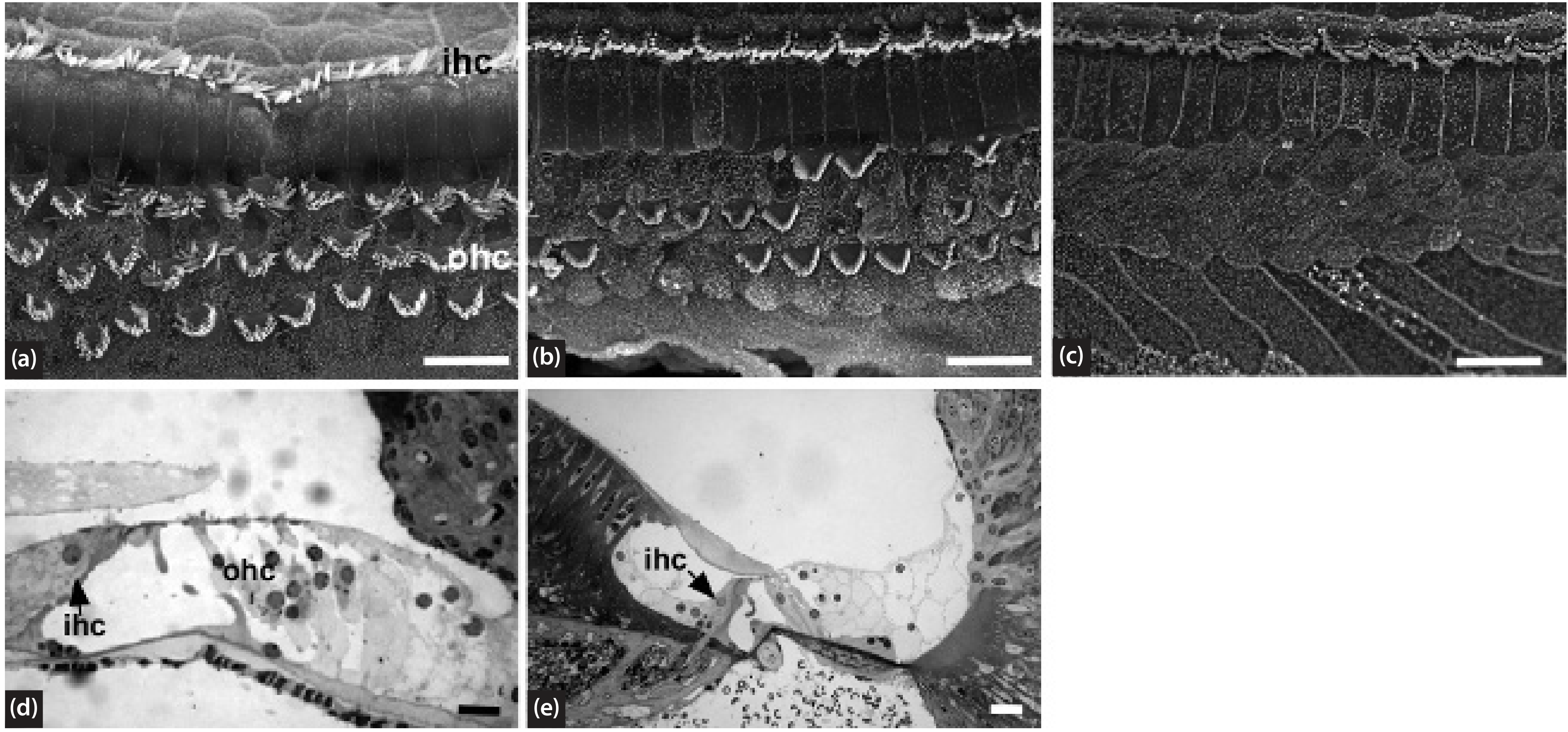
Scott-Brown's Otorhinolaryngology, Vol. 2 - OHC loss progresses base to apex
The key clinical point: aminoglycoside-induced hearing loss causes permanent damage because mammalian cochlear hair cells do not regenerate. Treatment is therefore primarily preventive and rehabilitative, not curative.
1. Prevention (Best "Treatment")
A. Therapeutic Drug Monitoring (TDM)
This is the single most important intervention. Ototoxicity is directly related to peak plasma concentrations and duration of treatment. TDM of gentamicin, tobramycin, amikacin, and plazomicin plasma concentrations is imperative to ensure appropriate dosing and minimize toxicity (Lippincott Pharmacology, p. 996-997).
- Keep peak levels within therapeutic range
- Avoid prolonged treatment courses
- Avoid concurrent ototoxic drugs (cisplatin, loop diuretics like furosemide/ethacrynic acid - these synergize dramatically)
- Adjust doses in renal impairment (elderly especially at risk)
B. Genetic Screening (m.1555A>G)
- ~17% of patients with aminoglycoside-induced hearing loss carry the mitochondrial 12S rRNA A1555G mutation, which makes the mammalian mitochondrial rRNA resemble bacterial rRNA - the exact target of aminoglycosides
- In China, ~5-6% of the population carry this mutation, accounting for ~one-third of aminoglycoside ototoxicity cases
- Interestingly, only the auditory system (not vestibular) is sensitized by this mutation
- Genedrive point-of-care kits now exist to test for this mutation in neonates and mothers before aminoglycoside exposure (systematic review, PMID 39487741)
C. Audiological Monitoring
High-frequency audiometry (above 8 kHz, up to 20 kHz) is the most sensitive early detection tool, since gentamicin initially damages the basal cochlear turn (high frequencies) before affecting speech frequencies. Serial monitoring allows drug discontinuation before clinically significant speech-frequency loss develops.
2. Otoprotective Agents (During Treatment)
Aspirin (Sodium Salicylate)
The most clinically studied otoprotectant. A prospective, randomized, double-blind trial at Xijing Hospital and Airforce Chengdu Hospital studied 195 patients receiving gentamicin 80-160 mg IV twice daily. Ototoxicity (defined as ≥15 dB shift at 6 and 8 kHz) occurred in 13% of the placebo group vs. only 3% in the aspirin group. The protection mechanism includes:
- Competitive inhibition of MET channels, reducing gentamicin entry into hair cells
- Antioxidant properties reducing free radical-mediated damage
- Interference with apoptosis signaling (aspirin pretreatment in animal studies blocked protein kinase C zeta cleavage and prevented nuclear translocation, protecting both hair cells and spiral ganglion neurons)
(Cummings Otolaryngology, p. 3503-3507)
N-Acetylcysteine (NAC)
Uremic patients on continuous ambulatory peritoneal dialysis receiving intraperitoneal aminoglycosides and vancomycin showed significant protection against ototoxicity when treated with NAC. The mechanism is antioxidant (free radical scavenging), as excess reactive oxygen species (ROS) production is a major downstream event in aminoglycoside hair cell toxicity.
(Cummings Otolaryngology, p. 3507)
Dexamethasone (Intracochlear)
In animal models (guinea pigs), concentration-dependent protection against kanamycin + ethacrynic acid ototoxicity was found with intracochlear dexamethasone delivered via osmotic minipump. Statistically significant preservation of OHC counts and lower ABR threshold shifts were demonstrated. However, no significant rescue was observed once damage had occurred - it was protective only when given before the ototoxic insult.
(Cummings Otolaryngology, p. 3509)
ORC-13661 (Investigational)
A promising channel blocker that reversibly blocks MET channels, reducing aminoglycoside entry into hair cells. Animal studies show dose-dependent hearing protection from both aminoglycosides and cisplatin. Not yet approved for clinical use.
3. After Hearing Loss is Established: Rehabilitation
Once gentamicin has caused irreversible hair cell death, no pharmacologic agent can restore hearing. Management focuses on rehabilitation:
A. Hearing Aids
- Indicated for mild-to-moderate sensorineural hearing loss
- Most effective when some residual cochlear function remains
- Conventional air-conduction aids are first-line
B. Cochlear Implants
- Indicated for severe-to-profound sensorineural hearing loss where hearing aids are inadequate
- Cochlear implantation is highly effective for aminoglycoside deafness specifically - residual spiral ganglion neurons are essential for implant efficacy
- Importantly, preserving spiral ganglion neurons after hair cell loss can be achieved by perfusion of neurotrophic factors (NT-3, BDNF) into the cochlea. Loss of IHC-derived neurotrophins drives secondary spiral ganglion neuron degeneration, and this has been explored as a way to preserve cochlear innervation before implantation (Scott-Brown's, p. 6359-6360)
- This neurotrophic factor strategy is a focus of current research to enhance cochlear implant outcomes
C. Bone-Anchored Hearing Devices (BAHA)
- May be considered for specific configurations of hearing loss
- In patients with the best cochlear reserve (PTA <45 dB), 89% report improved subjective hearing with implantation (Cummings Otolaryngology)
D. Vestibular Rehabilitation
- Gentamicin preferentially damages vestibular hair cells (crista > utricle > saccule)
- Patients with gentibamicin vestibulotoxicity may not report hearing loss because cochleotoxicity from gentamicin begins at high frequencies outside speech range
- Vestibular physiotherapy and balance rehabilitation exercises are the mainstay of treatment for vestibular ototoxicity
4. Emerging / Investigational Approaches
| Approach | Mechanism | Status |
|---|---|---|
| ORC-13661 | MET channel blocker | Animal studies |
| Gene therapy (Atoh1/Math1) | Hair cell regeneration via supporting cell reprogramming | Preclinical (mouse) |
| Neurotrophic factors (NT-3, BDNF) | Preserve spiral ganglion neurons post-hair cell loss | Preclinical |
| Supporting cell transdifferentiation | Mature supporting cells reprogrammed into hair cells | Preclinical (mouse, 2024-25) |
| D-methionine | Antioxidant | Investigational |
Research from the Hearing Research Program (2024-2025) has shown that mature cochlear supporting cells in the mouse inner ear can be reprogrammed into sensory hair cells, and gene therapies can be targeted specifically at supporting cells - potentially opening a future pathway for reversal of aminoglycoside hearing loss (Hearing Health Foundation, 2025).
Summary Table
| Phase | Intervention | Evidence Level |
|---|---|---|
| Prevention | TDM + dose optimization | High (guideline-level) |
| Prevention | Genetic screening (m.1555A>G) | Moderate |
| Prevention | High-frequency audiological monitoring | Moderate |
| During treatment | Aspirin co-therapy | RCT evidence (1 trial) |
| During treatment | N-acetylcysteine | Limited clinical evidence |
| Established loss | Hearing aids | Standard of care |
| Established loss | Cochlear implant (severe/profound) | High |
| Established loss | Vestibular rehabilitation | Standard of care |
| Investigational | Hair cell regeneration, gene therapy | Preclinical |
Bottom line: No drug reverses established gentamicin ototoxicity. The highest-yield interventions are prevention (TDM, avoiding synergistic ototoxins, genetic pre-screening) and co-administration of aspirin or N-acetylcysteine during aminoglycoside therapy. Once hearing loss is significant, cochlear implantation is the most effective rehabilitative option.
Primary sources: Cummings Otolaryngology Head and Neck Surgery, Scott-Brown's Otorhinolaryngology Vol. 2 (Ototoxicity chapter), Lippincott Illustrated Reviews Pharmacology
This is a shared conversation. Sign in to Orris to start your own chat.