
Types of tympanostomy tubes and their names
types of tympanostomy tubes names designs
https://en.wikipedia.org/wiki/Tympanostomy_tube
Tympanostomy Tubes: Types and Names
1. Short-Term Tubes (Grommet / Bobbin Design)
| Name | Notes |
|---|---|
| Armstrong tube | One of the most widely used designs worldwide; about 80% extrude by 2 years. The Long Armstrong variant is least prone to early extrusion. |
| Shepard tube | Standard short-term grommet; fastest to extrude (~93% gone by 2 years in trials). |
| Paparella type I | Smaller inner flange; shorter retention than Paparella type II. |
| Reuter Bobbin | Cylindrical bobbin shape; 66% extruded by 2 years in one major RCT. |
| Donaldson tube | Double-flanged silicone design; studied against Armstrong in large trials. |
| Sheehy bobbin | Another popular bobbin-style short-term tube. |
2. Long-Term Tubes (T-tube / Flanged Design)
| Name | Notes |
|---|---|
| Goode T-tube | Classic T-shaped design; only 31% extruded by 2 years in randomized trials - the most retentive in head-to-head studies. Typically stays 3-5 years. |
| Paparella type II | Larger inner flange than type I; behaves as a long-term tube; associated with higher rates of persistent perforation after extrusion. |
| Per-Lee tube | Long-term flanged tube with wide inner flange. |
| Shah grommet | Modification of the grommet with larger inner flange for prolonged retention. |
| Collar button tube | Generic term for any tube shaped like a collar button (wide inner flange, narrow shaft). |
Key Structural Variables That Affect Tube Behavior
- Shape of the medial flange - larger flanges resist extrusion (longer retention).
- Lateral flange presence - absence of a lateral flange speeds extrusion.
- Shaft length and inner diameter - affects patency and drainage.
- Material - most modern tubes are fluoroplastic (PTFE) or silicone, replacing older stainless steel, titanium, and gold tubes. Silicone tubes are associated with the longest time to first infection.
Summary: Short-Term vs. Long-Term at a Glance
| Feature | Short-Term (Grommet) | Long-Term (T-tube) |
|---|---|---|
| Retention | 6-15 months | 15 months to several years |
| Extrusion | Spontaneous | Often needs surgical removal |
| Best for | Most children with OME/rAOM | Cleft palate, atrophic TM, failed prior tubes |
| Examples | Armstrong, Shepard, Reuter Bobbin, Donaldson | Goode T-tube, Per-Lee, Paparella II |
Physiology of balance and tests of vestibular system
physiology of balance vestibular system tests clinical assessment
Physiology of Balance and Tests of the Vestibular System
Part 1: Physiology of Balance
The Three Sensory Inputs
- Vestibular system - detects head motion and gravity
- Visual system - provides spatial orientation cues
- Proprioceptive / somatosensory system - joint and muscle position sense from the periphery
Anatomy of the Vestibular End Organ
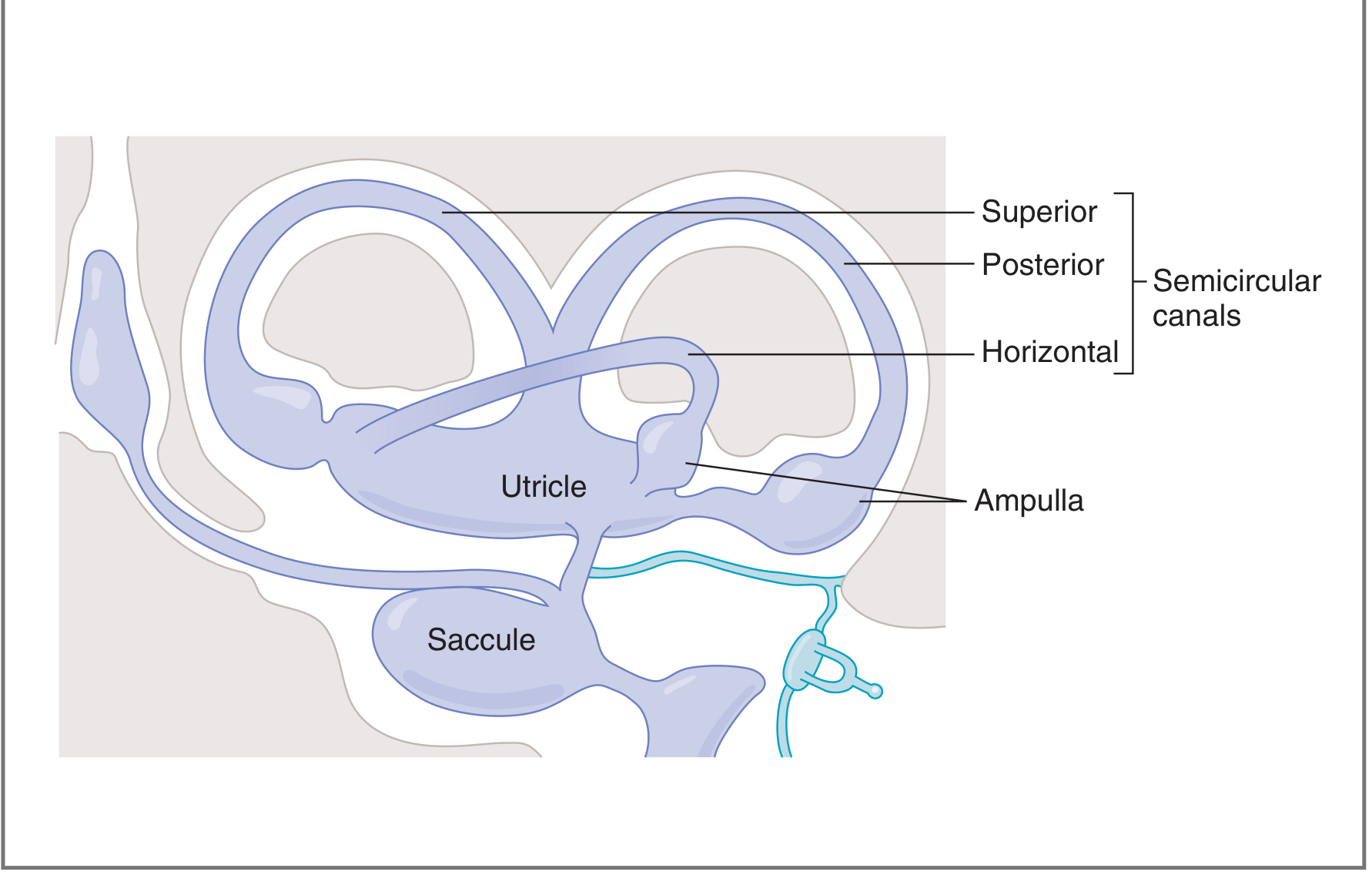
| Structure | Number | Detects |
|---|---|---|
| Semicircular canals (SCCs) | 3 (horizontal, superior, posterior) | Angular / rotational acceleration |
| Utricle | 1 | Linear acceleration (horizontal plane) |
| Saccule | 1 | Linear acceleration (vertical plane, gravity) |
Semicircular Canals - How They Work
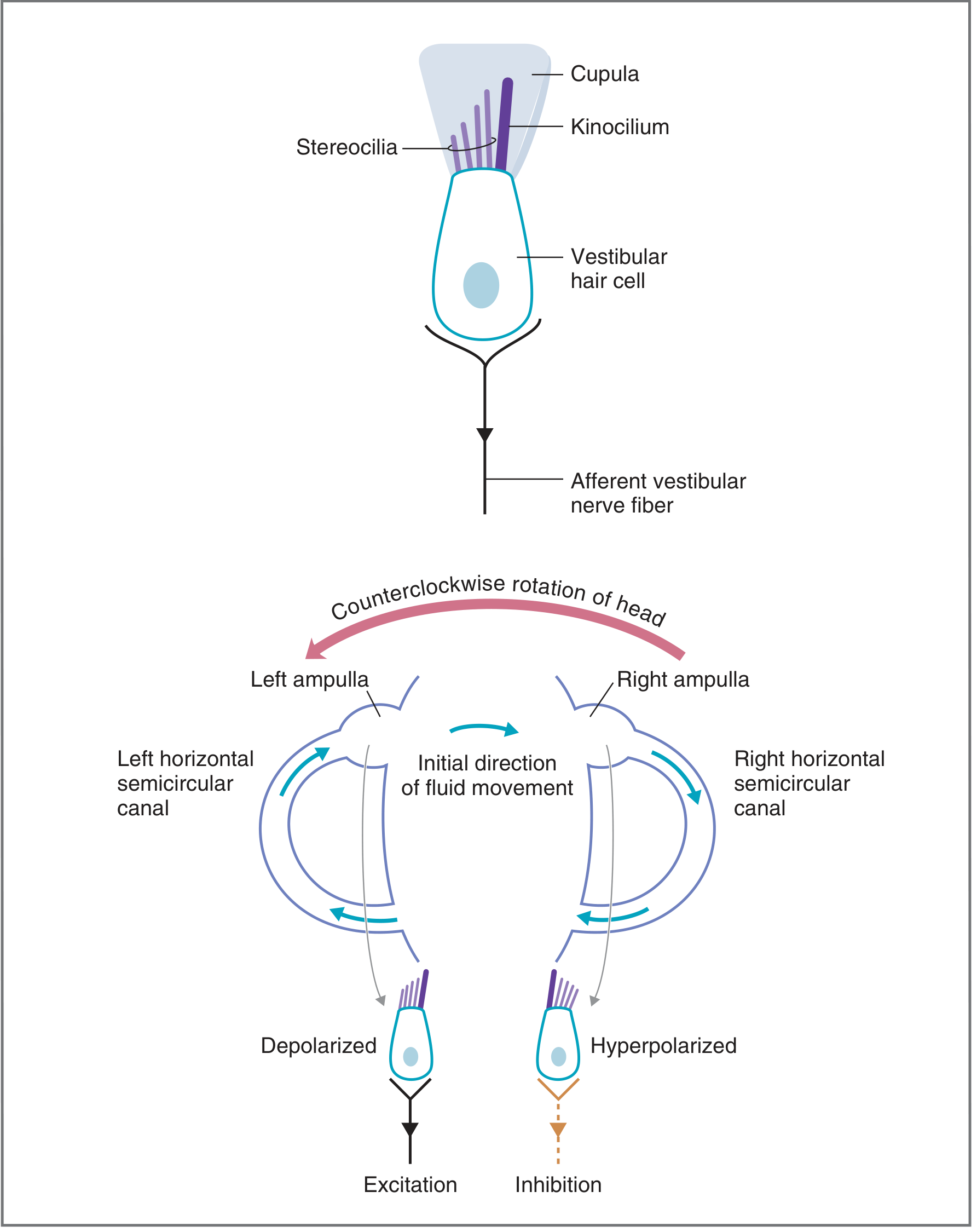
- Stereocilia bent toward the kinocilium → hair cell depolarizes → increased afferent firing
- Stereocilia bent away from kinocilium → hair cell hyperpolarizes → decreased afferent firing
"Hair cells within the SCCs fire at a baseline rate when at rest. When the head is moved rotationally, one of the pair of canals will increase its firing rate while the other will decrease. This differential signals a head movement in the plane of that canal." - K.J. Lee's Essential Otolaryngology
Otolith Organs - Utricle and Saccule
- When the head tilts, gravity pulls the heavy otolith mass across the hair cells, bending stereocilia
- Utricle: macula oriented horizontally when upright; detects lateral tilt and forward/backward linear motion
- Saccule: macula oriented vertically when upright; detects up/down motion (pitch and roll)
Central Vestibular Pathways
| Nucleus | Main Input | Main Output |
|---|---|---|
| Superior | SCCs | Extraocular muscles via MLF (mediates VOR) |
| Medial | SCCs | Extraocular muscles via MLF |
| Lateral (Deiters) | Utricle | Spinal cord via lateral vestibulospinal tract (postural reflexes) |
| Inferior | SCCs + otoliths | Brainstem + cerebellum via MLF |
Vestibulo-Ocular Reflex (VOR)
- Normal VOR: head turns right → eyes move left at equal velocity → gaze remains stable
- Impaired VOR (e.g., unilateral vestibular loss): head turns toward the affected side → eyes fail to compensate → a catch-up saccade is seen (the basis of the head impulse test)
- Slow phase: the compensatory eye drift driven by vestibular input
- Fast phase (saccade): the rapid "reset" movement; nystagmus is named by the direction of the fast phase
Part 2: Tests of the Vestibular System
A. Bedside / Clinical Tests
| Test | What It Tests | How Done | Interpretation |
|---|---|---|---|
| Dix-Hallpike maneuver | Posterior SCC (BPPV) | Patient moved rapidly from sitting to head-hanging position, head turned 45°; Frenzel lenses improve sensitivity | Torsional upbeat nystagmus with latency, fatigability = BPPV; persistent/non-fatiguing = central |
| Head Impulse Test (HIT) | High-frequency VOR (horizontal SCC) | Examiner grasps head, makes a small rapid unpredictable head thrust; patient fixes on examiner's nose | Corrective saccade after the thrust = ipsilateral canal paresis (peripheral); normal VOR + nystagmus + skew deviation = HINTS criteria for central lesion |
| Romberg test | Postural control + proprioception | Stand feet together, arms crossed, eyes closed | Falling/excessive sway = peripheral vestibular, cerebellar, or severe neuropathy; does not localize on its own |
| Fukuda Stepping Test | Peripheral labyrinthine function | March in place 50 steps, eyes closed, arms outstretched | Rotation >45° = peripheral vestibular weakness; most sensitive for severe unilateral dysfunction |
| Unterberger test | Similar to Fukuda | Arms horizontal, eyes closed, march 50 steps | Rotation toward side of lesion |
| Skew deviation | Otolith-ocular pathway integrity | Cover-uncover test; look for vertical correction of each eye alternately | Skew (vertical misalignment) = brainstem/cerebellar lesion |
B. Laboratory / Instrumental Tests
1. Electronystagmography / Videonystagmography (ENG/VNG)
- ENG: records eye movements indirectly via electrodes measuring the corneoretinal potential (dipole). Electrodes placed at lateral canthi and around one eye.
- VNG: records directly with infrared video cameras in real time.
- Spontaneous nystagmus
- Gaze nystagmus
- Positional nystagmus
- Positioning (Dix-Hallpike) nystagmus
- Fistula test
- Bithermal caloric tests
- Smooth pursuit
- Saccadic system
- Optokinetic system
- Fixation suppression
2. Bithermal Caloric Test
- Water: 44°C (warm) and 30°C (cool) for 30 seconds each
- Air: 58°C and 24°C for 60 seconds (used when TM is perforated)
- Cold water → endolymph drops → ampullofugal flow → inhibition → nystagmus to the Opposite side
- Warm water → endolymph rises → ampullopetal flow → excitation → nystagmus to the Same side
- Unilateral weakness (UW) = [(RW + RC) - (LW + LC)] / (RW + RC + LW + LC) × 100%
-
15-30% = abnormal (peripheral lesion on the weaker side)
-
- Directional preponderance (DP) = comparison of right-beating vs. left-beating responses
-
30% may suggest central lesion
-
- Bilateral weakness: total slow-phase velocity for each side <12°/s
| Peripheral Signs | Central Signs |
|---|---|
| Unilateral caloric weakness | Spontaneous nystagmus with normal calorics |
| Bilateral weakness with known ototoxicity | Direction-changing nystagmus |
| Fatiguing positional nystagmus | Failure of fixation suppression |
| Direction-fixed nystagmus | Abnormal saccades with normal calorics |
| Intact fixation suppression | Hyperactive caloric responses |
3. Rotary Chair Test (Rotational Chair / Sinusoidal Harmonic Acceleration)
- Patient sits in a motorized chair rotating in darkness at various frequencies
- Tests the VOR across a range of stimulus frequencies
- Tests both labyrinths simultaneously - useful when calorics are inconclusive
- Key parameters: VOR gain, phase, and symmetry
- Phase leads at low frequencies indicate loss of velocity storage (sign of peripheral lesion)
4. Vestibular Evoked Myogenic Potentials (VEMPs)
- cVEMP (cervical VEMP): loud sound stimulus → saccule → inferior vestibular nerve → ipsilateral sternocleidomastoid inhibition. Tests saccule and inferior vestibular nerve.
- oVEMP (ocular VEMP): same stimulus → utricle → superior vestibular nerve → contralateral inferior oblique activation. Tests utricle and superior vestibular nerve.
- Useful for diagnosing superior semicircular canal dehiscence, vestibular neuritis, and Meniere's disease.
5. Video Head Impulse Test (vHIT)
- Modern, objective version of the bedside HIT
- High-speed infrared camera tracks eye movements during rapid head thrusts in all six SCC planes
- Quantifies VOR gain for each individual SCC
- Detects covert saccades invisible to the naked eye
6. Computerized Dynamic Posturography (CDP)
- Measures postural stability on a moving platform while visual and/or proprioceptive cues are manipulated
- The sensory organization test (SOT) isolates each sensory input systematically
- Useful for functional assessment, rehab planning, and disability evaluation
7. Bárány (Rotation) Test - Historical/Bedside
- Normal: post-rotatory nystagmus toward the opposite side; patient falls toward the side of original rotation
- Tests both labyrinths simultaneously
Summary Table: Tests at a Glance
| Test | Structure Tested | Key Feature |
|---|---|---|
| Dix-Hallpike | Posterior SCC (BPPV) | Latency + fatigability = peripheral |
| Head Impulse (HIT/vHIT) | Horizontal SCC, high-frequency VOR | Catch-up saccade = ipsilateral paresis |
| Romberg | Postural control, proprioception | Non-localizing |
| Fukuda stepping | Peripheral labyrinth | >45° turn = peripheral deficit |
| ENG/VNG + Calorics | Each lateral SCC independently | COWS mnemonic; best for side-of-lesion |
| Rotary chair | Both labyrinths, VOR gain/phase | Best for bilateral loss assessment |
| cVEMP | Saccule + inferior vestibular nerve | Ipsilateral SCM inhibition |
| oVEMP | Utricle + superior vestibular nerve | Contralateral inferior oblique activation |
| CDP/Posturography | All three balance inputs | Functional disability, rehab |
Rhinolith
rhinolith nasal calculus definition pathology treatment
https://radiopaedia.org/articles/rhinolith
rhinolith composition pathogenesis imaging radiology treatment complications
https://www.kbb-forum.net/journal/text.php?lang=en&id=550
Rhinolith (Nasal Calculus / Rhinolithiasis)
Definition
Pathogenesis
1. Nidus Formation
| Type | Examples |
|---|---|
| Endogenous | Bone fragment, ectopic dental tissue (odontoma), blood clot, nasal epithelial debris, inspissated secretions |
| Exogenous | Fruit seeds, buttons, rubber, paper, cotton wool, beads, sponge, battery fragments |
2. Mineralization
- Calcium phosphate (primary)
- Calcium carbonate
- Magnesium phosphate and carbonate
3. Mucosal Erosion and Growth
Location
- Usually unilateral, found in the anterior nasal cavity
- Most common sites: around the inferior turbinate and against the nasal septum
- No consistent predilection for left vs. right side
Clinical Features
| Feature | Details |
|---|---|
| Unilateral nasal obstruction | Most common complaint (~71%); chronic, resistant to medical treatment |
| Foul-smelling (malodorous) discharge | Purulent, unilateral rhinorrhea - due to surrounding mucosal necrosis and secondary infection |
| Epistaxis | ~17% of cases - from erosion of mucosa |
| Headache / facial pain | ~17% |
| Anosmia | From obstruction |
| Epiphora | If obstruction involves the nasolacrimal duct |
The classic triad to suspect rhinolith: chronic unilateral nasal obstruction + foul-smelling unilateral discharge + failure to respond to antibiotics
Diagnosis
1. Anterior Rhinoscopy
- May reveal a hard, irregular, grayish-brown or yellowish mass in the nasal cavity
- Stone may be partially covered by granulation tissue or crusts
2. Rigid Nasal Endoscopy
- Confirms diagnosis, localizes the stone
- Allows visualization of associated mucosal pathology
- May enable direct extraction in accessible cases
3. Radiology
- X-ray (plain film): rhinoliths are radio-opaque (due to calcium/magnesium salts); may be seen on a lateral skull or water's view
- CT scan (gold standard): shows a hyperdense mass with a hypodense center (the organic nidus). CT:
- Accurately maps size and location
- Identifies complications (sinusitis, erosion into adjacent structures)
- Excludes differentials
Differential Diagnosis
| Condition | Distinguishing Feature |
|---|---|
| Nasal foreign body (non-calcified) | Radiolucent on plain film |
| Calcified nasal polyp | History of polyps; usually not centered on a discrete nidus |
| Odontoma / ectopic tooth | CT and dental review |
| Osteoma | Arises from bone, uniformly dense |
| Chondrosarcoma | Aggressive features, soft tissue component |
| Granulomatous disease (Wegener's, TB, syphilis) | Systemic features, serology |
| Fibrous dysplasia | Ground-glass appearance on CT, involves bone |
Complications (if untreated)
- Sinusitis (most common)
- Septal perforation
- Nasal deformity
- Orbital cellulitis / palpebral abscess
- Frontal osteomyelitis
- Meningitis / epidural abscess (rare, serious)
- Hypoplasia of the inferior turbinate (from chronic pressure)
Treatment
| Approach | Indication |
|---|---|
| Anterior rhinoscopy / office removal | Small, accessible stones - hook or Jobson Horne probe placed behind stone, pulled forward |
| Rigid nasal endoscopy (FESS) | Most cases; allows visualization + precise removal; stone fragmented if too large |
| Trans-oral (nasopharyngeal) approach | Large stones pushed posteriorly into nasopharynx under GA |
| Fogarty balloon catheter | Balloon passed behind stone, inflated, pulled forward |
| "Mother's kiss" technique | Children; mouth-to-mouth blow with opposite nostril occluded - effective in ~60% of foreign bodies |
- Large rhinoliths may need to be fragmented in situ before removal
- Histopathological examination of the removed stone is mandatory - to identify the nidus and rule out neoplasia
- Post-removal: treat any underlying sinusitis; nasal douching
Key Facts Summary
| Feature | Details |
|---|---|
| First described | Bertholin, 1654 |
| Composition | Calcium + magnesium phosphate and carbonate salts |
| Radiological appearance | Radio-opaque; CT: hyperdense with hypodense center |
| Classic triad | Unilateral obstruction + foul discharge + treatment failure |
| Gold standard imaging | CT scan |
| Treatment | Endoscopic surgical removal |
| Histology | Always send for pathological examination |
Rhinolith
Rhinolith - Quick Reference
Nidus Types
| Endogenous | Exogenous |
|---|---|
| Bone fragment, ectopic tooth, blood clot, epithelial debris | Fruit seed, button, rubber, paper, cotton wool |
Composition
Classic Triad
- Chronic unilateral nasal obstruction
- Foul-smelling unilateral purulent discharge
- Failure to respond to antibiotics/medical treatment
Other Symptoms
- Epistaxis (~17%)
- Headache / facial pain (~17%)
- Anosmia, epiphora
Diagnosis
- Anterior rhinoscopy: hard grayish-brown/yellowish mass
- Rigid nasal endoscopy: confirms + localizes
- Plain X-ray: radio-opaque shadow
- CT scan (gold standard): hyperdense mass with hypodense center (the nidus)
Differentials
Complications (if untreated)
Treatment
- Small/accessible: office removal with hook or Jobson Horne probe
- Most cases: rigid nasal endoscopic removal (fragment in situ if large)
- Very large: pushed into nasopharynx and removed trans-orally under GA
- Always send for histopathological examination
Oesophagus anatomy and Oesophagus motility disorders
Oesophagus - Anatomy and Motility Disorders
PART 1: ANATOMY OF THE OESOPHAGUS
General Description
Divisions
| Division | Vertebral Level | Length from Incisors |
|---|---|---|
| Cervical | C6 - T1 | 15-18 cm |
| Thoracic | T1 - T10 | 18-38 cm |
| Abdominal | T10 - T11 | 38-40 cm |
- In the neck: veers left from midline
- At T5: returns to midline, then veers left again
- At T7: continues left until it pierces the diaphragm
Anatomical Constrictions
| Constriction | Cause | Distance from Incisors |
|---|---|---|
| 1st - Cricopharyngeal | Cricopharyngeus (UES) - narrowest point | ~15 cm |
| 2nd - Aortic | Arch of the aorta crosses over | ~22 cm |
| 3rd - Bronchial | Left main bronchus crosses over | ~27 cm |
| 4th - Diaphragmatic | Oesophageal hiatus of diaphragm | ~38 cm |
The aortic and bronchial constrictions are often grouped together as a single "bronchoaortic" constriction.
Relations of Each Segment
- Anterior: trachea (connected by loose areolar tissue)
- Posterior: vertebral column (C6-C7), prevertebral fascia, longus colli muscle
- Lateral: common carotid arteries (in carotid sheaths), lower poles of thyroid gland
- Left: thoracic duct (ascending portion)
- Grooves between trachea and oesophagus: recurrent laryngeal nerves (surgically critical)
- Anterior: trachea, left recurrent laryngeal nerve
- Left lateral: aortic arch, left subclavian vein, thoracic duct, left pleura
- Posterior: T1-T4 vertebral bodies
- Anterior: left main bronchus, tracheobronchial nodes, pericardium, left atrium
- Right: azygos vein, mediastinal pleura
- Left: descending aorta (until oesophagus crosses anterior to it near T10)
- Posterior: thoracic duct (crosses from right to left at T5), hemiazygos veins
- The vagus nerves form a plexus around the oesophagus here
- Only ~2 cm long
- Lies in the oesophageal groove on the posterior surface of the left lobe of the liver
- Enclosed by the phrenoesophageal ligament
Histological Layers
| Layer | Key Features |
|---|---|
| Mucosa | Stratified squamous non-keratinizing epithelium; transitions to columnar at the Z-line (squamocolumnar junction / gastro-oesophageal junction) |
| Submucosa | Dense connective tissue; contains blood vessels, lymphatics, Meissner (submucosal) plexus, and oesophageal mucous glands (secrete mucus, bicarbonate, EGF for protection) |
| Muscularis propria | Inner circular + outer longitudinal layers; Auerbach (myenteric) plexus between them |
| Adventitia | Loose connective tissue - no serosa (this is why oesophageal cancer spreads so readily to adjacent structures) |
- Upper 5-33%: skeletal muscle only
- Middle third: mixed skeletal and smooth muscle
- Lower 50%: smooth muscle only
Sphincters
- Formed mainly by the cricopharyngeus muscle + inferior pharyngeal constrictor
- Skeletal muscle; contracted at rest (~60-100 mmHg)
- Prevents air entering the oesophagus during inspiration
- Relaxes reflexly during swallowing
- 2-4 cm of asymmetrically thickened circular smooth muscle just above the gastro-oesophageal junction
- Resting pressure: ~15-30 mmHg
- Maintained by tonic contraction + diaphragmatic crural contraction during inspiration
- Fixed in position by the phrenoesophageal ligament (from transversalis fascia of diaphragm)
- Relaxes during swallowing to allow bolus to enter the stomach
Innervation
- Skeletal muscle (upper oesophagus): vagal postganglionic fibers from the nucleus ambiguus terminate directly on motor endplates
- Smooth muscle (lower oesophagus): vagal preganglionic fibers from the dorsal motor nucleus synapse on neurons of Auerbach's (myenteric) plexus
- Sympathetic: from thoracic sympathetic chain (T5-T12) - reduces peristalsis
- Meissner plexus (submucosal) collects sensory signals
- Pain via chemoreceptors (mucosa/submucosa) and mechanoreceptors (musculature)
- Vagal afferents → nodose ganglia → nucleus tractus solitarius in medulla
- Sympathetic afferents → dorsal root ganglia → dorsal horn → spinothalamic/spinoreticular tracts → thalamus → somatosensory cortex
Because oesophageal neuroanatomic pathways overlap with those of the heart and respiratory system, chest pain from oesophageal disease is clinically indistinguishable from cardiac pain.
Blood Supply
| Segment | Artery |
|---|---|
| Cervical | Branches of inferior thyroid artery |
| Upper thoracic | Bronchial arteries |
| Mid thoracic | Direct branches from descending thoracic aorta |
| Lower thoracic/abdominal | Left gastric artery + left inferior phrenic artery |
- Cervical → inferior thyroid veins → brachiocephalic veins
- Thoracic → azygos / hemiazygos veins
- Abdominal → left gastric (coronary) vein → portal system
- The abdominal oesophageal veins form a portosystemic anastomosis - dilate as oesophageal varices in portal hypertension
- Cervical oesophagus → deep cervical nodes
- Thoracic → posterior mediastinal nodes
- Abdominal → left gastric / coeliac nodes
- Note: submucosal lymphatics run longitudinally for several centimetres before penetrating the muscle coat - explains skip metastases in oesophageal cancer
PART 2: OESOPHAGEAL MOTILITY DISORDERS
"Esophageal motility disorders are diseases attributable to abnormal esophageal neuromuscular dysfunction commonly associated with dysphagia, chest pain, or heartburn." - Harrison's Principles of Internal Medicine 22e
Diagnostic Tools
| Test | What It Shows |
|---|---|
| High-resolution manometry (HRM) | Gold standard; measures pressure along entire oesophagus; classifies disorders by Chicago Classification |
| Barium swallow | Structural assessment; detects dilatation, tapering, corkscrew pattern |
| Endoscopy | Excludes structural / inflammatory disease |
| CT / EUS | Rules out pseudoachalasia from extrinsic tumour |
1. Achalasia
- Autoimmune-mediated degeneration of ganglion cells in the myenteric plexus → aganglionosis
- Both excitatory (cholinergic) and inhibitory (nitric oxide-mediated) neurons are lost
- The inhibitory neurons mediate LES relaxation and sequential peristalsis propagation
- Net result: absent peristalsis + impaired LES relaxation
- Possible trigger: latent HSV-1 infection + genetic susceptibility
- Incomplete LES relaxation
- Increased LES tone
- Aperistalsis (absent peristalsis) of the oesophageal body
- Dysphagia to both solids AND liquids (differentiates from mechanical obstruction)
- Regurgitation of undigested food/secretions
- Chest pain - squeezing, pressure-like, may radiate to neck/arms/jaw
- Weight loss
- Respiratory complications: aspiration bronchitis, pneumonia, lung abscess
- Some patients complain of paradoxical "heartburn"
- Dilated oesophagus with poor emptying
- Air-fluid level
- "Bird-beak" or "rat-tail" tapering at the LES
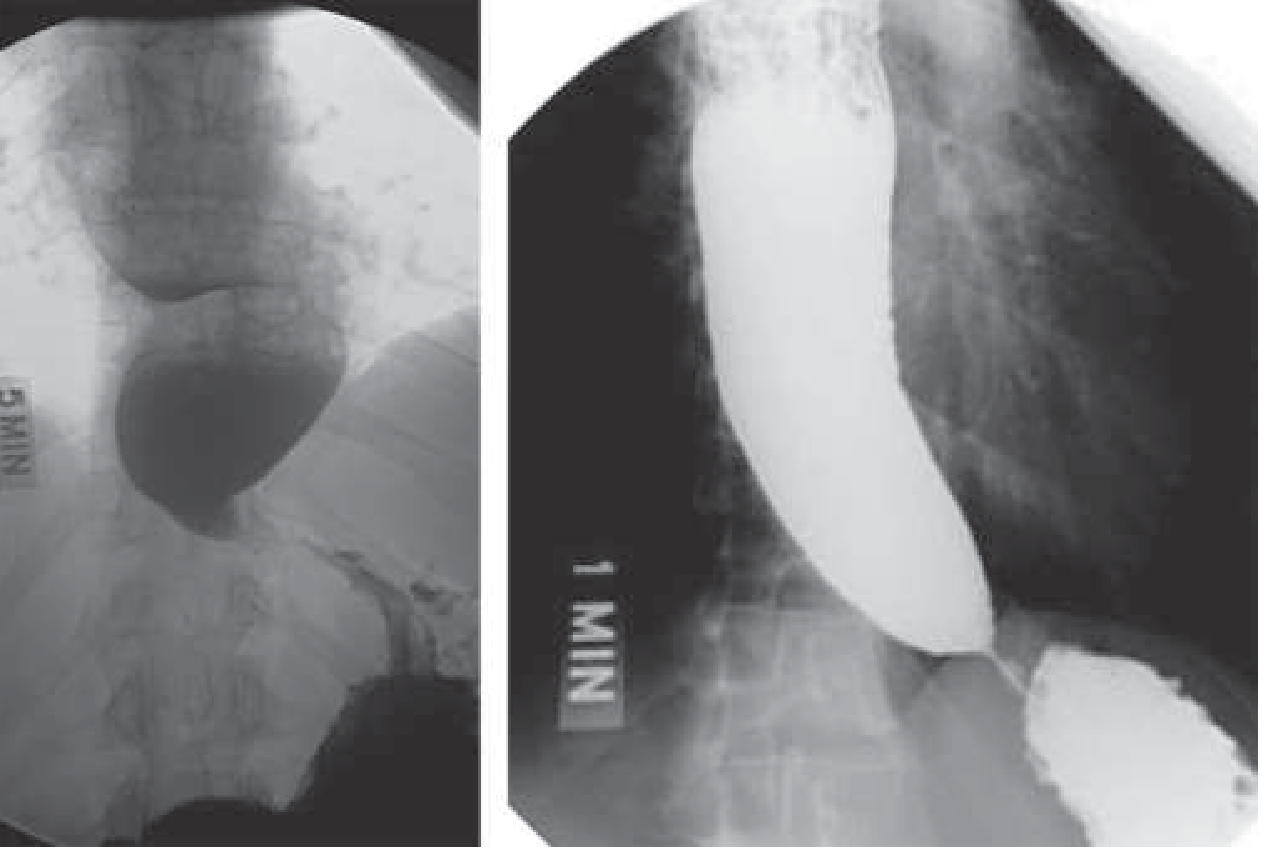
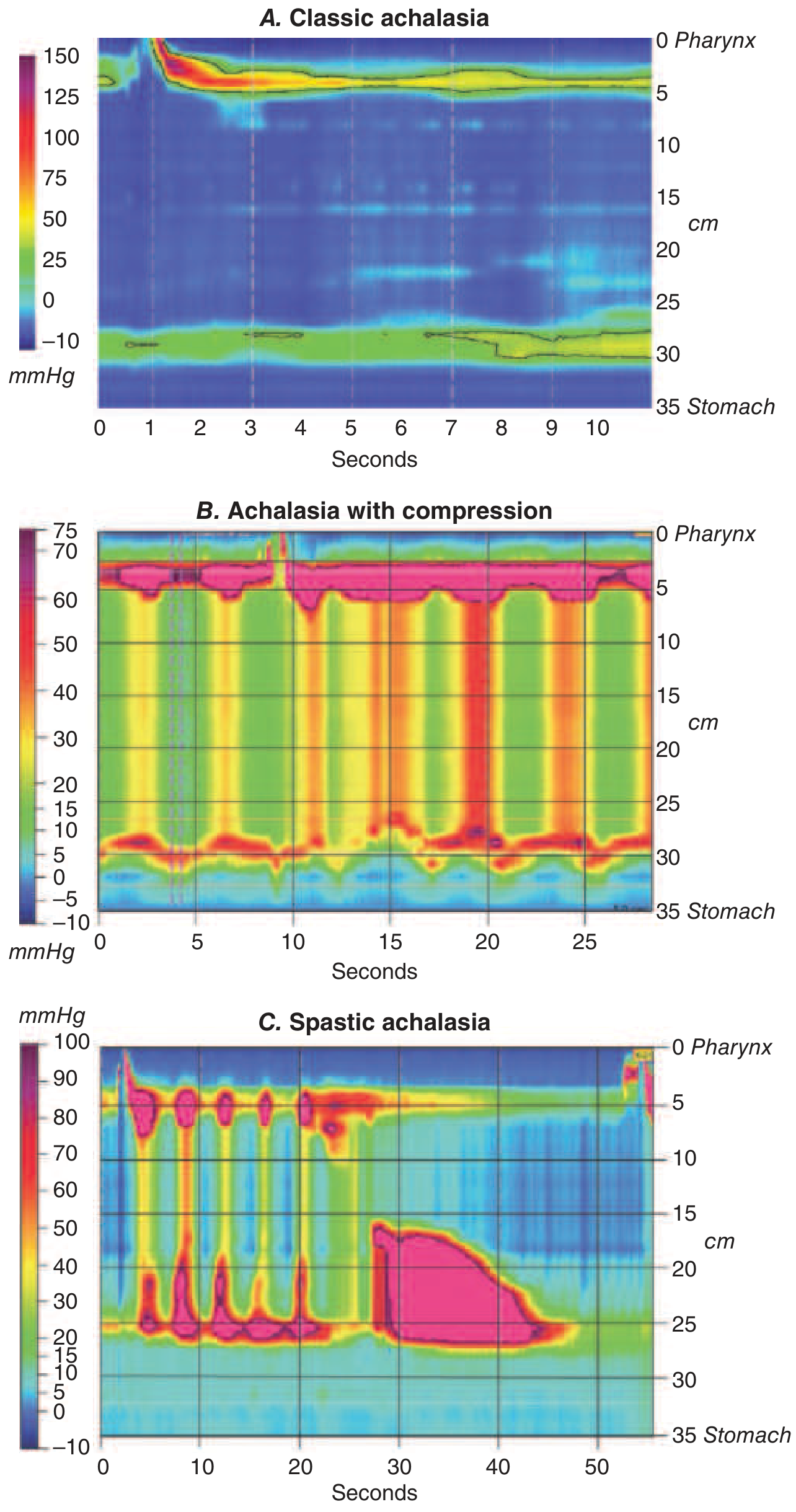
| Subtype | Manometry Pattern |
|---|---|
| Type I (Classic) | Absent peristalsis + impaired LES relaxation; minimal oesophageal body pressurisation |
| Type II (With compression) | Pan-oesophageal pressurisation with all swallows |
| Type III (Spastic) | Premature/spastic contractions in oesophageal body |
- Pseudoachalasia: tumour infiltration of gastric cardia/distal oesophagus (up to 5% of suspected achalasia); suspect with age >60, abrupt onset <1 year, significant weight loss
- Chagas disease: T. cruzi infection destroying autonomic ganglia; endemic in South America
- Opioid-induced oesophageal dysmotility
- Distal oesophageal spasm
| Modality | Details | Efficacy |
|---|---|---|
| Nitrates / Ca-channel blockers | Pre-meal; temporising only | Poor long-term |
| Botulinum toxin injection | Endoscopic injection into LES; inhibits ACh release | ~2/3 cases respond; effect lasts ~6 months |
| Pneumatic balloon dilation | Non-compliant cylindrical balloon dilated to 3-4 cm across LES | 60-90%; perforation risk 0.5-5% |
| Laparoscopic Heller myotomy | Surgical division of circular muscle of LES + partial fundoplication | 62-90%; equivalent to dilation at 5 years |
| POEM (Peroral Endoscopic Myotomy) | Endoscopic submucosal tunnel + circular muscle division; GERD common afterward; superior to dilation at 2 and 5 years | >80%; similar to Heller |
| Oesophagectomy | Refractory/advanced sigmoid deformity | Last resort |
2. Distal Oesophageal Spasm (DES)
- Intermittent dysphagia and severe chest pain (can mimic cardiac pain)
- Symptoms often triggered by hot/cold liquids, emotional stress
- Barium swallow: "corkscrew oesophagus" or "rosary bead" pattern - due to spastic circular muscle contractions
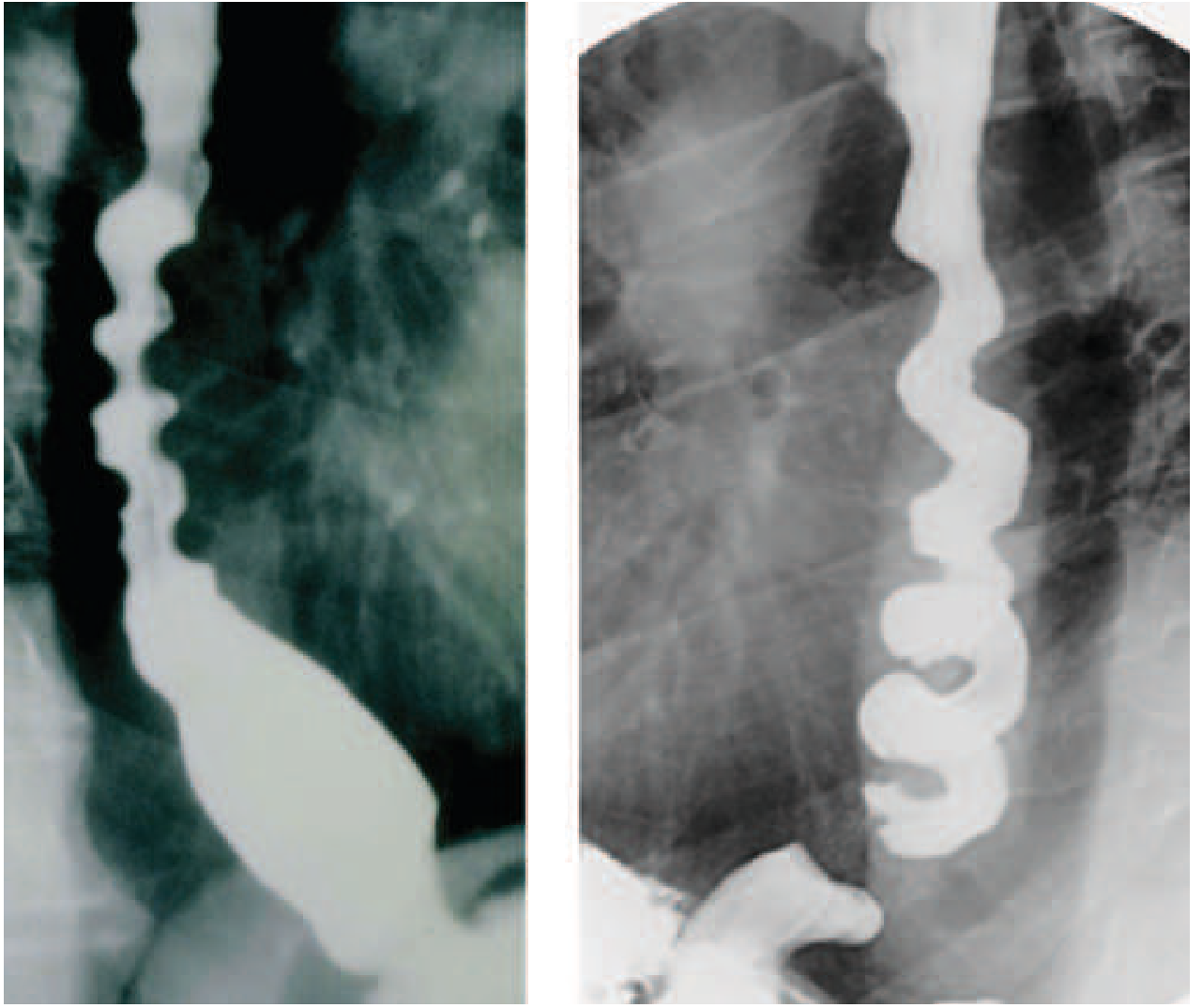
- Manometry: simultaneous (non-peristaltic), premature contractions in >20% of swallows with normal LES relaxation (integrated relaxation pressure <15 mmHg)
3. Hypercontractile (Jackhammer) Oesophagus
4. Secondary Motility Disorders
| Disease | Mechanism | Pattern |
|---|---|---|
| Scleroderma | Smooth muscle fibrosis and atrophy → aperistalsis + incompetent LES | Severe GERD, oesophagitis, stricture |
| Chagas disease | T. cruzi destroys myenteric ganglia (similar to achalasia) | Manometric achalasia pattern |
| Diabetes mellitus | Autonomic neuropathy | Hypomotility, delayed transit |
| Opioid use | Mu-receptor activation → impaired LES relaxation | Pseudoachalasia-like pattern |
| Connective tissue disorders (mixed, SLE, polymyositis) | Variable myopathy/neuropathy | Hypomotility |
Summary Comparison of Primary Motility Disorders
| Feature | Achalasia | Distal Oesophageal Spasm | Hypercontractile Oesophagus |
|---|---|---|---|
| LES relaxation | Impaired | Normal | Normal |
| Peristalsis | Absent | Premature contractions (>20%) | Vigorous (high DCI) |
| Barium | Bird-beak, dilated | Corkscrew | Often normal |
| Main symptom | Dysphagia (solid + liquid) | Chest pain > dysphagia | Chest pain > dysphagia |
| Definitive treatment | POEM / Heller myotomy | CCBs / POEM if refractory | CCBs / POEM if refractory |
Tracheosophageal fistula
tracheoesophageal fistula types classification Gross anatomy presentation diagnosis treatment
tracheoesophageal fistula Gross classification Waterston Spitz prognosis acquired TEF
Tracheoesophageal Fistula (TEF)
Definition
- Incidence: 1 in 3,000-4,500 live births
- More common in males
- Most common congenital anomaly of the lower respiratory tract
Embryology
- Ventral: larynx, trachea, and lungs
- Dorsal: pharynx and oesophagus
Classification (Gross Classification)

| Gross Type | Description | Incidence |
|---|---|---|
| Type A | Isolated oesophageal atresia - NO fistula; both ends blind; gasless abdomen on X-ray | ~8% |
| Type B | Proximal TEF + distal oesophageal atresia (proximal blind pouch connects to trachea; distal segment atretic) | <1% |
| Type C | Most common - Proximal blind pouch (oesophageal atresia) + distal TEF connecting lower oesophagus to trachea near carina; gas-filled abdomen on X-ray | ~85-87% |
| Type D | Oesophageal atresia with both proximal and distal fistulae | <1% |
| Type E (H-type) | TEF without oesophageal atresia - oesophagus patent; fistula runs obliquely like letter "H"; diagnosis often delayed until childhood/adulthood | ~3-4% |
The H-type (Type E) fistula is the only type that may escape neonatal diagnosis - it presents later with recurrent chest infections and bronchiectasis.
Associated Anomalies
VACTERL Association
| Letter | Anomaly |
|---|---|
| V | Vertebral anomalies |
| A | Anal atresia (imperforate anus) |
| C | Cardiac defects (most important for prognosis; 15-25% of cases) |
| TE | Tracheoesophageal fistula / Oesophageal atresia |
| R | Renal anomalies |
| L | Limb defects |
CHARGE Association
Chromosomal Anomalies
- Trisomy 18 more commonly associated than Trisomy 21
- Overall chromosomal abnormality incidence: 6-10%
Pathophysiology
In Type C (most common):
- The proximal blind oesophageal pouch cannot carry swallowed amniotic fluid to the stomach → polyhydramnios in utero
- After birth: saliva and feeds pool in the blind pouch → overflow aspiration
- The distal fistula connects the trachea to the stomach → gastric reflux passes directly into the lungs → aspiration pneumonitis / pneumonia
- Positive-pressure ventilation inflates the stomach through the fistula → gastric distension + reduced FRC
In Type E (H-type):
- Oesophagus is patent, but oblique fistula allows small amounts of food/liquid to enter the trachea with each swallow
- Presents with chronic aspiration and recurrent pneumonia
Clinical Features
Antenatal
- Polyhydramnios (fetus cannot swallow amniotic fluid in EA types)
- Absent stomach bubble on prenatal ultrasound
Neonatal (Types A-D)
| Feature | Mechanism |
|---|---|
| Excessive drooling / frothy oral secretions | Blind pouch overflows |
| Choking and coughing with first feed | Aspiration from pouch |
| Cyanotic episodes during feeding | Aspiration / airway compromise |
| Respiratory distress | Aspiration pneumonitis, gastric distension |
| Inability to pass NG tube beyond ~10 cm | Tube coils in blind pouch |
| Regurgitation of all feeds | Blind pouch has no exit |
Delayed Presentation (H-type TEF)
- Recurrent aspiration pneumonia
- Chronic cough (especially with feeds)
- Choking on feeds
- Bronchiectasis in late cases
- Can present in childhood or even adulthood
Diagnosis
Prenatal
- Ultrasound: polyhydramnios, absent or small stomach bubble (not reliable alone)
- MRI: better anatomical delineation of blind pouch
Postnatal
- 10-12 Fr catheter fails to advance beyond ~10 cm from lips
- Tube coils in the oesophageal pouch on chest X-ray
- Coiled NG tube in blind pouch
- Gas-filled abdomen = distal TEF present (Type C)
- Gasless abdomen = no distal fistula (Type A - pure atresia)
- Air in proximal pouch
- Evidence of aspiration pneumonitis (especially right upper lobe)
- Anterior bowing of trachea from distended pouch
- Demonstrates the pouch and any fistulous connection
- "Pullback" oesophagram used for H-type: NG tube inserted deep into oesophagus, pulled back slowly while contrast injected under fluoroscopy - fistula opacifies
- Small amounts of water-soluble contrast used (not barium, due to aspiration risk)
- Directly visualises the fistula opening on the posterior tracheal wall
- For H-type: NG tube advanced into distal oesophagus + air injected forcefully while bronchoscopist looks for bubbles emerging from fistula site
- Alternatively, Fogarty catheter inflated in oesophagus and slowly withdrawn while inspecting posterior tracheal wall
- Useful when contrast studies are equivocal
- Useful for diagnosis of recurrent/missed fistulae post-repair
- Mandatory pre-operatively to detect congenital heart disease and right-sided aortic arch
- Screen for renal anomalies
Prognostic Classification
Waterston Classification (1962) - based on birth weight, pneumonia, associated anomalies
| Group | Criteria | Survival |
|---|---|---|
| A | BW >2.5 kg, healthy | ~99% |
| B | BW 1.8-2.5 kg OR higher BW with moderate pneumonia/moderate anomaly | ~95% |
| C | BW <1.8 kg OR any weight with severe pneumonia/severe cardiac anomaly | ~60-71% |
Spitz Classification (1994) - simpler, still widely used
| Group | Criteria | Mortality |
|---|---|---|
| I | BW >1500 g, no major cardiac defect | ~2% |
| II | BW <1500 g OR major cardiac defect | ~11-22% |
| III | BW <1500 g AND major cardiac defect | High |
Management
Pre-operative Stabilisation
- Keep infant prone/head-up position (30-45°) - reduces reflux into lungs
- Replogle tube (double-lumen sump catheter) in blind ouch with continuous suction to prevent overflow aspiration
- Withhold oral feeds
- IV fluids and electrolyte correction
- Treat pneumonia with antibiotics
- Echocardiogram and renal USS
- Vitamin K administration
Surgical Repair
- Right extrapleural posterolateral thoracotomy (or thoracoscopic VATS - increasingly preferred)
- Identify and ligate/divide the fistula at the trachea
- Primary end-to-end oesophageal anastomosis
- Repair ideally within 24-48 hours if infant is stable
- Foker technique: external traction sutures applied to both ends of oesophagus through the chest wall, gradually tensioned over days-weeks to lengthen the oesophagus before anastomosis
- Colonic interposition or gastric pull-up if lengthening fails
- Free jejunal graft as alternative conduit
Anesthetic Considerations
- Aim to avoid positive-pressure mask ventilation before fistula is controlled (gastric distension risk)
- Inhalational induction preferred with spontaneous ventilation until fistula is ligated
- ETT placed distal to the fistula opening (bronchoscopy first to identify fistula location)
- Balloon embolectomy catheter can occlude the fistula temporarily during induction
- Invasive arterial monitoring recommended (mediastinal manipulation causes haemodynamic instability)
Complications
Early Post-operative
| Complication | Details |
|---|---|
| Anastomotic leak | Most common early complication; presents with pneumothorax or mediastinitis |
| Recurrent TEF | ~5-20% recurrence rate; usually at anastomotic site |
| Oesophageal stricture | At anastomosis; requires serial dilatation |
| Pneumonia/aspiration | From residual dysmotility or leaks |
Late Complications
| Complication | Details |
|---|---|
| Gastro-oesophageal reflux (GERD) | Very common; often severe; may require fundoplication |
| Tracheomalacia | Weak anterior tracheal wall (shared with oesophagus developmentally); presents with "TOF cough" - harsh, barking cough |
| Oesophageal dysmotility | Persistent; only 20% have normal pulmonary function at long-term follow-up |
| Growth failure | Up to 50% below 25th percentile for weight in first 5 years |
| Barrett's oesophagus | From chronic GERD |
Acquired TEF
- Malignancy (>50% of acquired TEFs): oesophageal/lung cancer eroding into the trachea
- Iatrogenic: tracheostomy cuff pressure necrosis, endotracheal intubation, prolonged NG tube use
- Trauma: penetrating neck/chest injury
- Infection: TB, mediastinitis
- Post-radiotherapy necrosis
Summary Table
| Type | Anatomy | Incidence | Presentation | X-ray |
|---|---|---|---|---|
| C | EA + distal TEF | 85-87% | Neonatal, cyanosis, choking | Gas-filled abdomen |
| A | Isolated EA, no fistula | ~8% | Neonatal, drooling | Gasless abdomen |
| E/H | TEF only, no EA | ~3-4% | Delayed - recurrent chest infections | Normal bowel gas |
| B | Proximal TEF + distal EA | <1% | Neonatal + pneumonia | Gasless abdomen |
| D | EA + both fistulae | <1% | Neonatal + severe pneumonia | Variable |