
What is localised and disseminated Herpes zoster
Reading File
Searching for information on localised and disseminated Herpes zoster.
search_medical_text
localised disseminated Herpes zoster clinical features
Harrison's Principles of Internal Medicine, Twenty First Edition
Page 5574
search_medical_image
Herpes zoster rash dermatomal disseminated
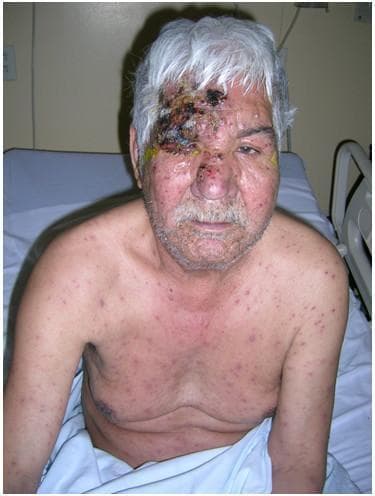
Hugging Face pmc clinical VQA raw
Page 0
GradeResponse
GradeResponse
Herpes Zoster: Localised vs. Disseminated
Herpes zoster (shingles) results from reactivation of latent Varicella-Zoster Virus (VZV) in the dorsal root or cranial nerve ganglia. It presents along a spectrum from localised dermatomal disease to widespread disseminated infection.
Localised (Dermatomal) Herpes Zoster
Definition: Zoster confined to one or two adjacent dermatomes on one side of the body.
Pathophysiology:
- Latent VZV in a single sensory ganglion reactivates, travels down the sensory nerve, and erupts in the corresponding dermatomal skin distribution.
Clinical Features:
- Prodrome (2–4 days before rash): Dermatomal pain, burning, itching, or hyperaesthesia; may be accompanied by fever, malaise, and headache.
- Rash: Erythematous maculopapules → vesicles on an erythematous base → pustules → crusting over 7–10 days.
- Distribution: Strictly unilateral, does not cross the midline. Most commonly affects the thoracic dermatomes (T3–L3), trigeminal nerve (V1 = ophthalmic branch), and lumbosacral dermatomes.
- Special forms:
- Herpes zoster ophthalmicus (HZO): V1 involvement; risk of keratitis, uveitis, and vision loss. Hutchinson's sign (tip/side of nose lesion) predicts ocular involvement.
- Ramsay Hunt syndrome: Geniculate ganglion (CN VII + VIII); facial palsy, ear pain, vesicles in the external auditory canal/pinna, and ipsilateral hearing loss.
Course:
- Scabbing complete in ~2–3 weeks in immunocompetent patients.
- Lesions continue to form for >1 week in immunocompromised individuals.
Disseminated Herpes Zoster
Definition: Widespread cutaneous dissemination defined as >20 vesicles outside the primary and immediately adjacent dermatomes, often accompanied by visceral involvement.
Pathophysiology:
- Occurs when viral viraemia is not contained by the host immune response, allowing VZV to spread haematogenously to skin and internal organs.
- Seen predominantly in immunocompromised patients (HIV/AIDS, haematological malignancies, transplant recipients, high-dose corticosteroid use).
Cutaneous Dissemination:
- Develops in approximately 40% of patients with Hodgkin's disease or non-Hodgkin's lymphoma with zoster (Harrison's, p. 5574).
- The rash resembles chickenpox (widespread, polymorphic vesicular eruption) superimposed on the primary dermatomal rash.
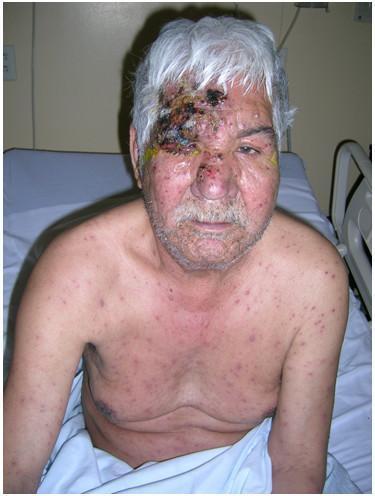
Visceral / Systemic Complications (risk increased 5–10× with cutaneous dissemination):
| Organ System | Complication |
|---|---|
| Lung | Pneumonitis |
| CNS | Meningoencephalitis, myelitis |
| Liver | Hepatitis |
| Eye | Retinal necrosis (ARN/PORN) |
| GI | Oesophagitis, colitis |
Prognosis: Even in immunocompromised patients, disseminated zoster is rarely fatal with antiviral therapy, though morbidity is significant (Harrison's, p. 5574).
Key Comparison Table
| Feature | Localised | Disseminated |
|---|---|---|
| Distribution | 1–2 dermatomes, unilateral | >20 lesions beyond primary dermatome |
| Host | Immunocompetent or mildly impaired | Immunocompromised |
| Visceral involvement | Rare | Significant risk (pneumonitis, encephalitis, hepatitis) |
| Healing time | 2–3 weeks | >3 weeks; ongoing new lesion formation |
| Mortality | Very rare | Rare even in immunocompromised |
Management Principles
- Antivirals: IV Aciclovir (10 mg/kg every 8 hours) for disseminated or severe disease; oral valaciclovir/famciclovir for localised disease in immunocompetent patients.
- Ophthalmology review: Mandatory for HZO.
- Pain management: Analgesics, gabapentinoids for post-herpetic neuralgia prevention.
- Infection control: Disseminated zoster carries airborne transmission risk (similar to chickenpox) — isolation is required in hospitalised patients.
- Prevention: Live attenuated zoster vaccine (Zostavax) and recombinant subunit vaccine (Shingrix) reduce incidence and severity; Shingrix is preferred and can be used in immunocompromised patients.
This is a shared conversation. Sign in to Orris to start your own chat.