
Meningitis tried
Reading File
Searching for comprehensive information on meningitis across text and imaging sources in parallel.
search_medical_text
meningitis etiology diagnosis clinical features management
Harrison's Principles of Internal Medicine, Twenty First Edition
Page 14669
search_medical_image
meningitis imaging CSF findings brain CT MRI

Hugging Face pmc clinical VQA raw
Page 0
GradeResponse
GradeResponse
Meningitis
Meningitis is inflammation of the meninges (the membranes surrounding the brain and spinal cord), most commonly caused by infection. It is a medical emergency.
Etiology
The causative agent varies by age and immune status (Harrison's, p. 14669):
| Category | Common Pathogens |
|---|---|
| Neonates | Group B Streptococcus, E. coli, Listeria monocytogenes |
| Children/Adults | Streptococcus pneumoniae, Neisseria meningitidis, H. influenzae |
| Elderly/Immunocompromised | L. monocytogenes, gram-negatives |
| Viral (Aseptic) | Enteroviruses, HSV-2, mumps, HIV |
| Fungal | Cryptococcus neoformans (esp. HIV patients), Candida |
| Tuberculous | Mycobacterium tuberculosis |
Pathophysiology
Organisms reach the meninges via hematogenous spread or direct extension. Once in the subarachnoid space, bacterial components trigger a robust inflammatory cascade, leading to:
- Increased intracranial pressure (ICP)
- Cerebral edema
- Impaired CSF resorption → hydrocephalus
- Vasculitis and cortical injury
Clinical Features
The classic triad (present together in only ~44% of cases):
- Fever
- Nuchal rigidity (neck stiffness)
- Altered mental status / headache
Additional signs:
- Kernig's sign: resistance to knee extension with hip flexed
- Brudzinski's sign: involuntary hip/knee flexion on neck flexion
- Photophobia, phonophobia
- Petechial/purpuric rash — classic for meningococcal disease (medical emergency)
- Seizures, focal neurological deficits (in complicated cases)
Diagnosis
Step 1 — CT Head Before LP?
Obtain CT first if any of:
- Papilledema
- Focal neurological deficits
- Severely altered consciousness / new-onset seizures
- Immunocompromised state
Do NOT delay antibiotics waiting for CT or LP!
Step 2 — Lumbar Puncture (CSF Analysis)
| Parameter | Bacterial | Viral | Tuberculous | Fungal |
|---|---|---|---|---|
| Appearance | Turbid/cloudy | Clear | Clear/xanthochromic | Clear/cloudy |
| WBC | >1000 (PMNs) | <500 (lymphs) | 100–500 (lymphs) | <500 (lymphs) |
| Protein | ↑↑ (>100 mg/dL) | Mildly ↑ | ↑↑ | ↑ |
| Glucose | ↓↓ (<40 mg/dL) | Normal | ↓ | ↓ |
| Opening pressure | ↑↑ | Normal/↑ | ↑ | ↑↑ |
| Gram stain/Culture | Positive ~70–80% | Negative | Negative (ZN stain) | India ink/CrAg |
Additional tests:
- Blood cultures (×2 before antibiotics if possible)
- Serum glucose (for CSF:serum ratio)
- CBC, CMP, CRP, procalcitonin
- PCR panels (HSV, enterovirus) on CSF
- Cryptococcal antigen (CrAg) in immunocompromised
Imaging
MRI with gadolinium is the imaging modality of choice when complications are suspected:
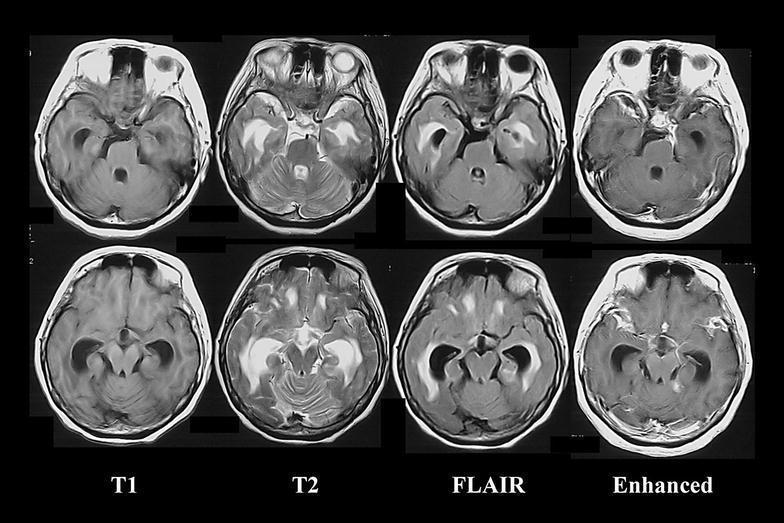
Multi-parametric MRI showing basal meningitis with communicating hydrocephalus, periventricular white matter changes on T2/FLAIR, and diffuse leptomeningeal enhancement on gadolinium sequences — characteristic of tuberculous or cryptococcal meningitis.
Management
Empiric Antibiotic Therapy (start immediately)
| Patient Group | Empiric Regimen |
|---|---|
| Adults 18–50 | Ceftriaxone 2g IV q12h + Vancomycin |
| >50 yrs / immunocompromised | + Ampicillin (covers Listeria) |
| Neonates | Ampicillin + Cefotaxime (or Gentamicin) |
| Penicillin allergy | Chloramphenicol or Meropenem |
Adjust based on culture/sensitivity results.
Adjunctive Dexamethasone
- Dexamethasone 0.15 mg/kg IV q6h × 4 days — start with or before first antibiotic dose
- Proven benefit in pneumococcal meningitis (reduces mortality, neurological sequelae)
- Benefit in other bacterial meningitis is less clear
Antiviral (if HSV suspected)
- Acyclovir 10 mg/kg IV q8h — start empirically if encephalitis is possible
Antifungal (Cryptococcal)
- Induction: Liposomal amphotericin B + Flucytosine × 2 weeks
- Consolidation: Fluconazole × 8 weeks
Supportive Care
- Strict neuro monitoring (GCS, pupils)
- ICP management (head of bed 30°, osmotherapy if needed)
- Seizure prophylaxis/treatment
- Fever control, fluid balance
- Isolation precautions for meningococcal disease (droplet)
Complications
| Complication | Notes |
|---|---|
| Hydrocephalus | May require EVD placement |
| SIADH / hyponatremia | Common, monitor Na⁺ closely |
| Subdural empyema | Neurosurgical emergency |
| Cerebral venous sinus thrombosis | MRV to diagnose |
| Hearing loss | Especially post-pneumococcal; audiological follow-up |
| Cognitive impairment, seizures | Long-term sequelae |
| Waterhouse-Friderichsen syndrome | Adrenal hemorrhage in meningococcemia |
| Death | Bacterial meningitis mortality ~20–30% without treatment |
Prophylaxis
- Meningococcal contacts: Rifampin 600 mg PO q12h × 2 days, or Ciprofloxacin single dose, or Ceftriaxone IM single dose
- Vaccination: MenACWY, MenB vaccines; PCV13/PPSV23 for pneumococcal; Hib vaccine
Prognosis
Bacterial meningitis carries significant morbidity/mortality. Prognosis worsens with:
- Delayed treatment
- Extremes of age
- Impaired consciousness at presentation
- Pneumococcal etiology
- Gram-negative organisms (Harrison's, p. 14669)
Viral meningitis is generally self-limiting with good outcomes. Tuberculous and fungal meningitis require prolonged therapy and carry higher morbidity.
This is a shared conversation. Sign in to Orris to start your own chat.