
Abortion (obstetric)
Reading File
Researching obstetric abortion: definitions, types, etiology, clinical features, management, and complications.
search_medical_text
abortion obstetric types classification spontaneous threatened missed incomplete complete
Abortion Care
Page 17
search_medical_text
abortion management treatment miscarriage complications
Medication Management for Early Pregnancy Loss
Page 2
GradeResponse
GradeResponse
Good initial results. Let me search for more clinical detail on the specific types, etiology, diagnosis, and management protocols.
search_medical_text
threatened abortion recurrent pregnancy loss etiology risk factors diagnosis ultrasound
search_medical_text
medical abortion mifepristone misoprostol surgical uterine aspiration D&C evacuation
I have enough information from the retrieved sources and my own clinical knowledge to deliver a comprehensive answer.
Abortion (Obstetric)
In obstetrics, abortion refers to the termination of pregnancy — either spontaneous or induced — before the fetus reaches viability (generally before 20–24 weeks of gestation or a fetal weight < 500 g). The term "miscarriage" is commonly used interchangeably with spontaneous abortion.
Classification
By Cause
| Type | Description |
|---|---|
| Spontaneous | Unintentional loss of pregnancy (miscarriage) |
| Induced/Elective | Deliberate termination using medical or surgical methods |
| Therapeutic | Induced abortion for maternal or fetal medical indications |
By Clinical Presentation (Spontaneous)
| Type | Cervical Os | Products of Conception | Bleeding | Key Features |
|---|---|---|---|---|
| Threatened | Closed | In utero | Present | Pregnancy may continue; fetal heartbeat usually present |
| Inevitable | Open | In utero | Present + cramping | Cannot be prevented; miscarriage will occur |
| Incomplete | Open | Partially expelled | Heavy | Some tissue retained in uterus |
| Complete | Closed | Fully expelled | Diminishing | All POC passed; uterus empty on USS |
| Missed (Silent) | Closed | Retained | None/minimal | Fetal demise without expulsion; embryonic/gestational sac present |
| Septic | Variable | May be retained | Variable | Signs of infection (fever, uterine tenderness, offensive discharge) |
| Recurrent | — | — | — | ≥3 consecutive spontaneous abortions; affects ~1% of couples |
Epidemiology
- Spontaneous abortion occurs in approximately 15–20% of all clinically recognized pregnancies (Medication Management for Early Pregnancy Loss, p. 2).
- The majority (>80%) occur in the first trimester.
- Recurrent pregnancy loss affects ~1% of couples trying to conceive.
Etiology & Risk Factors
First-Trimester Loss
- Chromosomal/genetic abnormalities (~50–60% of cases) — most common cause; trisomies, monosomy X, polyploidy
- Advanced maternal age
- Uterine anomalies (fibroids, septum, Asherman's syndrome)
- Endocrine disorders (uncontrolled diabetes, thyroid disease, hyperprolactinaemia)
- Thrombophilias (antiphospholipid syndrome — especially in recurrent loss)
- Infections (Listeria, Toxoplasma, CMV, Rubella)
- Smoking, alcohol, cocaine use
- Obesity
Second-Trimester Loss
- Cervical incompetence/insufficiency
- Uterine anomalies
- Placental abruption
- Infection
- Chromosomal abnormalities (less common than first trimester)
Clinical Features
| Symptom | Notes |
|---|---|
| Vaginal bleeding | Cardinal symptom; ranges from spotting to heavy haemorrhage |
| Lower abdominal/pelvic cramping | Colicky; may indicate inevitable or incomplete abortion |
| Passage of tissue | Confirms expulsion of POC |
| Absence of fetal movement | In later presentations |
| Cervical dilation on exam | Indicates inevitable/incomplete abortion |
| Signs of infection | Fever, tachycardia, tender uterus, purulent discharge — septic abortion |
Diagnosis
Investigations
- Serum β-hCG: Serial measurements every 48 hours — a rise of <53% or a falling trend is suspicious for non-viable pregnancy; should approximately double every 48h in viable early pregnancy.
- Transvaginal ultrasound (TVUSS): Primary diagnostic tool
- Empty gestational sac (mean sac diameter ≥25 mm) without embryo → anembryonic pregnancy
- Crown-rump length ≥7 mm without cardiac activity → missed abortion
- Absent fetal heart activity
- Full blood count: Assess for anaemia
- Blood group and Rh factor: Anti-D prophylaxis required in Rh-negative patients
- Cervical swabs: If septic abortion suspected
- In recurrent pregnancy loss: thrombophilia screen, karyotyping (both partners), uterine cavity assessment (hysteroscopy/sonohysterography), thyroid/endocrine workup
Management
General Principles
A patient-centred approach is recommended. Three management strategies are available and all are safe and effective; patients offered their preferred option have higher satisfaction and better outcomes (Medication Management for Early Pregnancy Loss, p. 2).
1. Expectant Management
- Suitable for: incomplete abortion, missed abortion (haemodynamically stable patient with no infection)
- Allow spontaneous passage of POC
- Success rate: ~50–80% within 2 weeks for missed abortion; higher for incomplete
- Monitor β-hCG to confirm resolution
- Patient must have 24-hour access to emergency care
2. Medical Management
- Misoprostol (prostaglandin E₁ analogue): sublingual, buccal, or vaginal; causes uterine contractions and cervical softening
- Mifepristone + misoprostol (combined regimen): more effective than misoprostol alone for missed/anembryonic pregnancy
- Mifepristone 200 mg orally, followed 24–48 hours later by misoprostol 800 µg vaginally/buccally
- Success rate >80% within 2 weeks (Abortion Care, p. 17; Medication Management for Early Pregnancy Loss, p. 2)
- Side effects: cramping, nausea, vomiting, diarrhoea, fever
- Follow-up USS or β-hCG to confirm complete evacuation
3. Surgical/Procedural Management
- Uterine aspiration (manual vacuum aspiration [MVA] or electric vacuum aspiration [EVA]): preferred surgical method; safe and highly effective (>95%)
- Sharp curettage (D&C): less preferred due to risk of intrauterine adhesions (Asherman's syndrome); generally reserved where aspiration not available
- Indications for urgent surgical management:
- Heavy haemorrhage / haemodynamic instability
- Suspected or confirmed intrauterine infection (septic abortion)
- Patient preference when other methods have failed
Septic Abortion
- Medical emergency
- Broad-spectrum IV antibiotics (e.g. metronidazole + cephalosporin ± gentamicin)
- Prompt uterine evacuation (after stabilisation and antibiotics initiated)
- ICU support if septic shock
Rh-Negative Patients
- Anti-D immunoglobulin (Rh prophylaxis) should be given to all Rh(D)-negative women undergoing surgical evacuation or where gestational age is ≥10 weeks (local guidelines vary on threshold).
Complications
| Complication | Notes |
|---|---|
| Haemorrhage | Most common; may require transfusion or emergency evacuation |
| Infection / Sepsis | Especially post-procedure or retained POC |
| Retained products of conception (RPOC) | May require repeat evacuation |
| Uterine perforation | Rare surgical complication |
| Cervical injury | From instrumentation |
| Intrauterine adhesions (Asherman's) | Associated with D&C, especially repeated procedures |
| Psychological sequelae | Grief, depression, anxiety, PTSD — counselling should be offered |
| Cervical incompetence | Risk for future pregnancies after multiple procedures |
| Isoimmunisation | If Rh prophylaxis omitted in Rh-negative patients |
Prognosis & Counselling
- After a single spontaneous abortion, >80% of women will have a successful subsequent pregnancy.
- After 3 consecutive losses, the risk of another is ~40–45% without intervention; systematic investigation and treatment of underlying causes improves outcomes significantly.
- Women should be offered psychological support and counselling; grief is a normal response.
- Pregnancy can usually be attempted again after one normal menstrual cycle following a first-trimester loss.
Sources: Abortion Care (WHO, p. 17); Medication Management for Early Pregnancy Loss (p. 2); supplemented with standard obstetric clinical knowledge (Williams Obstetrics; RCOG/ACOG guidelines).
Vaginal bleeding during pregnancy
Reading File
Finding Sources
Finding Sources
Reading File
Reading File
Excellent — very rich content retrieved. Let me read the continuation of both files to capture the full coverage of placenta previa, vasa previa, ectopic pregnancy, and first-trimester causes.
Reading File
Reading File
I now have comprehensive content covering all the major causes of vaginal bleeding in pregnancy (first and second half), including abruptio placentae, placenta previa, vasa previa, ectopic pregnancy, molar pregnancy, and miscarriage. Let me also fetch the abruption placentae diagram for visual clarity.
Loading Image
I now have comprehensive content from both Rosen's Emergency Medicine and Tintinalli's to deliver a thorough, well-structured response.
Vaginal Bleeding During Pregnancy
Vaginal bleeding complicates approximately 4% of all pregnancies and represents one of the most common obstetric emergencies. The differential diagnosis is strongly shaped by gestational age, and the clinical approach must first determine whether bleeding is occurring in the first or second half of pregnancy. — Rosen's Emergency Medicine, p. [block31]
Approach: First vs. Second Half
| Period | Key Diagnoses |
|---|---|
| First trimester (0–12 wks) | Threatened/inevitable/incomplete/complete/missed abortion, ectopic pregnancy, molar pregnancy, implantation bleeding |
| Second trimester (12–24 wks) | Placenta previa, abruptio placentae, vasa previa, cervical incompetence, subchorionic haematoma |
| Third trimester (>24 wks) | Abruptio placentae, placenta previa, vasa previa, show of labour, uterine rupture |
Critical rule: All patients with painless second-trimester/third-trimester vaginal bleeding should be assumed to have placenta previa until proven otherwise. Digital or instrumental examination of the cervix must be avoided until this diagnosis is excluded by ultrasound — it may precipitate catastrophic haemorrhage. — Rosen's Emergency Medicine [block31]; Tintinalli's Emergency Medicine [block8]
1. First-Trimester Bleeding
Causes
| Cause | Key Feature |
|---|---|
| Threatened abortion | Bleeding + closed cervical os; pregnancy may continue |
| Inevitable abortion | Bleeding + open os; cannot be prevented |
| Incomplete/Complete abortion | Partial or full expulsion of POC |
| Missed abortion | Retained non-viable pregnancy, no bleeding, closed os |
| Ectopic pregnancy | Amenorrhoea + pain + bleeding; most dangerous |
| Molar pregnancy | Exaggerated symptoms; "snowstorm" on USS |
| Implantation bleeding | Light spotting ~6–12 days post-conception; benign |
| Cervical pathology | Ectropion, polyp, cervicitis |
Ectopic Pregnancy
- The classic triad is amenorrhoea, abdominal pain, and abnormal vaginal bleeding ("the three A's") — ectopic pregnancy until proven otherwise. — Swanson's Family Medicine Review [block4]
- Risk factors: prior tubal surgery, PID, previous ectopic, IUD use, assisted reproduction.
- β-hCG present but intrauterine gestational sac absent on TVUSS → highly suspicious.
- Tubal rupture = surgical emergency; vasovagal attacks and orthostatic hypotension are strong indicators. — Swanson's Family Medicine Review [block4]
Molar Pregnancy
- Presents with vaginal bleeding, uterus large-for-dates, hyperemesis, early pre-eclampsia, and markedly elevated β-hCG.
- USS shows characteristic "snowstorm" appearance (see image below).
- Up to two-thirds are diagnosed only on pathological specimens after miscarriage; USS is only 58% sensitive.
- Management: uterine D&C + surveillance for gestational trophoblastic disease (invasive mole, choriocarcinoma). — Rosen's Emergency Medicine [block31]
2. Second-Half Bleeding
Bleeding from 14–24 weeks carries a 33% risk of fetal loss; management is supportive and expectant since fetal rescue is not possible before viability. In the third trimester, vaginal bleeding is associated with significant morbidity in ~one-third of cases, and urgent delivery may be required. — Rosen's Emergency Medicine [block31]
A. Abruptio Placentae (Placental Abruption)
Definition: Premature separation of a normally implanted placenta from the uterine lining. Incidence is highest between 24 and 32 weeks. — Tintinalli's Emergency Medicine [block8]
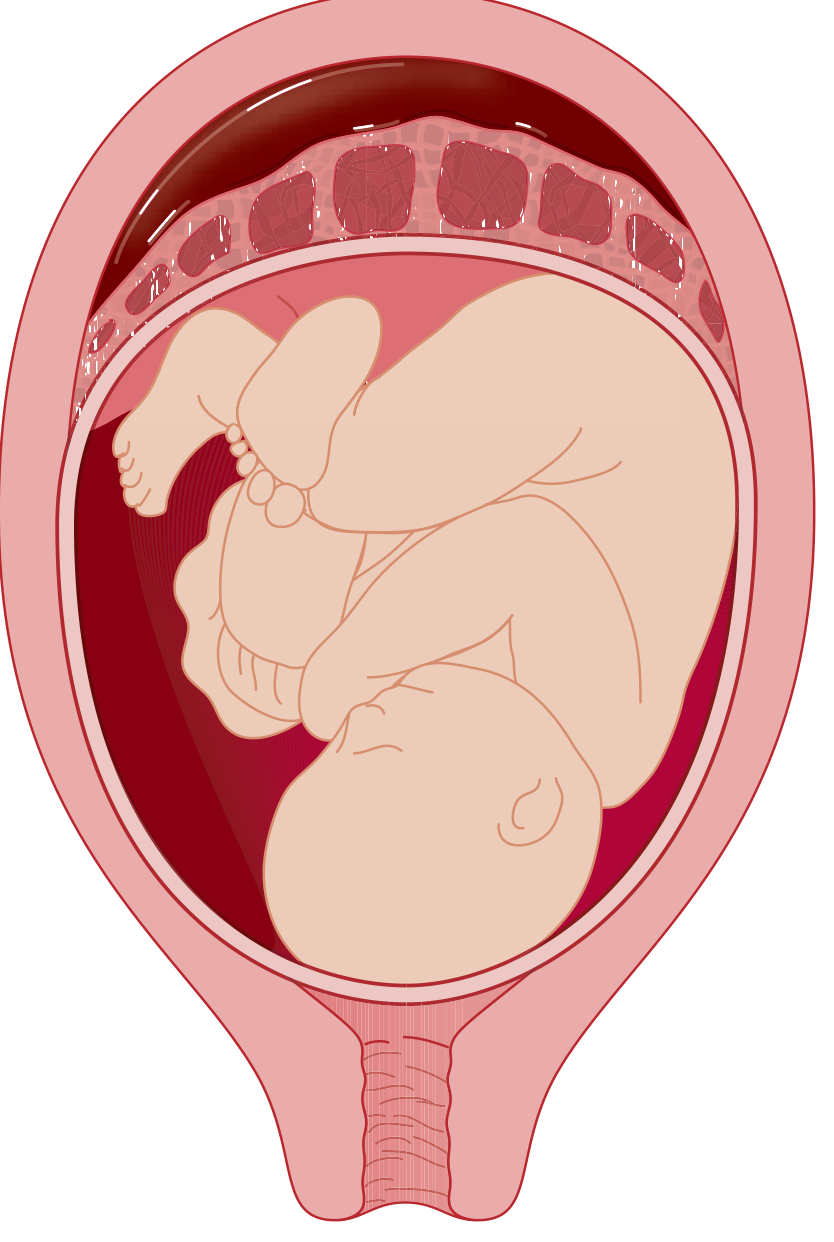
Risk factors: abdominal trauma (even minor), cocaine use, oligohydramnios, chorioamnionitis, advanced maternal age/parity, eclampsia, chronic or acute hypertension. — Tintinalli's [block8]
Clinical features (depend on severity):
- Mild: small retroplacental clot; vaginal bleeding may be minimal; no fetal distress
- Moderate: painful uterine contractions + vaginal bleeding; fetal distress present
- Severe: board-like rigid uterus; heavy bleeding (may be concealed); coagulopathy (DIC); fetal death; maternal haemorrhagic shock
Up to 20% of cases have no pain or vaginal bleeding (concealed abruption) — assessment relies on clinical features, coagulation parameters, and fetal monitoring. — Rosen's [block31]
Complications: DIC, haemorrhagic shock, uterine rupture, multiple organ failure, fetal demise.
Diagnosis: primarily clinical; USS confirms in ~50% (retroplacental clot) but a negative USS does not exclude abruption. CTG for fetal wellbeing.
Management:
- IV access × 2; FBC, coagulation studies, blood group + crossmatch
- IV fluid resuscitation; blood transfusion as needed
- Continuous fetal monitoring
- Obstetric consultation urgently
- Delivery timing based on gestational age, severity, and fetal/maternal condition
B. Placenta Previa
Definition: Abnormal implantation of the placenta overlying or adjacent to the internal cervical os.
Clinical presentation:
- Painless, bright red vaginal bleeding — classic hallmark
- Onset typically after 28 weeks (most commonly in the third trimester)
- Uterus non-tender, soft
- Abnormal fetal lie common (placenta occupies lower segment)
- Bleeding may be precipitated by intercourse, examination, or occur spontaneously
Key rule: Never perform a digital or speculum examination until placenta previa has been excluded by ultrasound — mechanical disruption of the placenta can cause catastrophic haemorrhage. When performed by an experienced operator (probe angled against anterior lip of cervix, not advanced into cervix), transvaginal USS is safe and is the preferred diagnostic modality. — Tintinalli's [block8]
Risk factors: previous caesarean section or uterine surgery (placenta accreta spectrum), multiparity, multiple gestation, advanced maternal age, smoking, prior placenta previa.
Grading:
- Complete (total): placenta covers internal os entirely
- Partial: placenta partially covers internal os
- Marginal: placental edge at margin of internal os
- Low-lying: placental edge within 2 cm of os but not covering it
Management:
- Haemodynamically stable + remote from term: expectant management, pelvic rest, hospitalisation (if severe bleeding)
- Haemodynamically unstable or near term: caesarean section
- Rh-negative patients: anti-D immunoglobulin
- Avoid vaginal delivery with complete previa
C. Vasa Previa
Definition: Fetal blood vessels (from velamentous cord insertion or succenturiate lobe) course through the fetal membranes across the internal cervical os, ahead of the presenting part.
Clinical significance: Vessel rupture (often at amniotomy or membrane rupture) causes fetal haemorrhage, not maternal — even small volumes are immediately life-threatening to the fetus.
Features:
- Sudden onset vaginal bleeding coinciding with rupture of membranes
- Rapid fetal bradycardia or sinusoidal CTG pattern
- Maternal haemodynamics may remain stable while fetus exsanguinates
Management: Emergency caesarean section is required immediately. Antenatal diagnosis by Doppler USS allows planned elective caesarean before membrane rupture. — Tintinalli's [block8]
D. Uterine Rupture
- Rare but catastrophic; risk factors: prior uterine scar (caesarean, myomectomy), obstructed labour, oxytocin misuse, grand multiparity.
- Sudden severe abdominal pain + vaginal bleeding + fetal bradycardia/loss of fetal heart tones.
- Loss of uterine contour on palpation; presenting part may retract.
- Emergency laparotomy + caesarean section.
Comparative Summary: Major Second-Half Causes
| Feature | Abruptio Placentae | Placenta Previa | Vasa Previa |
|---|---|---|---|
| Bleeding | Dark, may be concealed | Bright red, painless | Bright red; fetal blood |
| Pain | Severe, constant | None | None (until fetal distress) |
| Uterus | Rigid, tender | Soft, non-tender | Soft |
| Onset | Sudden, often traumatic/hypertensive | Spontaneous, 28+ wks | At ROM |
| Fetal distress | May be present | Less common unless severe | Immediate, severe |
| Who bleeds | Mother | Mother | Fetus |
| USS finding | Retroplacental clot (variable) | Placenta over os | Vessels over os (Doppler) |
| Pelvic exam | Safe after USS | CONTRAINDICATED until USS | CONTRAINDICATED |
Initial Assessment & Emergency Management (All Causes)
- History: gestational age, onset/character of bleeding, pain, trauma, prior USS, placental location, Rh status
- Vitals + fetal heart rate (normal 120–160 bpm)
- Do NOT perform digital/speculum examination until placenta previa/vasa previa excluded by USS
- IV access × 2; bloods: FBC, coagulation studies, blood group + crossmatch, Kleihauer-Betke test (feto-maternal haemorrhage)
- Transvaginal USS by experienced operator to localise placenta
- Continuous CTG (>24 weeks)
- Obstetric consultation — urgent/emergent based on severity
- Anti-D immunoglobulin for all Rh(D)-negative patients
- Resuscitate with crystalloid/blood products as needed; prepare for emergency delivery if haemodynamically unstable
Sources: Rosen's Emergency Medicine: Concepts and Clinical Practice [block31]; Tintinalli's Emergency Medicine [block8]; Swanson's Family Medicine Review [block4]; supplemented with standard obstetric knowledge (Williams Obstetrics; RCOG/ACOG guidelines).

Please make me understand this and tell me whats going on rn
This is a Samsung Eco Bubble 7.0kg washing machine with a Russian-language panel. Here's a full breakdown:
The Control Panel (Left — Program Dial)
The dial selects the wash program. The options listed (translated from Russian) are:
| Russian | English |
|---|---|
| Экономичная стирка ECO | Economy wash ECO |
| 15' Быстрая стирка | 15-minute quick wash |
| Ежеднев. стирка | Daily wash |
| Деликат. ткани | Delicate fabrics |
| Тёмные вещи | Dark clothes |
| Постельное бельё | Bed linen |
| Детские вещи | Baby clothes |
| Хлопок | Cotton |
| Eco Хлопок | Eco Cotton |
| Синтетика | Synthetics |
| Шерсть | Wool |
| Отжим | Spin only |
| Полоск. + Отжим | Rinse + Spin |
| Очистка барабана ECO | Drum clean ECO |
What's Happening Right Now
Looking at the display:
- "58" on the screen — this is the time remaining: 58 minutes
- The three blue icons at the top (wash tub, rinse, spin) — the machine is actively mid-cycle
- Red speaker icon (🔇) — the sound/beep is muted
- Red key icon (🔑) — the child lock is active (door/controls are locked)
- Temperature: the lit indicator appears to be around 40°C
- Rinse: 2 rinses selected (lit indicator)
- Spin speed: 1200 rpm selected
So right now: the machine is running a wash cycle with ~58 minutes left, at 40°C, 2 rinses, 1200 rpm spin — with sound muted and child lock on.
Other Buttons (Right Side)
| Button | Function |
|---|---|
| Отсрочка | Delay start |
| Супер Полоскание+ | Super Rinse+ (extra rinse) |
| Интенсивное Замачивание | Intensive pre-soak |
| ⏯ (Play/Pause) | Start / Pause the cycle |
| ⏻ (Power) | Power on/off |
To Turn Off Child Lock
Hold the designated button for 3 seconds — the panel notes "(Удерж. 3 сек.)" in the top right, which means "(Hold 3 sec.)"
Tell me everything about this and to use and what type should cloth for what setting In a simple language
Samsung Eco Bubble 7.0kg — Complete Simple Guide
🔵 What is Eco Bubble?
Samsung's Eco Bubble technology mixes water with air and detergent to create bubbles before washing. These bubbles penetrate fabric faster than regular water, so it cleans well even at cold temperatures — saving electricity.
🎛️ THE DIAL — Wash Programs & Which Clothes to Use
🟤 COTTON (Хлопок)
Use for: T-shirts, jeans, towels, bedsheets, underwear, socks
- Toughest wash — removes heavy dirt
- Can handle high temperatures (60–90°C)
- Safe for most everyday clothes
🟢 ECO COTTON (Eco Хлопок)
Use for: Same as Cotton but lightly soiled
- Uses less water and electricity
- Takes longer but is gentler on the environment
- Good for clothes that aren't very dirty
⚡ 15-MINUTE QUICK WASH (15' Быстрая стирка)
Use for: Clothes worn just once, barely dirty — a shirt you wore for a few hours
- Not for heavily soiled clothes
- Great when you're in a hurry
- Use small load only (1–2 items)
📅 DAILY WASH (Ежеднев. стирка)
Use for: Lightly worn everyday clothes — shirts, trousers, light cotton
- Balanced cycle — not too rough, not too gentle
- Good for regular use
🌸 DELICATES (Деликат. ткани)
Use for: Silk, lace, thin blouses, lingerie, anything labelled "delicate"
- Very gentle — slow drum movement
- Low temperature (30°C)
- Prevents stretching and tearing
🖤 DARK CLOTHES (Тёмные вещи)
Use for: Black jeans, dark t-shirts, dark coloured items
- Uses cold water to prevent colours fading
- Gentle spin to reduce colour loss
- Keeps dark clothes looking new longer
🛏️ BED LINEN (Постельное бельё)
Use for: Duvet covers, pillowcases, sheets, blankets
- Special drum movement to handle large bulky items
- Prevents tangling and ensures even wash
👶 BABY CLOTHES (Детские вещи)
Use for: Baby bodysuits, baby towels, soft toys, children's clothes
- High temperature (60°C) to kill bacteria and allergens
- Extra rinse to remove all detergent residue
- Safe for sensitive baby skin
🧶 WOOL (Шерсть)
Use for: Wool jumpers, woollen socks, cashmere
- Very slow and gentle drum movement
- Cold or 30°C only
- Prevents shrinking and matting
🧴 SYNTHETICS (Синтетика)
Use for: Polyester, nylon, sportswear, gym clothes, fleece
- Medium temperature (40°C)
- Gentle enough to prevent damage to synthetic fibres
💧 RINSE + SPIN (Полоск. + Отжим)
Use for: Clothes you hand-washed and want to rinse properly, or re-rinsing
- No detergent needed
- Just flushes out soap and spins dry
🌀 SPIN ONLY (Отжим)
Use for: Already washed clothes that just need water removed
- No water added — just spins
🥁 DRUM CLEAN ECO (Очистка барабана ECO)
Use for: The drum itself — no clothes inside!
- Run this once a month to clean the drum
- Removes mould, bacteria, and bad smells
- Use a drum-cleaning tablet or just run it empty
🌡️ TEMPERATURE GUIDE (Simple)
| Temp | Use For |
|---|---|
| Cold / 20°C | Very delicate items, dark clothes, synthetics |
| 30°C | Delicates, wool, lightly soiled clothes |
| 40°C | Most everyday clothes — shirts, jeans, mixed loads |
| 60°C | Cotton towels, bed linen, baby clothes, heavily soiled items |
| 90–95°C | White cotton only — bedsheets, heavily stained whites |
⚠️ Rule of thumb: Always check the label on your clothes. If it says 30°C, never go higher — it will shrink or damage the fabric.
🔄 SPIN SPEED GUIDE
| Speed | Use For |
|---|---|
| 400 rpm | Wool, delicates, silk — very gentle |
| 800 rpm | Synthetics, delicate cotton |
| 1000 rpm | Everyday clothes |
| 1200 rpm | Cotton, towels, bed linen — maximum drying |
Higher spin = clothes come out drier but more wrinkled. Lower spin = gentler on fabric but wetter.
🧴 HOW TO USE IT — Step by Step
- Load clothes — don't overfill; leave a hand's space at the top of the drum
- Add detergent to the drawer (pull it out from the top left):
- Left compartment = pre-wash detergent
- Middle = main wash detergent
- Right = fabric softener
- Turn the dial to your program
- Adjust settings if needed — temperature, spin speed, rinses
- Press the Play/Pause button (▶⏸) to start
- Machine beeps and door locks automatically
- When done, it beeps — open the door and unload
🔒 SPECIAL BUTTONS EXPLAINED
| Button | What it does |
|---|---|
| Delay Start (Отсрочка) | Set it to finish at a specific time — e.g. start at night, ready in morning |
| Super Rinse+ (Супер Полоскание+) | Adds extra rinse — good for people with sensitive skin or allergies |
| Intensive Soak (Интенсивное Замачивание) | Pre-soaks clothes before washing — for heavily stained items |
| Child Lock | Hold for 3 seconds to lock/unlock all buttons — prevents kids from changing settings |
| Mute (🔇) | Hold to turn off/on the beeping sounds |
💡 TOP TIPS
- Never overload — clothes need space to move to get clean
- Use the right amount of detergent — too much = poor rinsing, too little = poor cleaning
- Leave the door open after each wash to prevent mould and smell
- Clean the filter (bottom front panel) every few months — catches lint and coins
- Run Drum Clean once a month to keep it fresh
- Separate colours — wash darks with darks, whites with whites, for the first few washes at least
🧺 QUICK CHEAT SHEET — Cloth Type → Setting
| Clothing | Program | Temp | Spin |
|---|---|---|---|
| Jeans, towels, bedsheets | Cotton | 40–60°C | 1000–1200 |
| T-shirts, mixed everyday | Daily wash | 40°C | 1000 |
| Gym/sportswear | Synthetics | 40°C | 800 |
| Silk, lace, lingerie | Delicates | 30°C | 400 |
| Wool jumpers | Wool | 30°C | 400 |
| Baby clothes | Baby clothes | 60°C | 800 |
| Dark jeans/tops | Dark clothes | Cold | 800 |
| Barely worn clothes | 15-min Quick | 30°C | 1000 |
| White cotton sheets | Cotton | 90°C | 1200 |
What to set for bedsheet which is not slim
For a Thick/Heavy Bedsheet
Program → Bed Linen (Постельное бельё)
This program is specifically designed for bulky items — it moves the drum in a special way to handle the weight and size properly.
Settings to Choose:
| Setting | What to Set |
|---|---|
| Program | Постельное бельё (Bed Linen) |
| Temperature | 60°C — kills dust mites, bacteria, and deep cleans |
| Spin | 1000 rpm — strong enough to get water out, not so fast it damages fabric |
| Rinse | 2 (default is fine) |
⚠️ Important Tips for Thick Bedsheets
- Wash one at a time — a thick bedsheet alone can already be 2–3 kg. Don't add other items or the machine gets unbalanced and starts shaking violently
- Don't stuff it in — loosely place it in the drum, don't fold it tightly into a ball
- If the machine starts vibrating heavily mid-cycle, it means the sheet has bunched up on one side — pause, open the door, redistribute it evenly, then restart
- After washing, shake it out immediately — thick sheets wrinkle badly if left sitting in the drum
If It's a White Thick Bedsheet
You can go up to 90°C on Cotton program for a deep hygiene wash — but only if the label allows it.
This is a shared conversation. Sign in to Orris to start your own chat.