
Adrenal gland cyst effects
"adrenal cyst" clinical features management
adrenal gland cyst effects symptoms complications management
Adrenal Gland Cysts: Overview, Effects, and Management
What Are Adrenal Cysts?
Types of Adrenal Cysts (Histologic Classification)
| Type | Frequency | Key Feature |
|---|---|---|
| Endothelial cysts | ~45% | Lymphangiomatous or angiomatous; lack proliferating endothelium |
| Pseudocysts | ~39% | No cellular lining; result from prior intra-adrenal hemorrhage or infarction |
| Epithelial cysts | ~9% | True epithelial lining; includes glandular, embryonal, and cystic adenoma subtypes |
| Parasitic cysts | ~7% | Associated with Echinococcus (extremely rare as sole site) |
Effects and Clinical Consequences
1. Mass Effect (Large Cysts)
- Large cysts (especially >10 cm) can cause abdominal/flank pain, discomfort, and a palpable flank mass by displacing adjacent organs (kidney, pancreas, spleen, liver).
- Distinguishing a large adrenal cyst from lesions of neighboring organs can be difficult clinically.
2. Mostly Asymptomatic (Small Cysts)
- The majority (~90%) of adrenal cysts are asymptomatic and discovered incidentally on imaging done for unrelated reasons.
3. Hormonal (Functional) Effects
- While most adrenal cysts are non-functional, endocrinologic evaluation is always recommended to exclude active lesions (e.g., cortisol or aldosterone excess, or pheochromocytoma).
- Cysts can occasionally arise in the setting of a functioning adrenal neoplasm undergoing cystic degeneration.
4. Risk of Hemorrhage
- Cysts - particularly pseudocysts - can hemorrhage spontaneously, leading to acute abdominal pain, hemodynamic instability, or even acute abdomen.
- On CT, higher fluid density (>30 HU) within the cyst suggests hemorrhage or intracystic debris.
5. Malignancy Risk
- Approximately 7% of adrenal cysts are associated with underlying malignancy, almost entirely within the pseudocyst subtype.
- Cystic neoplasms masquerading as simple cysts include adrenocortical carcinoma (ACC), pheochromocytoma, and adenoma.
- Cystic neoplasms tend to be larger (>7 cm) and have thicker walls than true benign cysts.
- Because histology in most series comes from surgical specimens, the 7% malignancy rate may overestimate the true population risk. (Campbell-Walsh Wein Urology, p. 3167)
6. Cyst Growth and Recurrence
- In small series, ~60% of adrenal cysts increased in size over follow-up, and only 25% decreased. About one-third of patients experience ongoing enlargement.
7. Calcification
- Peripheral calcifications are seen in 15-70% of adrenal cysts on imaging. These are typically rim-like but occasionally nodular.
8. Infection / Rupture
- Infection of the cyst contents and spontaneous rupture, though rare, represent potential complications - especially in larger lesions.
Imaging Features
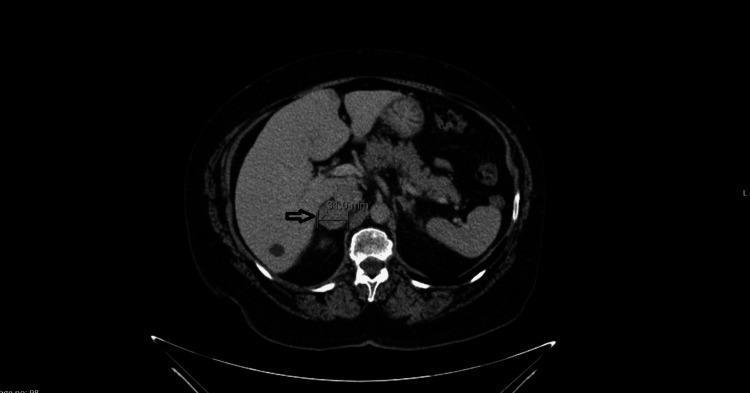
- CT (study of choice): Thin non-enhancing wall, fluid-density content (near water attenuation). Thickened walls, solid components, or septations raise suspicion for necrotic mass or cystic neoplasm.
- MRI: Simple cysts appear hypointense on T1 and hyperintense on T2.
- Radiology alone cannot exclude malignancy; aspiration or surgical excision is often needed when doubt exists. (Grainger & Allison's Diagnostic Radiology)
Management
Indications for Surgery
- Symptomatic (pain, mass effect)
- Functional (hormonally active)
- Size >5 cm (risk of hemorrhage and secondary complications)
- Radiologic suspicion of malignancy (thick walls, solid components, local invasion)
Conservative Management
- Small (<4 cm), asymptomatic, thin-walled, non-functional cysts with benign radiographic features can be observed without follow-up imaging, per the European Society of Endocrinology guidelines.
- If follow-up is chosen (e.g., borderline size), repeat CT or MRI at 6-12 months is recommended.
Aspiration
- Aspiration can be both diagnostic and therapeutic in select cases.
- Must be performed only after pheochromocytoma is biochemically excluded (aspiration can precipitate a hypertensive crisis if the cyst overlies or communicates with a pheo).
- Aspirate should be sent for cytology, Gram stain, cortisol, triglycerides, and amylase (for left-sided cysts).
Prognosis
- Benign cysts: Excellent prognosis after resection; follow-up is needed to watch for reaccumulation.
- Cysts with malignancy: Follow-up is governed by the underlying malignant histology (e.g., ACC protocols).
Bp malignant htn cyst size 1.2 *0.8 cm Aldosterone and urinary cortisol increased What is plan
"primary aldosteronism" AND "hypercortisolism" co-secreting adrenal
functional adrenal cyst elevated aldosterone urinary cortisol malignant hypertension management plan
"primary aldosteronism" diagnosis management adrenalectomy guidelines
"malignant hypertension" OR "hypertensive emergency" adrenal cause treatment
Clinical Scenario Summary
- Adrenal cyst: 1.2 x 0.8 cm (small, <2 cm)
- Malignant (accelerated) hypertension
- Elevated serum aldosterone
- Elevated urinary cortisol
- Likely: Co-secreting functional adrenal lesion - both Conn's syndrome (primary hyperaldosteronism) AND subclinical/overt Cushing's syndrome from the same small adrenal cyst/adenoma
Management Plan
STEP 1 - Immediate: Treat the Malignant Hypertension
- Admit to ICU/HDU immediately
- IV antihypertensives - reduce MAP by no more than 25% in the first hour:
- IV labetalol (first choice if no contraindication)
- IV nicardipine (calcium channel blocker)
- IV hydralazine or sodium nitroprusside as alternatives
- Avoid ACE inhibitors/ARBs initially until renal function is established
- Target: Bring BP down gradually - do NOT normalize acutely (risk of cerebral hypoperfusion)
- Begin spironolactone (aldosterone antagonist, 25-50 mg/day) orally once oral medications tolerated - this addresses the root cause of hyperaldosteronism-driven hypertension directly
- Correct hypokalemia (common with hyperaldosteronism - monitor K+ closely)
STEP 2 - Confirmatory Biochemical Workup
For Hyperaldosteronism:
| Test | Purpose |
|---|---|
| Plasma aldosterone concentration (PAC) | Baseline |
| Plasma renin activity (PRA) or direct renin concentration | Suppressed in primary hyperaldosteronism |
| Aldosterone-to-Renin Ratio (ARR) ≥ 20 with PAC > 15 ng/dL | Screening positive |
| Saline suppression test OR salt load test (24-hr urine aldosterone) | Confirmatory - aldosterone >10 ng/dL after saline load confirms diagnosis |
For Hypercortisolism:
| Test | Purpose |
|---|---|
| 24-hour urinary free cortisol (already elevated) | Confirms cortisol excess |
| Overnight 1 mg dexamethasone suppression test | If cortisol >1.8 mcg/dL post-dex = unsuppressed = confirms autonomous cortisol |
| Morning serum ACTH | Expected to be low/suppressed (adrenal source, not pituitary) |
| Late-night salivary cortisol x2 | Additional confirmation |
Exclude Pheochromocytoma (MANDATORY before any intervention):
- Plasma free metanephrines OR 24-hr urinary metanephrines/catecholamines
- Must be done BEFORE any aspiration or surgery - failure to do so risks fatal hypertensive crisis
STEP 3 - Imaging Evaluation
- CT abdomen without contrast (non-enhanced CT):
- Hounsfield units (HU) <10 = lipid-rich adenoma (benign)
- HU >10 = indeterminate, needs washout study or MRI
- Size <2 cm with benign features + functional = still warrants surgery given dual hormone excess
- MRI adrenals if CT indeterminate (chemical shift imaging to detect intracellular lipid)
- Adrenal Vein Sampling (AVS) - considered if:
- Bilateral lesions suspected
- Age >40 (non-functioning incidental adenomas common, may confuse lateralization)
- CT inconclusive for lateralization
- AVS has sensitivity 95%, specificity 100% for lateralized aldosterone secretion (Campbell-Walsh Wein Urology, p. 3167)
STEP 4 - Definitive Treatment
Surgical (Recommended - this lesion is functional with dual hormone secretion):
- Laparoscopic adrenalectomy - preferred approach for lesions ≤2 cm, minimally invasive
- Robotic-assisted approach is an acceptable alternative
Preoperative Preparation (Critical):
- Spironolactone (25-100 mg/day) for 4-6 weeks preoperatively - corrects hypokalemia and volume overload
- Correct hypokalemia to >3.5 mEq/L before surgery
- BP control - target <140/90 mmHg with spironolactone + additional agents as needed
- Steroid coverage mandatory - because urinary cortisol is elevated, the contralateral adrenal gland will be suppressed:
- Give hydrocortisone 100 mg IV at induction, then 50 mg IV q8h for 24 hours, then taper
- Continue until morning cortisol confirms recovery of contralateral adrenal (may take weeks-months)
- Cardiopulmonary and anesthetic review preoperatively (Cushing's risk: airway, DVT, aspiration)
- Prophylactic anticoagulation (hypercortisolism = VTE risk)
- Proton pump inhibitor preoperatively
If Surgery Deferred or Patient Unfit:
- Spironolactone 25-100 mg/day (or eplerenone if spironolactone intolerance - less anti-androgenic side effects)
- Add standard antihypertensives (calcium channel blocker, thiazide)
- Regular monitoring of electrolytes, BP, cortisol levels
STEP 5 - Postoperative Monitoring
| Parameter | Action |
|---|---|
| Serum K+ | Monitor daily - rebound hyperkalemia may occur up to 1 month post-op |
| Blood pressure | Persistent HTN requires pharmacologic treatment |
| Morning cortisol | Drawn at 6-8 AM; if <5 mcg/dL, continue hydrocortisone replacement |
| ACTH stimulation test | At 6-12 weeks to assess HPA axis recovery |
| Aldosterone/renin | Check at 1-3 months post-op to confirm cure |
Key Points Summary
| Issue | Finding | Action |
|---|---|---|
| Malignant HTN | BP >180/120 + end-organ damage | IV antihypertensives NOW |
| Hyperaldosteronism | Elevated aldosterone | ARR screening, saline suppression, spironolactone |
| Hypercortisolism | Elevated urinary cortisol | DST, ACTH, steroid cover perioperatively |
| Co-secreting lesion | Both elevated | Surgical adrenalectomy is definitive |
| Cyst size 1.2 x 0.8 cm | Small but functional | Surgery indicated for functional lesion regardless of size |
| Pre-op pheochromocytoma exclusion | Must rule out | Plasma metanephrines BEFORE any surgery/aspiration |
Clinical note: This management plan is a guide based on standard principles. Final decisions require a multidisciplinary team - endocrinologist, endocrine surgeon, radiologist, and anesthesiologist - with individualized assessment of the patient's full clinical picture.
Hemi or while adrenal glandectomy or just cystectomy
partial adrenalectomy versus total adrenalectomy functional adrenal tumor outcome
partial vs total adrenalectomy vs cystectomy functional adrenal cyst aldosterone cortisol secreting surgical choice
PMID: 41618588
Surgical Choice: Total Adrenalectomy vs. Partial vs. Cystectomy
The Three Options Compared
| Procedure | What it means | When used |
|---|---|---|
| Simple cystectomy / enucleation | Remove cyst only, leave all adrenal tissue | Non-functional, simple cysts |
| Partial (cortical-sparing) adrenalectomy | Remove tumor + thin rim of normal tissue, preserve rest of gland | Small functional tumors, bilateral disease, hereditary syndromes |
| Total adrenalectomy | Remove entire adrenal gland on one side | Functional tumors, suspected malignancy, larger lesions |
For THIS Patient (1.2 x 0.8 cm, dual hormone secretion - aldosterone + cortisol)
Simple Cystectomy Alone - NOT appropriate
- Simple enucleation/cystectomy is reserved for non-functional, benign, simple cysts
- This patient has a co-secreting functional lesion (elevated aldosterone + urinary cortisol)
- The hormonal excess does not come from the cyst wall alone - it comes from the underlying adrenal cortical tissue pathology (adenoma undergoing cystic change, or functional cyst)
- Cystectomy alone would leave behind the functioning tissue and fail to cure hypertension or normalize hormones
Partial Adrenalectomy (Cortical-Sparing) - PREFERRED for this patient
- Small tumor (1.2 x 0.8 cm, <2 cm) - ideal candidate for tissue-sparing surgery. Per PMC/NIH evidence, partial adrenalectomy is strongly supported as first-line for small adrenal tumors
- Cortisol is already elevated - this means the contralateral adrenal is already partially suppressed. Total adrenalectomy would guarantee adrenal insufficiency requiring lifelong steroid replacement
- Conn's adenoma (aldosterone) specifically - the 2026 meta-analysis by Kashi et al. (PMID 41618588) found:
- Partial adrenalectomy was NOT associated with higher recurrence in Conn's adenoma patients (unlike pheochromocytoma)
- Partial adrenalectomy had significantly fewer perioperative complications in Conn's patients
- Partial adrenalectomy cut the risk of adrenal insufficiency by 51% (RR 0.49) and steroid dependence by 56% (RR 0.44)
- Bilateral cysts occur in 8-10% of adrenal cyst cases - preserving cortex on the operated side is prudent
- Sabiston Surgery confirms: "When possible, a cortical-sparing or partial adrenalectomy should be performed to avoid permanent adrenal insufficiency" (Sabiston Textbook of Surgery)
- Remove the cyst/tumor with a thin (2-3 mm) rim of normal adrenal cortex
- Leave remaining healthy adrenal cortex in situ
- Done laparoscopically (transperitoneal or retroperitoneoscopic) given size ≤2 cm
- Robotic approach acceptable at high-volume centers
Total (Unilateral) Adrenalectomy - Reserved for specific situations
| Situation | Reason |
|---|---|
| Radiologic concern for malignancy (thick wall, invasion, heterogeneous) | Must ensure complete oncologic clearance |
| Cyst size >4-6 cm with adherence to surrounding tissue | Technical difficulty of partial resection |
| Intraoperative finding: tumor too close to adrenal hilum | Cannot safely preserve viable remnant |
| Pathology uncertain at time of surgery | Oncologic safety > adrenal preservation |
| Frozen section shows malignancy | Widen margins |
Decision Summary for This Case
Functional small cyst (1.2 x 0.8 cm)
        ↓
Pheochromocytoma excluded? → YES (mandatory before proceeding)
        ↓
Imaging benign? (no invasion, thin wall, <2 cm) → YES
        ↓
        ▶ PARTIAL (cortical-sparing) ADRENALECTOMY
          - Laparoscopic approach
          - Remove cyst + thin rim of normal cortex
          - Preserve remaining adrenal tissue
          - Perioperative steroid cover (cortisol already elevated)
          - Monitor K+ postop for rebound hyperkalemia
Key Evidence
- Kashi et al. 2026 - Meta-Analysis (PMID 41618588): 19 studies, 3,165 patients - partial adrenalectomy reduces adrenal insufficiency risk by 51%, no higher recurrence in Conn's adenoma, fewer complications
- PMC/NIH review: "Partial adrenalectomy is strongly supported as first-line for small (<5 cm) functional adrenal tumors"
- Schwartz's Surgery: "Cortical-sparing subtotal adrenalectomy may preserve adrenocortical function and avoid the morbidity of bilateral total adrenalectomy"
- Campbell-Walsh Wein Urology: "Partial adrenalectomy: underused first-line therapy for small adrenal tumors"
Urinary cortisol is normal tell me approach and adverse effect and control
"primary aldosteronism" spironolactone eplerenone medical management guidelines
Conn syndrome pure primary aldosteronism normal cortisol management approach spironolactone eplerenone adverse effects 2024 2025 guidelines
Revised Scenario: Pure Primary Hyperaldosteronism (Conn's Syndrome)
Pathophysiology Recap
- Na+ retention → ECF expansion → ↑cardiac output → Malignant hypertension
- K+ wasting → Hypokalemia → weakness, arrhythmia, tetany
- H+ secretion → Metabolic alkalosis
- Renin suppressed (high ECF pressure inhibits renin release) - hallmark of primary aldosteronism
- Long-term: LV hypertrophy, stroke, MI, renal damage (Robbins Pathology; Costanzo Physiology)
MANAGEMENT APPROACH
Phase 1 - Immediate (Malignant HTN Emergency)
| Step | Action |
|---|---|
| Admission | ICU/HDU |
| IV antihypertensive | IV labetalol or IV nicardipine; reduce MAP ≤25% in first hour |
| Start spironolactone oral | 25-50 mg/day as soon as oral tolerated - targets the root cause |
| Correct hypokalemia | IV/oral KCl supplementation; target K+ >3.5 mEq/L |
| Monitor | Renal function, K+, ECG (hypokalemia → arrhythmia risk) |
| No steroid cover needed | Cortisol is normal - HPA axis intact - contralateral adrenal is not suppressed |
Phase 2 - Confirmation and Localization
| Test | Details |
|---|---|
| Aldosterone-to-Renin Ratio (ARR) | ARR ≥20 with PAC >15 ng/dL = screening positive |
| Confirmatory: saline suppression test | IV 2L 0.9% NaCl over 4 hrs; aldosterone >10 ng/dL post = confirmed |
| CT abdomen (non-contrast) | Locate the 1.2 x 0.8 cm lesion; assess HU for lipid content |
| Adrenal Vein Sampling (AVS) | Recommended to confirm lateralization before surgery (sensitivity 95%, specificity 100%) - especially given small size where bilateral disease could be missed on CT |
| Exclude pheo | Plasma free metanephrines - mandatory before any intervention |
Phase 3 - Preoperative Medical Optimization (4-6 weeks)
| Drug | Dose | Purpose |
|---|---|---|
| Spironolactone | 50-100 mg/day (diagnostic dose 400-500 mg/day for 4-8 days if confirming diagnosis; preop dose 300-400 mg/day for 2 weeks) | Aldosterone antagonist - corrects hypokalemia, reduces BP, reduces cardiac arrhythmia risk perioperatively |
| KCl supplementation | As needed | Correct hypokalemia to >3.5 mEq/L |
| Calcium channel blocker (e.g., amlodipine) | Add if BP not controlled on spironolactone alone | Additional BP control |
| Avoid ACE inhibitors/ARBs initially | May worsen hyperkalemia when combined with spironolactone |
Phase 4 - Definitive Surgery
- Lesion is small (1.2 x 0.8 cm), unilateral, benign in appearance
- No steroid cover required (cortisol normal, contralateral adrenal is fully functional)
- Short hospital stay, quick recovery
- Monitor serum K+ daily - rebound hyperkalemia can occur up to 1 month post-op (as contralateral suppressed aldosterone zone recovers, K+ can spike)
- Stop spironolactone postoperatively
- Check BP at each visit - residual hypertension (from vascular remodeling) may persist for months; treat with standard antihypertensives if needed
- Confirm cure: recheck aldosterone + renin at 1-3 months
MEDICATIONS: Adverse Effects and How to Control Them
1. SPIRONOLACTONE (First-line MRA)
| Adverse Effect | Mechanism | Control/Management |
|---|---|---|
| Hyperkalemia | Blocked aldosterone → reduced K+ excretion | Monitor K+ regularly; reduce dose or add loop/thiazide diuretic; avoid in K+ >5.5 mEq/L or CrCl <30 mL/min |
| Gynecomastia (men) | Anti-androgenic effect on breast tissue; incidence 30% at 100 mg, 62% at 200 mg | Switch to eplerenone (no androgen receptor binding) |
| Impotence / decreased libido (men) | Androgen receptor antagonism | Reduce dose or switch to eplerenone |
| Menstrual irregularities (women) | Anti-progestogenic + anti-androgenic effect | Reduce dose; switch to eplerenone if intolerable |
| Breast tenderness (women) | Anti-progestogenic | Dose reduction |
| GI effects (diarrhea, gastritis, peptic ulcer, GI bleeding) | Direct mucosal irritation | Take with food; contraindicated with active peptic ulcer disease |
| CNS effects (drowsiness, lethargy, headache, ataxia, confusion) | CNS receptor effects | Usually dose-related; reduce dose |
| Skin rashes (rarely Stevens-Johnson syndrome, TEN, DRESS) | Hypersensitivity | Discontinue immediately if severe skin reaction |
| Metabolic acidosis | In cirrhotic patients | Avoid in severe hepatic disease |
| Drug interaction | Salicylates reduce efficacy; alters cardiac glycoside clearance | Avoid concurrent salicylates; monitor digoxin levels |
2. EPLERENONE (Second-line MRA - preferred if spironolactone intolerance)
| Adverse Effect | Notes | Control |
|---|---|---|
| Hyperkalemia (most important) | Rate 2-12%; can occur after years of therapy | Monitor K+ regularly; contraindicated if CrCl ≤30 mL/min |
| GI disturbance | Milder than spironolactone | Take with food |
| No gynecomastia | Key advantage over spironolactone | - |
| No sexual dysfunction | Key advantage | - |
| Drug interaction | Strong CYP3A4 inhibitors (ketoconazole, itraconazole) markedly increase eplerenone levels | Contraindicated with strong CYP3A4 inhibitors |
| Short half-life (~4 hrs) | Less potent than spironolactone; needs higher dose | Use twice daily; dose approximately 2x the spironolactone dose (e.g., spiro 50 mg = eplerenone 100 mg) |
3. FINERENONE (Newest non-steroidal MRA)
- Non-steroidal - no progesterone or androgen cross-reactivity
- Additional anti-fibrotic, anti-inflammatory, anti-remodeling properties in kidney, heart, vasculature
- Distributes more evenly between heart and kidneys vs. steroidal MRAs
- Approved for hypertension and heart failure
- Reduce starting dose from 20 mg to 10 mg if CrCl ≤60 mL/min; contraindicated CrCl ≤25 mL/min
- Avoid strong CYP3A4 inhibitors
- Main AE: hyperkalemia
Drug Choice Decision Tree
Primary aldosteronism (pure - normal cortisol)
          ↓
Surgical candidate? → YES → Spironolactone 50-100 mg/d for 4-6 weeks preop
                              ↓ surgery (partial adrenalectomy)
                              ↓ STOP spironolactone postop
                              ↓ Monitor K+, BP, aldosterone

NOT surgical / awaiting / declines surgery?
          ↓
Male patient with concern for sexual side effects → Eplerenone 50-100 mg BD
Female patient → Spironolactone 25-100 mg/d (first choice)
Renal impairment (CrCl 25-60) → Finerenone 10 mg/d (reduced dose)
CrCl <25 → MRAs contraindicated; use amiloride (K+-sparing) + antihypertensives
Summary Table
| Feature | Spironolactone | Eplerenone | Finerenone |
|---|---|---|---|
| MR selectivity | Non-selective | More selective | Highly selective (non-steroidal) |
| Gynecomastia | Yes (30-62%) | No | No |
| Sexual dysfunction | Yes (men) | No | No |
| Potency vs. spiro | Reference | ~50% (need 2x dose) | Comparable |
| Hyperkalemia | Yes | Yes (most common AE) | Yes |
| GI side effects | Yes (ulcer risk) | Minimal | Minimal |
| Dosing | Once daily | Twice daily | Once daily |
| CYP3A4 interactions | Minimal | Significant | Significant |
What can be consequences of surgery After partial lr complete adreneloctomy
adrenalectomy complications outcomes primary aldosteronism partial total
PMID: 40919663
PMID: 38966219
consequences after partial vs total adrenalectomy Conn syndrome postoperative hyperkalemia hypertension persistence adrenal insufficiency recurrence
Consequences After Adrenalectomy (Partial vs. Total)
Context: Pure Primary Hyperaldosteronism, 1.2 x 0.8 cm, Normal Cortisol
A. INTRAOPERATIVE COMPLICATIONS
| Complication | Rate | Details |
|---|---|---|
| Bleeding | ~5.9% | Most common; risk from adrenal vein (right drains directly into IVC), renal vein injury, splenic/hepatic capsular tear |
| Major vascular injury | Rare but life-threatening | IVC, renal artery/vein, splenic vessels; confusion between adrenal vein and renal vein on the right is a known hazard |
| Solid organ injury | ~0.7% | Spleen (left side), liver (right side), colon, pancreatic tail (left side) |
| Pneumothorax | Uncommon | Dissection near diaphragm; small = observe, large = chest tube |
| Ureter / renal artery transection | Rare | Due to deep retroperitoneal location |
| Subcutaneous emphysema | Transient | Retroperitoneoscopic approach specifically |
| Conversion to open | ~5% | Any major vascular injury mandates immediate open conversion |
B. EARLY POSTOPERATIVE CONSEQUENCES (Days to Weeks)
1. Rebound Hyperkalemia ⭐ (Most Important for THIS patient)
- Mechanism: Aldosterone was driving K+ excretion; when removed suddenly, K+ reabsorbs and serum K+ rises sharply
- Timeline: Can occur within days, persists up to 1 month post-op
- Risk: Cardiac arrhythmia - especially dangerous given the pre-existing malignant hypertension and LV strain
- Management: Daily K+ monitoring; withhold K+ supplementation immediately post-op; avoid spironolactone/eplerenone post-op; if severe, calcium gluconate IV + insulin/dextrose + Kayexalate
2. Hypotension
- Mechanism: Sudden loss of aldosterone → Na+/water loss → volume contraction
- Management: IV fluids, fludrocortisone rarely needed if cortisol is normal (which it is in this patient)
3. Wound Infection
- Rate ~1.5%
- Standard postoperative wound care and monitoring
4. Cardiac Complications
- Rate ~0.8%
- Pre-existing malignant HTN with LV hypertrophy increases cardiac risk
- ICU monitoring for 24-48 hrs post-op
5. Pulmonary Complications
- Rate ~0.6%
- Atelectasis, pneumonia (especially if retroperitoneoscopic approach used)
C. HORMONAL CONSEQUENCES (Differs Between Partial and Total)
PARTIAL Adrenalectomy
| Consequence | Rate | Details |
|---|---|---|
| Adrenal insufficiency | ~11.5% | Lower than total (25%) - key advantage; even if cortisol is normal, residual cortex may be temporarily stressed |
| Hypoglycemia post-op | ~2.6% | Much lower than total (7.1%); residual cortex still active |
| Steroid dependence | Very low | ~44-51% less risk vs total (meta-analysis); >90% remain steroid-independent |
| Disease recurrence | ~0-2% | Low; residual micronodules in the remnant could theoretically re-secrete aldosterone; especially if nonclassical or multifocal pathology |
TOTAL Adrenalectomy (Unilateral)
| Consequence | Rate | Details |
|---|---|---|
| Adrenal insufficiency | ~25% (transient); rare permanent | Contralateral gland is healthy (cortisol was normal) and compensates; but temporary post-op HPA adjustment possible |
| Hypoglycemia | ~7.1% | Monitor blood glucose 48-72 hrs post-op |
| Steroid dependence | Higher than partial (~2x risk) | May need short course of hydrocortisone if symptomatic |
| Permanent adrenal insufficiency | Rare (unilateral only) | Contralateral gland is fully functional in this patient (no cortisol excess) - full compensation expected |
Key difference: In THIS patient with normal cortisol, the contralateral adrenal is NOT suppressed, so risk of permanent adrenal insufficiency after unilateral total adrenalectomy is very low. Still requires short monitoring post-op.
D. FUNCTIONAL / BIOCHEMICAL OUTCOMES (The "Success" Consequences)
| Outcome | Partial Adrenalectomy | Total Adrenalectomy |
|---|---|---|
| Biochemical cure (aldosterone normalizes) | 100% (95% CI 99-100%) | ~100% |
| Hypertension improvement | 91% | ~85-90% |
| Recurrence of PA | 0% (over 25.9 months) | Similar |
| Postoperative complications | 1% | ~2%; OR 0.51 (partial = half the complication rate) |
| Hypokalemia resolution | Complete in nearly all | Complete in nearly all |
Hypertension Outcomes Specifically:
- ~59% complete cure (normotensive off all medications)
- ~26% improved control (reduced drug requirements)
- ~15% persistent hypertension requiring medications
- Duration of BP resolution: 1-18 months post-op (mean ~5-6 months)
- Residual hypertension is due to established vascular remodeling and nephrosclerosis from years of aldosterone-driven damage - not surgical failure
- Long duration of HTN before surgery (as in this malignant HTN case - a risk factor)
- Older age
- Renal impairment
- Higher serum aldosterone pre-op
- Obesity
E. LONG-TERM CONSEQUENCES
| Consequence | Timeline | Details |
|---|---|---|
| Residual / persistent hypertension | Months-years | 15-40% may need ongoing antihypertensives; treat with standard agents (CCB, thiazide, ACEi) |
| Renal function changes | Weeks-months | GFR may slightly drop post-op as aldosterone-driven hyperfiltration resolves - this is expected and usually not clinically significant |
| Cardiovascular remodeling | 6-24 months | LV hypertrophy gradually regresses; stroke/MI risk decreases |
| Recurrence of aldosteronism | <2% (partial) | Rare; requires repeat AVS/imaging if suspected |
| Contralateral gland hypertrophy | Months | Normal compensatory response after unilateral total adrenalectomy |
F. COMPARISON SUMMARY TABLE
| Consequence | Partial Adrenalectomy | Total Adrenalectomy |
|---|---|---|
| Biochemical cure | ~100% | ~100% |
| BP cure rate | ~91% | ~85-90% |
| Recurrence risk | ~0-2% | ~0-2% (similar in Conn's) |
| Adrenal insufficiency | ~11.5% (transient) | ~25% (mostly transient) |
| Steroid dependence | Very low | Moderate |
| Rebound hyperkalemia | Both equally | Both equally |
| Complication rate | ~1% | ~2% (2x higher) |
| Permanent Addison's | Negligible | Negligible (unilateral only) |
G. MONITORING PROTOCOL POST-SURGERY
| Timepoint | Check |
|---|---|
| Day 1-7 | Daily K+, BP, blood glucose, renal function |
| Week 2-4 | K+ (rebound hyperkalemia peak), taper/stop antihypertensives as BP falls |
| 1 month | Aldosterone + renin (confirm biochemical cure) |
| 3-6 months | BP assessment, reassess need for antihypertensives |
| 6-12 months | LV echo (regression of hypertrophy), renal function |
| Annually | BP, electrolytes, aldosterone/renin if any symptoms recur |