
Centrifuge
Asking for Preferences
What aspect of centrifuge are you interested in?
Reading File
Finding Sources
Finding Sources
Reading File
Reading File
Finding Sources
Searching Images
laboratory centrifuge types clinical
Reading File
Reading File
Here is a comprehensive overview of centrifuge use in medical/clinical laboratories, drawn from Tietz and Henry's:
Centrifuge in the Clinical Laboratory
What Is Centrifugation?
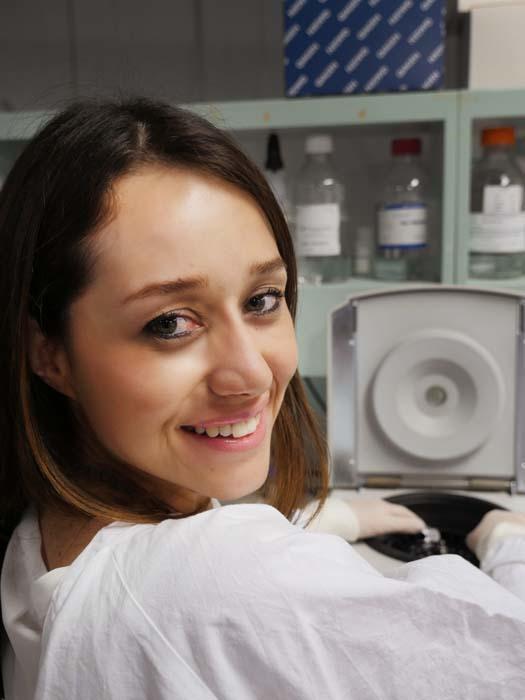
Centrifugation uses centrifugal force to separate lighter portions of a solution, mixture, or suspension from heavier portions. A centrifuge is the device that performs this process.
— Tietz Textbook of Laboratory Medicine, 7th Ed., p. 462
Clinical Uses of Centrifugation
- Remove cellular elements from blood → cell-free plasma or serum for analysis
- Concentrate cellular elements in biological fluids for microscopic examination or chemical analysis
- Remove chemically precipitated protein from an analytical specimen
- Separate bound from free ligand in immunochemical assays (e.g., RIA, ELISA)
- Extract solutes from aqueous to organic solvents
- Separate lipid components — e.g., remove chylomicrons from plasma; separate lipoproteins from one another
Types of Centrifuges
| Type | Key Features |
|---|---|
| Horizontal head (swinging bucket) | Tubes swing out to horizontal; good for density gradient work |
| Fixed-angle / angle-head | Tubes held at a fixed angle; faster sedimentation |
| High-speed centrifuges | Floor or undercounter models; portable versions available |
| Microcentrifuges | Compact bench-top; small-volume tubes |
| Refrigerated centrifuges | Temperature-controlled; prevents sample degradation |
| Ultracentrifuges | Up to 165,000 × g; requires refrigeration; used to clear chylomicrons from serum |
| Automatic balancing centrifuges | Self-balance rotors; used in total laboratory automation (TLA) |
A notable example of a fast-TAT centrifuge: the StatSpin Express 3 — fixed speed of 8,500 rpm, RCF of 4,440 × g, with 120–180 second spin cycles.
Principles: Relative Centrifugal Force (RCF)
RCF (expressed as multiples of gravity, e.g., 500 × g) is the correct measure of centrifuge performance:
RCF = 1.118 × 10⁻⁵ × r × rpm²
- r = radius in cm from center of rotation to tube bottom
- rpm = revolutions per minute
When switching to a rotor with a different radius, the equivalent rpm is:
rpm (alternate rotor) = 1000 × √(11.18 × r, alternate / RCF, original)
And the equivalent time:
Time (alternate rotor) = Time × RCF (original) / RCF (alternate)
Sedimentation time depends on: (1) rotor speed, (2) rotor radius, and (3) effective path length (liquid depth in tube).
Operating Principles
- Use only manufacturer-recommended tubes; polypropylene tubes generally withstand up to 5,000 × g
- Tubes should have a tapered bottom if supernatant removal is needed
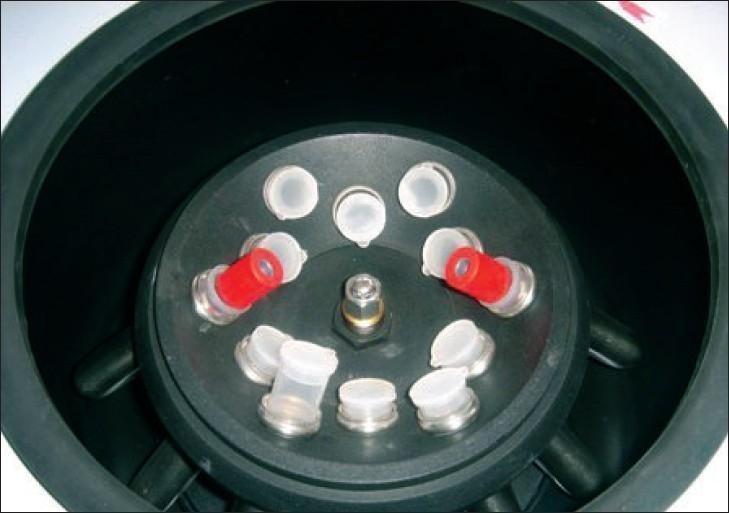
- Balance the rotor: weights on opposite sides must not differ by more than 1%
- Centrifuge blood tubes before opening — reduces aerosol risk when unstoppering
- Do not use a wooden applicator to dislodge clots — causes hemolysis
Quality Assurance
- Speed must be checked per manufacturer instructions; measured speed should not differ from rated speed by more than 5%
- Timer checked weekly against a reference stopwatch
- Every procedure requires a written specification: centrifuge type, temperature, g forces, and time
- Calibration of speed (rpm) and calculation of RCF are mandatory parts of QA
Safety & Maintenance
- Cleanliness minimizes spread of blood-borne pathogens (hepatitis viruses, etc.)
- Gray dust in the chamber → glass tube breakage → possible contamination → clean chamber immediately
- Inspect and replace broken-glass-embedded cushions to prevent repeat breakage
- Any spillage = potential blood-borne pathogen hazard
Important Pitfall: Recentrifugation of Gel Separator Tubes
Recentrifugation of gel separator tubes can cause pseudo-hyperkalemia: potassium leaks from the cellular layer into a new serum layer that forms under the gel during storage. When recentrifuged, this layer moves above the gel and falsely elevates potassium. The same phenomenon can cause pseudo-normokalemia in truly hypokalemic patients, and elevate LDH and free hemoglobin.
— Henry's Clinical Diagnosis and Management by Laboratory Methods
Sources:
- Tietz Textbook of Laboratory Medicine, 7th Edition, pp. 462–463
- Henry's Clinical Diagnosis and Management by Laboratory Methods
This is a shared conversation. Sign in to Orris to start your own chat.