
lets study brain tumor
Reading File
Before diving in, let me clarify the scope so I can give you the most useful study session.
Asking for Preferences
What aspect of brain tumors do you want to focus on? · What is your level / context?
Finding Sources
Finding Sources
Finding Sources
Finding Sources
Finding Sources
Finding Sources
Good — I'll now read the most content-rich sections in parallel: Harrison's brain tumor overview, Harrison's diffuse glioma & meningioma sections, Rosen's intracranial neoplasm, and Bradley & Daroff's comprehensive chapter.
Reading File
Reading File
Reading File
Excellent content loaded. Now reading Harrison's meningioma section and Bradley & Daroff's tumor details, plus searching for images and PubMed updates in parallel.
Reading File
Reading File
Searching Images
glioblastoma MRI brain tumor pathology histology
Searching PubMed
"brain tumor" classification management
Here is your comprehensive USMLE-level brain tumor study guide, synthesized from Harrison's (22nd ed.), Bradley & Daroff's Neurology, and Rosen's Emergency Medicine.
🧠 Brain Tumors — Complete USMLE Clinical Study Guide
1. EPIDEMIOLOGY & OVERVIEW
| Category | Key Facts |
|---|---|
| Most common primary brain tumor | Meningioma (~35% of all primary CNS tumors) |
| Most common malignant primary | Glioblastoma (GBM) |
| Most common overall (primary + secondary) | Metastases |
| Peak incidence of mets | Adults; lung > breast > melanoma > GI/renal |
| Most common in children | Medulloblastoma, pilocytic astrocytoma, ependymoma |
High-yield mnemonic for mets: "Let Black Man Ride Constantly" — Lung, Breast, Melanoma, Renal, Colon
2. WHO 2021 CLASSIFICATION (High-Yield)
The 2021 WHO Classification now integrates molecular markers alongside histology.
Adult-Type Diffuse Gliomas
| Tumor | Grade | Key Molecular Marker |
|---|---|---|
| Astrocytoma, IDH-mutant | 2, 3, or 4 | IDH mutation (no 1p/19q) |
| Oligodendroglioma, IDH-mutant | 2 or 3 | IDH mutation + 1p/19q co-deletion |
| Glioblastoma, IDH-wildtype | 4 | IDH wildtype; TERT promoter, EGFR amp, +7/−10 |
Pediatric-Type (also occur in adults)
- Diffuse intrinsic pontine glioma (DIPG) → now called Diffuse Midline Glioma, H3 K27-altered
Other Key Tumors
| Tumor | WHO Grade | Key Feature |
|---|---|---|
| Meningioma | I / II / III | Extra-axial, dural tail |
| Vestibular schwannoma | I | CN VIII, internal auditory canal |
| Medulloblastoma | 4 | Posterior fossa, children |
| Ependymoma | 2–3 | 4th ventricle (children), spinal cord (adults) |
| Craniopharyngioma | I | Rathke's pouch; bitemporal hemianopia |
| Pituitary adenoma | — | Sella turcica; hormone effects |
| Primary CNS lymphoma | — | Periventricular, EBV in immunocompromised |
3. HEREDITARY SYNDROMES (High-Yield for USMLE)
| Syndrome | Gene | Brain Tumor |
|---|---|---|
| NF1 | NF1/neurofibromin (chr 17) | Optic nerve glioma, astrocytoma |
| NF2 | NF2/merlin (chr 22) | Bilateral vestibular schwannomas, meningioma |
| Tuberous Sclerosis (TSC) | TSC1/TSC2 | Subependymal giant cell astrocytoma |
| VHL | VHL (chr 3) | Hemangioblastoma, retinal angioma |
| Li-Fraumeni | TP53 (chr 17) | Gliomas, medulloblastoma |
| Gorlin syndrome | PTCH1 (chr 9) | Medulloblastoma (desmoplastic) |
| Turcot syndrome | APC or MMR genes | Medulloblastoma (APC) or GBM (MMR) |
| Cowden syndrome | PTEN | Dysplastic cerebellar gangliocytoma |
4. CLINICAL PRESENTATION
General Features
- Headache in ~30% — typically dull, deep, worse with exertion/position change, may wake from sleep (10%)
- Classic triad (sleep disturbance + severe HA + N/V) is seen in a minority only
- Posterior fossa tumors: vomiting may precede headache by weeks
- Focal deficits: contralateral weakness/sensory loss, aphasia, visual field defects
- Seizures: often the presenting feature, especially with cortical/temporal tumors
- Personality/cognitive changes: frontal lobe involvement
- Increased ICP: headache worse with Valsalva (cough, sneeze, bending), papilledema, CN VI palsy (false localizing sign)
Localizing Clues
| Location | Presentation |
|---|---|
| Frontal | Personality changes, contralateral weakness, aphasia (dominant) |
| Temporal | Memory problems, upper quadrantanopia, Wernicke's aphasia |
| Parietal | Contralateral sensory/visual loss, neglect (non-dominant) |
| Occipital | Contralateral homonymous hemianopia |
| Posterior fossa/cerebellum | Ataxia, N/V, hydrocephalus |
| Sella/suprasellar | Bitemporal hemianopia, endocrine dysfunction |
| CPA | CN VIII (hearing loss, tinnitus, vertigo) |
5. SPECIFIC TUMOR PROFILES
🔴 Glioblastoma Multiforme (GBM) — Grade IV
Most common malignant primary brain tumor in adults.
- Location: Supratentorial (often temporal/frontal), can spread across corpus callosum → "butterfly glioma"
- Histology: Pseudopalisading necrosis, microvascular proliferation (endothelial hyperplasia), nuclear pleomorphism
- MRI: Ring-enhancing lesion with central necrosis, surrounding vasogenic edema
- Molecular: IDH-wildtype; EGFR amplification; TERT promoter mutation; loss of chr 10q
- MGMT methylation: Predicts better response to temozolomide (TMZ)
- Treatment: Maximal safe resection → concurrent RT + temozolomide (Stupp protocol) → adjuvant TMZ
- Prognosis: Median survival ~15 months with treatment; ~5% survive 5 years
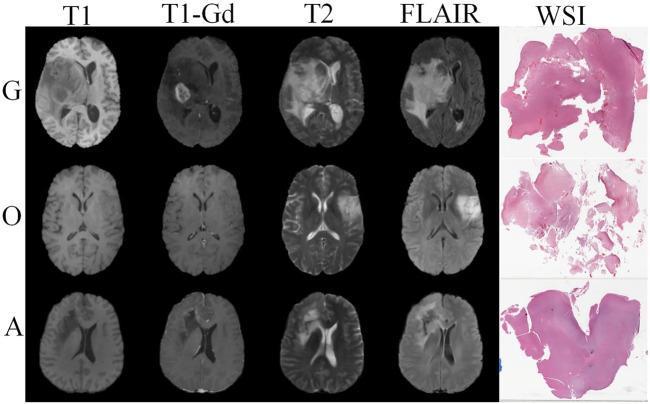
🟡 Oligodendroglioma — Grade 2–3
- Classic marker: IDH mutation + 1p/19q co-deletion
- Slow-growing; often presents with seizures in a young adult
- MRI: Cortical/subcortical, calcifications (50%), frontal lobe predilection
- Treatment: Surgery; chemotherapy (PCV — procarbazine, CCNU, vincristine) + RT for higher-grade
- Prognosis: Best among diffuse gliomas; median OS ~12–14 years (grade 2)
🟠 IDH-Mutant Astrocytoma — Grade 2–4
- IDH mutation without 1p/19q co-deletion
- Grade 4 IDH-mutant astrocytoma ≠ GBM (different entity with better prognosis than GBM)
- CDKN2A/B homozygous deletion → upstages to grade 4
- Treatment: Surgery → RT + chemotherapy (temozolomide)
🔵 Meningioma
Most common primary brain tumor overall.
- Origin: Dura mater — arachnoidal (meningothelial) cap cells
- Location: Cerebral convexities (parasagittal), skull base, spinal cord dorsum
- MRI hallmarks: Densely enhancing extra-axial mass + dural tail sign; no surrounding edema unless large
- Histology: Whorled pattern + psammoma bodies (calcifications)
- Molecular: NF2 mutation (chr 22) most common; TRAF7, KLF4, AKT1, SMO mutations in non-NF2
- WHO grades: I (benign, 92%) / II atypical (6%) / III malignant (2%)
- Risk factors: Female sex, NF2, prior cranial irradiation, increasing age
- Treatment:
- Incidental/asymptomatic small → observe with serial MRI
- Symptomatic or growing → surgical resection (curative if complete for grade I)
- Incomplete resection or recurrence → external beam RT or stereotactic radiosurgery (SRS)
- Chemotherapy/hormonal therapy: unproven (despite estrogen/progesterone receptor expression)
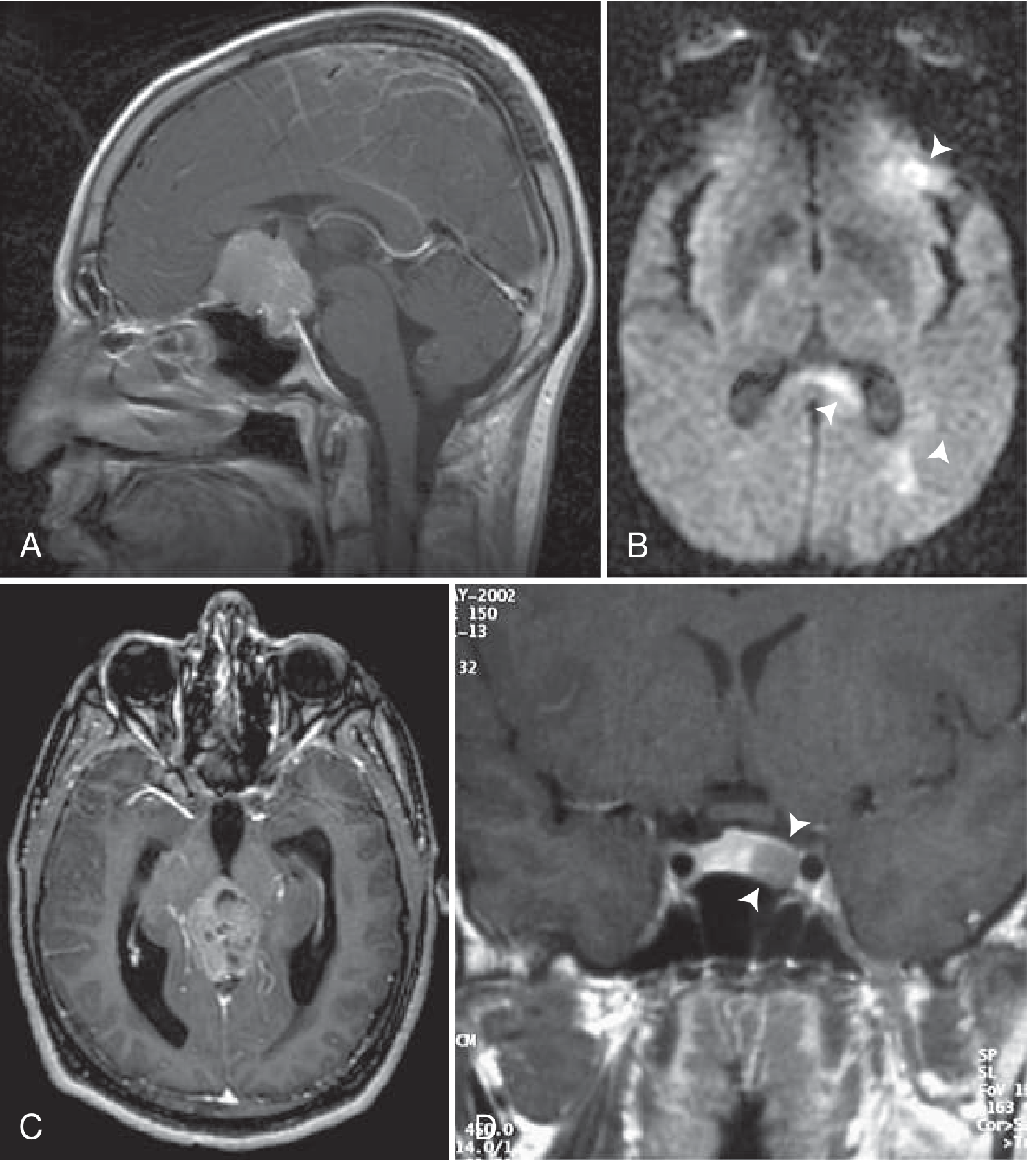
🟢 Vestibular Schwannoma (Acoustic Neuroma)
- Origin: Schwann cells of vestibular portion of CN VIII
- ~9% of primary brain tumors
- Bilateral = pathognomonic for NF2
- Presentation: Progressive unilateral hearing loss, tinnitus, vertigo; late → brainstem/cerebellar compression
- MRI: Densely enhancing lesion, widens internal auditory canal, extends to cerebellopontine angle (CPA)
- Treatment: Observation / SRS (Gamma Knife) / microsurgical resection
🟣 Medulloblastoma
- Most common malignant brain tumor in children
- Location: Posterior fossa — cerebellar vermis → obstructive hydrocephalus
- Presentation: Truncal ataxia, hydrocephalus, morning vomiting, papilledema
- Spreads: CSF seeding (leptomeningeal); must do spine MRI + lumbar CSF
- Molecular subgroups (WHO 2021): WNT-activated (best prognosis), SHH-activated, non-WNT/non-SHH (Groups 3, 4)
- Gorlin syndrome: PTCH1 mutation → desmoplastic medulloblastoma
- Treatment: Surgical resection + craniospinal RT + chemotherapy
⚪ Craniopharyngioma
- Origin: Rathke's pouch remnant (adamantinomatous type) — suprasellar
- Affects children AND adults (bimodal peak: 5–14 yr, 50–74 yr)
- Presentation: Bitemporal hemianopia (optic chiasm compression), growth retardation, diabetes insipidus, hypopituitarism
- Imaging: Suprasellar calcification + cystic component (characteristic "motor oil" cysts)
- Treatment: Surgery ± RT; often complicated by endocrine deficits post-op
⚫ Primary CNS Lymphoma (PCNSL)
- Immunocompromised (HIV/AIDS, organ transplant): EBV-driven, often multifocal
- Immunocompetent: DLBCL subtype; solitary periventricular lesion
- MRI: Homogeneous enhancement (vs. ring-enhancing in GBM); periventricular
- Key diagnostic clue: Lesion disappears with steroids ("ghost tumor") — avoid steroids before biopsy
- Treatment: High-dose methotrexate-based chemotherapy ± whole brain RT
- Do NOT treat with steroids first — it will yield a non-diagnostic biopsy
🔴 Brain Metastases
- Most common intracranial malignancy
- Sources: Lung (most common overall), breast, melanoma, renal cell, colon
- Melanoma and renal cell: most likely to be hemorrhagic
- Multiple lesions: Strongly suggests mets over primary tumor
- Location: Gray-white junction (hematogenous spread)
- MRI: Ring-enhancing, surrounded by vasogenic edema; often multiple
- Treatment: Whole brain RT, SRS (for limited lesions), surgery (single accessible met), targeted therapy if driver mutation (e.g., EGFR in NSCLC, BRAF in melanoma)
6. DIAGNOSIS
Neuroimaging
| Feature | Suggests |
|---|---|
| Ring-enhancing + necrosis + butterfly pattern | GBM |
| Ring-enhancing + multiple lesions | Mets or PCNSL |
| Ring-enhancing + immunocompromised | Toxoplasmosis (1st), PCNSL, abscess |
| Extra-axial + dural tail | Meningioma |
| Posterior fossa + child + hydrocephalus | Medulloblastoma |
| Suprasellar + calcification + cysts | Craniopharyngioma |
| CPA mass + CN VIII symptoms | Schwannoma |
| Periventricular + homogeneous enhancement | PCNSL |
- CT: Quick screen; good for calcifications and hemorrhage
- MRI with gadolinium: Gold standard — identifies blood-brain barrier breakdown (enhancement)
- MR spectroscopy: ↑ choline, ↓ NAA → favors high-grade tumor; presence of lipid/lactate peak → necrosis
- Perfusion MRI (rCBV): Higher in high-grade gliomas
- PET: Distinguishes tumor recurrence vs. radiation necrosis
CSF
- Indicated for leptomeningeal spread (medulloblastoma, PCNSL, mets)
- Cytology: malignant cells in carcinomatous meningitis
- Contraindicated with elevated ICP/mass effect (herniation risk)
7. MANAGEMENT OVERVIEW
Acute Management
- Dexamethasone: First-line for vasogenic edema (↓ VEGF-driven permeability) — dramatic temporary relief
- Seizures: Levetiracetam (preferred); phenytoin no longer recommended prophylactically
- Elevated ICP: Elevate HOB 30°, mannitol/hypertonic saline, hyperventilation (bridge), VP shunt if hydrocephalus
Definitive Treatment
| Modality | Role |
|---|---|
| Surgery | Maximal safe resection for most tumors; curative for grade I meningioma/schwannoma |
| Radiotherapy (RT) | Standard for high-grade gliomas, mets, recurrent meningioma |
| SRS (Gamma Knife) | Limited brain mets (≤4), schwannoma, small meningioma |
| Temozolomide (TMZ) | Alkylating agent for GBM (concurrent + adjuvant with RT) |
| PCV chemotherapy | Oligodendroglioma, IDH-mutant astrocytoma |
| Methotrexate | PCNSL (high-dose IV) |
| Bevacizumab | Anti-VEGF; used in recurrent GBM |
| BRAF/VEGF/EGFR inhibitors | Targeted therapy for specific mets or BRAF-mutant tumors |
8. HIGH-YIELD USMLE MNEMONICS & ONE-LINERS
| Clue | Answer |
|---|---|
| Butterfly lesion crossing corpus callosum | GBM |
| Ring-enhancing + HIV, toxo titers negative | PCNSL → biopsy |
| Disappears with steroids, then returns | PCNSL ("ghost tumor") |
| Bilateral acoustic neuromas | NF2 |
| Optic nerve glioma + café-au-lait spots | NF1 |
| Posterior fossa tumor + hydrocephalus + child | Medulloblastoma |
| Suprasellar calcification + bitemporal hemianopia | Craniopharyngioma |
| Dural tail sign + whorls + psammoma bodies | Meningioma |
| 1p/19q co-deletion + IDH mutation | Oligodendroglioma |
| MGMT methylation → better TMZ response | GBM |
| Morning vomiting before headache | Posterior fossa tumor (↑ICP) |
| Melanoma / RCC → hemorrhagic brain mets | Melanoma, RCC most hemorrhagic |
9. PEDIATRIC vs. ADULT — LOCATION RULE
- Adults: Supratentorial (cerebral hemispheres) — most primary and metastatic tumors
- Children: Infratentorial (posterior fossa) — medulloblastoma, pilocytic astrocytoma, ependymoma (4th ventricle), DIPG
10. RECENT UPDATES (2024–2025)
- ESTRO-EANO 2025 guideline (PMID 39454886): Updated radiotherapy target delineation for IDH-mutant WHO grade 2–3 diffuse gliomas — incorporates FLAIR-based contouring
- WHO 2021 CNS classification fully adopted: Molecular profiling (IDH, 1p/19q, MGMT, H3 K27) is now standard of care and required for definitive grading
- GBM molecular advances (PMID 40542948): TTFields (tumor-treating fields) now part of standard GBM management; trials ongoing with checkpoint inhibitors and CAR-T
Sources: Harrison's Principles of Internal Medicine 22E (2025), Bradley & Daroff's Neurology in Clinical Practice, Rosen's Emergency Medicine, ROSEN's Emergency Medicine, Adams & Victor's Principles of Neurology
---That's your complete USMLE-level brain tumor guide. Here's what's covered:
10 sections covering the full picture:
- Epidemiology — what's most common and when
- WHO 2021 Classification — the molecular-based system you must know
- Hereditary syndromes — NF1/2, TSC, VHL, Li-Fraumeni, etc.
- Clinical presentation — by general features and location
- Individual tumor profiles — GBM, oligodendroglioma, meningioma, schwannoma, medulloblastoma, craniopharyngioma, PCNSL, and brain mets
- Diagnosis — imaging patterns, MRI features, CSF
- Management — acute (dexamethasone, seizure control) + definitive (surgery/RT/chemo)
- USMLE mnemonics — one-liner pattern recognition table
- Peds vs. adult location rule
- 2024–2025 updates — WHO 2021, TTFields, new RT guidelines
Let me know if you want to go deeper on any specific tumor type, do practice questions, or cover a related topic (e.g., spinal cord tumors, pituitary adenomas, or paraneoplastic syndromes).
lets study neurocysticeercosis from nelson pediatrics mainly lets make it crisp conscise yet conceptual for mbbs level
Reading File
Finding Sources
Finding Sources
Finding Sources
Nelson's isn't in the library, but Red Book (AAP) and Harriet Lane are. I'll pull the best available sources — Red Book (pediatric infectious disease), plus Bradley & Daroff, Tintinalli, Washington Manual, and Katzung for complete coverage — and frame everything at MBBS level.
Finding Sources
Reading File
Reading File
Reading File
Reading File
Reading File
Searching Images
neurocysticercosis MRI CT brain cyst scolex calcification
Excellent — rich content loaded. Now synthesizing the crisp, conceptual MBBS-level guide.
🪱 Neurocysticercosis (NCC) — Crisp MBBS Study Notes
Note: Nelson's Textbook of Pediatrics is not in the library, but the content below is compiled from equivalent authoritative pediatric-infectious-disease sources (Red Book principles, Bradley & Daroff, Grainger & Allison diagnostic radiology, Tintinalli, IDSA 2018 guidelines) — all directly relevant to MBBS/pediatric level.
1. THE CONCEPT IN ONE LINE
NCC = CNS infection by larval stage (cysticercus) of the pork tapeworm Taenia solium → most common parasitic cause of epilepsy worldwide.
2. LIFECYCLE — THE KEY TO UNDERSTANDING EVERYTHING
PORK TAPEWORM (Taenia solium)
         ↓
  TWO ways to get infected:

① TAENIASIS (intestinal worm):
   Eat undercooked PORK with larvae (cysticerci)
   → Adult worm lives in human gut → eggs passed in feces
   → Person is a DEFINITIVE HOST

② CYSTICERCOSIS / NCC:
   Ingest T. solium EGGS (feco-oral route / contaminated food/water)
   → Eggs hatch → oncospheres → penetrate gut wall
   → Hematogenous spread to BRAIN, muscle, eye, skin
   → Form CYSTICERCI (larvae with scolex)
   → Person is an INTERMEDIATE HOST
Key concept: You get NCC from eggs (not from eating pork). You can get it from a tapeworm carrier in your household even if you're vegetarian!
3. EPIDEMIOLOGY
| Feature | Detail |
|---|---|
| Distribution | Latin America, India, Sub-Saharan Africa, SE Asia |
| Most common cause of | Secondary (provoked) epilepsy in developing world |
| Estimated global burden | ~1 million epilepsy cases due to NCC |
| Risk factor | Poor sanitation, open defecation, eating with tapeworm carriers |
| In children | Same mechanism; may present with encephalitic form (diffuse cysts + edema) |
4. PATHOLOGY — 4 STAGES OF THE CYST
This is the most important concept. Symptoms depend on which stage the cyst is in.
| Stage | What's Happening | Imaging | Symptoms |
|---|---|---|---|
| 1. Vesicular | Viable larva, host tolerates it | Thin-walled cyst, CSF-like fluid, scolex dot ("hole with dot") — NO edema, NO enhancement | Often asymptomatic |
| 2. Colloidal Vesicular | Larva begins dying → immune reaction | Ring-enhancing cyst + perilesional edema | Seizures, headache, ↑ ICP |
| 3. Granular Nodular | Larva dead, cyst collapses | Thick enhancing wall, more edema | Seizures, focal deficits |
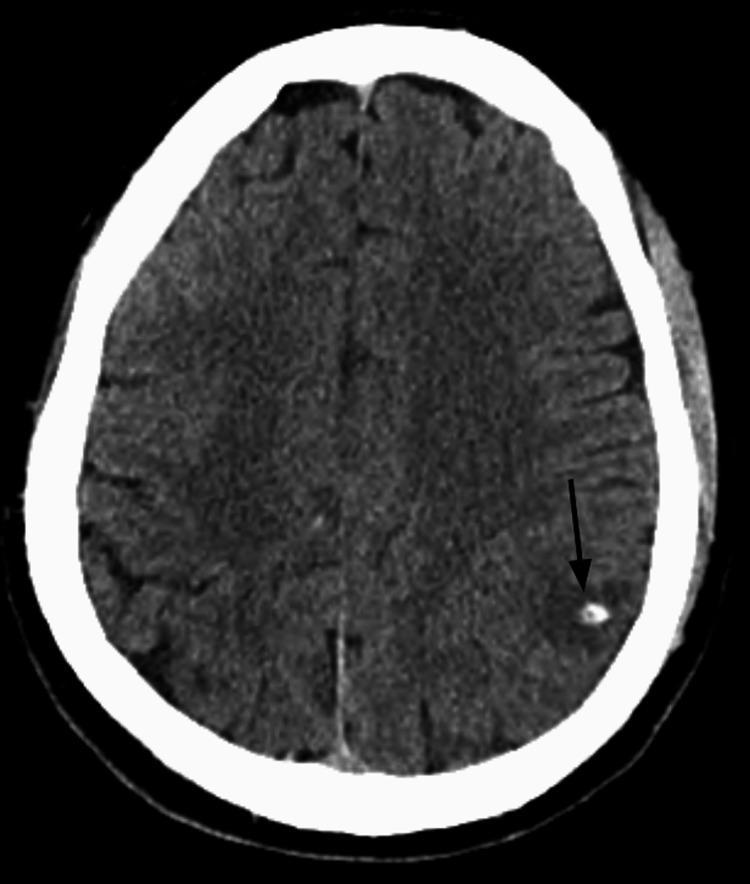
| 4. Calcified Nodular | End-stage scar | Calcified nodule on CT, no enhancement | May trigger seizures even years later |
USMLE/MBBS pearl: Most seizures occur at stages 2 & 3 — when the dying larva triggers the inflammatory cascade. 80–90% of single lesions resolve in 3–6 months.
5. FORMS OF NCC
| Form | Location | Notes |
|---|---|---|
| Parenchymal (most common) | Brain parenchyma | Seizures, headache |
| Intraventricular | 4th ventricle most common | Obstructive hydrocephalus |
| Subarachnoid / Racemose | Basal cisterns | Meningitis-like, chronic hydrocephalus, worst prognosis |
| Cysticercotic Encephalitis | Diffuse | Multiple cysts + massive cerebral edema; seen in children & young women; AVOID antiparasitics acutely |
| Spinal | Spinal cord | Radiculopathy, myelopathy |
| Ocular | Vitreous, subretinal | Visual loss — surgical emergency |
6. CLINICAL FEATURES
Seizures — #1 presentation (50–70%); typically new-onset focal seizures in someone from endemic area
- Usually simple partial (focal) with secondary generalization
- Occur as cyst degenerates (stages 2–3)
Headache — raised ICP (especially intraventricular/subarachnoid form)
Hydrocephalus — cyst obstructs CSF flow at 4th ventricle or aqueduct
Focal neurological deficits — hemiplegia, visual changes depending on location
Chronic meningitis — basal/subarachnoid form
Encephalitic form (children) — diffuse cysts → massive edema → RICP, coma; corticosteroids are critical, antiparasitics contraindicated acutely
7. DIAGNOSIS
Imaging (cornerstone)
CT scan (non-contrast):
- Calcified lesions (end-stage) — hyperdense dots
- Cystic hypodense lesions ± scolex
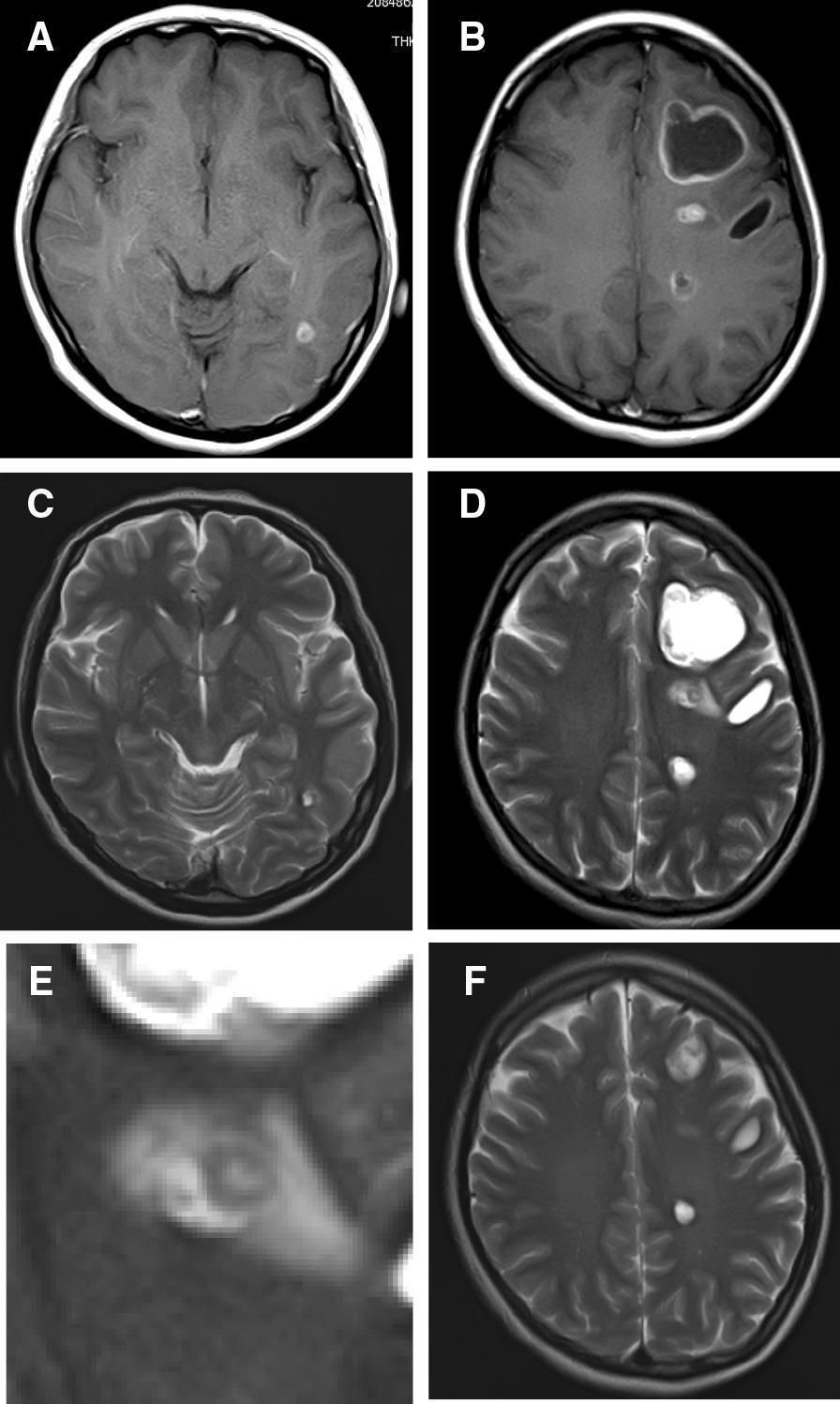
MRI (superior for active lesions):
- "Hole with dot" sign = cyst + scolex = pathognomonic
- Ring-enhancing lesions with perilesional edema in colloidal stage
- FLAIR: scolex appears hyperintense
- Identifies all 4 stages clearly
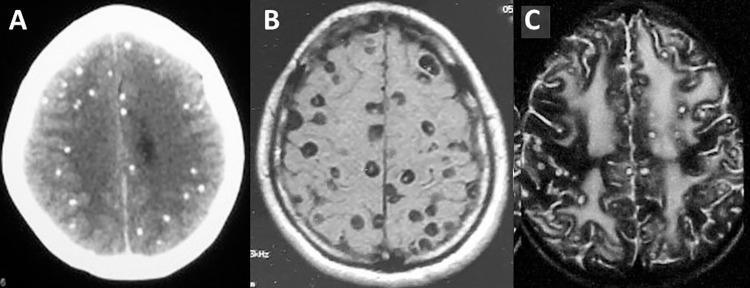
Serology
- EITB (Enzyme-Linked Immunoelectrotransfer Blot) on serum — most specific (~99%)
- Less sensitive with single/calcified cysts
- CSF ELISA also used
CSF
- May show eosinophilia, elevated protein, low glucose (basal form)
- Rarely needed; lumbar puncture contraindicated if ↑ ICP
Del Brutto Diagnostic Criteria (2017 IDSA/ASTMH)
- Absolute criterion: Histopathology OR cyst with scolex on imaging
- Major criteria: Imaging lesions compatible with NCC + positive serology
- Minor criteria: Hydrocephalus, enhancement, clinical features, exposure history
8. TREATMENT
Framework: Match treatment to stage + form + number
| Situation | Treatment |
|---|---|
| Single enhancing lesion (most common in India/children) | Albendazole × 1–2 weeks + steroids; AEDs for seizure control |
| 1–2 viable parenchymal cysts | Albendazole monotherapy + steroids |
| >2 viable parenchymal cysts | Albendazole + Praziquantel (combination) + steroids |
| Calcified cysts only | No antiparasitic (dead larvae); AEDs if seizures persist |
| Cysticercotic encephalitis | Steroids only — NO antiparasitics (will worsen edema) |
| Intraventricular cyst | Neuroendoscopic removal (3rd/lateral ventricle); surgery/shunt (4th ventricle) |
| Subarachnoid/Racemose | Prolonged albendazole ± praziquantel + steroids + shunt if hydrocephalus |
| Ocular cysticercosis | Surgical removal (antiparasitics worsen inflammation) |
Drug Details
| Drug | Dose | Mechanism |
|---|---|---|
| Albendazole | 15 mg/kg/day ÷ 2 doses × 8–28 days | Better CNS penetration; preferred |
| Praziquantel | 50–100 mg/kg/day ÷ 3 doses | Disrupts tegument; less penetration than albendazole |
| Dexamethasone / Prednisolone | Always with antiparasitics | Reduces inflammatory edema from dying larvae |
| AEDs (levetiracetam, carbamazepine) | For seizure control | Not indefinite unless seizures persist |
Why steroids with antiparasitics? Killing the larvae triggers a surge of host inflammation → can cause cerebral edema, increased ICP, paradoxical worsening. Steroids blunt this.
Albendazole > Praziquantel because praziquantel levels are reduced by dexamethasone and by coadministration with antiepileptics (enzyme induction).
9. SINGLE ENHANCING LESION (SEL) — High-yield for India/Pediatrics
- Most common presentation in India and pediatric patients
- 1–2 cm ring-enhancing or disc-enhancing lesion on CT/MRI
- Differential: NCC vs. tuberculoma (both common in India!)
- NCC favored if: scolex visible, no basal meningeal enhancement, EITB positive
- Tuberculoma favored if: satellite lesions, basal enhancement, contact with TB
- SEL resolves in 80–90% within 3–6 months with albendazole + steroids
10. COMPLICATIONS
| Complication | Mechanism |
|---|---|
| Epilepsy (most common) | Perilesional gliosis + calcification → seizure focus |
| Obstructive hydrocephalus | Intraventricular cyst blocking CSF flow |
| Communicating hydrocephalus | Basal arachnoiditis → impaired CSF reabsorption |
| Stroke | Vasculitis from basal NCC → lacunar infarcts |
| Cysticercotic encephalitis | Massive immune response to dying larvae |
| Cognitive decline | Chronic multiple lesion disease |
11. PREVENTION
- Proper cooking of pork (>65°C destroys cysticerci)
- Handwashing and good hygiene (breaks feco-oral transmission of eggs)
- Sanitation — toilet access, no open defecation
- Mass drug administration: albendazole/praziquantel in endemic areas (experimental)
- Porcine vaccination: Ox-fax vaccine against T. solium in pigs
12. MEMORY HOOKS
| Hook | Fact |
|---|---|
| "Hole with dot" | Cyst + scolex on imaging = pathognomonic |
| Vegetarian can get NCC | From eggs, not pork |
| Seizures when larva dies, not when alive | Immune response at colloidal/granular stage |
| Steroids alone in encephalitic form | Antiparasitics worsen edema |
| Albendazole > Praziquantel | Better CNS penetration + not antagonized by steroids |
| Calcified = no antiparasitics | Dead parasite; treat seizures symptomatically |
| Ocular & intraventricular = surgery | Antiparasitics dangerous in eye; endoscopy for ventricles |
| India = SEL + TB differential | Must distinguish NCC from tuberculoma |
Sources: Bradley & Daroff's Neurology in Clinical Practice; Grainger & Allison's Diagnostic Radiology; Tintinalli's Emergency Medicine; Washington Manual of Medical Therapeutics; IDSA/ASTMH 2018 Clinical Practice Guidelines for NCC
Let me know if you want to go deeper on any section — lifecycle diagram, differential of ring-enhancing lesions, pediatric encephalitic form, or practice MCQs on NCC!
This is a shared conversation. Sign in to Orris to start your own chat.