
Pseudo hypo parathyroid
Reading File
Searching for comprehensive information on pseudohypoparathyroidism across its pathophysiology, clinical features, diagnosis, and management.
search_medical_text
pseudohypoparathyroidism pathophysiology types clinical features
Harrison's Principles of Internal Medicine, Twenty First Edition
Page 14899
search_medical_text
pseudohypoparathyroidism diagnosis management treatment Albright hereditary osteodystrophy
Harrison's Principles of Internal Medicine, Twenty First Edition
Page 11614
GradeResponse
GradeResponse
Good start. Let me get more detailed content on the full picture.
search_medical_text
pseudohypoparathyroidism type 1a 1b 2 GNAS mutation PTH resistance hypocalcemia
search_medical_image
pseudohypoparathyroidism Albright hereditary osteodystrophy features brachydactyly
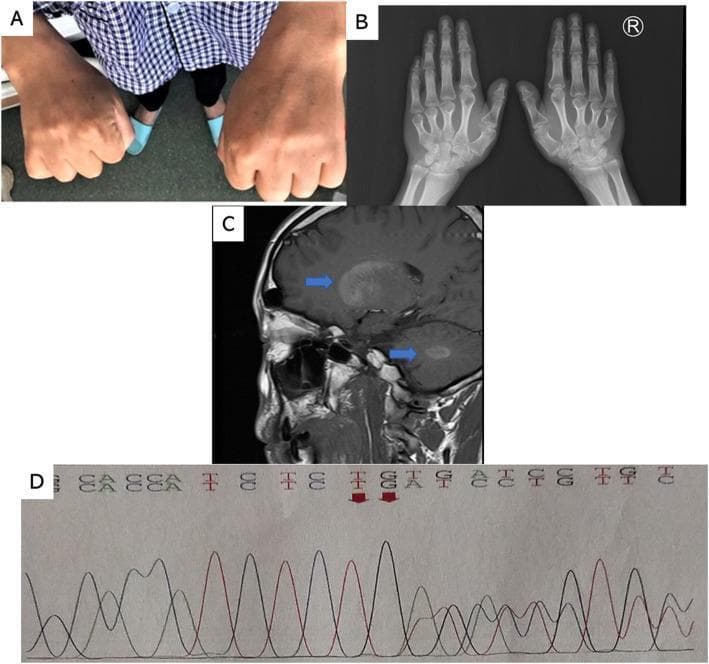
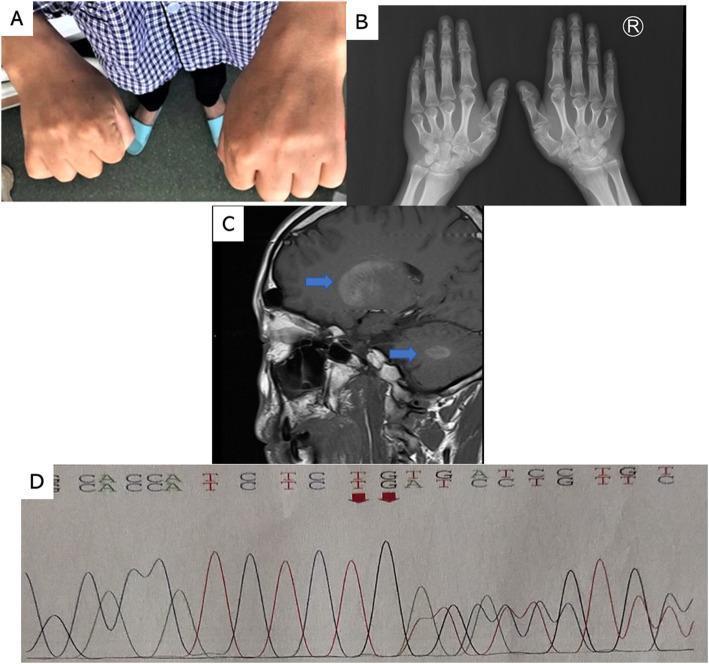
Hugging Face pmc clinical VQA raw
Page 0
GradeResponse
Here is a comprehensive overview of Pseudohypoparathyroidism (PHP):
Pseudohypoparathyroidism (PHP)
Definition
PHP is a group of inherited endocrine disorders characterized by end-organ resistance to parathyroid hormone (PTH) — unlike true hypoparathyroidism, where PTH is deficient. In PHP, PTH levels are elevated (or high-normal), yet the kidney and other target tissues fail to respond appropriately, resulting in hypocalcemia and hyperphosphatemia.
Pathophysiology
The defect lies in the PTH receptor signaling cascade:
- PTH binds its receptor (PTH1R) → activates Gs-alpha (Gsα) protein → stimulates adenylyl cyclase → generates cAMP → downstream effects (phosphaturia, 1,25-OH₂D production, calcium reabsorption)
- In PHP, a mutation or imprinting defect in the GNAS gene (encoding Gsα) impairs this cascade
- Failure to produce 1,25(OH)₂D → impaired intestinal calcium absorption
- Impaired phosphate excretion → hyperphosphatemia
- Result: hypocalcemia despite elevated PTH
Classification
| Type | Mechanism | AHO Features | PTH Resistance | Other Hormone Resistance |
|---|---|---|---|---|
| PHP Type Ia (PHP1A) | Heterozygous loss-of-function GNAS mutation (maternal allele) | Present | Yes | TSH, LH/FSH, GHRH resistance also |
| PHP Type Ib (PHP1B) | Imprinting defect at GNAS locus (methylation abnormality) | Absent | Yes | Primarily PTH; sometimes mild TSH |
| PHP Type Ic | Gsα activity normal in vitro but AHO phenotype present | Present | Yes | Similar to Ia |
| PHP Type II | Normal urinary cAMP response to PTH but no phosphaturia | Absent | Partial (post-cAMP defect) | Usually isolated |
| Pseudopseudohypoparathyroidism (PPHP) | GNAS mutation (paternal allele) | Present | No | None |
Key distinction: In PHP1A, the mutated allele is maternally inherited (GNAS is imprinted — only maternal allele expressed in kidneys). In PPHP, the paternal allele is mutated → AHO features but normal calcium/phosphate metabolism.
Albright's Hereditary Osteodystrophy (AHO)
AHO is the somatic phenotype seen in PHP1A and PPHP:
- Brachydactyly — shortened 4th and 5th metacarpals/metatarsals (most characteristic)
- Short stature
- Obesity
- Round facies
- Subcutaneous ossifications (ectopic bone)
- Developmental delay / intellectual disability
- Dental anomalies
Clinical Features of Hypocalcemia in PHP
- Neuromuscular irritability: tetany, Chvostek's sign, Trousseau's sign
- Perioral and peripheral paresthesias
- Carpopedal spasm
- Seizures (in severe hypocalcemia)
- Prolonged QT interval on ECG
- Cataracts (chronic)
- Basal ganglia calcification (Fahr's syndrome-like appearance on CT/MRI)
Biochemical Profile
| Parameter | PHP | True Hypoparathyroidism |
|---|---|---|
| Serum Ca²⁺ | Low | Low |
| Serum PO₄ | High | High |
| PTH | Elevated | Low/undetectable |
| Urinary cAMP | Low/no rise after PTH | Rises normally |
| 1,25(OH)₂D | Low | Low |
| Magnesium | Normal | Check (hypoMg → ↓PTH) |
Diagnosis
- Biochemistry: Hypocalcemia + hyperphosphatemia + elevated PTH (confirms resistance, not deficiency)
- Ellsworth-Howard Test (historical): Exogenous PTH infusion → measure urinary cAMP and phosphate
- PHP1: blunted cAMP and phosphate response
- PHP2: normal cAMP but blunted phosphaturia
- GNAS molecular genetics: Sequencing for mutations/methylation defects
- Imaging: Hand X-ray (metacarpal shortening), brain CT (basal ganglia calcification), DXA (bone density)
- TSH/LH/FSH/IGF-1: Screen for multi-hormone resistance in PHP1A
Management
Hypocalcemia
- Calcium supplementation: Oral calcium carbonate or citrate (1–3 g elemental calcium/day)
- Active vitamin D (calcitriol): 0.25–2 µg/day — critical since 1α-hydroxylation is impaired
- Monitor: serum calcium, urine calcium/creatinine ratio (hypercalciuria risk)
- Acute tetany: IV calcium gluconate (10 mL of 10% solution slowly)
Multi-hormone resistance (PHP1A)
- Hypothyroidism: Levothyroxine replacement (TSH resistance common)
- Growth hormone deficiency: GH therapy if documented (GHRH resistance)
- Hypogonadism: Sex hormone replacement if indicated
AHO features
- No specific treatment for brachydactyly or short stature beyond GH therapy
- Weight management for obesity
- Subcutaneous ossifications: surgical excision if symptomatic
Key Pearls
- PHP is the only condition where PTH is high yet the patient is hypocalcemic and hyperphosphatemic — distinguish from vitamin D deficiency (phosphate is typically low/normal)
- PPHP has AHO features but normal calcium — same GNAS mutation, different parental origin (imprinting)
- Always check TSH in PHP1A — subclinical hypothyroidism is common and often overlooked
- Hypomagnesemia can mimic PHP by impairing PTH secretion AND causing PTH resistance — always check Mg²⁺ first
- Brain CT may show basal ganglia calcification due to chronic hypocalcemia
Sources: Harrison's Principles of Internal Medicine, 21st Edition (pp. 11614, 3188–3190)
This is a shared conversation. Sign in to Orris to start your own chat.