
If a person eats 6 banana and 1 dragon fruit in a day what will happen for days
excessive banana consumption health effects potassium sugar daily intake
dragon fruit nutritional benefits health effects daily consumption
Nutritional Load Per Day (Estimated)
| Nutrient | 6 Bananas | 1 Dragon Fruit | Daily Total |
|---|---|---|---|
| Calories | ~540 kcal | ~60 kcal | ~600 kcal |
| Carbohydrates | ~138 g | ~13 g | ~151 g |
| Natural Sugar | ~74 g | ~8 g | ~82 g |
| Potassium | ~2,700 mg | ~200 mg | ~2,900 mg |
| Fiber | ~18 g | ~3 g | ~21 g |
| Vitamin C | ~62 mg | ~9 mg | ~71 mg |
| Magnesium | ~180 mg | ~18 mg | ~198 mg |
What Happens Over Days — Effects by System
✅ Positive Effects
- Heart & Blood Pressure: Potassium intake of ~2,900 mg/day aligns closely with the WHO recommended >3,500 mg/day and has a well-documented blood pressure-lowering effect (Management of Elevated Blood Pressure and Hypertension, p. 44). This reduces cardiovascular disease (CVD) risk, especially in women.
- Digestive Health: ~21 g of dietary fiber per day meets or approaches the recommended daily intake (25–38 g). This promotes healthy bowel movements and feeds beneficial gut bacteria.
- Energy: Bananas are rich in fast and slow-release carbohydrates (glucose, fructose, starch), providing sustained energy throughout the day.
- Immunity: Vitamin C (~71 mg) supports immune function and antioxidant defense. Dragon fruit also contains betalains and flavonoids with anti-inflammatory properties.
- Muscle Function: Magnesium and potassium together support nerve transmission and muscle contraction, reducing cramp risk.
- Prebiotic Effect: Dragon fruit contains oligosaccharides that act as prebiotics, supporting a healthy gut microbiome.
⚠️ Risks & Negative Effects Over Time
1. High Sugar Intake (~82 g/day)
- Raises blood glucose levels — concerning for people with prediabetes or Type 2 diabetes
- May contribute to insulin resistance over time
- Increases risk of dental caries (tooth decay) from fructose exposure
- Can promote weight gain if total caloric intake exceeds expenditure
2. Caloric Surplus Risk
3. Potassium Overload (in vulnerable individuals)
- In people with chronic kidney disease (CKD), consuming ~2,900 mg from fruit alone can cause hyperkalemia (dangerous high blood potassium), risking cardiac arrhythmias. CKD guidelines recommend restricting potassium to <2,400 mg/day (p. 44, ibid.)
- Symptoms of early hyperkalemia: muscle weakness, fatigue, irregular heartbeat
4. Nutrient Imbalance
- Protein (only ~8 g total from 6 bananas)
- Fat-soluble vitamins (A, D, E, K)
- Iron, Zinc, Calcium, B12
5. Digestive Discomfort
Summary by Timeframe
| Timeframe | What Happens |
|---|---|
| Day 1–3 | Energy boost, good digestion, possible mild bloating |
| Week 1–2 | Improved bowel regularity, steady energy; sugar load starts affecting glucose levels |
| Month 1 | Possible weight gain if caloric surplus; dental enamel may be at risk from daily sugar |
| 3+ Months | Risk of insulin resistance, nutritional gaps (protein, fat-soluble vitamins, minerals); hyperkalemia risk in kidney disease patients |
Bottom Line
Is it can reduce fats
banana dragon fruit fat burning weight loss mechanisms
dietary fiber fruit fructose fat reduction metabolism
Can 6 Bananas + 1 Dragon Fruit Reduce Fat?
❌ It Will NOT Directly Burn Fat
What the Science Says
🔴 High Fructose = Fat Risk, Not Fat Loss
"Increased fructose consumption is associated with fibrosis severity... avoidance of simple sugars and fructose consumption should be emphasized."
- Is processed primarily in the liver, where it can be converted directly into fat (triglycerides)
- Causes postprandial hypertriglyceridemia (elevated blood fat after eating)
- Is linked to insulin resistance, which promotes fat storage, especially around the belly
✅ Fiber Can Help — But Only Partially
| Component | Fat-Reduction Effect |
|---|---|
| Dietary fiber (~21 g/day) | Slows sugar absorption, reduces hunger, lowers LDL cholesterol slightly |
| Resistant starch (in unripe bananas) | Feeds gut bacteria, improves insulin sensitivity modestly |
| Dragon fruit betalains | Mild antioxidant/anti-inflammatory effect, no direct fat burning |
| Potassium & magnesium | Supports metabolism, but no direct fat loss |
Net Effect on Body Fat
| Scenario | Result |
|---|---|
| You eat only this fruit and very little else | Possible mild weight loss due to caloric restriction |
| You eat this on top of regular meals | Likely fat gain over time due to caloric surplus and fructose load |
| You replace high-fat junk food with this combination | Some benefit, but too much sugar still poses a metabolic risk |
What Actually Reduces Fat
- Caloric deficit — eat fewer calories than you burn
- High protein intake — preserves muscle while losing fat
- Reduce simple sugars & fructose — including limiting bananas to 1–2/day
- Increase vegetables, legumes, whole grains — fiber without the sugar spike
- Regular physical activity — especially resistance + cardio training
- Limit ultra-processed foods and saturated fats
Bottom Line
Make a fat loss diet
evidence based fat loss diet plan caloric deficit macronutrients
high protein diet weight loss meal plan recommendations
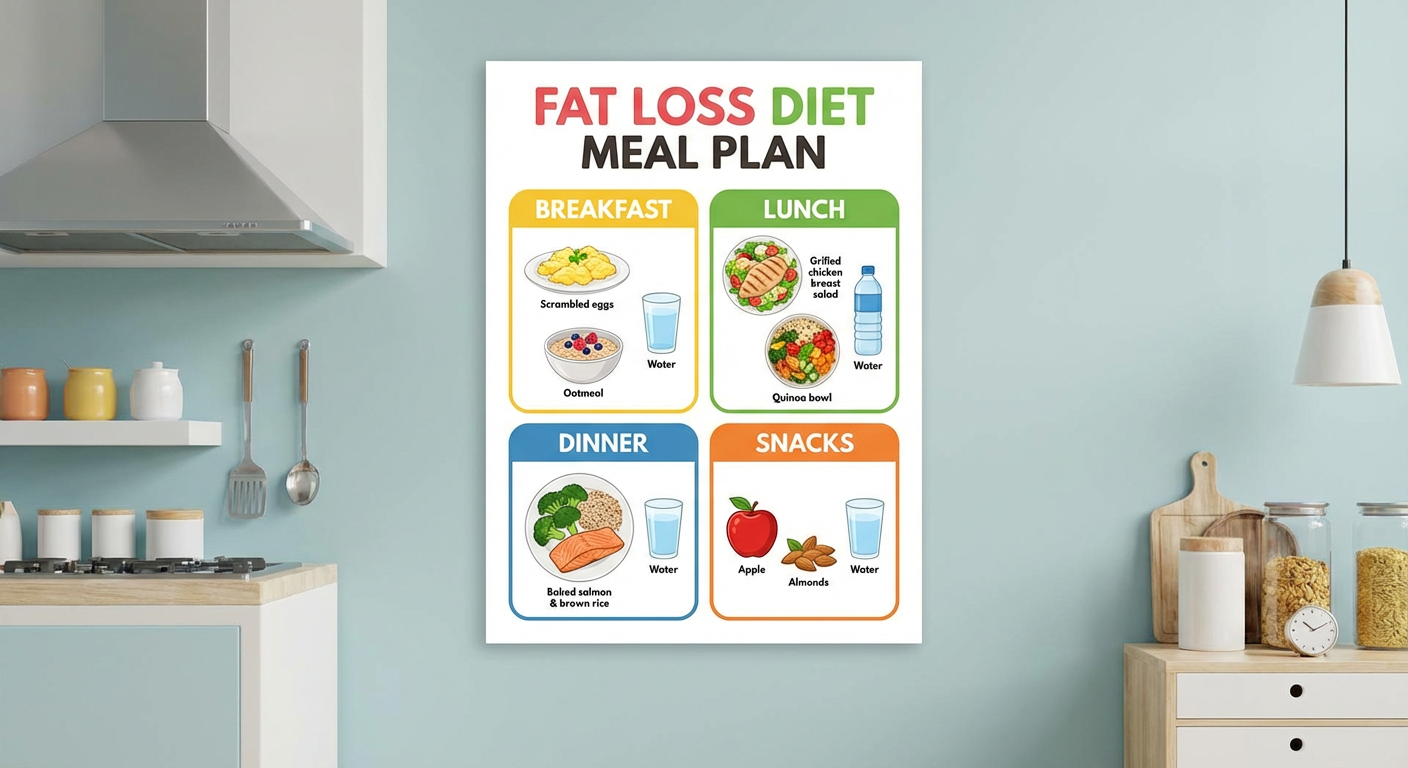
🥗 Fat Loss Diet Plan
Daily Calorie Target
| Goal | Calories/Day |
|---|---|
| Mild fat loss | ~1,800 kcal (men) / ~1,400 kcal (women) |
| Moderate fat loss | ~1,500 kcal (men) / ~1,200 kcal (women) |
| Target deficit | 500–700 kcal below your maintenance |
Macronutrient Split
| Macronutrient | % of Daily Calories | Purpose |
|---|---|---|
| Protein | 30–35% | Preserve muscle, boost metabolism, reduce hunger |
| Carbohydrates | 35–40% | Energy (from whole foods only) |
| Fat | 25–30% | Hormone function, satiety (healthy fats only) |
7-Day Sample Meal Plan
🌅 Breakfast (7:00–8:00 AM)
| Day | Meal |
|---|---|
| Mon | 3 boiled eggs + 1 slice whole grain toast + black coffee |
| Tue | Oats with chia seeds + 1 banana + green tea |
| Wed | Greek yogurt + mixed berries + handful of almonds |
| Thu | 2 scrambled eggs + sautéed spinach + 1 orange |
| Fri | Smoothie: spinach + 1 banana + protein powder + water |
| Sat | Whole grain pancakes (no syrup) + 2 boiled eggs |
| Sun | Omelette with tomatoes, onions, capsicum + black coffee |
☀️ Lunch (12:00–1:00 PM)
| Day | Meal |
|---|---|
| Mon | Grilled chicken breast + brown rice + steamed broccoli |
| Tue | Tuna salad with cucumber, tomato, olive oil + whole grain bread |
| Wed | Lentil soup + mixed salad + 1 apple |
| Thu | Grilled fish + quinoa + roasted vegetables |
| Fri | Chicken stir-fry with mixed vegetables + brown rice |
| Sat | Bean and vegetable curry + small portion of brown rice |
| Sun | Grilled salmon + sweet potato + green salad |
🌙 Dinner (6:00–7:00 PM)
| Day | Meal |
|---|---|
| Mon | Baked fish + steamed vegetables + small salad |
| Tue | Chicken soup with vegetables (no noodles) |
| Wed | Grilled tofu + stir-fried vegetables + small brown rice |
| Thu | Egg white omelette + sautéed mushrooms + salad |
| Fri | Grilled lean beef + roasted zucchini + tomato salad |
| Sat | Lentil and spinach stew + 1 slice whole grain bread |
| Sun | Baked chicken + steamed green beans + cucumber salad |
🍎 Snacks (2 per day — mid-morning & afternoon)
- 1 boiled egg
- Small handful of almonds or walnuts (20–25 g)
- 1 apple or 1 pear
- Carrot/cucumber sticks with hummus
- Low-fat Greek yogurt (unsweetened)
- 1 dragon fruit ✅ (good choice — low sugar, high fiber)
✅ Foods to Eat Freely
- Leafy greens (spinach, kale, lettuce)
- Cucumber, tomatoes, bell peppers
- Lean proteins (chicken breast, fish, eggs, tofu)
- Water, green tea, black coffee
❌ Foods to Avoid
| Food | Why |
|---|---|
| Sugary drinks & juices | Liquid fructose = direct fat storage |
| White bread, white rice | Spike insulin, promote fat storage |
| Fried foods | High calories, saturated fat |
| Processed snacks, chips | Empty calories, addictive |
| Alcohol | 7 kcal/g, disrupts fat metabolism |
| Excess fruit (>2–3/day) | High fructose load |
💧 Hydration
- Drink 2–3 liters of water per day
- Start every morning with 1 glass of warm water
- Green tea (2 cups/day) mildly boosts metabolism
Key Rules for Success
- Never skip breakfast — it regulates hunger hormones all day
- Eat dinner early (before 7 PM) — late eating promotes fat storage
- Don't graze between meals — structured meals prevent overeating (IFSO-WGO Guidelines, p. 207)
- Pair diet with exercise — at least 30 min of walking or resistance training daily
- Be consistent — adherence to the plan matters more than perfection (IFSO-WGO Guidelines, p. 86)
⚠️ Note: For personalized advice, especially if you have diabetes, kidney disease, or any chronic condition, consult a registered dietitian or doctor before starting any diet plan.
If I follow it for month what will happen
weight loss results one month caloric deficit diet outcomes
high protein low fat diet one month body composition changes metabolism
📅 Week-by-Week Timeline
Week 1 — The Adjustment Phase
- Your body switches from burning sugar (glucose) to burning stored glycogen (carb reserves in muscles/liver)
- As glycogen depletes, your body releases water weight — you may lose 1–3 kg in the first week, mostly water
- You may feel mild fatigue, hunger, or headaches for 2–3 days as your body adjusts
- Digestion improves noticeably from the high fiber intake
- Blood sugar levels start to stabilize
- Feeling slightly lighter
- Less bloating
- Possible mood dips (sugar cravings)
Week 2 — Metabolism Shifts
- Your body begins tapping into actual fat stores for energy
- High protein intake starts preserving muscle mass while fat is burned
- Hunger hormones (ghrelin) begin to regulate — you feel less hungry between meals
- Energy levels start to improve
- Clothes fitting slightly looser
- Better sleep quality
- Reduced cravings for junk food
- More consistent energy (no afternoon crashes)
Week 3 — Fat Loss Accelerates
- Real fat mass reduction is now measurable
- According to clinical research on high-protein, low-fat diets (Patient-Centered Management of Dyslipidemia, p. 14), this pattern produces greater fat mass reduction and lower triglycerides (blood fats) compared to standard diets
- Resting metabolism is better preserved — your body burns more calories even at rest compared to crash diets
- Insulin sensitivity improves, meaning your body stores less fat from carbs
- Visible reduction in belly, waist, and face
- Improved stamina during daily activities
- Skin may look clearer (less sugar = less inflammation)
Week 4 — Consolidation
- Fat loss continues steadily
- Blood pressure may begin to drop (potassium + reduced sodium from processed food elimination)
- Cholesterol (LDL) and triglycerides trend downward
- According to the 2023 Type 2 Diabetes Management Algorithm (p. 6), a 500–1,000 kcal daily deficit positively impacts blood sugar, blood pressure, and lipids — effects that start appearing around this point
- Significant visible body change
- Higher confidence and motivation
- Better digestion and regular bowel movements
- Reduced joint pain (less inflammatory foods)
Expected Results After 30 Days
| Measurement | Expected Change |
|---|---|
| Total weight loss | 2–4 kg (realistic, sustainable) |
| Fat mass lost | ~2–3 kg of actual fat |
| Muscle mass | Maintained or slightly increased (due to high protein) |
| Belly/waist | Noticeably reduced |
| Blood triglycerides | Reduced by ~20 mg/dL (clinical evidence, p. 14) |
| Blood sugar | More stable, lower fasting glucose |
| Blood pressure | Mild reduction |
| Energy levels | Significantly improved |
| Skin | Clearer, less puffy |
| Digestion | Regular, less bloating |
⚠️ What Could Go Wrong (If Not Done Correctly)
| Mistake | Consequence |
|---|---|
| Skipping meals | Triggers overeating later, slows metabolism |
| Eating too little (<1,200 kcal) | Muscle loss, fatigue, metabolic slowdown |
| No exercise | Slower fat loss, muscle not preserved as well |
| Cheating frequently on weekends | Cancels weekly deficit, stalls progress |
| Not drinking enough water | Slows metabolism, increases hunger |
🏆 The Bottom Line
✅ 2–4 kg of fat loss, better energy, improved blood markers, reduced bloating, and visible body changes — especially around the belly and face.
Make a best diet plan for fat loss for 22 boy for 1 month
caloric requirements young adult male 22 years fat loss diet
high protein meal plan young male weight loss macronutrient distribution
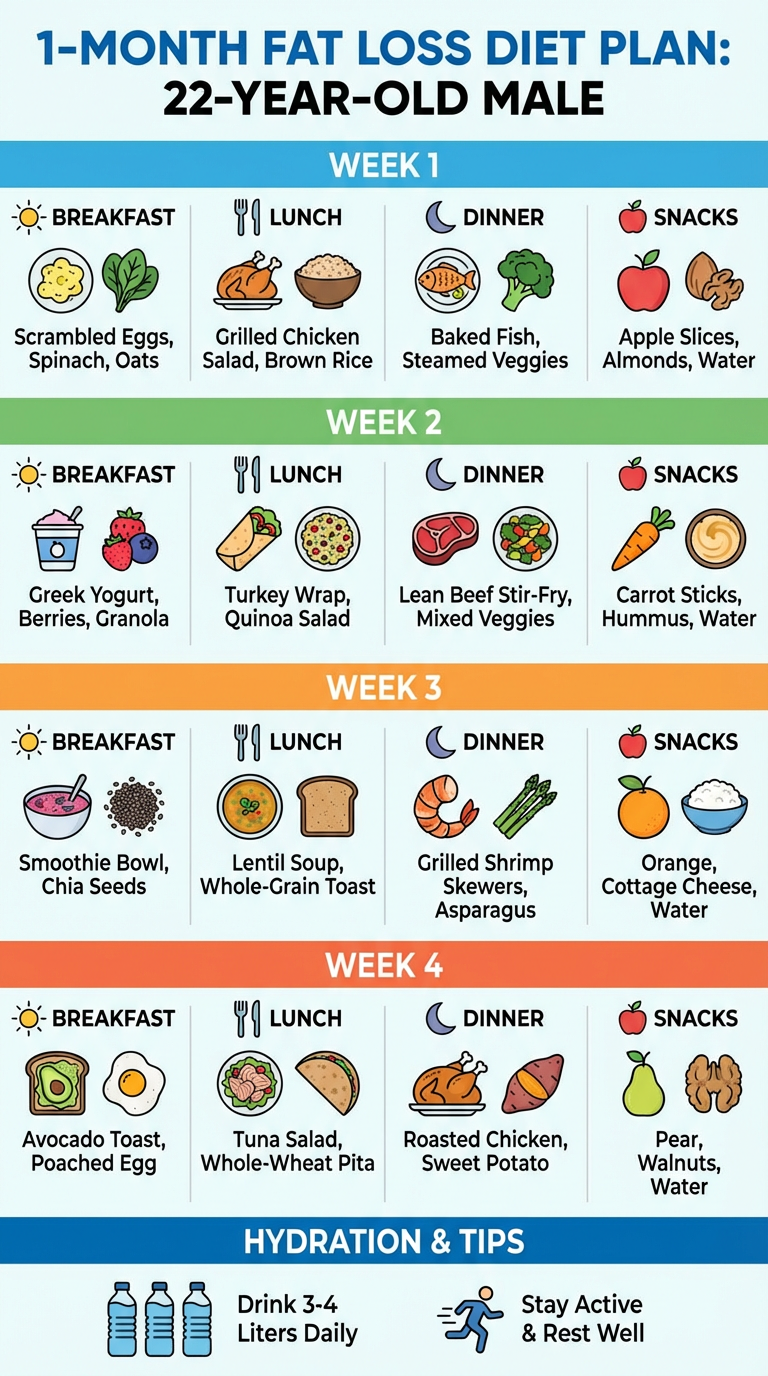
💪 1-Month Fat Loss Diet Plan — 22-Year-Old Male
Your Daily Targets
| Target | Value |
|---|---|
| Maintenance calories | ~2,500–2,700 kcal/day |
| Fat loss calories | ~2,000–2,100 kcal/day |
| Daily deficit | ~500 kcal (loses ~0.5 kg fat/week) |
| Protein | 150–160 g/day (preserves muscle) |
| Carbohydrates | 180–200 g/day (whole foods only) |
| Fats | 55–65 g/day (healthy fats) |
According to Harrison's Principles of Internal Medicine (p. 11489): "~500 kcal restriction daily equates to weight reduction of 1 lb (0.45 kg) per week." Over 30 days = ~2 kg of pure fat loss.
Meal Timing Schedule
| Time | Meal |
|---|---|
| 7:00 AM | Wake up — drink 1 glass warm water |
| 7:30 AM | Breakfast |
| 10:30 AM | Morning Snack |
| 1:00 PM | Lunch |
| 4:00 PM | Evening Snack |
| 7:00 PM | Dinner |
| 9:00 PM | Stop eating — allow 10 hrs overnight fast |
🗓️ Week 1 — Reset & Detox Phase
Monday
| Meal | Food | Approx. Calories |
|---|---|---|
| Breakfast | 3 boiled eggs + 1 cup oats with water + black coffee | 420 kcal |
| Snack | 1 apple + 10 almonds | 180 kcal |
| Lunch | 150g grilled chicken breast + 1 cup brown rice + steamed broccoli | 550 kcal |
| Snack | Low-fat Greek yogurt (150g) + cucumber slices | 150 kcal |
| Dinner | 150g baked fish + stir-fried vegetables (spinach, capsicum, carrot) | 350 kcal |
| Total | ~1,650 kcal |
Tuesday
| Meal | Food |
|---|---|
| Breakfast | Oats (80g) + banana (1 small) + chia seeds (1 tsp) + green tea |
| Snack | 2 boiled eggs |
| Lunch | Tuna (canned, 150g) + whole grain bread (2 slices) + tomato salad |
| Snack | 1 orange + handful of walnuts |
| Dinner | Grilled chicken + sautéed spinach + lemon juice |
Wednesday
| Meal | Food |
|---|---|
| Breakfast | 3 scrambled eggs + 1 slice whole grain toast + black coffee |
| Snack | 1 dragon fruit |
| Lunch | 150g grilled salmon + quinoa (½ cup) + roasted zucchini |
| Snack | Carrot sticks + 2 tbsp hummus |
| Dinner | Egg white omelette (4 whites) + mushrooms + tomatoes |
Thursday–Sunday
🗓️ Week 2 — Fat Burning Begins
Key Changes from Week 1:
- Reduce brown rice portion to ¾ cup at lunch
- Add 1 extra egg to breakfast
- Replace 1 fruit snack with a protein snack (boiled eggs, Greek yogurt)
Sample Day (Week 2)
| Meal | Food | Calories |
|---|---|---|
| Breakfast | 4 boiled eggs + ½ cup oats + green tea | 430 kcal |
| Snack | Greek yogurt (150g) + 5 walnuts | 200 kcal |
| Lunch | 180g grilled chicken + ¾ cup brown rice + salad | 560 kcal |
| Snack | 2 boiled eggs + cucumber | 160 kcal |
| Dinner | 180g baked fish + large mixed vegetable stir-fry | 370 kcal |
| Total | ~1,720 kcal |
🗓️ Week 3 — Accelerate Fat Loss
Key Changes:
- Eat a protein-rich meal 30–60 min before workout (if exercising)
- Post-workout: protein + small carb (e.g., eggs + banana)
- Cut evening snack if not hungry — listen to your body
Sample Day (Week 3)
| Meal | Food | Calories |
|---|---|---|
| Breakfast | Omelette (3 whole eggs + 2 whites) + spinach + coffee | 380 kcal |
| Pre-workout Snack | 1 banana + 2 boiled eggs | 280 kcal |
| Lunch | 200g grilled chicken + sweet potato (1 medium) + salad | 580 kcal |
| Snack | Greek yogurt + berries | 160 kcal |
| Dinner | 200g grilled fish + steamed vegetables + lemon | 360 kcal |
| Total | ~1,760 kcal |
🗓️ Week 4 — Consolidation & Results
Key Changes:
- Keep same meal structure but increase vegetable portions to feel full
- Try intermittent fasting (optional): eat between 8 AM–7 PM only
- Drink 3 liters of water daily
Sample Day (Week 4)
| Meal | Food | Calories |
|---|---|---|
| Breakfast | 3 eggs + oats (80g) + chia seeds + green tea | 430 kcal |
| Snack | 1 apple + 10 almonds | 180 kcal |
| Lunch | 200g grilled chicken/fish + brown rice (¾ cup) + large salad | 580 kcal |
| Snack | 2 boiled eggs | 140 kcal |
| Dinner | Stir-fried tofu/chicken + mixed vegetables (no rice) | 340 kcal |
| Total | ~1,670 kcal |
✅ Best Foods to Eat Daily
| Category | Best Choices |
|---|---|
| Protein | Eggs, chicken breast, fish (tuna, salmon), Greek yogurt, lentils |
| Carbs | Oats, brown rice, sweet potato, quinoa, whole grain bread |
| Fats | Almonds, walnuts, olive oil, avocado (small portion) |
| Vegetables | Spinach, broccoli, cucumber, tomato, capsicum, zucchini, carrot |
| Fruits | Apple, banana (1 max/day), orange, dragon fruit, berries |
| Drinks | Water, green tea, black coffee (no sugar) |
❌ Strictly Avoid for 30 Days
| Food | Why |
|---|---|
| Soft drinks, juices | Pure sugar, spikes insulin |
| White bread, white rice | Fast carbs = fat storage |
| Fried foods (fries, samosa) | High fat + high carb = worst combo |
| Biscuits, chips, sweets | Empty calories |
| Alcohol | 7 kcal/g, stops fat burning |
| Instant noodles | High sodium, low nutrition |
| Full-fat milk tea with sugar | Hidden calories add up fast |
💧 Hydration Plan
| Time | What to Drink |
|---|---|
| Morning (wake up) | 1 glass warm water |
| Before each meal | 1 glass water (reduces hunger) |
| During workout | Sip water regularly |
| Evening | 1 cup green tea |
| Daily total | 2.5–3 liters of water |
🏋️ Exercise to Pair With This Diet
| Type | Frequency | Duration |
|---|---|---|
| Walking / jogging | Daily | 30–45 min |
| Resistance training (weights/bodyweight) | 3–4x/week | 40–50 min |
| HIIT (optional) | 2x/week | 20 min |
📊 Expected Results After 30 Days
| Measure | Expected Change |
|---|---|
| Fat loss | 2–4 kg of actual fat |
| Waist size | Reduced by 2–4 cm |
| Muscle mass | Maintained / slightly increased |
| Energy | Significantly higher |
| Skin | Clearer, less puffy |
| Confidence | Noticeably improved |
| Blood sugar | More stable |
| Digestion | Regular, no bloating |
🔑 Golden Rules
- Never skip breakfast — fuels metabolism for the day
- Protein at every meal — keeps you full and preserves muscle
- No eating after 8 PM — prevents overnight fat storage
- Meal prep on Sundays — reduces temptation during the week
- Weigh yourself once a week (not daily) — tracks real progress
- Sleep 7–8 hours — poor sleep increases hunger hormones (ghrelin)
- Be consistent, not perfect — one bad meal won't ruin results; quitting will
⚠️ If you have any existing health condition, consult a doctor or dietitian before starting. This plan is designed for a healthy 22-year-old male with no underlying conditions.
How much fat will reduce after it
📉 How Much Fat Will You Lose After 1 Month?
The Science Behind It
"~3,500 kcal = 1 lb (0.45 kg) of fat. A 500 kcal daily deficit = ~1 lb of fat loss per week."
| Timeframe | Fat Lost |
|---|---|
| 1 week | ~0.45–0.5 kg |
| 2 weeks | ~0.9–1.0 kg |
| 3 weeks | ~1.3–1.5 kg |
| 4 weeks (1 month) | ~2.0–2.5 kg of pure fat |
Realistic Breakdown — What the Scale Shows
| Type of Weight | Amount | Explanation |
|---|---|---|
| Water weight (Week 1) | 1–2 kg | Lost first as glycogen depletes |
| Pure fat loss | 2.0–2.5 kg | Actual fat burned over 30 days |
| Total scale drop | 3–4.5 kg | What you see on the weighing scale |
⚠️ The scale includes water + fat. Pure fat loss = 2–2.5 kg is the real achievement.
If You Add Exercise
| Activity Level | Extra Calories Burned | Additional Fat Lost |
|---|---|---|
| Walking 30 min/day | ~200 kcal/day | +0.7 kg extra |
| Gym 4x/week | ~300–400 kcal/session | +1.0–1.5 kg extra |
| Diet + Exercise combined | Total: 3–4 kg pure fat in 30 days |
Where Will You Lose Fat First?
- Face & neck — visible within Week 1–2
- Belly & waist — most noticeable by Week 3–4
- Chest — reduces gradually
- Arms & thighs — later stage fat loss
- Lower belly & love handles — last to go (stubborn fat)
What 2–4 kg of Fat Loss Actually Looks Like
| Fat Lost | Visual Change |
|---|---|
| 1 kg | Face looks slightly slimmer |
| 2 kg | Clothes feel looser, belt moves 1 notch |
| 3 kg | Visible belly reduction, jawline more defined |
| 4 kg | Significant body transformation, people notice |
Factors That Affect Your Results
| Factor | Impact |
|---|---|
| Strict diet adherence | More fat lost |
| Regular exercise | Faster results |
| Good sleep (7–8 hrs) | Better fat burning hormones |
| Stress levels | High stress = cortisol = belly fat retention |
| Starting body fat % | Higher body fat = faster initial loss |
| Cheat meals/days | Every cheat day costs ~3–4 days of progress |
Bottom Line
✅ Following this plan strictly for 30 days, a 22-year-old male can expect to lose 2–2.5 kg of pure fat (3–4.5 kg on the scale). With exercise added, this can reach 3–4 kg of real fat loss — a very visible and meaningful transformation in just one month.