
Dobutamine
Reading File
Dobutamine is a synthetic catecholamine used primarily as an inotropic agent in acute heart failure and cardiogenic shock. It acts mainly on beta-1 adrenergic receptors to increase cardiac contractility with relatively less chronotropic effect compared to other catecholamines.
Searching sources...
Finding Sources
Finding Sources
Searching PubMed
dobutamine pharmacology clinical use
Good results. Let me pull the key sections from the top sources in parallel.
Reading File
Reading File
Reading File
Reading File
I now have comprehensive information from multiple authoritative textbooks. Here is a full pharmacological profile of dobutamine:
Dobutamine
Chemistry & Pharmacology
Dobutamine is a synthetic catecholamine that structurally resembles dopamine but carries a bulky aromatic substituent on the amino group. Commercial preparations contain a racemic mixture of two stereoisomers (- and +), each with distinct receptor profiles:
- (-)- isomer: potent alpha-1 agonist - causes pressor responses at higher doses
- (+)- isomer: potent alpha-1 antagonist (blocks the alpha effects of the (-) isomer) and a potent beta-1 agonist (~10x more potent at beta receptors than the (-) isomer)
Net result: the racemic mixture primarily acts as a beta-1 selective agonist with minimal net alpha-1 activity at low to moderate doses.
- Goodman & Gilman's Pharmacological Basis of Therapeutics, p. 281
Receptor Profile
| Receptor | Effect | Clinical Consequence |
|---|---|---|
| Beta-1 (dominant) | Positive inotropy + mild chronotropy | Increased cardiac contractility, CO |
| Beta-2 | Vasodilation | Reduced SVR, reduced LV afterload |
| Alpha-1 (dose-dependent) | Vasoconstriction at doses >5 mcg/kg/min | Partially offsets beta-2 vasodilation |
At doses <5 mcg/kg/min, alpha-1 effects are essentially absent. Above that threshold, the (-) isomer progressively stimulates alpha-1 receptors, attenuating vasodilation and helping maintain preload and arterial pressure.
- Barash Clinical Anesthesia, 9e, p. 965-966
Mechanism of Action
Dobutamine works via direct receptor binding - it does not act by releasing norepinephrine from nerve endings, and it has no effect on dopaminergic receptors.
Beta-receptor stimulation leads to:
- Increased intracellular cAMP
- Increased intracellular calcium
- Direct activation of voltage-sensitive calcium channels
- Braunwald's Heart Disease, 15e
Cardiovascular Effects
- Increased inotropy - the dominant effect; increases cardiac output and stroke volume
- Modest chronotropy - heart rate increases minimally at <20 mcg/kg/min; this is the key distinction from isoproterenol (which is more chronotropic)
- LV-arterial coupling improvement - by enhancing contractility while simultaneously reducing afterload (via beta-2 vasodilation), dobutamine improves myocardial efficiency
- Reduced mitral regurgitation severity in dilated cardiomyopathy - by reducing LV filling pressures
- Pulmonary vascular resistance - generally reduced, making dobutamine preferred over dopamine in patients with elevated PVR
- Myocardial oxygen demand increases - a clinically important limitation
At low doses (1-2 mcg/kg/min), dobutamine may improve renal perfusion.
- Braunwald's Heart Disease, 15e; Barash Clinical Anesthesia 9e, p. 966
Pharmacokinetics (ADME)
| Parameter | Value |
|---|---|
| Half-life | ~2 minutes |
| Onset | Rapid; steady state in ~10 min |
| Metabolism | Hepatic conjugation; major metabolites are conjugates of dobutamine and 3-O-methyldobutamine |
| Administration | IV infusion only (calibrated pump) |
- Goodman & Gilman's, p. 281
Dosing
| Dose (mcg/kg/min) | Primary Effect |
|---|---|
| 1-2 | Mild inotropy; possible improvement in renal perfusion |
| 2.5-10 | Standard therapeutic range; increased cardiac output |
| 10-20 | Higher doses needed if patient on beta blockers (competitive antagonism) |
| Up to 20 | Maximum typical dose; above this, tachycardia and arrhythmias become more prominent |
Note: If the patient is on a beta-blocker, competitive antagonism occurs, and doses of 10-20 mcg/kg/min may be required to achieve the desired effect.
- Braunwald's Heart Disease; Goodman & Gilman's
Clinical Indications
- Acute decompensated heart failure (cardiogenic shock, low output state with elevated filling pressures)
- Post-cardiac surgery low output syndrome
- Acute myocardial infarction with cardiogenic shock
- Dobutamine stress echocardiography (DSE) - used diagnostically to detect flow-limiting coronary stenoses; a regional wall motion abnormality appears in the ischemic territory due to supply-demand mismatch
- Persistent hypoperfusion despite adequate fluid resuscitation and vasopressors
Dobutamine is the most commonly used positive inotrope in Europe and the United States.
- Tintinalli's Emergency Medicine; Braunwald's Heart Disease; Goodman & Gilman's
Adverse Effects
- Tachycardia and tachyarrhythmias (including increased ventricular response in atrial fibrillation by facilitating AV conduction)
- Hypertension (especially in patients with pre-existing hypertension)
- Myocardial ischemia - from increased oxygen demand
- Ventricular arrhythmias
- Hypokalemia
- Headache, angina
- Tachyphylaxis - tolerance develops with infusions >24-48 hours, partly due to receptor desensitization
- Cardiomyocyte necrosis - possible direct toxic effects and induction of apoptosis at higher doses
Patients with atrial fibrillation are particularly at risk because dobutamine's facilitation of AV conduction can cause rapid ventricular rates; digoxin or other rate-control measures may be needed.
- Goodman & Gilman's; Braunwald's Heart Disease
Important Clinical Considerations
Mortality concern: Despite being the most commonly used inotrope, there is evidence that dobutamine increases mortality. The CASINO trial (the only placebo-controlled RCT in AHF) demonstrated significantly increased mortality with dobutamine compared to placebo. Dobutamine therefore has no significant role in diastolic dysfunction or high-output heart failure states.
Dobutamine vs. Dopamine:
- Dobutamine is preferred over dopamine in patients with elevated pulmonary vascular resistance and elevated LV filling pressures
- Dopamine causes more tachycardia and raises pulmonary pressures more than dobutamine
- When systolic BP <70 mmHg, norepinephrine is generally preferred over dobutamine
Comparison with Milrinone (PDE-3 inhibitor):
-
Milrinone is preferred in patients with significant renal dysfunction (dobutamine is hepatically metabolized; milrinone is renally excreted, but milrinone's vasodilation is less easily reversed)
-
Dobutamine is generally preferred in hypotensive patients (milrinone causes more profound vasodilation)
-
Braunwald's Heart Disease; Washington Manual of Medical Therapeutics; Tintinalli's Emergency Medicine; Barash Clinical Anesthesia 9e
Dobutamine Stress Echocardiography (DSE)
In DSE, dobutamine is infused at progressively higher doses (starting at 5 mcg/kg/min, escalating to 40 mcg/kg/min) to stress the myocardium. A regional wall motion abnormality that appears at peak stress but not at rest indicates inducible ischemia in that coronary territory. Atropine is often added if target heart rate is not achieved. This is a standard non-invasive test for:
-
Suspected coronary artery disease (when exercise testing is not feasible)
-
Viability assessment (hibernating myocardium recruits contractility at low doses)
-
Textbook of Clinical Echocardiography
Summary: Dobutamine is a beta-1 selective synthetic catecholamine inotrope used short-term for cardiogenic shock and acute heart failure. Its key advantage is improving cardiac output with minimal change in peripheral resistance and a relatively lower chronotropic burden than isoproterenol. Its key limitations are tachyarrhythmias, increased myocardial oxygen demand, tachyphylaxis with prolonged use, and evidence of increased mortality with chronic or extended use.
Compare dobutamine, dopamine, and milrinone in shock
Searching sources...
Finding Sources
Finding Sources
Searching PubMed
dobutamine dopamine milrinone cardiogenic shock
Reading File
Reading File
Finding Sources
Searching PubMed
milrinone dobutamine cardiogenic shock randomized trial
The DOREMI trial (NEJM 2021) is a landmark RCT directly comparing milrinone vs dobutamine in cardiogenic shock. Let me grab its abstract alongside relevant textbook sections.
Reading Article
PMID: 34347952
Reading Article
PMID: 35545181
Reading File
Reading File
Excellent - I now have comprehensive data from multiple major textbooks plus landmark RCT (DOREMI) and meta-analysis evidence. Here is the full comparison:
Dobutamine vs. Dopamine vs. Milrinone in Shock
1. Mechanism of Action
| Feature | Dobutamine | Dopamine | Milrinone |
|---|---|---|---|
| Drug class | Synthetic catecholamine | Endogenous catecholamine precursor | Phosphodiesterase-3 (PDE-3) inhibitor |
| Primary receptor | Beta-1 >> Beta-2 > Alpha-1 | DA1, DA2, Beta-1, Alpha-1 (dose-dependent) | No adrenergic receptors; inhibits cAMP breakdown |
| Mechanism | Direct adrenergic receptor stimulation | Releases norepinephrine; direct receptor activation | Blocks cAMP degradation → ↑intracellular cAMP → ↑Ca²⁺ → ↑inotropy + vasodilation |
| Inotropy | Strong (beta-1) | Moderate (beta-1 at mid-range doses) | Strong (cAMP-mediated) |
| Chronotropy | Mild-moderate | Pronounced | Mild |
| Vasodilation | Mild (beta-2) | Variable - vasodilates at low doses, vasoconstricts at high doses | Pronounced (systemic + pulmonary) |
| Vasopressor effect | Minimal | Yes, at doses >10 mcg/kg/min | None - vasodilatory only |
- Washington Manual of Medical Therapeutics; Tintinalli's Emergency Medicine
2. Dose-Dependent Effects of Dopamine (Unique to Dopamine)
Dopamine's effects are strongly dose-dependent in a way that the other two agents are not:
| Dose | Receptor | Effect |
|---|---|---|
| <5 mcg/kg/min (low/"renal" dose) | DA1/DA2 | Renal/splanchnic vasodilation, natriuresis |
| 5-10 mcg/kg/min (intermediate) | Beta-1 | Inotropic - increased cardiac output |
| >10 mcg/kg/min (high) | Alpha-1 | Vasoconstriction, increased SVR and blood pressure |
Important caveat on "renal-dose" dopamine: Despite widespread historical use, low-dose dopamine does not reduce mortality or decrease dialysis dependence. The ROSE-AHF, DAD-HF I and II studies failed to show renal benefit. It should not be used for renal protection.
- Braunwald's Heart Disease; Rosen's Emergency Medicine
3. Head-to-Head Hemodynamic Comparison in Cardiogenic Shock
| Parameter | Dobutamine | Dopamine | Milrinone |
|---|---|---|---|
| Cardiac output | ↑↑ | ↑↑ | ↑↑ |
| SVR (afterload) | ↓ (mild) | ↑ at high doses | ↓↓ (pronounced) |
| Heart rate | ↑ (mild-moderate) | ↑↑ (significant) | ↑ (minimal) |
| MAP | Neutral/mild ↑ | ↑ | ↓ (can cause hypotension) |
| Pulmonary capillary wedge pressure | ↓ | ↑ (can worsen) | ↓↓ |
| Pulmonary vascular resistance | ↓ | ↑ | ↓↓ |
| Myocardial O₂ demand | ↑ | ↑↑ | ↑ (less than catecholamines) |
| Arrhythmia risk | Moderate | High | Moderate |
Dopamine raises right atrial pressure, mean pulmonary arterial pressure, and pulmonary capillary occlusion pressure more than dobutamine, even at equivalent cardiac output - making it less favorable in patients with elevated filling pressures or pulmonary hypertension.
- Barash Clinical Anesthesia 9e; Braunwald's Heart Disease
4. Use in Different Shock States
Cardiogenic Shock
First-line inotropic options: Dobutamine and milrinone are both established agents. Dopamine is a vasopressor option but has less favorable hemodynamic profile.
Key clinical guidance (Tintinalli's Emergency Medicine):
- If SBP ≥90 mmHg: Dobutamine can be used as a standalone agent
- If SBP <70 mmHg: Prefer norepinephrine over dobutamine (dobutamine's vasodilatory effect is dangerous in severe hypotension)
- Dopamine: inotropic option but increases LVEDP and carries higher arrhythmia risk
- Milrinone: second-tier to dobutamine as default; preferred if patient is on a beta-blocker (milrinone works downstream of the beta-receptor and is not affected by beta-blockade)
- Norepinephrine + dobutamine combination is more effective than dopamine alone for profound hypotension
Septic Shock
The primary treatment is vasopressors (norepinephrine first-line). Inotropes are added only when myocardial dysfunction is evident after adequate vasopressor support.
-
Dobutamine: recommended as the primary inotropic add-on in septic shock with myocardial dysfunction (Surviving Sepsis Guidelines)
-
Dopamine: associated with higher mortality than norepinephrine in both septic and cardiogenic shock. Also associated with higher arrhythmia rates, especially atrial fibrillation. Not recommended as first-line vasopressor when norepinephrine is available
-
Milrinone: used less frequently in septic shock; its vasodilation can worsen already-low SVR in sepsis
-
Rosen's Emergency Medicine; Washington Manual
Acute Decompensated Heart Failure (Low-Output State Without Shock)
All three can be used; choice depends on blood pressure:
- Hypotensive patients: dopamine or dobutamine preferred (milrinone's vasodilation risks worsening hypotension)
- Normotensive patients with congestion: milrinone may be preferred (lowers filling pressures more effectively)
- Patients on beta-blockers: milrinone preferred
5. The DOREMI Trial (NEJM 2021) - Landmark RCT
The DOREMI trial (Mathew et al., NEJM 2021) is the most important direct comparison of milrinone vs. dobutamine in cardiogenic shock (n=192, double-blind RCT):
- Primary composite outcome (in-hospital death, cardiac arrest, mechanical support, MI, stroke, RRT): milrinone 49% vs. dobutamine 54% (RR 0.90; 95% CI 0.69-1.19; p=0.47)
- In-hospital mortality: milrinone 37% vs. dobutamine 43% (RR 0.85; non-significant)
- Conclusion: No significant difference between milrinone and dobutamine for any outcome in cardiogenic shock
This means the choice between milrinone and dobutamine should be guided by clinical context rather than expected superiority of one over the other.
Meta-analysis (Biswas et al., 2023, n=21,106):
- Milrinone associated with marginally lower mortality in overall AHF (RR 0.87, p<0.05) - driven largely by the destination therapy subgroup
- No significant difference in the cardiogenic shock subgroup
- No difference in AKI, RRT, arrhythmias, or hypotension between the two
6. Renal Considerations
| Agent | Renal Consideration |
|---|---|
| Dobutamine | Hepatically metabolized - safe in renal failure |
| Dopamine | Hepatically metabolized - safe in renal failure; renal-dose benefit is a myth |
| Milrinone | ~80% renally excreted - accumulates in renal failure; use with caution, reduce dose |
In patients with significant renal dysfunction, dobutamine (or dopamine) is preferred over milrinone.
- Braunwald's Heart Disease
7. Adverse Effects Summary
| Adverse Effect | Dobutamine | Dopamine | Milrinone |
|---|---|---|---|
| Tachycardia | ++ | +++ | + |
| Arrhythmias (AF, VT) | ++ | +++ | ++ |
| Hypotension | + | - (raises BP) | +++ |
| Myocardial ischemia | ++ | ++ | + |
| Tachyphylaxis (>24-48h) | Yes | Less prominent | Less prominent |
| Hypokalemia | + | + | + |
| Increased mortality risk | Yes (CASINO trial) | Yes (vs NE in cardiogenic/septic shock) | Non-significant trend lower |
| Cardiomyocyte apoptosis | Possible | Possible | Less evidence |
| Increased LVEDP | No | Yes | No |
8. Quick Clinical Decision Framework
Cardiogenic shock + SBP ≥90 mmHg
    → Dobutamine OR Milrinone (equivalent per DOREMI)
    → On beta-blocker? → Milrinone preferred
    → Beta-blockade not a concern? → Either; dobutamine often first-line

Cardiogenic shock + SBP <70 mmHg
    → Norepinephrine (vasopressor) + Dobutamine (inotrope)
    → Dopamine is an alternative vasopressor but higher arrhythmia risk

Septic shock with myocardial dysfunction
    → Norepinephrine first for vasopressor
    → Add Dobutamine if cardiac output remains low

Elevated pulmonary pressures / right heart failure
    → Dobutamine preferred over dopamine (dopamine raises PVR)
    → Milrinone also effective (reduces PVR)

Renal failure
    → Avoid or reduce milrinone
    → Dobutamine or dopamine safer

Beta-blocker therapy
    → Milrinone preferred (bypasses beta-receptor)
- Tintinalli's Emergency Medicine; Braunwald's Heart Disease; Rosen's Emergency Medicine; DOREMI Trial, NEJM 2021; Biswas et al. meta-analysis, 2023
Bottom line: Dobutamine remains the most widely used first-line inotrope in cardiogenic shock. Milrinone is equivalent per the DOREMI RCT, making beta-blocker status and renal function the most practical deciding factors between the two. Dopamine, once commonly used, is now clearly less favored than norepinephrine for shock states due to its higher arrhythmia burden and worse mortality profile in both cardiogenic and septic shock - its role has largely been displaced except when norepinephrine is unavailable.
B1 b2 receptor agonist antagonist Normal functions Drugs
B1 b2 receptor agonist antagonist Normal functions Drugs
Searching sources...
Finding Sources
Finding Sources
Reading File
Finding Sources
Finding Sources
Reading File
Finding Sources
Finding Sources
Finding Sources
Finding Sources
Reading File
Finding Sources
Loading Image
Loading Image
Excellent - rich diagrams retrieved. Here is the complete reference guide:
Beta-1 and Beta-2 Adrenergic Receptors: Normal Functions, Agonists & Antagonists
Signal Transduction (Both Receptor Types)
Both Beta-1 and Beta-2 receptors are G protein-coupled receptors (GPCRs). Here is how they signal:
Beta-1 AR: Couples exclusively to Gs → activates adenylyl cyclase (AC) → ↑cAMP → activates PKA → phosphorylates downstream targets → inotropy, chronotropy, lusitropy
Beta-2 AR: Couples to both Gs (stimulatory - same as B1) and Gi (inhibitory) → dual, bifurcating signal pathway. This bifurcation means beta-2 effects are more complex and context-dependent than beta-1.
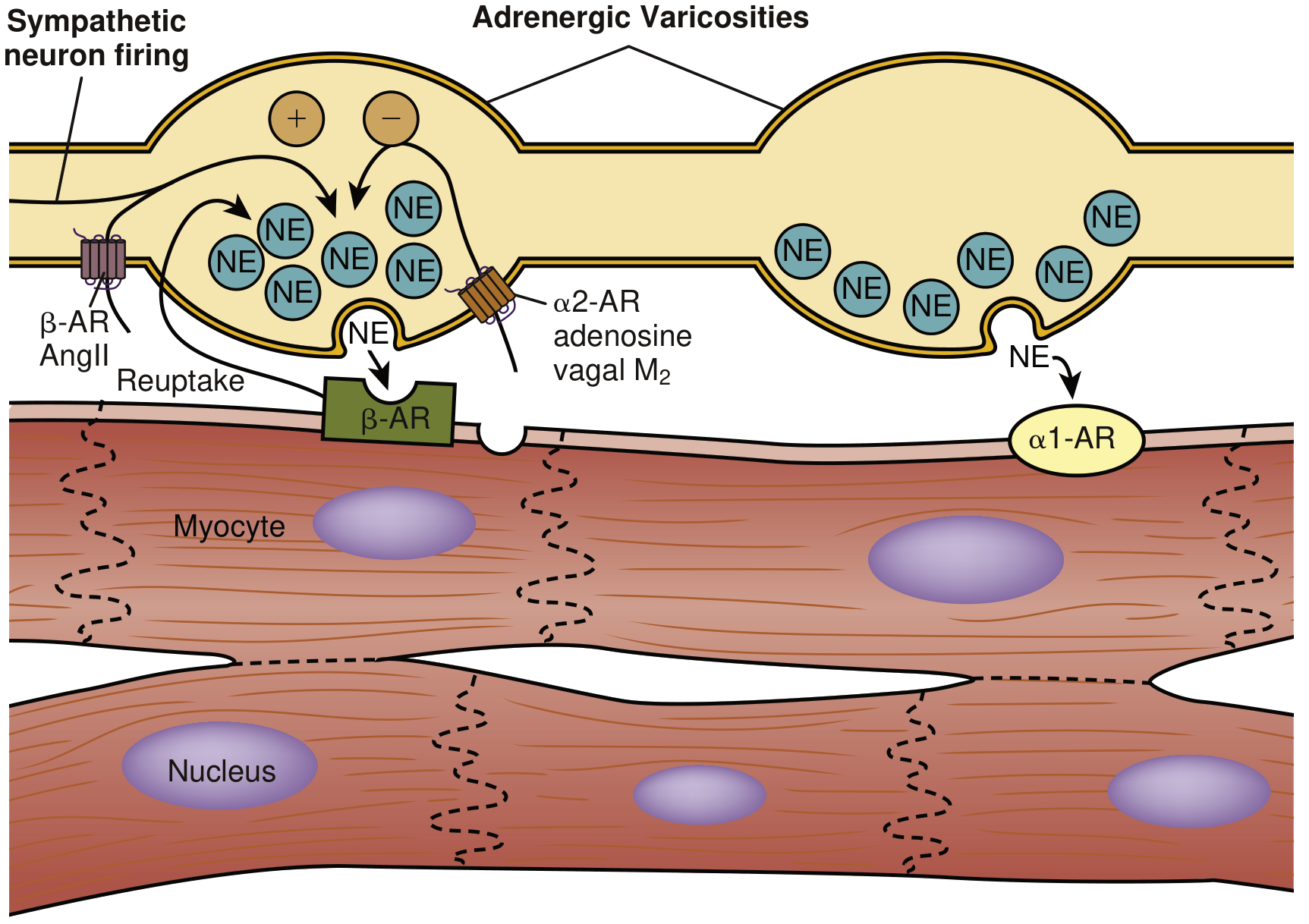
NE release from sympathetic varicosities acts on beta-AR (cardiac) and alpha1-AR (vascular); presynaptic alpha-2 autoreceptors provide negative feedback:
Beta-1 and Beta-2 intracellular signaling in cardiac myocytes - cAMP/PKA pathway and downstream phosphorylation targets (PLB, troponin-I, MyBP-C):
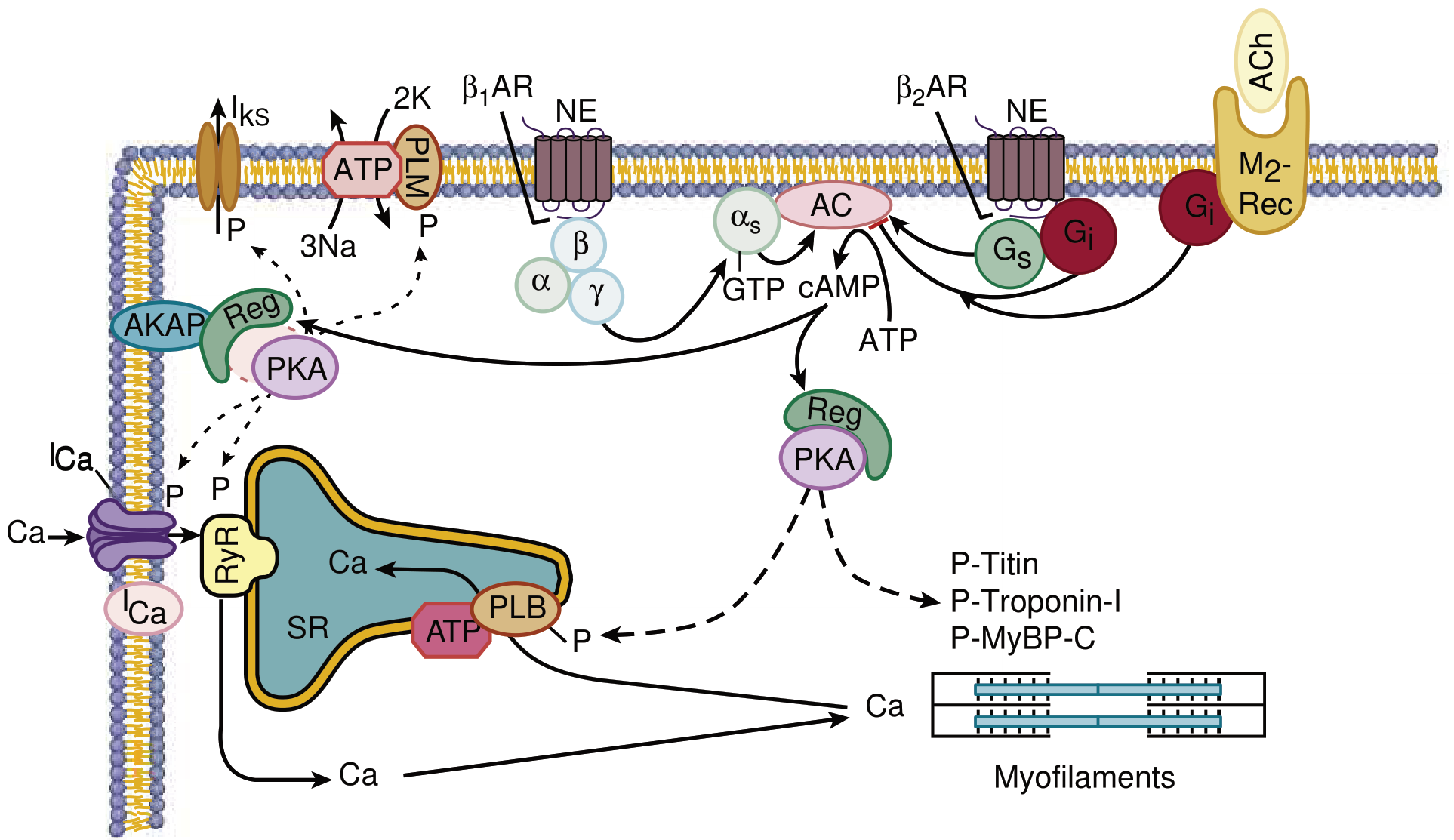
- Braunwald's Heart Disease, 15e
Beta-1 vs Beta-2: Side-by-Side
| Feature | Beta-1 (β₁) | Beta-2 (β₂) |
|---|---|---|
| Primary location | Heart (SA node, AV node, ventricles) - 80% of cardiac beta-Rs; Kidney (JGA) | Lungs (bronchial smooth muscle); Vascular smooth muscle; Uterus; Skeletal muscle; Liver; Pancreas (beta cells) |
| G-protein coupling | Gs only | Gs + Gi (bifurcating) |
| Endogenous agonist potency | NE = Epi > Iso (approx) | Iso > Epi >> NE |
| Heart rate (chronotropy) | ↑↑ (SA node) | ↑ (minor direct effect) |
| Contractility (inotropy) | ↑↑ (dominant cardiac inotropic receptor) | ↑ minor (partly via NE release from sympathetic terminals) |
| AV conduction (dromotropy) | ↑ | Minor |
| Relaxation (lusitropy) | ↑ (faster cardiac relaxation) | - |
| Bronchi | - | Relaxation/bronchodilation ↑↑ |
| Vascular smooth muscle | - | Vasodilation ↓SVR (beta-2) |
| Uterus | - | Relaxation (tocolysis) |
| Renin release | ↑ (JGA of kidney) | - |
| Glycogenolysis / gluconeogenesis | Minor | ↑↑ (liver, skeletal muscle) |
| Insulin secretion | - | ↑ (pancreatic beta cells) |
| Tremor | - | Skeletal muscle tremor |
| Potassium | - | ↓K⁺ (drives K⁺ into cells) |
- Braunwald's Heart Disease; Goodman & Gilman's
Agonist Potency Order
| Receptor | Potency Order |
|---|---|
| Beta-1 | Isoproterenol > Epinephrine = Norepinephrine |
| Beta-2 | Isoproterenol > Epinephrine >> Norepinephrine |
Norepinephrine is a poor beta-2 agonist - this is why NE causes vasoconstriction (alpha-1 dominant) while epinephrine at low doses can vasodilate (beta-2 active).
Beta-1 and Beta-2 Agonists: Drugs
Non-selective Beta Agonists (Beta-1 + Beta-2)
| Drug | Key Actions | Uses |
|---|---|---|
| Isoproterenol | Potent B1+B2; pure beta, no alpha; ↑HR, ↑inotropy, bronchodilation, vasodilation | Bradyarrhythmia (historical); bronchospasm (replaced); used in pharmacology labs as prototype |
| Epinephrine | B1, B2, Alpha-1 (dose-dependent) | Anaphylaxis, cardiac arrest, croup, severe asthma; low dose = vasodilation (B2), high dose = vasoconstriction (alpha-1) |
| Norepinephrine | B1 + Alpha-1 dominant; weak B2 | Septic shock (vasopressor), anaphylaxis |
Beta-1 Selective Agonists
| Drug | Key Actions | Uses |
|---|---|---|
| Dobutamine | B1 >> B2 > alpha-1 (dose-dep); ↑inotropy > chronotropy | Cardiogenic shock, acute decompensated HF, dobutamine stress echo |
| Dopamine | DA1, DA2, B1, alpha-1 (dose-dep) | Cardiogenic shock, vasopressor (high doses) |
Beta-2 Selective Agonists
| Drug | Duration | Uses |
|---|---|---|
| Salbutamol (Albuterol) | Short-acting (SABA) | Acute asthma attack, acute COPD exacerbation, hyperkalemia (drives K⁺ into cells) |
| Terbutaline | Short-acting | Acute asthma; also used as tocolytic (uterine relaxation in preterm labor) |
| Salmeterol | Long-acting (LABA) | Maintenance asthma + COPD (always with ICS in asthma) |
| Formoterol | Long-acting (LABA) | Maintenance asthma + COPD; also has rapid onset |
| Vilanterol | Ultra-long-acting | Once-daily COPD (combined inhalers) |
| Ritodrine | - | Tocolysis (preterm labor) - largely replaced |
B2 agonist adverse effects (from B2 activity outside the lungs):
- Tremor (skeletal muscle)
- Tachycardia (some beta-1 spillover + reflex from vasodilation)
- Hypokalemia (K⁺ driven intracellularly)
- Hyperglycemia (glycogenolysis, impaired insulin release)
Beta-Blockers (Antagonists): Drugs
Classification
| Class | Drugs | Beta-1 Selective? | Additional Properties |
|---|---|---|---|
| Non-selective (B1 + B2) | Propranolol, Nadolol, Timolol, Carteolol | No | Propranolol = membrane-stabilizing; timolol used topically for glaucoma |
| Cardioselective (B1 > B2) | Metoprolol, Atenolol, Bisoprolol, Esmolol, Nebivolol | Yes (at normal doses) | All become non-selective at high doses |
| Non-selective + Alpha-1 block | Carvedilol, Labetalol | No | Additional vasodilation via alpha-1 blockade |
| B1 selective + vasodilation | Nebivolol | Yes | Releases NO → vasodilation |
| With ISA (intrinsic sympathomimetic activity) | Pindolol, Acebutolol | Acebutolol = B1-selective | Partial agonists; less bradycardia at rest; avoid in angina/post-MI |
Cardioselectivity rule: Selectivity for beta-1 is relative, not absolute. At high doses or overdose, all beta-blockers lose B1 selectivity and will block B2.
- Lippincott Illustrated Reviews Pharmacology; Rosen's Emergency Medicine
Clinical Uses of Beta-Blockers
| Indication | Preferred Agent | Rationale |
|---|---|---|
| Angina (stable effort) | Metoprolol, Atenolol | ↓HR and contractility → ↓O₂ demand; first-line (avoid in vasospastic angina - can worsen) |
| Post-MI | Metoprolol, Carvedilol | Reduce death and MI recurrence |
| Heart failure with reduced EF (HFrEF) | Carvedilol, Metoprolol succinate, Bisoprolol | Three agents proven to reduce mortality |
| Hypertension | Metoprolol, Atenolol, Bisoprolol | Reduce CO; also central sympatholysis |
| Atrial fibrillation / tachyarrhythmias | Metoprolol, Esmolol (IV, ultrashort) | Rate control via AV nodal slowing |
| Acute aortic dissection | Esmolol, Labetalol | ↓HR and BP to reduce aortic wall stress |
| Thyroid storm | Propranolol | Also blocks T4→T3 conversion peripherally |
| Glaucoma | Timolol (topical) | Reduces aqueous humor production |
| Essential tremor | Propranolol | Central + peripheral mechanism |
| Portal hypertension / varices | Propranolol, Nadolol (non-selective) | Reduce splanchnic blood flow via B2 blockade of mesenteric vasodilator tone |
| Migraine prophylaxis | Propranolol, Metoprolol | - |
| Hypertrophic obstructive cardiomyopathy | Metoprolol, Atenolol | Reduce outflow tract gradient |
| Pheochromocytoma | Only after alpha-blockade first | Beta-blockade alone can precipitate hypertensive crisis |
- Lippincott Illustrated Reviews Pharmacology; Braunwald's Heart Disease
Key Contraindications to Beta-Blockers
| Contraindication | Receptor Involved | Reason |
|---|---|---|
| Asthma / reactive airways | B2 blockade | Bronchoconstriction; use cardioselective if essential |
| Bradycardia / high-degree heart block | B1 blockade | Worsens conduction |
| Vasospastic (Prinzmetal) angina | B2 blockade | Unopposed alpha-1 constriction worsens spasm |
| Acute decompensated HF (wet, cold) | B1 blockade | Reduces contractility acutely (chronic use is beneficial) |
| Hypoglycemia-prone diabetics | B1 + B2 | Mask tachycardia and tremor; prolong hypoglycemia (sweating preserved via cholinergic) |
| Abrupt withdrawal | Rebound | Up-regulation of beta-receptors → rebound angina, MI, hypertension on sudden stop - taper over 2-3 weeks |
Quick Summary Table
| Beta-1 | Beta-2 | |
|---|---|---|
| Location | Heart, JGA kidney | Lungs, vessels, uterus, liver, skeletal muscle |
| Normal function | ↑HR, ↑inotropy, ↑dromotropy, ↑renin | Bronchodilation, vasodilation, glycogenolysis, tocolysis |
| Agonist drugs | Dobutamine, dopamine (B1-selective); Epi, NE, Iso (non-selective) | Salbutamol, salmeterol, formoterol, terbutaline (B2-selective) |
| Antagonist drugs | Metoprolol, atenolol, bisoprolol, esmolol (B1-selective); Propranolol (non-selective) | Propranolol, nadolol (non-selective block B2 too) |
| Blocking effect | ↓HR, ↓BP, ↓contractility, ↓renin | Bronchoconstriction, uterine contraction, vasoconstriction |
- Braunwald's Heart Disease 15e; Goodman & Gilman's; Lippincott Illustrated Reviews Pharmacology
This is a shared conversation. Sign in to Orris to start your own chat.