
Acromegaly notes based on Harrison 22nd edition
Reading File
Now let me search for the acromegaly sections in Harrison's.
Finding Sources
Finding Sources
Finding Sources
Finding Sources
The main acromegaly content is in block42. Let me also search for related sections (pituitary tumors, IGF-1, treatment).
Finding Sources
Reading File
Good, I can see the acromegaly section starts at line 2406. Let me read the full acromegaly section and GH section in parallel.
Reading File
Reading File
I see the acromegaly section content was truncated. Let me read it fully now from the correct lines.
Reading File
Reading File
Good - I can see lots of content. Let me get the full acromegaly treatment section and the arthropathy section.
Reading File
Excellent - I now have all the core content. Let me also fetch the arthropathy section and read a bit more about treatment details.
Reading File
Loading Image
I now have all the content needed to write comprehensive acromegaly notes. Let me compile the full notes from Harrison's 22nd edition.
Acromegaly
Harrison's Principles of Internal Medicine, 22nd Edition (2025) - Chapter 392
1. Definition
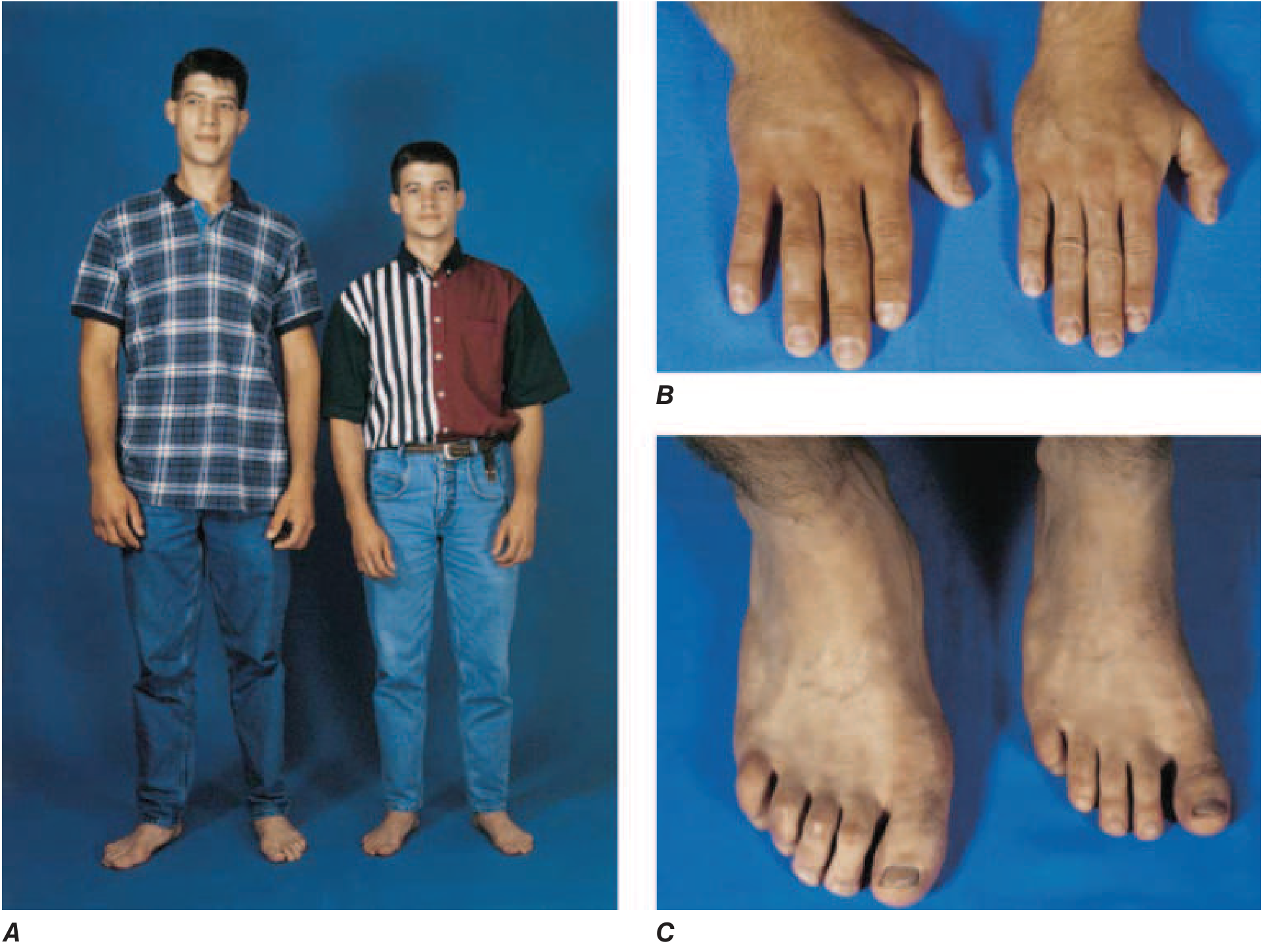
Acromegaly is a clinical syndrome caused by chronic, pathological hypersecretion of growth hormone (GH) and subsequent excess of insulin-like growth factor 1 (IGF-1). When GH excess occurs before epiphyseal closure in children/adolescents, the result is pituitary gigantism rather than acromegaly.
2. Etiology
GH hypersecretion is pituitary in origin in ~98% of cases.
| Cause | Prevalence |
|---|---|
| Pituitary (98%) | |
| Densely or sparsely granulated GH cell adenoma | 60% |
| Mixed GH + PRL cell adenoma | 25% |
| Mammosomatotrope cell adenoma | 10% |
| Plurihormonal adenoma (also secretes ACTH, TSH, α-subunit) | rare |
| GH cell carcinoma or metastases | rare |
| MEN-1 associated GH adenoma | rare |
| McCune-Albright syndrome | rare |
| Ectopic sphenoid/parapharyngeal sinus pituitary adenoma | rare |
| Extrapituitary tumor (<1%) | |
| Pancreatic islet cell tumor, lymphoma | <1% |
| Excess GHRH secretion (<1%) | |
| Central: hypothalamic hamartoma, choriostoma, ganglioneuroma | <1% |
| Peripheral: bronchial carcinoid, pancreatic islet cell tumor, small-cell lung cancer, adrenal adenoma, medullary thyroid carcinoma, pheochromocytoma | <1% |
Key pathophysiology points:
- Mixed mammosomatotrope tumors and acidophilic stem cell adenomas secrete both GH and PRL. In acidophilic stem cell adenomas, features of hyperprolactinemia (hypogonadism, galactorrhea) dominate over acromegaly signs.
- GHRH-mediated acromegaly presents with classic acromegaly features, elevated GH, pituitary enlargement on MRI, and pituitary hyperplasia (not adenoma) on pathology. Most common cause: chest/abdominal carcinoid.
- Rarely, ectopic GH secretion from pancreatic, ovarian, lung, or hematopoietic tumors.
3. GH Physiology (Background)
- GH is the most abundant anterior pituitary hormone; somatotropes constitute up to 50% of anterior pituitary cells.
- GHRH (44 amino acids, hypothalamic) - stimulates GH synthesis and release via GPCR/cAMP pathway.
- Ghrelin (octanoylated gastric peptide) - induces GHRH and directly stimulates GH release.
- Somatostatin (SRIF) - inhibits GH secretion; SST2 and SST5 subtypes primarily suppress GH.
- GH secretion is pulsatile, with highest peaks at night (sleep onset).
- GH secretory rates decline markedly with age (~15% of pubertal levels in middle age).
- A single random GH level is not useful - ~50% of daytime samples in healthy subjects are undetectable.
GH actions (direct):
- Protein synthesis and nitrogen retention
- Impairs glucose tolerance (insulin antagonism)
- Stimulates lipolysis - increases circulating fatty acids, reduces omental fat, increases lean body mass
- Promotes Na+, K+, water retention; elevates inorganic phosphate
- Stimulates linear bone growth via epiphyseal prechondrocyte differentiation
IGF-1 (main mediator of GH effects):
- Liver is the major source of circulating IGF-1 (GH-dependent)
- IGF-1 peaks at age 16, then declines >80% with aging
- IGFBP3 is GH-dependent and the major carrier protein for circulating IGF-1
- In acromegaly, IGF-1 levels show a log-linear relationship with circulating GH
- GH receptor signals via JAK/STAT pathway
4. Clinical Features
Manifestations are indolent - often not diagnosed for 10+ years after onset.
Acral/Skeletal Features
- Frontal bossing, mandibular enlargement, prognathism
- Widened space between lower incisors
- Increased hand and foot size
- "Spadelike" distal finger tufts
- Large fleshy nose
- Kyphosis, barrel chest (rib enlargement + dorsal kyphosis)
Soft Tissue / Skin
- Soft tissue swelling: increased heel pad thickness, increased shoe/glove size, ring tightening
- Coarse facial features
- Hyperhidrosis (very common)
- Oily skin
- Acanthosis nigricans, skin tags
- Deep, hollow-sounding voice
Cardiovascular (most significant impact)
- Cardiomyopathy with arrhythmia
- Left ventricular hypertrophy
- Decreased diastolic function
- Hypertension
- Overall mortality increased ~3-fold (primarily cardiovascular and cerebrovascular disorders and respiratory disease)
- Untreated acromegaly reduces survival by an average of 10 years
Respiratory
- Upper airway obstruction with sleep apnea in >60% of patients
- Caused by: soft tissue laryngeal airway obstruction AND central sleep dysfunction
Metabolic
- Diabetes mellitus in 25% of patients (GH counteracts insulin)
- Most patients are glucose intolerant
Gastrointestinal / Oncologic
- Colon polyps in up to 1/3 of patients
- Increased mortality from colonic malignancy
- Visceromegaly: cardiomegaly, macroglossia, thyroid gland enlargement
Musculoskeletal (Arthropathy)
- Osteoarthritis affecting knees, shoulders, hips, wrists, fingers - wrist involvement is not prominent in primary OA, making it a distinguishing clue
- Initial: joint space widening (cartilage hypertrophy) → later joint space narrowing as cartilage degrades
- Joint fluid: noninflammatory
- Chondrocalcinosis - calcium pyrophosphate crystals can cause pseudogout attacks
- Back pain (spine hypermobility); radiographs show widened intervertebral disk spaces, anterior osteophytes, ligamental calcification (can mimic DISH)
- Thickened heel pad in 1/3 of patients
- Raynaud's phenomenon in ~1/3
- Carpal tunnel syndrome in ~1/2 of patients (median nerve compression by excess connective tissue)
- Proximal muscle weakness (non-inflammatory GH effect; serum enzymes and EMG normal)
Reproductive / Hormonal
- PRL elevated in ~25% of acromegaly patients (co-secreting tumors)
- Hypogonadism and galactorrhea if acidophilic stem cell adenoma
- Thyroid/gonadotropin/sex steroid levels may be attenuated from tumor mass effects
5. Diagnosis
IGF-1
- Age-matched serum IGF-1 is elevated in acromegaly
- Best screening test when clinical features suggest acromegaly
- IGF-1 provides a useful laboratory measure because it integrates overall GH secretion
GH Suppression Test (Gold standard)
- Single random GH is not useful (pulsatile secretion)
- Oral glucose tolerance test (OGTT, 75 g): failure to suppress GH to <0.4 μg/L within 1-2 hours confirms the diagnosis
- With ultrasensitive assays, normal nadir GH is even lower (<0.05 μg/L)
- ~20% of patients show a paradoxical GH rise after glucose
- Using standard assays, glucose suppresses GH to <0.7 μg/L in women and <0.07 μg/L in men
Additional Labs
- PRL: measure in all patients (elevated in ~25%)
- Thyroid function, gonadotropins, sex steroids: may be attenuated due to mass effects
- ACTH reserve testing: defer until after surgery (most patients get glucocorticoid coverage perioperatively)
Imaging
- Pituitary MRI to localize the adenoma
- Most tumors are macroadenomas at presentation
6. Treatment
Goal: Control GH and IGF-1 hypersecretion, ablate/arrest tumor growth, ameliorate comorbidities, restore normal mortality rates, and preserve pituitary function.
1. Surgery (First-line)
- Transsphenoidal surgical resection of GH-secreting adenoma is the initial treatment for most patients
- Somatostatin receptor ligands (SRLs) are used as adjuvant therapy
2. Somatostatin Receptor Ligands (SRLs) - Primary medical therapy
- Octreotide (short-acting) and lanreotide (long-acting)
- Act via SST2 and SST5 receptor subtypes to suppress GH
- Reduce GH and IGF-1 levels, improve symptoms
- May shrink tumor in some patients
- Used pre-operatively to improve surgical outcomes, or as primary therapy if surgery is contraindicated/declined
3. Dopamine Agonists
- Cabergoline or bromocriptine
- Less effective than SRLs for GH suppression
- More effective in mixed GH/PRL-secreting tumors
- Oral administration is an advantage
4. GH Receptor Antagonist
- Pegvisomant - a GH analogue that binds to the receptor but cannot signal (competitive antagonist)
- Approved for treatment of acromegaly
- Directly blocks peripheral GH action → lowers IGF-1
- Does not lower GH levels; tumor monitoring still required
5. Radiotherapy
- Used when surgery and medical therapy fail
- Options: conventional radiotherapy, stereotactic radiosurgery (Gamma Knife)
- Effect on GH/IGF-1 may take years
- Risk of hypopituitarism
7. Key Numbers to Remember
| Parameter | Value |
|---|---|
| Diagnostic GH cut-off (OGTT) | <0.4 μg/L (standard); <0.05 μg/L (ultrasensitive) |
| Paradoxical GH rise after glucose | ~20% of patients |
| PRL co-elevation | ~25% of patients |
| Sleep apnea prevalence | >60% |
| Diabetes mellitus | ~25% |
| Colon polyps | Up to 1/3 |
| Carpal tunnel syndrome | ~50% |
| Raynaud's phenomenon | ~1/3 |
| Thickened heel pad | ~1/3 |
| Mortality increase | ~3-fold |
| Reduced survival (untreated) | ~10 years |
| Diagnosis delay | 10+ years typical |
| Pituitary cause of acromegaly | 98% |
| Extrapituitary cause | <1% |
| Excess GHRH cause | <1% |
8. Acromegaly vs. Gigantism
| Feature | Acromegaly | Gigantism |
|---|---|---|
| Age of onset | After epiphyseal closure (adult) | Before epiphyseal closure (child/adolescent) |
| Primary feature | Acral/soft tissue overgrowth | Increased linear height |
| Cause | Same (GH-secreting adenoma) | Same |
9. Associations / Syndromes
- MEN-1: GH cell adenoma is one of the pituitary manifestations
- McCune-Albright syndrome: can cause somatotrope hyperfunction
- Carcinoid tumors: most common cause of ectopic GHRH-mediated acromegaly
Source: Harrison's Principles of Internal Medicine, 22nd Edition (2025), Chapter 392 - Pituitary Tumor Syndromes.
This is a shared conversation. Sign in to Orris to start your own chat.