
Malformations of Musculoskeletal System in Children Definition Etilogy pathogensis mechanism diagnosis treatment etc for class discussion
congenital malformations musculoskeletal system children definition etiology pathogenesis classification
Harrison's Principles of Internal Medicine, Twenty First Edition
Page 12086
clubfoot developmental dysplasia hip scoliosis congenital limb defects diagnosis treatment pediatric
Detection and Nonoperative Management of Pediatric Developmental Dysplasia of the Hip in Infants up to Six Months of Age
Page 1
congenital musculoskeletal malformations children clubfoot hip dysplasia scoliosis
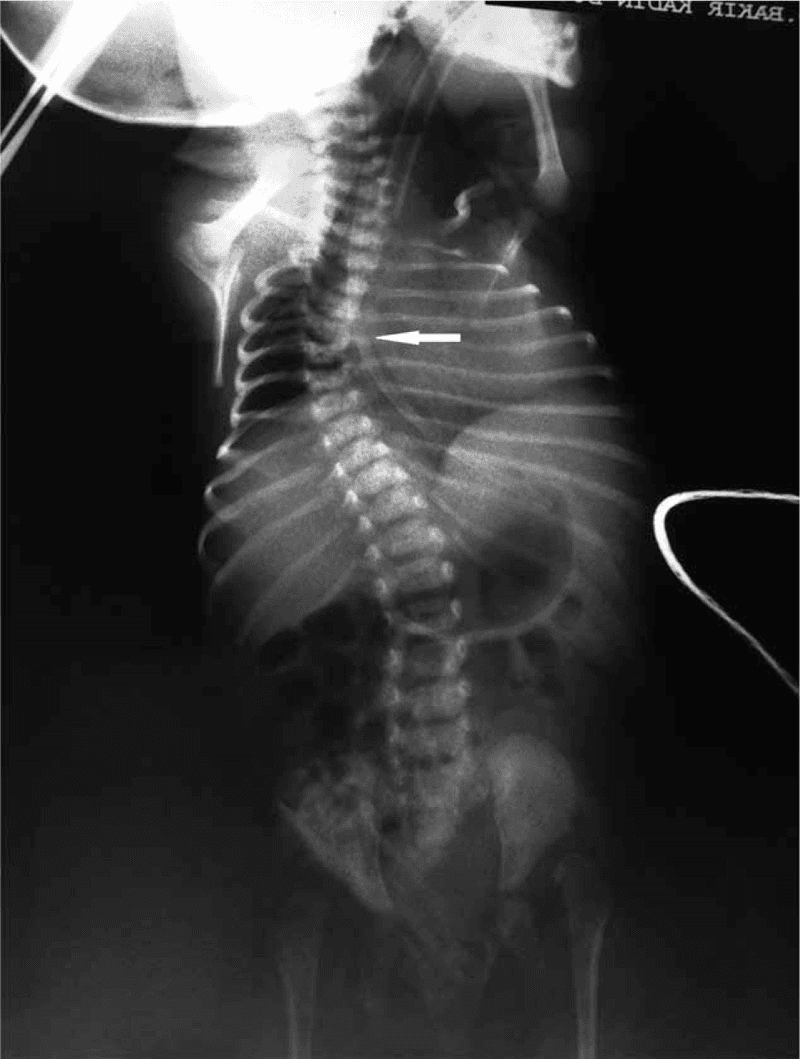
Hugging Face ROCO-Radiology
Page 0
developmental dysplasia hip DDH pathogenesis risk factors Ortolani Barlow diagnosis Pavlik harness treatment
congenital talipes equinovarus clubfoot etiology pathology Ponseti method treatment surgery
Malformations of the Musculoskeletal System in Children
Class Discussion Guide — Definitions, Etiology, Pathogenesis, Diagnosis & Treatment
I. Overview & Definition
| Category | Description | Examples |
|---|---|---|
| Malformations | Intrinsic developmental error | Clubfoot, DDH, polydactyly |
| Deformations | Extrinsic mechanical forces on normal tissue | Positional foot deformity |
| Disruptions | Breakdown of normal tissue (vascular, amniotic bands) | Limb reduction defects |
| Dysplasias | Abnormal tissue organization | Osteogenesis imperfecta, achondroplasia |
II. Etiology & Pathogenesis — General Mechanisms
A. Genetic / Chromosomal
- Single gene mutations (e.g., FGFR3 in achondroplasia; COL1A1/COL1A2 in osteogenesis imperfecta)
- Chromosomal trisomies (Trisomy 21 → ligamentous laxity; Trisomy 18 → multiple deformities)
- Multifactorial inheritance (most common — e.g., clubfoot, DDH, scoliosis)
B. Teratogenic / Environmental
- Antiseizure drugs: Valproic acid carries a 7–20% risk of fetal malformations, including musculoskeletal and cardiovascular defects; the risk increases with polytherapy (up to 10–20% with 3 drugs). (Harrison's, p. 12086)
- Thalidomide → limb reduction defects (phocomelia)
- Alcohol (FAS) → joint and limb anomalies
- Mechanical (oligohydramnios, uterine constraint) → deformations
C. Intrauterine Mechanical Factors
- Reduced amniotic fluid → compression deformities
- Abnormal fetal position → congenital hip dislocation, foot deformities
- Amniotic band syndrome → limb constrictions
D. Vascular / Ischemic
- Transverse limb defects from vascular disruption in first trimester
III. Major Conditions — Detailed
1. Developmental Dysplasia of the Hip (DDH)
Etiology & Risk Factors
| Factor | Relative Risk |
|---|---|
| Female sex | 4–8× more common |
| Breech presentation | 10–20× |
| Positive family history | 12× if parent + sibling affected |
| First-born child | Tight uterus |
| Left hip (most common) | Crowded in utero against maternal spine |
| Oligohydramnios | Mechanical compression |
| Ligamentous laxity | Maternal estrogen effect |
Pathogenesis
- Shallow acetabulum fails to provide adequate containment of femoral head
- Femoral head migrates superolaterally out of acetabulum
- Chronically dislocated head causes: acetabular fibrofatty changes (pulvinar), labral eversion (limbus), capsular elongation, and shortened hip adductors/iliopsoas
- If untreated: secondary osteoarthritis by 3rd–4th decade
Classification (Graf Ultrasound)
- Type I: Normal
- Type IIa: Immature (< 3 months)
- Type IIb: Delayed ossification (> 3 months — pathological)
- Type III: Subluxation
- Type IV: Dislocation
Clinical Presentation
- Neonate: Asymmetric skin folds, leg length discrepancy, limited hip abduction
- Ortolani test (+): Dislocated hip reduces with abduction — "clunk" of reduction
- Barlow test (+): Stable hip dislocates with adduction + posterior pressure
- Walking child: Trendelenburg gait, waddling (bilateral DDH), leg shortening
Diagnosis
| Age | Investigation of Choice | Notes |
|---|---|---|
| 0–4 months | Ultrasound (Graf method) | Gold standard; ossific nucleus not yet visible on X-ray |
| > 4–6 months | Pelvis X-ray (AP) | Shenton's line disrupted; Hilgenreiner/Perkin lines used |
| Older child | X-ray ± MRI | Assess acetabular index, CE angle |
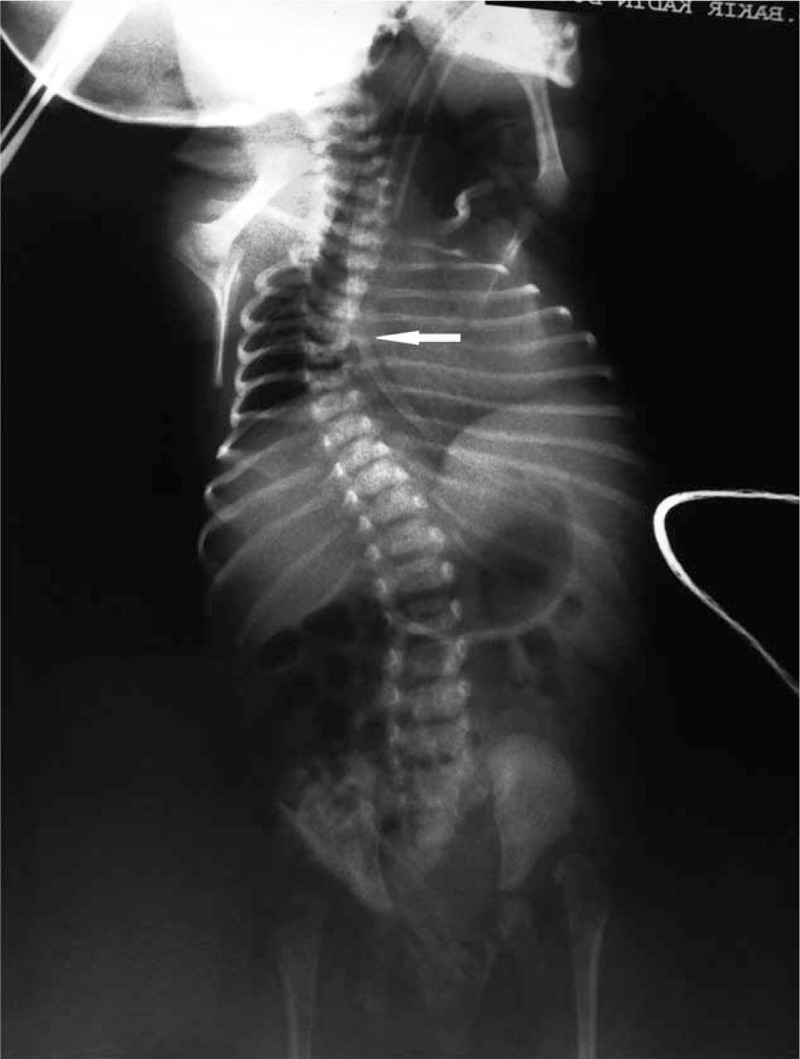
Treatment
| Age | Treatment |
|---|---|
| 0–6 months | Pavlik harness — keeps hips in flexion/abduction (success rate ~95% in neonates) |
| 6–18 months | Closed reduction under GA + spica cast; if failed → open reduction |
| 18 months – 3 yrs | Open reduction ± femoral shortening/pelvic osteotomy (Salter/Pemberton) |
| > 3 years | Combined femoral + pelvic osteotomy |
2. Congenital Talipes Equinovarus (CTEV / Clubfoot)
Etiology
- Idiopathic (most common — 50%): multifactorial; 2–3% recurrence in siblings
- Neurogenic: spina bifida, cerebral palsy, arthrogryposis
- Syndromic: associated with other anomalies
- Male predominance (2:1); bilateral in ~50%
Pathogenesis
- Primary defect likely in the talar anlage (cartilaginous talar neck is deviated medially and plantarward)
- Leads to sequential deformity:
- Calcaneus: inverted under talus (varus)
- Navicular: displaced medially
- Forefoot: adducted and supinated
- Ankle: plantarflexed (equinus)
- Shortened medial structures: tibialis posterior tendon, plantar fascia, spring ligament, deltoid ligament
- Muscles: anterior compartment relatively weak; posterior/medial compartment contracted
Diagnosis
- Clinical diagnosis at birth: assess CAVE components
- Pirani Score: 6-point scoring system (3 midfoot + 3 hindfoot signs) — guides Ponseti treatment
- Dimeglio Classification: I–IV based on reducibility
- Postnatal X-ray: Talo-calcaneal angle (Kite's angle) < 20° (normal 20–40°); talus-first metatarsal angle abnormal
- Rule out: neural tube defects, hip dysplasia (associated in ~2%)
Treatment
- Serial casting (weekly) — corrects C, A, V components sequentially over ~6–8 weeks
- Percutaneous Achilles tenotomy (in ~90%) — corrects equinus
- Foot abduction brace (Denis Browne splint) — worn 23 hrs/day × 3 months, then nights until age 4
- Posteromedial soft tissue release (Carroll/McKay procedure)
- Tibialis anterior tendon transfer (to lateral cuneiform) for dynamic supination
3. Congenital Scoliosis
Classification (Winter)
| Type | Description | Prognosis |
|---|---|---|
| Type I | Failure of formation (hemivertebra) | Variable |
| Type II | Failure of segmentation (unsegmented bar) | Worst — progressive |
| Type III | Mixed | Variable |
Etiology & Pathogenesis
- Failure of normal somite differentiation between weeks 5–8 of embryogenesis
- Unilateral unsegmented bar: tethers one side → asymmetric growth → progressive curve
- Frequently associated with VACTERL syndrome (Vertebral, Anal, Cardiac, Tracheo-Esophageal, Renal, Limb anomalies)
- Spinal cord anomalies in ~18–38% (diastematomyelia, syrinx, tethered cord) — MRI mandatory
Diagnosis
- Screening: Adams forward bend test (rib hump)
- X-ray (AP + lateral standing): Cobb angle measurement; vertebral anomaly typing
- MRI spine: mandatory — assess intraspinal anomalies
- CT 3D reconstruction: surgical planning
- Echocardiogram + renal ultrasound: rule out associated anomalies
Treatment
- Observation: curves < 20° with low progression risk
- Growing rods / VEPTR (Vertical Expandable Prosthetic Titanium Rib): for thoracic insufficiency syndrome in young children
- Spinal fusion: for progressive curves, once growth nears completion; type II (unsegmented bar) requires early surgery
4. Achondroplasia
Etiology & Pathogenesis
- Autosomal dominant; > 80% are new mutations
- Gain-of-function mutation in FGFR3 gene (chromosome 4p16.3) — most commonly Gly380Arg
- FGFR3 normally inhibits chondrocyte proliferation; mutant receptor is constitutively active → severely inhibited endochondral ossification
- Intramembranous ossification is normal → skull vault, clavicle normal; long bones abnormally short
Clinical Features
- Rhizomelic shortening of limbs (proximal > distal)
- Large head (macrocephaly), frontal bossing, midface hypoplasia
- Trident hands, thoracolumbar kyphosis (infantile), lumbar hyperlordosis (adult)
- Normal intelligence; normal lifespan (with monitoring)
Complications
- Foramen magnum stenosis → cervical cord compression (sudden death in infancy)
- Spinal canal stenosis in adulthood
- Obstructive sleep apnea
- Recurrent otitis media
Diagnosis
- Clinical + X-ray: shortened tubular bones, rhizomelia, "champagne glass" pelvis, "tombstone" shaped pelvis, small foramen magnum
- Molecular genetic testing (FGFR3)
- Prenatal: ultrasound (femur length < 5th percentile after 22 weeks), amniocentesis
Treatment
- Primarily supportive and symptomatic
- Vosoritide (CNP analogue — FGFR3 inhibitor): FDA-approved (2021) for pediatric achondroplasia — improves annualized height velocity
- Foramen magnum decompression if symptomatic stenosis
- Limb lengthening (controversial)
- Avoid contact sports
5. Osteogenesis Imperfecta (OI)
Etiology & Pathogenesis
- Most commonly autosomal dominant mutations in COL1A1 or COL1A2 (encoding Type I collagen)
- Leads to: quantitative deficiency (Type I OI) or qualitative defect in collagen fibril assembly (Types II–IV)
- Bone matrix is disorganized and poorly mineralized → pathological fractures from minimal trauma
Sillence Classification
| Type | Severity | Sclerae | Notable Features |
|---|---|---|---|
| I | Mild | Blue sclerae | Most common; normal stature |
| II | Lethal (perinatal) | Blue | Multiple fractures in utero; stillbirth |
| III | Severe, progressive | Variable | Triangular face, severe deformity |
| IV | Moderate | White/normal | Variable deformity |
Diagnosis
- Clinical: fractures disproportionate to trauma, blue sclerae, dentinogenesis imperfecta, hearing loss
- X-ray: osteopenia, wormian bones (skull), bowing deformities
- DXA scan: reduced BMD
- Molecular testing: COL1A1/COL1A2 sequencing
- Key differential: non-accidental injury (NAI/child abuse) — history, pattern of fractures, multidisciplinary assessment
Treatment
- Bisphosphonates (pamidronate/zoledronate): IV cyclic therapy — increases bone density, reduces fracture rate; given in children with recurrent fractures
- Physiotherapy: muscle strengthening, mobility
- Intramedullary rodding (Fassier-Duval rods): for long bone stabilization and correction of bowing
- Hearing aids, dental management
6. Polydactyly & Syndactyly
- Polydactyly: Supernumerary digits (extra fingers/toes)
- Syndactyly: Fusion of adjacent digits (most common congenital hand anomaly)
Etiology & Pathogenesis
- Limb development regulated by: Zone of Polarizing Activity (ZPA), Apical Ectodermal Ridge (AER), and Wnt/BMP signaling
- Polydactyly: defective ZPA signaling (sonic hedgehog pathway excess)
- Syndactyly: failure of interdigital apoptosis (programmed cell death) between weeks 6–8
- Both may be isolated or syndromic (Apert syndrome — complex syndactyly; Ellis-van Creveld — polydactyly + short stature)
Classification
- Polydactyly: Preaxial (radial/tibial side), Central, Postaxial (ulnar/fibular — most common)
- Syndactyly: Simple (skin only) vs. Complex (bone fusion); Complete vs. Incomplete
Diagnosis
- Clinical examination + X-ray of hand/foot
- Genetic workup if syndromic features present
Treatment
- Polydactyly: Surgical excision — timing depends on type; postaxial soft-tissue type can be tied off in neonates; bony types need reconstruction at 1–2 years
- Syndactyly: Surgical separation + skin grafting at 6–18 months (earlier if bordering digits of unequal length — index-middle, ring-small — to prevent deformity)
7. Limb Reduction Defects
Classification (ISO/ISPO)
- Transverse: Complete absence distal to a level (amputation-like)
- Longitudinal: Absence along the axis of the limb (radial/ulnar/fibular hemimelia)
Etiology
- Vascular disruption in first trimester
- Amniotic band syndrome
- Teratogenic exposure (thalidomide, misoprostol)
- Chromosomal anomalies
Treatment
- Prosthetic fitting (age-appropriate)
- Radial club hand (radial hemimelia): centralization surgery; associated with Fanconi anemia — must screen
- Fibular hemimelia: Syme amputation vs. limb lengthening
IV. Diagnostic Approach — Summary Table
| Condition | Key Clinical Signs | Investigation of Choice | Additional Work-up |
|---|---|---|---|
| DDH | Ortolani/Barlow, limited abduction | USG (< 4 mo), X-ray (> 4 mo) | Graf classification |
| Clubfoot | CAVE deformity | Clinical + Pirani score | X-ray, spinal ultrasound |
| Congenital scoliosis | Rib hump, trunk asymmetry | X-ray Cobb angle | MRI spine, echo, renal USG |
| Achondroplasia | Rhizomelia, macrocephaly | X-ray skeletal survey | FGFR3 gene testing |
| OI | Fractures, blue sclerae | X-ray, DXA | COL1A1/COL1A2 sequencing |
| Polydactyly/Syndactyly | Extra/fused digits | X-ray hand/foot | Genetics if syndromic |
V. Pathogenesis — Unifying Concepts for Class Discussion
Embryological insult (genetic/teratogenic/mechanical)
           │
    ┌──────┴──────┐
    ▼             ▼
Failure of    Failure of
formation     segmentation
(hemivertebra) (fusion anomaly)
           │
    Asymmetric growth forces
           │
    Progressive deformity over time
           │
    Secondary joint/soft tissue adaptation
           │
    Functional disability if untreated
- The earlier the insult in embryogenesis, the more severe and complex the malformation
- Many conditions are progressive during growth spurts — regular surveillance mandatory
- Multisystem association is common (VACTERL, skeletal dysplasias) — always screen
- Timing of intervention is critical — early treatment exploits growth remodeling potential
VI. Treatment Principles Summary
| Approach | Examples |
|---|---|
| Splinting/Bracing | Pavlik harness (DDH), Denis Browne (clubfoot), TLSO (scoliosis) |
| Serial Casting | Ponseti method (clubfoot) |
| Closed/Open Reduction | DDH surgical reduction |
| Osteotomy | Salter, Pemberton (DDH); corrective spinal fusion |
| Intramedullary Rodding | OI (Fassier-Duval rods) |
| Medical | Bisphosphonates (OI), Vosoritide (achondroplasia) |
| Prosthetics | Limb reduction defects |
| Gene-targeted therapy | Emerging (achondroplasia, OI) |
VII. Key Discussion Points
- Why is early diagnosis critical? — Growth remodeling is possible only while skeletal immaturity persists; delayed diagnosis leads to secondary adaptive changes requiring more complex surgery
- How do you differentiate positional from true malformations? — Positional deformities are flexible/passively correctable; true malformations are rigid
- Role of genetics clinic: Any child with multiple malformations needs chromosomal microarray + dysmorphology assessment
- Teratogen counseling: Valproic acid in epileptic mothers — risk of musculoskeletal + cardiovascular malformations (1.4–1.8%); always discuss risk/benefit with neurologist (Harrison's, p. 12086)
- Clubfoot management has been revolutionized — Ponseti method (non-surgical) achieves >95% success and has replaced extensive surgical release as first-line globally
- Scoliosis vs. congenital scoliosis: Congenital has structural vertebral anomaly, always get MRI to rule out spinal cord anomaly before any treatment
Try again
congenital malformations musculoskeletal system children classification etiology pathogenesis
Bailey and Love's Short Practice of Surgery 28th Edition
Page 759
clubfoot DDH scoliosis achondroplasia osteogenesis imperfecta pediatric orthopedics diagnosis treatment
Bailey and Love's Short Practice of Surgery 28th Edition
Page 636
pediatric musculoskeletal malformations clubfoot hip dysplasia congenital scoliosis limb defects
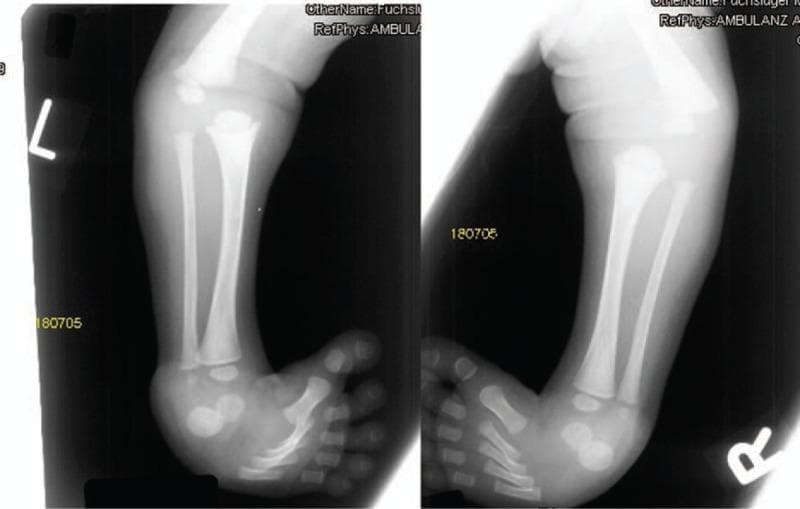
Hugging Face pmc clinical VQA raw
Page 0
developmental dysplasia of the hip pathogenesis Ortolani Barlow test Pavlik harness ultrasound Graf classification
congenital talipes equinovarus clubfoot CAVE deformity Ponseti method Pirani score serial casting tenotomy
clubfoot talipes equinovarus Ponseti casting treatment before after
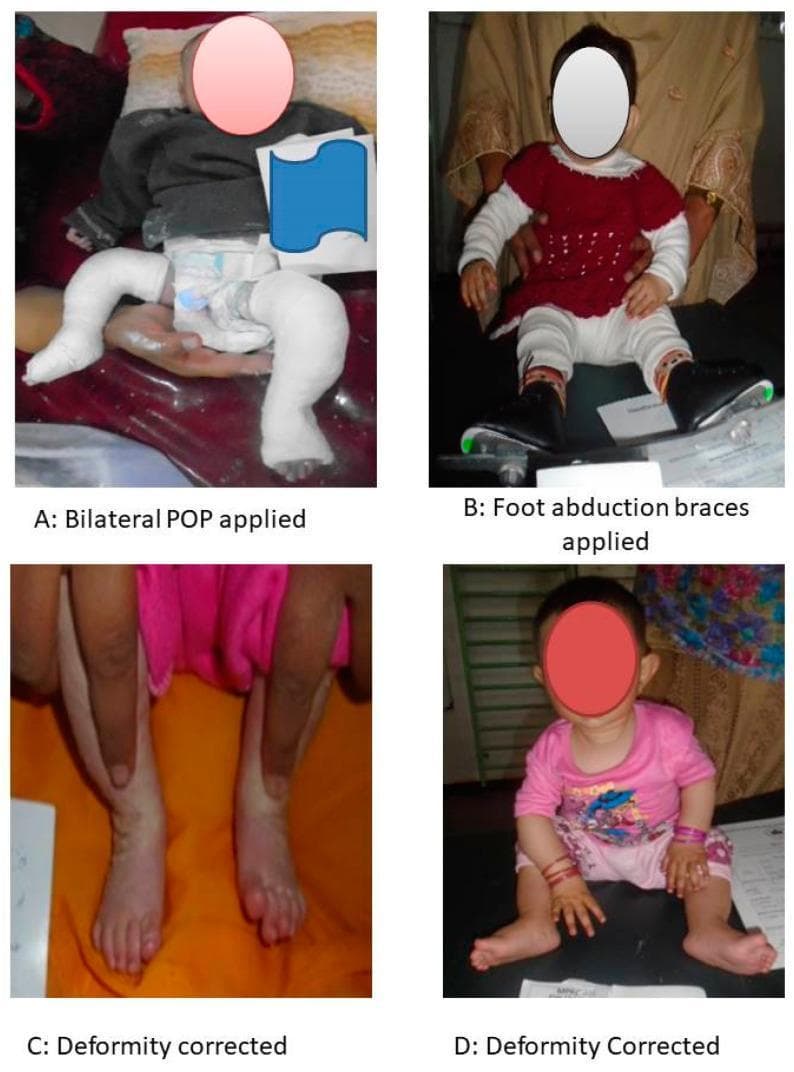
Hugging Face pmc clinical VQA raw
Page 0
Malformations of the Musculoskeletal System in Children
Complete Class Discussion Notes
1. DEFINITION
| Category | Mechanism | Examples |
|---|---|---|
| Malformation | Intrinsic error in morphogenesis | Clubfoot, DDH, polydactyly |
| Deformation | Extrinsic mechanical forces on structurally normal tissue | Positional foot deformity |
| Disruption | Breakdown of originally normal tissue | Amniotic band syndrome, limb reduction |
| Dysplasia | Abnormal organization of cells into tissue | Achondroplasia, OI |
2. EMBRYOLOGICAL BASIS
| Organizer | Location | Controls |
|---|---|---|
| Apical Ectodermal Ridge (AER) | Distal limb tip | Proximodistal outgrowth |
| Zone of Polarizing Activity (ZPA) | Posterior mesenchyme | Anteroposterior patterning (digit identity) |
| Dorsoventral Ectoderm | Dorsal/ventral surface | Dorsoventral patterning |
3. GENERAL ETIOLOGY
| Category | Mechanism | Examples |
|---|---|---|
| Genetic / Single gene | Mutation in developmental gene | FGFR3 → achondroplasia; COL1A → OI; SHH pathway → polydactyly |
| Chromosomal | Trisomies, deletions | Trisomy 18, 21 → multiple anomalies |
| Multifactorial | Gene + environment threshold | DDH, clubfoot, idiopathic scoliosis |
| Teratogenic | Drug, chemical, infection | Valproic acid, thalidomide, rubella |
| Mechanical / Intrauterine | Oligohydramnios, abnormal lie, twinning | Positional deformities, DDH |
| Vascular disruption | Ischemia in early gestation | Transverse limb defects |
4. MAJOR CONDITIONS
A. Developmental Dysplasia of the Hip (DDH)
Definition
Etiology & Risk Factors
| Risk Factor | Relative Risk |
|---|---|
| Female sex | 4–8× |
| Breech presentation | 10–20× |
| Family history (1st-degree) | 12× |
| First-born | Tight, unprepared uterus |
| Left hip (most common 60%) | Lies against maternal spine in LOA position |
| Oligohydramnios | Mechanical constraint |
| Ligamentous laxity (maternal estrogen) | Neonatal hip instability |
Pathogenesis
Shallow/underdeveloped acetabulum
        ↓
Femoral head inadequately contained
        ↓
Head migrates superolaterally
        ↓
Secondary changes:
  • Pulvinar (fibrofatty tissue) fills acetabulum
  • Labrum everts/inverts (limbus)
  • Capsule elongates and hourglass constricts
  • Iliopsoas & adductors shorten
        ↓
If untreated → secondary OA by 3rd–4th decade
Clinical Features
- Neonate: Asymmetric skin folds, apparent leg shortening (Galeazzi sign), limited hip abduction
- Ortolani test: Hip reduced → gentle abduction → dislocated head clunks back in ("in sign")
- Barlow test: Hip reduced → adduction + posterior pressure → head clunks out ("out sign")
- Walking child: Trendelenburg gait, waddling (bilateral), apparent leg shortening
- Note: Ortolani/Barlow become negative after 6–8 weeks as soft tissues tighten — do not exclude DDH
Diagnosis
| Age | Investigation | Rationale |
|---|---|---|
| 0–4 months | Ultrasound (Graf method) | Ossific nucleus absent; X-ray useless |
| 4–6 months | Ultrasound transitioning to X-ray | |
| > 6 months | AP pelvis X-ray | Ossific nucleus visible |
- Type I: Normal (α angle > 60°)
- Type IIa: Immature (α 50–59°, age < 3 months — physiological)
- Type IIb: Delayed ossification (α 50–59°, age > 3 months — pathological)
- Type III: Subluxed cartilaginous roof
- Type IV: Dislocated
- Hilgenreiner line: Horizontal through both triradiate cartilages
- Perkin line: Vertical from lateral acetabular edge
- Normal: ossific nucleus in inner lower quadrant
- Shenton's line: Disrupted in subluxation/dislocation
Treatment
| Age | Treatment | Notes |
|---|---|---|
| 0–6 months | Pavlik harness | Maintains flexion 90–100°, abduction 40–50°; success ~95% in neonates; check for femoral nerve palsy |
| 6–18 months | Closed reduction + hip spica cast under GA | Arthrogram to confirm reduction; cast 12 weeks |
| 18 months – 3 yrs | Open reduction ± femoral shortening | Approach: medial (Ludloff) or anterior (Smith-Petersen) |
| > 3 yrs | Open reduction + femoral + pelvic osteotomy | Salter (< 6 yrs), Pemberton, Dega, Triple osteotomy |
B. Congenital Talipes Equinovarus (CTEV / Clubfoot)
Definition
- C — Cavus (high arch of midfoot)
- A — Adductus (forefoot adducted)
- V — Varus (hindfoot inverted)
- E — Equinus (ankle plantarflexed)
Epidemiology
- 1–2 per 1,000 live births; male 2:1; bilateral in ~50%
- Most common congenital foot deformity
Etiology
| Type | Details |
|---|---|
| Idiopathic (80%) | Multifactorial; 2–4% sibling recurrence; 10× if parent + sibling affected |
| Neurogenic | Spina bifida (myelomeningocele), cerebral palsy — rigid, worse prognosis |
| Syndromic | Arthrogryposis (fibrous joint ankylosis), Larsen syndrome, chromosomal anomalies |
| Positional | In utero compression — flexible, corrects with gentle manipulation |
Pathogenesis
- Primary defect: deviated talar neck (medially and plantarward rotated)
- All other bones displace around the abnormal talus:
- Calcaneus: inverted, equinus position
- Navicular: displaced medially onto medial talar neck
- Cuboid: follows calcaneus medially
- Contracted structures: tibialis posterior, FHL, FDL, plantar fascia, spring ligament, deltoid ligament, posterior capsule
- Relatively weak/lengthened: peronei, anterior tibialis, extensor tendons
Assessment
- Midfoot score (3 points): Curved lateral border, medial crease, talar head coverage
- Hindfoot score (3 points): Posterior crease, rigid equinus, empty heel
- Grade I: Soft/postural (benign)
- Grade II: Soft/resistant (moderate)
- Grade III: Resistant/soft (severe)
- Grade IV: Rigid (very severe)
Treatment
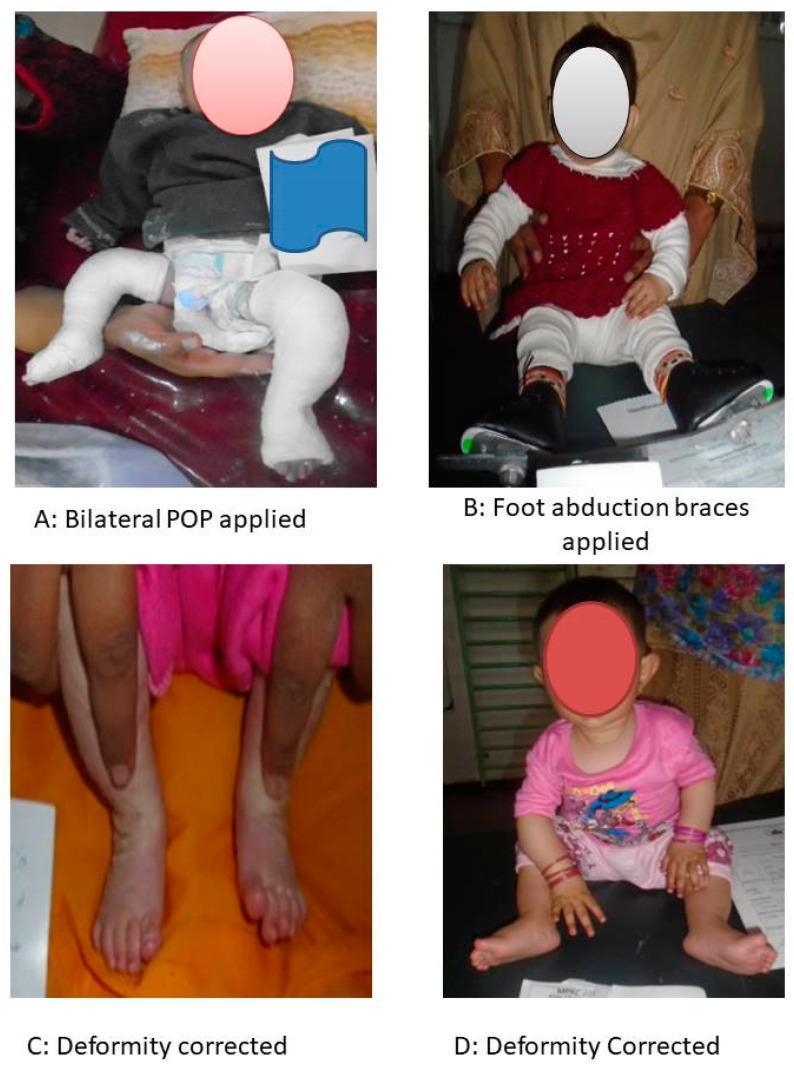
- Serial casting (weekly, 5–7 casts): Corrects C → A → V in sequence; hindfoot corrects last
- Percutaneous Achilles tenotomy (in ~85–90%): Corrects equinus; local anesthesia; cast for 3 weeks post-procedure
- Foot Abduction Brace (Denis Browne orthosis): 70° abduction, 10° dorsiflexion; 23 hrs/day × 3 months, then nights/naps until age 4–5 years
- Non-compliance = #1 cause of relapse
- Tibialis anterior tendon transfer to lateral cuneiform — corrects dynamic supination
- Posteromedial soft-tissue release (McKay/Carroll) — historically used; now reserved for failures
C. Congenital Scoliosis
Definition
Etiology
- Failure of normal somite differentiation at weeks 5–8 of gestation
- Environmental triggers: maternal hyperthermia, diabetes, antiepileptic drugs
- Associated with VACTERL syndrome (Vertebral, Anorectal, Cardiac, Tracheo-Esophageal, Renal, Limb)
- Spinal cord anomalies in 18–38% (diastematomyelia, tethered cord, syringomyelia) — always get MRI
Classification (Winter)
| Type | Defect | Examples | Prognosis |
|---|---|---|---|
| Type I | Failure of formation | Hemivertebra (fully/partially segmented) | Variable — depends on hemivertebra type |
| Type II | Failure of segmentation | Unilateral unsegmented bar (block vertebra on one side) | Worst — relentlessly progressive; tethers convex side |
| Type III | Mixed | Bar + hemivertebra on opposite side | Most severe progression |
- Fully segmented (free growth plates both ends) — most progressive
- Semi-segmented — moderate progression
- Incarcerated (wedged between normal vertebrae) — minimal progression
- Non-segmented (fused) — least progressive
Pathogenesis
Vertebral anomaly (e.g. unsegmented bar)
        ↓
Asymmetric longitudinal growth
        ↓
Progressive lateral curve + rotation
        ↓
Rib cage deformity → Thoracic Insufficiency Syndrome
        ↓
Restrictive lung disease + cor pulmonale (severe cases)
Diagnosis
- Adams Forward Bend Test: rib hump/trunk asymmetry
- Standing AP + lateral X-ray: Cobb angle; vertebral anomaly characterization
- MRI whole spine: Mandatory before any surgery — intraspinal anomalies
- CT 3D reconstruction: Surgical planning
- Echocardiogram + renal ultrasound: VACTERL screening
- Pulmonary function tests (older children)
Treatment
| Cobb Angle / Age | Treatment |
|---|---|
| < 20°, low risk | Observation (6-monthly X-rays) |
| Progressive, young child | Growing rods (magnetically controlled — MAGEC rods) distracted every 6 months; preserves growth |
| Thoracic insufficiency syndrome | VEPTR (Vertical Expandable Prosthetic Titanium Rib) |
| Fully segmented hemivertebra | Hemivertebra resection (< 5 years, before curve is established) |
| Near skeletal maturity | Spinal fusion with instrumentation |
D. Osteogenesis Imperfecta (OI) — "Brittle Bone Disease"
Definition
Pathogenesis
- Mutations in COL1A1 or COL1A2 genes (most common — autosomal dominant)
- Newer forms: CRTAP, LEPRE1, PPIB mutations (autosomal recessive — severe)
- Result: disordered collagen fibril assembly → abnormal bone matrix → osteoporosis + fracture susceptibility
- Bone heals promptly but in disorganized fashion → progressive bowing deformities
- ALL collagen-containing structures affected: bone, ligaments, sclerae, dentin, middle ear ossicles
Sillence Classification
| Type | Severity | Sclerae | Teeth | Features |
|---|---|---|---|---|
| I | Mild | Blue | Normal/DI | Most common; near-normal stature; fractures with minor trauma |
| II | Lethal perinatal | Dark blue | — | Multiple in-utero fractures; stillbirth or death within days |
| III | Severe progressive | Variable | Often DI | Triangular face; severe bowing; wheelchair-bound; most severe surviving form |
| IV | Moderate | White/normal | Often DI | Variable deformity; short stature |
Diagnosis
- Clinical triad: Fractures disproportionate to trauma + blue sclerae + dentinogenesis imperfecta
- X-ray: Generalized osteopenia, wormian bones (skull), bowed long bones, vertebral compression fractures
- DXA scan: Reduced bone mineral density (BMD) Z-score
- Molecular genetic testing: COL1A1/COL1A2 sequencing
- Skin biopsy: Collagen biochemical analysis (historical)
- Critical differential: Non-accidental injury (NAI/child abuse) — history inconsistency, dating of fractures, multidisciplinary team assessment essential
Treatment
| Modality | Details |
|---|---|
| Bisphosphonates | IV pamidronate or zoledronate — cyclic therapy; increases BMD, reduces fracture frequency and bone pain; standard of care for moderate–severe OI |
| Physiotherapy | Hydrotherapy, muscle strengthening, standing frames — prevent disuse atrophy |
| Intramedullary rodding | Fassier-Duval telescoping rods — correct bowing, stabilize long bones, prevent fractures; rods expand with growth |
| Denosumab | Emerging — RANK-L inhibitor for bisphosphonate-resistant cases |
| Hearing aids | Conductive hearing loss from ossicle involvement |
| Dental care | Crowning, dental hygiene for dentinogenesis imperfecta |
E. Achondroplasia
Definition
Etiology & Pathogenesis
- Autosomal dominant; > 80% are de novo mutations (associated with advanced paternal age)
- Gain-of-function mutation in FGFR3 (fibroblast growth factor receptor 3) gene — most commonly Gly380Arg (c.1138G>A, chromosome 4p16.3)
- FGFR3 normally inhibits chondrocyte proliferation in growth plate; mutant receptor is constitutively active
- Result: severely suppressed endochondral ossification → short long bones
- Intramembranous ossification is normal → normal skull vault and clavicles; skull base (endochondral) → small foramen magnum
Clinical Features
- Rhizomelic limb shortening (humerus/femur disproportionately short)
- Macrocephaly, frontal bossing, midface hypoplasia
- Trident hand configuration
- Thoracolumbar kyphosis in infancy → lumbar hyperlordosis with age
- Normal intelligence; near-normal lifespan
- Homozygous achondroplasia = lethal (respiratory failure)
Complications
| Complication | Mechanism | Management |
|---|---|---|
| Foramen magnum stenosis | Small endochondral skull base | High cervical MRI; decompression if symptomatic |
| Obstructive sleep apnea | Midface hypoplasia | Sleep study; CPAP; adenotonsillectomy |
| Spinal canal stenosis | Shortened pedicles | Laminectomy in adulthood |
| Recurrent otitis media | Eustachian tube dysfunction | Grommets |
| Genu varum | Fibular overgrowth relative to tibia | Guided growth / osteotomy |
Diagnosis
- Clinical + skeletal survey X-ray: Shortened tubular bones, "champagne glass" pelvis (narrow sacrosciatic notch), tombstone-shaped iliac wings, small foramen magnum, interpediculate distance narrows caudally (opposite of normal)
- Molecular genetics: FGFR3 point mutation
- Prenatal: Ultrasound (femur length < 5th percentile after 22 weeks); amniocentesis for FGFR3
Treatment
- Vosoritide (CNP analogue; FGFR3 inhibitor) — FDA-approved 2021; daily SC injection; improves annualized height velocity in children ≥ 2 years
- Foramen magnum decompression if symptomatic stenosis
- Guided growth / osteotomy for symptomatic genu varum
- Limb lengthening (Ilizarov/LON technique) — controversial; performed in specialist centres
F. Polydactyly & Syndactyly
Polydactyly — Extra Digits
- Preaxial: Radial/tibial side (thumb/great toe duplication) — often associated with genetic syndromes
- Central: Middle digits — rare, usually syndromic
- Postaxial: Ulnar/fibular side (little finger/5th toe) — most common; Type A (fully formed), Type B (rudimentary)
- Type B postaxial: suture ligation at birth or excision
- Bony types: surgical reconstruction at 1–2 years (before school age)
Syndactyly — Fused Digits
- Most common congenital hand anomaly (1 in 2,000–3,000)
- Simple: skin/soft tissue only
- Complex: bony fusion
- Complete: to fingertip; Incomplete: partial
- Surgical separation + skin grafting at 6–18 months
- Priority: digit pairs of unequal length (ring-little, index-middle) — separate earlier to prevent tethering and angular deformity
G. Congenital Limb Reduction Defects
Definition
Classification
- Transverse: Complete absence distal to a level (amputation-like)
- Longitudinal: Absence along the limb axis
- Radial hemimelia (radial club hand) — associated with Fanconi anemia, TAR syndrome, Holt-Oram syndrome; screen with CBC and bone marrow biopsy
- Fibular hemimelia — most common longitudinal deficiency; associated with femoral and tarsal anomalies
- Tibial hemimelia — rare; associated with polydactyly and split hand/foot
Etiology
- Vascular disruption in first trimester
- Amniotic band syndrome (Streeter dysplasia)
- Teratogenic: thalidomide (phocomelia — absent proximal + present distal limb), misoprostol
- Chromosomal
Treatment
- Radial hemimelia: Centralization of hand over ulna + pollicization (creating thumb from index finger)
- Fibular hemimelia: Syme amputation (well-accepted in infancy) vs. limb lengthening (Ilizarov); decision based on foot function, leg length discrepancy
- Prosthetic fitting: Age-appropriate; upper limb from 6 months (sitting), lower limb from 9–12 months (standing)
H. Larsen Syndrome (Multi-joint Dislocation)
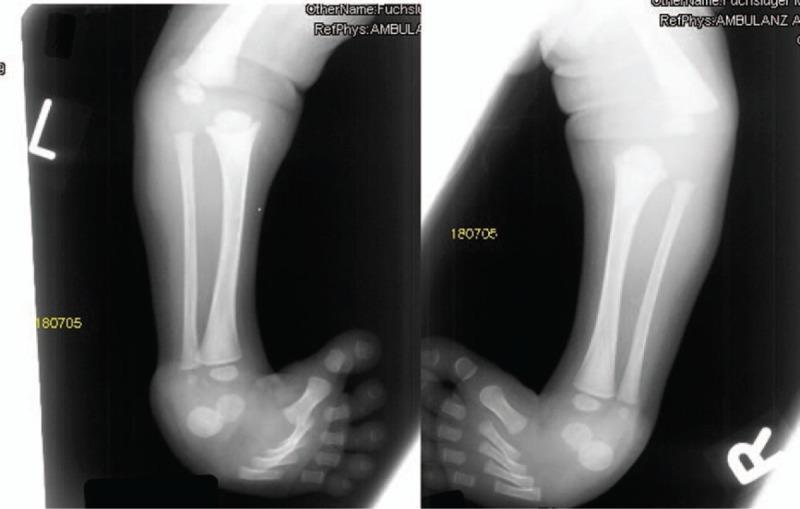
- Mutation in FLNB (filamin B) — regulates cytoskeletal organization
- Multiple large joint dislocations (hips, knees, elbows) + clubfoot + cervical spine instability
- Treatment: serial casting, surgical stabilization, cervical spine fusion if needed
5. UNIFIED DIAGNOSTIC APPROACH
Suspected MSK Malformation
        │
        ├── History: Family history, maternal drugs/illness,
        │   birth presentation, fetal movements, amniocentesis results
        │
        ├── Physical Examination:
        │   • Dysmorphic features (syndromic?)
        │   • Range of motion, flexibility vs rigidity
        │   • Neurological exam (spine anomaly?)
        │   • Skin: cafe-au-lait, haemangiomas
        │
        ├── Imaging:
        │   • X-ray (skeletal survey if dysplasia suspected)
        │   • Ultrasound (hips < 4 months; soft tissue/cord)
        │   • MRI (spinal cord anomalies, soft tissue detail)
        │   • CT 3D (complex bony anomalies, surgical planning)
        │
        └── Investigations:
            • Karyotype / chromosomal microarray
            • Gene panel / WES (if syndromic/dysmorphic)
            • Echocardiogram + renal USS (VACTERL)
            • CBC (radial hemimelia → Fanconi)
6. TREATMENT PRINCIPLES SUMMARY
| Modality | Conditions | Key Points |
|---|---|---|
| Serial casting | Clubfoot, congenital knee dislocation | Ponseti; weekly; corrects sequentially |
| Splinting/Bracing | DDH (Pavlik), clubfoot (Denis Browne), scoliosis (TLSO) | Compliance is critical |
| Closed/Open reduction | DDH | Closed first; open if closed fails or > 18 months |
| Osteotomy | DDH (Salter/Pemberton), OI limb bowing | Corrects anatomy; allows normal growth |
| Intramedullary rodding | OI, severe bowing | Fassier-Duval telescoping rods |
| Growing rods / VEPTR | Congenital scoliosis (young children) | Preserves growth; expands every 6 months |
| Spinal fusion | Scoliosis at/near skeletal maturity | Halts progression |
| Tendon transfer | Clubfoot relapse | Tibialis anterior → lateral cuneiform |
| Medical therapy | OI (bisphosphonates), Achondroplasia (vosoritide) | |
| Prosthetics | Limb reduction defects | Fit early to encourage use |
7. KEY CLASS DISCUSSION POINTS
-
Why does timing matter? — The growing skeleton has remodeling potential unavailable after skeletal maturity. DDH treated at birth with harness avoids surgery; treated at 5 years requires complex osteotomy.
-
Flexible vs. rigid deformity — Always assess passively. Flexible = deformation (positional); corrects with stretching. Rigid = true malformation; requires casting/surgery.
-
Don't miss associations — Congenital scoliosis → VACTERL screen + MRI spine before any surgery. Radial hemimelia → rule out Fanconi anemia (fatal if missed).
-
Neonatal hip examination is a clinical skill — Ortolani and Barlow tests must be performed by every clinician. They become unreliable after 6–8 weeks as soft tissues tighten.
-
Ponseti has changed everything — Before 1990s, extensive posteromedial surgical release was standard for clubfoot, with high rates of stiffness and arthritic feet. Ponseti (non-surgical casting) now achieves > 95% correction with excellent long-term outcomes globally.
-
OI vs. NAI — Every child presenting with multiple unexplained fractures requires multidisciplinary assessment. Blue sclerae, wormian bones, and family history support OI; however, both can coexist.
-
Genetic counseling — Essential for families. Achondroplasia (> 80% de novo), OI (AD with variable expressivity), multifactorial conditions (recurrence risk counseling for DDH, clubfoot).