
Alp alone increased , what could the cause
An isolated elevation of ALP (alkaline phosphatase) with normal other liver enzymes (AST, ALT, GGT, bilirubin) points to a specific set of causes.
Searching sources...
Reading File
Finding Sources
Finding Sources
Reading File
Reading File
Reading File
Loading Image
Loading Image
Here is a complete, structured answer on isolated ALP elevation, based on Goldman-Cecil Medicine and Harrison's Principles of Internal Medicine (2025).
Isolated ALP Elevation - Causes & Approach
ALP has isoenzymes from multiple tissues: liver, bone, placenta, intestine, and kidney. An isolated rise (with normal AST, ALT, and bilirubin) means the first task is to find which tissue it is coming from.
Step 1 - Is it liver or non-liver origin?
Check GGT (or 5'-nucleotidase):
- GGT elevated → liver/biliary source
- GGT normal → non-hepatic source (bone, placenta, intestine)
GGT is NOT elevated in bone disease, making it the best discriminator.
Non-Hepatic Causes (GGT normal)
| Cause | Mechanism |
|---|---|
| Bone disease | Increased bone ALP isoenzyme |
| Paget's disease | Most striking elevation (>4x ULN) |
| Bone metastases | Osteoblastic activity |
| Osteomalacia / Rickets | Increased bone turnover |
| Hyperparathyroidism | Bone remodeling |
| Pregnancy | Placental ALP isoenzyme (3rd trimester) |
| Adolescent growth | Bone ALP - up to 2x adult normal |
| Elderly women | Age-related rise (65-year-old woman has ~50% higher ALP than a 30-year-old) |
| Intestinal ALP | Benign familial elevation; post-fatty meal in blood type O or B |
Hepatic/Biliary Causes (GGT elevated)
Cholestatic / Biliary
- Primary biliary cholangitis (PBC) - check anti-mitochondrial antibody (AMA); positive AMA is diagnostic
- Primary sclerosing cholangitis (PSC) - especially in IBD patients; order MRCP
- Biliary obstruction (stones, stricture, cancer) - dilated ducts on ultrasound
- Drug-induced cholestasis - careful medication history is essential
- Intrahepatic cholestasis (sepsis, liver transplant rejection, AIDS cholangiopathy)
Infiltrative Liver Disease
- Sarcoidosis - elevated ACE level; hilar adenopathy; can present without extrahepatic disease
- Hepatic metastases / infiltrative neoplasms
- Amyloidosis
- Tuberculosis or other granulomatous infections
- Lymphoma (Hodgkin's disease)
- Langerhans cell histiocytosis
- Extramedullary hematopoiesis
Other Hepatic
- Congestive heart failure (hepatic congestion)
- Hyperthyroidism (increased bone turnover + hepatic effect)
- Diabetes mellitus
Diagnostic Flowchart
Goldman-Cecil Medicine outlines this approach for isolated elevated ALP:
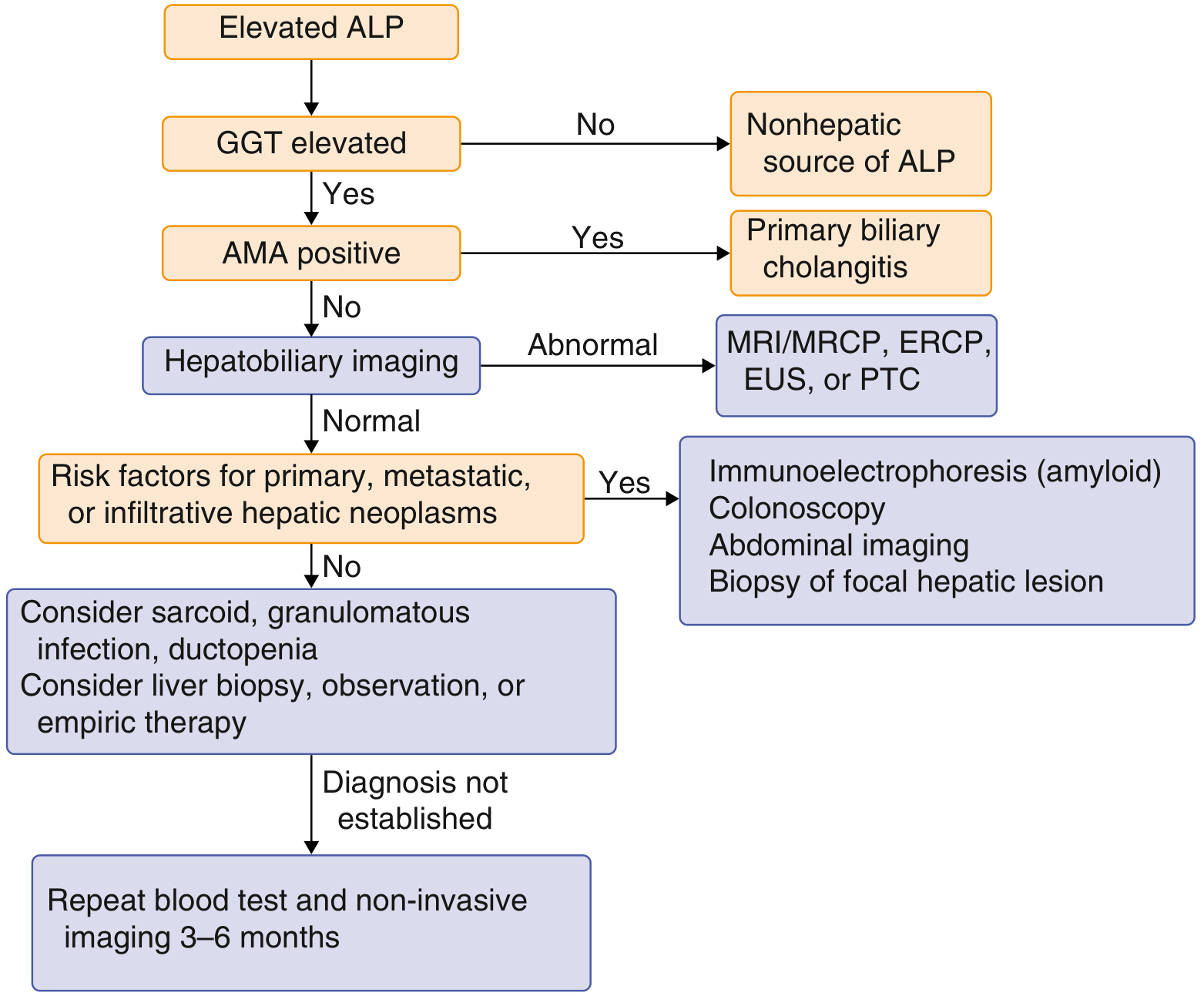
Sleisenger & Fordtran provides a complementary flowchart focused on fractionating ALP vs. GGT:
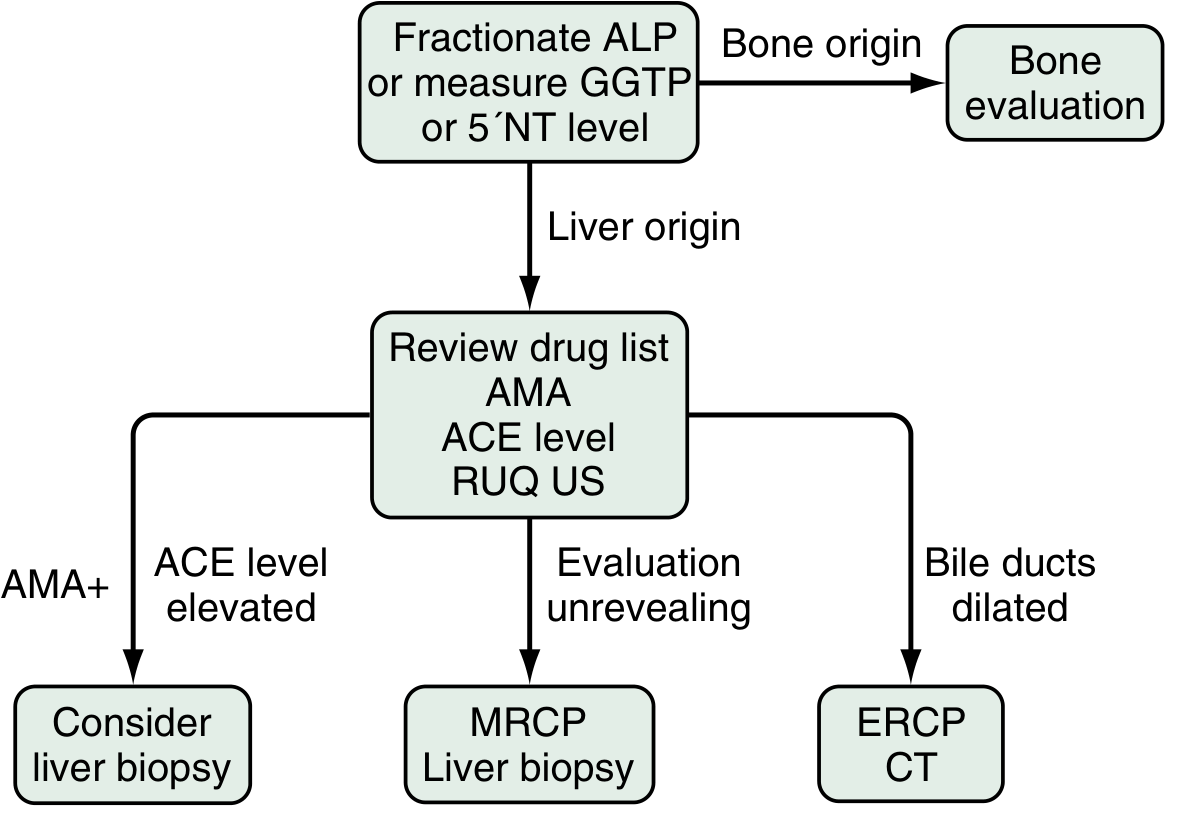
Key Points to Remember
- >4x ULN of ALP - most likely cholestatic liver disease, infiltrative disease, or Paget's disease
- <3x ULN with normal GGT - consider bone, physiological (age, pregnancy), or benign intestinal source
- Always check GGT or 5'-nucleotidase first to separate liver from bone
- If hepatic origin confirmed, liver ultrasound is the standard first imaging step
- In IBD patients with elevated ALP, consider PSC and go directly to MRCP
- Isolated ALP with positive AMA = strongly suggests primary biliary cholangitis
Sources: Goldman-Cecil Medicine (p. 1562), Harrison's Principles of Internal Medicine 22E (2025), Sleisenger & Fordtran's Gastrointestinal and Liver Disease
This is a shared conversation. Sign in to Orris to start your own chat.