
What is diabtetes? explain types and cure in details
Reading File
search_medical_text
diabetes mellitus definition pathophysiology types classification
search_medical_text
diabetes mellitus treatment management cure insulin therapy
GradeResponse
GradeResponse
search_medical_image
diabetes mellitus types comparison diagram insulin
GradeResponse
Here is a comprehensive explanation of diabetes mellitus — its definition, types, and management.
Diabetes Mellitus
What Is Diabetes?
Diabetes mellitus is a group of metabolic disorders of carbohydrate metabolism in which glucose is both underutilized and overproduced, resulting in chronically elevated blood sugar levels (hyperglycemia). According to Laboratory Analysis in the Diagnosis and Management of Diabetes Mellitus (p. 1), this occurs when the body either cannot produce enough insulin, cannot use insulin effectively, or both.
Insulin is a hormone produced by beta (β) cells in the pancreas. It acts like a "key" that allows glucose to enter cells and be used for energy. Without proper insulin function, glucose builds up in the bloodstream instead.
Types of Diabetes
1. 🔴 Type 1 Diabetes Mellitus (T1DM)
| Feature | Details |
|---|---|
| Cause | Autoimmune destruction of pancreatic β-cells |
| Insulin production | Little to none |
| Typical onset | Childhood/young adulthood (but can occur at any age) |
| Prevalence | ~5–10% of all diabetes cases |
| Also called | Insulin-dependent diabetes / Juvenile diabetes |
Pathophysiology:
The immune system mistakenly attacks and destroys the insulin-producing β-cells in the pancreatic islets of Langerhans. This leads to absolute insulin deficiency. Without insulin, cells cannot absorb glucose, and the body breaks down fat for energy, producing ketone bodies — which can cause a life-threatening emergency called diabetic ketoacidosis (DKA).
Symptoms:
- Excessive thirst (polydipsia)
- Frequent urination (polyuria)
- Unexplained weight loss
- Fatigue, blurred vision
- Fruity-smelling breath (sign of DKA)
Is There a Cure?
There is currently no definitive cure for T1DM. However, pancreatic islet cell transplantation and whole pancreas transplants have shown success in some patients. Research into stem cell therapy and immunotherapy to stop autoimmune destruction is ongoing.
2. 🟠 Type 2 Diabetes Mellitus (T2DM)
| Feature | Details |
|---|---|
| Cause | Insulin resistance + relative insulin deficiency |
| Insulin production | Present but insufficient or ineffective |
| Typical onset | Adults (increasingly in younger people too) |
| Prevalence | ~90–95% of all diabetes cases |
| Also called | Non-insulin-dependent diabetes (historically) |
Pathophysiology:
In T2DM, body cells (muscle, liver, fat) become resistant to insulin's effects. The pancreas initially compensates by secreting more insulin, but over time, the β-cells become exhausted and insulin secretion also declines. The result: chronic hyperglycemia.
Risk Factors:
- Obesity (especially abdominal)
- Physical inactivity
- Family history
- Age >45
- Hypertension, dyslipidemia
Symptoms:
- Often asymptomatic early on
- Fatigue, increased thirst/urination
- Slow-healing wounds, recurrent infections
- Blurred vision, tingling in hands/feet
Is There a Cure?
T2DM can be put into remission (not a classical "cure") through significant weight loss, bariatric surgery, and intensive lifestyle changes. Many patients achieve normal blood sugar without medications, though the underlying susceptibility remains.
3. 🟡 Gestational Diabetes Mellitus (GDM)
| Feature | Details |
|---|---|
| Cause | Hormonal insulin resistance during pregnancy |
| Onset | Usually 2nd or 3rd trimester |
| Prevalence | ~17% of pregnancies (range 5–30%) |
| Resolution | Usually resolves after delivery |
Pathophysiology:
Pregnancy hormones (e.g., human placental lactogen, progesterone, cortisol) cause insulin resistance. If the mother's pancreas cannot compensate with increased insulin output, GDM develops.
Risks:
- For mother: higher risk of T2DM later in life, preeclampsia
- For baby: macrosomia (large baby), hypoglycemia at birth, increased obesity/T2DM risk in child
Management: Dietary changes, monitoring, insulin if needed. Most cases resolve postpartum.
4. 🔵 Other Specific Types
| Type | Description |
|---|---|
| MODY (Maturity-Onset Diabetes of the Young) | Single-gene defects in β-cell function; often misdiagnosed as T1 or T2 |
| LADA (Latent Autoimmune Diabetes in Adults) | Slow-onset autoimmune diabetes in adults; shares features of both T1 and T2 |
| Secondary Diabetes | Due to pancreatitis, pancreatic cancer, Cushing's syndrome, hemochromatosis, or medications (e.g., steroids) |
| Neonatal Diabetes | Rare, occurring in infants under 6 months |
Diagnosis
| Test | Normal | Pre-diabetes | Diabetes |
|---|---|---|---|
| Fasting Blood Glucose | < 100 mg/dL | 100–125 mg/dL | ≥ 126 mg/dL |
| HbA1c | < 5.7% | 5.7–6.4% | ≥ 6.5% |
| 2-hr Oral Glucose Tolerance | < 140 mg/dL | 140–199 mg/dL | ≥ 200 mg/dL |
| Random Blood Glucose | — | — | ≥ 200 mg/dL + symptoms |
Management and Treatment
According to Eye Care of the Patient with Diabetes Mellitus (p. 23), management is individualized and includes:
🥗 1. Lifestyle Modifications (All Types)
- Diet: Low glycemic index foods, reduced refined carbohydrates and sugars, high fiber
- Exercise: At least 150 minutes/week of moderate-intensity activity
- Weight loss: Even 5–10% body weight reduction significantly improves insulin sensitivity in T2DM
- Smoking cessation, stress management
💊 2. Oral Medications (Mainly T2DM)
| Drug Class | Examples | Mechanism |
|---|---|---|
| Biguanides | Metformin | Reduces hepatic glucose production; first-line for T2DM |
| SGLT2 Inhibitors | Empagliflozin, Dapagliflozin | Increase glucose excretion via urine; also protect heart/kidney |
| GLP-1 Receptor Agonists | Semaglutide, Liraglutide | Increase insulin secretion, reduce appetite, promote weight loss |
| DPP-4 Inhibitors | Sitagliptin, Saxagliptin | Enhance incretin effect, lower post-meal glucose |
| Sulfonylureas | Glipizide, Glibenclamide | Stimulate pancreatic insulin secretion |
| Thiazolidinediones | Pioglitazone | Improve insulin sensitivity |
| Alpha-glucosidase inhibitors | Acarbose | Slow carbohydrate absorption |
💉 3. Insulin Therapy
Insulin is mandatory for T1DM and often required in advanced T2DM.
| Type | Onset | Duration | Example |
|---|---|---|---|
| Rapid-acting | 10–30 min | 3–5 hrs | Lispro, Aspart |
| Short-acting | 30–60 min | 5–8 hrs | Regular insulin |
| Intermediate-acting | 1–2 hrs | 12–18 hrs | NPH insulin |
| Long-acting (basal) | 1–2 hrs | 20–24 hrs | Glargine, Detemir |
| Ultra-long-acting | 6 hrs | >42 hrs | Degludec |
Common regimen: Basal-bolus insulin (long-acting at night + rapid-acting before meals).
🔬 4. Advanced/Emerging Treatments
| Approach | Status |
|---|---|
| Continuous Glucose Monitors (CGM) | Widely available — real-time glucose tracking |
| Insulin pumps (CSII) | Approved — mimics physiological insulin delivery |
| Closed-loop "Artificial Pancreas" | Approved (e.g., Medtronic MiniMed) — auto-adjusts insulin |
| Pancreatic islet transplantation | Available in select centers for severe T1DM |
| Bariatric surgery | Can induce T2DM remission in obese patients |
| Stem cell therapy | Promising trials underway for T1DM |
| Teplizumab (anti-CD3) | FDA-approved to delay T1DM onset in high-risk individuals |
Complications (If Uncontrolled)
| Category | Complications |
|---|---|
| Microvascular | Diabetic retinopathy (blindness), nephropathy (kidney failure), neuropathy (nerve damage) |
| Macrovascular | Heart attack, stroke, peripheral artery disease |
| Other | Diabetic foot ulcers/amputations, susceptibility to infections, sexual dysfunction |
Key Takeaway: Is Diabetes Curable?
| Type | Curable? |
|---|---|
| Type 1 | No definitive cure yet; manageable with insulin; transplant/stem cell research ongoing |
| Type 2 | Remission is possible with major lifestyle change or bariatric surgery; not a permanent cure |
| Gestational | Usually resolves after delivery |
| MODY | Depends on the gene mutation; some respond well to sulfonylureas |
⚠️ Disclaimer: This information is educational. Always consult a qualified healthcare provider for diagnosis and personalized treatment.
What is cancer? explain types and cure in details
search_medical_text
cancer definition pathophysiology types classification oncology
search_medical_text
cancer treatment cure chemotherapy radiation surgery immunotherapy
search_medical_image
cancer types tumor cells diagram
GradeResponse
GradeResponse
GradeResponse
search_medical_text
hallmarks of cancer tumor biology metastasis cell proliferation
search_medical_text
targeted therapy CAR-T cell therapy cancer immunotherapy emerging treatments
GradeResponse
GradeResponse
Here is a comprehensive, detailed explanation of cancer.
Cancer (Malignant Neoplasm)
What Is Cancer?
Cancer is a broad term for a group of diseases characterized by the uncontrolled, abnormal growth and division of cells that can invade surrounding tissues and spread to distant organs. Normally, cells grow, divide, and die in an orderly way. Cancer occurs when genetic mutations disrupt this process — causing cells to grow out of control, avoid programmed cell death, and form masses called tumors (except in blood cancers like leukemia).
According to Harrison's Principles of Internal Medicine, 21st Edition (p. 2328), cancers arise as a result of:
- Gain-of-function mutations in oncogenes (genes that promote cell growth)
- Loss-of-function mutations in tumor-suppressor genes (genes that restrain cell growth)
The Hallmarks of Cancer
(Harrison's, p. 2328)
These are the core biological capabilities cancer cells acquire:
| Hallmark | Meaning |
|---|---|
| Sustained proliferative signaling | Continuously signal themselves to grow |
| Insensitivity to antigrowth signals | Ignore brakes that stop normal cell division |
| Evading apoptosis | Resist programmed cell death |
| Limitless replicative potential | Become immortal — do not age or die naturally |
| Sustained angiogenesis | Form new blood vessels to feed the tumor |
| Tissue invasion and metastasis | Spread to nearby and distant organs |
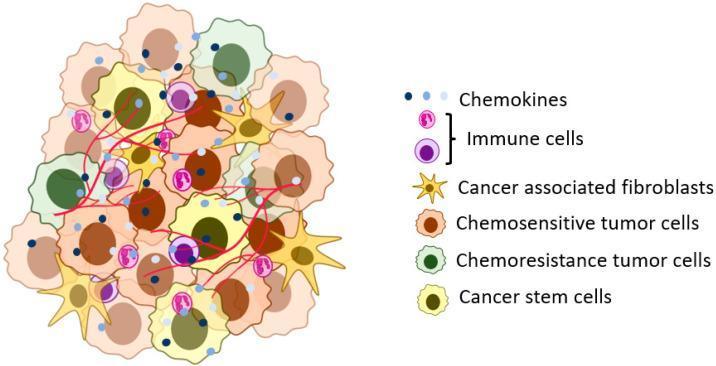
Classification of Cancer
Cancers are classified by the tissue of origin:
1. 🔴 Carcinomas (~85% of all cancers)
Arise from epithelial cells (cells lining organs and surfaces).
| Subtype | Origin | Examples |
|---|---|---|
| Adenocarcinoma | Glandular epithelial cells | Breast, lung, colon, prostate, stomach cancer |
| Squamous cell carcinoma | Squamous epithelial cells | Skin, cervix, esophagus, head & neck cancers |
| Transitional cell carcinoma | Transitional epithelium | Bladder cancer |
| Basal cell carcinoma | Basal skin cells | Skin cancer (most common cancer overall) |
2. 🟠 Sarcomas (~1% of cancers)
Arise from connective tissues — bone, cartilage, muscle, fat, blood vessels.
| Example | Tissue |
|---|---|
| Osteosarcoma | Bone |
| Liposarcoma | Fat tissue |
| Rhabdomyosarcoma | Muscle |
| Angiosarcoma | Blood vessels |
3. 🟡 Lymphomas
Arise from lymphocytes (immune cells) in the lymphatic system.
| Type | Features |
|---|---|
| Hodgkin Lymphoma | Contains Reed-Sternberg cells; often curable; affects young adults |
| Non-Hodgkin Lymphoma | More common; diverse subtypes; B-cell or T-cell origin |
4. 🔵 Leukemias
Cancers of blood-forming cells in the bone marrow. No solid tumor — malignant cells circulate in blood.
| Type | Description |
|---|---|
| Acute Lymphoblastic Leukemia (ALL) | Most common childhood cancer; fast-growing |
| Acute Myeloid Leukemia (AML) | Fast-growing; adults and children |
| Chronic Lymphocytic Leukemia (CLL) | Slow-growing; mostly adults >60 |
| Chronic Myeloid Leukemia (CML) | Associated with Philadelphia chromosome (BCR-ABL) |
5. 🟣 Brain and CNS Tumors
Arise from brain tissue or its coverings.
| Type | Notes |
|---|---|
| Glioblastoma (GBM) | Most aggressive; poor prognosis |
| Meningioma | From meninges; often benign |
| Astrocytoma | From astrocyte glial cells; variable grade |
6. 🟤 Melanoma
Arises from melanocytes (pigment-producing skin cells). Highly aggressive with high metastatic potential.
7. Other Notable Types
| Cancer | Key Facts |
|---|---|
| Lung cancer | Leading cause of cancer death worldwide; NSCLC and SCLC subtypes |
| Breast cancer | Most common cancer in women; hormone-receptor driven |
| Prostate cancer | Most common in men; often slow-growing; PSA-screened |
| Colorectal cancer | 3rd most common; linked to diet, polyps, Lynch syndrome |
| Cervical cancer | Caused by HPV; preventable with vaccine |
| Hepatocellular carcinoma | Liver cancer; linked to hepatitis B/C and cirrhosis |
| Pancreatic cancer | Very poor prognosis due to late detection |
Diagnosis
| Method | Purpose |
|---|---|
| Biopsy | Gold standard — microscopic examination of tissue |
| Imaging (CT, MRI, PET, Ultrasound) | Detect tumor location, size, spread |
| Blood tests | Tumor markers (PSA, CA-125, AFP, CEA, LDH) |
| Endoscopy / Colonoscopy | Direct visualization of internal tumors |
| Genetic/molecular testing | Identify mutations (BRCA1/2, EGFR, HER2, BCR-ABL) for targeted therapy |
| Liquid biopsy | Circulating tumor DNA from blood — emerging technology |
Cancer Staging (TNM System)
| Stage | Meaning |
|---|---|
| Stage I | Small, localized tumor — most curable |
| Stage II | Larger, may involve nearby lymph nodes |
| Stage III | Spread to regional lymph nodes |
| Stage IV | Distant metastasis — most difficult to cure |
Treatment & Cure
According to Harrison's Principles of Internal Medicine (p. 2108), cancer treatments are divided into local and systemic categories, often used in combination.
🔪 1. Surgery (Local)
- Oldest and most direct treatment — physical removal of the tumor
- Curative in many early-stage solid cancers (breast, colon, kidney, thyroid)
- Also used for debulking (reducing tumor burden) even if not fully curative
- Minimally invasive options: laparoscopy, robotic surgery (e.g., da Vinci system)
☢️ 2. Radiation Therapy (Local)
- Uses high-energy X-rays or particles to destroy cancer cell DNA
- External beam radiation (EBRT) — machine delivers radiation to the body
- Brachytherapy — radioactive seeds placed inside the body (prostate, cervical cancer)
- Stereotactic radiosurgery (e.g., Gamma Knife) — highly focused for brain tumors
- Can be curative (early Hodgkin lymphoma, cervical cancer) or palliative
💊 3. Chemotherapy (Systemic)
- Uses cytotoxic drugs to kill rapidly dividing cells throughout the body
- Effective against cancers that have spread (metastatic disease) or blood cancers
- Common agents:
| Drug Class | Examples | Used In |
|---|---|---|
| Alkylating agents | Cyclophosphamide, Cisplatin | Many cancers |
| Antimetabolites | Methotrexate, 5-Fluorouracil | Leukemia, colon cancer |
| Taxanes | Paclitaxel, Docetaxel | Breast, lung, ovarian cancer |
| Anthracyclines | Doxorubicin | Breast cancer, leukemia |
| Vinca alkaloids | Vincristine | Lymphoma, leukemia |
- Side effects: Hair loss, nausea, immunosuppression, fatigue, mucositis
🎯 4. Targeted Therapy (Systemic)
Drugs that precisely target specific molecular abnormalities in cancer cells — less harmful to normal cells than chemo.
| Target | Drug | Cancer |
|---|---|---|
| BCR-ABL | Imatinib (Gleevec) | CML — revolutionized treatment |
| HER2 | Trastuzumab (Herceptin) | HER2+ Breast cancer |
| EGFR | Erlotinib, Osimertinib | EGFR-mutant Lung cancer |
| VEGF/VEGFR | Bevacizumab, Sorafenib | Colon, kidney, liver cancer |
| BRAF | Vemurafenib | BRAF V600E Melanoma |
| CDK4/6 | Palbociclib | HR+ Breast cancer |
| PARP | Olaparib | BRCA-mutant Breast/Ovarian cancer |
🛡️ 5. Immunotherapy — The 4th Pillar
According to Immune Effector Cell-related Adverse Event (p. 1), immunotherapy is now established as a fourth pillar of cancer treatment alongside surgery, radiation, and chemotherapy.
a) Checkpoint Inhibitors
Block proteins (PD-1, PD-L1, CTLA-4) that cancer uses to "hide" from the immune system.
| Drug | Target | Cancer |
|---|---|---|
| Pembrolizumab (Keytruda) | PD-1 | Melanoma, lung, many others |
| Nivolumab (Opdivo) | PD-1 | Multiple cancers |
| Ipilimumab (Yervoy) | CTLA-4 | Melanoma |
| Atezolizumab | PD-L1 | Bladder, lung cancer |
b) CAR-T Cell Therapy (Chimeric Antigen Receptor T-cell)
Per Management of Immune-Related Adverse Events in CAR T-Cell Therapy (p. 1):
- A patient's own T cells are genetically engineered to attack specific cancer antigens
- Administered as a single infusion — works as a "living drug" that may persist for decades
- Approved for: B-cell lymphoma, ALL, multiple myeloma
- Achieves durable, long-term remissions in many patients
- Risks: Cytokine Release Syndrome (CRS), neurotoxicity (ICANS)
c) Cancer Vaccines
- Preventive: HPV vaccine (prevents cervical cancer), Hepatitis B vaccine (prevents liver cancer)
- Therapeutic: Sipuleucel-T (Provenge) for prostate cancer
d) Monoclonal Antibodies
- Rituximab (anti-CD20): B-cell lymphomas
- Cetuximab: Colorectal, head & neck cancer
🧬 6. Hormone Therapy (Systemic)
For hormone-sensitive cancers:
| Drug | Mechanism | Cancer |
|---|---|---|
| Tamoxifen, Aromatase inhibitors | Block estrogen | Breast cancer |
| Leuprolide, Enzalutamide | Block testosterone/androgen | Prostate cancer |
🌡️ 7. Bone Marrow / Stem Cell Transplant
- Used after high-dose chemotherapy to restore blood cell production
- Autologous (patient's own cells) or Allogeneic (donor cells)
- Curative in many leukemias, lymphomas, and myeloma
Is Cancer Curable?
| Cancer Type | Curability |
|---|---|
| Hodgkin Lymphoma | ~85–90% cure rate with chemo+radiation |
| Testicular cancer | ~95%+ cure rate |
| Childhood ALL | ~90% cure rate |
| Early-stage breast cancer | ~99% 5-year survival (Stage I) |
| Early-stage thyroid cancer | >98% 5-year survival |
| Melanoma (early) | Highly curable with surgery |
| CML | Imatinib gives near-normal life expectancy |
| Stage IV pancreatic cancer | ~3% 5-year survival — very difficult to cure |
| Glioblastoma (GBM) | Median survival ~15 months; rarely cured |
| Stage IV lung cancer | ~8% 5-year survival; improving with targeted therapy |
Key insight: The earlier the stage at diagnosis, the higher the chance of cure. Many cancers caught at Stage I are highly curable with surgery alone.
Prevention
| Strategy | Examples |
|---|---|
| Vaccination | HPV vaccine, Hepatitis B vaccine |
| Screening | Mammogram, colonoscopy, Pap smear, PSA, low-dose CT (lung) |
| Lifestyle | No smoking, healthy weight, limited alcohol, sun protection |
| Chemoprevention | Tamoxifen in high-risk women, Aspirin for colorectal cancer |
| Genetic counseling | BRCA1/2 testing, prophylactic mastectomy in high-risk patients |
Summary Table
| Type | Origin | Common Examples | Key Treatment |
|---|---|---|---|
| Carcinoma | Epithelial cells | Breast, lung, colon, prostate | Surgery, chemo, targeted therapy |
| Sarcoma | Connective tissue | Osteosarcoma, liposarcoma | Surgery, chemo, radiation |
| Lymphoma | Lymphocytes | Hodgkin, Non-Hodgkin | Chemo, immunotherapy, transplant |
| Leukemia | Blood/bone marrow | ALL, AML, CML, CLL | Chemo, targeted therapy, CAR-T |
| Brain tumors | CNS tissue | Glioblastoma, meningioma | Surgery, radiation, temozolomide |
| Melanoma | Melanocytes | Skin melanoma | Surgery, immunotherapy, BRAF inhibitors |
⚠️ Disclaimer: This content is for educational purposes only. Cancer treatment is highly individualized. Always consult a qualified oncologist for diagnosis and treatment planning.
This is a shared conversation. Sign in to Orris to start your own chat.