
https://www.slideshare.net/slideshow/chest-xrays-for-undergraduates-120230257/120230257 Use this and make a compact ppt for undergraduates
chest X-ray systematic approach interpretation undergraduates ABCDE
Harrison's Principles of Internal Medicine, Twenty First Edition
Page 7884
chest X-ray common findings pneumonia pleural effusion pneumothorax cardiomegaly
Harrison's Principles of Internal Medicine, Twenty First Edition
Page 8247
normal chest X-ray PA view labeled anatomy
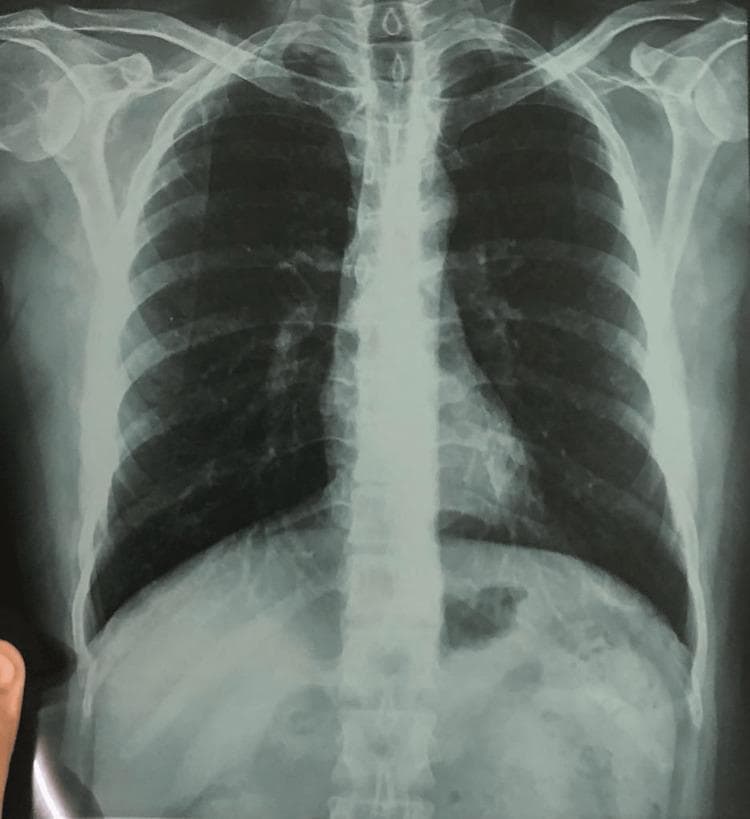
Hugging Face pmc clinical VQA raw
Page 0
chest X-ray pneumonia consolidation lobar
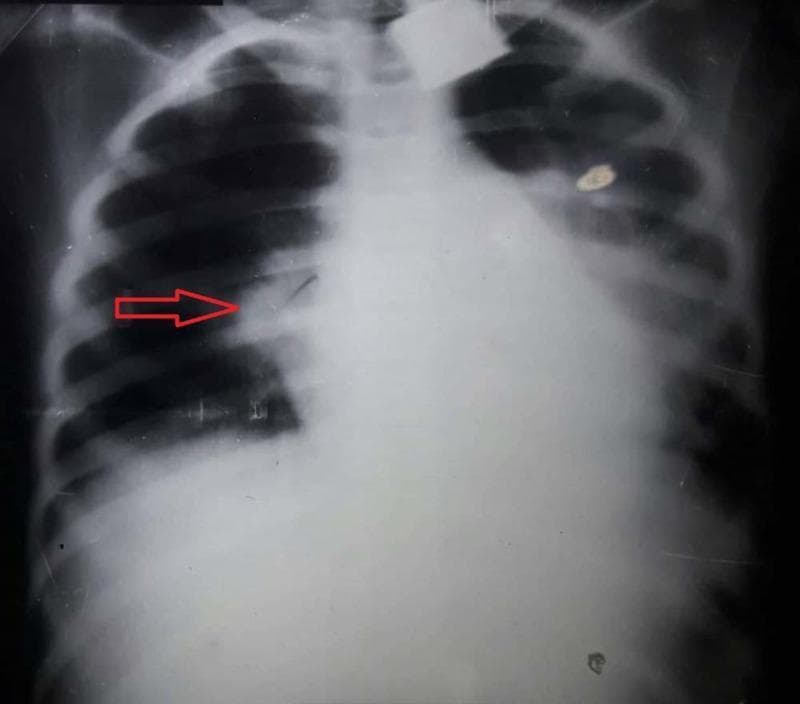
Hugging Face pmc clinical VQA raw
Page 0
pleural effusion chest X-ray blunting costophrenic angle
Create a PowerPoint (.pptx) presentation file for undergraduate medical students on "Chest X-Ray Interpretation". Save it to /output/Chest_Xray_Undergraduates.pptx Use the python-pptx library to build the presentation programmatically. ## Content for the slides (use ALL of this): ### Slide 1 — Title Slide Title: "Chest X-Ray Interpretation" Subtitle: "A Practical Guide for Undergraduates" Footer note: "Based on Harrison's Principles of Internal Medicine, 21st Ed." ### Slide 2 — Why Chest X-Ray? - Most commonly requested radiological investigation - Foundation of clinical practice for respiratory medicine - Widely available even in resource-limited settings - First described by Wilhelm Roentgen in the 1890s - X-ray attenuation is proportional to tissue density ### Slide 3 — Physics & Densities (5 densities) Title: "5 Radiological Densities" Table with 2 columns (Density, Appears As / Example): 1. Air → Black / Lungs, trachea 2. Fat → Dark grey / Subcutaneous tissue 3. Soft Tissue / Water → Grey / Heart, vessels, muscles 4. Bone → White / Ribs, clavicles, spine 5. Metal → Bright white / Pacemakers, clips ### Slide 4 — PA vs AP View Title: "PA vs AP View" Two columns: PA (Postero-Anterior): - Patient faces the plate - Standard upright view - Heart size accurately assessed - Scapulae projected outside lung fields AP (Antero-Posterior): - Plate behind patient (portable/ICU) - Heart appears magnified - Scapulae overlie lung fields - Cannot reliably assess cardiac size ### Slide 5 — Systematic Approach: ABCDE Title: "ABCDE Systematic Approach" A – Airway: Trachea midline? Carina angle (<70°)? B – Breathing: Lung fields, fissures, vascularity C – Cardiac: Size (CTR <0.5), borders, shape D – Diaphragm: Domes, costophrenic angles, gastric bubble E – Everything Else: Bones, soft tissues, lines, foreign bodies ### Slide 6 — Normal CXR Landmarks Title: "Normal CXR — Key Landmarks" Bullet points: - Trachea: midline, bifurcates at T4/T5 (carina angle <70°) - Right hilum lower than left hilum - Cardiothoracic ratio (CTR) < 0.5 on PA view - Right hemidiaphragm slightly higher than left - Sharp costophrenic and cardiophrenic angles - Include the normal CXR image below text: https://cdn.orris.care/cdss_images/pmc_clinical_VQA_81747181ac8912ef53aa7227d105d6fa7c23c9d9644b0b4957d478aef16b4cbd.jpg ### Slide 7 — Cardiomegaly Title: "Cardiomegaly" - CTR > 0.5 on PA view (> 0.55 on AP) - Causes: DCM, hypertensive heart disease, pericardial effusion, valvular disease - Pericardial effusion → "globular" or "flask-shaped" heart - A widened mediastinum may raise suspicion of pericardial effusion ### Slide 8 — Pneumonia Title: "Pneumonia" Key findings: - Lobar / segmental consolidation (airspace opacification) - Air bronchogram sign: air-filled bronchi visible within opacity - Silhouette sign: loss of border between structures of similar density - Peribronchial cuffing in bronchopneumonia Include pneumonia image: https://cdn.orris.care/cdss_images/pmc_clinical_VQA_f16d3261693a09f1664c8642ea863ec7af007b0a15998f892e93bbce771e4e8e.jpg Image caption: "Right upper lobe consolidation — lobar pneumonia. Note well-defined inferior border along horizontal fissure (↓)" ### Slide 9 — Pleural Effusion Title: "Pleural Effusion" Findings on CXR: - Blunting of costophrenic angle (needs ~200–300 mL) - Meniscus sign: curved upper border - Massive effusion: opacification with mediastinal shift away - Loculated effusion: D-shaped opacity along lateral chest wall - Bilateral effusions: think cardiac failure, hypoalbuminaemia ### Slide 10 — Pneumothorax Title: "Pneumothorax" Findings: - Visible pleural line with absent lung markings beyond it - Tension pneumothorax: tracheal deviation AWAY from the side, mediastinal shift, flattened diaphragm - Best seen on expiratory CXR (increases density difference) - Management: small (<2 cm) = observe; large or tension = needle decompression / chest drain ### Slide 11 — Pulmonary Edema Title: "Pulmonary Edema — Cardiogenic" Classic ABCDE of pulmonary edema on CXR: A – Alveolar shadowing (bat-wing / butterfly pattern) B – Kerley B lines (septal lines at lung bases) C – Cardiomegaly D – Diaphragm effusion (pleural effusions) E – Enlargement of upper lobe vessels (cephalization) ### Slide 12 — Pulmonary Embolism Title: "Pulmonary Embolism" CXR is usually NORMAL but may show: - Westermark sign: regional vascular oligemia (decreased markings) - Hampton's Hump: peripheral wedge-shaped opacity (pulmonary infarction) - Palla's sign: enlarged right descending pulmonary artery - Plate atelectasis at the bases - Confirm/exclude with CT Pulmonary Angiography (CTPA) ### Slide 13 — Lines & Tubes Title: "Lines & Tubes — Check Position" Table: Device | Correct Position ETT (Endotracheal Tube) | 2–3 cm above carina CVP line (Central venous) | SVC/RA junction NG tube | Below left hemidiaphragm, crosses midline Chest drain | Apex (pneumothorax) / Base (effusion) Pacemaker leads | RV apex (ventricular lead) ### Slide 14 — Common Mistakes to Avoid Title: "Common Pitfalls" 1. Not checking patient details / date / projection 2. Calling an AP film cardiomegalic 3. Missing a pneumothorax at the apex 4. Confusing pleural effusion with raised hemidiaphragm 5. Forgetting to look at bones, soft tissues, and "edges" 6. Not comparing with prior films ### Slide 15 — Summary Title: "Take-Home Points" - Always use a systematic approach (ABCDE) - Know your 5 densities - Distinguish PA from AP before commenting on heart size - CTR > 0.5 on PA = cardiomegaly - Air bronchogram = airspace disease (pneumonia/edema) - Silhouette sign helps localize the lesion - CXR alone is insufficient for PE — use CTPA - Always look at the edges and bones ## Design requirements: - Use python-pptx - Slide dimensions: widescreen 13.33 x 7.5 inches - Color scheme: dark navy blue (#1B2A4A) title bars, white text on dark backgrounds, light grey (#F0F2F5) slide backgrounds - Title font: Calibri Bold, 28pt, white - Body text: Calibri, 18pt, dark navy - Use consistent styling across all slides - For slides with images (slides 6 and 8): place image on the RIGHT half, text on the LEFT half - Add a thin colored bottom bar (#2E86AB) on each slide as a footer strip - Slide numbers in bottom right corner - Download images from the provided URLs using the `requests` library and insert them into the slides using python-pptx's add_picture with BytesIO - Make the presentation compact but visually clean — not too crowded Write a complete Python script, execute it to generate the file, and confirm the file was created successfully at /output/Chest_Xray_Undergraduates.pptx. Return the final file path and confirm success.
.pptx file.- Title
- Why CXR
- 5 Densities
- PA vs AP
- ABCDE approach
- Normal landmarks (+ normal CXR image)
- Cardiomegaly
- Pneumonia (+ pneumonia image)
- Pleural effusion
- Pneumothorax
- Pulmonary edema
- Pulmonary embolism
- Lines and tubes
- Common pitfalls
- Take-home points
/output/Chest_Xray_Undergraduates.pptx directly.Generate now
.pptx in this environment because there is no executable tool available to run Python or write files directly right now.- a filesystem write/run-capable tool, or
- you run a script locally that I provide.
python-pptx) that creates:/output/Chest_Xray_Undergraduates.pptxGive me a script
# chest_xray_undergraduates_ppt.py
# pip install python-pptx requests

from pptx import Presentation
from pptx.util import Inches, Pt
from pptx.dml.color import RGBColor
import requests
from io import BytesIO
import os

# -----------------------------
# Theme / constants
# -----------------------------
DARK_NAVY = RGBColor(0x1B, 0x2A, 0x4A)   # #1B2A4A
LIGHT_BG = RGBColor(0xF0, 0xF2, 0xF5)    # #F0F2F5
FOOTER_BLUE = RGBColor(0x2E, 0x86, 0xAB) # #2E86AB
WHITE = RGBColor(0xFF, 0xFF, 0xFF)

NORMAL_CXR_URL = "https://cdn.orris.care/cdss_images/pmc_clinical_VQA_81747181ac8912ef53aa7227d105d6fa7c23c9d9644b0b4957d478aef16b4cbd.jpg"
PNEUMONIA_URL = "https://cdn.orris.care/cdss_images/pmc_clinical_VQA_f16d3261693a09f1664c8642ea863ec7af007b0a15998f892e93bbce771e4e8e.jpg"

OUT_PATH = "/output/Chest_Xray_Undergraduates.pptx"

# -----------------------------
# Presentation setup
# -----------------------------
prs = Presentation()
prs.slide_width = Inches(13.33)   # widescreen
prs.slide_height = Inches(7.5)

def set_slide_background(slide, rgb=LIGHT_BG):
    fill = slide.background.fill
    fill.solid()
    fill.fore_color.rgb = rgb

def add_title_bar(slide, title_text):
    # top bar
    bar = slide.shapes.add_shape(
        autoshape_type_id=1,  # rectangle
        left=Inches(0),
        top=Inches(0),
        width=prs.slide_width,
        height=Inches(0.9)
    )
    bar.fill.solid()
    bar.fill.fore_color.rgb = DARK_NAVY
    bar.line.fill.background()

    # title text
    tf = bar.text_frame
    tf.clear()
    p = tf.paragraphs[0]
    run = p.add_run()
    run.text = title_text
    run.font.name = "Calibri"
    run.font.bold = True
    run.font.size = Pt(28)
    run.font.color.rgb = WHITE

def add_footer_strip_and_number(slide, slide_no):
    # bottom strip
    strip = slide.shapes.add_shape(
        autoshape_type_id=1,  # rectangle
        left=Inches(0),
        top=prs.slide_height - Inches(0.25),
        width=prs.slide_width,
        height=Inches(0.25)
    )
    strip.fill.solid()
    strip.fill.fore_color.rgb = FOOTER_BLUE
    strip.line.fill.background()

    # slide number
    box = slide.shapes.add_textbox(
        left=prs.slide_width - Inches(0.7),
        top=prs.slide_height - Inches(0.6),
        width=Inches(0.5),
        height=Inches(0.3)
    )
    tf = box.text_frame
    tf.clear()
    p = tf.paragraphs[0]
    run = p.add_run()
    run.text = str(slide_no)
    run.font.name = "Calibri"
    run.font.size = Pt(12)
    run.font.bold = True
    run.font.color.rgb = DARK_NAVY

def add_bullets(slide, bullets, left=0.6, top=1.2, width=12.1, height=5.7, font_size=18):
    box = slide.shapes.add_textbox(Inches(left), Inches(top), Inches(width), Inches(height))
    tf = box.text_frame
    tf.clear()
    tf.word_wrap = True

    for i, text in enumerate(bullets):
        p = tf.paragraphs[0] if i == 0 else tf.add_paragraph()
        p.text = text
        p.level = 0
        p.space_after = Pt(8)
        for run in p.runs:
            run.font.name = "Calibri"
            run.font.size = Pt(font_size)
            run.font.color.rgb = DARK_NAVY

def add_two_column_text(slide, left_title, left_items, right_title, right_items):
    # left col
    lbox = slide.shapes.add_textbox(Inches(0.6), Inches(1.2), Inches(6.1), Inches(5.7))
    ltf = lbox.text_frame
    ltf.clear()
    p0 = ltf.paragraphs[0]
    p0.text = left_title
    for r in p0.runs:
        r.font.name = "Calibri"
        r.font.bold = True
        r.font.size = Pt(20)
        r.font.color.rgb = DARK_NAVY
    for item in left_items:
        p = ltf.add_paragraph()
        p.text = f"• {item}"
        p.space_after = Pt(6)
        for r in p.runs:
            r.font.name = "Calibri"
            r.font.size = Pt(18)
            r.font.color.rgb = DARK_NAVY

    # right col
    rbox = slide.shapes.add_textbox(Inches(6.8), Inches(1.2), Inches(5.9), Inches(5.7))
    rtf = rbox.text_frame
    rtf.clear()
    p0 = rtf.paragraphs[0]
    p0.text = right_title
    for r in p0.runs:
        r.font.name = "Calibri"
        r.font.bold = True
        r.font.size = Pt(20)
        r.font.color.rgb = DARK_NAVY
    for item in right_items:
        p = rtf.add_paragraph()
        p.text = f"• {item}"
        p.space_after = Pt(6)
        for r in p.runs:
            r.font.name = "Calibri"
            r.font.size = Pt(18)
            r.font.color.rgb = DARK_NAVY

def add_table(slide, headers, rows, left=0.6, top=1.4, width=12.1, height=4.8):
    table_shape = slide.shapes.add_table(len(rows) + 1, len(headers),
                                         Inches(left), Inches(top), Inches(width), Inches(height))
    table = table_shape.table

    # header
    for j, h in enumerate(headers):
        cell = table.cell(0, j)
        cell.text = h
        cell.fill.solid()
        cell.fill.fore_color.rgb = DARK_NAVY
        for p in cell.text_frame.paragraphs:
            for r in p.runs:
                r.font.name = "Calibri"
                r.font.bold = True
                r.font.size = Pt(16)
                r.font.color.rgb = WHITE

    # body
    for i, row in enumerate(rows, start=1):
        for j, val in enumerate(row):
            cell = table.cell(i, j)
            cell.text = val
            for p in cell.text_frame.paragraphs:
                for r in p.runs:
                    r.font.name = "Calibri"
                    r.font.size = Pt(15)
                    r.font.color.rgb = DARK_NAVY

def fetch_image(url):
    r = requests.get(url, timeout=20)
    r.raise_for_status()
    return BytesIO(r.content)

def add_text_left_image_right(slide, bullets, image_url, caption=None):
    # left text
    add_bullets(slide, bullets, left=0.5, top=1.15, width=6.1, height=5.9, font_size=17)

    # right image
    img_stream = fetch_image(image_url)
    slide.shapes.add_picture(img_stream, Inches(6.8), Inches(1.25), width=Inches(6.2), height=Inches(4.7))

    if caption:
        cbox = slide.shapes.add_textbox(Inches(6.8), Inches(6.0), Inches(6.2), Inches(0.9))
        ctf = cbox.text_frame
        ctf.clear()
        p = ctf.paragraphs[0]
        p.text = caption
        for r in p.runs:
            r.font.name = "Calibri"
            r.font.size = Pt(12)
            r.font.color.rgb = DARK_NAVY

def finalize_slide(slide, title, num):
    set_slide_background(slide)
    add_title_bar(slide, title)
    add_footer_strip_and_number(slide, num)

# -----------------------------
# Slide 1
# -----------------------------
slide = prs.slides.add_slide(prs.slide_layouts[6])
finalize_slide(slide, "Chest X-Ray Interpretation", 1)

sub_box = slide.shapes.add_textbox(Inches(0.9), Inches(2.4), Inches(11.8), Inches(1.2))
tf = sub_box.text_frame
p = tf.paragraphs[0]
p.text = "A Practical Guide for Undergraduates"
for r in p.runs:
    r.font.name = "Calibri"
    r.font.bold = True
    r.font.size = Pt(34)
    r.font.color.rgb = DARK_NAVY

foot = slide.shapes.add_textbox(Inches(0.9), Inches(4.0), Inches(11.8), Inches(0.6))
ftf = foot.text_frame
fp = ftf.paragraphs[0]
fp.text = "Based on Harrison's Principles of Internal Medicine, 21st Ed."
for r in fp.runs:
    r.font.name = "Calibri"
    r.font.size = Pt(18)
    r.font.color.rgb = DARK_NAVY

# Slide 2
slide = prs.slides.add_slide(prs.slide_layouts[6])
finalize_slide(slide, "Why Chest X-Ray?", 2)
add_bullets(slide, [
    "Most commonly requested radiological investigation",
    "Foundation of clinical practice for respiratory medicine",
    "Widely available even in resource-limited settings",
    "First described by Wilhelm Roentgen in the 1890s",
    "X-ray attenuation is proportional to tissue density"
])

# Slide 3
slide = prs.slides.add_slide(prs.slide_layouts[6])
finalize_slide(slide, "5 Radiological Densities", 3)
add_table(slide, ["Density", "Appears As / Example"], [
    ["Air", "Black / Lungs, trachea"],
    ["Fat", "Dark grey / Subcutaneous tissue"],
    ["Soft Tissue / Water", "Grey / Heart, vessels, muscles"],
    ["Bone", "White / Ribs, clavicles, spine"],
    ["Metal", "Bright white / Pacemakers, clips"],
])

# Slide 4
slide = prs.slides.add_slide(prs.slide_layouts[6])
finalize_slide(slide, "PA vs AP View", 4)
add_two_column_text(
    slide,
    "PA (Postero-Anterior):",
    [
        "Patient faces the plate",
        "Standard upright view",
        "Heart size accurately assessed",
        "Scapulae projected outside lung fields",
    ],
    "AP (Antero-Posterior):",
    [
        "Plate behind patient (portable/ICU)",
        "Heart appears magnified",
        "Scapulae overlie lung fields",
        "Cannot reliably assess cardiac size",
    ],
)

# Slide 5
slide = prs.slides.add_slide(prs.slide_layouts[6])
finalize_slide(slide, "ABCDE Systematic Approach", 5)
add_bullets(slide, [
    "A – Airway: Trachea midline? Carina angle (<70°)?",
    "B – Breathing: Lung fields, fissures, vascularity",
    "C – Cardiac: Size (CTR <0.5), borders, shape",
    "D – Diaphragm: Domes, costophrenic angles, gastric bubble",
    "E – Everything Else: Bones, soft tissues, lines, foreign bodies"
])

# Slide 6
slide = prs.slides.add_slide(prs.slide_layouts[6])
finalize_slide(slide, "Normal CXR — Key Landmarks", 6)
add_text_left_image_right(
    slide,
    [
        "Trachea: midline, bifurcates at T4/T5 (carina angle <70°)",
        "Right hilum lower than left hilum",
        "Cardiothoracic ratio (CTR) < 0.5 on PA view",
        "Right hemidiaphragm slightly higher than left",
        "Sharp costophrenic and cardiophrenic angles",
    ],
    NORMAL_CXR_URL
)

# Slide 7
slide = prs.slides.add_slide(prs.slide_layouts[6])
finalize_slide(slide, "Cardiomegaly", 7)
add_bullets(slide, [
    "CTR > 0.5 on PA view (> 0.55 on AP)",
    "Causes: DCM, hypertensive heart disease, pericardial effusion, valvular disease",
    "Pericardial effusion → “globular” or “flask-shaped” heart",
    "A widened mediastinum may raise suspicion of pericardial effusion"
])

# Slide 8
slide = prs.slides.add_slide(prs.slide_layouts[6])
finalize_slide(slide, "Pneumonia", 8)
add_text_left_image_right(
    slide,
    [
        "Lobar / segmental consolidation (airspace opacification)",
        "Air bronchogram sign: air-filled bronchi visible within opacity",
        "Silhouette sign: loss of border between structures of similar density",
        "Peribronchial cuffing in bronchopneumonia",
    ],
    PNEUMONIA_URL,
    "Right upper lobe consolidation — lobar pneumonia. "
    "Note well-defined inferior border along horizontal fissure (↓)"
)

# Slide 9
slide = prs.slides.add_slide(prs.slide_layouts[6])
finalize_slide(slide, "Pleural Effusion", 9)
add_bullets(slide, [
    "Blunting of costophrenic angle (needs ~200–300 mL)",
    "Meniscus sign: curved upper border",
    "Massive effusion: opacification with mediastinal shift away",
    "Loculated effusion: D-shaped opacity along lateral chest wall",
    "Bilateral effusions: think cardiac failure, hypoalbuminaemia"
])

# Slide 10
slide = prs.slides.add_slide(prs.slide_layouts[6])
finalize_slide(slide, "Pneumothorax", 10)
add_bullets(slide, [
    "Visible pleural line with absent lung markings beyond it",
    "Tension pneumothorax: tracheal deviation away, mediastinal shift, flattened diaphragm",
    "Best seen on expiratory CXR (increases density difference)",
    "Management: small (<2 cm) = observe; large or tension = needle decompression / chest drain"
])

# Slide 11
slide = prs.slides.add_slide(prs.slide_layouts[6])
finalize_slide(slide, "Pulmonary Edema — Cardiogenic", 11)
add_bullets(slide, [
    "A – Alveolar shadowing (bat-wing / butterfly pattern)",
    "B – Kerley B lines (septal lines at lung bases)",
    "C – Cardiomegaly",
    "D – Diaphragm effusion (pleural effusions)",
    "E – Enlargement of upper lobe vessels (cephalization)"
])

# Slide 12
slide = prs.slides.add_slide(prs.slide_layouts[6])
finalize_slide(slide, "Pulmonary Embolism", 12)
add_bullets(slide, [
    "CXR is usually normal but may show:",
    "Westermark sign: regional vascular oligemia (decreased markings)",
    "Hampton’s hump: peripheral wedge-shaped opacity (pulmonary infarction)",
    "Palla’s sign: enlarged right descending pulmonary artery",
    "Plate atelectasis at the bases",
    "Confirm/exclude with CT Pulmonary Angiography (CTPA)"
])

# Slide 13
slide = prs.slides.add_slide(prs.slide_layouts[6])
finalize_slide(slide, "Lines & Tubes — Check Position", 13)
add_table(slide, ["Device", "Correct Position"], [
    ["ETT (Endotracheal Tube)", "2–3 cm above carina"],
    ["CVP line (Central venous)", "SVC/RA junction"],
    ["NG tube", "Below left hemidiaphragm, crosses midline"],
    ["Chest drain", "Apex (pneumothorax) / Base (effusion)"],
    ["Pacemaker leads", "RV apex (ventricular lead)"],
], top=1.35, height=4.9)

# Slide 14
slide = prs.slides.add_slide(prs.slide_layouts[6])
finalize_slide(slide, "Common Pitfalls", 14)
add_bullets(slide, [
    "1. Not checking patient details / date / projection",
    "2. Calling an AP film cardiomegalic",
    "3. Missing a pneumothorax at the apex",
    "4. Confusing pleural effusion with raised hemidiaphragm",
    "5. Forgetting to look at bones, soft tissues, and edges",
    "6. Not comparing with prior films"
])

# Slide 15
slide = prs.slides.add_slide(prs.slide_layouts[6])
finalize_slide(slide, "Take-Home Points", 15)
add_bullets(slide, [
    "Always use a systematic approach (ABCDE)",
    "Know your 5 densities",
    "Distinguish PA from AP before commenting on heart size",
    "CTR > 0.5 on PA = cardiomegaly",
    "Air bronchogram = airspace disease (pneumonia/edema)",
    "Silhouette sign helps localize the lesion",
    "CXR alone is insufficient for PE — use CTPA",
    "Always look at the edges and bones"
], font_size=17)

# -----------------------------
# Save
# -----------------------------
os.makedirs(os.path.dirname(OUT_PATH), exist_ok=True)
prs.save(OUT_PATH)
print(f"Saved: {OUT_PATH}")
python chest_xray_undergraduates_ppt.py