
Can you tell me about splanchnic being??
Reading File
Now let me search the medical library for splanchnic nerves/anatomy:
Finding Sources
Finding Sources
Reading File
Reading File
Reading File
Reading File
Loading Image
Here is a thorough overview of the splanchnic nerves - key components of visceral innervation.
Splanchnic Nerves
The splanchnic nerves are key components in the innervation of the abdominal and pelvic viscera. They pass from the sympathetic trunk (or directly from sacral spinal nerves) to the prevertebral plexuses and ganglia that lie anterior to the abdominal aorta.
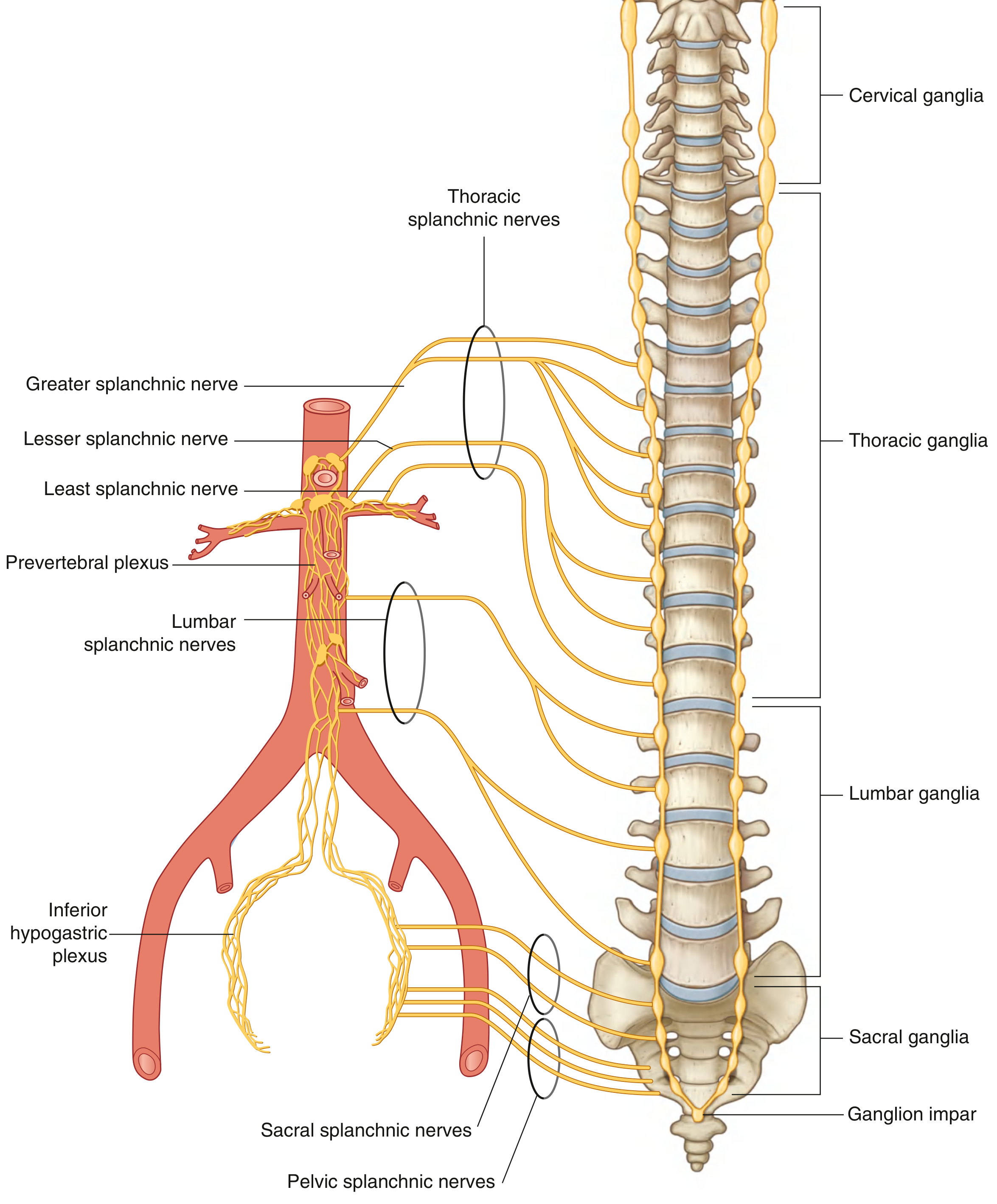
Fig. 4.138 - Splanchnic Nerves (Gray's Anatomy for Students)
Two Functional Types
There are two fundamentally different types of splanchnic nerves, based on the fibers they carry:
- Thoracic, lumbar, and sacral splanchnic nerves - carry preganglionic sympathetic fibers from the sympathetic trunk to ganglia in the prevertebral plexus, plus visceral afferent fibers.
- Pelvic splanchnic nerves - carry preganglionic parasympathetic fibers from S2-S4 to the inferior hypogastric plexus.
1. Thoracic Splanchnic Nerves
Three thoracic splanchnic nerves arise from sympathetic ganglia in the thorax and descend to the abdominal prevertebral plexuses:
| Nerve | Origin | Destination |
|---|---|---|
| Greater splanchnic nerve | T5-T9 (or T10) ganglia | Celiac ganglion |
| Lesser splanchnic nerve | T9-T10 (or T10-T11) ganglia | Aorticorenal ganglion |
| Least splanchnic nerve | T12 ganglion (inconstant) | Renal plexus |
- The greater splanchnic nerve is the largest. It descends across the front of the vertebral bodies, pierces the muscular part of the diaphragm, and ends in the celiac ganglion, which supplies the foregut and midgut organs (stomach, liver, gallbladder, pancreas, adrenal glands, small intestine to the transverse colon).
- The lesser splanchnic nerve runs parallel and slightly medial to the greater splanchnic nerve, eventually ending in the aorticorenal ganglion.
- The least splanchnic nerve is only identifiable in some individuals; it travels to the renal plexus.
All three nerve trunks pierce the crus of the diaphragm to enter the abdomen.
2. Lumbar and Sacral Splanchnic Nerves (Sympathetic)
- There are typically 2-4 lumbar splanchnic nerves arising from the lumbar portion of the sympathetic trunk, entering the abdominal prevertebral plexus (aortic/inferior mesenteric plexuses).
- Sacral splanchnic nerves arise from the sacral sympathetic trunk and enter the inferior hypogastric (pelvic) plexus.
- Both carry preganglionic sympathetic and visceral afferent fibers to pelvic organs.
3. Pelvic Splanchnic Nerves (Parasympathetic - Unique!)
The pelvic splanchnic nerves are anatomically and functionally unique:
- They are the only splanchnic nerves carrying parasympathetic fibers.
- They do not arise from the sympathetic trunk - instead they come directly from the anterior rami of S2, S3, and S4.
- Preganglionic parasympathetic fibers travel to the inferior hypogastric (pelvic) plexus.
- Some fibers pass upward into the abdominal prevertebral plexus and travel with arteries to innervate the hindgut (distal transverse colon, descending colon, sigmoid colon).
Abdominal Prevertebral Plexus - Where It All Converges
The prevertebral plexus surrounds the abdominal aorta and receives:
- Preganglionic parasympathetic and visceral afferent fibers from the vagus nerve (CN X)
- Preganglionic sympathetic and visceral afferent fibers from the thoracic and lumbar splanchnic nerves
- Preganglionic parasympathetic fibers from the pelvic splanchnic nerves (traveling upward)
The three major divisions are:
- Celiac plexus - around the celiac trunk; contains celiac ganglia, superior mesenteric ganglion, aorticorenal ganglia
- Aortic plexus - from the superior mesenteric artery origin to aortic bifurcation; contains inferior mesenteric ganglion
- Superior hypogastric plexus - divides into hypogastric nerves that enter the pelvis
Clinical Relevance
- Celiac plexus block / splanchnic nerve block: Used to treat intractable pain from pancreatic cancer and chronic pancreatitis. Blocking/ablating the greater splanchnic nerve interrupts nociceptive signals from the upper abdominal organs.
- Sympathetic control of GI blood flow: The splanchnic nerves regulate mesenteric vascular resistance. Splanchnic vasodilation plays a key role in the pathophysiology of portal hypertension and hepatic cirrhosis.
- Splanchnic vein thrombosis: Thrombosis of the portal, splenic, or mesenteric veins, affecting the venous drainage territory of splanchnic innervation.
Sources: Gray's Anatomy for Students, p. 422-423; Fischer's Mastery of Surgery 8th ed., p. 5092
This is a shared conversation. Sign in to Orris to start your own chat.