
Vagal inhibition points on body surface
Reading File
Finding Sources
Finding Sources
Searching the Web
vagal inhibition points body surface anatomy clinical
Reading File
Reading File
Reading File
Finding Sources
Reading File
Finding Sources
Finding Sources
Finding Sources
Finding Sources
Reading File
Reading File
Reading File
Loading Image
Reading File
I now have comprehensive material. Let me compile the full answer.
Vagal Inhibition - Body Surface Points
Vagal inhibition (also called vasovagal shock, reflex cardiac arrest, or neurogenic shock) is sudden cardiac arrest triggered by peripheral stimulation that reflexively activates the vagus nerve (CN X), causing profound bradycardia or cardiac standstill. Sudden death can result from what may appear to be trivial trauma.
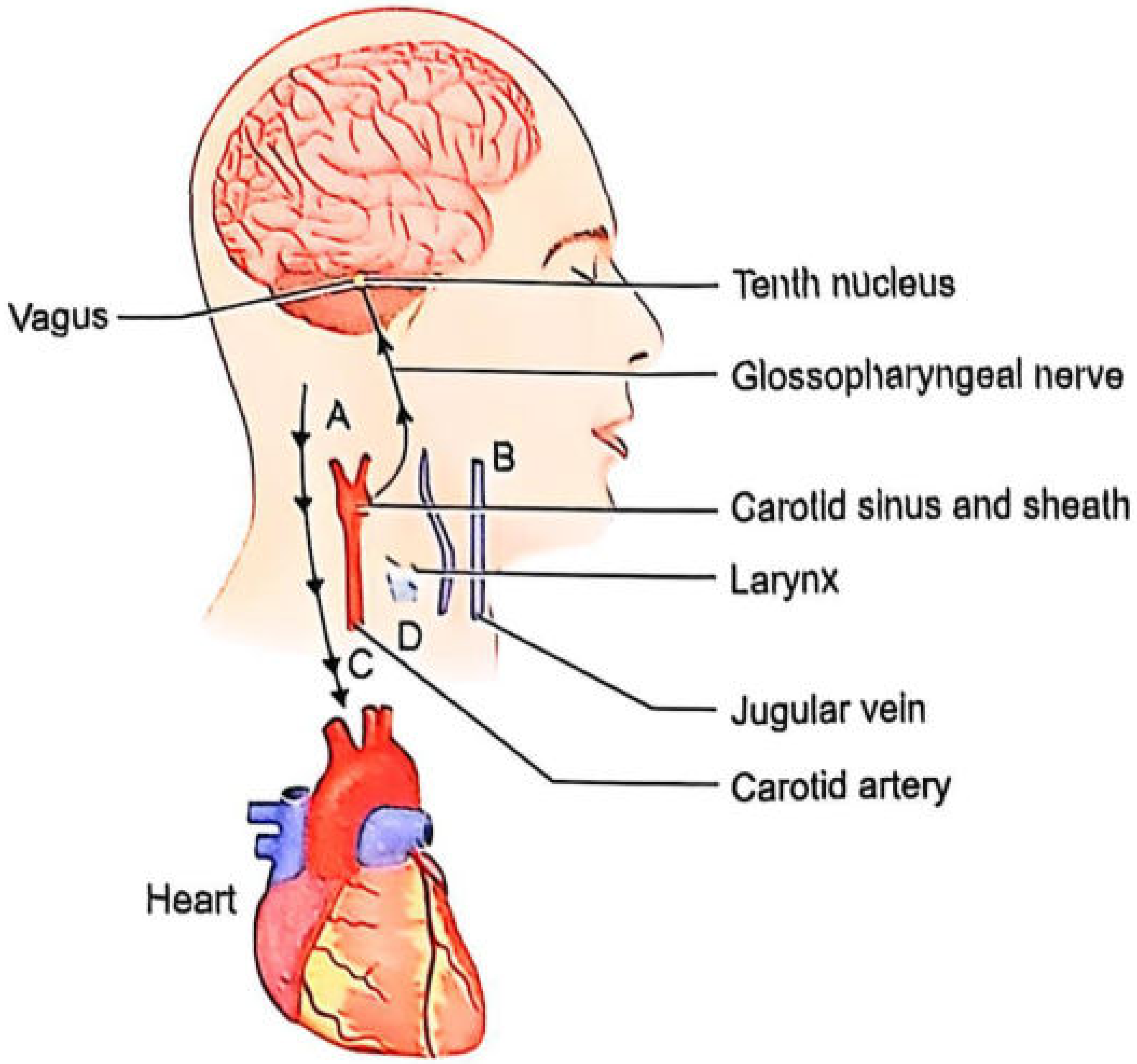
Fig. 6.6 - Coarse distribution of the receptor system in vagal inhibition reflexes. (The Essentials of Forensic Medicine and Toxicology, 36th ed.)
Mechanism
Pressure on baroreceptors in the carotid sinuses, carotid sheaths, and carotid body sends impulses via Hering's nerve to afferent fibers of the glossopharyngeal nerve (CN IX), which then relay to the dorsal motor nucleus of the vagus in the brainstem. Efferent parasympathetic impulses then travel via the cardiac branches of CN X, producing profound bradycardia and cardiac arrest.
There is also a wide sensory network in skin, pharynx, glottis, pleura, peritoneum, spermatic cord, cervix, urethra, and perineum. Afferent fibers from these pass into lateral tracts of the spinal cord and ultimately influence the vagal nucleus, explaining how stimulation of distant body sites triggers the reflex.
Body Surface Points That Can Trigger Vagal Inhibition
1. Neck Region
- Carotid sinus and carotid sheath - the most common and potent site. Located at the level of the angle of mandible and upper border of thyroid cartilage (where the common carotid bifurcates). Compression here - as in hanging, strangulation, or a tight collar - is the classic cause.
- Carotid body - in the dilated wall of the internal carotid artery just above the bifurcation.
- Vagal trunk itself - direct pressure over the cervical vagus nerve trunk.
- Larynx - a blow to the larynx or unexpected entry of fluid into the upper airway.
2. Eye / Orbit
- Oculocardiac reflex - pressure on the eyeball or traction on the extraocular muscles activates the ophthalmic branch of CN V (trigeminal), which connects to the vagal motor nucleus in the brainstem. Relevant in ocular surgery and blunt eye trauma.
3. Ear
- External auditory meatus - manipulation of the ear canal stimulates the auricular branch of the vagus (Arnold's nerve / Alderman's nerve) which directly triggers cardiac slowing. Even gentle syringing of the ear can cause syncope or death in susceptible individuals.
4. Chest
- Unexpected blows to the chest (epigastrium/precordium) - sudden blunt force, e.g., a punch, steering-wheel impact, or commotio cordis-type mechanism, can trigger reflex vagal inhibition without visible injury.
- Puncture of the pleural cavity - e.g., during pneumothorax induction.
5. Abdomen and Viscera
- Epigastrium / upper abdomen - a sudden blow here is a well-recognized cause of "dead on the spot" injury.
- Sudden evacuation of pathological fluids - rapid drainage of ascites or pleural effusion.
6. Genital Organs and Perineum
- Scrotum / testes - a blow to the genitals can cause reflex vagal inhibition via the spermatic cord plexus.
- Cervix / uterus - insertion of instruments into the cervix or uterine cavity (e.g., during criminal abortion or D&C), due to rich visceral afferent innervation.
- Bladder / urethra / rectum - instrumentation or sudden distension of any of these hollow organs.
7. Skin Surface (General)
- Cold water immersion - sudden immersion of the body in cold water stimulates cold receptors across the body surface, precipitating reflex vagal cardiac arrest. This is a well-recognized mechanism in drowning deaths.
Summary Table
| Site | Trigger | Mechanism |
|---|---|---|
| Carotid sinus (neck, angle of jaw) | Compression, hanging, strangulation | Hering's nerve → CN IX → vagal nucleus |
| Larynx (anterior neck) | Blow, food impaction, fluid inhalation | Direct vagal afferents |
| External auditory meatus | Ear syringing, instrumentation | Arnold's nerve (auricular branch of CN X) |
| Eye/orbit | Pressure, surgical traction | Oculocardiac reflex (CN V → vagal nucleus) |
| Chest/epigastrium | Punch, blast, blunt trauma | Visceral afferents → vagal nucleus |
| Pleural cavity | Needle entry, pneumothorax induction | Parietal pleura afferents |
| Abdomen/viscera | Evacuation of ascites/pleural fluid | Peritoneal/visceral afferents |
| Genitalia/testes | Blow | Spermatic plexus afferents |
| Uterus/cervix/bladder/rectum | Instrumentation, distension | Pelvic parasympathetic afferents |
| Entire body surface | Cold water immersion | Cutaneous cold receptors |
Clinical Significance (Forensic)
- Death from vagal inhibition leaves no visible autopsy findings - diagnosis is made by exclusion (no natural disease, injury, or poison sufficient to cause death).
- It is legally relevant in cases of accidental hanging, manual strangulation ("love pat" on neck), sudden immersion drowning, and deaths during instrumentation procedures.
- Emotional shock (extreme fear, grief, fright) can also trigger vasovagal syncope via cortical/thalamic input to the vagal nucleus, without any physical contact.
Sources: The Essentials of Forensic Medicine and Toxicology, 36th ed., p. 151; Parikh's Textbook of Medical Jurisprudence, Forensic Medicine and Toxicology; P.C. Dikshit Textbook of Forensic Medicine and Toxicology.
This is a shared conversation. Sign in to Orris to start your own chat.