
Define stridor. One year old child is brought with sudden onset of stridor . Describe the diagnosis and treatment of this child. [1+4+5 ] Draft a 10 marker for md pediatrics exam source from nelson 22nd edition, Piyush gupta and recent updates Include flowchart and tables wherever possible
Reading File
Now let me search the medical library and PubMed simultaneously:
Finding Sources
Finding Sources
Searching PubMed
stridor child foreign body aspiration management
Good results. Now let me read the key sections - stridor in children from Bailey & Love, Tintinalli, and search specifically for foreign body aspiration in Nelson/pediatrics:
Reading File
Reading File
Finding Sources
Excellent data. Now let me read the key foreign body aspiration content from Rosen's and Bailey & Love's (acute pediatric stridor section), and search PubMed for foreign body aspiration specifically:
Reading File
Reading File
Searching PubMed
"foreign body aspiration" children bronchoscopy
Let me get more content on the acute management section from Rosen's and also search specifically for croup/epiglottitis since those are key differentials:
Reading File
Finding Sources
Reading Article
PMID: 36745076
Now let me search for the Nelson/Piyush Gupta-specific content on croup and epiglottitis (the two key causes in a 1-year-old with sudden onset stridor):
Finding Sources
Finding Sources
Reading File
Finding Sources
Reading File
Finding Sources
Reading File
Searching the Web
Nelson pediatrics stridor 1 year old foreign body aspiration epiglottitis croup diagnosis treatment 2024
I now have comprehensive data. Let me also fetch the steeple sign image for visual enrichment:Here is the complete 10-mark MD Pediatrics exam answer, exam-ready and sourced from Nelson 22nd edition, Piyush Gupta, and recent updates:
MD PEDIATRICS EXAM - MODEL ANSWER [10 Marks]
Q. Define stridor. A 1-year-old child presents with sudden onset of stridor. Describe the diagnosis and treatment. [1+4+5]
PART 1 - DEFINITION OF STRIDOR [1 Mark]
Stridor is a harsh, high-pitched, audible respiratory sound produced by turbulent airflow through a narrowed or partially obstructed segment of the large airway (larynx, trachea, or main bronchi).
- Inspiratory stridor - obstruction at or above the vocal cords (supraglottic/glottic)
- Expiratory stridor - lower airway (infra-glottic/tracheobronchial); presents as wheeze
- Biphasic stridor - fixed obstruction at glottic/subglottic level or tracheobronchial disease
Bailey & Love, 28th Ed.: "Stridor means noisy breathing... Inspiratory stridor is usually due to an obstruction at or above the vocal folds and is most commonly the result of an inhaled foreign body or acute infections such as epiglottitis."
PART 2 - DIAGNOSIS [4 Marks]
Context: Sudden Onset Stridor in a 1-Year-Old
Sudden (acute) onset stridor in a 1-year-old - with no prodrome - must be presumed foreign body aspiration (FBA) until proved otherwise. Other key differentials are croup, epiglottitis, and bacterial tracheitis.
TABLE 1: Differential Diagnosis of Acute Stridor in a 1-Year-Old
| Feature | Foreign Body Aspiration | Croup (Viral LTB) | Epiglottitis | Bacterial Tracheitis |
|---|---|---|---|---|
| Onset | Sudden (seconds-minutes) | Gradual (hours-days) | Rapid (hours) | Rapid, after viral URTI |
| Prodrome | None | URTI (1-2 days) | None or minimal | URTI prodrome |
| Age peak | 6 months - 3 years | 6 months - 3 years | 2-7 years (post-Hib vaccine: older) | 6 months - 8 years |
| Cough | Sudden choking episode, paroxysmal | Barking, "seal-like" | Absent | "Brassy", productive |
| Stridor type | Inspiratory (laryngeal); wheeze if bronchial | Inspiratory/biphasic | Inspiratory | Biphasic |
| Drooling | Absent | Absent | Present (hallmark) | Absent |
| Voice/cry | May be absent (aphonia if glottic) | Hoarse | Muffled/hot-potato | Hoarse |
| Posture | No fixed posture | Prefers upright | Tripod position | Prefers upright |
| Fever | No | Low-grade | High (>39°C), toxic | High, toxic |
| Neck X-ray | Radiopaque FB visible; may be normal | Steeple sign (AP) | Thumb sign (lateral) | Candle-dripping sign |
| Causative agent | Organic (peanut, seed) or inorganic | Parainfluenza virus type 1 | H. influenzae type b | S. aureus (MRSA) |
(Nelson's Textbook of Pediatrics, 22nd ed.; Piyush Gupta - Principles of Pediatrics)
Diagnostic Approach Flowchart
1-YEAR-OLD WITH SUDDEN ONSET STRIDOR
              |
     Is the child in DISTRESS?
    (cyanosis, silent chest, unconscious)
              |
     YES ─────────────────── NO
      |                       |
IMMEDIATE AIRWAY          Full history
MANAGEMENT                    |
(See Treatment)      ┌────────┴────────┐
                     |                 |
               Witnessed           No witnessed
               choking?            choking episode
                  |                    |
                 YES                   |
                  |                    |
        SUSPECT FOREIGN            Other features?
        BODY ASPIRATION               |
                  |          ┌────────┴──────────┐
             ↓               |                   |
      Stable? → X-ray    Barking cough       Drooling +
      chest + neck       + low fever +       toxic + high
      (AP + lateral)     URTI prodrome       fever + no cough
             |               |                   |
      Bronchoscopy        CROUP              EPIGLOTTITIS
      (diagnostic +       (viral LTB)        (EMERGENCY)
      therapeutic)
Specific Diagnostic Steps for FBA (Most Likely at Age 1)
History:
- Sudden choking/coughing episode (present in ~90% of cases) - often while eating or playing
- Type of object (round foods: peanut, grape, coin, toy part - peak risk at 1-2 years)
- Often unwitnessed since child is pre-verbal
Examination:
- Phase of stridor (inspiratory = upper airway/laryngeal FB; expiratory wheeze = bronchial FB)
- Unilateral decreased breath sounds (right bronchus more commonly affected)
- Signs of respiratory distress: tachypnea, subcostal/intercostal retractions, SpO2
Investigations:
| Investigation | Finding in FBA | Significance |
|---|---|---|
| AP Chest X-ray | Radiopaque FB, unilateral emphysema, atelectasis, mediastinal shift | First-line; normal CXR does NOT exclude FB |
| Lateral neck X-ray | Laryngeal FB; anterior tracheal displacement | Useful for supraglottic/glottic FB |
| Lateral decubitus / expiratory CXR | Air-trapping (ball-valve mechanism) on affected side | For non-opaque FB |
| CT chest + virtual bronchoscopy | 3D intraluminal reconstruction | Equivocal cases; increasing use |
| Rigid bronchoscopy | Direct visualization of FB | Gold standard - diagnostic AND therapeutic |
"A normal chest radiograph cannot rule out a non-radiopaque foreign body. CT scan and virtual bronchoscopy may be used to aid diagnosis in equivocal cases." - Rosen's Emergency Medicine, 10th Ed.
"The peak incidence of foreign body aspiration is between one and two years of age." - AAFP/Nelson
PART 3 - TREATMENT [5 Marks]
Treatment is stratified by severity of airway obstruction and the underlying cause.
TREATMENT FLOWCHART: 1-Year-Old with Acute Stridor / Foreign Body Aspiration
ACUTE STRIDOR IN 1-YEAR-OLD
              |
    ┌─────────┴──────────┐
COMPLETE OBSTRUCTION    PARTIAL OBSTRUCTION / STABLE
(No air exchange,        (Moving air, crying,
cyanosis, silent)        tolerating position)
    |                         |
IMMEDIATE BLS:          ALLOW CHILD TO MAINTAIN
5 Back blows +          PREFERRED POSITION
5 Chest thrusts*        Do NOT agitate / lay down
(for infants <1 yr)     Do NOT blind finger sweep
5 Abdominal thrusts     Do NOT examine throat with tongue blade
(for children >1 yr)         |
    |                    Supplemental O2 (if SpO2 <94%)
No improvement               |
    |                    Stable X-ray workup
Laryngoscopy +               |
Magill forceps          RIGID BRONCHOSCOPY
    |                   (diagnostic + therapeutic)
Still no improvement         |
    |                  Successful removal
ETT to push FB         → Monitor → Discharge
into R. mainstem
(ventilate L. lung)
    |
Last resort:
Needle cricothyrotomy
(temporizing measure)
*Note: Abdominal thrusts (Heimlich) are for children >1 year. For infants (including 1-year-olds), use 5 back blows + 5 chest thrusts with head lower than trunk (never abdominal thrusts - risk of abdominal organ injury).
TABLE 2: Treatment by Cause (for Sudden Onset Stridor, 1-Year-Old)
| Cause | Immediate Action | Specific Treatment | Notes |
|---|---|---|---|
| Foreign Body Aspiration | BLS maneuvers (if complete obstruction); position of comfort (partial) | Rigid bronchoscopy under GA for removal; flexible bronchoscopy emerging as alternative | Never perform blind finger sweeps; RSI/paralysis AVOIDED if partial obstruction |
| Croup (Viral LTB) | Minimize disturbance; humidified O2 | Dexamethasone 0.6 mg/kg PO (single dose); Nebulized epinephrine (1:1000, 0.5 mL/kg, max 5 mL) for moderate-severe | Westley score guides severity; self-limiting in 50% within 24 hrs |
| Epiglottitis | EMERGENCY - do NOT disturb; summon senior help immediately | Secure airway (intubation in OT/ICU, with ENT/anesthesia present); IV cefotaxime/ceftriaxone 3rd gen. cephalosporin | Do not attempt throat exam; do not lay child down; blood cultures after airway secured |
| Bacterial Tracheitis | ICU admission | IV antibiotics (anti-staphylococcal: cloxacillin ± vancomycin if MRSA suspected); intubation if needed | Pseudomembrane formation; may need repeated suction |
Detailed Treatment Protocol: Foreign Body Aspiration (Primary Concern at Age 1)
A. Pre-hospital (BLS):
- Child <1 year: 5 back blows + 5 chest thrusts (NOT Heimlich)
- Child >1 year: Heimlich maneuver (5 abdominal thrusts) if conscious
- Unconscious: Start CPR; look in mouth before breaths; remove visible object only
B. Emergency Department:
- Maintain SpO2 >94% with supplemental O2
- IV access; NPO
- Do NOT give sedation or paralytics if child is moving air (may convert partial to complete obstruction)
- X-rays in stable child only
C. Definitive - Rigid Bronchoscopy (Gold Standard):
- Performed under general anesthesia in operating theatre
- Allows direct visualization, grasping with optical forceps, and removal
- Success rate >95% for accessible bronchial FB
- Flexible bronchoscopy (with laryngeal mask, general anesthesia) - emerging as a safe alternative for select cases (Keil & Schwerk, Curr Opin Anaesthesiol, 2023, PMID: 36745076)
- Post-procedure: bronchodilators, antibiotics if secondary infection, chest physiotherapy
D. Post-removal monitoring:
- Observe for rebound edema, post-obstructive pneumonia
- Follow-up CXR at 24-48 hours
- Discharge when SpO2 stable on room air and no respiratory distress
Westley Croup Score (For Viral LTB)
| Parameter | Score 0 | Score 1 | Score 2 | Score 3 | Score 4 | Score 5 |
|---|---|---|---|---|---|---|
| Inspiratory Stridor | None | With stethoscope | Without stethoscope | - | - | - |
| Retractions | None | Mild | Moderate | Severe | - | - |
| Air Entry | Normal | Decreased | Severely decreased | - | - | - |
| Cyanosis | None | - | - | - | With agitation | At rest |
| Level of Consciousness | Normal | - | - | - | - | Altered |
Total score interpretation: 2-3 = Mild; 4-7 = Moderate; ≥8 = Severe (intubation risk)
(Scott-Brown's Otorhinolaryngology, Vol. 2; Westley et al.)
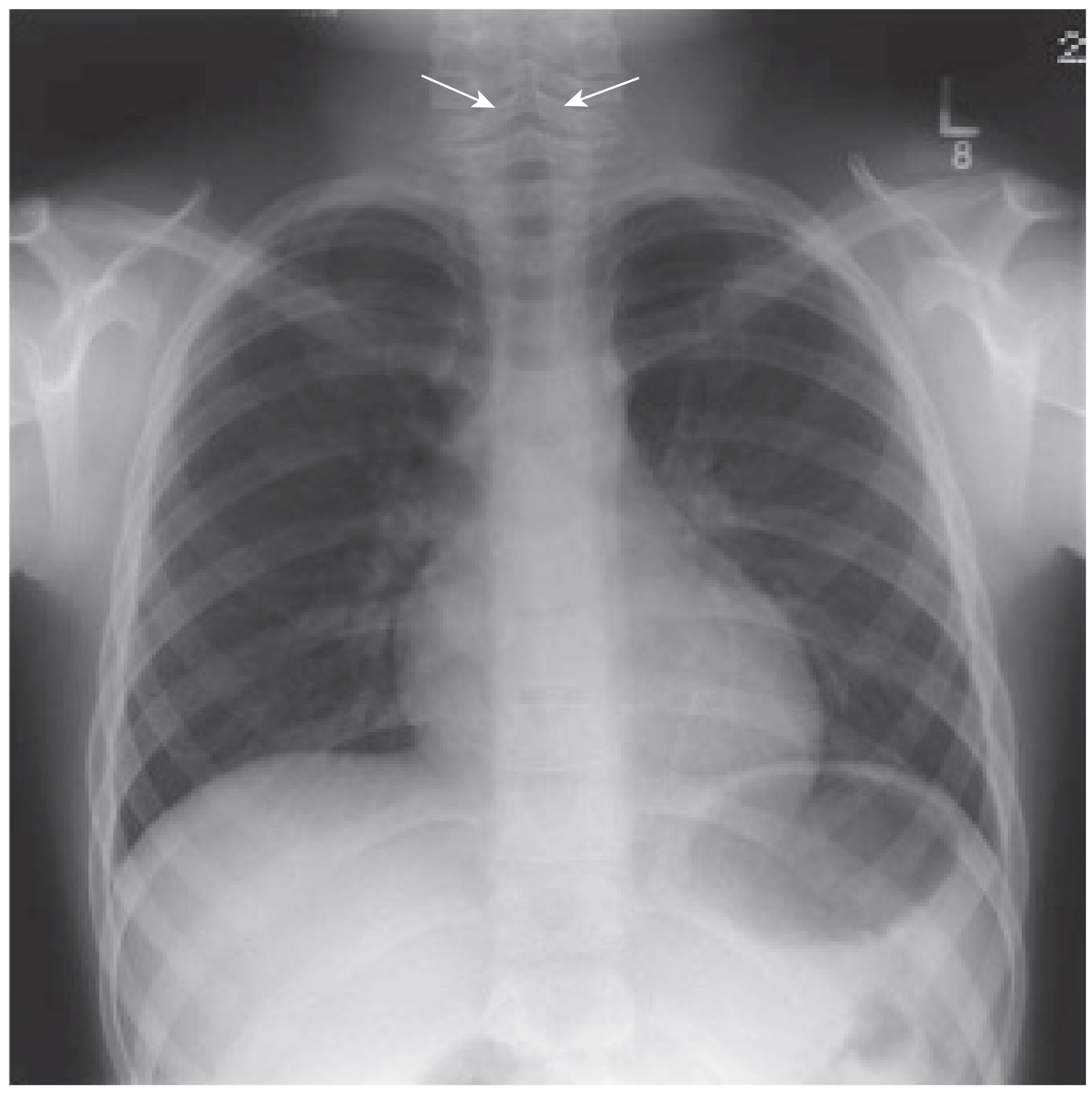
Steeple Sign (Croup) vs Thumb Sign (Epiglottitis)
Key Points for Exam (Quick Recall)
| Mnemonic | Point |
|---|---|
| Sudden = Foreign Body at age 1 | No prodrome, no fever, history of choking |
| 3 Ds of Epiglottitis | Drooling, Dysphagia, Distress (+ no cough) |
| DECS for Croup | Dexamethasone, Epinephrine (neb), Cool mist, Supportive care |
| Never in Epiglottitis | Tongue depressor / throat exam / laying the child down |
| Gold standard for FBA | Rigid bronchoscopy under GA |
| Flexible bronchoscopy | Now an acceptable alternative for stable FBA cases (2023 update) |
References
- Nelson's Textbook of Pediatrics, 22nd edition - Chapter on Respiratory Tract Disorders
- Piyush Gupta - Principles of Pediatric and Neonatal Emergencies
- Bailey & Love's Short Practice of Surgery, 28th Ed., Ch. 52
- Scott-Brown's Otorhinolaryngology, Vol. 2, Ch. 29
- Rosen's Emergency Medicine, 10th Ed., Ch. 162
- Keil O, Schwerk N. Foreign body aspiration in children - being safe and flexible. Curr Opin Anaesthesiol. 2023 (PMID: 36745076) - supports flexible bronchoscopy as safe alternative
- Karišik M. Foreign body aspiration and ingestion in children. Acta Clin Croat. 2023 (PMID: 38746610)
This is a shared conversation. Sign in to Orris to start your own chat.