
Layers of pharynx
Reading File
Searching for layers of the pharynx now.
search_medical_text
layers of pharynx wall anatomy
Bailey and Love's Short Practice of Surgery 28th Edition
Page 795

GradeResponse
GradeResponse
The retrieved text provides only general anatomy. Here is a comprehensive answer synthesized from the source and core anatomical knowledge:
Layers of the Pharynx
The pharynx is a fibromuscular tube extending from the base of the skull to the level of C6 (lower border of the cricoid cartilage), where it continues as the oesophagus. Its wall is composed of 4 layers, from inside out:
1. Mucous Membrane (Mucosa)
- Innermost layer
- Nasopharynx: lined by pseudostratified ciliated columnar (respiratory) epithelium
- Oropharynx & Hypopharynx (laryngopharynx): lined by non-keratinized stratified squamous epithelium (better suited to withstand food passage)
- Contains mucous glands and lymphoid tissue (part of Waldeyer's ring in the nasopharynx)
2. Pharyngobasilar Fascia (Fibrous Layer)
- Lies between the mucosa and the muscular layer
- A dense fibrous sheet that is thickest superiorly (where the pharyngeal musculature is incomplete near the skull base)
- Attaches the pharynx to the basilar part of the occipital bone and petrous temporal bone superiorly
- Provides structural rigidity to the upper pharynx
3. Muscular Layer
The muscular layer has two groups of muscles:
A. Outer Circular Layer — Pharyngeal Constrictors
| Muscle | Origin | Role |
|---|---|---|
| Superior constrictor | Pterygoid hamulus, pterygomandibular raphe, mandible, tongue | Upper pharynx compression |
| Middle constrictor | Hyoid bone (greater & lesser cornua), stylohyoid ligament | Mid pharynx compression |
| Inferior constrictor | Thyroid & cricoid cartilages | Lower pharynx; upper part = thyropharyngeus, lower part = cricopharyngeus |
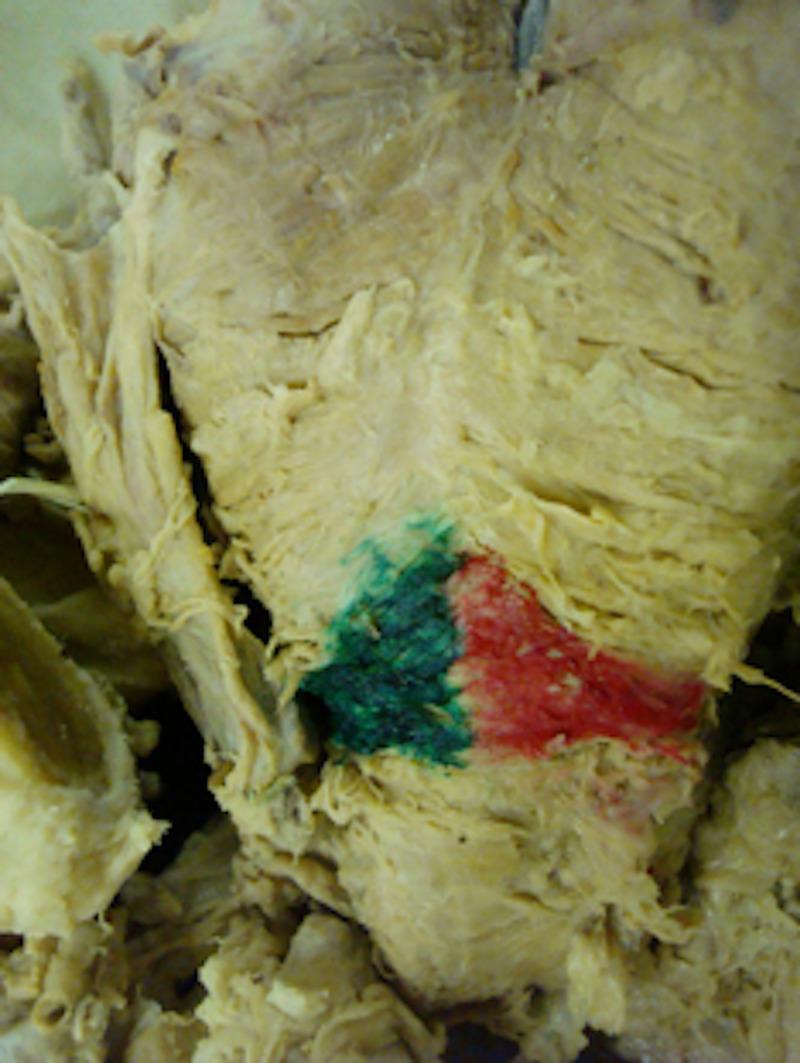
- Killian's triangle (dehiscence of Laimer) is a weak area between the thyropharyngeal and cricopharyngeal parts of the inferior constrictor — the site of Zenker's diverticulum formation (Bailey & Love's, p. 795)
- The constrictors overlap each other like stacked cups (inferior overlaps middle, middle overlaps superior)
- They are innervated by the pharyngeal plexus (CN IX + CN X + sympathetic fibers)
B. Inner Longitudinal Layer — Elevators
| Muscle | Origin |
|---|---|
| Stylopharyngeus | Styloid process (CN IX) |
| Salpingopharyngeus | Cartilage of auditory tube (CN X) |
| Palatopharyngeus | Soft palate (CN X) |
- These muscles elevate the pharynx and larynx during swallowing
4. Buccopharyngeal Fascia (Adventitia)
- Outermost layer
- A loose connective tissue (areolar) fascia covering the outer surface of the constrictors
- Separates the pharynx from the retropharyngeal space posteriorly
- Continuous with the fascia covering the buccinator anteriorly
- Important surgical landmark — infections can spread through the retropharyngeal space into the mediastinum (retropharyngeal abscess)
Summary Table
| Layer | Tissue Type | Key Features |
|---|---|---|
| Mucosa | Epithelium + lamina propria | Respiratory epithelium (NP); squamous (OP, HP) |
| Pharyngobasilar fascia | Dense fibrous | Thickest superiorly; attaches to skull base |
| Muscular layer | Striated muscle | Constrictors (outer) + Elevators (inner) |
| Buccopharyngeal fascia | Loose areolar | Outermost; borders retropharyngeal space |
Below is a cadaveric specimen of the posterior pharyngeal wall, showing the muscular and adventitial layers and highlighting Killian's Triangle between the inferior constrictor parts:
This is a shared conversation. Sign in to Orris to start your own chat.