
Post acne marks ans pores treatment
Reading File
Researching post-acne marks, enlarged pores, and their treatment options now.
search_medical_text
post acne marks hyperpigmentation erythema treatment
Management of Acne Vulgaris
Page 19
search_medical_text
enlarged pores treatment topical procedures
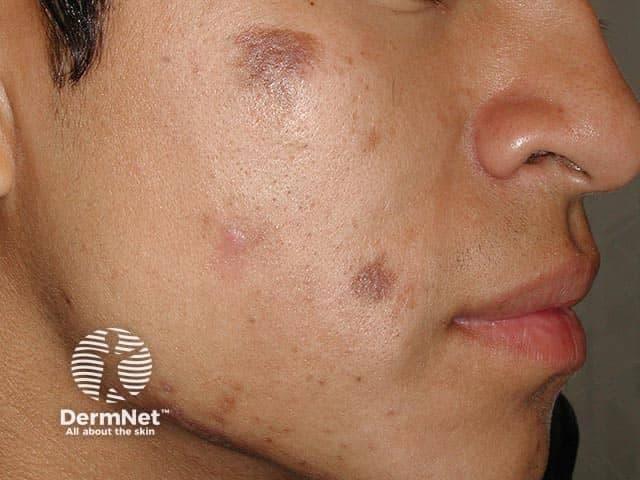
GradeResponse
GradeResponse
GradeResponse
Here is a comprehensive guide on treating post-acne marks and enlarged pores:
Post-Acne Marks & Enlarged Pores: Treatment Guide
Understanding the Types of Post-Acne Marks
| Type | Description | Skin Tone Predisposition |
|---|---|---|
| Post-Inflammatory Hyperpigmentation (PIH) | Flat brown/dark macules left after acne heals | More common in Fitzpatrick types III–VI |
| Post-Inflammatory Erythema (PIE) | Flat pink/red marks from residual vascular changes | More common in lighter skin tones |
| Acne Scars | Textural changes (ice pick, boxcar, rolling scars) | All skin types |
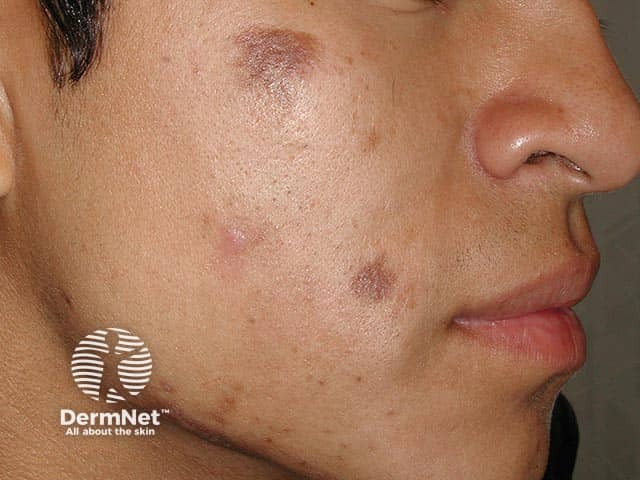
Treatment for Post-Acne Marks (PIH & PIE)
First-Line Topicals
| Agent | Mechanism | Notes |
|---|---|---|
| Topical Retinoids (tretinoin, adapalene) | Accelerate cell turnover, fade pigment | Also prevents new acne; mild irritation initially |
| Azelaic Acid (10–20%) | Inhibits tyrosinase, anti-inflammatory | Safe for all skin tones; dual-purpose (acne + PIH) |
| Hydroquinone (2–4%) | Inhibits melanin synthesis | Gold standard for PIH; use cycles (3 months on/off) |
| Niacinamide (4–5%) | Blocks melanosome transfer | Well tolerated, anti-inflammatory |
| Vitamin C (L-ascorbic acid 10–20%) | Antioxidant, tyrosinase inhibitor | Best for PIE and general brightening |
| Alpha Arbutin | Tyrosinase inhibitor | Gentler alternative to hydroquinone |
Sun Protection (NON-NEGOTIABLE)
- Broad-spectrum SPF 30+ daily — UV exposure darkens PIH significantly and undoes all treatment progress
- Use even on cloudy days / indoors near windows
Treatment for Enlarged Pores
Pore size is largely genetic (determined by sebum production and collagen laxity), but can be minimized:
Topicals
| Agent | Benefit |
|---|---|
| Topical Retinoids | Increase collagen, tighten pore walls over time |
| Niacinamide | Reduces sebum production, visually minimizes pores |
| BHAs (Salicylic acid 0.5–2%) | Oil-soluble; penetrates and clears sebaceous plugs within pores |
| AHAs (Glycolic/Lactic acid) | Surface exfoliation, improves skin texture |
| Clay masks | Temporary pore-tightening by absorbing excess sebum |
Procedural / In-Office Treatments
For more significant PIH, PIE, scars, or persistent pores:
| Procedure | Best For | Notes |
|---|---|---|
| Chemical Peels (glycolic, TCA, Jessner's) | PIH, PIE, texture | Multiple sessions; caution in darker skin types |
| Microneedling | Pore size, atrophic scars | Stimulates collagen; minimal downtime |
| Laser (non-ablative) — Nd:YAG, pulsed dye | PIE (vascular lesions), pores | PDL excellent for erythema; darker skin needs careful selection |
| Ablative Laser — CO₂, Er:YAG | Atrophic scars, pores | Significant downtime; risk of PIH in darker skin |
| Intense Pulsed Light (IPL) | PIE, pigment | Best for Fitzpatrick I–III |
| Fractional Laser | Scars + pores | Fractional CO₂ is highly effective |
Special Considerations for Darker Skin Tones (Fitzpatrick IV–VI)
Per Management of Acne Vulgaris guidelines (p. 19), patients with skin of color disproportionately suffer from acne-induced hyperpigmentation, and this is often under-treated. Key points:
- Avoid aggressive procedures that risk worsening PIH (e.g., high-concentration TCA peels, ablative lasers without caution)
- Prefer azelaic acid, retinoids, and non-hydroquinone alternatives
- Always pre-treat with depigmenting agents before any laser procedure
- Strict sun protection is even more critical
Recommended Skincare Routine (Combined Approach)
Morning:
- Gentle cleanser
- Vitamin C serum (for PIH/PIE)
- Niacinamide moisturizer
- SPF 30–50
Evening:
- Gentle cleanser
- BHA (salicylic acid) — 2–3x/week for pores
- Retinoid (tretinoin / adapalene) — start low, build up
- Azelaic acid (on off-retinoid nights) or hydroquinone if needed
Timeline for Results
| Treatment | Expected Improvement |
|---|---|
| Topical retinoids | 8–12 weeks |
| Hydroquinone / azelaic acid | 4–8 weeks |
| Chemical peel series | 4–6 sessions |
| Microneedling | 3–6 sessions (4–6 weeks apart) |
| Laser treatments | 1–3 sessions |
Key Principle: The most important step is controlling active acne first — new breakouts continuously create new marks. All lightening and pore treatments work best on stable, non-inflamed skin.
Adapalene percentage?
Adapalene is available in the following concentrations:
| Strength | Availability | Common Use |
|---|---|---|
| 0.1% | OTC & prescription (gel, cream, lotion) | Standard first-line; well tolerated |
| 0.3% | Prescription only (gel) | More potent; for resistant acne or when faster results needed |
Key Points:
- 0.1% gel is the most commonly used form — effective for both acne and PIH with a favorable tolerability profile
- 0.3% gel produces faster and greater reduction in acne lesions but causes more dryness and irritation
- For post-acne marks and pores specifically, 0.1% is typically sufficient and better tolerated long-term
- Always apply at night to dry skin, starting 2–3x per week, then building to nightly as tolerated
This is a shared conversation. Sign in to Orris to start your own chat.