I now have comprehensive data from Harrison's 22nd edition, Goodman & Gilman's pharmacology, and current web sources. Here is the complete clinical answer:
Type 2 Diabetes - New Diagnosis: Treatment Plan
Patient Summary:
- 37-year-old female, no prior DM/HTN diagnosis, not on medications
- HbA1c: 8.3% | FBS: 135 mg/dL | PPBS: 245 mg/dL
- This represents moderate hyperglycemia (PPBS >200, HbA1c >8%)
Step 1 - Confirm the Diagnosis
She already meets diagnostic criteria (ADA):
- FBS ≥ 126 mg/dL ✓
- PPBS ≥ 200 mg/dL ✓
- HbA1c ≥ 6.5% ✓ (8.3% is well above threshold)
Before starting treatment, also check: CBC, LFT, RFT (serum creatinine, eGFR), urine microalbumin, lipid profile, TSH, BP - to rule out contraindications and screen for complications.
Step 2 - Set the Glycemic Target
Per Harrison's 22E and ADA guidelines:
- Target HbA1c: <7.0% for a 37-year-old otherwise healthy woman
- FBS target: 80-130 mg/dL
- PPBS target: <180 mg/dL
Her current HbA1c of 8.3% means she needs a ~1.3% reduction - achievable with oral monotherapy or dual therapy.
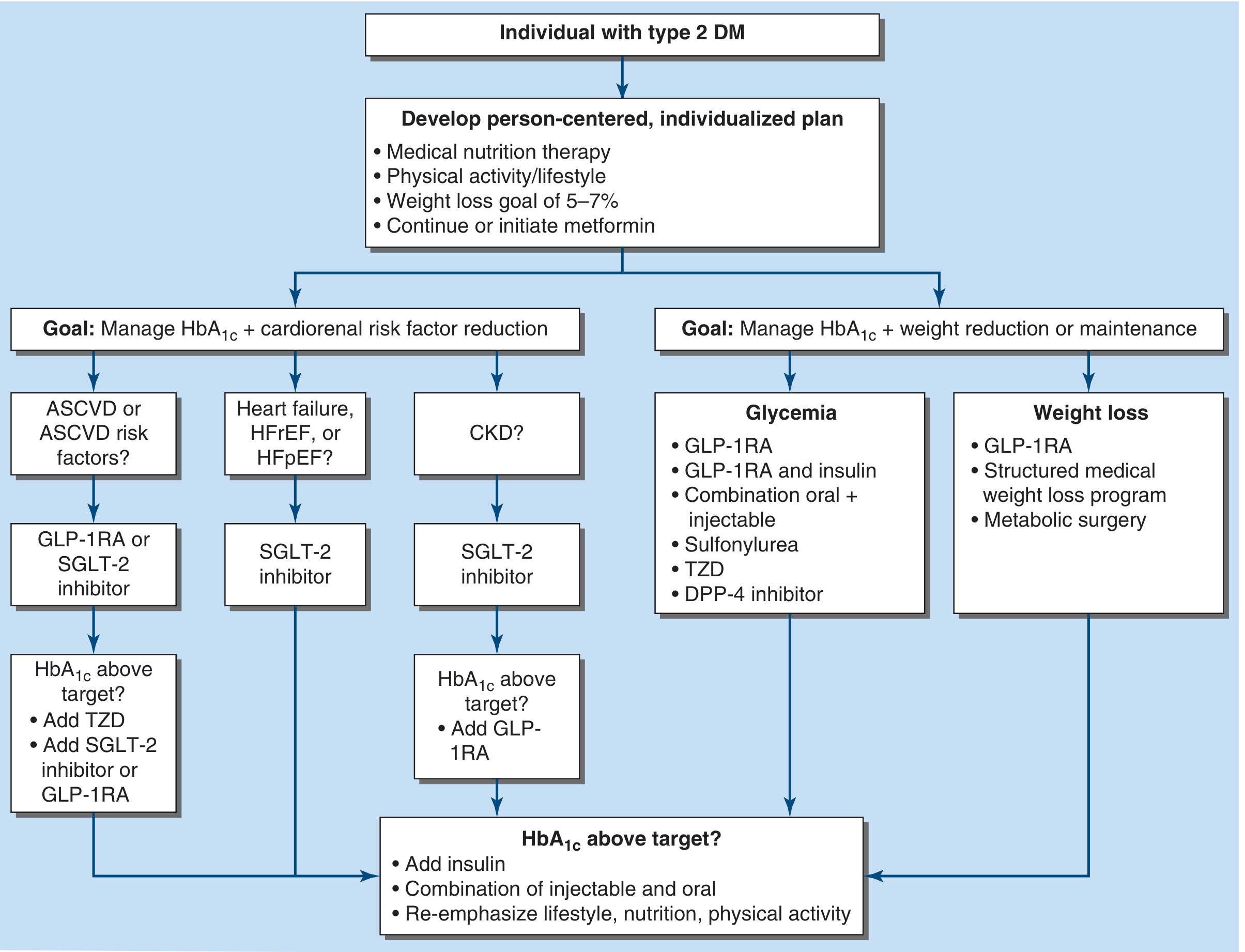
Step 3 - Lifestyle Modification (Mandatory First Step)
Always start alongside any drug:
- Medical Nutrition Therapy (MNT): Reduce refined carbs, sugars, processed foods. Low glycemic index diet.
- Physical activity: 150 min/week of moderate exercise (brisk walking)
- Weight loss goal: 5-7% body weight (if overweight)
- Smoking cessation, alcohol restriction
Step 4 - Drug Treatment
First-Line Drug: METFORMIN
Per Goodman & Gilman and Harrison's, Metformin is the universally accepted first-line agent for type 2 diabetes unless contraindicated.
Why Metformin for this patient:
- No hypoglycemia risk (does not stimulate insulin release)
- No weight gain - often mild weight loss (ideal for a young woman)
- Cardioprotective, reduces microvascular complications
- Cheap, safe, well-studied
- No contraindications evident (normal renal function assumed)
How to start:
| Step | Dose | Timing |
|---|
| Week 1-2 | 500 mg once daily | With dinner (reduces GI side effects) |
| Week 3-4 | 500 mg twice daily | With breakfast + dinner |
| Week 5-6 | 500 mg thrice daily OR 1000 mg BD | With meals |
| Target dose | 1000 mg twice daily (2g/day) | With meals |
Titrate slowly to minimize GI side effects (nausea, bloating, diarrhea). Tell the patient these are transient and reduce over 2-4 weeks.
Trade Names for Metformin:
| Brand | Manufacturer | Strength |
|---|
| Glucophage | Merck | 500 mg, 850 mg, 1000 mg |
| Glycomet | USV | 500 mg, 850 mg, 1 g |
| Obimet | Aristo | 500 mg, 850 mg |
| Bigomet | Cadila | 500 mg |
| Glucomet | Various | 500 mg, 1000 mg |
| Glycomet SR (sustained release) | USV | 500 mg, 1g |
| Metlong (SR) | Lupin | 500 mg, 1g |
Step 5 - When to Add a Second Drug
Because her HbA1c is 8.3% (moderate hyperglycemia - FPG 135, PPBS 245), there is a clinical argument to start dual therapy upfront per Harrison's 22E:
"Patients with moderate hyperglycemia (FPG 200-250 mg/dL) will usually require more than one oral agent."
Option A: Metformin + Sulfonylurea (most affordable combination)
Add Glimepiride or Glipizide
- Works by stimulating pancreatic insulin secretion
- Effective, inexpensive, widely available
- Risk: hypoglycemia (counsel patient), mild weight gain
| Drug | Trade Name | Dose |
|---|
| Glimepiride | Amaryl, Glimpid, Glimisave | 1-2 mg OD with breakfast |
| Glipizide | Glucotrol, Glipizide SR | 5 mg OD before meals |
| Gliclazide | Diamicron, Glycinorm | 80 mg OD/BD or 30-60 mg MR OD |
| Glibenclamide | Daonil, Glycomin | 2.5-5 mg OD (lower preference - long t1/2) |
Best choice: Glimepiride 1 mg OD + Metformin 500 mg BD to start (combination tablet available)
Common combination brand: Glycomet GP (Glycomet + Glimepiride), Amaryl M (Glimepiride + Metformin)
Option B: Metformin + DPP-4 Inhibitor ("Gliptin") - Preferred if hypoglycemia concern
No hypoglycemia risk, weight neutral, well tolerated. Slightly more expensive.
| Drug | Trade Name | Dose |
|---|
| Sitagliptin | Januvia, Sitagen | 100 mg OD |
| Vildagliptin | Galvus, Vildamet | 50 mg BD |
| Teneligliptin | Tendia, Ziten | 20 mg OD |
| Linagliptin | Tradjenta | 5 mg OD |
| Saxagliptin | Onglyza | 2.5-5 mg OD |
Combination brands: Janumet (Sitagliptin + Metformin), Galvumet (Vildagliptin + Metformin), Tendia-M (Teneligliptin + Metformin)
Option C: Metformin + SGLT-2 Inhibitor (if weight loss also a goal)
Promotes glucosuria (glucose excretion in urine), causes weight loss, cardioprotective.
| Drug | Trade Name | Dose |
|---|
| Dapagliflozin | Farxiga, Forxiga | 10 mg OD |
| Empagliflozin | Jardiance | 10-25 mg OD |
| Canagliflozin | Invokana | 100-300 mg OD |
Combination brands: Synjardy (Empagliflozin + Metformin), Xigduo XR (Dapagliflozin + Metformin)
Caution: increased UTI/genital infection risk; ensure adequate hydration.
Recommended Practical Plan for This Patient
Given she is a 37-year-old woman, HbA1c 8.3%, PPBS 245 (moderate hyperglycemia), no comorbidities:
Start: Metformin 500 mg BD with meals + Glimepiride 1 mg OD with breakfast
OR (if she is concerned about hypoglycemia or weight):
Metformin 500 mg BD + Teneligliptin 20 mg OD (very affordable in India, no hypoglycemia)
Titrate at 4-6 weeks based on SMBG (self-monitoring blood glucose) and repeat HbA1c at 3 months.
Target: HbA1c <7% within 3-6 months.
Treatment Algorithm (from Harrison's 22E)
Monitoring Schedule
| Parameter | Frequency |
|---|
| FBS + PPBS (SMBG) | Daily initially |
| HbA1c | Every 3 months until target, then every 6 months |
| RFT (creatinine, eGFR) | Every 6-12 months (Metformin monitoring) |
| Urine microalbumin | Annually |
| Lipid profile | Annually |
| Eye examination (fundus) | Annually |
| Foot examination | Every visit |
| Blood pressure | Every visit |
Key Points
- Metformin is the anchor drug - always start here unless contraindicated (eGFR <30, liver disease, severe illness)
- This patient's PPBS of 245 suggests she may need dual therapy from the start
- She is young (37 years) and has no DM previously known - excellent window to achieve remission with aggressive lifestyle change
- Counsel on: hypoglycemia symptoms (with sulfonylureas), sick-day rules (hold Metformin if ill/dehydrated), and importance of regular follow-up
- Vitamin B12 monitoring annually on Metformin (it reduces B12 absorption by 20-30%)
References: Harrison's Principles of Internal Medicine 22E (2025) - Ch. 416; Goodman & Gilman's Pharmacological Basis of Therapeutics - Ch. 51;
ADA Standards of Care 2025;
BMJ living systematic review on T2DM medications (PMID: 40813122)