
from Guyton and Hall textbook of medical physiology, 4th South Asia edition write a 5 mark short note on .Ventricular Diastole-event
Reading File
Finding Sources
Finding Sources
Finding Sources
Finding Sources
Reading File
Reading File
Finding Sources
Finding Sources
Reading File
Reading File
Loading Image
Reading File
I now have all the content needed from Guyton and Hall to write a comprehensive 5-mark short note on Ventricular Diastole. Here is the complete answer:
Short Note: Ventricular Diastole - Events
Source: Guyton and Hall Textbook of Medical Physiology, 4th South Asia Edition
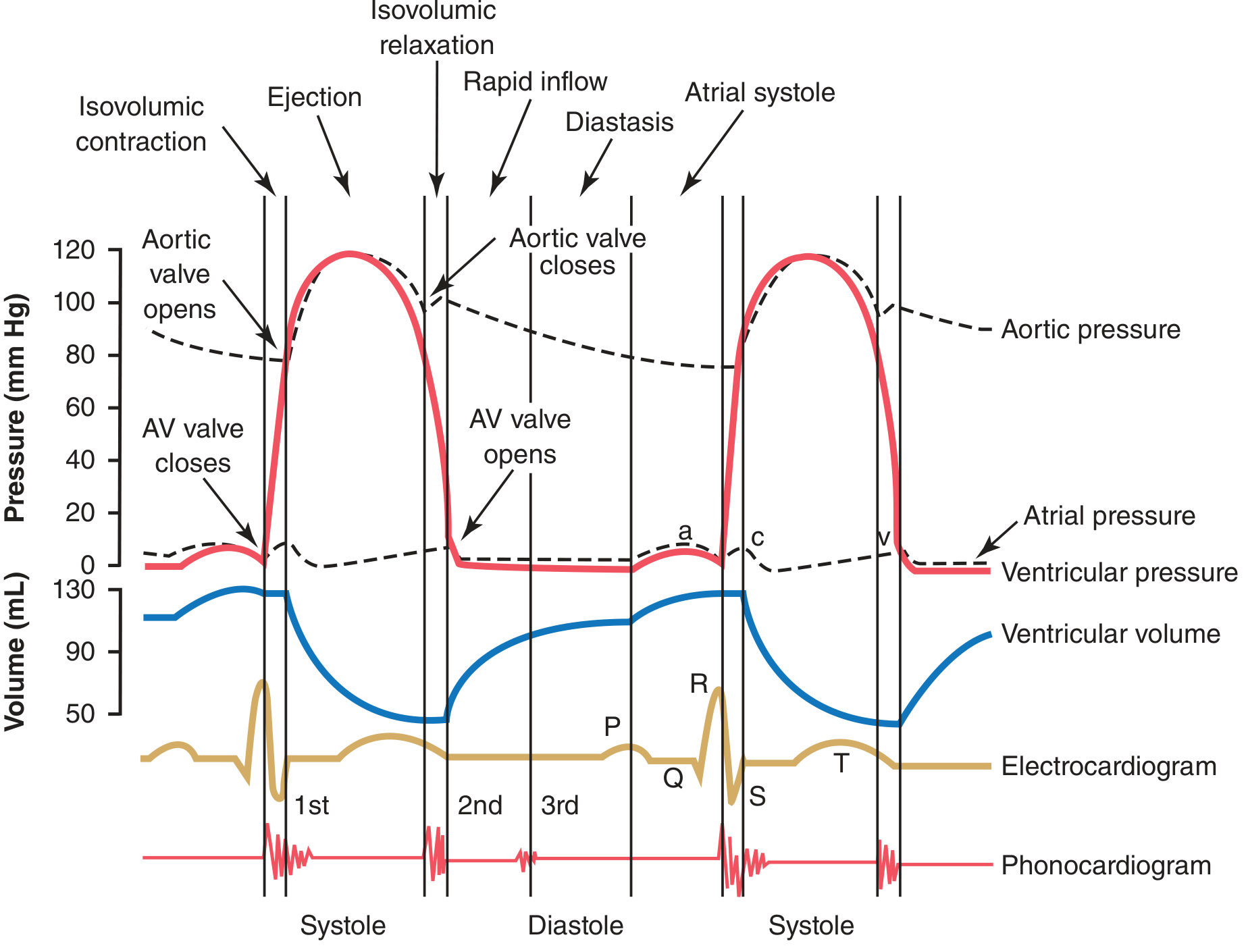
Figure 9.8 - Events of the Cardiac Cycle (Guyton & Hall)
Definition
Ventricular diastole is the period of ventricular relaxation and filling that follows systole. It comprises two sequential events: (1) isovolumic relaxation, and (2) the period of ventricular inflow (filling). At a normal heart rate of 72 beats/min, the entire cardiac cycle lasts approximately 0.833 seconds, with diastole occupying the larger portion.
Events of Ventricular Diastole
1. Period of Isovolumic (Isometric) Relaxation
At the end of systole, ventricular relaxation begins suddenly, causing the intraventricular pressures to fall rapidly. The elevated pressures in the distended aorta and pulmonary artery (which have just received blood from the contracting ventricles) immediately push blood back toward the ventricles, snapping the aortic and pulmonary (semilunar) valves shut - producing the 2nd heart sound (S2).
For approximately 0.03 to 0.06 seconds after semilunar valve closure, the ventricular muscle continues to relax while the ventricular volume remains unchanged (both AV and semilunar valves are closed). This is the period of isovolumic or isometric relaxation. During this time, intraventricular pressure rapidly falls back to its low diastolic level (approaching 0 mm Hg for the left ventricle).
2. Period of Ventricular Filling (Inflow Phase)
Once intraventricular pressure falls below atrial pressure, the AV valves (mitral and tricuspid) open, and diastolic filling of the ventricles begins. This inflow phase is divided into three sub-phases:
a) Period of Rapid Filling (First Third of Diastole)
During ventricular systole, blood has been accumulating in the atria (since AV valves were closed), moderately raising atrial pressure. As soon as the AV valves open, this pressure difference drives blood rapidly into the ventricles. The left ventricular volume rises sharply on the volume curve. This rapid filling produces the 3rd heart sound (S3) - a soft, low-pitched sound heard in early diastole, physiologically normal in young individuals.
The period of rapid filling lasts for about the first third of diastole.
b) Diastasis (Middle Third of Diastole)
During the middle third of diastole, only a small amount of blood flows passively into the ventricles. This is blood continuing to empty from the great veins into the atria, which passes through directly into the ventricles. There is little pressure gradient and the flow is slow - this period is termed diastasis (slow filling).
c) Atrial Systole / Last Third of Diastole
During the final third of diastole, the atria contract (triggered by the P wave of the ECG), giving an additional thrust of blood into the ventricles - acting as a "booster pump." This atrial contraction contributes 20-30% of ventricular filling, and the remaining 70-80% occurs passively in the earlier phases. This may produce the 4th heart sound (S4) in conditions of reduced ventricular compliance. It is represented by the "a" wave in the atrial pressure curve.
End-Diastolic Volume (EDV) and Stroke Volume
At the end of diastole, normal filling increases ventricular volume to approximately 110-120 mL - this is the end-diastolic volume (EDV). During the subsequent systole, about 70 mL is ejected as the stroke volume, leaving an end-systolic volume (ESV) of 40-50 mL. The ejection fraction (EDV - ESV / EDV) is normally about 60%.
Ventricular stiffening due to aging or diseases such as hypertension and diabetes mellitus reduces early diastolic filling and makes the ventricle more dependent on the atrial contraction component to maintain adequate cardiac output.
Summary Table
| Phase | Duration | Valve Status | Key Event |
|---|---|---|---|
| Isovolumic Relaxation | 0.03-0.06 s | All valves closed | Pressure falls; S2 produced |
| Rapid Filling | First 1/3 of diastole | AV valves open | Rapid inflow; S3 produced |
| Diastasis | Middle 1/3 of diastole | AV valves open | Slow passive filling |
| Atrial Systole | Last 1/3 of diastole | AV valves open | Atrial booster pump; +20-30% filling |
Guyton and Hall Textbook of Medical Physiology, Chapter 9 - The Cardiac Cycle (pp. 127-128)
This is a shared conversation. Sign in to Orris to start your own chat.