
Scopian sting
Reading File
Finding Sources
Searching PubMed
scorpion sting envenomation treatment
Reading File
Searching Images
scorpion sting Centruroides
Scorpion Sting
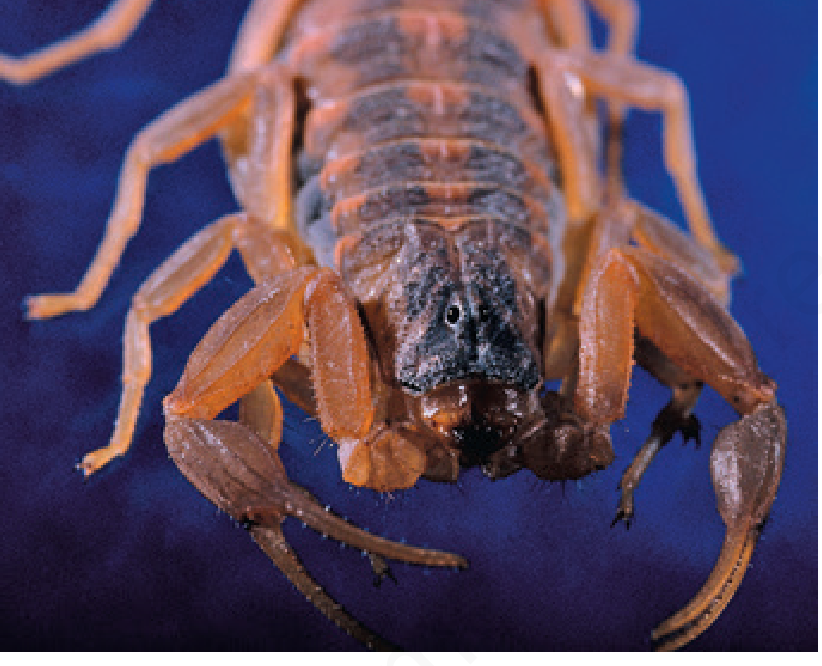
The animal: Scorpions have an elongated abdomen ending in a stinger, plus a cephalothorax, four pairs of legs, and pincers. Two poison glands at the back of the abdomen empty into the stinger. They're nocturnal, hiding by day under tabletops, in closets, shoes, and folded blankets - ground scorpions may burrow into gravel and children's sandboxes.
Medically important species (Buthidae family carries the most dangerous venom):
- Tityus serrulatus - Brazil
- Buthotus tamulus - India
- Leiurus quinquestriatus and Androctonus crassicauda - North Africa/southwest Asia
- Centruroides suffusus - Mexico
- Centruroides exilicauda and C. sculpturatus - most toxic species in the United States
- Vaejovis species (southeastern US) can cause "brown recluse-like" dermonecrotic reactions rather than systemic toxicity
Clinical picture:
- Local: immediate pain, paresthesia, and variable swelling at the sting site. Notably, there is often minimal or no visible skin change, and histologic studies confirm a typical absence of inflammation at the site.
- Systemic (neurotoxic venom): numbness at the sting site, laryngeal edema, profuse sweating and salivation, cyanosis, nausea, and tongue paresthesia.
- Severe/fatal cases: death from cardiac or respiratory failure, especially in children, plus possible renal and hepatic toxicity.
- The Egyptian scorpion (L. quinquestriatus) sting carries a reported 50% mortality rate in children - reflecting how dangerous some Buthid species are, especially in pediatric victims.
Treatment:
- Management depends on the species and the toxic symptoms produced.
- Supportive/symptomatic therapy: antiarrhythmics, antiadrenergic agents, vasodilators, and calcium channel blockers as needed for cardiovascular effects.
- Antivenin is available for many scorpion species and is generally considered the most effective intervention when indicated.
Source: Andrews' Diseases of the Skin - Clinical Dermatology, p. 1094 (citing Rodrigo C, et al. "Management of scorpion envenoming," Syst Rev 2017;6:74, and Santos MS, et al. "Clinical and epidemiological aspects of scorpionism in the world," Wilderness Environ Med 2016;27:504).
Note on current evidence: A 2023 systematic review found scorpion envenomation can also cause myocarditis and pulmonary edema in children, with dobutamine and mechanical ventilation used as supportive management in severe cases (PMID: 37018229) - this is consistent with and extends the cardiac/respiratory failure risk noted in the textbook, so no contradiction, just additional detail on managing severe systemic envenomation.
If you meant a specific clinical scenario (e.g., a patient presentation, a particular species, or pediatric management specifics), let me know and I can go deeper.
This is a shared conversation. Sign in to Orris to start your own chat.