
Management of bleeding gums
Reading File
Now let me search the medical library and PubMed in parallel for bleeding gums management.
Finding Sources
Finding Sources
Searching PubMed
"gingival bleeding" AND management
Let me search more specifically for gingivitis, periodontitis, and gingival management in the library.
Finding Sources
Finding Sources
Searching the Web
management of bleeding gums gingivitis treatment guidelines 2024
Good, I found relevant sections. Let me read both textbook sections in parallel.
Reading File
Reading File
Let me read the management section from Scott-Brown and more of the Rosen's section.
Reading File
Reading File
Let me also fetch the clinical image of chronic periodontitis from the textbook.
Loading Image
I now have comprehensive information from both textbooks and web sources. Here is the full management guide:
Management of Bleeding Gums
Bleeding gums (gingival bleeding) is one of the most common oral complaints. The first step is always identifying the underlying cause, because treatment is cause-directed.
Causes at a Glance
Table: Causes of Gingival Bleeding (Scott-Brown's Otorhinolaryngology, Head & Neck Surgery)
| Local Causes | Systemic Causes |
|---|---|
| Chronic gingivitis | Pregnancy (exacerbates gingivitis) |
| Chronic periodontitis | Leukaemia |
| Acute necrotizing gingivitis (ANG) | HIV infection |
| Angioma / telangiectasia | Clotting defects |
| Anticoagulant drugs | |
| Scurvy (vitamin C deficiency) | |
| Other causes of purpura |
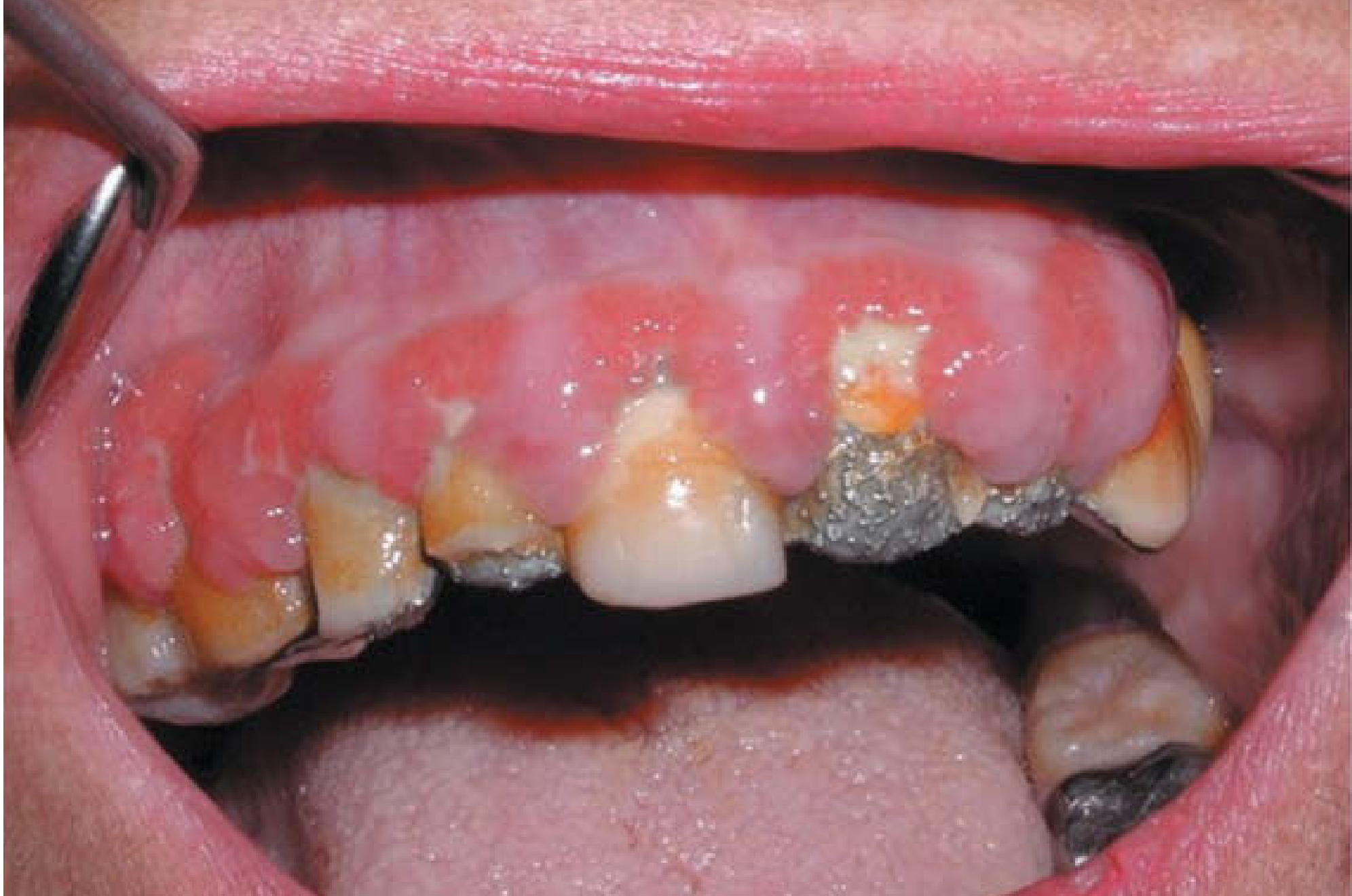
1. Simple / Chronic Gingivitis
This is the most common cause and is fully reversible with proper management.
Goals: Reduce inflammation by eliminating the causative plaque biofilm.
Step 1 - Oral Hygiene (First-line)
- Brush teeth twice daily with a soft-bristled toothbrush using correct technique
- Floss once daily to remove interproximal plaque
- These measures alone can resolve early gingivitis completely
Step 2 - Antiseptic Mouth Rinses (moderate/severe)
- Chlorhexidine 0.12-0.2% - preferred agent, antibacterial rinse
- 3% hydrogen peroxide diluted 1:1 with warm water - alternative
- Warm saline rinses for symptomatic relief
Step 3 - Professional Dental Care
- Scaling and root planing (SRP) - professional removal of plaque and calculus (tartar), including subgingival deposits
- Referred to dentist/periodontist for regular cleanings every 6 months (or more frequently for established disease)
(ROSEN's Emergency Medicine, Scott-Brown's)
2. Necrotizing Periodontal Disease (Acute Necrotizing Gingivitis / ANUG)
A more severe, painful form often seen in immunocompromised patients (HIV, poorly controlled diabetes, immunosuppressive therapy).
Management:
- Requires dentist-led debridement of necrotic tissue - cannot be managed with hygiene alone
- Oral antimicrobials are indicated for:
- Extensive disease
- Immunocompromised patients
- Systemic symptoms (fever, lymphadenopathy)
Recommended antibiotics (ROSEN's Emergency Medicine, Table 56.2):
| Antibiotic | Dose | Duration | Notes |
|---|---|---|---|
| Penicillin V | 500 mg TID-QID | 10 days | First-line |
| Amoxicillin/clavulanate | 500 mg/125 mg TID | 10 days | Alternative |
| Metronidazole | 500 mg BID | 10 days | If penicillin allergy |
| Clindamycin | 300 mg QID | 10 days | If penicillin allergy |
| Nystatin (swish/spit) | 100,000 units/mL, 5 mL QID | 10 days | If immunocompromised or candidal infection suspected |
Pain management:
- Ibuprofen 400-600 mg every 6-8 hours (NSAID, first-line - also reduces gingival inflammation)
- Paracetamol 650 mg every 6 hours
- Severe pain: opioid analgesics
- Topical viscous lidocaine - apply only to small areas (risk of systemic toxicity if swallowed in large amounts)
Smoking cessation - the most common modifiable risk factor in HIV-negative patients; all patients who smoke must be counselled.
3. Systemic Causes - Key Management Points
| Cause | Specific Management |
|---|---|
| Pregnancy gingivitis | Reinforce oral hygiene; professional cleaning safe in 2nd trimester; resolves postpartum |
| Anticoagulant drugs | Review medication with prescribing physician; local hemostatic measures; do not stop anticoagulants without medical advice |
| Leukaemia / blood dyscrasias | Haematology referral; treat underlying disorder; local measures |
| Scurvy | Vitamin C supplementation (500-1000 mg/day); dietary correction |
| HIV-associated disease | Antiretroviral therapy optimization; aggressive periodontal management |
| Diabetes | Glycaemic control improves periodontal outcomes (bidirectional relationship) |
| Clotting defects | Haematology input; local hemostatic agents (oxidized cellulose, tranexamic acid mouthwash) |
4. Follow-up and Referral
- Simple gingivitis: Non-urgent dental referral (1-2 weeks)
- Acute necrotizing gingivitis: Dentist review within 24-72 hours for repeat debridement
- Severe necrotizing disease: Emergency dental consultation within 24 hours
- Systemic symptoms (fever, lymphadenopathy) or immunocompromised with severe disease: IV antibiotics + emergency dental consultation
5. Prevention
- Brush twice daily, floss daily
- Regular professional dental cleanings (6-monthly)
- Stop smoking / tobacco use
- Control systemic conditions (diabetes, nutritional deficiencies)
- Limit excess sugar and alcohol
- Avoid medications known to cause gingival hyperplasia where possible (e.g., phenytoin, cyclosporin, calcium channel blockers)
Sources:
- ROSEN's Emergency Medicine: Concepts and Clinical Practice - Gingivitis and Periodontitis chapter
- Scott-Brown's Otorhinolaryngology Head & Neck Surgery - Periodontal Disease chapter (Table 42.2)
- StatPearls - Gingivitis (NCBI)
- Medscape - Gingivitis Treatment
This is a shared conversation. Sign in to Orris to start your own chat.