
a 7 year old patient came with head injury with no active bleed no seizures and ncct head showing right tempero-parietal fracture. patient was admitted in picu. what are the differentials and why. and what is the next management and why. also tell me what to write in initial assessment according to pals.
Reading File
Now I'll run parallel searches across the library and PubMed for all aspects of this case.
Finding Sources
Finding Sources
Finding Sources
Searching PubMed
pediatric skull fracture management PICU
Finding Sources
Finding Sources
Finding Sources
Searching PubMed
pediatric traumatic brain injury management guidelines
Reading File
Finding Sources
Finding Sources
Searching the Web
PALS initial assessment pediatric head injury 2024 guidelines
Reading File
Reading File
Searching the Web
PALS 2024 initial assessment documentation pediatric trauma primary survey airway breathing circulation disability
Reading File
Searching the Web
PALS systematic approach pediatric assessment triangle PAT primary survey documentation format
I now have enough material for a comprehensive answer. Let me fetch the EDH CT image to include visually.
Loading Image
Loading Image
Here is the complete, structured clinical answer.
Pediatric Head Injury - Right Temporo-Parietal Fracture (7-year-old, PICU Admission)
PART 1 - DIFFERENTIAL DIAGNOSES & WHY
The key clinical facts driving differentials are: right temporo-parietal fracture on NCCT, no active bleed seen on initial scan, no seizures, admitted to PICU. The absence of active bleed on CT does NOT mean the child is safe - it means you must watch for these evolving injuries:
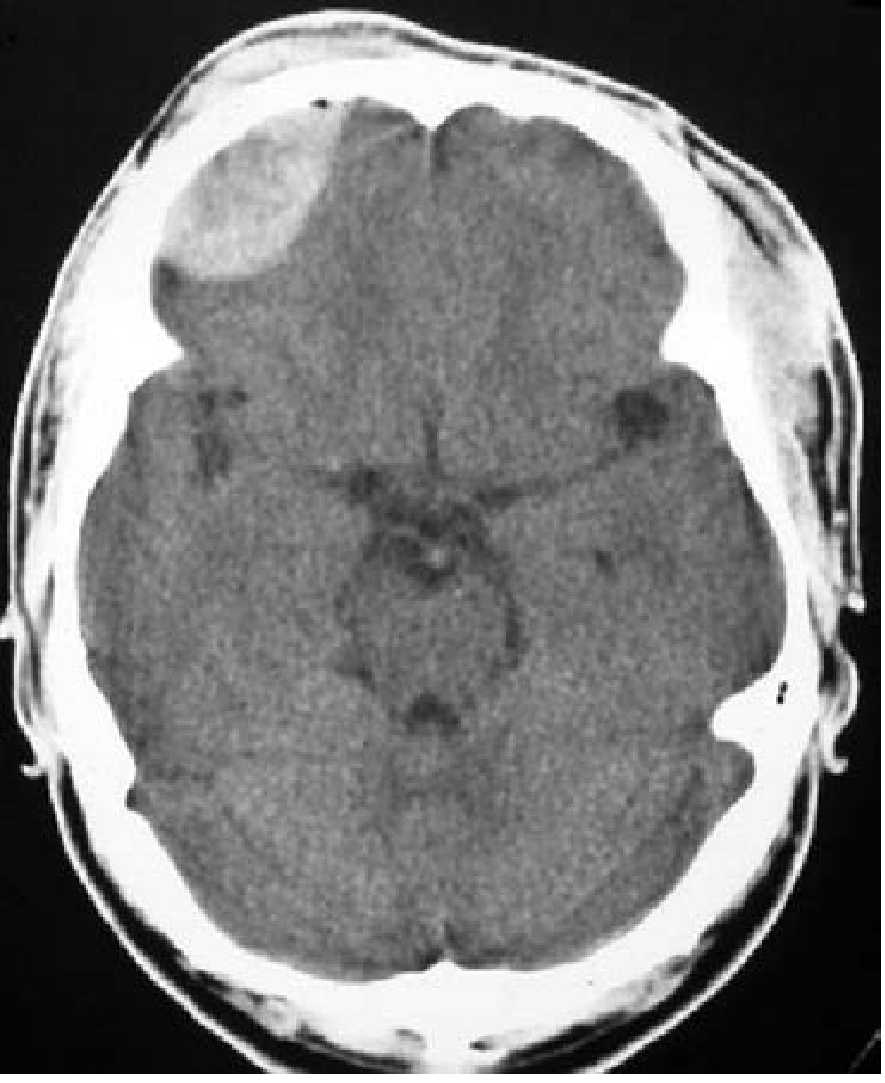
1. Epidural Hematoma (EDH) - Most Critical Differential
Why: A temporo-parietal skull fracture is the classic setup for EDH. The fracture crosses the path of the middle meningeal artery (which runs in a groove on the inner surface of the temporal bone at the pterion). Even when the initial CT shows no hematoma, arterial bleeding can accumulate over hours.
Key facts:
- Blunt trauma to the temporal/temporoparietal area with an associated skull fracture and middle meningeal arterial disruption is the primary mechanism of EDH (Tintinalli's Emergency Medicine, p. 1732)
- CT appearance when present: biconvex (football-shaped) hyperdense mass, typically temporal region
- Classic lucid interval: loss of consciousness → recovery → rapid neurological decline. This is why PICU observation is mandatory even when the initial CT is negative
- High-pressure arterial bleeding can cause herniation within hours - early recognition and evacuation are life-saving
2. Subdural Hematoma (SDH)
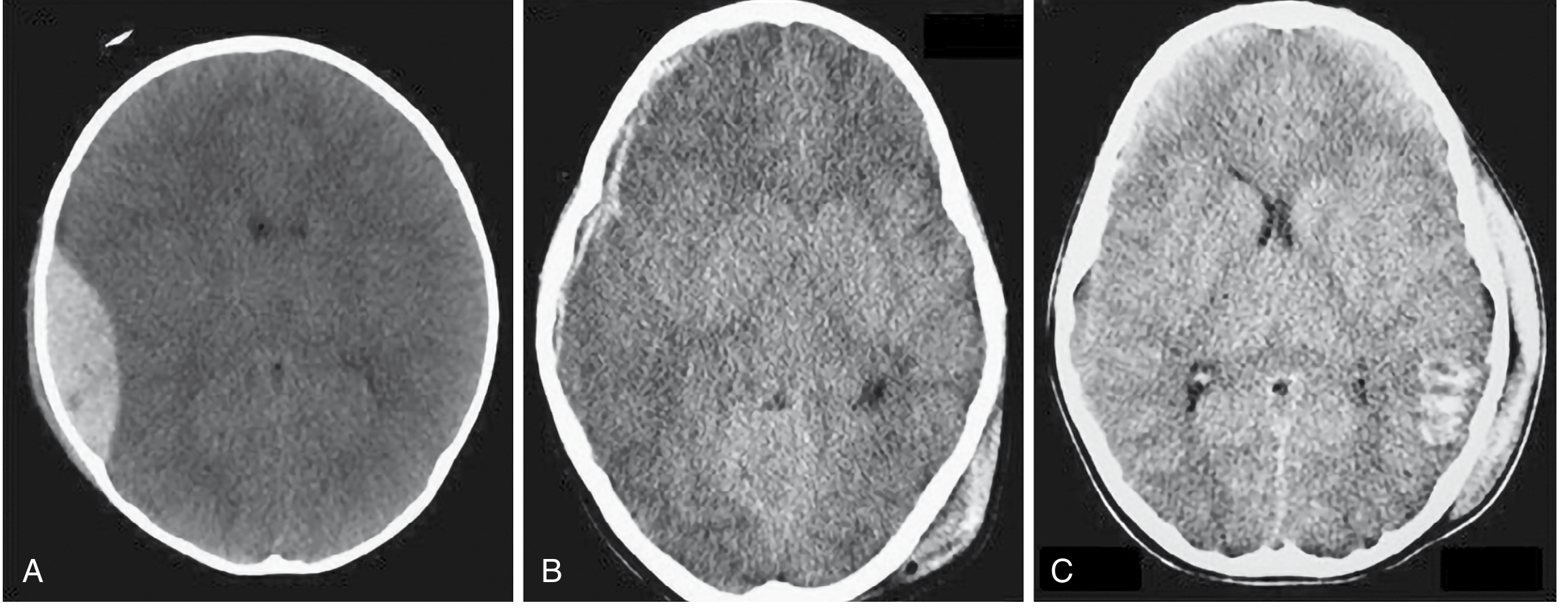
Why: A significant blow causing temporal fracture can also tear bridging veins crossing the subdural space, especially with acceleration-deceleration forces. SDH may not be visible on an early scan but can become apparent on a repeat CT at 12-24 hours.
Key facts:
- SDH crosses suture lines (unlike EDH) - crescent-shaped hyperdensity on CT
- SDH implies substantial force; underlying parenchymal injury is common
- Children <2 years are at highest risk, but any age can get SDH from significant trauma
- PICU monitoring for neurological decline is standard (Sabiston Textbook of Surgery, p. 833)
3. Cerebral Contusion / Intraparenchymal Hematoma (IPH)
Why: The force that fractured the skull can cause the brain to strike the inner calvarium, resulting in contusions at the impact site (coup) or opposite side (contrecoup). IPH is particularly dangerous because it "blossoms" in 24-48 hours after initial injury, with dramatic changes on interval CT scans and potential for ICP crisis.
4. Traumatic Subarachnoid Hemorrhage (tSAH)
Why: Temporo-parietal trauma can rupture small cortical vessels or leptomeningeal vessels, leaking blood into the subarachnoid space. On NCCT this may appear as subtle hyperattenuation in sulci that is easy to miss on an initial read. Clinically it presents with severe headache and meningism.
5. Diffuse Axonal Injury (DAI)
Why: High-velocity trauma causes rotational/shearing forces to white matter axons. DAI may be invisible on initial NCCT (it shows up on MRI as multiple punctate haemorrhages at grey-white junctions). This is the diagnosis to consider if the child's neurological status seems worse than what the CT suggests.
6. Growing Skull Fracture (Leptomeningeal Cyst) - Delayed Concern
Why: Unique to pediatric patients under 3 years (less common at 7, but worth knowing). A dural tear at the fracture site allows arachnoid to herniate, resulting in progressive widening of the fracture over weeks. Must be watched on follow-up imaging.
7. Non-Accidental Trauma (NAT/Child Abuse) - Must Exclude
Why: Temporo-parietal fractures in children, particularly with a history that does not match the injury pattern, should raise concern for NAT. A parietal fracture in a child is one of the fracture patterns with highest association with abuse. This is a mandatory consideration in any pediatric head injury admitted to PICU.
PART 2 - NEXT MANAGEMENT & WHY
Immediate Priorities on PICU Admission
| Action | Rationale |
|---|---|
| Continuous neuro-monitoring (GCS, pupils every 1-2 hours) | Detect the "lucid interval" before herniation from EDH |
| O2 saturation monitoring, maintain SpO2 ≥95% | Hypoxia causes secondary brain injury - avoid at all costs |
| Maintain normotension (MAP adequate for CPP) | Hypotension worsens cerebral perfusion; target CPP >40 mmHg in children |
| Head of bed at 30°, neutral head position | Optimizes cerebral venous drainage, reduces ICP |
| Keep NPO initially | Risk of operative intervention; also reduces aspiration risk |
| IV access with maintenance fluids (isotonic) | Avoid hypotonic fluids - they worsen cerebral edema |
| Cervical spine precautions until cleared | Cannot exclude C-spine injury in significant head trauma until imaging is done |
Repeat NCCT Head (MANDATORY)
When: Repeat CT at 6-12 hours from injury (or sooner if any neurological deterioration).
Why: The initial CT may be negative for hematoma if imaging was done within the first 1-2 hours. EDH and IPH evolve over time. The "blossoming" of intraparenchymal contusions over 24-48 hours is a well-documented phenomenon. A temporal fracture with a negative initial CT is not reassuring enough without a repeat scan.
NICE guidelines (NBK592586) and PECARN-based protocols mandate repeat imaging or close observation for all skull fractures in children.
Neurosurgery Consultation (Immediate)
Why: Any skull fracture with PICU admission requires neurosurgical involvement. If hematoma develops, the window for evacuation before herniation is narrow. The neurosurgical team sets the threshold for operative intervention (typically EDH >30 mL, >1 cm thickness, or midline shift >5 mm, or any EDH with neurological deterioration regardless of size).
ICP Monitoring Considerations
- Criteria for ICP monitor: GCS <8 with nonsurgical lesion on CT, or any patient at high risk for ICP elevation
- Target: ICP <20 mmHg, CPP >40 mmHg in pediatric patients
- External ventricular drain (EVD): preferred as it both monitors ICP and allows therapeutic CSF drainage (Sabiston Textbook of Surgery, p. 832-833)
- For refractory ICP: sedation + analgesia, osmotherapy (3% hypertonic saline 5 mL/kg bolus preferred over mannitol in children), neuromuscular blockade with EEG monitoring for seizures
Investigations to Order
- Labs: CBC, coagulation profile (PT/APTT/INR), blood glucose, electrolytes, metabolic panel
- Repeat NCCT at 6-12 hours (or immediately if any GCS drop)
- MRI Brain (if available, no acute contraindication): better for DAI, cortical contusions, posterior fossa injuries
- Skeletal survey if NAT is suspected
- Ophthalmology review for retinal hemorrhages (critical for NAT evaluation)
- CTA head/neck if petrous temporal bone is involved (McGovern score >3 indicates high risk for blunt cerebrovascular injury)
Seizure Prophylaxis
- Levetiracetam is the preferred agent in pediatric TBI for short-term prophylaxis (7 days)
- This patient has no seizures currently but the risk remains elevated given the fracture and potential evolving injury
- Continuous EEG monitoring should be considered in PICU, especially if sedation/paralysis is used
Antibiotic Prophylaxis
Not routinely indicated for closed skull fractures. Reserve for open/compound fractures or confirmed CSF leak.
PART 3 - PALS INITIAL ASSESSMENT DOCUMENTATION
PALS uses a two-step systematic approach: first the Pediatric Assessment Triangle (PAT) from across the room, then the hands-on ABCDE Primary Assessment.
Step 1: Pediatric Assessment Triangle (PAT) - From Across the Room
Document each of the 3 components:
A - Appearance (TICLS)
| Component | Normal Finding (Document) |
|---|---|
| T - Tone | Good muscle tone, moving all limbs spontaneously |
| I - Interactiveness | Alert, interacting with environment, looking around |
| C - Consolability | Consolable/not in extreme distress |
| L - Look/Gaze | Appropriate eye contact, tracking |
| S - Speech/Cry | Speaking in age-appropriate sentences / crying normally |
Document for this case: "Appearance: Alert, appropriate tone, interacting with caregiver, consolable" OR document any abnormalities found.
B - Work of Breathing (from across room, no stethoscope yet)
- No increased work of breathing, no retractions, no nasal flaring, no head bobbing
- Respiratory rate appears normal for age
C - Circulation to Skin
- No pallor, mottling, or cyanosis
- Skin color normal
PAT Impression: e.g., "Stable - no acute life threat identified on general assessment. Proceeding to Primary Assessment."
Step 2: Primary Assessment (ABCDE) - Hands-On
A - Airway
- Airway: Patent, self-maintaining
- No stridor, no gurgling, no audible obstruction
- Mouth: No blood, no secretions, no foreign body
- C-spine precautions maintained (assumed until cleared)
- Intervention: None required / position maintained with neutral alignment
B - Breathing
- Respiratory Rate: ___ breaths/min (normal for 7-year-old: 18-25/min)
- Effort: No subcostal/intercostal/suprasternal retractions, no nasal flaring
- Air entry: Equal bilateral air entry on auscultation, no wheeze/crackle
- SpO2: ___% on room air / supplemental O2
- Intervention: Supplemental O2 if SpO2 <95%; BMV if inadequate breathing
C - Circulation
- Heart Rate: ___ bpm (normal 7-year-old: 70-110/min)
- Blood Pressure: / mmHg (normal SBP ~94 + [2×age] = ~108 mmHg)
- Capillary Refill Time: <2 seconds centrally
- Peripheral Pulses: Equal and full bilaterally, no delay
- Skin: Warm, well-perfused, no pallor/mottling
- Active hemorrhage: None visible
- IV access: Established / IO if needed
- Intervention: IV fluids (isotonic NS or LR at maintenance rate), avoid bolus unless hemodynamically compromised
D - Disability (Neurological)
- GCS: Document E/V/M scores individually (e.g., E4V5M6 = 15)
- AVPU: Alert / Voice / Pain / Unresponsive
- Pupils: Right ___ mm, reactive/non-reactive; Left ___ mm, reactive/non-reactive
- Focal deficits: Any hemiparesis, facial asymmetry, arm/leg drift - document explicitly
- Posturing: None / Decorticate / Decerebrate
- Blood glucose: ___ mg/dL (hypoglycemia causes secondary brain injury - correct immediately)
- Intervention: Correct hypoglycemia; elevate HOB 30°; if GCS ≤8, prepare for intubation
E - Exposure / Environment
- Full head-to-toe inspection: scalp lacerations, swelling, step deformity at fracture site
- External ear: hemotympanum (Battle's sign precursor), check for CSF otorrhea
- Eyes: periorbital ecchymosis (raccoon eyes - basilar skull fracture sign)
- Abdomen: soft/tender (assess for associated abdominal trauma)
- Spine: tenderness along cervical/thoracic/lumbar spine
- Extremities: any other injuries
- Temperature: document and prevent hypothermia (keep warm)
- Undress fully, keep covered to prevent heat loss
Secondary Assessment (after ABCDE stabilized)
SAMPLE History:
- S - Signs/Symptoms: Headache, vomiting, LOC at scene, any seizure-like activity
- A - Allergies
- M - Medications
- P - Past medical history: prior head injuries, bleeding disorders, seizure history
- L - Last meal: Important for anesthesia planning
- E - Events: Mechanism of injury (fall height, speed of MVA, direct blow) - document precisely; note if history is consistent with injury pattern
Focused Neurological Exam:
- Cranial nerve assessment
- Motor: strength 5/5 all limbs, symmetric
- Sensation: intact
- Cerebellar: age-appropriate coordination
PALS Categorization After Assessment
Based on the assessment findings, document one of these:
- Respiratory distress / failure? No (if breathing stable)
- Shock? No (if hemodynamically stable)
- Altered mental status? Document GCS and AVPU
- Category: Stable with high-risk mechanism requiring close monitoring
Summary Table
| Priority | Action | Timeframe |
|---|---|---|
| PAT + ABCDE assessment | Document fully | Immediately on admission |
| Neurosurgery consult | Mandatory for any skull fracture | Within 1 hour |
| Repeat NCCT head | Even if initial was negative | At 6-12 hours |
| Neuro checks (GCS/pupils) | Every 1-2 hours | Ongoing |
| ICP management | Position, avoid hypoxia/hypotension | Continuous |
| Screen for NAT | History, retinal exam, skeletal survey | First 24 hours |
| Seizure prophylaxis | Levetiracetam consideration | Discuss with neurology |
Sources: Tintinalli's Emergency Medicine (p. 1732), Sabiston Textbook of Surgery 7e (p. 832-834), Plum & Posner's Diagnosis and Treatment of Stupor and Coma (p. 577-578), PALS Systematic Approach - AHA, Canadian Pediatric Society head trauma guidelines, PECARN minor head injury guidelines
This is a shared conversation. Sign in to Orris to start your own chat.