
expain in detail physiotherapy managemnet for urinary incontibence with pelvi foor strengrthening and bladder training in detail
physiotherapy management urinary incontinence pelvic floor muscle training
Bailey and Love's Short Practice of Surgery 28th Edition
Page 1525
bladder training urinary incontinence behavioral therapy protocol
Bailey and Love's Short Practice of Surgery 28th Edition
Page 1521
pelvic floor muscles anatomy urinary incontinence
Hugging Face pmc clinical VQA raw
Page 0
Physiotherapy Management of Urinary Incontinence
Understanding the Types First
| Type | Mechanism | Key Feature |
|---|---|---|
| Stress UI (SUI) | Weak urethral sphincter/pelvic floor | Leakage on coughing, sneezing, exercise |
| Urge UI (UUI) | Detrusor overactivity / OAB | Sudden, strong urge to void; can't hold |
| Mixed UI (MUI) | Combination of both | Features of both SUI and UUI |
| Overflow UI | Bladder doesn't empty properly | Continuous dribbling |
The Physiotherapy Framework
- Lifestyle modifications
- Pelvic Floor Muscle Training (PFMT)
- Bladder Training (behavioral therapy)
PILLAR 1 — Lifestyle Modifications (Adjunct to PT)
- Weight reduction: Reduces intra-abdominal pressure on the bladder and pelvic floor
- Fluid management: Aim for 1.5–2 L/day; avoid caffeine, alcohol, and carbonated drinks (bladder irritants)
- Smoking cessation: Chronic cough from smoking increases intra-abdominal pressure
- Bowel management: Treat constipation; straining at stool weakens pelvic floor over time
- Activity modification: Avoid high-impact activities during initial rehabilitation (e.g., heavy lifting, jumping)
PILLAR 2 — Pelvic Floor Muscle Training (PFMT)
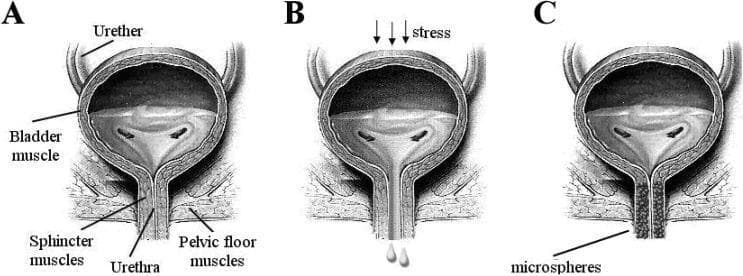
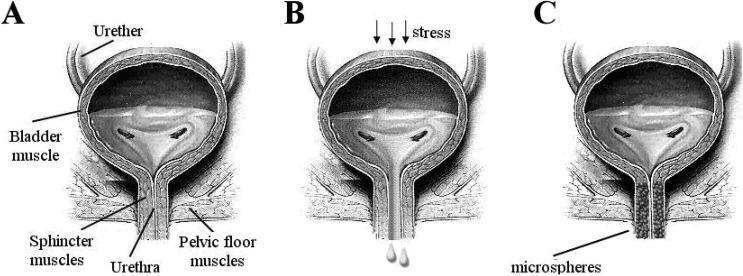
Anatomy of the Pelvic Floor
- Levator ani group: pubococcygeus, puborectalis, iliococcygeus
- Coccygeus
- Urogenital diaphragm: deep transverse perineal muscle, external urethral sphincter
- Superficial perineal muscles: bulbospongiosus, ischiocavernosus
Step 1: Patient Education and Correct Muscle Identification
- Ask the patient to imagine they are stopping the flow of urine midstream, or preventing passing gas — this contracts the correct muscles
- Alternatively, in women: insert one finger vaginally and ask them to squeeze around it
- Physiotherapist assessment: Digital vaginal/rectal examination (with consent) to confirm correct muscle activation — up to 30% of patients initially contract the wrong muscles (e.g., gluteals, adductors, abdominals)
- Biofeedback: Surface EMG or pressure biofeedback perineometry can confirm correct activation with real-time visual/auditory feedback
- Bearing down/pushing instead of lifting and squeezing
- Breath-holding during contractions
- Contracting gluteals or abdominals as a substitute
Step 2: Muscle Fiber Types and Training Rationale
| Fiber Type | Function | Targeted By |
|---|---|---|
| Type I (slow-twitch, ~70%) | Tonic postural support; sustained closure | Long holds (endurance contractions) |
| Type II (fast-twitch, ~30%) | Rapid reflex closure (e.g., during cough/sneeze) | Quick flicks (power contractions) |
Step 3: The PFMT Exercise Protocol (Evidence-Based)
Starting Position Options (progress from easiest to hardest):
- Supine (lying on back) — gravity-eliminated, easiest
- Side-lying — slight load
- Sitting — moderate load
- Standing — full functional load (most challenging, most functional)
A. Endurance (Type I) Contractions — "Long Holds"
- Lift and squeeze the pelvic floor inward and upward
- Hold the contraction for 3–10 seconds (start at 3s, progress to 10s)
- Relax fully for equal or double the hold time (e.g., hold 5s → rest 10s)
- Repeat 8–12 repetitions per set
- Complete 3 sets per day
| Week | Hold Duration | Repetitions | Sets/Day |
|---|---|---|---|
| 1–2 | 3 seconds | 8 | 3 |
| 3–4 | 5 seconds | 10 | 3 |
| 5–6 | 7 seconds | 10 | 3 |
| 7–8 | 10 seconds | 10–12 | 3 |
| Maintenance | 10 seconds | 8–12 | 1–2 |
B. Power (Type II) Contractions — "Quick Flicks"
- Contract the pelvic floor as quickly and forcefully as possible
- Hold for 1–2 seconds
- Fully relax for 3–4 seconds
- Repeat 10–20 times per session
- Complete 3 sets per day
C. The "Knack" Maneuver (Pre-contraction Strategy)
- Anticipate the trigger (cough, sneeze, laugh, lift)
- Voluntarily contract the pelvic floor just before and during the increase in intra-abdominal pressure
- Gradually, this becomes an automatic reflex
Step 4: Adjunct Physiotherapy Modalities for PFMT
1. Biofeedback Therapy
- Perineometer or surface EMG placed vaginally/rectally measures pelvic floor contraction
- Visual or auditory feedback helps patients learn correct muscle activation
- Particularly useful for patients who cannot identify or isolate the pelvic floor
- 4–8 weekly sessions typical
2. Electrical Stimulation (E-Stim / NMES)
- Low-frequency (5–10 Hz): stimulates detrusor inhibition — used for urge incontinence
- Higher frequency (35–50 Hz): stimulates pelvic floor contraction — used for stress incontinence
- Intravaginal or anal probe delivers current
- Used when patient cannot perform voluntary contractions (e.g., severely weak muscles)
- Sessions: 20–30 minutes, 3x/week for 4–8 weeks
3. Vaginal Weighted Cones
- Graduated weights inserted vaginally; patient must contract pelvic floor to retain them
- Provides proprioceptive feedback and progressive resistance
- Start with lightest cone; progress when able to retain during walking for 15 minutes
- Used as a home training adjunct
4. Pelvic Floor Ultrasound
- Real-time transperineal/transabdominal ultrasound to visualize bladder neck and pelvic floor movement
- Provides biofeedback during training sessions
Step 5: Core and Hip Integration
- Transverse abdominis co-activation: TA and pelvic floor work synergistically; deep abdominal drawing-in maneuver
- Diaphragmatic breathing coordination: Pelvic floor descends on inhalation and recoils on exhalation — patients learn to time contractions with breathing
- Hip adductor activation: There is a functional connection between the adductors and pelvic floor via the fascial sling
- Functional integration: Squats, bridges, step-ups with simultaneous pelvic floor activation; progress to lunges, jumping jacks
PFMT Timeline and Expected Outcomes
| Timeframe | Expected Progress |
|---|---|
| 4–6 weeks | Patient reliably identifies and activates correct muscles |
| 6–8 weeks | Reduction in leakage episodes (especially SUI) |
| 12 weeks | Significant improvement in 60–70% of patients with SUI |
| 3–6 months | Maximum benefit; maintenance program established |
| 6 months+ | Long-term gains maintained with ongoing exercise |
Duration: Minimum 12 weeks of supervised PFMT is recommended before evaluating outcome. Discontinuation leads to gradual regression.
PILLAR 3 — Bladder Training
Neurophysiological Basis
Step 1: Baseline Bladder Diary (2–3 days)
- Time and volume of each void
- Episodes of urgency (scored 0–3)
- Leakage episodes with trigger
- Fluid intake (type, volume, timing)
- Current voiding frequency (e.g., every 30–60 minutes)
- Functional bladder capacity
- Urgency patterns
- Nocturnal frequency (nocturia)
Step 2: Urge Suppression Techniques — The Core Skill
Technique 1: "Freeze, Don't Run"
- When urgency strikes, stop moving immediately
- Sit down or stand still; rushing to the toilet worsens urgency (motion triggers detrusor)
- Take several slow, deep breaths
Technique 2: Pelvic Floor Contraction for Urge Suppression
- Perform 3–5 rapid, firm pelvic floor contractions (quick flicks) when urgency strikes
- This reflexively inhibits detrusor contraction via the pudendal-to-pelvic nerve inhibitory reflex
- Wait until the urge wave passes (it will diminish in 30–60 seconds), then walk calmly to toilet
Technique 3: Distraction/Cognitive Inhibition
- Mental distraction tasks (count backward from 100 by 7s, recall items in a room)
- Redirects cortical attention away from the bladder, reducing urgency perception
Technique 4: Pressure on Perineum
- Sitting firmly on a hard surface, pressing a heel against the perineum, or crossing legs — applies counterpressure that temporarily inhibits urgency
Step 3: Progressive Voiding Schedule
| Phase | Voiding Interval | Duration |
|---|---|---|
| Baseline | Every 30–60 min (patient's current pattern) | Week 1 |
| Stage 1 | Every 60–90 min | Weeks 1–2 |
| Stage 2 | Every 90–120 min | Weeks 2–4 |
| Stage 3 | Every 2–2.5 hours | Weeks 4–6 |
| Stage 4 | Every 2.5–3 hours | Weeks 6–8 |
| Stage 5 | Every 3–4 hours (goal) | Weeks 8–12 |
- Void at scheduled times only — not by urge (unless absolutely necessary)
- If the urge comes early, use urge suppression techniques and delay
- If unable to hold, void but document the episode — do not extend the interval prematurely
- Increase the interval by 15–30 minutes only when the patient is successful (dry) for at least 2 consecutive days at the current interval
Step 4: Timed/Prompted Voiding (for Dependent Patients)
- Prompted voiding: Carer asks the patient every 2 hours if they need to void, assists, and praises continence
- Timed voiding: Scheduled voiding every 2 hours regardless of urge
- Goal is accident prevention rather than training cortical control
Step 5: Nocturia Management
- Limit fluids within 2–3 hours of bedtime
- Elevate legs in the afternoon (prevents dependent edema from shifting at night)
- Avoid caffeine and alcohol in the evening
- Bladder training nocturia goal: reduce nighttime voids to ≤1 per night
Bladder Training Outcomes
| Timeframe | Outcome |
|---|---|
| 2–4 weeks | Reduced voiding frequency; improved urgency control |
| 6–8 weeks | 50–80% reduction in urgency episodes |
| 12 weeks | Significant improvement in most patients with UUI/OAB |
| 3–6 months | Functional bladder capacity increases by 50–100 mL |
Combined Program: Weekly Session Structure
| Session | Content |
|---|---|
| Week 1–2 | Assessment; bladder diary review; pelvic floor anatomy education; teach muscle identification; baseline PFMT (supine, 3-sec holds); introduce urge suppression techniques; start voiding schedule |
| Week 3–4 | Review PFMT technique (biofeedback if needed); progress hold duration to 5–7 sec; introduce quick flicks; progress voiding interval; review bladder diary |
| Week 5–6 | Progress PFMT to sitting; introduce Knack maneuver; progress voiding interval further; discuss fluid management in detail |
| Week 7–8 | PFMT in standing; functional integration (squats, bridges); review voiding diary for progress; progress to 2.5-hr interval |
| Week 9–12 | Full functional PFMT; maintenance program design; target 3-hr voiding interval; troubleshoot remaining issues |
| Discharge | Home exercise program; return-to-activity guidance; maintenance schedule; red flag warning signs |
Outcome Measures Used in Physiotherapy
| Tool | What It Measures |
|---|---|
| Bladder diary (3-day) | Frequency, urgency episodes, volumes |
| 1-hour pad test / 24-hour pad test | Urine leakage volume (grams) |
| ICIQ-UI SF | Validated patient-reported outcome for UI severity and impact |
| Oxford Grading Scale (0–5) | Manual assessment of pelvic floor strength |
| Pelvic floor dynamometry | Objective force measurement |
| Urinary Distress Inventory (UDI-6) | Symptom distress |
| Incontinence Impact Questionnaire (IIQ-7) | Quality of life impact |
Summary
| Intervention | Target Type | Mechanism | Timeline |
|---|---|---|---|
| PFMT (long holds) | SUI, MUI | Builds resting urethral closure pressure | 12 weeks minimum |
| PFMT (quick flicks) | SUI, MUI | Reflex urethral closure on coughing/sneezing | 6–8 weeks |
| Knack maneuver | SUI | Pre-emptive urethral closure | Immediate (skill-based) |
| Bladder training | UUI, OAB, MUI | Cortical inhibition of detrusor overactivity | 8–12 weeks |
| Urge suppression | UUI, OAB | Reflexive detrusor inhibition via pudendal nerve | Immediate (skill-based) |
| Biofeedback | All types | Correct muscle identification and feedback | Adjunct throughout |
| E-stim | Severe SUI/UUI | Neuromuscular facilitation | Adjunct 4–8 weeks |
for a 4-week postnatal woman of urinary incontinence with a low back pain, mild postpartum depression, and pelvic floor weakness. So write the PT assessment and management.
postnatal postpartum physiotherapy assessment pelvic floor weakness urinary incontinence
Management of Pregnancy
Page 40
postpartum low back pain pelvic girdle pain physiotherapy management
Management of Pregnancy
Page 97
mild postpartum depression Edinburgh scale screening physiotherapy psychological considerations
postnatal pelvic floor rehabilitation exercise program
Hugging Face pmc clinical VQA raw
Page 0
Physiotherapy Assessment & Management
4-Week Postnatal Woman: Multi-System Presentation
⚠️ IMPORTANT CLINICAL PRECAUTIONS AT 4 WEEKS POSTPARTUM
| Precaution | Rationale |
|---|---|
| Tissue healing still active | Perineal/episiotomy repair, C-section wound (if applicable) not fully healed |
| Relaxin still elevated | Ligamentous laxity persists during breastfeeding; joint instability risk |
| Diastasis recti likely present | Linea alba may be weakened; trunk loading must be graded carefully |
| Lochia still present | Indicates uterine involution is ongoing |
| Mild PPD confirmed | Requires sensitive communication, adapted goal-setting, MDT liaison |
| Fatigue and sleep deprivation | Limits exercise tolerance and compliance; session length adjusted |
| Breastfeeding status | Affects hormonal environment (low estrogen → pelvic tissue atrophy) |
PART A — PHYSIOTHERAPY ASSESSMENT
1. Subjective Assessment (History-Taking)
Patient Profile
- Age, parity (G_P_), mode of delivery (SVD / instrumental / C-section)
- Gestational age at delivery, birth weight, duration of second stage
- Any perineal trauma: 1st–4th degree tear, episiotomy, instrumental delivery (forceps/ventouse)
- Breastfeeding or formula feeding
- Pre-existing back pain or pelvic floor issues prior to/during pregnancy
Chief Complaints (explore each):
A. Urinary Incontinence
- Type: stress (leaks on cough, sneeze, laugh, exercise), urge (sudden strong need to void), mixed
- Onset: immediately postpartum vs. gradual
- Frequency: how many episodes per day
- Volume: drops, splashes, or large amounts
- Pad use: number of pads/day
- Triggers: specific activities, position changes
- Bladder diary: 3-day frequency–volume chart (completed prior to session)
- Associated symptoms: urgency, frequency, nocturia, incomplete emptying, hesitancy, dysuria
B. Low Back Pain
- Location: lumbar, lumbosacral, sacroiliac, pubic symphysis, or combined
- Character: aching, sharp, stabbing, burning
- Onset and mechanism: during pregnancy vs. post-delivery; related to labour positioning
- Aggravating factors: prolonged standing, sitting, walking, lifting (baby), rolling in bed, climbing stairs
- Relieving factors: rest, heat, support belt
- Night pain: waking at night
- Radiation: buttock, groin, leg — rule out nerve root involvement
- Functional impact: carrying baby, feeding positions, household tasks
- Numeric Pain Rating Scale (NPRS): 0–10 at rest and with activity
C. Pelvic Floor Weakness
- Symptoms of prolapse: heaviness, dragging, or bulge in the vagina
- Bowel: constipation, incomplete emptying, fecal urgency/incontinence
- Sexual dysfunction (not assessed at 4 weeks; flag for 3-month review)
D. Postpartum Depression
- Use Edinburgh Postnatal Depression Scale (EPDS) — validated 10-item self-report tool
- Score ≥10: likely depression; ≥13: probable major depression
- Critically assess Question 10 (self-harm ideation) — mandatory
- If EPDS score ≥13 or any self-harm ideation: immediate referral to GP/obstetrician/psychiatry
- Explore: mood, anxiety, sleep (beyond infant demands), appetite, motivation, bonding with baby
- Physiotherapy role: supportive, non-pharmacological; exercise has Level 1 evidence for reducing PPD symptoms
Other Subjective Information
- Medications: iron supplements, analgesics, laxatives, antidepressants
- Red flags to screen and refer if present:
- Cauda equina symptoms (saddle anesthesia, bilateral leg weakness, bladder/bowel paralysis)
- Fever, wound breakdown, postpartum hemorrhage
- Severe unremitting pain unrelated to activity
- Active suicidal ideation (EPDS Q10)
2. Objective Assessment
2.1 Observation and Posture
| Area | Findings to Note |
|---|---|
| Standing posture | Increased lumbar lordosis (common postpartum), forward head posture (from feeding), swayed back posture |
| Gait | Antalgic gait, Trendelenburg sign (gluteal weakness) |
| Abdominal contour | Diastasis recti visible as midline ridge or gap on sit-up or head lift |
| Perineum | Only if clinical setting allows; observe for prolapse, wound healing |
| Breathing pattern | Thoracic vs. diaphragmatic; breath-holding (increases intra-abdominal pressure) |
2.2 Pelvic Floor Assessment
A. Diastasis Recti Assessment (MUST assess at 4 weeks)
- Place 2–3 fingers horizontally at the umbilicus
- Patient performs slow head lift
- Measure:
- Width of gap (in finger-widths or cm): normal ≤2 finger-widths (≤2 cm)
- Depth/tension: ability to feel tissue tension under the fingers (more important than width alone)
- Linea alba tension: poor tension = no resistance felt under fingers
Clinical relevance: Diastasis recti impairs abdominal–pelvic floor force transmission. No conventional abdominal crunches, sit-ups, or double-leg lifts until recti approximation restored.
B. Pelvic Floor Muscle Assessment (Internal — with consent)
At 4 weeks postpartum, internal examination is appropriate only if perineal wounds are healed. Defer if episiotomy/tear not healed.
| Grade | Description |
|---|---|
| 0 | No contraction |
| 1 | Flicker only |
| 2 | Weak contraction, no lift |
| 3 | Moderate contraction with some lift |
| 4 | Good contraction with elevation and resistance |
| 5 | Strong contraction, holds against strong resistance |
- Ability to relax (equally important — hypertonic floor is also dysfunctional)
- Presence of trigger points, scar tissue, episiotomy tenderness
- Prolapse stage (modified POP-Q or Baden–Walker if applicable)
- Perineal body integrity
- Observe perineal lift during voluntary contraction
- Assess for paradoxical (bearing down) instead of lifting
2.3 Lumbar Spine and Pelvic Girdle Assessment
| Test | Purpose |
|---|---|
| Active range of motion (flexion, extension, lateral flexion, rotation) | Identify lumbar restriction and pain arc |
| Posterior Pelvic Pain Provocation (P4) test | Screens for SIJ dysfunction — sensitivity 80%, specificity 79% |
| FABER test (Patrick's test) | SIJ and hip pathology |
| Active Straight Leg Raise (ASLR) | Tests lumbopelvic force closure; positive = inability to raise leg without compensating |
| Pubic symphysis palpation | Rules out diastasis symphysis pubis (DSP) |
| Trendelenburg test | Assesses gluteus medius strength |
| Prone hip extension | Assesses gluteal activation pattern; lumbar hyperextension compensation common |
| Slump test / SLR | Rules out radiculopathy if leg symptoms present |
- Gluteus maximus, gluteus medius, hip abductors
- Transverse abdominis (TVA) — note: assessed functionally, not with conventional testing at 4 weeks
- Lumbar multifidus — prone multifidus contraction test
2.4 Functional Tests
| Test | What It Assesses |
|---|---|
| Timed sit-to-stand (5x) | Lower limb and pelvic strength |
| Single leg stance (timed) | Pelvic stability, gluteal endurance |
| Walking test (2-minute) | Functional endurance, pelvic pain provocation |
| Step test | Stair negotiation safety |
| Carrying baby simulation | Functional load assessment — lumbar and pelvic floor response |
2.5 Outcome Measures
| Tool | Domain |
|---|---|
| EPDS (Edinburgh Postnatal Depression Scale) | Postpartum depression screening |
| NPRS (0–10) | Pain intensity |
| ICIQ-UI SF | Urinary incontinence severity and QoL |
| Oxford Grading Scale | Pelvic floor strength |
| ASLR test score (0–5) | Lumbopelvic stability |
| Bladder diary (3-day) | Voiding patterns |
| Oswestry Disability Index | Low back pain functional disability |
| 24-hour pad test | Urine leakage volume |
3. Problem List and Goals
Problem List
- Stress urinary incontinence (most likely type at 4 weeks postpartum)
- Pelvic floor weakness (Oxford Grade likely 1–3)
- Lumbar/lumbosacral/SIJ pain
- Diastasis recti (probable)
- Postural dysfunction (increased lordosis, anterior pelvic tilt)
- Mild postpartum depression
- Reduced functional capacity (fatigue, deconditioning)
Short-Term Goals (4 weeks)
- Correct pelvic floor muscle identification and activation
- Reduce leakage episodes by 50%
- Reduce LBP from X/10 to X-2/10
- Improve pelvic floor strength to Oxford Grade 3–4
- Patient understands and manages diastasis recti safely
Long-Term Goals (3–6 months)
- Achieve continence (0 leakage episodes)
- Return to full functional activity (walking, exercise, return to work)
- Oxford Grade 4–5 pelvic floor
- Full lumbar mobility and pain-free function
- Safe return to impact exercise (running, aerobics) when cleared
- EPDS score <10; maintained with exercise and MDT support
PART B — PHYSIOTHERAPY MANAGEMENT
SESSION STRUCTURE
All sessions adapted for: fatigue, baby-care demands, breastfeeding, emotional lability from PPD. Sessions kept to 30–45 minutes. Home program is brief, realistic, and baby-friendly.
PHASE 1 — WEEKS 1–2 (Weeks 4–6 Postpartum)
Goals: Education, correct activation, pain management, gentle restoration
1. Education and Counselling
- Explain normal postnatal physiology: tissue healing, hormonal changes, relaxin effects
- Normalize the presenting symptoms — reassurance reduces anxiety (important for PPD)
- Breathing education: diaphragmatic breathing as the foundation of pelvic floor and core function
- Posture education: feeding positions (avoid prolonged neck flexion and thoracic kyphosis), lifting technique, sleeping posture
- Activity guidance:
- Avoid: heavy lifting, high-impact exercise, straining at stool, sit-ups/crunches
- Encourage: gentle walking, progressive activity within comfort
- Pelvic floor anatomy education with diagrams
- PPD management: validate feelings; explain exercise as evidence-based mood support; encourage social interaction, adequate rest, sunlight exposure; provide EPDS score feedback and refer if indicated
2. Low Back Pain Management
Manual Therapy / Passive Modalities
- Heat therapy: superficial heat to lumbar region for 15–20 min (safe while breastfeeding)
- Gentle soft tissue massage: lumbar paraspinals, gluteals, piriformis (common sites of tension)
- SIJ mobilization: gentle Grade I–II Maitland techniques if SIJ dysfunction confirmed
- TENS: safe postpartum for pain modulation (avoid abdomen if breastfeeding concerns)
- Positioning advice: sleeping with pillow between knees in side-lying, lumbar roll for sitting
Pelvic Support Belt / SIJ Belt
- Indicated if ASLR positive and SIJ provocation tests positive
- Worn at hip level to compress SIJ during painful activities
- Temporary measure (4–8 weeks); not a long-term solution
3. Pelvic Floor Exercises (Week 1–2)
Step 1: Diaphragmatic Breathing (Foundation Exercise)
- Place one hand on chest, one on abdomen
- Inhale through nose — abdomen rises, pelvic floor gently descends
- Exhale through mouth — abdomen falls, pelvic floor naturally recoils upward
- 3 sets × 10 breaths, 3× daily
- This alone begins pelvic floor rehabilitation
Step 2: Gentle Pelvic Floor Activation
- Hold: 3 seconds → relax fully for 6 seconds
- Repetitions: 8–10 contractions
- Sets: 3 per day
- Quick flicks: 10 rapid contractions added after holds
- Ensure NO breath-holding, gluteal contraction, or abdominal bracing
"At approximately 9 weeks postpartum, individualized physiotherapist-guided PFMT with biofeedback significantly reduced rates of urinary incontinence and improved pelvic floor muscle strength and endurance at 6 months" (Management of Pregnancy, p. 40). Starting gently at 4 weeks is appropriate and beneficial.
Step 3: Diastasis Recti Safe Exercises
Replace conventional abdominal exercises completely until linea alba tension restored.
- Supine, knees bent
- Gently draw in lower abdomen (2–3 cm inward) while simultaneously lifting pelvic floor
- Hold 5–10 seconds, breathe normally
- 10 repetitions, 3× daily
- Supine, knees bent; activate TVA
- Slowly slide one heel along floor to extend the leg
- Return; alternate sides
- 10× each side, 2 sets
- Supine, activate TVA and pelvic floor
- Lift one foot off floor (knee to 90°), hold 5 sec, lower slowly
- 8× each side
Low Back Exercises (Week 1–2)
- Supine, knees bent
- Gently flatten lumbar spine against floor → hold 5 sec → release
- 15 repetitions, 2 sets
- Supine, knees bent together
- Gently rock knees side to side within pain-free range
- 15 repetitions each side
- 4-point kneeling
- Alternate lumbar flexion and extension gently
- 10 repetitions, 2 sets
- Side-lying, hips flexed ~45°
- Lift top knee maintaining pelvis still
- 15 repetitions, 2 sets each side
PHASE 2 — WEEKS 3–4 (Weeks 6–8 Postpartum)
Goals: Progressive strengthening, bladder training introduction, posture correction
1. Progress Pelvic Floor Exercises
- Progress hold to 5–7 seconds, 10 repetitions, 3 sets/day
- Progress position: sitting (more functional load)
- 15–20 rapid maximum contractions per set, 3 sets/day
- Teach pre-contraction before coughing, sneezing, lifting baby
- Practice in sitting and standing
- Pelvic floor contraction during nappy changing (standing)
- Contract during baby lifting (every lift = a pelvic floor rep)
2. Introduce Bladder Training
- Typical voiding frequency (e.g., every 45–60 minutes)
- Urgency episodes and triggers
- Freeze, don't rush to toilet
- 3–5 quick pelvic floor flicks to inhibit detrusor contraction
- Deep breathing and distraction
- Walk calmly to toilet only after urge wave subsides
| Week | Target Voiding Interval |
|---|---|
| Week 1 (Bladder training) | Every 60–75 min |
| Week 2 | Every 90 min |
| Week 3 | Every 2 hours |
| Week 4 | Every 2.5–3 hours |
- 1.5–2 L water/day (do not restrict if breastfeeding — maintain adequate hydration)
- Reduce caffeine (tea, coffee, cola) — bladder irritants
- Avoid large fluid boluses; distribute intake evenly
3. Progressive Low Back and Lumbopelvic Exercises
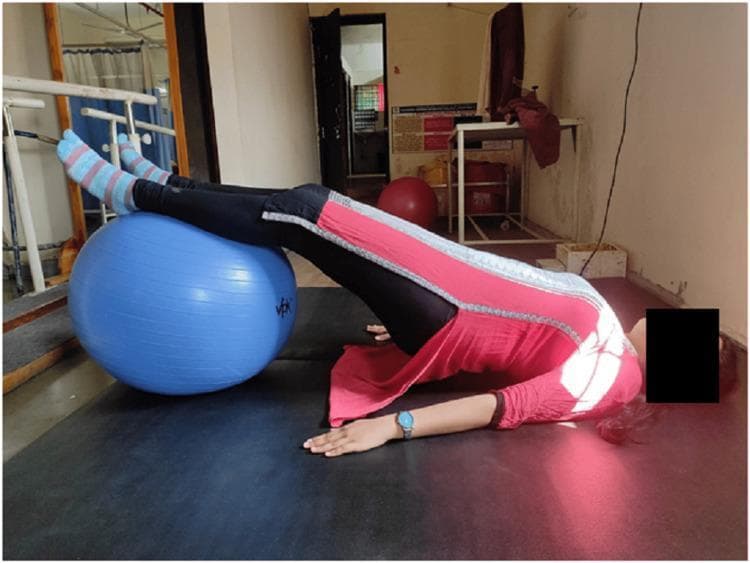
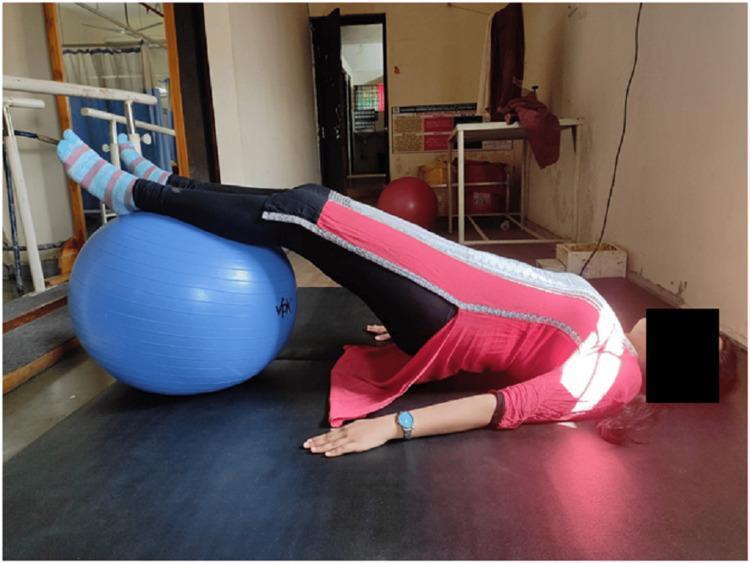
- Supine, knees bent, feet hip-width
- Activate pelvic floor and TVA; lift pelvis off floor
- Hold 5–8 seconds; lower slowly
- 12 repetitions, 3 sets
- 4-point kneeling; activate deep core
- Extend opposite arm and leg simultaneously, maintaining neutral spine
- Hold 5 seconds; 10 each side, 3 sets
- Progress from clamshells
- Full hip abduction in side-lying; slow and controlled
- 15 repetitions, 3 sets each side
- Stand with back against wall, feet hip-width
- Slide down to 30–45° knee flexion; hold 5 sec; rise
- Pelvic floor activated throughout
- 10 repetitions, 2 sets
- Begin at 10–15 min flat walking; progress by 5 min/week
- Target 30 min continuous walking by week 8 postpartum
- Wear supportive footwear; avoid hills in early phase
PHASE 3 — MONTHS 2–3 (Weeks 8–12 Postpartum)
Goals: Return to full function, impact preparation, maximize pelvic floor strength
1. Advanced Pelvic Floor Training
- Oxford Grade 4–5 targeted
- Standing PFMT with functional movements
- Pelvic floor contractions during squats, lunges, step-ups
- Biofeedback review session to confirm progress
- Progressed to weighted exercises only when pelvic floor can sustain loading without leakage
2. Core and Trunk Rehabilitation
Only when diastasis recti linea alba tension is adequate (finger-gap width secondary to tension):
- Dead bug (full version)
- Pallof press (anti-rotation)
- Modified plank (from knees → full plank at 12 weeks)
- Pilates-based exercises (transverse abdominis focus)
3. Return to Impact Activity Guidance
| Activity | Earliest Recommended Time Postpartum |
|---|---|
| Walking (gentle) | Immediately |
| Swimming (wounds healed) | 6 weeks |
| Cycling (static bike) | 8 weeks |
| Low-impact aerobics | 12 weeks |
| Running / jogging | Not before 12 weeks; pelvic floor must be symptom-free |
| High-impact sport | 3–6 months, symptom-free, full pelvic floor strength |
- No urinary leakage during walking, jogging, or PFMT
- Oxford Grade ≥4
- Able to single leg hop 10× without leakage or pelvic heaviness
- No pelvic girdle pain on single leg stance
PPD Management — Physiotherapy Role
| Strategy | Evidence |
|---|---|
| Aerobic exercise | Level 1 evidence — 30 min moderate exercise 3–5×/week reduces PPD symptoms significantly |
| Group physiotherapy sessions | Reduces isolation; peer support improves mood and adherence |
| Goal-setting and mastery | Achieving exercise goals improves self-efficacy and combats helplessness |
| Mind-body exercises | Yoga, breathing exercises, relaxation — reduce cortisol, improve sleep quality |
| Education and normalization | Reduces shame and anxiety about symptoms |
| Therapeutic relationship | Active listening, validation, empathy during sessions |
- GP/Obstetrician: EPDS result; consider antidepressant therapy if EPDS ≥13
- Midwife / Health Visitor: continuity of monitoring at home
- Psychologist/Counsellor: CBT or interpersonal therapy if EPDS warrants
- Lactation consultant: if breastfeeding difficulties contributing to stress
"Patients who experience low back/pelvic girdle pain during pregnancy are at higher risk for postpartum depression and chronic pain... Providers should consider postpartum referral to rehabilitation services should the patient continue to experience persistent symptoms" (Management of Pregnancy, p. 97). This case illustrates exactly that clinical profile.
4-Week Session-by-Session Physiotherapy Plan
| Session | Week | Duration | Content |
|---|---|---|---|
| 1 | Week 4 (today) | 45 min | Subjective Hx; EPDS; bladder diary issue; full objective assessment; education; begin diaphragmatic breathing; pelvic tilt; pelvic floor identification |
| 2 | Week 5 | 45 min | Review bladder diary; begin pelvic floor holds (3-sec); heel slides; knee folds; lumbar mobility; soft tissue therapy for LBP; TENS if indicated |
| 3 | Week 6 | 45 min | Internal pelvic floor assessment (if wounds healed); Oxford grading; progress PFMT; introduce bladder training schedule; clamshells; cat-cow; advise SIJ belt if needed |
| 4 | Week 7 | 45 min | Progress PFMT to 5-sec holds + quick flicks in sitting; Knack maneuver; introduce bladder training interval; glute bridges; bird-dog; walking program |
| 5 | Week 8 | 45 min | Review EPDS; biofeedback session; PFMT in standing; progress voiding interval; mini squats; step-up preparation; walking 20–25 min |
| 6 | Week 10 | 45 min | Full functional PFMT assessment; discharge planning; design home maintenance program; return-to-activity counselling; refer for psychology if PPD not improving |
Home Exercise Programme (Weeks 4–6 Postpartum)
| Exercise | Dose | When |
|---|---|---|
| Diaphragmatic breathing | 10 breaths × 3 | Morning, afternoon, evening |
| Pelvic floor holds (3 sec → 5 sec) | 10 reps × 3 sets | Morning, feeding time, evening |
| Quick flicks | 10–20 reps × 3 sets | Alongside holds |
| Pelvic tilts | 15 reps × 2 sets | Morning |
| Knee rocks | 15 each side | After feeding |
| Heel slides | 10 each side × 2 sets | During baby floor time |
| Clamshells | 15 each side × 2 sets | Naptime |
| Gentle walking | Start 10–15 min | Daily |
Red Flags — When to Escalate or Refer Immediately
| Red Flag | Action |
|---|---|
| EPDS ≥13 or suicidal ideation | Same-day GP/psychiatry referral |
| Cauda equina signs (saddle numbness, bilateral leg weakness, loss of bowel/bladder control) | Emergency surgical referral |
| Wound breakdown / infection signs | Refer to GP/midwife |
| Sudden severe LBP with radiation | Rule out vertebral fracture, disc prolapse — MRI |
| Prolapse grade III–IV | Refer to urogynaecology |
| No improvement in UI after 12 weeks PFMT | Refer to urogynaecology / urology |
| Worsening depression, inability to bond with baby | Urgent psychiatric referral |
Summary Overview
4-WEEK POSTNATAL PHYSIOTHERAPY PROGRAM

ASSESSMENT:         Subjective → Objective → Problem List → Goal Setting
                    (EPDS + ICIQ-UI SF + Oxford Grade + ASLR + Bladder Diary)

MANAGEMENT:
┌─────────────────────┬──────────────────────────────────────────────────────┐
│ DOMAIN              │ KEY INTERVENTIONS                                    │
├─────────────────────┼──────────────────────────────────────────────────────┤
│ Urinary Incontinence│ PFMT (holds + quick flicks + Knack) + Bladder        │
│                     │ Training + Urge Suppression                          │
├─────────────────────┼──────────────────────────────────────────────────────┤
│ Low Back Pain       │ Heat / Soft tissue / TENS / Pelvic belt +            │
│                     │ Pelvic tilts / Bird-dog / Glute bridges / Walking    │
├─────────────────────┼──────────────────────────────────────────────────────┤
│ Pelvic Floor        │ Oxford Grade progression + Biofeedback +             │
│ Weakness            │ Functional integration + Diastasis recti rehab       │
├─────────────────────┼──────────────────────────────────────────────────────┤
│ Postpartum          │ Exercise therapy + Education + Goal-setting +        │
│ Depression          │ MDT referral + Therapeutic relationship              │
└─────────────────────┴──────────────────────────────────────────────────────┘

TIMELINE:   Weeks 4–6: Foundation phase
            Weeks 6–8: Progressive loading
            Weeks 8–12: Return to function
            Months 3–6: Return to sport/impact