
reactive arthritis
Reading File
Reading File
Finding Sources
Searching PubMed
"Arthritis, Reactive"[MeSH Terms]
Reading File
Reading File
Searching Images
reactive arthritis keratoderma blennorrhagicum circinate balanitis
Reading File
Reading File
query_images_db
Reading File
Reading File
Finding Sources
Searching the Web
reactive arthritis treatment NSAIDs sulfasalazine antibiotics chlamydia guideline
Reading File
Reactive arthritis
Definition
Reactive arthritis (ReA) is a sterile inflammatory arthritis that follows an infection elsewhere in the body, usually in the gut or genitourinary tract. It belongs to the HLA-B27-associated spondyloarthritis group. Arthritis typically starts 1 to 3 weeks after the infection (Goldman-Cecil Medicine, Ch. 244). The term "Reiter's syndrome" has been dropped because of Hans Reiter's Nazi affiliation (Firestein & Kelley's Rheumatology, Ch. 75).
Triggers
- Gastrointestinal: Salmonella, Yersinia enterocolitica, Shigella flexneri, Campylobacter jejuni.
- Genitourinary: Chlamydia trachomatis is the most common trigger. Neisseria gonorrhoeae, Mycoplasma genitalium and Ureaplasma are also implicated.
- Post-streptococcal arthritis and Giardia are generally excluded from ReA. They lack the other spondyloarthritis features and the HLA-B27 link.
Epidemiology and pathobiology
- Peak onset is at age 20 to 40. Gut-triggered ReA affects both sexes equally, and Chlamydia-triggered ReA is more common in men.
- In Salmonella or Yersinia outbreaks, 2 to 7% of infected people develop ReA. The figure is up to 20% in HLA-B27-positive people.
- HLA-B27 raises the risk of arthritis, axial involvement and chronicity. Toll-like receptor 2 (TLR-2) variants point to a role for innate immunity.
- PCR on synovium is most consistently positive after Chlamydia. This suggests viable organisms persist in the joint in an altered metabolic state.
Clinical features
Joints
- The classic pattern is an asymmetric oligoarthritis of the lower limbs.
- Enthesitis (Achilles tendinitis, plantar fasciitis) and dactylitis ("sausage digit") are common.
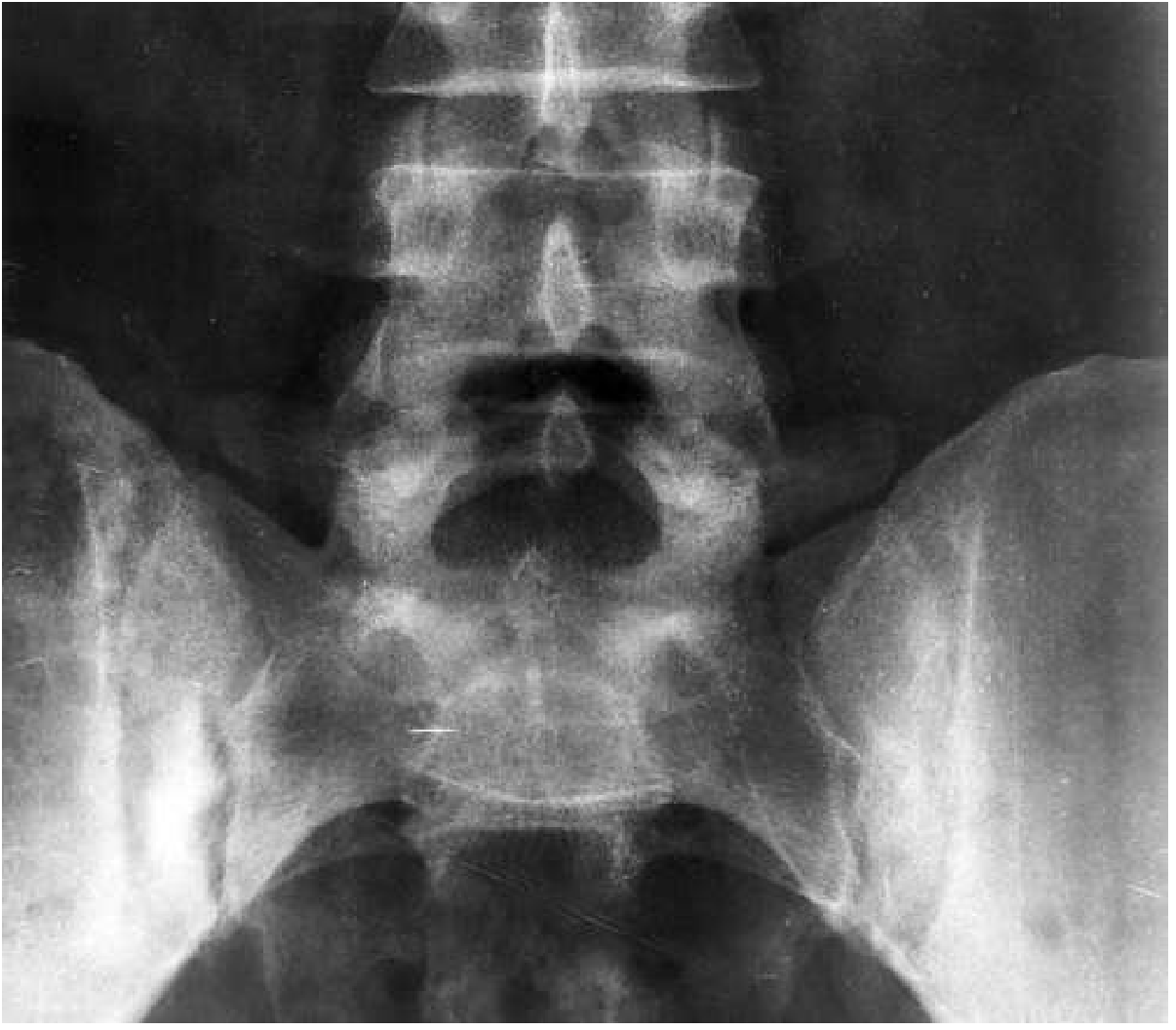
- Sacroiliitis can occur.
Extra-articular features
- Urethritis or cervicitis: cervicitis is often asymptomatic, so ReA is underdiagnosed in women.
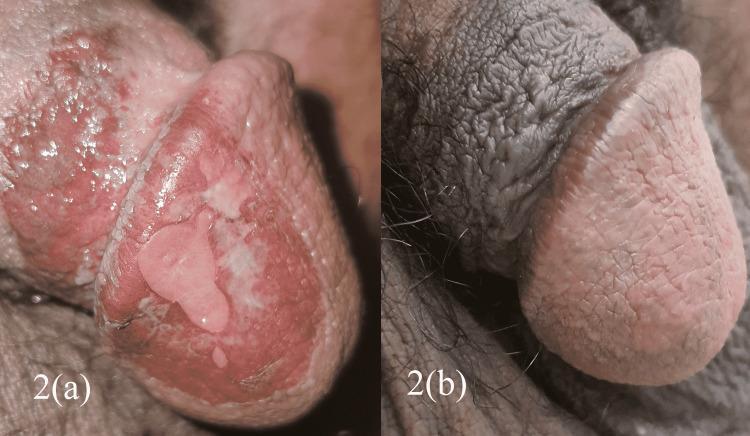
- Circinate balanitis: the most common mucocutaneous lesion, seen in about 50% of men. It looks like painless, serpiginous erosive or crusted plaques on the glans.
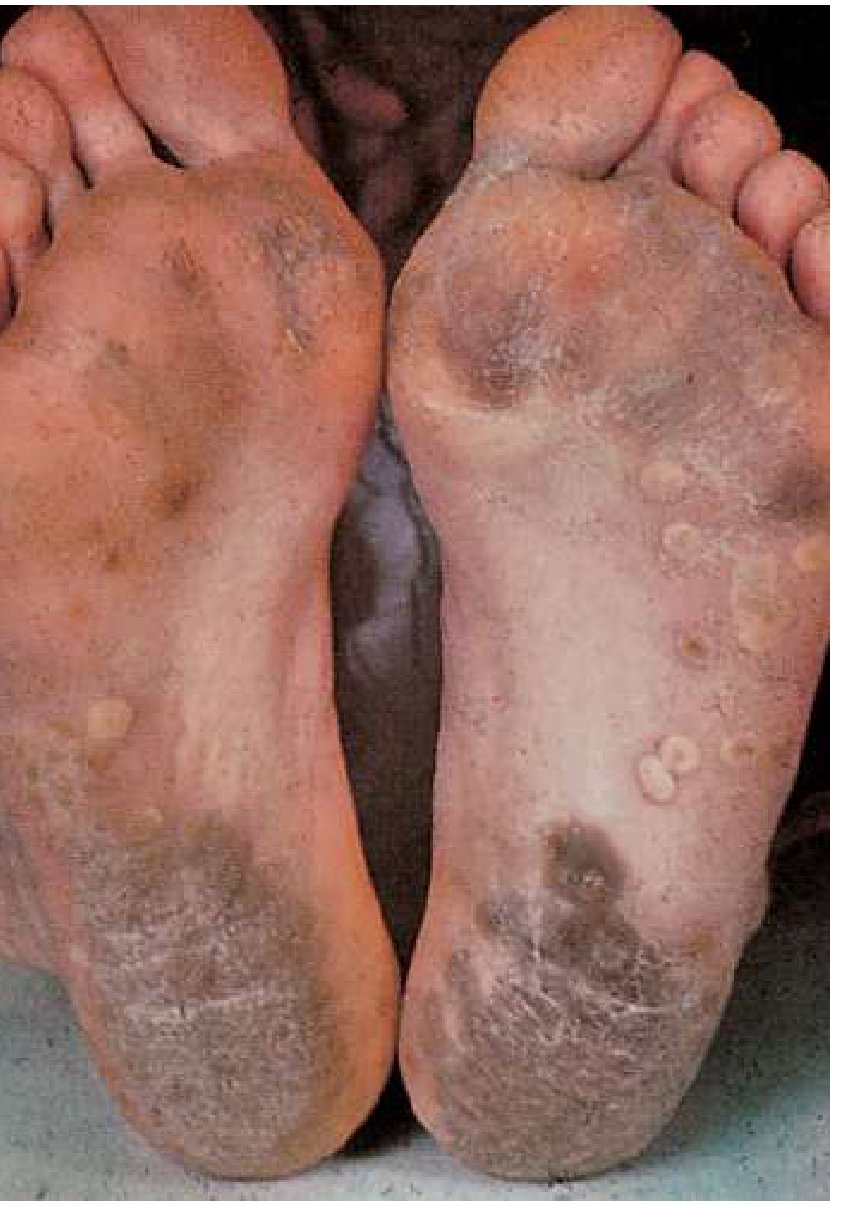
- Keratoderma blennorrhagicum: hyperkeratotic papules and plaques on the palms and soles, seen in about 10% of patients. They appear 1 to 2 months after onset and look like psoriasis.
- Mouth: painless oral ulcers and migratory glossitis.
- Nails: thickening, ridging or subungual keratosis. Pitting is not typical.
- Eyes: conjunctivitis is bilateral and often painful. Acute anterior uveitis is usually unilateral and less painful.
- Erythema nodosum: uncommon, and linked to Yersinia.
Diagnosis
There are no validated diagnostic criteria. The proposals from the 1995 and later international workshops combine two things:
- Major criteria: asymmetric mono- or oligoarthritis of the lower limb, plus a preceding symptomatic enteritis or urethritis 3 days to 6 weeks before arthritis onset.
- Minor criteria: evidence of the triggering infection, such as a positive Chlamydia swab or PCR, or stool culture.
Work-up
- Synovial fluid: culture it first, because Yersinia and Salmonella can cause septic arthritis, which is the key differential (Goldman-Cecil).
- Infection testing: Chlamydia NAAT, stool culture, and HIV and other STI screening.
- HLA-B27: supportive but not diagnostic.
- Inflammatory markers: ESR and CRP are raised.
Imaging
- Peripheral joints show soft-tissue swelling and juxta-articular osteopenia, with periostitis in later disease.
- Sacroiliitis is asymmetric, unlike the symmetric sacroiliitis of ankylosing spondylitis.
- Chronic syndesmophytes are bulky, non-marginal and asymmetric, unlike the thin marginal syndesmophytes of ankylosing spondylitis.
Other differentials: gout, psoriatic arthritis, gonococcal arthritis and enteropathic arthritis. HIV can make the course more aggressive, though it does not make ReA more common.
Management
- Treat the trigger. Treat active urethritis or cervicitis, and treat the partner. A single 1 g dose of azithromycin is as effective as doxycycline 100 mg twice daily for 7 days. Antibiotics are generally not indicated for post-dysenteric ReA.
- NSAIDs (indomethacin, naproxen) are first line for symptoms. They do not shorten the disease course.
- Intra-articular or intralesional corticosteroids help for oligoarthritis, enthesitis and dactylitis. Prolonged systemic steroids are discouraged.
- DMARDs are used if there is no response after about 1 month, or in chronic disease. Sulfasalazine (1 g two to three times daily) is often effective if started within 3 months. Methotrexate is an alternative.
- Prolonged antibiotics for Chlamydia-induced ReA. Cecil describes 6 months of rifampicin 300 mg/day plus doxycycline 100 mg twice daily or azithromycin. In that study 65% responded, versus about 20% on placebo, and 20% had complete remission, versus 0% on placebo. This was for patients PCR-positive for C. trachomatis or C. pneumoniae. Other trials of antibiotics have been mixed, so this is not routine.
- Biologics (anti-TNF) are sometimes used in chronic HLA-B27-positive disease or axial disease. Efficacy is unproven.
Prognosis
About 50% of patients recover within about 6 months. A minority develop chronic arthritis or persistent spondyloarthritis. HLA-B27 positivity and axial symptoms predict this. Whether ReA often evolves into true ankylosing spondylitis is not definitively established (Goldman-Cecil Medicine).
Recent evidence check
A 2025 systematic review (Ng and Lassere, PMID 39644691) looked at gut microbiome changes in several spondyloarthritis and arthritis conditions, including ReA. It adds to the pathogenesis picture but does not change the management above. I found no recent meta-analysis that contradicts the textbook approach.
Sources: Goldman-Cecil Medicine, Ch. 244 (Spondyloarthritis); Firestein & Kelley's Textbook of Rheumatology, Ch. 75; Fitzpatrick's Dermatology, Ch. 43; Textbook of Family Medicine 9e. Web sources: the Medscape treatment overview and the ACR patient page.
I can go deeper on diagnostic criteria, the antibiotic trials, or ReA versus psoriatic arthritis and ankylosing spondylitis if you want.
This is a shared conversation. Sign in to Orris to start your own chat.