
Itching in eyes from few days no other symptoms just itching in both eyes.. tried local steroids and antibiotics drops didn’t improve. What could be the cause
Reading File
Bilateral eye itching for days, not responding to antibiotics or steroids - this points strongly toward allergic conjunctivitis as the primary suspect. Let me search the medical library for a thorough answer.
Searching sources...
Finding Sources
Finding Sources
Searching PubMed
"allergic conjunctivitis" diagnosis treatment
Good results. Now let me read the key ophthalmology and family medicine sections in parallel.
Reading File
Reading File
Reading File
Excellent - I have very rich content. Let me also quickly check the Kanski section on vernal/atopic keratoconjunctivitis since these are non-responding allergic conditions, and fetch the image for clinical illustration.
Reading File
Loading Image
I now have comprehensive information to give a thorough, well-referenced answer.
Bilateral Eye Itching - Not Responding to Antibiotics or Steroids
The key clue here is bilateral itching with no discharge, no pain, no vision change - and no response to antibiotics or steroids. This pattern is classic for allergic conjunctivitis. Antibiotics don't work because there's no infection, and topical steroids alone often fail without addressing the allergic mechanism directly.
Most Likely Cause: Allergic Conjunctivitis
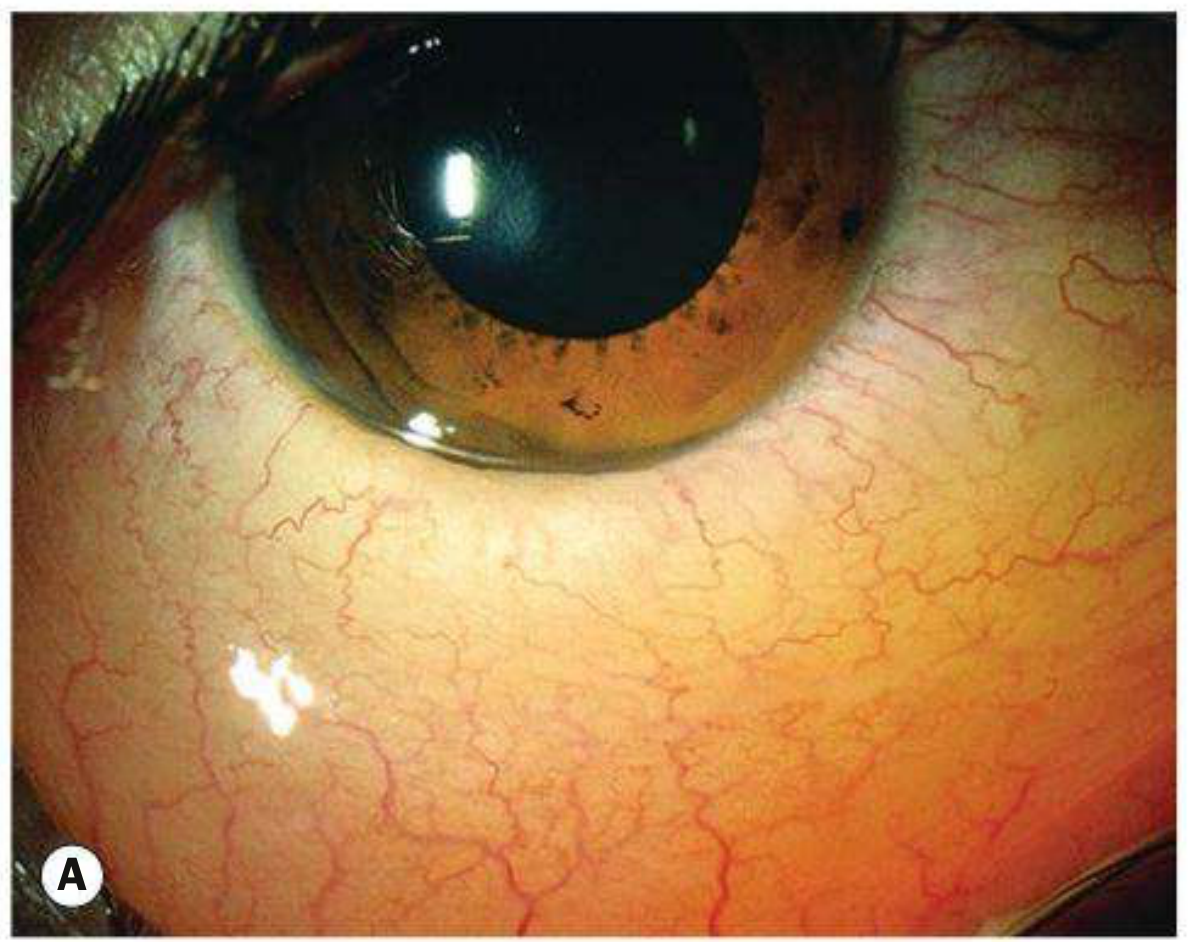
Chemosis (conjunctival swelling) in allergic conjunctivitis - Kanski's Clinical Ophthalmology 10e
Allergic conjunctivitis is a Type I hypersensitivity reaction mediated by IgE-driven mast cell degranulation. Itching is the cardinal symptom - it distinguishes allergic from bacterial or viral causes. There are two main subtypes to consider:
Seasonal Allergic Conjunctivitis ("Hay Fever Eyes")
- Triggered by tree/grass pollens - worse in spring and summer
- Episodes of redness, watering, and itching, often with sneezing/nasal discharge
- Symptoms can occur without any systemic features
Perennial Allergic Conjunctivitis
- Year-round symptoms, often worse in autumn/winter
- Triggers: house dust mites, animal dander (especially cats), molds, cockroaches
- Generally milder than seasonal type but persistent
- This fits your case well - "a few days" of isolated itching, both eyes, no obvious seasonal pattern
Other Conditions to Consider
| Condition | Key Feature | Why It Could Fit |
|---|---|---|
| Dry Eye Disease | Burning + itching, worse in the evening | Very common, often missed; no response to antibiotics/steroids expected |
| Vernal Keratoconjunctivitis (VKC) | Intense itching, thick mucoid discharge, cobblestone papillae under upper lid | Common in warm/dry climates (South Asia, Middle East, Africa); bilateral |
| Atopic Keratoconjunctivitis | Bilateral itching + burning, associated with atopic dermatitis/eczema | Chronic, disabling; associated with skin disease |
| Contact/Toxic Conjunctivitis | From the drops themselves | Prolonged antibiotic/steroid drops can cause toxic reaction |
| Blepharitis | Lid margin disease causing eye irritation | Associated with dandruff, rosacea; itching at lid margins |
| Demodex infestation | Itchy lids, cylindrical dandruff at lash base | Not responsive to standard treatment |
Important note: The antibiotic and steroid drops you tried may actually be worsening the itch through a toxic/preservative reaction to the drops themselves, especially if used for several days.
Why Steroids Didn't Work
Topical steroids alone, without addressing the allergic mechanism, often give limited relief in allergic conjunctivitis. The proper treatment targets histamine and mast cell degranulation - not inflammation alone.
What Actually Works
Based on Kanski's Clinical Ophthalmology and Goldman-Cecil Medicine:
-
Topical antihistamine + mast cell stabilizer (dual-action) - FIRST CHOICE
- Olopatadine (Patanol/Pataday) - most commonly recommended; once or twice daily
- Azelastine or ketotifen - also effective dual-action agents
- These act rapidly AND prevent future degranulation
-
Mast cell stabilizers alone (if used prophylactically, before allergen season)
- Sodium cromoglicate, lodoxamide, nedocromil - need a few days before full effect kicks in
-
Artificial tears - dilute allergens and soothe; useful for mild symptoms
-
Oral antihistamines (cetirizine, loratadine) - if ocular symptoms are part of broader allergic rhinitis
-
Non-pharmacological
- Cool compresses
- Avoid rubbing eyes (rubbing releases more histamine from mast cells - worsens itch)
- Identify and avoid the trigger (dust, pollen, pets, mold)
- Wash face/hands after going outdoors
- Keep windows closed during high-pollen seasons
When to See an Ophthalmologist
- If itching is severe and associated with thick mucoid discharge + photophobia - possible VKC (needs slit lamp exam and upper lid eversion to look for cobblestone papillae)
- If there's any vision change, corneal involvement, or lid swelling
- If symptoms persist despite 2 weeks of antihistamine drops
- If Demodex is suspected (lid hygiene + tea tree oil treatment needed)
Bottom line: Stop the antibiotic and steroid drops - they are not helping and may be adding irritation. Start a dual-action topical antihistamine/mast cell stabilizer like olopatadine. Identify potential triggers (new pet, dusty environment, season change). If not improving within 1-2 weeks, a slit lamp exam by an ophthalmologist is warranted to rule out VKC, dry eye, or blepharitis.
Sources: Kanski's Clinical Ophthalmology 10e, Goldman-Cecil Medicine, Textbook of Family Medicine 9e
A 2025 network meta-analysis (PMID: 40348333) confirms that dual-action topical antihistamine/mast cell stabilizer combinations (olopatadine, ketotifen) rank highest in efficacy for ocular allergy treatment.
Give me the medicine which can i use and available in india
Based on my knowledge, here are the commonly available options in India. Let me verify current availability.
Searching sources...
Searching the Web
olopatadine ketotifen azelastine eye drops available India brand names 2024
Searching the Web
allergic conjunctivitis eye drops India pharmacy sodium cromoglicate lodoxamide brand
Searching the Web
olopatadine eye drops India brand name Patadin Ocupat ketotifen Zaditen India
Here is a complete, practical guide to medicines available in India for allergic eye itching:
Eye Drops for Allergic Itching - Available in India
Important: Stop the antibiotic and steroid drops first. These don't help allergic itching and can worsen irritation with prolonged use.
First Choice - Dual-Action (Antihistamine + Mast Cell Stabilizer)
These work the fastest and most effectively. Start here.
| Generic Name | Indian Brand Names | Company | Dose | Price (approx) |
|---|---|---|---|---|
| Olopatadine 0.1% | Olopat, Winolap, IF-2, Patadin, Oloblu, Olopine, Olotop, Alertchek | Ajanta, Sun Pharma, Cipla, Lupin, Intas | 1 drop in each eye, twice daily | ₹65–₹291 |
| Olopatadine 0.2% | Pataday (Novartis), Winolap OD, Rapidon OD | Novartis, Sun Pharma | 1 drop in each eye, once daily | ₹155–₹493 |
| Ketotifen 0.025% | Zaditen (Novartis), Keto Eye | Novartis India | 1 drop in each eye, twice daily | ₹80–₹150 |
| Azelastine 0.05% | Azep Eye, Optivar | Cipla | 1 drop in each eye, twice daily | ~₹120 |
Best pick: Olopat (Ajanta) or Winolap (Sun Pharma) - widely available at any pharmacy, affordable, and highly effective. Ask for it by generic name "olopatadine eye drops" if the brand isn't stocked.
Second Choice - Mast Cell Stabilizers (Prevention / Long-term)
These take 3-5 days to show effect but are excellent for long-term or seasonal use. Not for immediate relief.
| Generic Name | Indian Brand Names | Dose |
|---|---|---|
| Sodium Cromoglicate 2% | Cromal, Opticrom, Cromabak | 1-2 drops, 4 times daily |
| Lodoxamide 0.1% | Alomide (Alcon), Lodox | 1-2 drops, 4 times daily |
| Nedocromil 2% | Nedmak | 1-2 drops, twice daily |
Add-on: Oral Antihistamines (if itching is also affecting nose/skin)
These can be taken alongside eye drops for better control:
| Drug | Common Indian Brand | Dose |
|---|---|---|
| Cetirizine 10mg | Cetrizet, Alerid, Zyrtec | Once daily at night |
| Levocetirizine 5mg | L-Cin, Levocet, Xyzal | Once daily at night |
| Loratadine 10mg | Loratadine, Clarityne | Once daily |
What to Buy at the Pharmacy (Simple Summary)
Walk into any pharmacy and ask for one of these:
- "Olopat eye drops" (Ajanta) - ₹65, most widely available, 1 drop twice daily - best first option
- "Winolap eye drops" (Sun Pharma) - slightly pricier but same molecule
- "Zaditen eye drops" - if olopatadine not available
Practical Tips
- Cool the bottle in the fridge before use - the cold drop relieves itching faster
- Do NOT rub your eyes - rubbing releases more histamine and worsens itching
- Wait 5 minutes between different eye drops if using more than one
- Give the drops at least 1 week before judging if they work
- If no improvement after 2 weeks, see an ophthalmologist - you may need a slit lamp exam to check for VKC (vernal keratoconjunctivitis) which needs stronger treatment
Based on: Kanski's Clinical Ophthalmology 10e, Goldman-Cecil Medicine | Indian brand data from 1mg.com
This is a shared conversation. Sign in to Orris to start your own chat.