
teach me blood picturefrom basics to clinical
Reading File
Now let me search the library for blood picture / peripheral blood smear content across multiple angles simultaneously.
Finding Sources
Finding Sources
Finding Sources
Finding Sources
Finding Sources
Finding Sources
Now let me read the key sections in parallel - the main blood smear content from Henry's, the CBC + blood smear from Rosen's, the RBC morphology table, and the anemia classification from Robbins/Harrison's.
Reading File
Reading File
Reading File
Reading File
Reading File
Reading File
I now have rich content from multiple authoritative textbooks. Let me also fetch a couple of key images for the response, and search for clinical correlation content.
Loading Image
Finding Sources
Finding Sources
Loading Image
Loading Image
Loading Image
I now have comprehensive, textbook-sourced content with real images. Let me compose the full teaching guide.
The Blood Picture - From Basics to Clinical
A complete teaching guide drawn from Henry's Clinical Diagnosis, Tietz Textbook of Laboratory Medicine, Histology (Eroschenko), Robbins Pathology, Harrison's, and Goldman-Cecil Medicine.
PART 1 - What is the "Blood Picture"?
The term blood picture refers to the full interpretation of a peripheral blood smear (PBS) combined with the complete blood count (CBC). It is the most ordered investigation in medicine and serves as a window into the bone marrow, immune system, nutritional status, and dozens of systemic diseases.
PART 2 - The CBC: Numbers First
The CBC is generated by automated flow cytometry-based analyzers that count ~10,000 cells per category. The key parameters:
| Parameter | Normal Range | What it Reflects |
|---|---|---|
| RBC count | M: 4.5-5.5 × 10¹²/L; F: 4.0-5.0 × 10¹²/L | Total circulating red cells |
| Hemoglobin (Hb) | M: 13.5-17.5 g/dL; F: 12-15.5 g/dL | O₂-carrying capacity |
| Hematocrit (HCT/PCV) | M: 41-53%; F: 36-46% | Packed cell volume |
| MCV | 80-100 fL | Average RBC size |
| MCH | 27-33 pg | Hb per cell |
| MCHC | 31-36 g/dL | Hb concentration per cell |
| RDW | <14.5% | Variation in RBC size (anisocytosis) |
| WBC | 4.5-11.0 × 10⁹/L | Total leukocytes |
| Platelets | 150-400 × 10⁹/L | Thrombocytes |
The rule of thirds: Hb × 3 ≈ HCT, and HCT × 3 ≈ RBC count (roughly). A quick bedside check for CBC consistency.
Source: Histology - A Text and Atlas (Eroschenko), p. 728-729
PART 3 - Making and Reading the Blood Film
Preparation
Blood is anticoagulated in EDTA and a wedge film (or coverslip preparation) is made. It is stained with Romanowsky stain (Wright-Giemsa). The film must be:
- Well-made (no artefacts, uniform thickness)
- Properly stained
- Evaluated systematically: low power scan first (10x), then high power (40-100x oil immersion)
The Systematic Approach
When you pick up a blood film, go through these 5 steps in order:
- Scan at low power - estimate WBC count, check for clumps, parasites, large abnormal cells
- Evaluate RBC morphology - size, shape, colour, inclusions
- Perform differential WBC count - 100 cells minimum; note morphology
- Estimate platelet count - ~1 platelet per 10-30 RBCs = normal
- Note any abnormal cells - nucleated RBCs, blasts, parasites - these are NEVER normal in peripheral blood
PART 4 - Normal RBC Morphology
The reference image - normal RBCs:
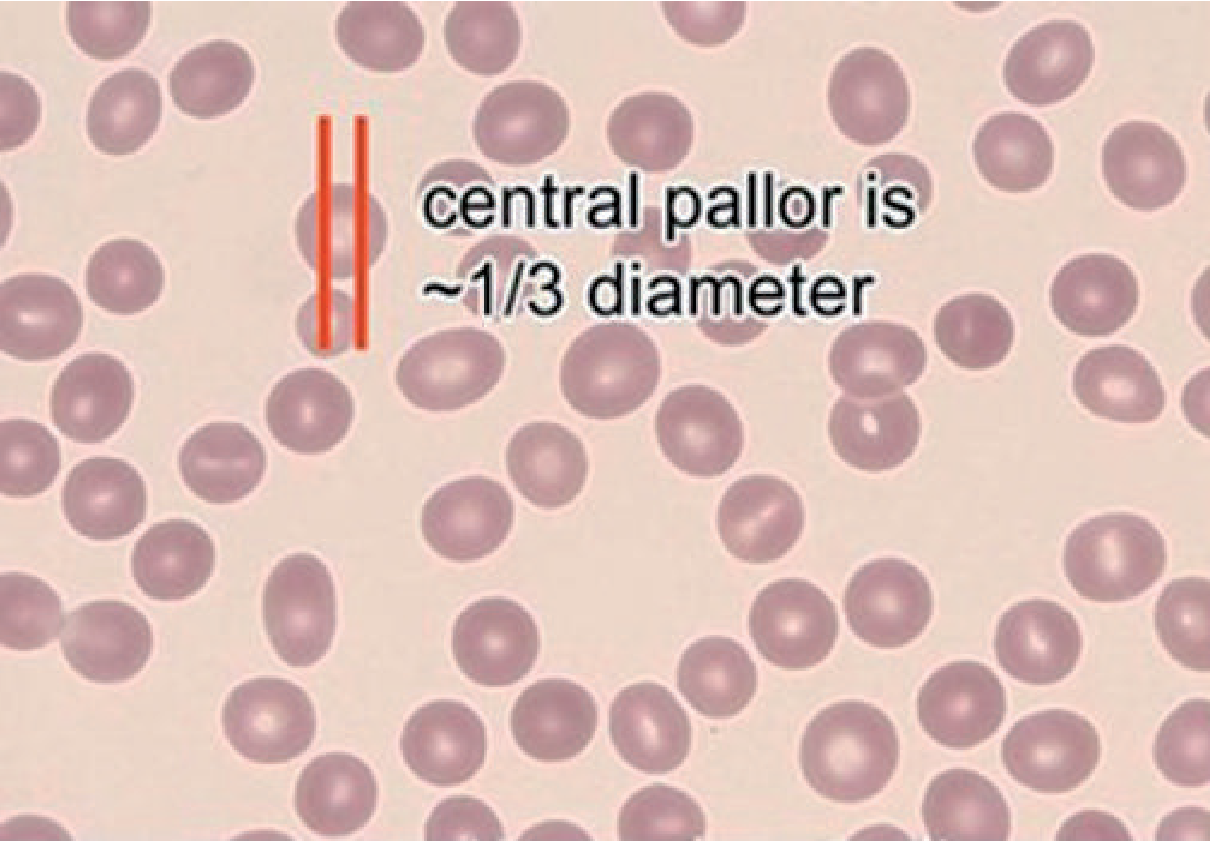
Normal RBCs are:
- Normocytic: MCV 80-100 fL, diameter ~6-8 µm (roughly the size of a small lymphocyte nucleus)
- Normochromic: MCHC 31-36 g/dL; central pallor = approximately 1/3 of the cell diameter
- Uniform in shape: biconcave discs - this gives them flexibility to squeeze through capillaries
- Uniform in size: minimal anisocytosis (RDW <14.5%)
Source: Tietz Textbook of Laboratory Medicine, 7th Ed., p. 2989
PART 5 - Abnormal RBC Morphology (The Core of the Blood Picture)
This is the most clinically useful part. Each abnormal shape has a differential diagnosis.
5.1 - Size Changes
| Abnormality | Feature | Key Causes |
|---|---|---|
| Microcytes | RBC <6 µm, MCV <80 fL, increased central pallor | Iron deficiency anemia, thalassemia, anemia of chronic disease, sideroblastic anemia |
| Macrocytes | RBC >8 µm, MCV >100 fL | B12/folate deficiency, liver disease, hypothyroidism, MDS, chemotherapy (methotrexate) |
| Anisocytosis | Variation in size | Elevated RDW; seen in iron deficiency (one of the earliest findings), mixed deficiencies |
Pearl: In iron deficiency, anisocytosis (high RDW) appears BEFORE the MCV falls. An elevated RDW with normal MCV should prompt iron studies.
5.2 - Shape Changes (Poikilocytosis)
| Cell | Description | Mechanism | Causes |
|---|---|---|---|
| Spherocyte | Small, round, no central pallor | Loss of membrane | Hereditary spherocytosis, AIHA, ABO incompatibility |
| Elliptocyte / Ovalocyte | Oval/cigar-shaped | Spectrin mutation | Hereditary elliptocytosis; also iron deficiency (pencil cells = hypochromic elliptocytes) |
| Target cell (Codocyte) | Bullseye appearance | Excess membrane or decreased Hb | Thalassemia, HbC disease, liver disease, post-splenectomy, iron deficiency |
| Sickle cell (Drepanocyte) | Elongated crescent/scythe | HbS polymerisation under low O₂ | Sickle cell disease (pathognomonic) |
| Schistocyte | RBC fragments, helmet cells | Mechanical shearing in small vessels | TTP, HUS, DIC, prosthetic heart valves, HELLP syndrome |
| Acanthocyte (Spur cell) | Irregular spicules of varying length | Membrane lipid abnormality | Abetalipoproteinemia, severe liver disease, McLeod phenotype |
| Echinocyte (Burr cell) | Regular spicules, uniform | Crenation (often artefact) | Uremia, liver disease, often artefact (EDTA effect) |
| Stomatocyte | Slit-like central pallor (mouth shape) | Altered Na/K permeability | Hereditary stomatocytosis, alcohol, liver disease |
| Teardrop cell (Dacrocyte) | Teardrop-pear shape | Forced through stiff marrow stroma | Myelofibrosis, thalassemia, infiltrative marrow disease |
| Bite cell (Degmacyte) | Semicircular bite out of cell | Heinz body removed by spleen | G6PD deficiency, unstable hemoglobins, oxidative drug exposure |
Source: Tietz Textbook of Laboratory Medicine, Table 76.1, pp. 2989-2990; Harrison's Principles of Internal Medicine 22E
PART 6 - RBC Inclusions
| Inclusion | Stain | Composition | Causes |
|---|---|---|---|
| Howell-Jolly bodies | Romanowsky (dark purple dot) | DNA remnant (chromosome fragment) | Post-splenectomy, functional asplenia (sickle cell), megaloblastic anemia |
| Basophilic stippling | Romanowsky (blue dots) | Aggregated ribosomes | Lead poisoning, thalassemia, megaloblastic anemia, pyrimidine 5'-nucleotidase deficiency |
| Heinz bodies | Supravital stain (brilliant cresyl blue) - NOT visible on Romanowsky | Denatured/oxidised Hb | G6PD deficiency, unstable hemoglobins, alpha-thalassemia |
| Pappenheimer bodies | Romanowsky and Prussian blue | Iron granules (siderosomes) | Sideroblastic anemia, post-splenectomy, hemolytic anemia |
| Cabot rings | Romanowsky (ring/figure-8) | Mitotic spindle remnant | Severe megaloblastic anemia, lead poisoning |
| Malaria parasites | Romanowsky | Plasmodium sp. | Malaria (ring forms in P. falciparum; enlarged cells in P. vivax/ovale) |
PART 7 - WBC Morphology on the Blood Film
The Differential - Normal Ranges
| Cell | % | Absolute count × 10⁹/L | Key morphology |
|---|---|---|---|
| Neutrophil | 50-70% | 1.8-7.0 | 2-5 lobes, coarse chromatin, pale granules |
| Lymphocyte | 20-40% | 1.0-4.8 | Round nucleus, scant cytoplasm |
| Monocyte | 2-8% | 0.2-0.8 | Kidney-shaped nucleus, grey cytoplasm |
| Eosinophil | 1-4% | 0.04-0.4 | 2-lobed, large orange-red granules |
| Basophil | 0-1% | 0-0.1 | Large dark blue/purple granules obscure nucleus |
Neutrophil Morphology in Detail
Segmented vs. Band Neutrophil:
- Segmented (mature): 2+ lobes connected by thin filaments (thread-like, no width)
- Band (immature): horseshoe/U-shaped nucleus, thicker connection between lobes - filament has width
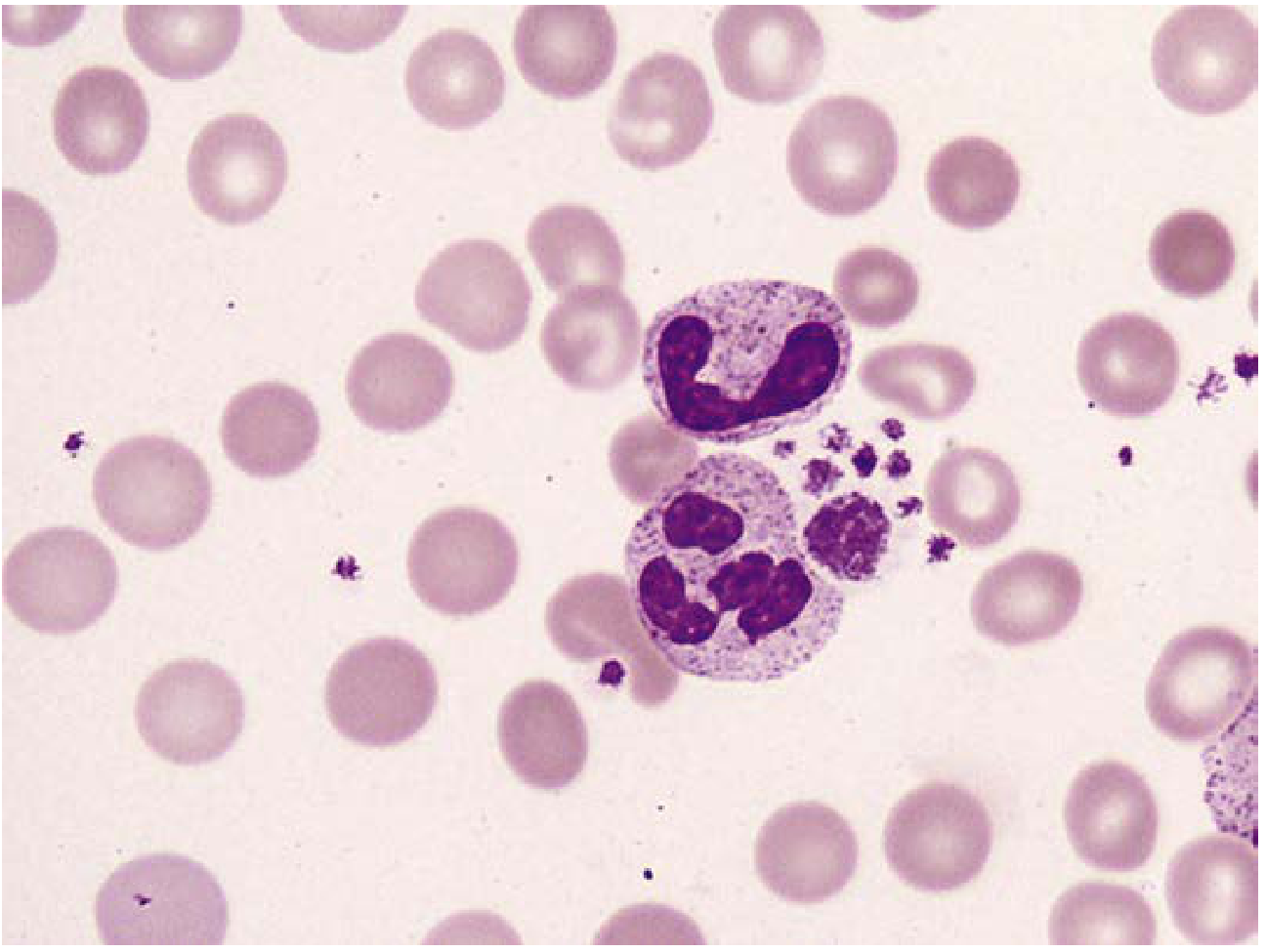
(Here you can see two neutrophils with lobulated nuclei and pale granular cytoplasm, surrounded by normocytic normochromic RBCs and a platelet cluster.)
Clinically Important WBC Changes
Left shift: appearance of immature granulocytes in blood (bands, metamyelocytes, myelocytes) - seen in sepsis, severe infection, myeloproliferative disorders
Toxic granulation: coarse, dark-blue primary granules in neutrophils - indicates severe bacterial infection, sepsis, or toxic states
Dohle bodies: pale blue cytoplasmic inclusions in neutrophils (rough ER remnants) - sepsis, burns, pregnancy
Hypersegmentation (>5 lobes): classic for megaloblastic anemia (B12/folate deficiency). Defined as: >5% of neutrophils with 5+ lobes, OR any neutrophil with 6+ lobes.
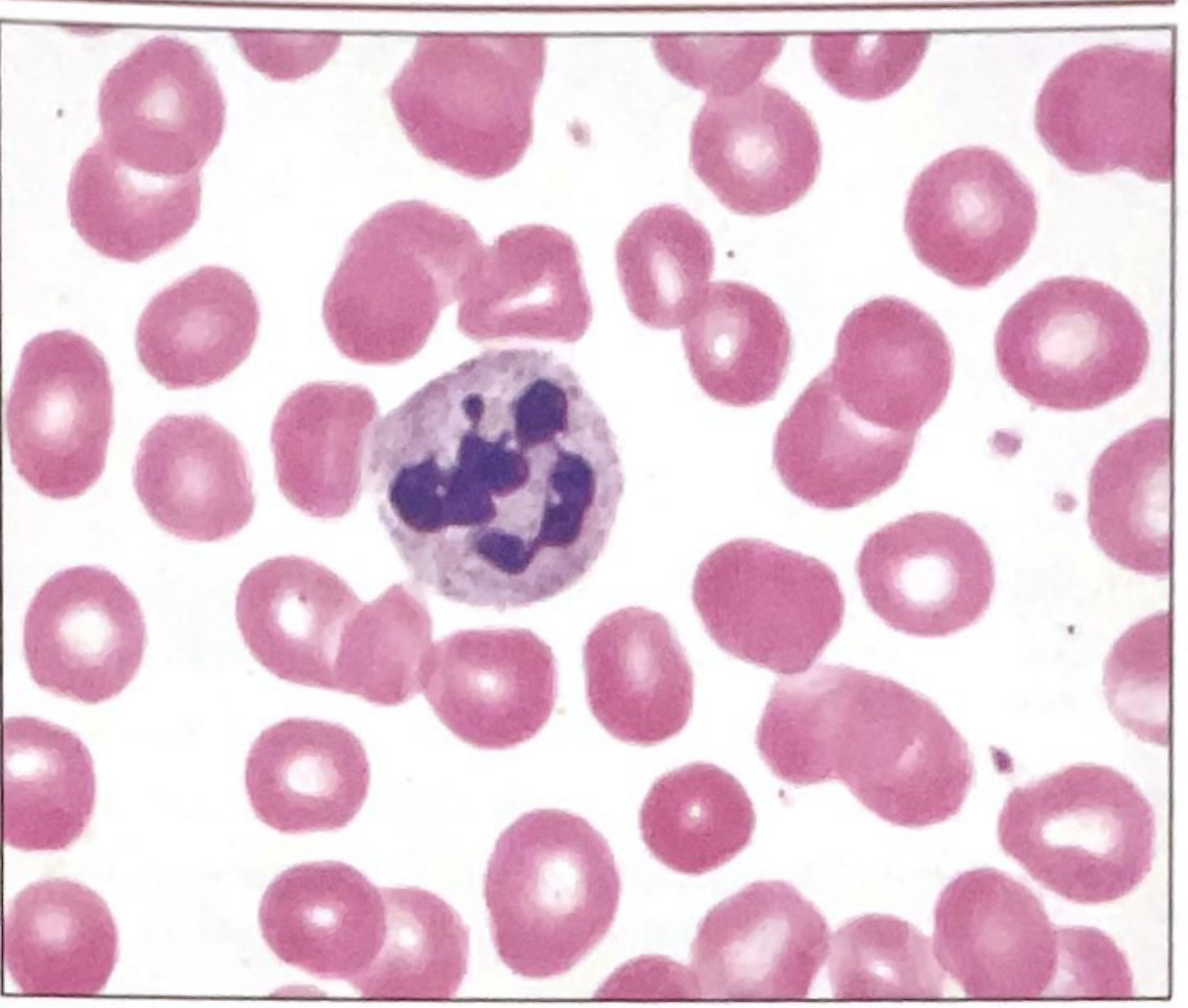
Reactive lymphocytosis: atypical lymphocytes (Downey cells) - large, irregular, with abundant blue cytoplasm that indents around adjacent RBCs - seen in EBV (infectious mononucleosis), CMV, viral hepatitis
PART 8 - Platelet Assessment on the Film
Estimation rule: ~7-20 platelets per oil immersion field = normal count (corresponds to 150-400 × 10⁹/L)
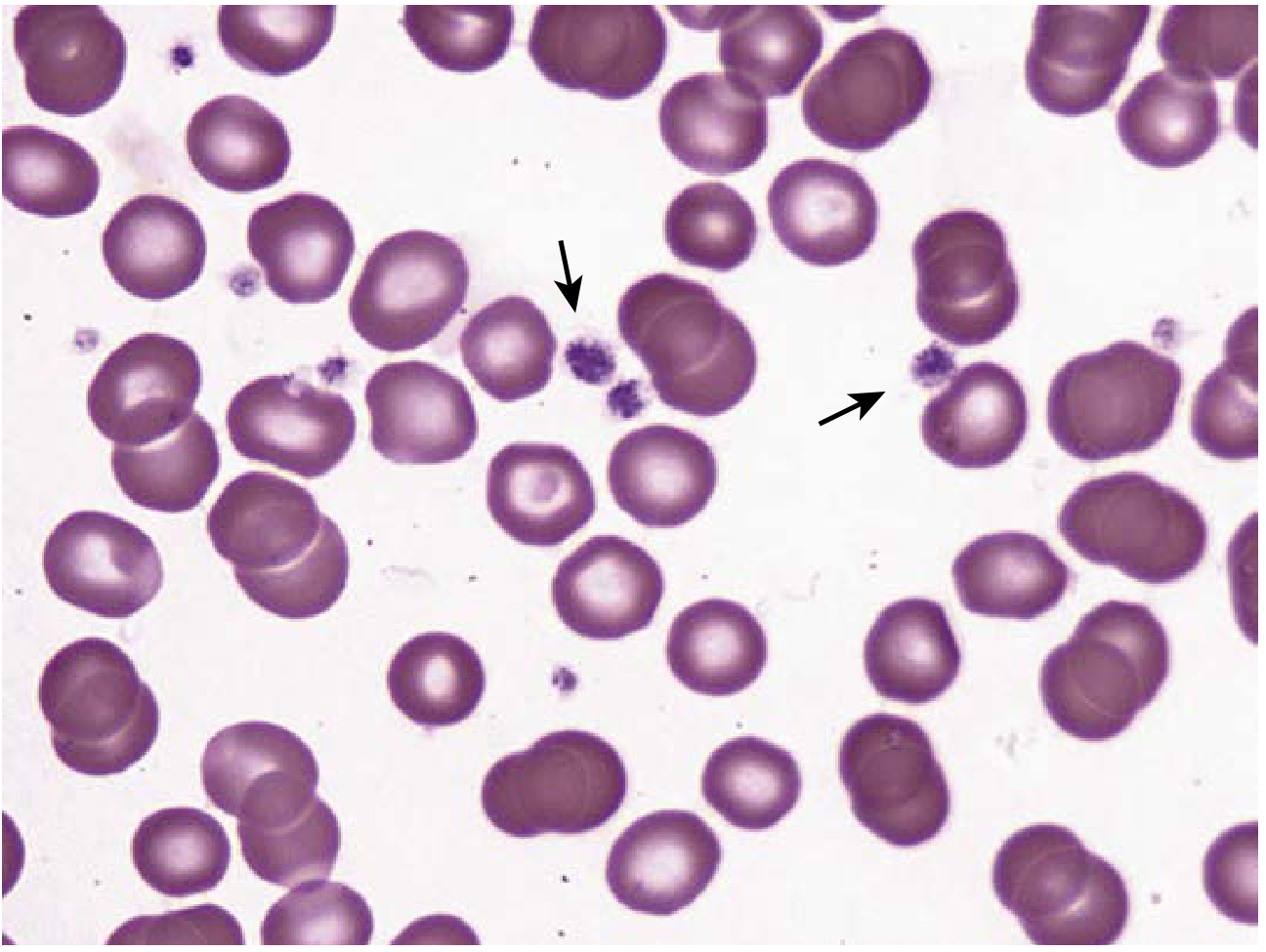
Normal platelets: 2-4 µm, round to oval, contain fine purple granules. Central "granulomere" and peripheral pale "hyalomere" may be seen.
Giant platelets (>3 µm): ITP (immune thrombocytopenic purpura), Bernard-Soulier syndrome, myeloproliferative neoplasms
Platelet clumping: artefact from EDTA causing pseudothrombocytopenia - check by repeating in citrate tube
Hypogranular platelets: myeloproliferative neoplasms (especially CML, ET)
Source: Henry's Clinical Diagnosis, p. 645
PART 9 - Clinical Integration: Reading the Film Diagnostically
This is where it all comes together. Use the MCV as your first branch point.
The MCV-Based Approach to Anemia
ANEMIA (low Hb)
       |
       +--- MCV <80 fL (MICROCYTIC)
       |         Iron deficiency: ↑RDW, hypochromia, pencil cells, ↓ferritin, ↑TIBC
       |         Thalassemia: normal or ↓RDW, target cells, basophilic stippling, normal ferritin
       |         Anemia of chronic disease: usually normocytic, but can be microcytic; ↑ferritin
       |         Sideroblastic: ring sideroblasts on bone marrow; dimorphic picture on PBS
       |
       +--- MCV 80-100 fL (NORMOCYTIC)
       |         Acute blood loss, hemolytic anemia, anemia of chronic disease
       |         Aplastic anemia, renal disease (EPO deficiency)
       |         Mixed deficiency (Fe + B12 -- can cancel each other out to give normal MCV!)
       |
       +--- MCV >100 fL (MACROCYTIC)
                 Megaloblastic: oval macrocytes + hypersegmented neutrophils
                 (B12 deficiency: subacute combined degeneration; folate: neural tube defects)
                 Non-megaloblastic: round macrocytes (liver disease, alcohol, hypothyroidism, MDS)
Source: Robbins Pathologic Basis of Disease, Table 14.1; Harrison's, p. 731
Disease-Specific Patterns
| Disease | Blood Film Clues |
|---|---|
| Iron deficiency anemia | Hypochromic microcytes, pencil cells (hypochromic elliptocytes), ↑RDW, thrombocytosis (reactive) |
| B12/Folate deficiency | Oval macrocytes, hypersegmented neutrophils (≥5 lobes), pancytopenia in severe cases |
| Sickle cell disease | Sickle cells (pathognomonic), target cells, Howell-Jolly bodies (functional asplenia), polychromasia |
| Thalassemia | Microcytes, target cells, basophilic stippling, nucleated RBCs, tear drop cells (beta-thal major) |
| TTP/HUS/DIC | Schistocytes (microangiopathic hemolysis) + thrombocytopenia - this is a medical emergency |
| Hereditary spherocytosis | Spherocytes (no central pallor), polychromasia (reticulocytosis), increased MCHC |
| G6PD deficiency (after oxidant stress) | Bite cells, Heinz bodies (on supravital stain), polychromasia |
| Malaria | Ring forms inside RBCs, multiple infections per cell (P. falciparum), enlarged pale RBCs (P. vivax) |
| CML | Leukocytosis with full granulocyte spectrum (myelocytes, metamyelocytes, bands), eosinophilia, basophilia |
| Infectious mononucleosis | Atypical lymphocytes (>10% Downey cells), lymphocytosis |
| ITP | Isolated thrombocytopenia, giant platelets, otherwise normal smear |
| Aplastic anemia | Pancytopenia, no blasts, no abnormal cells - "empty" smear |
| AML | Blasts (large cells with open chromatin, prominent nucleoli, Auer rods in M2/M3), +/- Auer rod clumps |
| CLL | Lymphocytosis of small mature lymphocytes + smudge/smear cells (fragile CLL cells rupturing during slide prep) |
PART 10 - Key Terminology Summary
| Term | Meaning |
|---|---|
| Anisocytosis | Variation in RBC size |
| Poikilocytosis | Variation in RBC shape |
| Polychromasia | RBCs with bluish tint = reticulocytes (young RBCs with residual RNA) |
| Hypochromia | Increased central pallor (>1/3 diameter) = reduced MCHC |
| Rouleaux | RBCs stacked like coins - seen in high fibrinogen, paraproteinaemia (myeloma) |
| Leukoerythroblastic reaction | Immature WBCs + nucleated RBCs in peripheral blood = bone marrow infiltration (cancer mets, myelofibrosis) |
| Left shift | Immature neutrophil precursors in blood = active marrow response (usually infection) |
| Dimorphic picture | Two populations of RBCs (normochromic + hypochromic) - sideroblastic anemia, post-transfusion, treated iron deficiency |
PART 11 - A Practical Approach Summary
When you receive a blood picture report or look at a film yourself:
- Check the numbers (CBC): Is there anemia? Leukocytosis/leukopenia? Thrombocytopenia? Is it one cell line or pancytopenia?
- Classify anemia by MCV: Micro/Normo/Macrocytic
- Check RDW: High RDW = iron deficiency or mixed; normal/low RDW = thalassemia or chronic disease
- Look at the film description: What shapes? Inclusions? Color changes?
- Look at the white cells: Hypersegmented? Left shift? Blasts? Atypical lymphocytes?
- Look at platelets: Count estimate, size, morphology
- Correlate with the clinical context: The film never stands alone - always integrate with history, examination, and other tests
Sources: Henry's Clinical Diagnosis and Management by Laboratory Methods; Tietz Textbook of Laboratory Medicine 7th Ed.; Histology - A Text and Atlas (Eroschenko); Robbins Pathologic Basis of Disease; Harrison's Principles of Internal Medicine 22E; Goldman-Cecil Medicine; Quick Compendium of Clinical Pathology 5th Ed.
This is a shared conversation. Sign in to Orris to start your own chat.