
Normal FBS and metabolic pathway
I'll look up fasting blood sugar (FBS) normal values and the metabolic pathways involved. Let me check the medical library first.
Reading File
Now let me search the medical library in parallel for FBS normal values and glucose metabolic pathways.
Finding Sources
Finding Sources
Finding Sources
Good results. Let me now read the key sections - Guyton's carbohydrate metabolism and glucose metabolism pathway sections in parallel.
Finding Sources
Reading File
Finding Sources
Let me read the Guyton carbohydrate metabolism section and the biochemistry glycolysis sections in parallel.
Reading File
Reading File
Finding Sources
Excellent data. Let me now read the glycolysis reactions detail and get the full metabolic pathway coverage from biochemistry textbook.
Reading File
Finding Sources
Excellent - I now have comprehensive data. Let me fetch the glycolysis pathway diagram image to include in the answer.
Loading Image
Loading Image
I now have all the information needed for a comprehensive answer. Here is the full response:
Normal FBS and Glucose Metabolic Pathways
1. Normal Fasting Blood Sugar (FBS) Values
| Category | Fasting Plasma Glucose |
|---|---|
| Normal | 70 - 99 mg/dL (4.1 - 5.5 mmol/L) |
| Impaired fasting glucose (Pre-diabetes) | 100 - 125 mg/dL |
| Diabetes mellitus | ≥ 126 mg/dL (on two occasions) |
| Hypoglycemia | < 50 mg/dL (symptomatic threshold) |
- Fasting is defined as no caloric intake for at least 8 hours.
- The Tietz reference interval for plasma/serum fasting glucose in adults is 74-99 mg/dL (4.1-5.5 mmol/L).
Sources: Lippincott's Biochemistry 8e; Textbook of Family Medicine 9e; Tietz Textbook of Laboratory Medicine 7e
2. Glucose Metabolic Pathways
Glucose 6-phosphate (Glucose 6-P) is the central branch point of carbohydrate metabolism. After phosphorylation by hexokinase (or glucokinase in liver/pancreatic beta cells), it can enter four major routes:
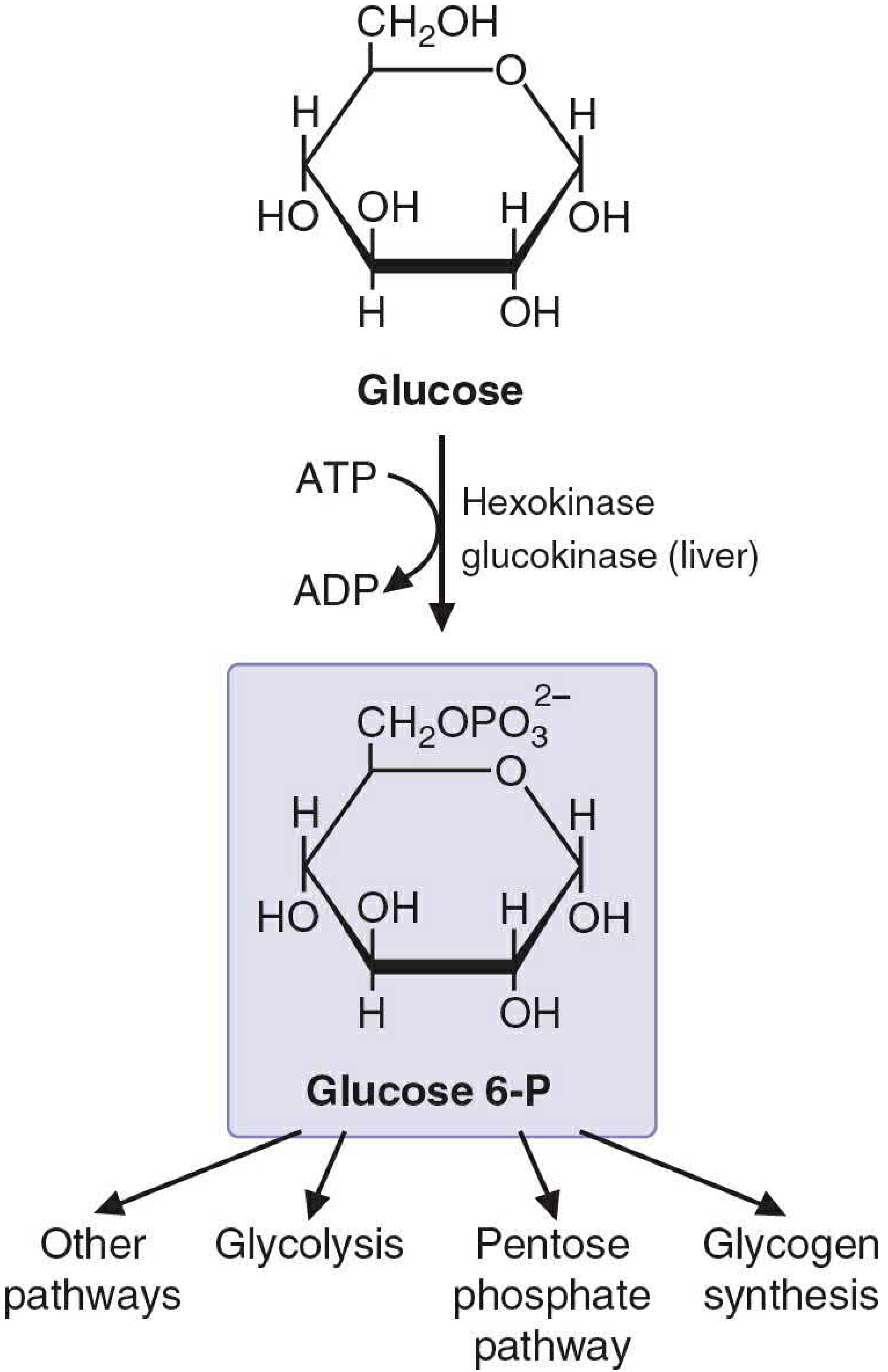
A. Glycolysis (Aerobic / Anaerobic)
The primary ATP-generating pathway. Occurs in the cytoplasm of all cells.
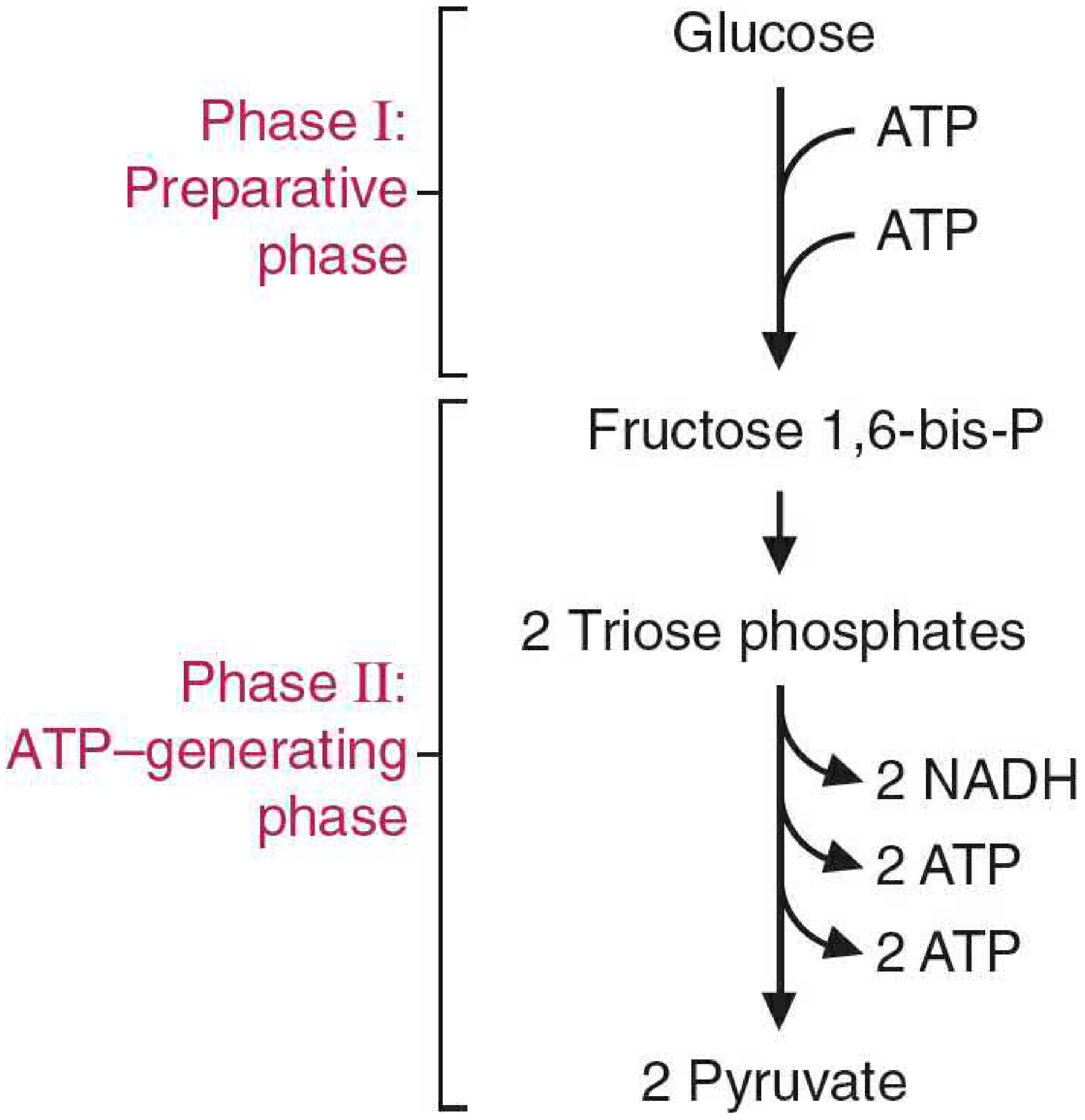
Two phases:
Phase I - Preparative Phase (energy investment)
- Glucose + ATP → Glucose 6-P (by hexokinase/glucokinase) - commits glucose to the cell
- Glucose 6-P → Fructose 6-P (phosphoglucose isomerase)
- Fructose 6-P + ATP → Fructose 1,6-bisphosphate (phosphofructokinase-1, the key regulatory step)
- Fructose 1,6-bisphosphate → 2x Glyceraldehyde 3-phosphate (aldolase)
- Net investment: 2 ATP consumed
Phase II - ATP-Generating Phase
5. G3P + NAD⁺ + Pi → 1,3-bisphosphoglycerate + NADH (G3P dehydrogenase)
6. Substrate-level phosphorylation steps → 2x ATP per triose (x2 for two trioses)
7. Final product: 2 pyruvate
- Net yield: 2 ATP + 2 NADH per glucose
Pyruvate fate (two routes):
- Aerobic: Pyruvate → Acetyl-CoA (via pyruvate dehydrogenase) → TCA cycle → oxidative phosphorylation → ~30-32 ATP total
- Anaerobic: Pyruvate → Lactate (allows NADH reoxidation to NAD⁺, sustaining glycolysis without oxygen)
B. Glycogen Metabolism
| Process | Trigger | Location |
|---|---|---|
| Glycogenesis (glycogen synthesis) | Fed state, insulin | Liver, muscle |
| Glycogenolysis (glycogen breakdown) | Fasting, glucagon, epinephrine | Liver (→ blood glucose), muscle (→ glycolysis) |
- In the postprandial state: liver stores excess glucose as glycogen via glycogenesis, then converts surplus to fat (lipogenesis)
- In the fasting state: liver breaks down glycogen (glycogenolysis) to release glucose into the blood
C. Gluconeogenesis
Synthesis of new glucose from non-carbohydrate precursors - occurs mainly in the liver (and kidney).
Precursors: Amino acids (especially alanine), lactate, glycerol (from triglyceride breakdown)
Triggered by: fasting, glucagon, cortisol. This pathway is critical when blood glucose falls below normal.
D. Pentose Phosphate Pathway (HMP Shunt)
- Generates NADPH (for reductive biosynthesis and glutathione reduction) and ribose 5-phosphate (for nucleotide synthesis)
- Runs continuously in RBCs, liver, adrenal cortex, and lactating mammary gland
- Important for protecting RBCs from oxidative damage (G6PD deficiency impairs this)
3. Hormonal Regulation of Blood Glucose
| Hormone | State | Effect |
|---|---|---|
| Insulin | Fed | Stimulates glycolysis, glycogenesis, lipogenesis; suppresses gluconeogenesis |
| Glucagon | Fasting | Stimulates glycogenolysis and gluconeogenesis in liver |
| Epinephrine | Stress | Inhibits glycogenesis; promotes glycogenolysis |
| Cortisol | Prolonged fast | Promotes gluconeogenesis; raises blood glucose |
4. Role of the Liver in Glucose Homeostasis
The liver acts as the body's glucose buffer (Guyton & Hall). Key functions:
- Glycogen storage - absorbs excess post-meal glucose
- Gluconeogenesis - synthesizes glucose from amino acids and glycerol when blood glucose falls
- Conversion of galactose and fructose to glucose
- Formation of metabolic intermediates (pyruvate, acetyl-CoA) for other biosynthetic reactions
"Storage of glycogen allows the liver to remove excess glucose from the blood, store it, and then return it to the blood when the blood glucose concentration begins to fall too low" - Guyton and Hall Textbook of Medical Physiology
Sources: Guyton & Hall Textbook of Medical Physiology; Basic Medical Biochemistry 6e (Lieberman & Peet); Lippincott's Biochemistry 8e; Tietz Textbook of Laboratory Medicine 7e; Miller's Anesthesia 10e
This is a shared conversation. Sign in to Orris to start your own chat.