
Cml slide n label
Reading File
CML (Chronic Myeloid Leukemia) peripheral blood smear shows a left-shifted myeloid series with cells at all stages of maturation. Let me pull the textbook content and images.
Searching sources...
Finding Sources
Finding Sources
Reading File
Reading File
Found the CML peripheral blood smear image. Let me fetch it and also get more detailed content.
Loading Image
Reading File
Loading Image
Loading Image
Here is the complete labeled breakdown of the CML peripheral blood smear:
CML - Peripheral Blood Smear
Slide 1 (Robbins Basic Pathology)
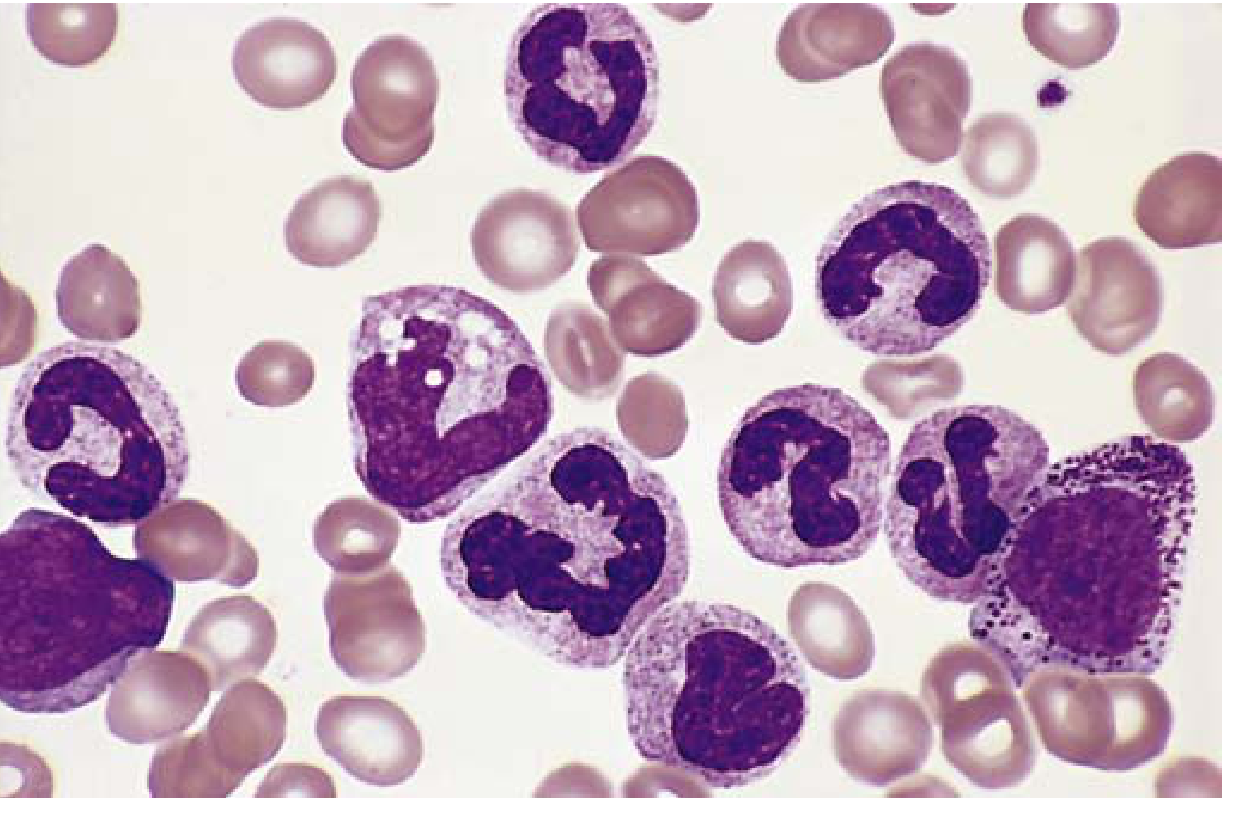
Slide 2 (Robbins & Cotran Pathologic Basis of Disease)
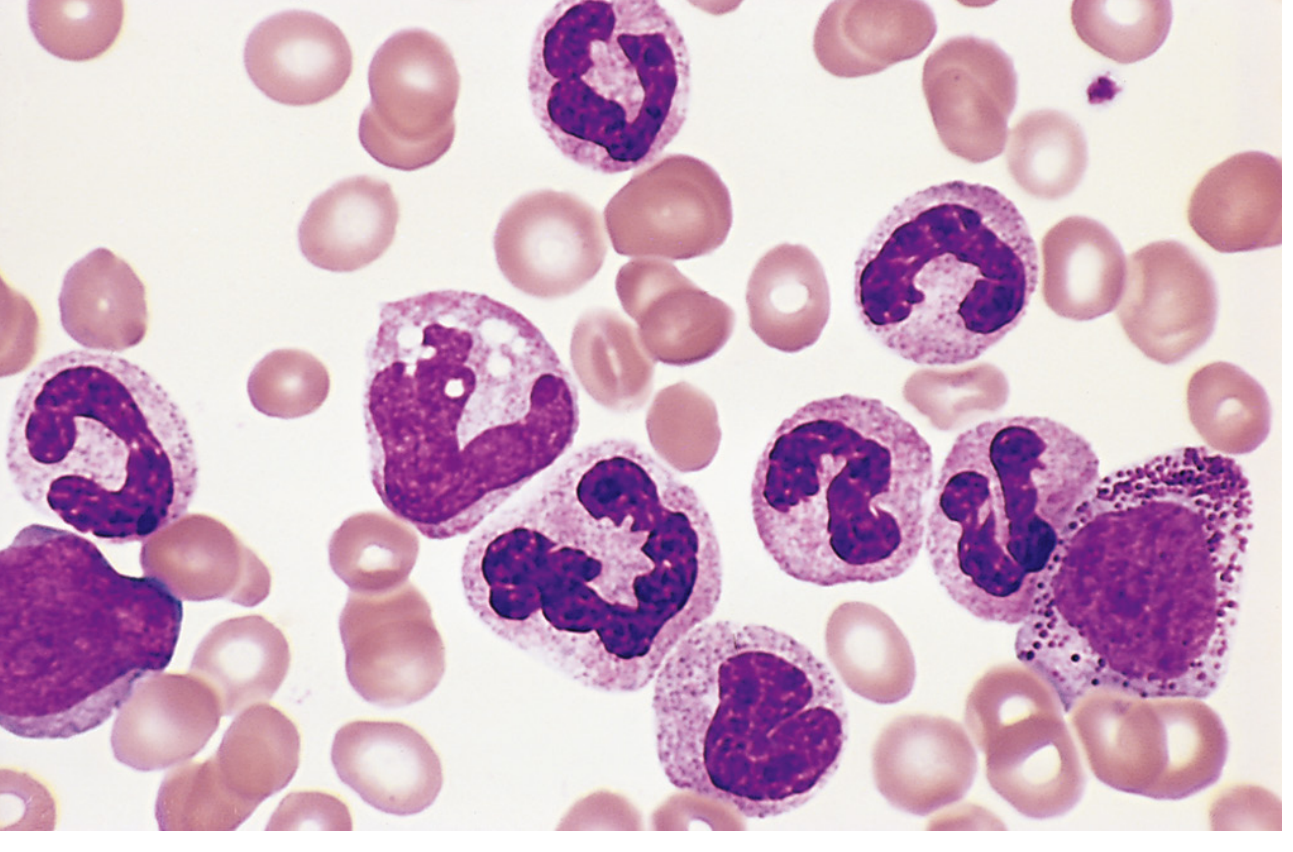
What to Label on the CML Smear
Cells Present (Left Shift - All Stages of Myeloid Maturation)
| Cell | Key Features to Label |
|---|---|
| Mature neutrophils (segmented) | Multi-lobed (2-5 lobes) dark purple nucleus, pink granular cytoplasm - most numerous cell |
| Band neutrophils | U-shaped or horseshoe nucleus, no segmentation |
| Metamyelocytes | Kidney/indented nucleus, pale pink cytoplasm with granules |
| Myelocytes | Round to oval nucleus (no indentation), abundant cytoplasm with primary + secondary granules |
| Promyelocytes | Large cell, round nucleus with prominent nucleolus, prominent azurophilic (purple) primary granules |
| Basophils | Dark purple-black coarse granules that may obscure the nucleus - characteristically increased in CML |
| Eosinophils | Bi-lobed nucleus, large bright orange-red granules - also increased |
| Platelets | Numerous small anucleate fragments - often markedly elevated (thrombocytosis) |
| Red blood cells | Normal-appearing biconcave discs in background |
Key Diagnostic Features to Note
- WBC markedly elevated - often >100,000 cells/µL
- Full myeloid spectrum in peripheral blood (normally only mature neutrophils and bands are seen)
- Basophilia - characteristic and distinguishes CML from leukemoid reaction
- Eosinophilia - also present
- Thrombocytosis - platelets often increased
- Low LAP (Leukocyte Alkaline Phosphatase) score - distinguishes from leukemoid reaction where LAP is high
Pathogenesis Diagram
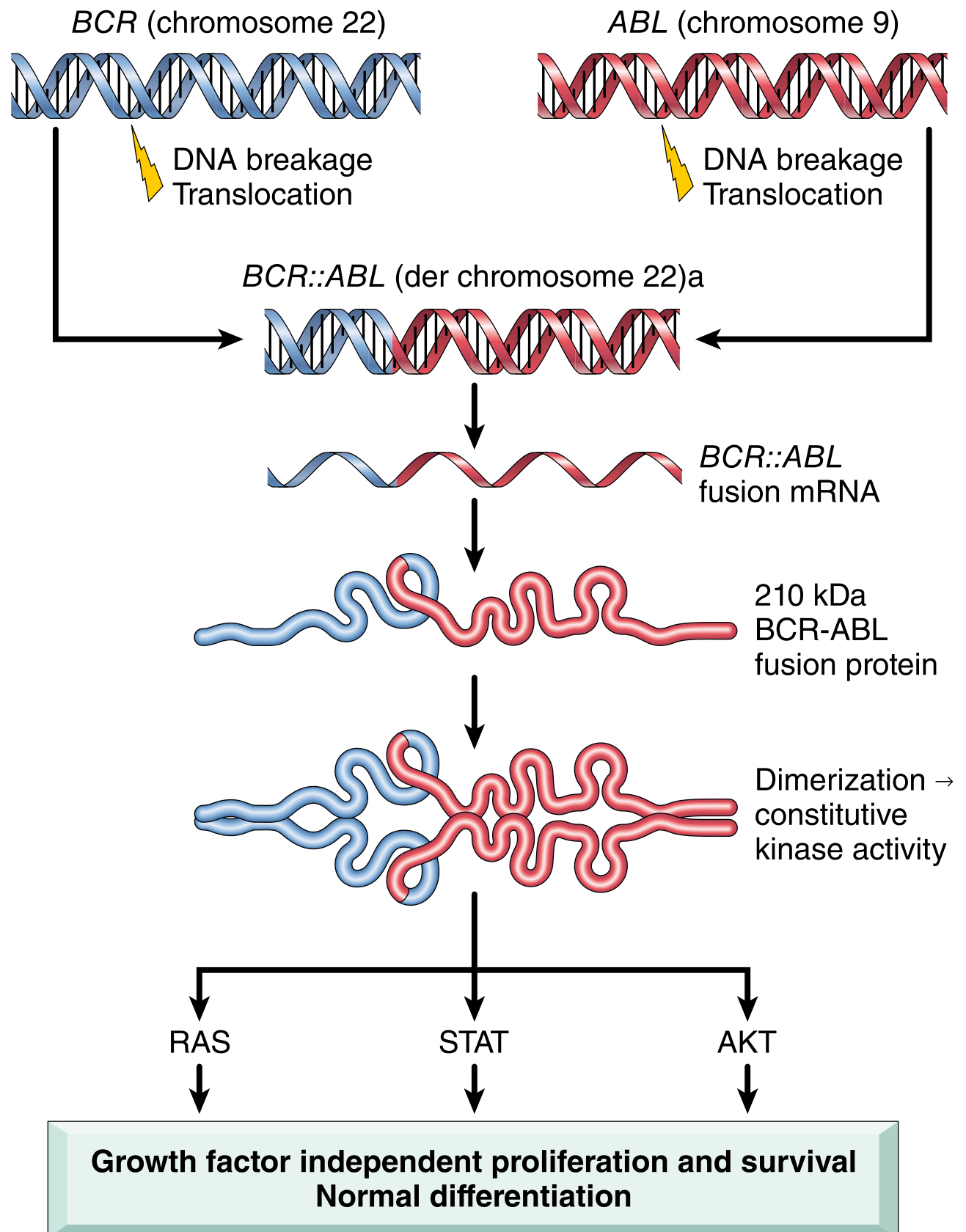
The t(9;22) Philadelphia chromosome translocation creates the BCR::ABL fusion gene → 210 kDa BCR-ABL fusion protein → constitutive kinase activity → activates RAS, STAT, AKT → growth factor-independent proliferation with preserved differentiation (hence the mature cells in blood).
CML vs Leukemoid Reaction (Quick Differentiator)
| Feature | CML | Leukemoid Reaction |
|---|---|---|
| LAP score | Low | High |
| Basophils | Increased | Normal |
| BCR-ABL | Positive | Negative |
| Cause | Neoplastic | Reactive (infection, stress) |
- Robbins & Cotran Pathologic Basis of Disease, p. 583-584
- Robbins Basic Pathology, p. 583
This is a shared conversation. Sign in to Orris to start your own chat.